
No products in the cart.
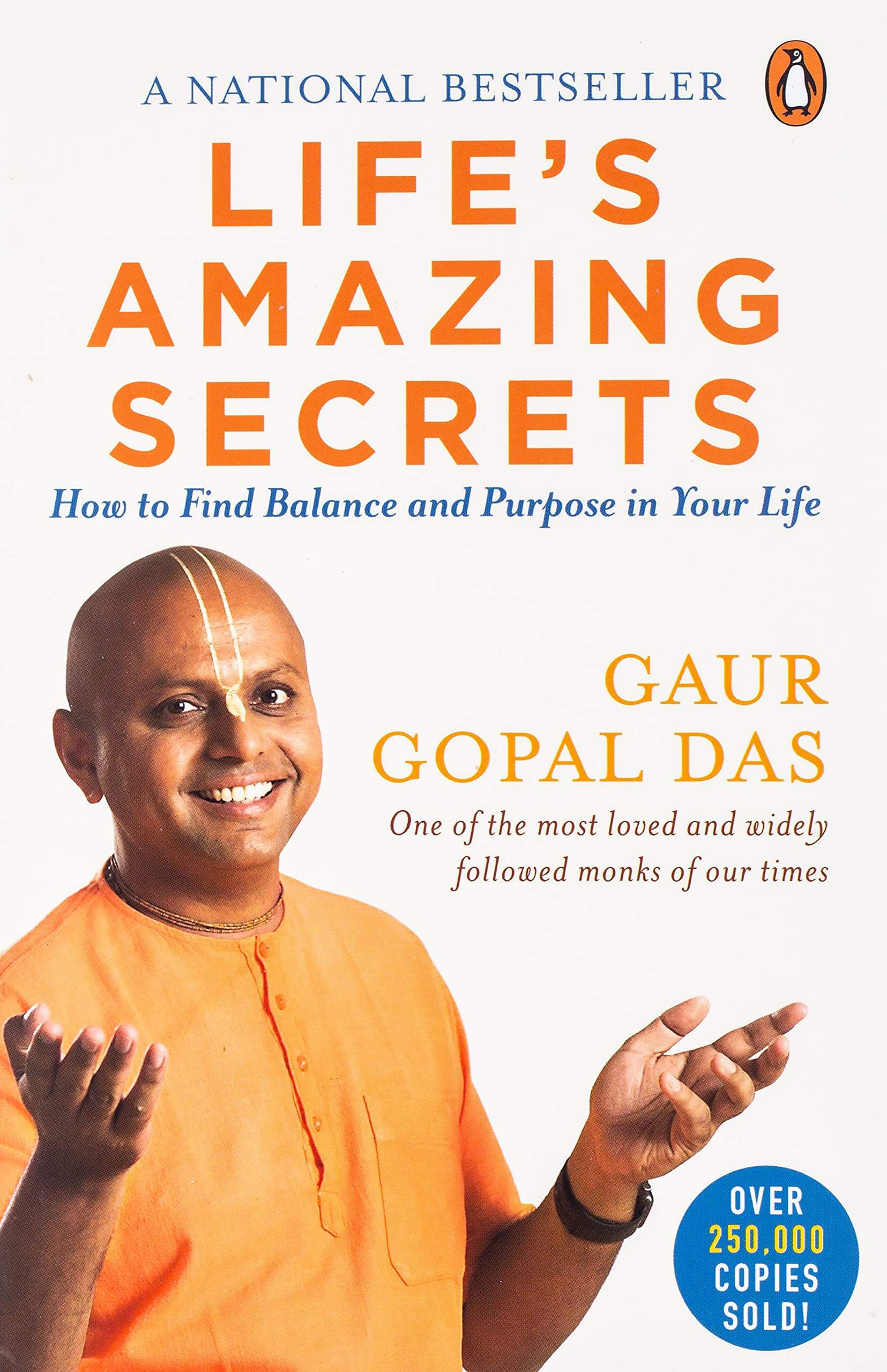


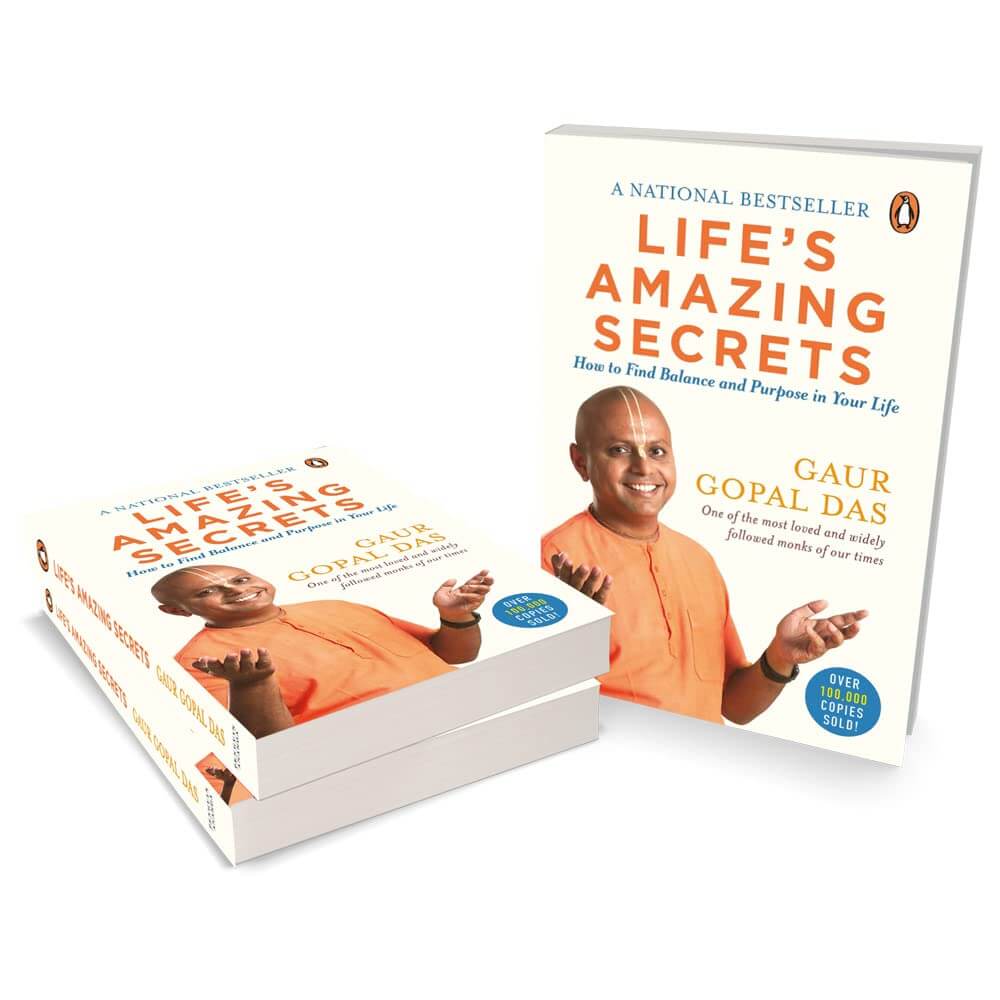





Life’s Amazing Secrets by Gaur Gopal Das


රු1,500.00
3 X Rs. 500.00 or 8% Cashback with


or 3 X රු500.00 with


or up to 4 X රු375.00 with


Life’s Amazing Secrets by Gaur Gopal Das is an inspiring self-development book about finding balance, happiness and purpose in everyday life. Through simple stories, practical wisdom and thoughtful conversations, Gaur Gopal Das explores relationships, gratitude, personal growth, work, mindset and the importance of contributing to others. Ideal for readers interested in motivation, self-help, spirituality, work-life balance and living a more meaningful life.
Out of stock
Email when stock available
Life’s Amazing Secrets by Gaur Gopal Das is an inspiring and practical self-development book about finding happiness, improving relationships, discovering purpose, creating balance and living a more meaningful life.
Modern life can feel incredibly busy.
Work.
Money.
Relationships.
Family.
Social expectations.
Personal goals.
Responsibilities.
Technology.
People spend years trying to succeed in all of these areas.
Yet even after achieving some of their goals, many still feel:
Stressed.
Unsatisfied.
Disconnected.
Confused.
Unbalanced.
That leads to a difficult question:
What actually makes life meaningful?
Gaur Gopal Das explores this question through simple stories, conversations and practical insights.
Instead of presenting happiness as something complicated or impossible, he encourages readers to pay attention to the everyday areas of life that matter most.
Relationships.
Personal growth.
Work.
Purpose.
Gratitude.
Service.
Inner peace.
Life’s Amazing Secrets by Gaur Gopal Das reminds readers that success is important, but success without balance may still leave a person feeling empty.
The goal is not simply to go through life.
It is to grow through life.
Life’s Amazing Secrets by Gaur Gopal Das – Book Overview
Life’s Amazing Secrets by Gaur Gopal Das is structured around conversations and reflections that begin during a journey through busy Mumbai traffic.
Gaur Gopal Das and his friend Harry begin discussing life.
Their conversation gradually moves into deeper questions.
Why are people unhappy even after becoming successful?
How can relationships become stronger?
How do we deal with negative thoughts?
How can we become better at work?
What is our purpose?
How can we contribute to others?
Through these discussions, Gaur Gopal Das shares lessons drawn from his experience as a monk and life coach.
The book combines:
Ancient wisdom.
Modern psychology.
Personal stories.
Humour.
Everyday examples.
Practical advice.
This makes complex ideas easy to understand.
Finding Balance in Life
Balance is one of the strongest themes in Life’s Amazing Secrets by Gaur Gopal Das.
People often focus heavily on one area of life while ignoring others.
Someone may have:
A successful career.
High income.
Professional recognition.
But weak relationships.
Another person may have loving relationships but no clear personal direction.
Someone else may constantly help others while completely neglecting their own wellbeing.
A meaningful life requires attention to several important areas.
Success Is Not Everything
Modern culture often teaches people to measure success through:
Money.
Job titles.
Cars.
Houses.
Followers.
Achievements.
Status.
These things can be valuable.
But they do not automatically create happiness.
A person can achieve professional success and still feel lonely.
A person can earn a large salary and still feel anxious.
A person can appear successful publicly while struggling privately.
Life’s Amazing Secrets by Gaur Gopal Das encourages readers to define success more broadly.
What Is Real Happiness?
Happiness is not simply getting everything you want.
Desires keep changing.
You buy one thing.
Then want another.
Reach one goal.
Then create another.
This does not mean ambition is bad.
It means happiness cannot depend entirely on external achievement.
Inner satisfaction matters too.
Inner Happiness
External circumstances change constantly.
Jobs change.
Relationships change.
Money changes.
People change.
If happiness depends completely on external conditions, peace becomes fragile.
Inner growth can create greater emotional stability.
Gratitude
Gratitude is one of the simplest but most powerful ideas explored in the book.
People naturally notice what is missing.
The promotion they did not receive.
The money they do not have.
The relationship that is imperfect.
The opportunity someone else received.
But constantly focusing on what is missing can create dissatisfaction.
Gratitude shifts attention toward what is already present.
Appreciate What You Have
You may already have:
People who care about you.
Health.
Education.
Opportunity.
Food.
Safety.
Skills.
Experience.
A place to live.
These things become easy to ignore because they are familiar.
Gratitude makes ordinary blessings visible again.
Gratitude Does Not Mean Lack of Ambition
Being grateful does not mean:
Stop improving.
Stop dreaming.
Stop setting goals.
You can appreciate what you have while still working toward something better.
The difference is emotional.
Instead of saying:
“I will only be happy when I achieve this.”
you can say:
“I appreciate where I am while continuing to grow.”
Relationships
Relationships are central to Life’s Amazing Secrets by Gaur Gopal Das.
A successful life without meaningful relationships can become lonely.
People need:
Family.
Friendship.
Trust.
Support.
Understanding.
Connection.
Relationships require effort just like careers do.
Invest Time in People
People often say:
“I don’t have time.”
But time usually reveals priorities.
If relationships matter, they need attention.
A message.
A conversation.
A visit.
A meal together.
Listening.
Small actions can strengthen relationships.
Listening
One of the most valuable relationship skills is listening.
Many people listen only because they are waiting for their turn to speak.
Real listening means trying to understand.
Not immediately judging.
Not interrupting.
Not preparing the next argument.
Just listening.
Understanding Before Responding
Conflicts often become worse because people respond before understanding.
Someone says something.
We interpret it negatively.
We become defensive.
Then an argument begins.
A better approach may be:
Pause.
Listen.
Ask.
Clarify.
Then respond.
Relationships Need Respect
Love alone does not automatically create a healthy relationship.
Relationships also need:
Respect.
Trust.
Communication.
Patience.
Understanding.
Boundaries.
These qualities help people remain connected even when they disagree.
Expectations
Expectations can create disappointment.
We think:
They should understand me.
They should call.
They should behave differently.
They should know what I need.
But other people cannot always meet expectations they do not understand.
Communication matters.
Forgiveness
No relationship is perfect.
People make mistakes.
Say the wrong thing.
Forget.
Disappoint.
Misunderstand.
Forgiveness can help relationships recover.
Forgiveness does not mean accepting repeated harmful behavior.
It means learning not to carry unnecessary anger forever.
Holding Grudges
Resentment can consume enormous emotional energy.
You may replay an old argument repeatedly.
The other person may not even be thinking about it.
Holding anger can sometimes hurt the person carrying it more than the person who caused it.
Apologizing
An apology can protect a relationship.
But pride often prevents people from saying:
I was wrong.
I misunderstood.
I’m sorry.
Strong relationships require humility.
Ego
Ego creates many unnecessary conflicts.
People want to:
Win arguments.
Prove themselves right.
Protect their image.
Avoid admitting mistakes.
But winning an argument while damaging an important relationship may not really be a victory.
Humility
Humility allows people to learn.
A humble person can say:
I don’t know.
I made a mistake.
Teach me.
I can improve.
Humility is not weakness.
It is openness.
Comparing Yourself to Others
Comparison is another source of unhappiness.
Someone else has:
More money.
A better job.
A larger house.
A happier relationship.
More followers.
But comparison rarely shows the full picture.
You see another person’s visible success.
You do not always see:
Their struggles.
Fear.
Debt.
Loneliness.
Problems.
Social Media and Comparison
Modern social media makes comparison especially easy.
People often share:
Holidays.
Success.
Celebrations.
Achievements.
They rarely post every difficult moment.
Comparing your entire life to someone else’s highlights creates an unfair comparison.
Focus on Your Own Journey
Your life has its own:
Timing.
Challenges.
Strengths.
Weaknesses.
Opportunities.
Instead of constantly asking:
“Why am I behind them?”
ask:
“What can I improve today?”
Self-Improvement
Personal growth is another major theme in Life’s Amazing Secrets by Gaur Gopal Das.
Growth does not happen automatically.
Age increases automatically.
Wisdom does not.
Experience can teach lessons only when we reflect on it.
Stop Going Through Life
One of the central ideas associated with the book is:
Stop going through life. Start growing through life.
The difference is important.
Going through life means:
Wake up.
Work.
Eat.
Sleep.
Repeat.
Growing through life means learning from experiences.
Learn From Challenges
Difficult experiences can teach:
Patience.
Resilience.
Humility.
Courage.
Empathy.
A problem may not be enjoyable.
But it can still become meaningful if something is learned from it.
Responsibility
Growth begins when people take responsibility.
It is easy to blame:
Parents.
Bosses.
Partners.
Government.
Economy.
Circumstances.
Sometimes those factors genuinely matter.
But focusing only on blame can remove personal power.
Ask:
What can I control?
What can I change?
What can I do next?
Control What You Can
You cannot control:
Other people.
The past.
Every economic event.
Every opinion.
Every unexpected problem.
But you can influence:
Your response.
Your habits.
Your effort.
Your attitude.
Your learning.
Your decisions.
That distinction can reduce stress.
Mindset
Two people can experience similar situations and interpret them very differently.
One sees:
Failure.
Another sees:
Feedback.
One sees:
Rejection.
Another sees:
Redirection.
Mindset changes how people respond to circumstances.
Positive Thinking
Positive thinking does not mean pretending problems do not exist.
It means facing reality while still looking for:
Solutions.
Lessons.
Possibilities.
Hope.
Real optimism requires honesty.
Negative Thoughts
The mind naturally produces negative thoughts.
What if I fail?
What if they reject me?
What if something goes wrong?
The goal is not necessarily to eliminate every negative thought.
The goal is to stop allowing every thought to control your actions.
Work
Work occupies a huge part of adult life.
That makes it important to develop a healthy relationship with work.
A career can provide:
Income.
Identity.
Growth.
Contribution.
Purpose.
But work can also become a source of:
Stress.
Comparison.
Competition.
Burnout.
Life’s Amazing Secrets by Gaur Gopal Das encourages readers to think beyond salary alone.
Doing Well at Work
Professional success often depends on more than technical ability.
People also need:
Communication.
Teamwork.
Integrity.
Discipline.
Patience.
Leadership.
Emotional intelligence.
A person who develops both competence and character can become more effective.
Competition
Competition can motivate improvement.
But unhealthy competition creates:
Jealousy.
Insecurity.
Office politics.
Constant comparison.
A better question is:
How can I become better than I was yesterday?
Excellence
Excellence is different from perfection.
Perfection says:
I cannot make mistakes.
Excellence says:
I will give my best and continue improving.
The second mindset is more sustainable.
Purpose
Purpose is one of the biggest questions in Life’s Amazing Secrets by Gaur Gopal Das.
Why am I here?
What should I do with my life?
What makes my work meaningful?
Purpose does not always appear as one dramatic revelation.
It may develop gradually.
Discovering Purpose
Purpose can emerge from the intersection of:
Your abilities.
Your interests.
Your values.
Problems you care about.
Ways you can help other people.
Purpose often becomes clearer through action.
You Do Not Need Everything Figured Out
Young people sometimes feel pressure to know exactly what they want from life.
But life rarely develops according to a perfect plan.
Careers change.
Interests change.
Opportunities appear.
People learn.
It is okay not to have every answer immediately.
Service
Helping others is another important theme.
Personal success becomes more meaningful when it creates value beyond oneself.
Contribution can take many forms.
Helping family.
Mentoring someone.
Supporting a community.
Giving time.
Sharing knowledge.
Solving a problem.
Giving Back
Giving back does not require being wealthy.
You can contribute:
Time.
Attention.
Skills.
Encouragement.
Knowledge.
Support.
A meaningful contribution may seem small but still matter greatly to another person.
Money
Money is useful.
It provides:
Security.
Opportunity.
Comfort.
Freedom.
But money becomes dangerous when it becomes the only measure of value.
A wealthy person can still be unhappy.
A person with modest resources can still live meaningfully.
Money as a Tool
Money works best as a tool.
It can support:
Family.
Education.
Experiences.
Charity.
Business.
Security.
The problem begins when identity depends entirely on financial status.
Greed
There is always more available.
A bigger house.
Better car.
Newer phone.
Higher salary.
More status.
If satisfaction always requires the next upgrade, contentment never arrives.
Contentment
Contentment does not mean lack of progress.
It means learning to experience enoughness.
I can improve my life without hating my current life.
That is a healthier foundation for ambition.
Habits
Life is shaped by repeated actions.
Small habits may appear insignificant.
But over months and years they become powerful.
Reading.
Exercise.
Saving.
Meditation.
Gratitude.
Planning.
Communication.
Small improvements accumulate.
Discipline
Motivation changes.
Some days you feel excited.
Other days you do not.
Discipline allows good habits to continue when motivation disappears.
Morning Reflection
Taking a few minutes to reflect can change the tone of the day.
Ask:
What am I grateful for?
What matters today?
Who needs my attention?
What can I improve?
Reflection creates intention.
Self-Awareness
You cannot improve what you refuse to notice.
Self-awareness means understanding:
Your strengths.
Weaknesses.
Emotions.
Triggers.
Habits.
Motivations.
Without awareness, people repeat the same patterns.
Feedback
Feedback can feel uncomfortable.
But useful feedback reveals blind spots.
Instead of immediately becoming defensive, ask:
Is there something here I can learn?
Not all criticism is correct.
But some criticism contains valuable information.
Emotional Intelligence
Emotional intelligence involves recognizing and managing emotions.
Anger.
Jealousy.
Fear.
Frustration.
Excitement.
Sadness.
Emotions provide information.
But they should not always make decisions automatically.
Anger
Anger can make people act before thinking.
A short pause can prevent a long regret.
Before responding:
Pause.
Breathe.
Ask what outcome you actually want.
Envy
Envy often appears when someone else’s success reminds us of something we want.
Instead of turning envy into resentment, it can become information.
What does their success reveal about my own goals?
Gratitude Versus Envy
Gratitude says:
I appreciate what I have.
Envy says:
I cannot enjoy my life because someone has more.
The more gratitude develops, the less comparison controls happiness.
Mindfulness
Being present is increasingly difficult.
People eat while checking phones.
Talk while thinking about work.
Work while worrying about tomorrow.
The body is here.
The mind is somewhere else.
Mindfulness means returning attention to the present.
The Present Moment
The past cannot be changed.
The future cannot be completely controlled.
The present is where action happens.
That makes it valuable.
Stress
Stress often comes from carrying too much mentally.
Yesterday’s regret.
Tomorrow’s fear.
Today’s responsibilities.
Breaking problems into smaller actions can make them more manageable.
Relationships Before Regret
Careers can often recover from missed opportunities.
Relationships may not always give unlimited time.
People grow older.
Circumstances change.
That is why showing appreciation now matters.
Say What Matters
Tell people:
Thank you.
I appreciate you.
I’m sorry.
I love you.
These simple words can strengthen relationships while there is still time to say them.
Character
Achievement tells people what you accomplished.
Character tells them who you became while accomplishing it.
Important qualities include:
Integrity.
Kindness.
Humility.
Discipline.
Honesty.
Compassion.
Integrity
Integrity means doing what is right even when nobody is watching.
A reputation can be carefully managed.
Character appears in private choices.
Leadership
The principles in Life’s Amazing Secrets by Gaur Gopal Das can also apply to leadership.
Good leaders do more than give instructions.
They:
Listen.
Understand.
Encourage.
Develop people.
Set an example.
Leadership involves people, not merely authority.
Appreciation at Work
People want to feel valued.
A sincere:
Thank you.
Well done.
I appreciate your work.
can make a meaningful difference.
Recognition helps strengthen teams and relationships.
Relationships and Business
Business success is also built through relationships.
Customers.
Employees.
Suppliers.
Partners.
Leaders who treat people only as numbers may eventually damage trust.
Purpose and Career
A career can become more satisfying when work connects with something meaningful.
Not every job needs to feel like a spiritual calling.
But people can still ask:
Who benefits from my work?
What skill am I developing?
How am I contributing?
Meaning can exist inside ordinary work.
Failure
Failure is part of growth.
A person who never fails may simply be avoiding difficult challenges.
Failure can provide:
Feedback.
Experience.
Humility.
Direction.
The question is not whether you ever fail.
It is whether you learn.
Resilience
Resilience means recovering after difficulty.
Life will include:
Rejection.
Loss.
Disappointment.
Mistakes.
Unexpected change.
Resilience helps people continue.
Perspective
A problem can feel enormous when viewed from very close.
Perspective asks:
Will this matter in five years?
What can I learn?
Is there another way to see this?
Perspective does not remove problems.
It changes their emotional size.
Simple Wisdom
One strength of Life’s Amazing Secrets by Gaur Gopal Das is that the lessons are accessible.
The book does not require advanced knowledge of philosophy.
Ideas are explained through:
Stories.
Examples.
Conversations.
Everyday situations.
This makes it suitable for readers beginning their personal-development journey.
Ancient Wisdom for Modern Life
Gaur Gopal Das combines traditional spiritual wisdom with modern problems.
The world has changed technologically.
But human beings still struggle with:
Jealousy.
Fear.
Relationships.
Purpose.
Anger.
Stress.
Comparison.
These challenges are old.
That makes ancient wisdom surprisingly relevant.
Spirituality
The book contains spiritual ideas, but many lessons can be applied regardless of a reader’s specific religious background.
Themes such as:
Gratitude.
Service.
Purpose.
Relationships.
Self-awareness.
are widely relevant.
Personal Growth
Life’s Amazing Secrets by Gaur Gopal Das is particularly useful for readers who feel:
Stuck.
Unbalanced.
Overwhelmed.
Uncertain about purpose.
Dissatisfied despite achievement.
The book encourages reflection rather than offering one magical solution.
Life Is a Journey
There is no final moment when everything becomes perfect.
Life continues.
Problems change.
Goals change.
People change.
Growth therefore becomes continuous.
Progress Over Perfection
You do not need to transform your entire life overnight.
Improve one habit.
One relationship.
One decision.
One response.
Small changes can produce long-term results.
Gaur Gopal Das
Gaur Gopal Das trained as an electrical engineer before choosing the life of a monk.
He later became widely known as a speaker and life coach, sharing lessons about:
Happiness.
Relationships.
Purpose.
Leadership.
Personal growth.
His ability to explain deeper ideas through simple everyday stories is central to the style of this book.
A Conversation-Based Style
Rather than feeling like a formal textbook, the book unfolds through conversation and stories.
This helps the reader move naturally from one lesson to another.
Complex subjects feel more approachable.
Great for Beginners in Self-Help
Readers who find some self-development books overly technical may enjoy the simplicity of Life’s Amazing Secrets by Gaur Gopal Das.
The writing is designed to be:
Accessible.
Thought-provoking.
Practical.
Encouraging.
Similar Books Readers May Enjoy
Readers who enjoy this book may also like:
The Monk Who Sold His Ferrari by Robin Sharma
Ikigai by Héctor García and Francesc Miralles
Think Like a Monk by Jay Shetty
The Power of Now by Eckhart Tolle
The 5 AM Club by Robin Sharma
These books also explore various combinations of:
Purpose.
Mindset.
Happiness.
Habits.
Spirituality.
Personal growth.
7 Powerful Life Lessons From Life’s Amazing Secrets
There are many lessons in Life’s Amazing Secrets by Gaur Gopal Das, but seven stand out:
- Balance matters more than success in one area – A great career cannot automatically compensate for unhealthy relationships, poor wellbeing or lack of purpose.
- Gratitude changes how you experience life – Appreciating what is already present can reduce constant dissatisfaction and comparison.
- Relationships require deliberate effort – Listening, respect, forgiveness and time are essential for maintaining meaningful connections.
- Stop comparing your life with everyone else’s – Every person has a different journey, timing, background and set of challenges.
- Growth requires personal responsibility – Focus less on what you cannot control and more on the actions, habits and responses that belong to you.
- Purpose includes contribution – A meaningful life becomes richer when success creates value for people beyond yourself.
- Do not simply go through life—grow through life – Experiences become valuable when you reflect, learn and allow them to improve who you become.
Why Read Life’s Amazing Secrets by Gaur Gopal Das?
Life’s Amazing Secrets by Gaur Gopal Das is an excellent choice for readers interested in:
- Gaur Gopal Das books
- Self-help
- Personal development
- Happiness
- Life balance
- Relationships
- Purpose
- Motivation
- Gratitude
- Spirituality
- Mindset
- Emotional intelligence
- Work-life balance
- Self-awareness
- Positive thinking
- Stress management
- Personal growth
- Meaningful living
- Life lessons
- Inspirational books
It is especially valuable for readers looking for simple ideas they can apply to everyday life.
Who Should Read This Book?
Life’s Amazing Secrets by Gaur Gopal Das may especially appeal to:
- Personal-development readers
- Students
- Young professionals
- Entrepreneurs
- Business leaders
- People struggling with work-life balance
- Readers seeking greater happiness
- People wanting stronger relationships
- Readers interested in purpose
- People dealing with stress
- Readers beginning a self-help journey
- Gaur Gopal Das fans
- Readers interested in spiritual wisdom
- Anyone feeling stuck or unbalanced
- Anyone wanting to live more intentionally
Stop Going Through Life and Start Growing Through It
Life’s Amazing Secrets by Gaur Gopal Das reminds readers that a good life cannot be measured by one number.
Not only:
Salary.
Job title.
Bank balance.
Followers.
Achievements.
A fulfilling life also includes:
Meaningful relationships.
Inner peace.
Personal growth.
Gratitude.
Purpose.
Contribution.
You may not be able to create a perfect life.
No one can.
There will always be:
Challenges.
Mistakes.
Uncertainty.
Disappointment.
But you can become better at responding to them.
You can listen more carefully.
Appreciate more deeply.
Compare less.
Forgive.
Learn.
Improve your habits.
Develop your character.
Contribute to others.
And become more intentional about how you spend your life.
That is the deeper message behind Life’s Amazing Secrets by Gaur Gopal Das.
Life is not only about reaching the next destination.
It is about who you become during the journey.
For readers interested in happiness, relationships, work-life balance, purpose, gratitude, self-development and practical wisdom for everyday living, Life’s Amazing Secrets by Gaur Gopal Das offers an accessible and uplifting guide to creating a more balanced and meaningful life.
Learn more about Life’s Amazing Secrets by Gaur Gopal Das on Gaur Gopal Das’s official website.
Explore more personal development and inspirational books at Bargain Books.
| Author | Gaur Gopal Das |
|---|---|
| Language | English |
| Type | Paperback Printed Book (Second Quality Copy) |
Be the first to review “Life’s Amazing Secrets by Gaur Gopal Das”
Related products

රු2,000.00
3 X Rs. 666.67 or 8% Cashback with
or 3 X රු666.67 with
or up to 4 X රු500.00 with
-33%

Self-Help & Psychology
Original price was: රු2,300.00.රු1,550.00Current price is: රු1,550.00.
3 X Rs. 516.67 or 8% Cashback with
or 3 X රු516.67 with
or up to 4 X රු387.50 with
-34%

Self-Help & Psychology
Original price was: රු2,350.00.රු1,550.00Current price is: රු1,550.00.
3 X Rs. 516.67 or 8% Cashback with
or 3 X රු516.67 with
or up to 4 X රු387.50 with

Non-Fiction & Knowledge
රු1,950.00
3 X Rs. 650.00 or 8% Cashback with
or 3 X රු650.00 with
or up to 4 X රු487.50 with
-17%
Out of stock
Non-Fiction & Knowledge
Original price was: රු2,900.00.රු2,400.00Current price is: රු2,400.00.
3 X Rs. 800.00 or 8% Cashback with
or 3 X රු800.00 with
or up to 4 X රු600.00 with
Non-Fiction & Knowledge
රු2,250.00
3 X Rs. 750.00 or 8% Cashback with
or 3 X රු750.00 with
or up to 4 X රු562.50 with
-26%

Out of stock
Non-Fiction & Knowledge
Original price was: රු2,000.00.රු1,490.00Current price is: රු1,490.00.
3 X Rs. 496.67 or 8% Cashback with
or 3 X රු496.67 with
or up to 4 X රු372.50 with
-28%

Self-Help & Psychology
Original price was: රු1,800.00.රු1,300.00Current price is: රු1,300.00.
3 X Rs. 433.33 or 8% Cashback with
or 3 X රු433.33 with
or up to 4 X රු325.00 with
Reviews
There are no reviews yet.