
No products in the cart.
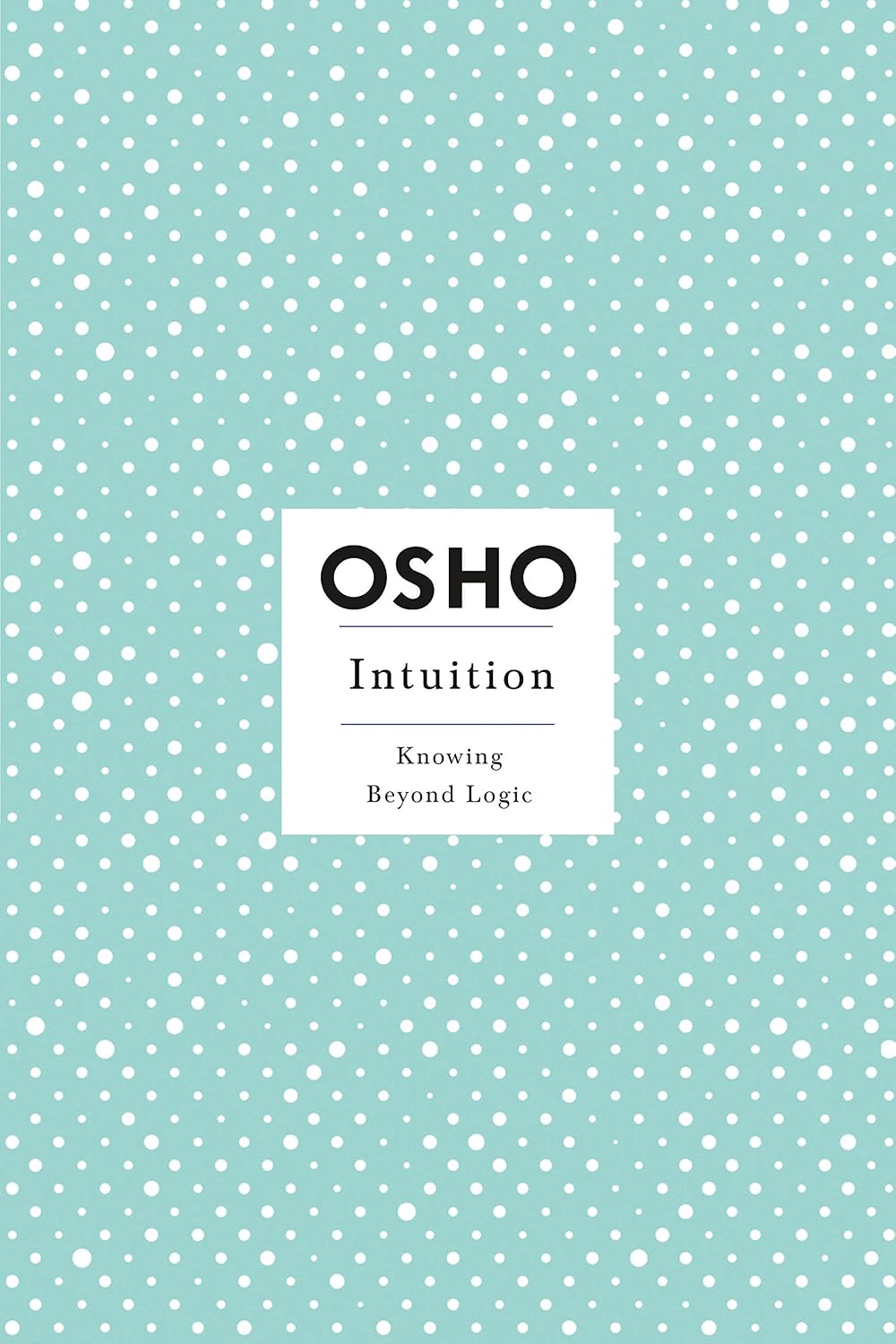


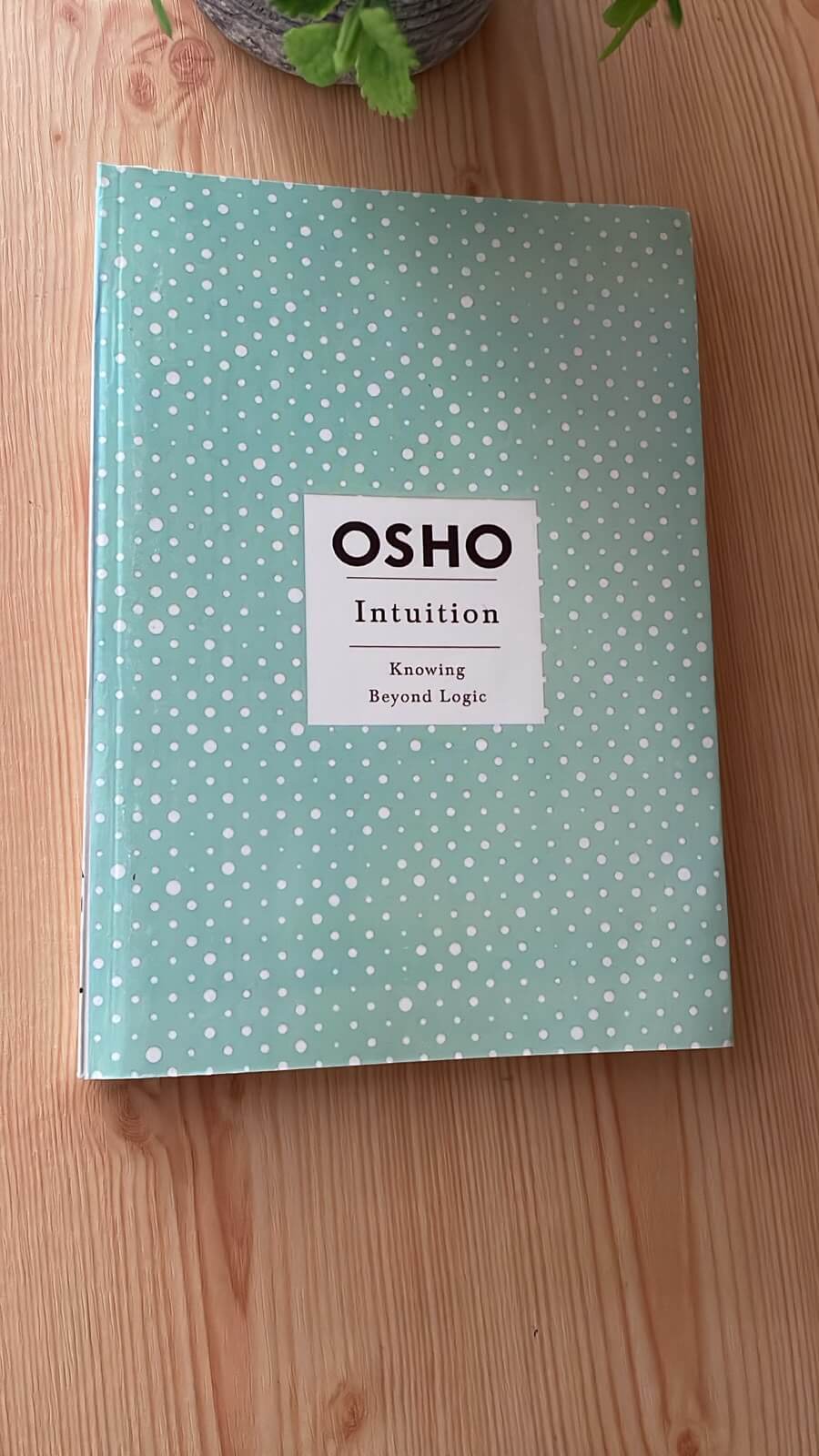




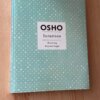
Intuition: Knowing Beyond Logic by Osho
රු900.00
3 X Rs. 300.00 or 8% Cashback with


or 3 X රු300.00 with


or up to 4 X රු225.00 with


Book Details / WooCommerce
| Field | Enter This |
|---|---|
| Title | Intuition: Knowing Beyond Logic |
| Author | Osho |
| ISBN-13 | 9780312275679 |
| ISBN-10 | 0312275676 |
| Series | Osho Insights for a New Way of Living |
| Series Position | 6 |
| Format | Trade Paperback |
| Publisher | St. Martin’s Publishing Group |
| Imprint | St. Martin’s Griffin / currently St. Martin’s Essentials |
| Publication Date | 14 December 2001 |
| Pages | 208 |
| Language | English |
| Audience | Adult / General |
| Genre | Self-Help / Spirituality / Meditation |
| Weight | Approx. 0.181 kg |
| Length | Approx. 19.8 cm |
| Width | Approx. 12.9 cm |
| Height / Thickness | Approx. 1.4 cm |
| Dimensions | Approx. 19.8 × 12.9 × 1.4 cm |
1 in stock
Intuition: Knowing Beyond Logic by Osho is a reflective work of spirituality and personal development examining what Osho describes as the difference between instinct, intellect and intuition.
Part of the popular Osho Insights for a New Way of Living collection, the book asks whether every meaningful human understanding must come through logical analysis—or whether people also experience forms of inner insight that cannot always be explained step by step.
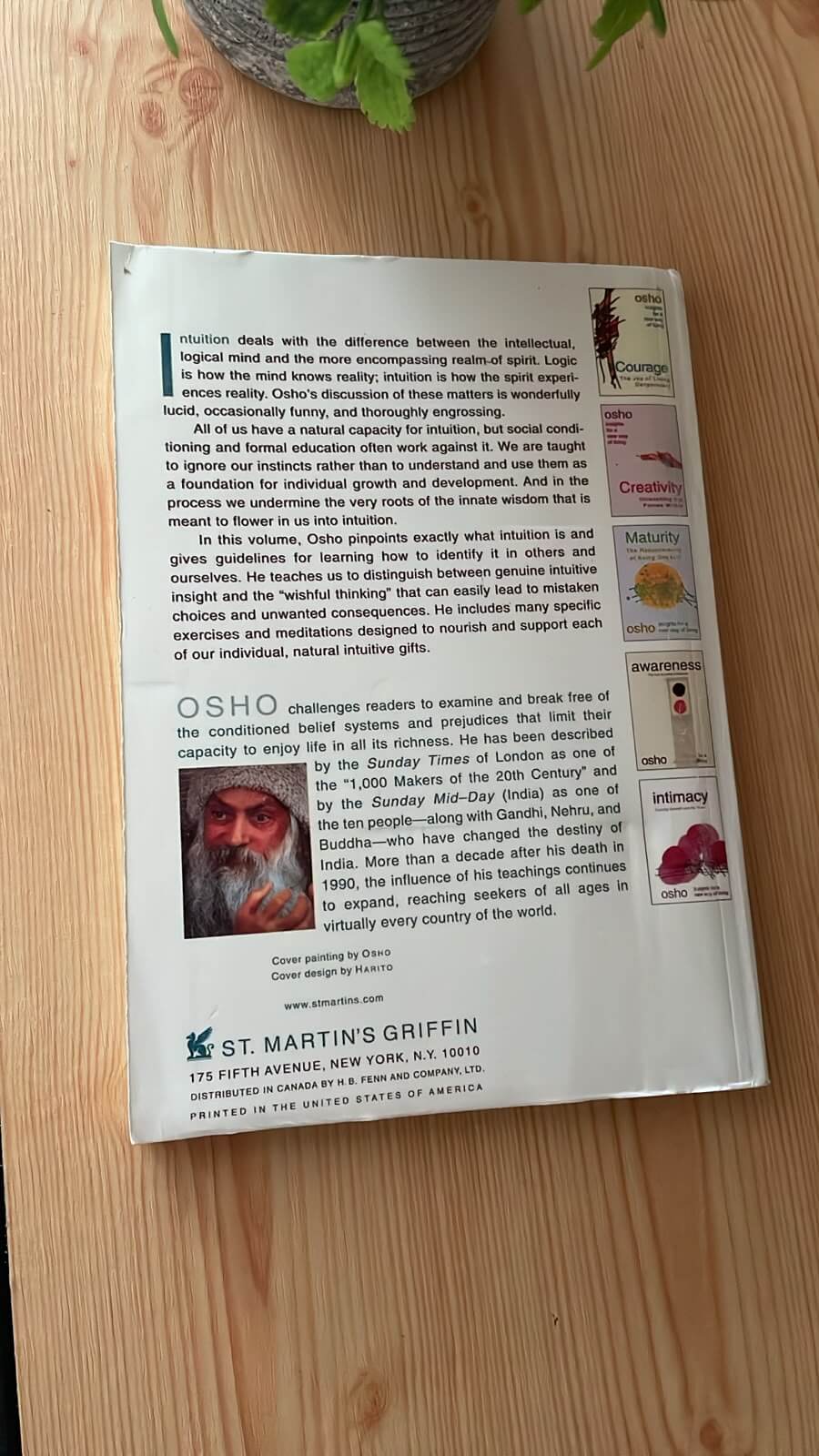
Macmillan describes the book as an exploration of the difference between the intellectual, logical mind and what Osho regards as the broader realm of intuition and spiritual awareness.
Rather than presenting intuition as simply guessing or following every emotion, Osho encourages readers to examine their inner responses more carefully.
Instinct, Intellect and Intuition
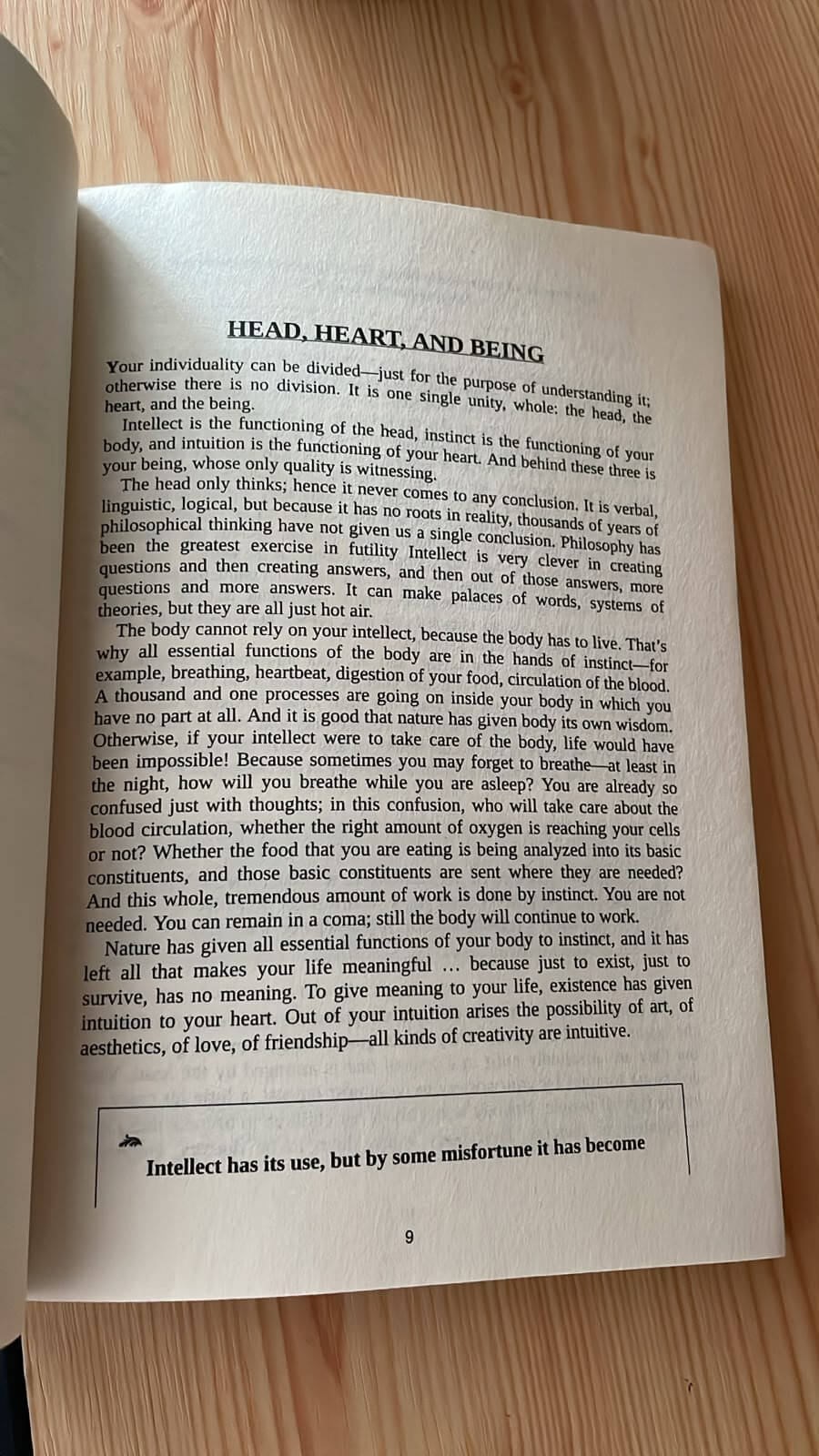
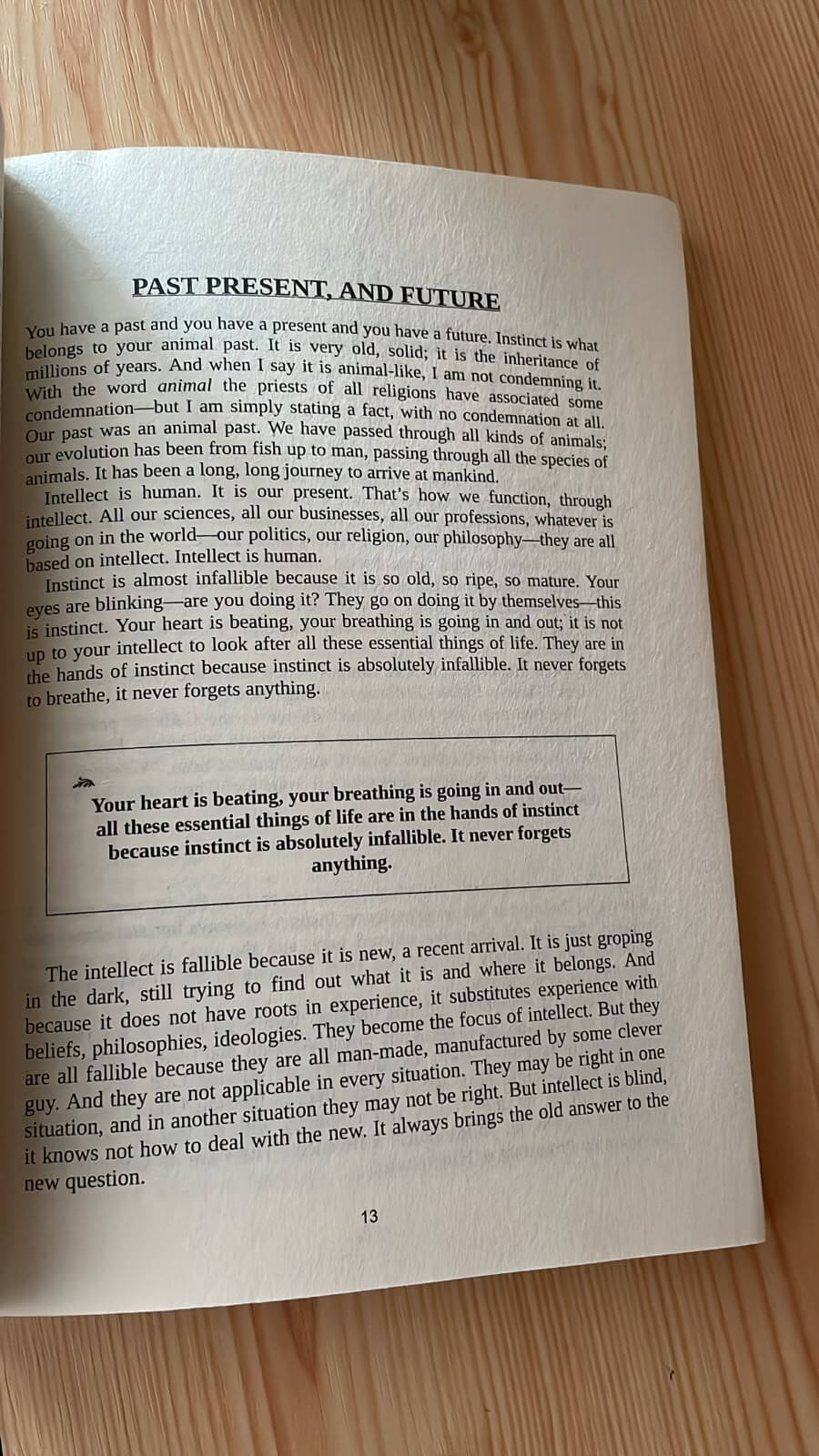
One of the book’s central ideas is Osho’s distinction between three forms of human functioning.
Instinct
Osho connects instinct with the body and natural biological responses.
Intellect
Intellect is associated with the thinking mind, knowledge, logic, analysis and reasoning.
Intuition
Intuition, in Osho’s spiritual framework, represents a deeper or more immediate form of inner understanding.
Macmillan’s official material presents this three-part distinction as one of the key foundations of the book.
The purpose is not simply to reject intelligence or logical thinking.
Instead, Osho asks whether people sometimes become so dependent on analysis that they lose contact with other aspects of their experience.
Intuition Versus Wishful Thinking
An especially useful theme in the book is the difference between intuition and wishful thinking.
A strong desire can feel convincing.
Fear can also create a powerful internal feeling.
Past experience may influence what someone expects to happen.
Osho therefore argues that simply feeling something strongly does not automatically make it intuitive truth.
Macmillan specifically states that the book attempts to help readers distinguish between intuitive insight and wishful thinking that can lead to mistaken choices.
This makes the book less about blindly trusting every feeling and more about developing self-observation.
Social Conditioning
Another major theme is the influence of social conditioning.
According to Osho, people learn ways of thinking and behaving from:
- Family
- School
- Society
- Religion
- Cultural expectations
- Past experiences
- Fear of judgment
Some of these influences may be helpful.
Others may become automatic beliefs that people rarely examine.
Osho encourages readers to ask whether a thought or reaction genuinely reflects their own understanding or whether it has simply been repeated for so long that it feels unquestionable.
Google Books summarises this aspect of the book by noting Osho’s argument that formal education and social conditioning can sometimes lead people to ignore instinctive or intuitive responses.
Meditation and Awareness
Meditation is central to Osho’s approach to intuition.
He argues that constant mental activity can make subtle internal responses harder to notice.
Meditation, in his philosophy, creates an opportunity to observe thoughts without immediately becoming absorbed by them.
The book therefore includes exercises and meditations designed to help readers explore awareness and intuitive experience.
This connects Intuition closely with another title in the series:
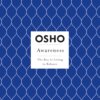
Awareness: The Key to Living in Balance
Both books focus on observation and conscious attention, although Intuition concentrates more specifically on inner knowing and the relationship between instinct and intellect.
Barriers to Knowing
Google Books shows the book organised around major sections including:
- Maps
- Barriers to Knowing
- Strategies
- Afterword
This structure reflects the progression of the book.
First, Osho explains his model of intuition.
He then examines what he believes interferes with it.
Possible barriers discussed include:
- Overthinking
- Fear
- Social conditioning
- Prejudice
- Habit
- Expectations
- Intellectual rigidity
- Desire
- Lack of self-awareness
The later parts explore approaches to becoming more observant of these patterns.
Logic Still Has a Place
The title Knowing Beyond Logic should not be understood as meaning that logic has no value.
Reason and evidence remain essential for many areas of life.
Logical thinking helps people evaluate information, solve problems and make decisions.
The philosophical question Osho asks is different:
Is logical reasoning the only form of human understanding?
His answer is no.
However, readers should distinguish Osho’s spiritual philosophy from scientific evidence.
For important decisions involving health, finance, law, safety or other high-stakes matters, intuition should not replace reliable evidence or appropriate professional advice.
Is Intuition a Psychology Book?
Not primarily.
Although the book discusses:
- Thoughts
- Decisions
- Awareness
- Conditioning
- Habits
- Emotions
- Internal experience
its framework comes mainly from Osho’s spiritual and philosophical teachings, not academic psychology or neuroscience.
For WooCommerce, the most appropriate categories are:
- Self-Help
- Personal Development
- Spirituality
- Meditation & Mindfulness
- Philosophy
It should not be marketed as a clinically proven psychological treatment.
Osho Insights for a New Way of Living
Pan Macmillan currently lists Intuition as Book #6 in the collection.
The sequence includes:
- Courage
- Creativity
- Maturity
- Awareness
- Intimacy
- Intuition
- Freedom
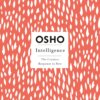
- Intelligence
- Compassion
- Joy
- Trust
- Happiness
- Forgiveness
Because each book explores a separate theme, they can generally be read in any order.
Who Will Enjoy Intuition?
This book may particularly appeal to readers interested in:
- Intuition
- Spirituality
- Meditation
- Self-awareness
- Mindfulness
- Personal growth
- Inner wisdom
- Conscious living
- Philosophy
- Decision-making
- Osho’s teachings
- Reflective self-help
Readers who enjoyed Awareness: The Key to Living in Balance or Joy: The Happiness That Comes from Within may find Intuition a natural next choice.
About Osho
Osho was an Indian spiritual teacher whose talks were later compiled and published extensively in book form.
His books explore subjects such as:
- Meditation
- Awareness
- Freedom
- Love
- Creativity
- Relationships
- Intuition
- Consciousness
- Personal transformation
Macmillan describes his work as focused on inner transformation and spiritual inquiry.
For Sri Lankan readers interested in meditation, spirituality and reflective personal development, Intuition: Knowing Beyond Logic offers an accessible introduction to Osho’s ideas about logic, instinct, awareness and inner experience.
Product Short Description
Explore the relationship between logic, instinct and inner knowing in Intuition: Knowing Beyond Logic by Osho.
Part of the popular Osho Insights for a New Way of Living series, this reflective book examines intuition, social conditioning, meditation, awareness and the difference between intuitive insight and wishful thinking.
Ideal for readers interested in spirituality, meditation, mindfulness, self-awareness and personal growth.
Series: Osho Insights for a New Way of Living
Series Position: #6
Format: Trade Paperback
Pages: 208
Genre: Self-Help / Spirituality / Meditation
Be the first to review “Intuition: Knowing Beyond Logic by Osho”
Related products

Out of stock
Non-Fiction & Knowledge
රු1,900.00
3 X Rs. 633.33 or 8% Cashback with
or 3 X රු633.33 with
or up to 4 X රු475.00 with
-29%
Self-Help & Psychology
Original price was: රු1,750.00.රු1,250.00Current price is: රු1,250.00.
3 X Rs. 416.67 or 8% Cashback with
or 3 X රු416.67 with
or up to 4 X රු312.50 with
-17%
Out of stock
Non-Fiction & Knowledge
Original price was: රු2,900.00.රු2,400.00Current price is: රු2,400.00.
3 X Rs. 800.00 or 8% Cashback with
or 3 X රු800.00 with
or up to 4 X රු600.00 with
Out of stock
Self-Help & Psychology
රු1,500.00
3 X Rs. 500.00 or 8% Cashback with
or 3 X රු500.00 with
or up to 4 X රු375.00 with
-26%
Non-Fiction & Knowledge
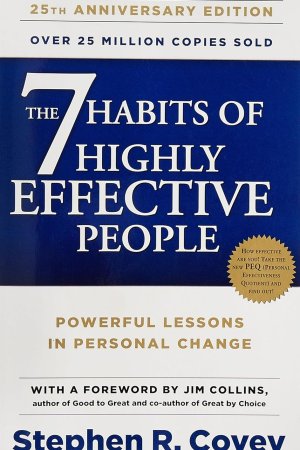
The 7 Habits of Highly Effective People by Stephen R. Covey – Blue Cover
Original price was: රු2,300.00.රු1,700.00Current price is: රු1,700.00.
3 X Rs. 566.67 or 8% Cashback with
or 3 X රු566.67 with
or up to 4 X රු425.00 with
-34%

Self-Help & Psychology
Original price was: රු2,350.00.රු1,550.00Current price is: රු1,550.00.
3 X Rs. 516.67 or 8% Cashback with
or 3 X රු516.67 with
or up to 4 X රු387.50 with
Non-Fiction & Knowledge
රු2,250.00
3 X Rs. 750.00 or 8% Cashback with
or 3 X රු750.00 with
or up to 4 X රු562.50 with
-23%
Non-Fiction & Knowledge
Original price was: රු2,200.00.රු1,700.00Current price is: රු1,700.00.
3 X Rs. 566.67 or 8% Cashback with
or 3 X රු566.67 with
or up to 4 X රු425.00 with
Reviews
There are no reviews yet.