
No products in the cart.
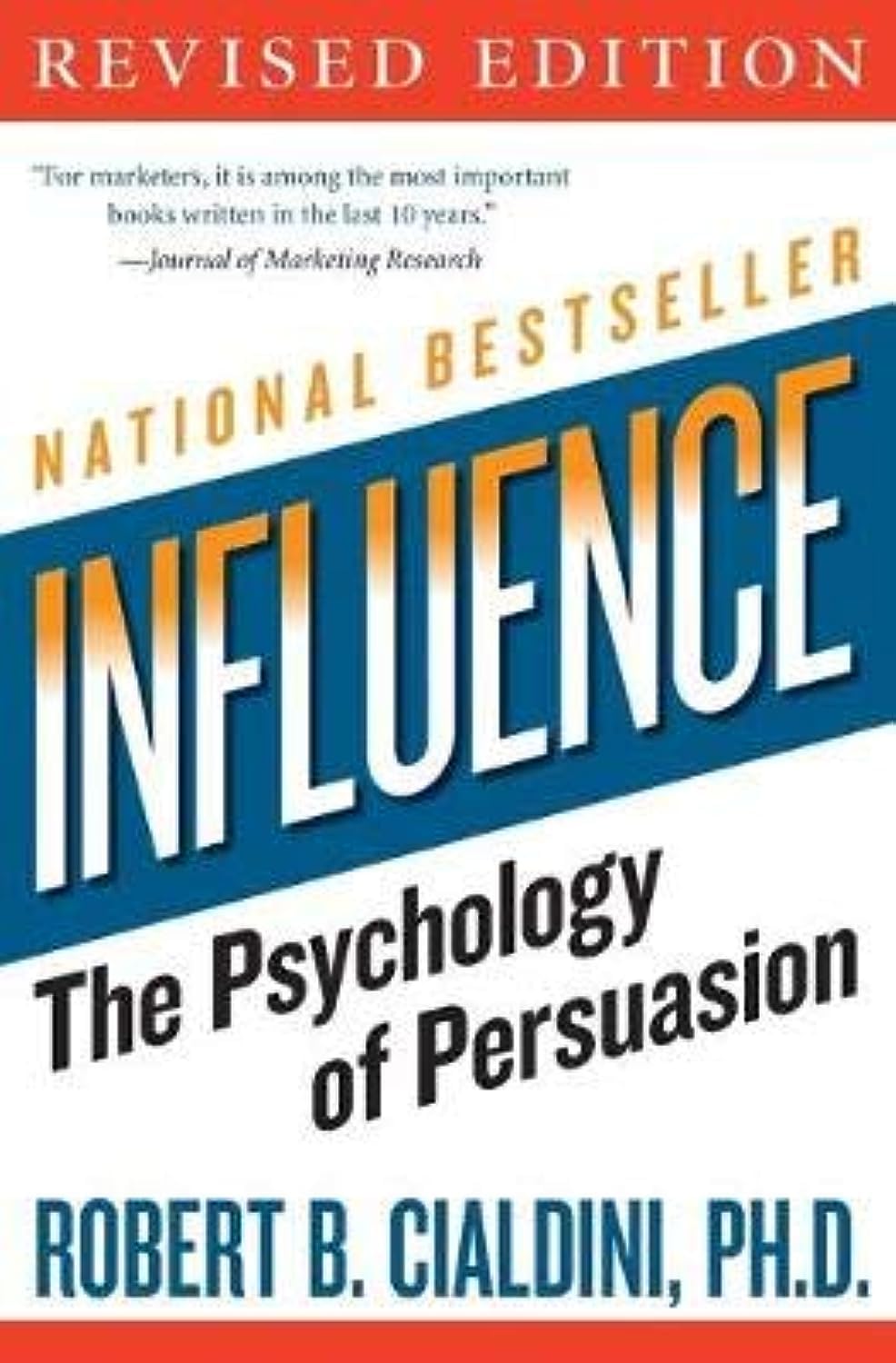
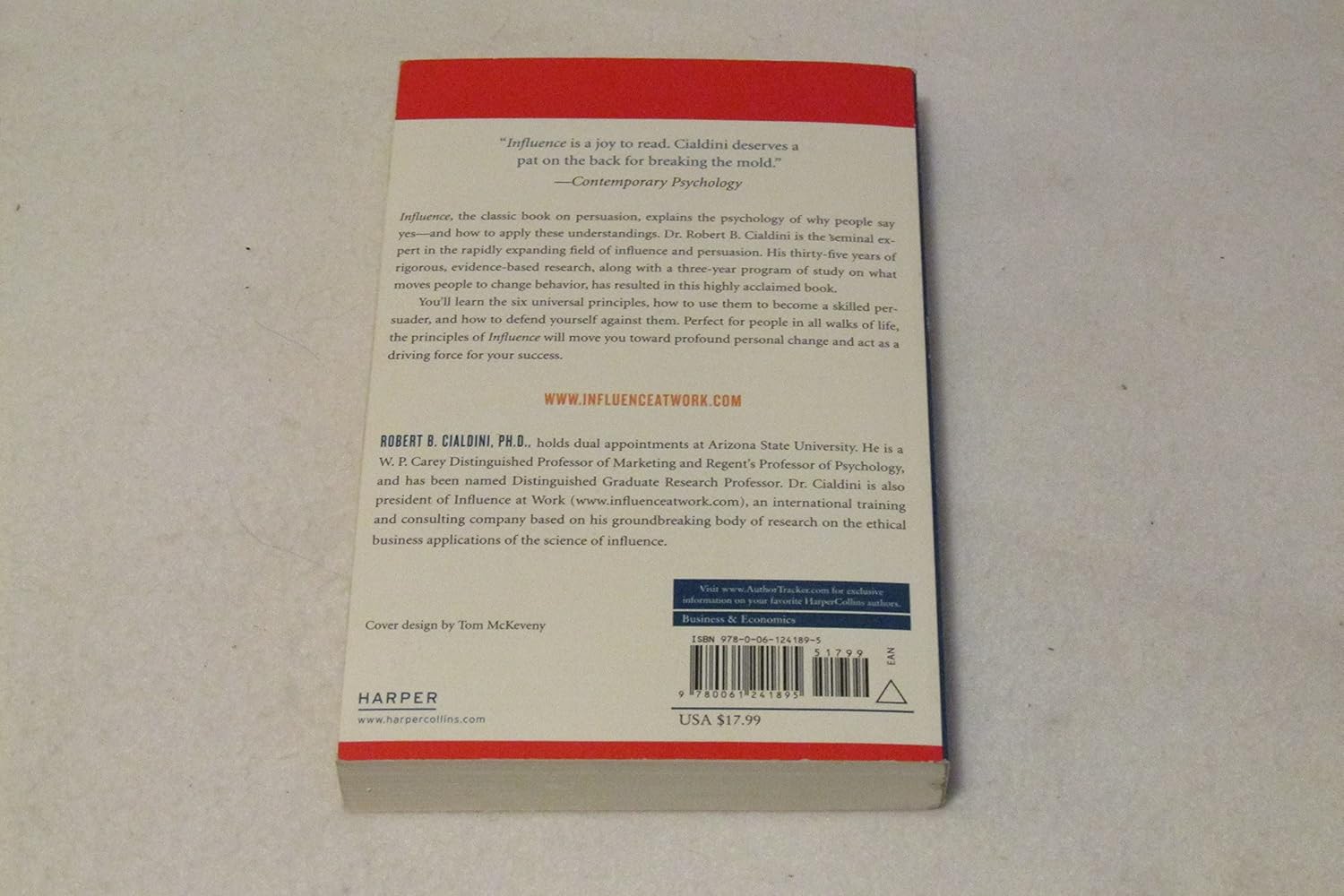

Influence by Robert B. Cialdinin


රු1,800.00
3 X Rs. 600.00 or 8% Cashback with


or 3 X රු600.00 with


or up to 4 X රු450.00 with


Influence: The Psychology of Persuasion by Robert B. Cialdini is a foundational and internationally acclaimed work that explores the science behind why people say yes and how these psychological triggers can be used ethically in communication, persuasion, and decision-making. Drawing on decades of research in psychology, marketing, economics, and real-world observation, Cialdini identifies powerful principles that shape human behavior and explains how they’re used by compliance professionals—such as advertisers, salespeople, fundraisers, and negotiators to influence actions and decisions.
Cialdini guides readers through the mental shortcuts that our brains use to cope with complex social information, showing how these “weapons of influence” can lead to both positive outcomes and unintentional manipulation if misunderstood. Full of compelling examples, case studies, and scientific evidence, the book teaches not only how to apply these principles to persuade others but also how to recognize and defend against undue influence in everyday life
Out of stock
Email when stock available
Influence by Robert Cialdini is one of the most influential books ever written about persuasion, psychology, decision-making, marketing, communication, sales, leadership, negotiation, and understanding why people say yes.
Why do people agree to some requests but reject others?
Why does seeing thousands of positive reviews make a product feel safer to buy?
Why does a limited-time offer suddenly make something more desirable?
Why are we more likely to listen to someone we consider an expert?
Why do free samples make us feel slightly more willing to purchase something?
Robert Cialdini spent years studying these questions.
His work explores the psychological shortcuts people frequently use when making decisions.
Most people imagine that they carefully analyse every decision.
In reality, everyday life contains too many choices for us to examine everything deeply.
We therefore use mental shortcuts.
Sometimes those shortcuts help us make good decisions quickly.
But they can also make us easier to influence.
Influence by Robert Cialdini explains these patterns and shows how understanding them can help readers become more persuasive while also protecting themselves from manipulation.
The book is especially valuable for entrepreneurs, marketers, sales professionals, managers, business owners, negotiators, content creators, students, and anyone who regularly needs to communicate ideas or persuade others.
Influence by Robert Cialdini – Book Overview
Influence by Robert Cialdini examines the science of persuasion.
Cialdini studied why people comply with requests and how professionals in fields such as sales, marketing, fundraising, and advertising use psychological principles to influence decisions.
His research resulted in a framework of universal principles.
The classic edition became widely known for six major principles of influence:
- Reciprocation
- Commitment and Consistency
- Social Proof
- Liking
- Authority
- Scarcity
The new and expanded edition adds a seventh:
- Unity
These principles help explain a remarkable range of everyday behaviour.
Why testimonials influence customers.
Why people want exclusive products.
Why recommendations from friends are powerful.
Why credentials matter.
Why customers may feel more loyal after making a small commitment.
Why people often return favours.
And why shared identity can create strong persuasive influence.
Principle 1 – Reciprocation
The first major principle in Influence by Robert Cialdini is reciprocation.
Human beings commonly feel pressure to return favours.
If someone helps us, we often want to help them.
If someone gives us something, we may feel more willing to give something back.
This principle exists across many cultures and social situations.
Imagine someone unexpectedly buys you coffee.
Later, they ask you for a small favour.
You may feel more willing to help.
The first action created a feeling of obligation.
Businesses use this principle in many ways.
Free samples.
Free consultations.
Helpful educational content.
Free trials.
Complimentary gifts.
Useful guides.
The strongest ethical use of reciprocity begins with providing genuine value.
Give something useful before asking for something in return.
Reciprocity in Marketing
Modern marketing frequently uses reciprocity.
A company might offer:
- A free ebook
- A useful checklist
- A free consultation
- A free trial
- Educational videos
- Helpful advice
- A sample product
Customers receive value without immediately paying.
That positive experience may make them more receptive to a later offer.
But Influence by Robert Cialdini also helps readers recognize the difference between ethical persuasion and manipulation.
The principle should not be used to create unfair pressure.
Instead, genuine generosity can build trust.
Principle 2 – Commitment and Consistency
People generally want their actions to appear consistent with previous decisions.
This forms another major principle in Influence by Robert Cialdini.
Once someone makes a commitment, they may feel motivated to behave consistently with it.
Consider a simple example.
Someone publicly says:
“I am going to exercise three times every week.”
Making that statement can increase the psychological pressure to actually do it.
This principle can also influence purchasing behaviour.
A customer who makes a small commitment may later become more willing to make a larger one.
For example:
Signing up for updates.
Creating an account.
Adding something to a wishlist.
Joining a loyalty program.
Trying a free version.
Each action creates involvement.
Small Commitments Can Become Powerful
Large requests can feel intimidating.
Small commitments feel easier.
That is why marketers, salespeople, coaches, and organizations often begin with small actions.
Influence by Robert Cialdini explains that once people choose something voluntarily, they often begin seeing themselves as the kind of person who supports that choice.
A reader who joins a reading challenge may begin thinking:
“I am someone who reads regularly.”
That identity can influence future behaviour.
Ethically, this principle can help people maintain positive habits.
But it can also be misused.
Understanding the principle helps readers notice when previous commitments are influencing decisions that should be reconsidered.
Principle 3 – Social Proof
One of the most recognizable principles in Influence by Robert Cialdini is social proof.
When people are uncertain about what to do, they often look at what others are doing.
Imagine choosing between two restaurants.
One is empty.
The other has a queue outside.
Without knowing anything else, many people assume the busy restaurant is probably better.
That is social proof.
We see it constantly online.
Reviews.
Star ratings.
Testimonials.
Customer numbers.
Follower counts.
Bestseller labels.
Trending products.
Most-purchased lists.
Social proof reduces uncertainty.
If thousands of other people selected something, the decision can feel safer.
Why Reviews Matter
Online shopping provides a perfect example.
A customer sees two similar products.
One has no reviews.
The other has hundreds of positive reviews.
Which feels safer?
Usually the second.
Influence by Robert Cialdini explains why people frequently use other people’s behaviour as evidence.
This is particularly powerful when we believe the other people are similar to us.
For example:
“Students like you loved this course.”
“Thousands of parents recommend this book.”
“Most customers in your area choose this option.”
Similarity makes social proof stronger.
Principle 4 – Liking
People are generally more easily influenced by people they like.
This sounds obvious.
But Influence by Robert Cialdini explores why liking has such a strong psychological effect.
We may like someone because of:
- Similarity
- Familiarity
- Compliments
- Cooperation
- Shared interests
- Positive associations
- Physical attractiveness
- Personality
Imagine receiving the same recommendation from two people.
One is someone you trust and enjoy speaking with.
The other is someone you dislike.
Even if both recommendations contain identical information, they may not feel equally persuasive.
Relationships influence decisions.
Similarity Creates Connection
Similarity is particularly powerful.
People often feel more comfortable with others who share something with them.
Same university.
Same hometown.
Same hobby.
Same profession.
Same favourite sport.
Same reading interests.
Influence by Robert Cialdini shows that even small similarities can make communication feel more natural.
This has an important business lesson.
Customers do not want to feel like anonymous numbers.
Understanding their needs, interests, and experiences can create genuine connection.
Principle 5 – Authority
People frequently trust experts.
Doctors.
Scientists.
Professors.
Experienced professionals.
Certified specialists.
This is the authority principle explored in Influence by Robert Cialdini.
Authority can help people make decisions when they lack specialist knowledge.
Imagine needing medical advice.
You are more likely to trust a qualified doctor than a random stranger.
This shortcut is useful because nobody can become an expert in everything.
However, symbols of authority can sometimes influence us even when expertise has not been properly verified.
Titles.
Uniforms.
Certificates.
Professional language.
Prestigious organizations.
Understanding authority helps people ask an important question:
Is this person genuinely qualified in the area where I am being asked to trust them?
Authority in Business
Businesses often demonstrate authority through:
- Professional certifications
- Awards
- Expert endorsements
- Experience
- Research
- Media coverage
- Industry recognition
- Qualifications
These signals can reduce uncertainty.
But Influence by Robert Cialdini encourages ethical use.
Real expertise should be demonstrated honestly.
Pretending to have authority is manipulation.
Principle 6 – Scarcity
People often want something more when they believe it is limited.
This is scarcity.
Examples include:
“Only 3 left.”
“Limited edition.”
“Offer ends tonight.”
“Only 20 seats available.”
“Registration closes Friday.”
The object itself may not have changed.
What changed is its availability.
Influence by Robert Cialdini explains that limited availability can increase perceived value.
People dislike losing opportunities.
Sometimes the possibility of missing something becomes more motivating than the possibility of gaining it.
Why Limited-Time Offers Work
Imagine a book normally costs Rs. 3,000.
You have considered buying it for weeks.
Then you see:
15% OFF – TODAY ONLY
Suddenly the decision feels more urgent.
Why?
Tomorrow the opportunity may disappear.
That is scarcity.
Used ethically, scarcity simply communicates real limitations.
Limited stock.
Real deadlines.
Real capacity.
Artificially creating fake scarcity can damage trust.
Principle 7 – Unity
The expanded edition of Influence by Robert Cialdini introduces Unity as an additional principle.
Unity goes deeper than simply liking someone.
It is about shared identity.
People may become more open to influence when they feel:
“This person is one of us.”
Family.
Nationality.
Community.
Profession.
Team.
Culture.
Shared experience.
Shared identity creates stronger psychological connection.
For example, alumni of the same university may immediately feel some level of connection even if they have never met.
Fans of the same sports team may do the same.
Unity demonstrates how identity can influence trust and cooperation.
Influence Is Not the Same as Manipulation
One of the most important lessons in Influence by Robert Cialdini is the distinction between ethical influence and manipulation.
Influence can help someone make a useful decision.
Manipulation tries to exploit someone.
Ethical persuasion uses truthful information.
The customer should still benefit.
The person being influenced should maintain genuine choice.
That distinction matters enormously.
Understanding persuasion gives people power.
How that power is used becomes an ethical question.
Protect Yourself From Manipulation
The book is not useful only for people who want to become more persuasive.
It can also help readers recognize when someone else is influencing them.
Before making an important decision, ask:
Am I choosing this because it genuinely fits my needs?
Or because everyone else seems to be buying it?
Am I rushing because the offer is genuinely limited?
Or because someone created artificial urgency?
Am I trusting this person because they are actually an expert?
Or because they simply look authoritative?
Understanding persuasion creates awareness.
And awareness can improve decision-making.
Influence in Sales
Sales professionals can benefit greatly from Influence by Robert Cialdini.
Effective selling should not simply mean pressuring people.
Strong sales often involves understanding:
What customers need.
Why they hesitate.
What reduces risk.
What creates trust.
What information helps them decide.
For example, social proof can help uncertain customers.
Authority can establish credibility.
Reciprocity can build goodwill.
Commitment can encourage progress.
Scarcity can communicate genuine urgency.
Used correctly, these principles can help customers make decisions rather than force decisions upon them.
Influence in Marketing
Marketing is another obvious application.
Influence by Robert Cialdini can help marketers understand why certain messages perform better than others.
Testimonials use social proof.
Expert recommendations use authority.
Limited offers use scarcity.
Free valuable content can use reciprocity.
Brand communities can create unity.
Consistent customer actions can build commitment.
Influencer partnerships often rely partly on liking.
Once you understand these mechanisms, advertising begins to look different.
You start noticing the psychology behind campaigns.
Influence in Leadership
Leadership also involves persuasion.
Managers cannot solve every problem simply by giving orders.
Teams need:
Trust.
Motivation.
Communication.
Direction.
Commitment.
Influence by Robert Cialdini can help leaders understand why people support certain ideas.
A leader who develops trust and credibility may become more persuasive than someone who depends only on job title.
Authority based on expertise can be stronger than authority based only on hierarchy.
Shared identity can create unity.
Small commitments can help teams move toward larger goals.
Influence in Negotiation
Negotiation requires understanding human behaviour.
Price is only one part.
Trust matters.
Timing matters.
Relationships matter.
Perceived alternatives matter.
Commitment matters.
Influence by Robert Cialdini provides useful psychological concepts for anyone involved in negotiation.
A negotiator who understands persuasion can communicate proposals more effectively while also recognizing tactics used by the other side.
Influence in Everyday Life
Persuasion happens constantly outside business.
Parents persuade children.
Children persuade parents.
Friends influence friends.
Teachers influence students.
Couples negotiate decisions.
Communities influence behaviour.
Social media influences opinions.
Influence by Robert Cialdini helps readers understand these everyday interactions.
The principles are not limited to selling products.
They describe patterns of human behaviour.
Why Social Media Is Built Around Influence
Social media makes Cialdini’s ideas especially visible.
Think about the signals platforms display:
Likes.
Comments.
Followers.
Shares.
Trending topics.
Verified badges.
Influencer endorsements.
Limited drops.
Community identities.
Many of these connect directly with principles discussed in Influence by Robert Cialdini.
A post with thousands of likes feels more important.
That is social proof.
A recommendation from a trusted creator uses liking and authority.
A limited product drop uses scarcity.
A fan community uses unity.
Understanding these principles can make people more conscious digital consumers.
Influence and Consumer Psychology
Consumers rarely make decisions using logic alone.
Emotion matters.
Trust matters.
Familiarity matters.
Other people’s behaviour matters.
Fear of missing out matters.
Influence by Robert Cialdini helps explain why.
This does not mean people are irrational.
Mental shortcuts often save time.
The problem appears when those shortcuts are deliberately exploited.
Learning consumer psychology therefore helps both marketers and customers.
Why People Follow the Crowd
Social proof becomes especially powerful under uncertainty.
Imagine visiting a new city.
You know nothing about the restaurants.
Seeing a crowded restaurant provides information.
Maybe the crowd knows something you do not.
That assumption is often reasonable.
But crowds can also be wrong.
Influence by Robert Cialdini encourages readers to notice when they are borrowing other people’s judgment instead of forming their own.
Why Expertise Matters
Modern life is incredibly complex.
Medicine.
Finance.
Technology.
Law.
Engineering.
Business.
People need experts.
Authority therefore plays an essential social role.
But authority should be verified.
A person may be extremely knowledgeable in one area and know very little about another.
Influence by Robert Cialdini helps readers distinguish genuine expertise from superficial authority signals.
Why We Hate Losing Opportunities
Scarcity connects strongly to fear of missing out.
People frequently dislike losing opportunities more than they enjoy gaining equivalent ones.
That is why phrases such as:
“Last chance.”
“Almost sold out.”
“Final day.”
can feel so powerful.
The emotional reaction can happen before careful reasoning.
Understanding this helps consumers slow down before making unnecessary purchases.
Persuasion and Trust
Trust is central to long-term influence.
You may manipulate someone once.
But repeated relationships require credibility.
Influence by Robert Cialdini emphasizes principles that work especially well when used honestly.
A trusted business can build long-term customer relationships.
A trusted leader can inspire teams.
A trusted salesperson can receive repeat customers and referrals.
Influence based on deception eventually destroys itself.
Persuasion Is a Skill
Some people naturally appear persuasive.
But persuasion can also be studied.
Understanding psychology improves communication.
Instead of simply repeating the same message louder, effective persuaders consider the decision from the other person’s perspective.
What does this person need to know?
What concerns do they have?
What evidence would help?
Which information creates trust?
Influence by Robert Cialdini turns persuasion from a mysterious talent into something that can be understood systematically.
7 Powerful Principles From Influence
The new and expanded Influence by Robert Cialdini centres on seven major principles:
- Reciprocation – People often feel motivated to return value they have received.
- Commitment and Consistency – People generally prefer behaving consistently with previous commitments and identities.
- Social Proof – When uncertain, people frequently look to others for guidance.
- Liking – We are more easily influenced by people we know, like, trust, or identify with.
- Authority – Genuine expertise and credibility can strongly influence decisions.
- Scarcity – Limited availability can make opportunities feel more valuable.
- Unity – Shared identity can create powerful connection and influence.
Understanding these principles can help readers communicate more effectively while also becoming more resistant to unethical persuasion.
Why Read Influence by Robert Cialdini?
Influence by Robert Cialdini is an excellent choice for readers interested in:
- Psychology
- Persuasion
- Marketing
- Sales
- Business
- Communication
- Consumer behaviour
- Negotiation
- Leadership
- Decision-making
- Advertising
- Entrepreneurship
- Behavioural psychology
- Social psychology
- Personal development
The book is especially useful because its ideas can be applied across many different areas.
Who Should Read This Book?
Influence by Robert Cialdini may especially appeal to:
- Entrepreneurs
- Business owners
- Marketing professionals
- Sales professionals
- Managers
- Leaders
- Negotiators
- Students
- Psychology readers
- Content creators
- Advertisers
- Customer-service professionals
- HR professionals
- Consultants
- Anyone interested in human behaviour
It is also valuable for ordinary consumers who want to understand the psychological techniques influencing everyday decisions.
A Powerful Guide to the Psychology of Persuasion
Influence by Robert Cialdini changes the way readers look at everyday decisions.
The free sample at a supermarket.
The thousands of positive reviews beside a product.
The expert endorsement in an advertisement.
The limited-stock notification.
The recommendation from a friend.
The loyalty program asking you to take one small first step.
These are not random.
They connect with predictable patterns in human psychology.
Cialdini’s framework helps readers recognize those patterns.
More importantly, it shows how they can be used ethically.
Persuasion does not need to mean manipulation.
It can mean presenting genuine value in a way that makes decisions clearer and easier.
For entrepreneurs, marketers, leaders, sales professionals, negotiators, students, and anyone interested in psychology and human behaviour, Influence by Robert Cialdini remains an essential guide to understanding why people say yes—and how to become both a more ethical persuader and a more informed decision-maker.
Learn more about Influence by Robert B. Cialdini on the official Pearson website.
Explore more psychology and personal development books at Bargain Books.
| Author | Robert B. Cialdinin |
|---|---|
| Language | English |
| Type | Paperback Printed Book (Second Quality Copy) |
Be the first to review “Influence by Robert B. Cialdinin”
Related products
-14%

Out of stock
Self-Help & Psychology
Original price was: රු2,900.00.රු2,500.00Current price is: රු2,500.00.
3 X Rs. 833.33 or 8% Cashback with
or 3 X රු833.33 with
or up to 4 X රු625.00 with
Non-Fiction & Knowledge
රු2,250.00
3 X Rs. 750.00 or 8% Cashback with
or 3 X රු750.00 with
or up to 4 X රු562.50 with
-19%

Out of stock
Non-Fiction & Knowledge
Original price was: රු2,650.00.රු2,150.00Current price is: රු2,150.00.
3 X Rs. 716.67 or 8% Cashback with
or 3 X රු716.67 with
or up to 4 X රු537.50 with
-24%
Out of stock
Non-Fiction & Knowledge
Original price was: රු2,100.00.රු1,600.00Current price is: රු1,600.00.
3 X Rs. 533.33 or 8% Cashback with
or 3 X රු533.33 with
or up to 4 X රු400.00 with

Out of stock
Autobiography
රු2,750.00
3 X Rs. 916.67 or 8% Cashback with
or 3 X රු916.67 with
or up to 4 X රු687.50 with
-34%

Non-Fiction & Knowledge
Original price was: රු2,250.00.රු1,490.00Current price is: රු1,490.00.
3 X Rs. 496.67 or 8% Cashback with
or 3 X රු496.67 with
or up to 4 X රු372.50 with
-24%

Non-Fiction & Knowledge
Original price was: රු2,300.00.රු1,750.00Current price is: රු1,750.00.
3 X Rs. 583.33 or 8% Cashback with
or 3 X රු583.33 with
or up to 4 X රු437.50 with
-33%

Self-Help & Psychology
Original price was: රු2,300.00.රු1,550.00Current price is: රු1,550.00.
3 X Rs. 516.67 or 8% Cashback with
or 3 X රු516.67 with
or up to 4 X රු387.50 with
Reviews
There are no reviews yet.