
No products in the cart.
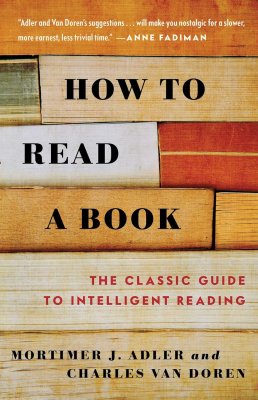
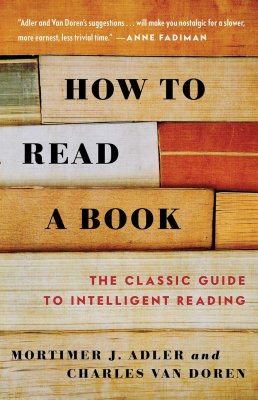
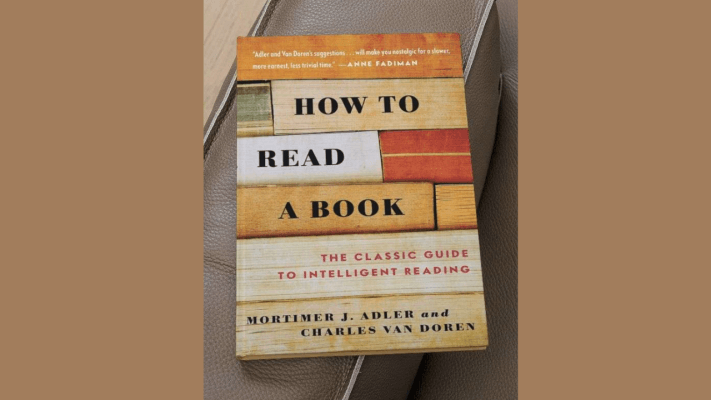
How To Read A Book (a guide to improve elementary reading skills) By Mortimer J. Adler and Charles Van Doren

රු2,100.00
3 X Rs. 700.00 or 8% Cashback with


or 3 X රු700.00 with


or up to 4 X රු525.00 with


How to Read a Book by Mortimer J. Adler and Charles Van Doren is a classic guide to intelligent reading that teaches inspectional, analytical, and syntopical reading, helping readers improve comprehension, critical thinking, note-taking, research, and their ability to understand challenging books.
Out of stock
Email when stock available
How to Read a Book by Mortimer J. Adler and Charles Van Doren is a classic guide to becoming a more intelligent, active, and thoughtful reader. Rather than simply encouraging people to read more books, it teaches readers how to understand books more deeply.
Many people learn how to recognize words and read sentences at school.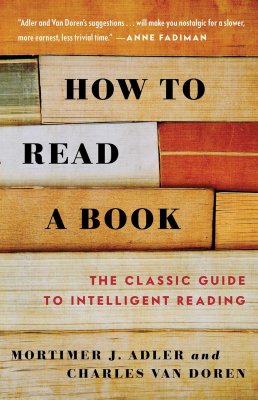
But reading a difficult book is a different skill.
A reader may finish hundreds of pages and remember very little.
They may understand the individual sentences but fail to understand the author’s central argument.
They may highlight dozens of passages without knowing which ideas actually matter.
How to Read a Book by Mortimer J. Adler and Charles Van Doren addresses these problems by treating reading as an active intellectual skill that can be improved through practice.
The authors explain that different books require different reading techniques.
A novel should not necessarily be approached in exactly the same way as a history book.
A philosophy book requires different questions from a practical business book.
And sometimes the reader does not need to study every page with equal intensity.
Learning how to choose the right reading method can dramatically improve comprehension, efficiency, and critical thinking.
How to Read a Book by Mortimer J. Adler and Charles Van Doren – Book Overview
How to Read a Book by Mortimer J. Adler and Charles Van Doren introduces several levels of reading that represent increasingly advanced ways of understanding written material.
These include:
- Elementary reading
- Inspectional reading
- Analytical reading
- Syntopical reading
Each level has a different purpose.
Elementary reading focuses on understanding the words and sentences.
Inspectional reading helps readers quickly understand what a book is about.
Analytical reading involves studying a book deeply.
Syntopical reading involves comparing multiple books about the same subject.
The authors show readers when each approach is useful and how to move from basic comprehension toward deeper intellectual engagement.
The First Level – Elementary Reading
Elementary reading is the basic ability to understand written language.
Most people develop this skill during childhood.
At this level, the main question is:
What does this sentence say?
Readers identify words, understand grammar, and follow basic meaning.
Although elementary reading seems simple, it forms the foundation for everything that follows.
Without strong basic comprehension, advanced reading becomes much more difficult.
How to Read a Book by Mortimer J. Adler and Charles Van Doren begins with this level because sophisticated reading still depends on accurate understanding of language.
But the authors make it clear that simply being able to read sentences does not automatically make someone an effective reader of difficult books.
Inspectional Reading
Inspectional reading is one of the most immediately useful techniques in How to Read a Book by Mortimer J. Adler and Charles Van Doren.
The goal is to understand the basic structure and purpose of a book within a limited amount of time.
Instead of immediately starting on page one and reading every sentence, the reader first examines the book strategically.
This may involve looking at:
- The title
- Subtitle
- Table of contents
- Preface
- Introduction
- Chapter headings
- Index
- Publisher description
- Important sections
- Conclusion
The goal is to answer several questions.
What kind of book is this?
What subject does it cover?
How is it organized?
What is the author trying to accomplish?
This process gives readers a mental map before they begin deeper reading.
Learn to Skim Intelligently
Skimming is often misunderstood as careless reading.
How to Read a Book by Mortimer J. Adler and Charles Van Doren shows that intelligent skimming can actually be an important reading skill.
Suppose you have a 500-page book.
Before spending ten or fifteen hours reading it carefully, you may want to determine whether it contains the information you need.
Inspectional reading helps accomplish this.
You can examine headings, introductions, summaries, and key passages.
You may also read several pages quickly without stopping whenever something becomes difficult.
This gives you an overall sense of the book.
Later, if the book deserves deeper attention, you can return for analytical reading.
Analytical Reading
Analytical reading is the heart of How to Read a Book by Mortimer J. Adler and Charles Van Doren.
This level involves reading a book carefully and systematically.
The purpose is not simply to collect information.
It is to understand what the author is saying and why.
Analytical readers ask questions.
What problem is the author trying to solve?
What is the central argument?
What important terms does the author use?
What evidence supports the argument?
How are the chapters connected?
What conclusions does the author reach?
Do those conclusions follow logically?
Analytical reading turns reading from passive consumption into active intellectual work.
Identify What the Book Is About
One important skill taught in How to Read a Book by Mortimer J. Adler and Charles Van Doren is identifying the central subject of a book.
Many books contain hundreds of ideas.
But usually there is a larger purpose connecting them.
A reader should eventually be able to explain the book in a short statement.
What is the author trying to accomplish?
If you cannot answer that question after reading the book, you may have understood individual sections without understanding the whole.
The authors therefore encourage readers to think about structure.
Which chapters are most important?
How do they fit together?
Which ideas support other ideas?
Understanding structure makes complex books much easier to remember.
Find the Author’s Main Argument
Books often contain claims.
Some claims are more important than others.
How to Read a Book by Mortimer J. Adler and Charles Van Doren encourages readers to identify the propositions and arguments that form the foundation of a nonfiction work.
For example, imagine reading a business book.
The author might argue that a particular management strategy increases productivity.
The reader should ask:
What exactly is the claim?
What evidence supports it?
What assumptions does it depend on?
Are there exceptions?
Could another explanation produce the same results?
This approach prevents readers from accepting ideas simply because they appear in a published book.
Reading critically means understanding first and judging afterward.
Understand Before You Criticize
One of the most valuable lessons in How to Read a Book by Mortimer J. Adler and Charles Van Doren is that criticism should come after understanding.
People sometimes disagree with an author before they have fully understood the argument.
That creates weak criticism.
A thoughtful reader should first be able to explain the author’s position fairly.
Only then should they decide whether they agree or disagree.
This principle is useful far beyond books.
It improves:
- Academic discussions
- Debates
- Business meetings
- Online conversations
- Political discussions
- Personal disagreements
Understanding another person’s position does not require agreeing with it.
It simply creates a stronger foundation for meaningful criticism.
Ask Questions While Reading
Passive reading often causes information to disappear quickly.
Active reading works differently.
How to Read a Book by Mortimer J. Adler and Charles Van Doren encourages readers to constantly ask questions.
Important questions include:
- What is the book about?
- What is the author saying in detail?
- Is the author’s argument convincing?
- Why does this information matter?
These questions force the mind to interact with the text.
Instead of simply moving your eyes from one line to another, you search for meaning.
That makes reading more mentally demanding.
But it also improves understanding.
Write in Your Books
The authors encourage active engagement with books.
For readers who own their copies and are comfortable annotating them, this may include:
- Underlining important statements
- Writing questions in margins
- Circling key terms
- Numbering arguments
- Connecting related passages
- Writing short summaries
- Recording disagreements
The purpose is not to make every page colourful.
Annotation should support thinking.
A book filled with highlights is not necessarily a book that has been understood.
The important question is whether the notes help you identify the author’s ideas and remember your own reactions.
Improve Reading Comprehension
Reading comprehension is one of the central purposes of How to Read a Book by Mortimer J. Adler and Charles Van Doren.
Poor comprehension often happens because readers move through material too quickly without checking whether they understand it.
The authors encourage readers to slow down when necessary.
Some paragraphs deserve several readings.
Some chapters may require notes.
Important terminology may need to be defined.
At the same time, not every part of every book requires maximum concentration.
A skilled reader learns when to speed up and when to slow down.
This flexible approach can make reading both faster and more effective.
Different Books Require Different Methods
A major strength of How to Read a Book by Mortimer J. Adler and Charles Van Doren is its recognition that not every book should be approached identically.
The authors discuss reading techniques for different kinds of material, including:
- Practical books
- History
- Science
- Mathematics
- Philosophy
- Social science
- Fiction
- Plays
- Poetry
A practical book usually contains recommendations about what people should do.
A history book attempts to explain events.
A philosophical work may investigate fundamental ideas.
A novel creates an imaginative experience.
Readers should therefore adjust their expectations and questions according to the kind of book they are reading.
Reading Practical Books
Practical books are designed to help readers take action.
Business books, self-development books, productivity books, and instructional guides often belong to this category.
When reading them, readers should ask:
What problem is this book trying to solve?
What action does the author recommend?
What results are expected?
Do the recommendations apply to my circumstances?
How to Read a Book by Mortimer J. Adler and Charles Van Doren helps readers understand that practical knowledge becomes useful only when it influences action.
Simply understanding a productivity method does not automatically make someone productive.
The reader must decide whether and how to apply the idea.
Reading Fiction and Literature
Imaginative literature requires a different approach.
A novel is not simply a collection of arguments.
It creates characters, settings, emotions, conflicts, and experiences.
Readers should allow themselves to enter the fictional world.
Constantly stopping to analyse every sentence may destroy the reading experience.
After understanding the story, deeper analysis can follow.
What themes appear?
How do characters change?
What conflicts drive the story?
What does the ending suggest?
This balance between experience and analysis helps readers appreciate literature more deeply.
Reading History
Historical writing also requires special attention.
History involves both events and interpretation.
Two historians may describe the same period differently.
A thoughtful reader should therefore ask:
Which events does the author emphasize?
Which sources are being used?
What explanation is offered?
Are alternative explanations possible?
Understanding historical writing requires recognizing that authors organize facts into narratives.
The way events are selected and connected can influence how readers understand the past.
Reading Philosophy
Philosophy can be among the most challenging types of reading.
How to Read a Book by Mortimer J. Adler and Charles Van Doren encourages readers to identify philosophical questions clearly.
A philosopher may ask:
What is knowledge?
What is justice?
What makes an action moral?
What is freedom?
Because philosophical arguments often depend on precise definitions, readers need to pay close attention to terminology.
A single word may have a very specific meaning within the author’s argument.
Syntopical Reading
Syntopical reading is the most advanced level discussed in How to Read a Book by Mortimer J. Adler and Charles Van Doren.
Instead of deeply reading only one book, the reader examines multiple books about the same subject.
Imagine studying leadership.
You might read ten important leadership books.
Each author may define leadership differently.
Some may emphasize communication.
Others focus on strategy.
Others emphasize psychology, culture, or decision-making.
Syntopical reading involves comparing these viewpoints.
The reader identifies common questions and analyses how different authors answer them.
At this level, the reader’s own investigation becomes more important than any single book.
Compare Multiple Authors
Syntopical reading is especially valuable for research.
Suppose you want to understand artificial intelligence.
Reading one book gives you one author’s perspective.
Reading several books reveals disagreements.
One expert may emphasize technological benefits.
Another may emphasize economic risks.
Another may focus on ethics.
Another may study technical limitations.
Comparing those perspectives produces a broader understanding than simply accepting one source.
This is why How to Read a Book by Mortimer J. Adler and Charles Van Doren can be particularly useful for students, researchers, and serious lifelong learners.
Become an Active Reader
The central message of How to Read a Book by Mortimer J. Adler and Charles Van Doren is that good reading is active.
A passive reader asks:
“What does the book say?”
An active reader goes further.
“What does the author mean?”
“How does the argument work?”
“Is the evidence convincing?”
“What do I agree with?”
“What do I disagree with?”
“How does this connect with something else I have read?”
This type of reading transforms books from sources of information into tools for thinking.
Reading for Information vs Understanding
The authors also distinguish between reading for information and reading for understanding.
Sometimes we read something we already understand reasonably well and simply acquire new facts.
That is reading for information.
More challenging books can stretch our understanding.
They contain ideas that initially seem difficult.
Working through those books can teach us something we could not have understood before.
This is reading for greater understanding.
How to Read a Book by Mortimer J. Adler and Charles Van Doren is especially concerned with this second type.
The authors want readers to become capable of learning from books that are more difficult than the material they normally read.
7 Powerful Lessons From How to Read a Book
How to Read a Book by Mortimer J. Adler and Charles Van Doren offers many useful techniques, but seven lessons stand out:
- Not every book requires the same reading method – Adjust your approach according to purpose and difficulty.
- Inspect before reading deeply – Understand the structure before investing significant time.
- Read actively – Ask questions instead of simply moving through words.
- Find the main argument – Identify what the author is actually trying to prove.
- Understand before criticizing – Fair criticism requires accurate comprehension.
- Take useful notes – Engage with ideas rather than highlighting everything.
- Compare multiple books – Syntopical reading creates deeper understanding of complex subjects.
Why Read How to Read a Book by Mortimer J. Adler and Charles Van Doren?
How to Read a Book by Mortimer J. Adler and Charles Van Doren is an excellent choice for readers interested in:
- Reading comprehension
- Critical thinking
- Active reading
- Studying effectively
- Analytical reading
- Learning from books
- Research skills
- Note-taking
- Lifelong learning
- Academic reading
- Philosophy
- Literature
- Self-education
- Intellectual development
- Better study habits
It can transform the way readers approach difficult material.
Who Should Read This Book?
How to Read a Book by Mortimer J. Adler and Charles Van Doren may especially appeal to:
- University students
- School students
- Teachers
- Researchers
- Academics
- Book lovers
- Lifelong learners
- Writers
- Professionals
- Philosophy readers
- Literature students
- People preparing for exams
- Readers interested in critical thinking
- Anyone wanting to understand books more deeply
It is particularly useful for people who read regularly but feel they forget too much of what they read.
A Powerful Guide to Intelligent Reading
How to Read a Book by Mortimer J. Adler and Charles Van Doren teaches that becoming a better reader is not primarily about increasing the number of books you finish.
It is about improving what happens while you read.
Can you identify the central idea?
Can you understand the author’s argument?
Can you recognize important terms?
Can you distinguish evidence from opinion?
Can you explain the book clearly afterward?
Can you evaluate whether the author’s conclusions are convincing?
And can you connect the ideas with other books?
These are the skills that transform reading into serious learning.
By introducing elementary, inspectional, analytical, and syntopical reading, How to Read a Book by Mortimer J. Adler and Charles Van Doren gives readers a systematic framework for becoming more thoughtful and independent learners.
For students, researchers, professionals, lifelong learners, and anyone who wants to get more knowledge and understanding from the books they read, this classic guide remains a valuable introduction to the art of intelligent reading.
Learn more about How to Read a Book by Mortimer J. Adler and Charles Van Doren on the official Simon & Schuster website.
Explore more personal development and educational books at Bargain Books.
Be the first to review “How To Read A Book (a guide to improve elementary reading skills) By Mortimer J. Adler and Charles Van Doren”
Related products
Non-Fiction & Knowledge
රු2,450.00
3 X Rs. 816.67 or 8% Cashback with
or 3 X රු816.67 with
or up to 4 X රු612.50 with
-28%
Self-Help & Psychology
Original price was: රු1,800.00.රු1,300.00Current price is: රු1,300.00.
3 X Rs. 433.33 or 8% Cashback with
or 3 X රු433.33 with
or up to 4 X රු325.00 with
-19%
Out of stock
Non-Fiction & Knowledge
Original price was: රු2,650.00.රු2,150.00Current price is: රු2,150.00.
3 X Rs. 716.67 or 8% Cashback with
or 3 X රු716.67 with
or up to 4 X රු537.50 with
Out of stock
Non-Fiction & Knowledge
රු1,600.00
3 X Rs. 533.33 or 8% Cashback with
or 3 X රු533.33 with
or up to 4 X රු400.00 with
Out of stock
Self-Help & Psychology
රු1,900.00
3 X Rs. 633.33 or 8% Cashback with
or 3 X රු633.33 with
or up to 4 X රු475.00 with
-24%
Out of stock
Non-Fiction & Knowledge
Original price was: රු2,100.00.රු1,600.00Current price is: රු1,600.00.
3 X Rs. 533.33 or 8% Cashback with
or 3 X රු533.33 with
or up to 4 X රු400.00 with
-39%
Out of stock
Self-Help & Psychology
Original price was: රු2,450.00.රු1,500.00Current price is: රු1,500.00.
3 X Rs. 500.00 or 8% Cashback with
or 3 X රු500.00 with
or up to 4 X රු375.00 with
-24%
Out of stock
Non-Fiction & Knowledge
Original price was: රු2,500.00.රු1,900.00Current price is: රු1,900.00.
3 X Rs. 633.33 or 8% Cashback with
or 3 X රු633.33 with
or up to 4 X රු475.00 with
Reviews
There are no reviews yet.