
No products in the cart.
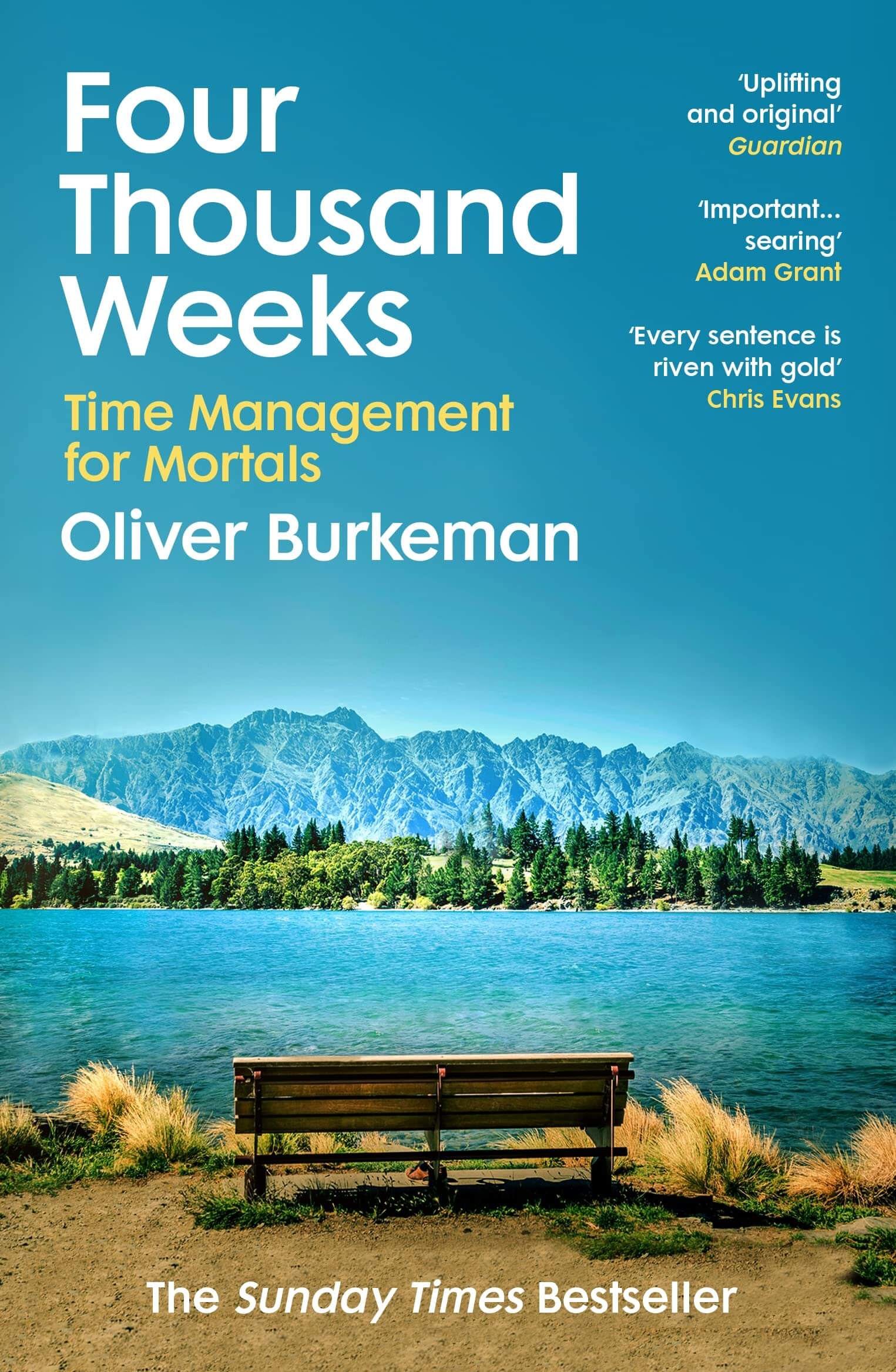
Four Thousand Weeks by Oliver Burkeman – Time Management for Mortals

රු1,750.00
3 X Rs. 583.33 or 8% Cashback with


or 3 X රු583.33 with


or up to 4 X රු437.50 with


Four Thousand Weeks: Time Management for Mortals by Oliver Burkeman is an internationally bestselling personal development book that challenges conventional ideas about productivity and teaches readers how to make the most of their limited time.
If you live to approximately eighty years old, your entire life will consist of just over four thousand weeks.
Yet most people spend their lives struggling with endless to-do lists, demanding schedules, overflowing inboxes and the constant pressure to accomplish more.
What if the solution isn’t becoming more productive, but accepting that you simply cannot do everything?
Drawing on philosophy, psychology and timeless wisdom, Oliver Burkeman offers a refreshing approach to time management.
Rather than promising ways to complete every task, he encourages readers to embrace their limitations, identify meaningful priorities and live more fully in the present.
Product Highlights:
- Written by bestselling author Oliver Burkeman
- A Sunday Times bestselling nonfiction book
- Challenges traditional productivity and time-management advice
- Explores the importance of accepting life’s limitations
- Encourages meaningful priorities and intentional living
- Discusses procrastination, distraction, patience and mortality
- Combines philosophy, psychology and practical reflection
- Ideal for students, entrepreneurs and busy professionals
- Perfect for readers of Essentialism and The Daily Stoic
- An insightful guide to living a more meaningful life
Buy Four Thousand Weeks by Oliver Burkeman online in Sri Lanka from Book Lounge and discover a refreshing approach to productivity, time and the art of living.
8 in stock
Four Thousand Weeks by Oliver Burkeman – Time Management for Mortals
Four Thousand Weeks by Oliver Burkeman is a thought-provoking and internationally bestselling personal development book that challenges everything we think we know about productivity, time management and living a meaningful life.
What if the secret to making better use of your time wasn’t learning how to do more, but finally accepting that you cannot do everything?
The average human lifespan of approximately eighty years contains just over four thousand weeks. When considered this way, life suddenly feels extraordinarily short.
Yet most people spend their days attempting to complete endless tasks, meet impossible deadlines, achieve ambitious goals and keep up with an ever-growing list of responsibilities.
Modern productivity culture encourages us to become more efficient. We download planning apps, organise complicated schedules, develop morning routines and search for techniques to accomplish more in less time.
But despite these efforts, many people feel busier and more overwhelmed than ever.
In Four Thousand Weeks: Time Management for Mortals, Oliver Burkeman offers a radically different perspective.
Rather than promising a system that will help readers accomplish everything, he explores why the desire for complete control over time may be one of the main reasons we feel constantly stressed.
Drawing on philosophy, psychology, history and the experiences of thinkers from different traditions, Burkeman encourages readers to embrace the limitations of human life.
His message is both challenging and reassuring: you cannot do everything, and accepting that reality can help you focus on what truly matters.
This refreshing approach makes Four Thousand Weeks much more than a conventional productivity guide. It is a thoughtful exploration of how to spend a finite life with greater intention, presence and meaning.
Why Four Thousand Weeks?
The title comes from a surprisingly simple observation.
If someone lives for approximately eighty years, their life will last around four thousand weeks.
That may sound like a substantial amount of time.
However, when compared with the seemingly endless possibilities available in the world, it becomes clear that every human life is limited.
There will always be more books to read, places to visit, skills to learn, people to meet and projects to complete than a person can realistically experience.
Burkeman argues that this limitation is not simply a problem to be solved.
It is a fundamental part of being human.
By recognising that our time is finite, we may become more thoughtful about how we use it.
Instead of attempting to accomplish everything, we can begin deciding which experiences and responsibilities deserve our attention.
Rethinking Traditional Time Management
Most productivity books promise to help readers become more efficient.
They recommend better schedules, faster methods, improved organisation and techniques for eliminating distractions.
Although these approaches can sometimes be useful, Burkeman questions the assumption that greater efficiency will automatically create a more satisfying life.
Completing tasks faster may simply create opportunities to accept additional tasks.
An empty inbox may quickly fill again.
A carefully organised schedule can become crowded with new obligations.
The more efficiently someone works, the more other people may expect them to accomplish.
Four Thousand Weeks encourages readers to question the belief that productivity should be measured by the number of tasks completed.
Instead, it suggests focusing on whether the activities we choose are worth doing.
The Myth of Getting Everything Done
Many people secretly hope that one day they will finally finish their responsibilities.
Their inbox will be empty.
Their projects will be complete.
Their home will be perfectly organised.
Their schedule will contain enough free time for everything they want to enjoy.
Burkeman explains why this imagined future rarely arrives.
Life continuously creates new responsibilities and opportunities.
Finishing one task does not eliminate the possibility of another.
As a result, treating complete productivity as the foundation of happiness can create constant dissatisfaction.
The book encourages readers to accept that some tasks will remain unfinished.
This does not necessarily represent failure.
It is simply the reality of having limited time.
Learning to Embrace Your Limits
Accepting limitations is one of the central ideas in Four Thousand Weeks.
Modern culture often celebrates the idea that people can achieve almost anything through sufficient effort, discipline and planning.
While ambition can be valuable, unlimited expectations may create unnecessary pressure.
Burkeman encourages readers to recognise the boundaries of their time, energy and attention.
Every decision involves choosing one activity instead of another.
By accepting that trade-offs are unavoidable, individuals may become more comfortable making meaningful choices.
Instead of seeing limitations only as obstacles, the book presents them as conditions that give our decisions significance.
The Importance of Choosing What Matters
When time is limited, priorities become essential.
However, deciding what matters most can be difficult.
People frequently feel pressure to pursue professional success, financial security, strong relationships, personal hobbies, health and numerous other objectives simultaneously.
These goals may all be valuable, but they cannot always receive equal attention.
Four Thousand Weeks encourages readers to make deliberate choices.
This may involve concentrating on a smaller number of meaningful projects.
It may require accepting that certain opportunities will be missed.
It may also mean declining responsibilities that do not align with personal priorities.
The book challenges the assumption that a successful life requires maximising every possibility.
The Art of Doing Less
Doing less can feel uncomfortable in a society that celebrates busyness.
People may associate productivity with self-worth.
A packed schedule can appear to demonstrate ambition and importance.
However, constant activity does not necessarily produce meaningful progress.
Burkeman explores the possibility that reducing commitments can create greater satisfaction.
By choosing fewer priorities, individuals may give more attention to each one.
This approach can be relevant to work, education, family life and creative pursuits.
The goal is not to become passive.
It is to direct effort toward activities that genuinely deserve it.
Overcoming the Fear of Missing Out
Modern life offers an extraordinary number of possibilities.
Social media exposes people to other individuals’ achievements, travel experiences, careers and lifestyles.
This can create the impression that everyone else is doing more.
Fear of missing out may encourage people to fill their schedules with activities they do not truly value.
Burkeman suggests that missing out is unavoidable.
Every choice involves not choosing countless alternatives.
Recognising this can reduce the pressure to experience everything.
Rather than attempting to avoid every missed opportunity, readers can focus on appreciating the experiences they actually choose.
Living in the Present Moment
People often approach the present as something that must be used to prepare for the future.
They work hard now so that they can relax later.
They postpone enjoyable experiences until their responsibilities are complete.
They treat today’s activities primarily as steps toward tomorrow’s achievements.
Burkeman questions whether this approach allows us to fully experience life.
The future is important, but it is not the only source of meaning.
Some activities deserve attention because they are valuable in the present.
Spending time with family, enjoying a conversation or engaging in a creative activity can be worthwhile without producing a measurable achievement.
The book encourages readers to experience the present instead of constantly treating it as preparation for something else.
Why Productivity Can Become a Trap
Productivity systems can provide useful organisation.
However, they may also encourage the belief that life can eventually be brought under complete control.
Burkeman examines how the pursuit of efficiency can become self-defeating.
The desire to avoid wasting time may create anxiety about every unproductive moment.
Leisure activities can become another form of achievement.
Even rest may be evaluated according to how effectively it prepares someone for future work.
The book challenges this way of thinking.
It encourages readers to recognise that life is not simply a series of tasks awaiting completion.
Attention and the Challenge of Distraction
Attention is one of the most valuable resources we possess.
Yet modern technology creates constant opportunities for distraction.
Notifications, emails, social media and entertainment platforms compete for our focus.
Burkeman explores why distraction is not merely a problem of insufficient self-discipline.
Sometimes people seek distraction because concentrating on meaningful work requires confronting uncertainty and discomfort.
A difficult project may reveal our limitations.
An important decision may create anxiety.
Digital distractions offer an easy escape from these feelings.
The book encourages readers to develop a more thoughtful relationship with attention.
By recognising why we avoid certain activities, we may become better equipped to engage with them.
The Value of Patience
Modern culture places great importance on speed.
People expect immediate responses, rapid results and efficient processes.
Waiting can feel like wasted time.
Burkeman challenges this impatience.
Some worthwhile experiences require time that cannot easily be shortened.
Developing a skill, building a meaningful relationship or completing a creative project may involve slow progress.
Attempting to accelerate everything can reduce the satisfaction gained from the process.
The book explores how patience can become an important part of living well.
Why Rest Should Not Always Be Productive
Many people feel uncomfortable when they are not accomplishing something.
They may approach hobbies, exercise or leisure primarily as methods for improving future performance.
A walk becomes a productivity technique.
A holiday becomes an opportunity to recharge for work.
Even relaxation becomes another responsibility.
Four Thousand Weeks encourages readers to reconsider this attitude.
Rest and leisure can have value independently of professional achievement.
Enjoying an activity simply because it is enjoyable is not necessarily a misuse of time.
The book invites readers to create space for experiences that do not need to produce measurable results.
Meaningful Relationships and Shared Time
Relationships require attention.
Friendships, family connections and romantic partnerships cannot be maintained solely through efficient planning.
They involve conversation, patience and shared experiences.
Burkeman explores how individual control over time has limitations because our lives are connected to those of others.
Meaningful relationships often require coordinating schedules and accepting circumstances that cannot be optimised.
The book encourages readers to recognise the importance of shared time.
A life filled with personal achievements may still feel incomplete without meaningful human connections.
Mortality and the Meaning of Life
Mortality is central to the philosophy of Four Thousand Weeks.
The awareness that life will eventually end can be unsettling.
However, Burkeman presents this awareness as an opportunity to reconsider our priorities.
When we acknowledge that time is finite, everyday choices become more meaningful.
We may become more willing to focus on important relationships.
We may reconsider professional ambitions that no longer reflect our values.
We may appreciate experiences that previously seemed ordinary.
The book does not suggest that thinking about mortality automatically produces happiness.
Instead, it explores how accepting life’s limits can encourage a more intentional approach to living.
A Different Approach to Success
Success is often measured through achievements, income, professional recognition and visible progress.
These goals may be important.
However, Burkeman questions whether constantly pursuing more can lead to lasting satisfaction.
The book encourages readers to develop their own understanding of a meaningful life.
For some, this may involve creative work.
For others, it may mean raising a family, contributing to a community or developing close friendships.
The central idea is that worthwhile living cannot be reduced to a universal productivity formula.
Time Management for Students
Students frequently experience pressure from assignments, examinations and personal expectations.
They may feel that every available hour should be devoted to studying or improving their future opportunities.
Four Thousand Weeks offers a useful perspective on these challenges.
Rather than attempting to master every subject or opportunity simultaneously, students can consider which priorities deserve attention.
The book encourages realistic expectations and the acceptance that learning requires time.
Its ideas may also help readers think more carefully about the relationship between education, ambition and personal wellbeing.
Lessons for Entrepreneurs and Professionals
Business owners and professionals often face an endless stream of responsibilities.
Emails, meetings, customer requests, financial decisions and operational problems can consume entire days.
The feeling of never finishing work is common.
Burkeman’s approach challenges the belief that better efficiency will eventually eliminate this pressure.
Instead, it encourages leaders to establish clearer priorities.
Not every opportunity requires immediate action.
Not every task deserves equal attention.
Some responsibilities must be delegated, postponed or declined.
The book’s philosophy may be especially useful for individuals who struggle to separate professional demands from the rest of their lives.
Productivity Without Constant Pressure
The book does not argue that planning or organisation is useless.
Instead, it questions the expectations people attach to productivity systems.
A calendar can help manage appointments.
A task list can support memory.
A schedule can make it easier to focus on important work.
However, none of these tools can create unlimited time.
Burkeman encourages readers to use organisational methods while accepting that some uncertainty and incompleteness will remain.
This creates a more realistic approach to personal effectiveness.
The Influence of Philosophy and Psychology
Four Thousand Weeks draws inspiration from a wide range of philosophical and psychological perspectives.
Burkeman explores how different thinkers have approached the challenges of time, attention, mortality and personal meaning.
The book connects these insights with everyday experiences.
Rather than presenting abstract concepts without practical relevance, it uses philosophical ideas to question familiar assumptions about productivity.
Readers who enjoy reflective nonfiction will appreciate the combination of intellectual exploration and accessible writing.
A Refreshing Alternative to Traditional Self-Help
Many self-help books promise dramatic improvement through a particular system or routine.
Four Thousand Weeks offers something different.
It encourages readers to become more comfortable with the imperfect nature of human life.
Instead of promising total control, it explores the freedom that may come from accepting uncertainty.
Instead of encouraging endless achievement, it examines the value of choosing meaningful commitments.
Instead of treating every minute as an opportunity for optimisation, it invites readers to recognise the importance of simply being alive.
This thoughtful perspective distinguishes the book from conventional time-management guides.
Why Read Four Thousand Weeks?
Four Thousand Weeks is ideal for readers who feel overwhelmed by busy schedules, endless responsibilities or the pressure to accomplish more.
Its ideas encourage a more balanced relationship with time.
The book challenges unrealistic productivity expectations.
It explores the importance of attention, patience and meaningful priorities.
It also invites readers to consider how an awareness of mortality can influence everyday decisions.
Through engaging arguments and accessible philosophical insights, Oliver Burkeman offers a different way to think about success and living well.
Who Should Read This Book?
Four Thousand Weeks by Oliver Burkeman is recommended for readers interested in:
- Time management and productivity
- Personal development and self-improvement
- Work-life balance and meaningful living
- Philosophy and psychology
- Overcoming perfectionism and overcommitment
- Developing focus and attention
- Reducing the pressure to accomplish everything
- Building a more intentional lifestyle
Readers who enjoy The Daily Stoic, Essentialism, Deep Work, The Subtle Art of Not Giving a Fck* and The Psychology of Money may appreciate its reflective approach to everyday decisions.
About the Author – Oliver Burkeman
Oliver Burkeman is a British journalist and internationally bestselling nonfiction author known for his writing on psychology, productivity, happiness and the meaning of life.
For many years, he wrote the popular Guardian column This Column Will Change Your Life, in which he explored psychological research and unconventional approaches to personal development.
He is also the author of The Antidote: Happiness for People Who Can’t Stand Positive Thinking and Meditations for Mortals.
His work challenges popular assumptions about achievement, positive thinking and modern productivity culture.
Through thoughtful writing and philosophical exploration, Burkeman encourages readers to reconsider how they approach time and personal fulfilment.
Buy Four Thousand Weeks in Sri Lanka
Four Thousand Weeks by Oliver Burkeman is a valuable addition to any personal development, philosophy or productivity collection.
Be the first to review “Four Thousand Weeks by Oliver Burkeman – Time Management for Mortals”
Related products
-34%
Out of stock
Non-Fiction & Knowledge
Original price was: රු2,650.00.රු1,750.00Current price is: රු1,750.00.
3 X Rs. 583.33 or 8% Cashback with
or 3 X රු583.33 with
or up to 4 X රු437.50 with
-24%
Out of stock
Non-Fiction & Knowledge
Original price was: රු2,100.00.රු1,600.00Current price is: රු1,600.00.
3 X Rs. 533.33 or 8% Cashback with
or 3 X රු533.33 with
or up to 4 X රු400.00 with

Out of stock
Autobiography
රු2,750.00
3 X Rs. 916.67 or 8% Cashback with
or 3 X රු916.67 with
or up to 4 X රු687.50 with
Self-Help & Psychology
රු2,550.00
3 X Rs. 850.00 or 8% Cashback with
or 3 X රු850.00 with
or up to 4 X රු637.50 with
-24%
Non-Fiction & Knowledge
Original price was: රු2,300.00.රු1,750.00Current price is: රු1,750.00.
3 X Rs. 583.33 or 8% Cashback with
or 3 X රු583.33 with
or up to 4 X රු437.50 with
Non-Fiction & Knowledge
රු1,650.00
3 X Rs. 550.00 or 8% Cashback with
or 3 X රු550.00 with
or up to 4 X රු412.50 with

Self-Help & Psychology
රු1,500.00
3 X Rs. 500.00 or 8% Cashback with
or 3 X රු500.00 with
or up to 4 X රු375.00 with
Non-Fiction & Knowledge
රු2,450.00
3 X Rs. 816.67 or 8% Cashback with
or 3 X රු816.67 with
or up to 4 X රු612.50 with
Reviews
There are no reviews yet.