
No products in the cart.
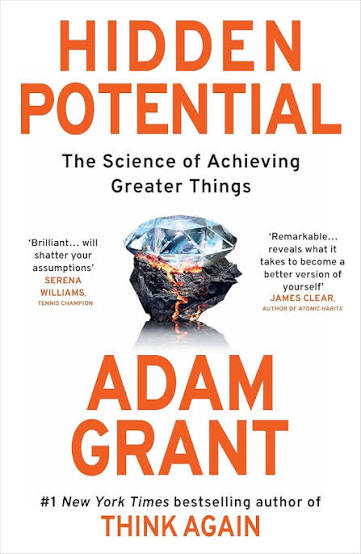
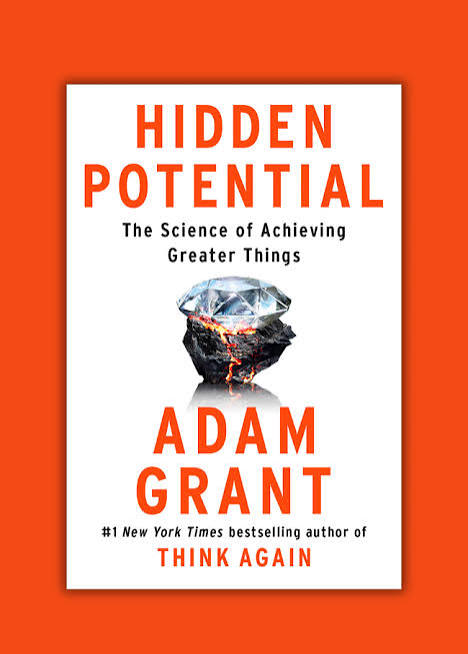
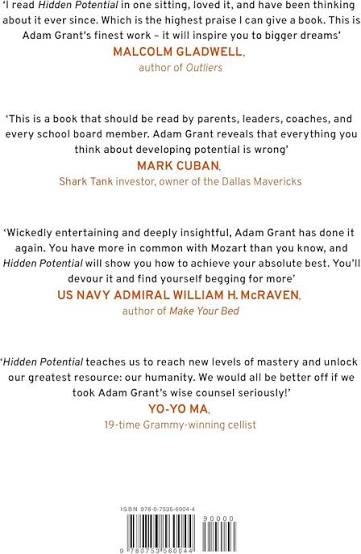
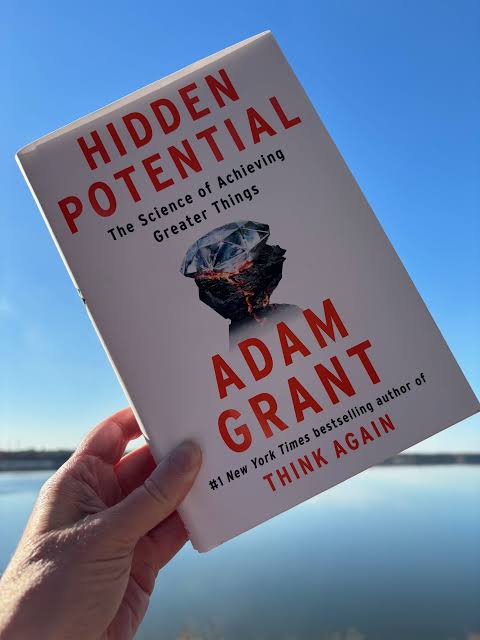
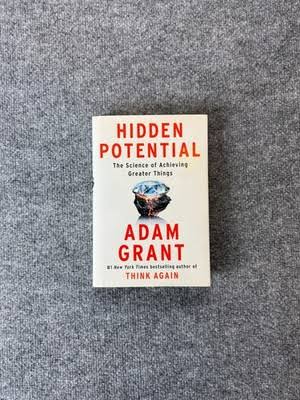

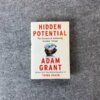
Hidden Potential: The Science of Achieving Greater Things by Adam Grant – Hardcover

රු2,900.00
3 X Rs. 966.67 or 8% Cashback with


or 3 X රු966.67 with


or up to 4 X රු725.00 with


Hidden Potential by Adam Grant explores why talent alone does not determine success.
Discover how character, learning, motivation, feedback and opportunity can help people achieve far more than their starting point might suggest.
Perfect for readers interested in psychology, personal development, leadership, education and professional growth.
Author: Adam Grant
Format: Hardcover
Pages: 304
Genre: Psychology / Personal Development / Business
3 in stock
Hidden Potential: The Science of Achieving Greater Things by Adam Grant – Hardcover
Discover How Much You Are Capable of Becoming
Hidden Potential: The Science of Achieving Greater Things by Adam Grant challenges one of the most common assumptions about success:
That the people who achieve the most are simply the people who started with the most talent.
Grant argues that this view overlooks something far more important.
How much a person can grow.
We often admire people who seem naturally gifted—exceptional students, athletes, musicians, entrepreneurs and leaders.
But starting ahead does not always determine where someone finishes.
In Hidden Potential, Adam Grant explores how people can develop abilities that initially seem beyond their reach by improving the way they learn, building strong character skills and creating better environments for growth.
Penguin describes the book as a framework for raising aspirations and exceeding expectations, with Grant arguing that progress depends less on natural genius than on how effectively people learn and develop.
Potential Is Not Where You Start
One of the central ideas in the book is that potential should not be measured only by someone’s current performance.
A person who starts ahead may improve very little.
Someone who starts behind may grow dramatically.
Grant encourages readers to pay attention to:
- Progress
- Learning ability
- Character
- Opportunity
- Motivation
- Persistence
- Environment
The distance travelled can sometimes tell us more than the starting position.
This changes the way we think about talent.
Instead of asking:
“How gifted is this person?”
we can ask:
“How much can this person learn and improve?”
Character Skills Matter
Grant distinguishes between personality and character skills.
Personality describes tendencies.
Character skills involve learned capacities that can help people respond effectively when situations become difficult.
These can include qualities such as:
- Determination
- Discipline
- Proactivity
- Adaptability
- Curiosity
- Courage
- Persistence
The important point is that many of these abilities can be developed.
That means improvement is not limited to people who appear naturally confident, brilliant or talented.
Learning How to Learn
One of the strongest themes in Hidden Potential is that success depends not only on working hard but on learning effectively.
Doing the same thing repeatedly does not automatically produce progress.
People improve faster when they learn how to:
- Seek useful feedback
- Experiment
- Recognise weaknesses
- Adjust strategies
- Learn from mistakes
- Use deliberate practice
- Stay open to new approaches
Grant uses research and real-world stories to show that becoming a better learner can be more valuable than simply trying to work longer or harder.
The Importance of Discomfort
Growth often requires people to do things that initially feel uncomfortable.
Learning a language means making mistakes.
Developing leadership skills may require difficult conversations.
Becoming better at public speaking requires speaking before you feel completely ready.
Grant argues that discomfort is not always evidence that something is going wrong.
Sometimes it is evidence that learning is happening.
The challenge is distinguishing useful discomfort from pointless struggle.
Becoming a Human Sponge
The book explores how people can become more receptive to knowledge and feedback.
Instead of treating criticism as a personal attack, effective learners try to extract useful information from it.
This does not mean accepting every piece of advice.
It means learning how to identify feedback that can help you improve.
The strongest learners are often not the people who already know the most.
They are the people who remain willing to learn.
Motivation and Progress
Motivation is easier when progress feels visible.
Large goals can sometimes feel overwhelming because the final destination appears far away.
Grant explores ways to maintain momentum by focusing on smaller steps and recognising improvement.
This is useful for people working toward:
- Career goals
- Academic goals
- Business growth
- Fitness
- Creative projects
- New skills
- Leadership development
Progress can become its own source of motivation.
Opportunity Matters Too
The book is not simply about individual effort.
Grant also examines the systems surrounding people.
Talent can remain hidden when individuals lack:
- Good teachers
- Mentors
- Resources
- Support
- Opportunities
- Fair evaluation
He argues that schools, workplaces and organisations can improve when they stop judging people only by their current performance and begin looking more carefully at growth and potential.
This makes the book especially relevant to:
- Managers
- Teachers
- Coaches
- Parents
- HR professionals
- Team leaders
Rethinking Selection
Organisations often try to identify the “best” candidate based on existing achievements.
But this may favour people who already had better opportunities.
Grant explores whether organisations should pay more attention to:
trajectory rather than starting point.
Someone who has repeatedly improved despite difficult circumstances may demonstrate significant future potential.
This has implications for hiring, education, leadership development and talent management.
Hidden Potential at Work
For professionals, the book offers useful ideas about:
- Building stronger teams
- Developing employees
- Giving feedback
- Recognising overlooked talent
- Creating learning cultures
- Improving leadership
- Supporting growth
Leaders who assume talent is fixed may invest only in people who already look successful.
Leaders who understand potential differently may discover valuable ability in people who were previously underestimated.
Hidden Potential in Education
The book also considers how schools and teachers evaluate students.
Grades and test results show current performance.
They do not always reveal how far a student can progress.
Grant encourages educators to consider growth, motivation and learning habits alongside conventional measures of ability.
This can help create environments where more students have the opportunity to improve.
Main Ideas in Hidden Potential
1. Potential Is About Growth
What matters is not only where you begin but how far you can develop.
2. Character Skills Can Be Learned
Important qualities for achievement are not necessarily fixed at birth.
3. Improve How You Learn
Better learning strategies can matter more than simply working harder.
4. Seek Useful Feedback
Feedback can reveal opportunities for improvement that are difficult to see alone.
5. Get Comfortable With Productive Discomfort
Learning often requires temporary uncertainty and difficulty.
6. Build Better Systems
People are more likely to reach their potential when institutions create meaningful opportunities.
7. Look for Trajectory
Past achievement is not the only indicator of future success.
Major Themes
Growth
The book focuses on improvement rather than fixed talent.
Learning
Effective learning is presented as a major driver of achievement.
Character
Character skills can help people continue improving even when progress becomes difficult.
Motivation
Progress, support and meaningful goals can strengthen motivation.
Opportunity
People cannot develop potential without environments that allow them to learn.
Leadership
Leaders can help uncover and develop ability in others.
Education
Schools can improve when they focus not only on achievement but also on growth.
Who Will Benefit From Hidden Potential?
This book may especially appeal to:
- Students
- Teachers
- Managers
- Entrepreneurs
- Business owners
- Leaders
- Coaches
- Parents
- HR professionals
- Team leaders
- Personal-development readers
- Psychology readers
- Anyone learning a new skill
It is particularly relevant to readers who enjoyed books about growth mindset, habits, leadership, psychology and performance.
Is Hidden Potential Part of a Series?
No.
Hidden Potential is a standalone nonfiction book.
Readers do not need to read Adam Grant’s previous books first.
However, readers who enjoy it may also like:
- Think Again
- Originals
- Give and Take
- Option B
About Adam Grant
Adam Grant is an organisational psychologist at the Wharton School and the author of several bestselling books about motivation, work, creativity, learning and human behaviour.
Penguin identifies him as an organisational psychologist whose work examines areas including motivation, success, character and change.
His books include:
- Give and Take
- Originals
- Think Again
- Hidden Potential
For Sri Lankan readers interested in personal development, leadership, psychology, learning and professional growth, Hidden Potential offers an evidence-informed way to think differently about achievement.
Be the first to review “Hidden Potential: The Science of Achieving Greater Things by Adam Grant – Hardcover”
Related products

Non-Fiction & Knowledge
රු1,500.00
3 X Rs. 500.00 or 8% Cashback with
or 3 X රු500.00 with
or up to 4 X රු375.00 with
Self-Help & Psychology
රු1,750.00
3 X Rs. 583.33 or 8% Cashback with
or 3 X රු583.33 with
or up to 4 X රු437.50 with
-24%
Non-Fiction & Knowledge
Original price was: රු2,300.00.රු1,750.00Current price is: රු1,750.00.
3 X Rs. 583.33 or 8% Cashback with
or 3 X රු583.33 with
or up to 4 X රු437.50 with
-21%
Non-Fiction & Knowledge
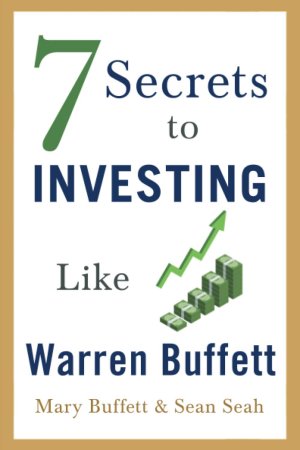
7 Secrets to Investing Like Warren Buffett by Mary Buffett & Sean Seah
Original price was: රු1,900.00.රු1,500.00Current price is: රු1,500.00.
3 X Rs. 500.00 or 8% Cashback with
or 3 X රු500.00 with
or up to 4 X රු375.00 with

Self-Help & Psychology
රු1,750.00
3 X Rs. 583.33 or 8% Cashback with
or 3 X රු583.33 with
or up to 4 X රු437.50 with
-13%

Out of stock
Non-Fiction & Knowledge
Original price was: රු3,900.00.රු3,400.00Current price is: රු3,400.00.
3 X Rs. 1,133.33 or 8% Cashback with
or 3 X රු1,133.33 with
or up to 4 X රු850.00 with
Non-Fiction & Knowledge
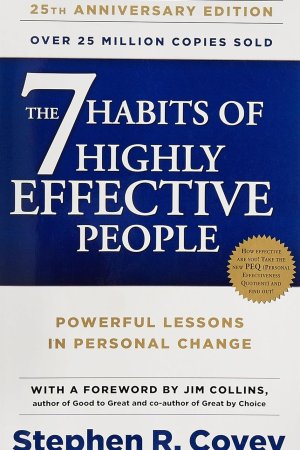
The 7 Habits of Highly Effective People by Stephen R. Covey – Blue Cover
රු1,900.00
3 X Rs. 633.33 or 8% Cashback with
or 3 X රු633.33 with
or up to 4 X රු475.00 with
Self-Help & Psychology
රු1,500.00
3 X Rs. 500.00 or 8% Cashback with
or 3 X රු500.00 with
or up to 4 X රු375.00 with
Reviews
There are no reviews yet.