
No products in the cart.
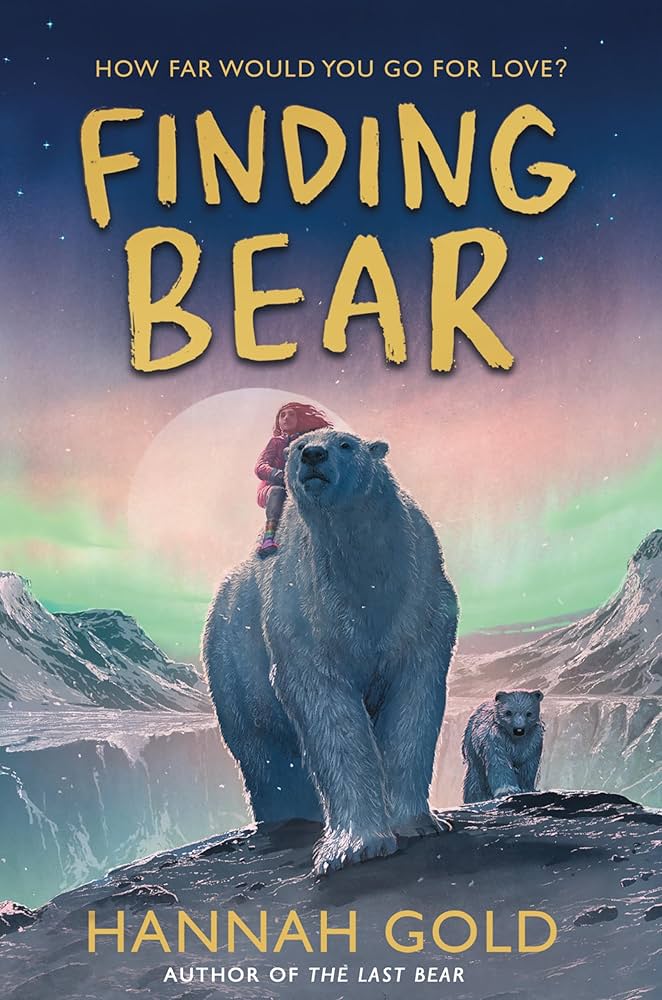








Finding Bear by Hannah Gold


රු1,950.00
3 X Rs. 650.00 or 8% Cashback with


or 3 X රු650.00 with


or up to 4 X රු487.50 with


Finding Bear is a heartfelt children’s adventure novel that continues the journey of a boy and his deep connection with nature. Written by Hannah Gold, the story blends friendship, environmental awareness, and emotional growth. Rather than just an animal story, the book explores themes of responsibility, loss, and the powerful bond between humans and the natural world.
Out of stock
Email when stock available
Finding Bear by Hannah Gold
Finding Bear by Hannah Gold is a beautiful children’s adventure about friendship, survival, courage, and the extraordinary connection between a girl and a polar bear.
April Wood is back home.
But part of her heart is still far away.
More than a year has passed since her unforgettable adventure on Bear Island.
Yet April cannot stop thinking about Bear.
She wonders where he is.
Whether he is safe.
Whether he remembers her.
Then April hears frightening news.
A polar bear has been shot and injured in Svalbard.
She immediately fears the same thing.
Could it be Bear?
April cannot ignore the possibility.
She persuades her father to travel with her to the far north of the Arctic.
What begins as a search for an old friend becomes a dangerous journey across frozen tundra, icy glaciers, and one of the harshest environments on Earth.
Why Read Finding Bear?
Finding Bear is perfect for children who enjoy animal stories with adventure and heart.
The book combines:
- Polar bears
- Arctic wilderness
- Survival
- Friendship
- Family
- Courage
- Environmental themes
- Frozen landscapes
- Hope
- Adventure
- Beautiful illustrations
- Emotional storytelling
Hannah Gold describes the book as a story of survival and love that explores how hope can begin with even the smallest of beginnings.
Finding Bear and April Wood
April Wood is at the centre of the story.
Readers who know The Last Bear already understand how deeply Bear changed her life.
Their friendship was unusual.
A human child.
A wild polar bear.
Two very different lives connected through trust.
After returning home, April should be able to move forward.
But some experiences are too important to forget.
Bear remains part of her thoughts.
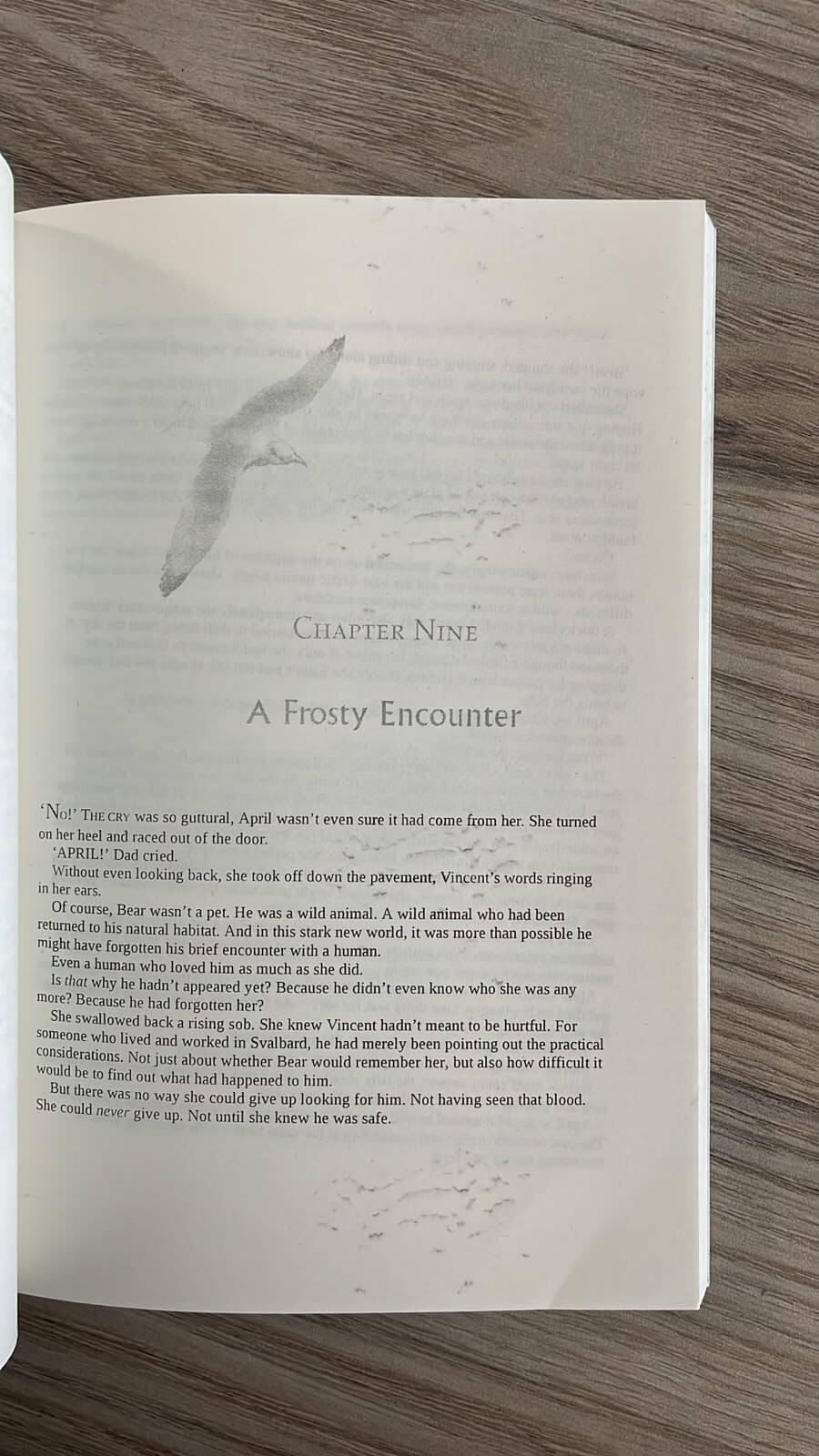
So when she hears that a polar bear has been injured in Svalbard, staying home feels impossible.
April needs to know the truth.
Finding Bear and the Search for Bear
The central question is simple.
Is the injured polar bear Bear?
April believes it could be.
That possibility creates the emotional heart of Finding Bear.
She is not travelling to the Arctic because she wants an exciting holiday.
She is going because someone she loves may need help.
That makes the journey personal.
Every kilometre north matters.
Every clue matters.
Every moment brings her closer to either hope or heartbreak.
The Arctic Setting in Finding Bear
The Arctic is breathtaking.
But it is also dangerous.
Snow.
Ice.
Freezing temperatures.
Glaciers.
Long distances.
Wild animals.
Weather that can change rapidly.
In Finding Bear, the landscape becomes more than background scenery.
It influences every decision April makes.
The frozen wilderness is beautiful enough to inspire wonder.
But harsh enough to remind readers that survival cannot be taken for granted.
Finding Bear and Svalbard
Svalbard gives the story an unforgettable setting.
The islands lie deep in the Arctic region.
Polar bears inhabit the wider area.
The landscape includes snow-covered mountains, glaciers, and frozen terrain.
For April, reaching Svalbard means entering Bear’s world rather than expecting Bear to exist in hers.
That shift matters.
She must understand the environment.
Respect it.
And recognize that nature operates by its own rules.
A Tiny Polar Bear Cub
During her journey, April discovers something she was not expecting.
A tiny polar bear cub.
The cub desperately needs help.
Suddenly, April’s mission becomes bigger.
She may have travelled north searching for Bear.
But now another animal depends on her.
Hannah Gold’s official description identifies this discovery as one of the major turning points of the story.
Finding Bear and Survival
Survival is one of the strongest themes in Finding Bear.
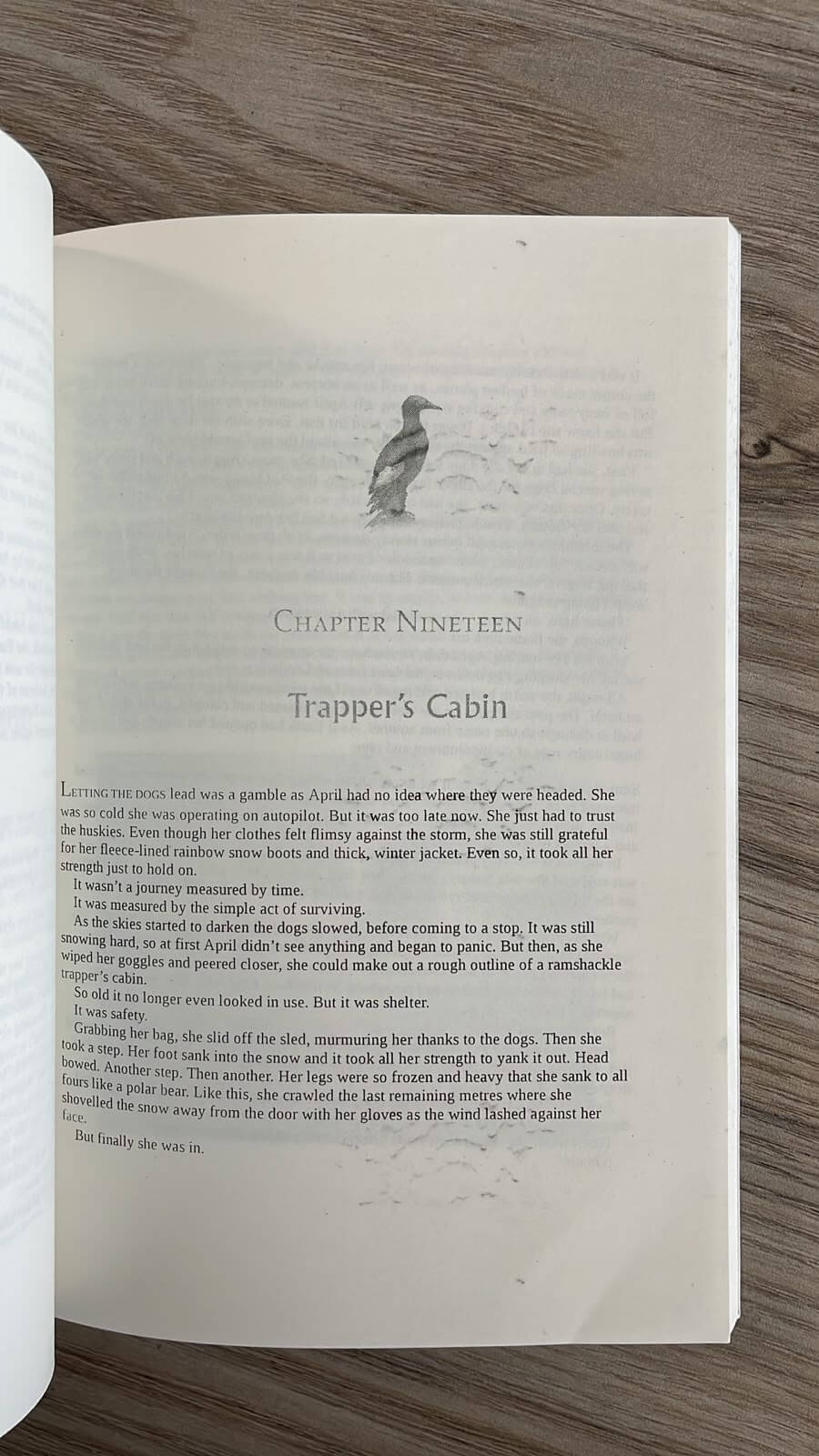
April must navigate freezing conditions.
She faces difficult terrain.
She confronts fear.
And she needs to make careful decisions when mistakes could have serious consequences.
This makes the book exciting.
But the survival element also teaches something important.
Courage is not the same as carelessness.
The Arctic demands respect.
Finding Bear and Courage
April is brave.
But she is not fearless.
That difference makes her more believable.
Fear exists because danger is real.
The important question is what April does with that fear.
Does she give up?
Does she run away?
Or does she keep moving while thinking carefully?
Finding Bear shows courage as continuing even when something feels frightening.
Finding Bear and Friendship
At the heart of the book is friendship.
April’s connection with Bear is unusual because Bear is a wild animal.
She cannot expect him to behave like a pet.
She cannot control him.
She can only respect him.
That makes their friendship more meaningful.
It is based on trust rather than ownership.
The story encourages young readers to think about animals as living beings with their own needs rather than simply things humans can possess.
Finding Bear and Family
April’s father also plays an important role.
Travelling to the Arctic is a huge decision.
April cannot simply go alone.
Her relationship with her father adds another emotional layer to the adventure.
Parents sometimes want to protect children from danger.
Children sometimes feel they need to take risks to do what they believe is right.
Finding Bear explores that tension through love, trust, and shared experience.
Finding Bear and Hope
Hope is one of the most important themes in the book.
April does not know whether she will find Bear.
She does not know whether the injured animal is him.
She cannot control the Arctic.
Yet she continues.
Hope gives her a reason to move forward.
The publisher describes Finding Bear as a heartwarming story showing how hope can grow from very small beginnings.
Finding Bear and Nature
Hannah Gold’s stories often place nature at the centre.
Animals are not simply decorations.
The environment matters.
Human choices matter.
The way people treat wildlife matters.
Finding Bear can therefore encourage young readers to think more deeply about conservation and our relationship with the natural world.
The story entertains first.
But underneath the adventure is a strong respect for wildlife.
Finding Bear and Polar Bears
Polar bears are powerful animals.
They are also closely connected with the Arctic environment.
In Finding Bear, they represent more than excitement.
They also remind readers that wild animals depend on healthy habitats.
April’s bond with Bear helps make environmental issues personal.
Instead of thinking only about distant statistics, readers care because they care about a character.
That is one of the strengths of animal adventure fiction.
Levi Pinfold’s Illustrations
Finding Bear is illustrated by award-winning illustrator Levi Pinfold.
His artwork helps bring the Arctic environment and emotional moments to life.
The official author and publisher both highlight his illustrations as an important part of the book.
For young readers, illustrations can make the frozen landscapes feel even more immersive.
They also make the book visually appealing as a gift.
Should You Read The Last Bear First?
Yes, ideally.
Finding Bear is the follow-up to The Last Bear.
The earlier book explains:
- How April meets Bear
- Why their friendship matters
- What happened on Bear Island
- Why April cannot forget him
You can understand the basic adventure without remembering every detail.
But reading The Last Bear first gives Finding Bear much more emotional impact.
The publisher officially describes this novel as the follow-up to The Last Bear.
Finding Bear for Young Readers
Hannah Gold’s official site describes Finding Bear as perfect for readers 8+.
It is especially suitable for children who enjoy:
Animal adventures.
Polar bears.
Nature.
Survival stories.
Arctic settings.
Emotional friendships.
Books with environmental themes.
Illustrated chapter books.
The language is accessible while the themes still offer plenty for older children to think about.
7 Powerful Reasons to Read Finding Bear
- A Beautiful Polar Bear Adventure – April returns to the Arctic searching for Bear.
- An Emotional Friendship Story – The bond between April and Bear gives the story a powerful heart.
- A Dramatic Arctic Setting – Frozen tundra and icy glaciers create a memorable adventure landscape.
- A Tiny Polar Bear Cub – April discovers another animal desperately in need of help.
- Themes of Courage and Hope – The story shows how people can keep going even when they are afraid.
- Beautiful Illustrations – Levi Pinfold’s artwork adds atmosphere and emotion.
- A Powerful Follow-Up to The Last Bear – Finding Bear continues April’s unforgettable story.
What You Can Expect From Finding Bear
Readers can expect:
- April Wood
- Bear
- Polar bears
- A polar bear cub
- Svalbard
- Arctic adventure
- Frozen tundra
- Glaciers
- Survival
- Family
- Friendship
- Courage
- Hope
- Wildlife
- Environmental themes
- Beautiful illustrations
- Emotional storytelling
Who Should Read Finding Bear?
Finding Bear is ideal for:
Readers aged approximately 8+.
Children who love animals.
Fans of The Last Bear.
Young readers interested in nature.
Children who enjoy survival stories.
Readers fascinated by the Arctic.
Fans of emotional adventure books.
Anyone who enjoys stories about friendship between humans and animals.
A Powerful Arctic Story About Love and Hope
Finding Bear begins with April unable to forget the friend she left behind.
Then she hears that a polar bear has been injured.
She fears it is Bear.
And suddenly, returning to the Arctic becomes something she feels she has to do.
Her journey takes her through frozen landscapes and dangerous conditions.
But she also discovers a tiny cub that desperately needs help.
What begins as a search for one polar bear becomes a larger story about courage, survival, responsibility, and hope.
For young readers who love animals, adventure, nature, and emotional stories, Finding Bear is a beautiful and memorable continuation of April Wood’s journey.
Book Details
Title: Finding Bear
Author: Hannah Gold
Illustrator: Levi Pinfold
Genre: Children’s Fiction / Adventure / Animal Story / Survival
Series Connection: Follow-up to The Last Bear
Recommended Age: Approximately 8+
Original Publication: 2023
Publisher: HarperCollins Children’s Books.
Paperback Edition Details
Collins lists a paperback edition with:
ISBN-13: 9780008582043
Format: Paperback
Publisher / Imprint: HarperCollins Children’s Books
Publication Date: 30 January 2025
Pages: 368.
Hardcover Edition
A hardback edition is catalogued with:
ISBN-13: 9780008639679
Format: Hardcover
Publisher: HarperCollins Publishers
Publication Year: 2023
Illustrator: Levi Pinfold.
Awards & Recognition
Finding Bear won the Books for Topics Children’s Favourite Book 2023 and was later shortlisted for The Week Junior Book Awards 2024 and the Indie Book Awards 2025.
Edition Note
Different editions of Finding Bear have different ISBNs and page counts.
Use the ISBN printed on your physical copy before entering exact edition information on your website.
Learn more about Finding Bear by Hannah Gold on the official Collins website.
Explore more children’s books at Bargain Books.
Be the first to review “Finding Bear by Hannah Gold”
Related products
-28%

Self-Help & Psychology
Original price was: රු1,800.00.රු1,300.00Current price is: රු1,300.00.
3 X Rs. 433.33 or 8% Cashback with
or 3 X රු433.33 with
or up to 4 X රු325.00 with
-24%

Non-Fiction & Knowledge
Original price was: රු2,300.00.රු1,750.00Current price is: රු1,750.00.
3 X Rs. 583.33 or 8% Cashback with
or 3 X රු583.33 with
or up to 4 X රු437.50 with

Out of stock
Self-Help & Psychology
රු1,500.00
3 X Rs. 500.00 or 8% Cashback with
or 3 X රු500.00 with
or up to 4 X රු375.00 with

රු2,000.00
3 X Rs. 666.67 or 8% Cashback with
or 3 X රු666.67 with
or up to 4 X රු500.00 with
-33%

Self-Help & Psychology
Original price was: රු2,300.00.රු1,550.00Current price is: රු1,550.00.
3 X Rs. 516.67 or 8% Cashback with
or 3 X රු516.67 with
or up to 4 X රු387.50 with

Non-Fiction & Knowledge
රු1,950.00
3 X Rs. 650.00 or 8% Cashback with
or 3 X රු650.00 with
or up to 4 X රු487.50 with
-26%

Non-Fiction & Knowledge
The 7 Habits of Highly Effective People by Stephen R. Covey – Blue Cover
Original price was: රු2,300.00.රු1,700.00Current price is: රු1,700.00.
3 X Rs. 566.67 or 8% Cashback with
or 3 X රු566.67 with
or up to 4 X රු425.00 with

Out of stock
Self-Help & Psychology
රු2,200.00
3 X Rs. 733.33 or 8% Cashback with
or 3 X රු733.33 with
or up to 4 X රු550.00 with
Reviews
There are no reviews yet.