
No products in the cart.
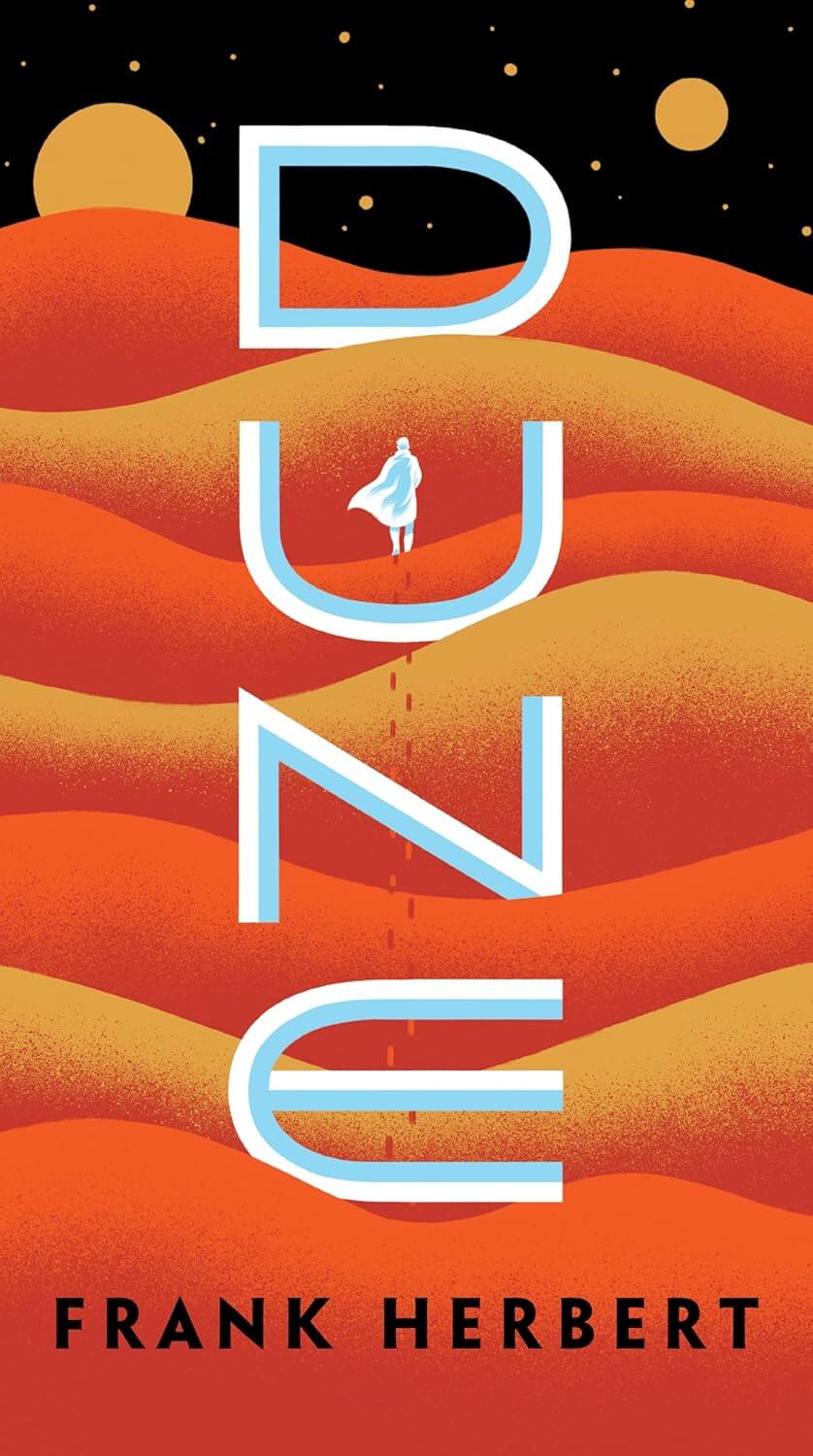
Dune by Frank Herbert


රු1,950.00
3 X Rs. 650.00 or 8% Cashback with


or 3 X රු650.00 with


or up to 4 X රු487.50 with


- Dune is a sweeping science fiction saga about Paul Atreides, a noble heir caught in a web of politics, prophecy, and rebellion on the desert planet Arrakis, home to the universe’s most valuable resource.
- Winner of the Hugo Award and Nebula Award
- One of the best-selling science fiction novels of all time
- Introduces an expansive, richly detailed universe
- Themes of power, religion, ecology, prophecy, and human potential
- Features one of sci-fi’s most iconic heroes: Paul Atreides
- Basis for multiple film adaptations, including Denis Villeneuve’s recent blockbuster
- First book in a series that has become a cornerstone of the sci-fi genre
- Publisher : Penguin USA; Ace Special 25th Anniversary ed edition (1 September 1990)
- Language : English
- Mass Market Paperback : 896 pages
- ISBN-10 : 0441172717
- ISBN-13 : 978-0441172719
- Item Weight : 459 g
- Dimensions : 10.64 x 4.8 x 19.2 cm
Out of stock
Email when stock available
Dune by Frank Herbert is a legendary science-fiction novel filled with political intrigue, survival, prophecy, war, environmental themes and a struggle for control over the most valuable resource in the universe.
The story takes place in the distant future.
At its centre is Paul Atreides, the young heir of House Atreides.
Paul’s family is ordered to take control of Arrakis, a harsh desert planet that may appear almost uninhabitable.
Yet Arrakis is the most strategically important planet in the known universe.
Why?
Because it is the source of melange, commonly known as spice.
The spice can extend life and enhance consciousness, making control of Arrakis enormously valuable.
But power on Arrakis comes with danger.
House Atreides is surrounded by enemies.
Political alliances cannot always be trusted.
And when betrayal strikes, Paul’s life is changed forever.
Why Read Dune?
Dune is much more than a story about spaceships and distant planets.
Frank Herbert combines science fiction with politics, religion, ecology, philosophy and questions about power. Penguin Random House specifically describes the novel as blending adventure and mysticism with environmentalism and politics.
The result is a world that feels enormous.
Different noble houses compete for influence.
Religious beliefs shape societies.
Control of natural resources creates political power.
The environment of Arrakis determines how people live.
And Paul must understand all of these forces if he is going to survive.

Dune and the Planet Arrakis
Arrakis is one of the most memorable settings in science fiction.
It is almost entirely desert.
Water is extraordinarily valuable.
Survival requires knowledge, discipline and adaptation.
Yet beneath this hostile landscape lies the resource everyone wants.
Spice.
Because Arrakis is the source of melange, political powers throughout the universe have an enormous interest in controlling the planet.
This makes Arrakis more than a backdrop.
The planet shapes everything.
Culture.
Economics.
Politics.
War.
Even the way characters think about survival.
Meet Paul Atreides
Paul Atreides begins Dune as the son and heir of Duke Leto Atreides.
He is intelligent, highly trained and born into one of the universe’s powerful noble families.
But his future is much larger and more dangerous than he initially understands.
When House Atreides is betrayed, Paul is forced onto a completely different path. The official Dune site describes this destruction of his family as the event that launches him toward a destiny beyond anything he had imagined.
Paul gradually becomes connected with the people of Arrakis.
His abilities develop.
His understanding of politics deepens.
And the possibility of a much greater destiny begins to emerge.
Paul Atreides and Muad’Dib
One of the most important parts of Dune is Paul’s transformation.
He is not simply trying to survive.
His identity begins changing.
Among the people of Arrakis, Paul becomes associated with the name Muad’Dib.
That transformation raises important questions.
How much of Paul’s future is chosen?
How much is influenced by prophecy?
Can someone control a movement once other people begin believing in them?
Herbert uses Paul’s journey to examine leadership, religion and the dangers of charismatic power.
Dune and the Spice Melange
Spice is one of the defining elements of Dune.
Melange is valuable because of its extraordinary effects and its importance throughout the universe.
The official description highlights its ability to extend life and enhance consciousness.
Because spice exists on Arrakis, control of the planet becomes a source of enormous political and economic influence.
Everyone wants it.
That creates conflict.
The struggle over spice also gives the novel a deeper theme.
What happens when an entire civilization depends on one scarce resource?
Who controls that resource?
And what happens to the people who actually live where it is found?
House Atreides
House Atreides is one of the powerful noble families in Dune.
Paul is its heir.
His father, Duke Leto Atreides, accepts responsibility for governing Arrakis.
But the opportunity is dangerous.
Other political forces have their own plans.
The Atreides family must therefore navigate both the environmental dangers of Arrakis and the complicated politics surrounding control of the planet.
Trust becomes extremely important.
So does loyalty.
House Harkonnen
House Harkonnen represents one of the greatest threats to House Atreides.
The struggle between powerful families creates much of the political tension in Dune.
The conflict is not simply about personal hatred.
Control of Arrakis means control of spice.
And control of spice means enormous influence.
This gives every political decision much greater importance.
A family conflict can affect an entire empire.
The Fremen in Dune
The Fremen are the people who have adapted to the brutal environment of Arrakis.
Their lives are shaped by the desert.
Water conservation is essential.
Survival requires extraordinary knowledge of the land.
Outsiders may underestimate them.
That is a serious mistake.
As Paul becomes increasingly connected with Arrakis, the Fremen become central to his journey.
Through them, he begins to understand that the desert contains possibilities the great political powers have failed to recognise.
Giant Sandworms
Few images are more strongly associated with Dune than the enormous sandworms of Arrakis.
These creatures dominate the desert.
Their presence makes travelling across open sand dangerous.
They also contribute to the extraordinary mythology and ecology of Arrakis.
Frank Herbert’s world-building makes the environment itself feel alive.
The desert is not simply empty space between locations.
It is a system.
Every creature, resource and survival technique is connected.
Dune and Environmentalism
Environmental themes are one of the reasons Dune remains distinctive.
Penguin Random House explicitly identifies environmentalism as one of the novel’s major elements.
Arrakis has limited water.
Its population must adapt.
Natural resources shape politics.
Long-term ecological change becomes connected with human ambition.
Herbert therefore treats the environment as something that influences civilizations.
People cannot simply ignore the conditions of the planet they inhabit.
That idea gives Dune a depth beyond traditional space adventure.
Politics and Power in Dune
Politics is everywhere in Dune.
Families compete.
Leaders make alliances.
Enemies manipulate one another.
Resources influence decisions.
Religion can become political.
Information becomes power.
Even apparently simple choices may have strategic consequences.
Readers who enjoy political fantasy and complex power struggles may find this part especially appealing.
The novel rewards attention because different characters often have different motivations.
Religion and Prophecy
Religion plays an important role in Dune.
Paul begins to encounter beliefs and prophecies that seem connected with his arrival.
But Herbert does not present prophecy as something simple.
Belief can inspire people.
It can unite communities.
It can also become dangerous.
Paul gradually understands that becoming a symbol may create consequences far beyond his personal intentions.
This gives the story a philosophical dimension.
Dune and Leadership
Paul’s story is also a study of leadership.
What makes people follow someone?
Strength?
Intelligence?
Hope?
Fear?
Prophecy?
Heritage?
Throughout Dune, Paul begins accumulating several forms of influence.
But greater influence means greater responsibility.
A leader’s decisions can affect thousands or millions of people.
That makes power both valuable and dangerous.
Survival on Arrakis
Arrakis punishes mistakes.
Water is scarce.
The desert is dangerous.
Travel requires knowledge.
Environmental conditions cannot be ignored.
The people who survive there understand something outsiders often forget:
The environment sets the rules.
This creates a powerful survival element within Dune.
Characters cannot simply defeat nature through technology.
They must understand it.
Fear in Dune
Fear is another major theme.
Characters face political danger.
Physical danger.
Uncertainty.
Betrayal.
Death.
Paul is trained to manage fear rather than allow it to control him.
This idea appears throughout the novel’s philosophy.
Fear can influence decisions.
But recognising fear can help prevent it from becoming the only force guiding those decisions.
Dune and Destiny
Paul’s future appears increasingly connected with events larger than himself.
He sees possibilities.
Other people interpret his actions through prophecy.
Political forces begin moving around him.
This creates one of the novel’s central tensions.
Can Paul shape his destiny?
Or is he being carried toward a future that has already begun forming?
Dune does not treat destiny as a simple heroic promise.
Great destiny can also mean great danger.
More Than a Typical Hero Story
At first, Paul’s journey may seem like a familiar story.
A young heir loses his position.
He survives.
He gains new allies.
He becomes stronger.
But Dune complicates this pattern.
Power has consequences.
Revenge has consequences.
Leadership has consequences.
Even victory can create new problems.
That complexity is one reason the book has remained influential.
Dune Is the First Book in the Original Saga
Dune begins Frank Herbert’s original six-book Dune sequence. Penguin Random House lists the later novels as Dune Messiah, Children of Dune, God Emperor of Dune, Heretics of Dune, and Chapterhouse: Dune.
The original reading order is:
- Dune
- Dune Messiah
- Children of Dune
- God Emperor of Dune
- Heretics of Dune
- Chapterhouse: Dune
This makes Dune the perfect starting point for readers who want to explore the larger universe.
Award-Winning Science Fiction
Dune received major recognition within science fiction.
Penguin Random House states that the novel won the first Nebula Award and shared the Hugo Award.
Its influence extends well beyond awards.
The novel helped establish one of science fiction’s most expansive fictional universes.
Its combination of ecology, politics, mysticism and adventure helped distinguish it from many other works in the genre.
7 Powerful Reasons to Read Dune
- Epic World-Building – Explore Arrakis, spice, noble houses and a vast interstellar civilization.
- Paul Atreides – Follow a young heir whose journey develops into something far greater than survival.
- Political Intrigue – Experience betrayal, alliances and struggles for control.
- Fascinating Environmental Themes – Discover how the ecology of Arrakis shapes culture and power.
- Mysticism and Prophecy – Explore religion, destiny and the consequences of becoming a symbol.
- Unforgettable Science Fiction – Giant sandworms, desert survival and the spice melange create a unique universe.
- Beginning of an Epic Saga – Dune is the first novel in Frank Herbert’s original six-book sequence.
What You Can Expect From Dune
Readers can expect:
- Paul Atreides
- Arrakis
- Spice melange
- Fremen
- Sandworms
- House Atreides
- Political intrigue
- Betrayal
- Survival
- Ecology
- Religion
- Prophecy
- Leadership
- Science fiction
- Space opera
- Adventure
- Philosophy
- World-building
- Family conflict
- Power struggles
Who Should Read Dune?
Dune is ideal for readers who enjoy epic science fiction.
Fans of complex world-building may appreciate Herbert’s detailed universe.
Readers who enjoy political intrigue may find the rivalry between powerful groups particularly engaging.
Fantasy readers may also enjoy the novel because its noble houses, prophecies and enormous mythology often create an epic-fantasy feeling despite the futuristic setting.
Readers interested in ecology, religion, leadership and philosophy will find themes extending beyond the central adventure. Penguin Random House specifically highlights politics, environmentalism, mysticism and adventure as key elements of the novel.
A Powerful Science-Fiction Masterpiece
Dune begins with a family travelling to a desert planet.
But the story quickly becomes much larger.
Arrakis contains the universe’s most valuable resource.
Powerful factions want control of it.
House Atreides enters a dangerous political trap.
Paul loses the world he understands and begins an extraordinary transformation among the people of the desert.
Frank Herbert uses this journey to explore politics, ecology, religion, leadership and the dangers of power.
The result is a science-fiction novel that works as adventure while also asking difficult questions about society and human ambition.
For readers interested in epic science fiction, unforgettable world-building and complex stories about power and destiny, Dune by Frank Herbert is an essential addition to any bookshelf.
Book Details
Title: Dune
Author: Frank Herbert
Series: Dune Saga
Series Position: Book 1
Original Publication: 1965
Genre: Science Fiction / Space Opera
Main Character: Paul Atreides
Primary Setting: Arrakis
Major Themes: Politics, ecology, religion, power, leadership, survival and destiny.
Awards: First Nebula Award; shared Hugo Award.Edition note: page count and ISBN vary significantly between editions. For example, Penguin Random House currently lists a 2023 Ace paperback edition at 704 pages, ISBN 9780593640333, while other hardcover and mass-market editions have different page counts. Use the ISBN printed on your physical copy rather than copying an edition-specific ISBN blindly.
- https://yourwebsite.com/dune/

Be the first to review “Dune by Frank Herbert”
Related products
-24%

Out of stock
Non-Fiction & Knowledge
Original price was: රු2,100.00.රු1,600.00Current price is: රු1,600.00.
3 X Rs. 533.33 or 8% Cashback with
or 3 X රු533.33 with
or up to 4 X රු400.00 with

Non-Fiction & Knowledge
රු2,450.00
3 X Rs. 816.67 or 8% Cashback with
or 3 X රු816.67 with
or up to 4 X රු612.50 with
-26%

Non-Fiction & Knowledge
The 7 Habits of Highly Effective People by Stephen R. Covey – Blue Cover
Original price was: රු2,300.00.රු1,700.00Current price is: රු1,700.00.
3 X Rs. 566.67 or 8% Cashback with
or 3 X රු566.67 with
or up to 4 X රු425.00 with

Non-Fiction & Knowledge
රු1,550.00
3 X Rs. 516.67 or 8% Cashback with
or 3 X රු516.67 with
or up to 4 X රු387.50 with

Out of stock
Non-Fiction & Knowledge
රු1,500.00
3 X Rs. 500.00 or 8% Cashback with
or 3 X රු500.00 with
or up to 4 X රු375.00 with
-39%

Out of stock
Self-Help & Psychology
Original price was: රු2,450.00.රු1,500.00Current price is: රු1,500.00.
3 X Rs. 500.00 or 8% Cashback with
or 3 X රු500.00 with
or up to 4 X රු375.00 with

Non-Fiction & Knowledge
රු1,950.00
3 X Rs. 650.00 or 8% Cashback with
or 3 X රු650.00 with
or up to 4 X රු487.50 with
-13%

Out of stock
Non-Fiction & Knowledge
Original price was: රු3,900.00.රු3,400.00Current price is: රු3,400.00.
3 X Rs. 1,133.33 or 8% Cashback with
or 3 X රු1,133.33 with
or up to 4 X රු850.00 with
Reviews
There are no reviews yet.