
No products in the cart.
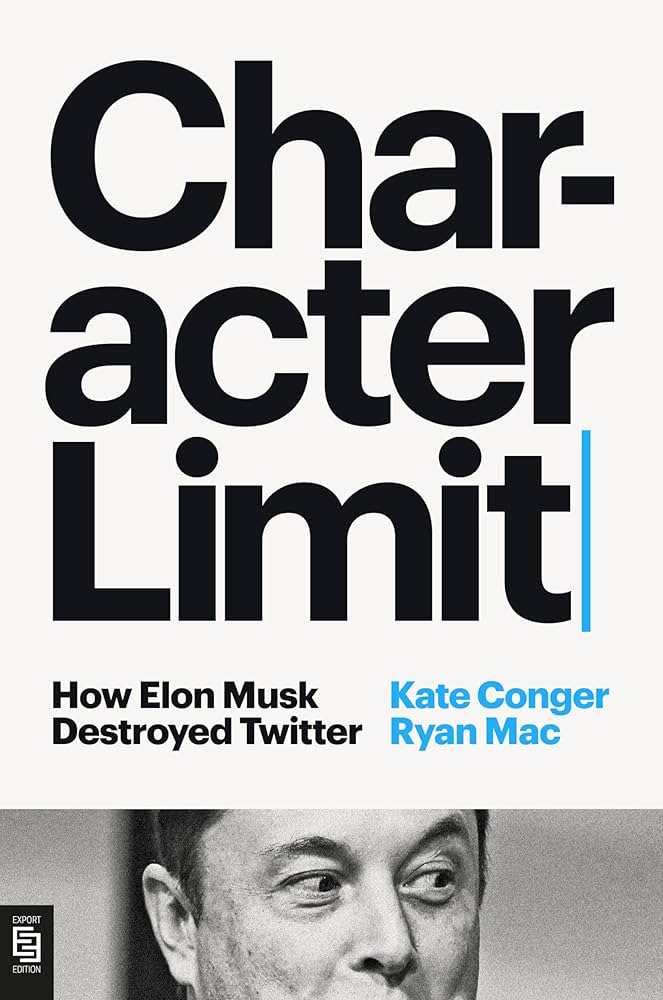
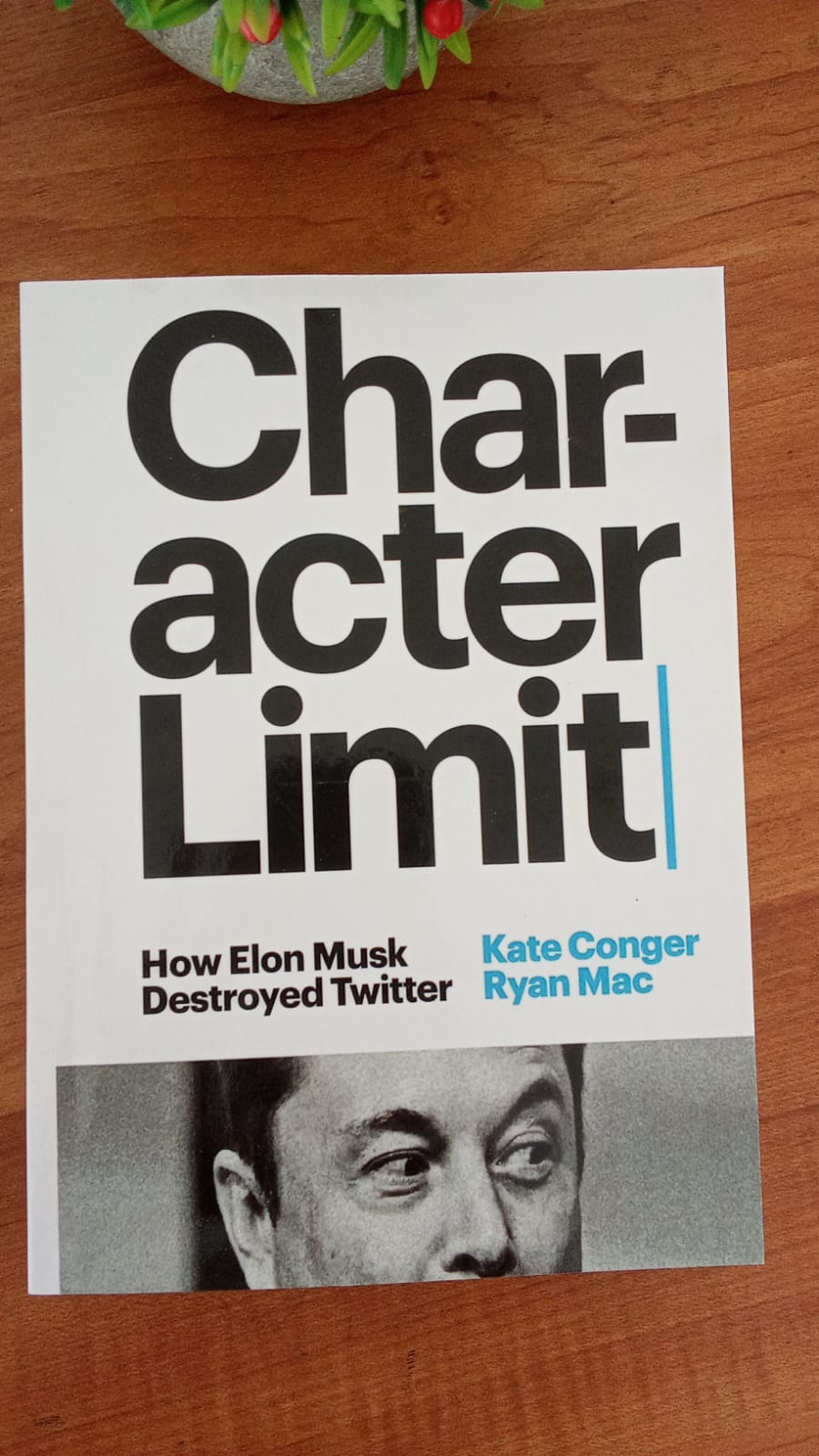
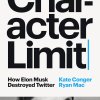

Character Limit by Kate Conger and Ryan Mac


රු2,650.00
3 X Rs. 883.33 or 8% Cashback with


or 3 X රු883.33 with


or up to 4 X රු662.50 with


Product Short Description:
Character Limit by Kate Conger and Ryan Mac is a gripping business and technology book that explores Elon Musk’s takeover of Twitter and its impact on the company and global communication. It offers a behind-the-scenes look at leadership, power, and the fast-changing world of social media.
5 in stock
Character Limit by Kate Conger and Ryan Mac
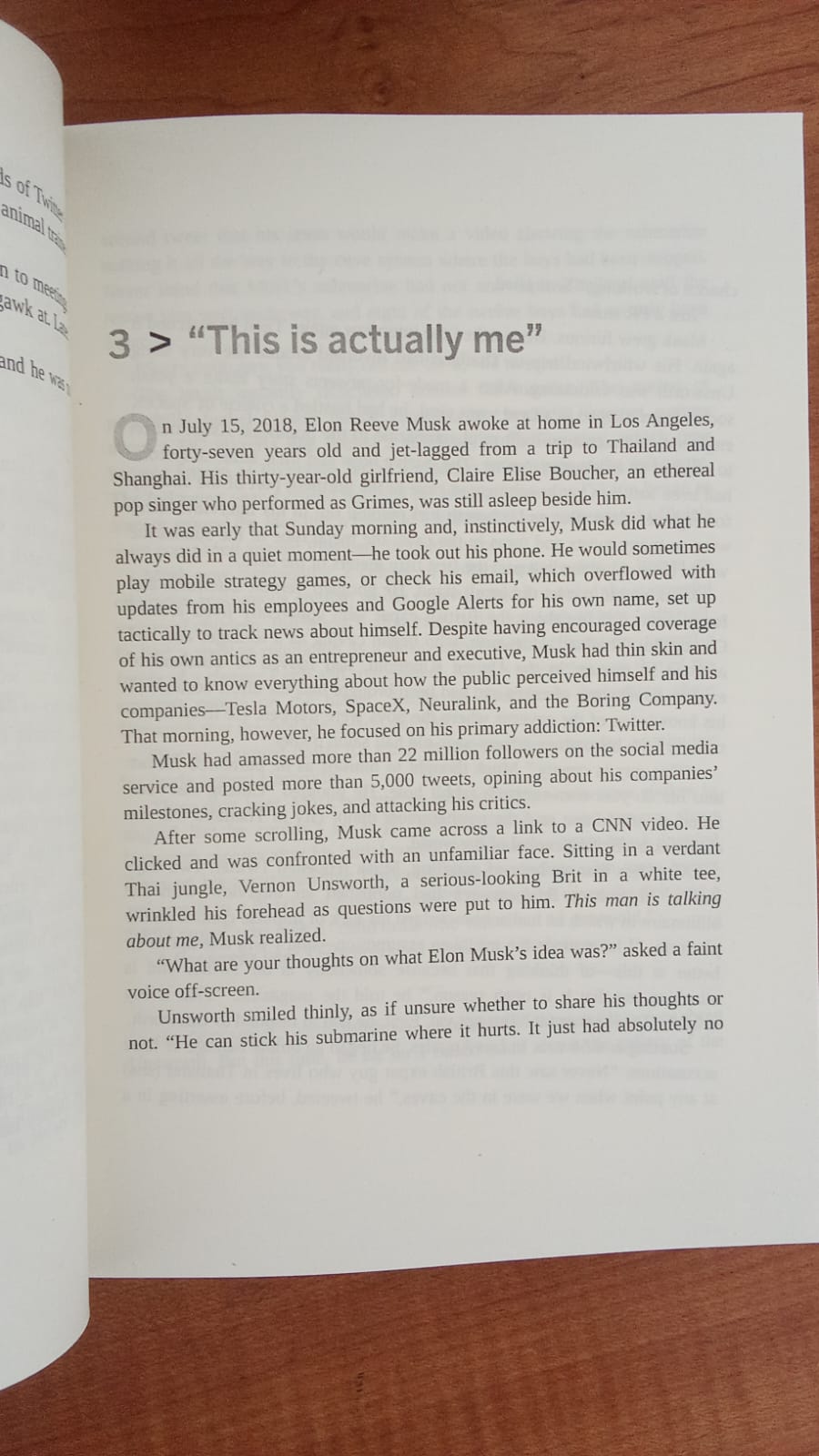
Character Limit by Kate Conger and Ryan Mac is a gripping business and technology book about Elon Musk’s takeover of Twitter and the dramatic changes that followed.
The authors are technology reporters who investigated the acquisition using interviews, previously unreported documents, and internal Twitter recordings.
The result is a detailed account of one of the most controversial technology deals of the modern era.
Why Read Character Limit?
Character Limit is a strong choice for readers interested in business, technology, leadership, Silicon Valley, social media, corporate takeovers, and Elon Musk.
The book looks beyond headlines.
It explores the people, decisions, negotiations, conflicts, and enormous financial stakes behind Musk’s attempt to buy Twitter.
Readers get a close look at what happens when one of the world’s most influential technology platforms becomes the target of an unpredictable acquisition.
Elon Musk and Twitter
Twitter had become one of the world’s most influential online platforms.
Politicians used it.
Journalists used it.
Businesses used it.
Celebrities, activists, and millions of ordinary users relied on it to communicate publicly.
According to Penguin, Musk began secretly accumulating Twitter shares in January 2022 and had become its largest shareholder by April.
Soon afterward, he made an unsolicited offer to buy the company.
The $44 Billion Deal
The proposed acquisition valued Twitter at approximately $44 billion.
Twitter’s board eventually accepted Musk’s offer.
Then Musk attempted to pull away from the deal.
Twitter responded by taking legal action to force the acquisition to proceed.
That conflict turned an already unusual corporate transaction into a public business drama.
A Battle for Control
Character Limit is not simply about buying a company.
It is also about control.
Who controls a powerful communication platform?
Who decides what speech is allowed?
Who decides which users are promoted, restricted, or removed?
And what happens when enormous influence becomes concentrated in the hands of one billionaire?
The book uses the takeover to explore these larger questions about power and technology.
Jack Dorsey and the Original Vision
Twitter co-founder Jack Dorsey also plays an important role in the story.
Penguin describes Dorsey as someone who imagined Twitter as a kind of digital public square but struggled with the pressures of Wall Street and the challenge of building a consistently profitable business.
That vision later collided with Musk’s very different ideas about how the platform should operate.
Leadership Under Pressure
One of the most interesting business themes in Character Limit is leadership.
Major acquisitions create uncertainty.
Employees worry about jobs.
Managers need direction.
Investors want answers.
Customers and advertisers want stability.
The book examines what happens when leadership decisions are made quickly inside an already complicated company.
Corporate Culture
Twitter had its own culture before Musk arrived.
Employees had established ways of working.
Leadership teams had priorities.
There were internal expectations about moderation, product development, and company values.
A takeover can disrupt all of these things.
Character Limit explores how dramatically an organization can change when ownership and leadership change at the same time.
Money and Power
The deal also demonstrates the relationship between wealth and influence.
Twitter was not simply another technology company.
It was a communication platform capable of shaping news, politics, public opinion, and online culture.
That meant control of Twitter carried a form of influence beyond ordinary corporate ownership.
The authors examine the political and financial consequences of that concentration of power.
Social Media and Free Speech
Free speech became one of the biggest issues surrounding Musk’s takeover.
Musk argued publicly that Twitter had lost its way and that major changes were necessary. Penguin notes that he framed the platform’s direction as a major issue connected to free expression and society.
The book examines the tensions between open expression, moderation, platform responsibility, business interests, and online safety.
Technology Meets Politics
Social media companies increasingly sit between technology and politics.
A decision about an algorithm can affect which ideas become visible.
A moderation decision can become a political controversy.
An ownership change can alter how governments, journalists, advertisers, and users react to the platform.
Character Limit uses Twitter’s takeover to show how technology businesses can become politically significant institutions.
Investigative Reporting
One of the strengths of the book is its reporting approach.
Conger and Mac relied on extensive sources, internal material, interviews, and corporate records to reconstruct events surrounding the acquisition.
That makes the book especially suitable for readers who enjoy detailed business investigations rather than simple biographies.
7 Shocking Lessons from Character Limit
1. Huge deals can become personal battles.
Corporate acquisitions involve money, but personality and ego can influence negotiations too.
2. Leadership changes culture quickly.
A new owner can transform how a company operates.
3. Social platforms hold enormous power.
Control of a major platform can influence politics, media, and public discussion.
4. Money does not remove uncertainty.
Even a multibillion-dollar transaction can become chaotic.
5. Employees feel the impact first.
Corporate strategy eventually becomes a daily reality for the people working inside the organization.
6. Free speech and moderation are complicated.
Large platforms must balance competing expectations about expression and responsibility.
7. Technology companies are also political institutions.
Platforms that shape public conversation can become deeply connected to political power.
About Kate Conger and Ryan Mac
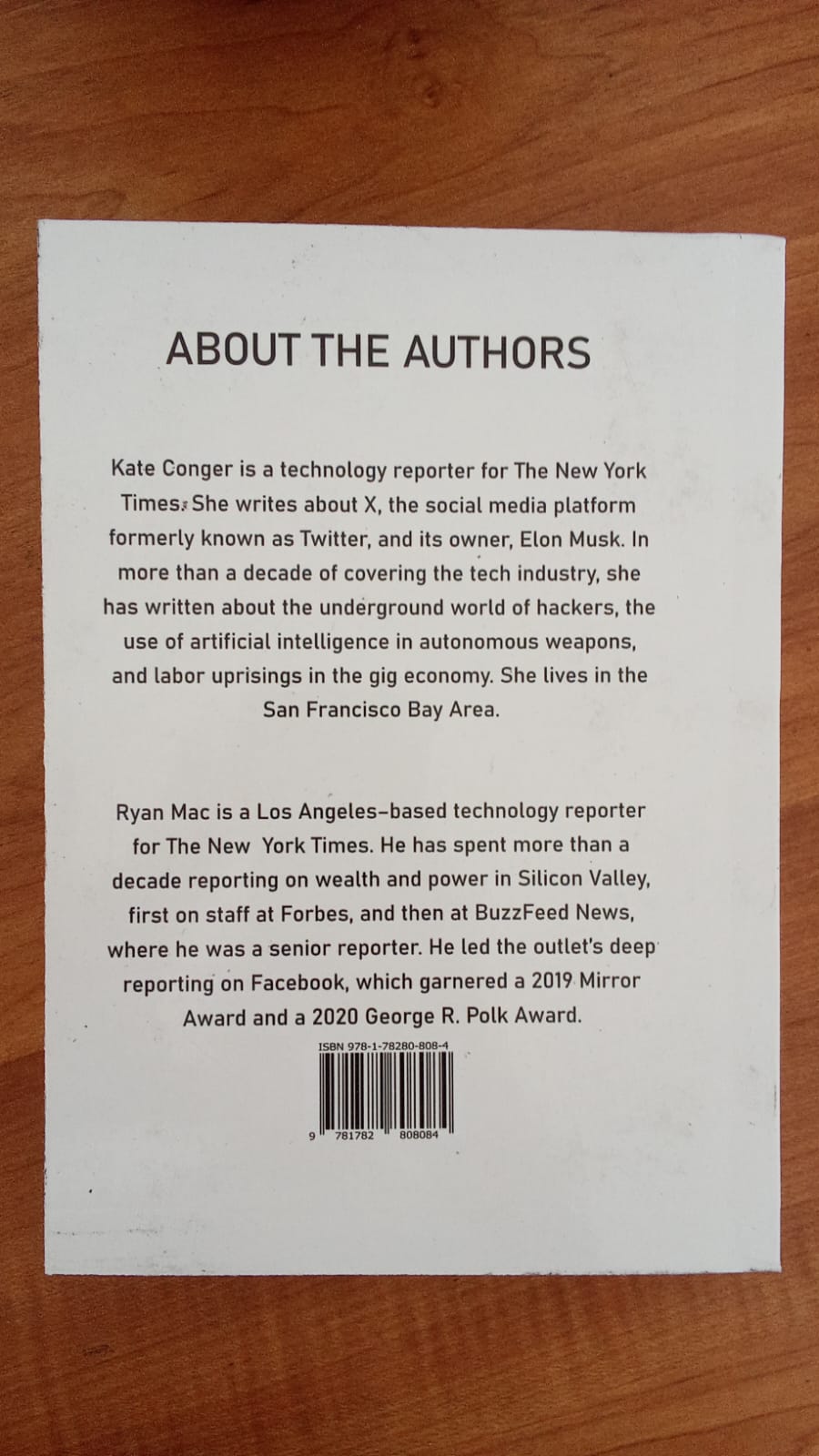
Kate Conger is a technology reporter for The New York Times who has covered X, technology companies, hackers, artificial intelligence, and labour issues.
Ryan Mac is also a technology reporter for The New York Times and has reported extensively on wealth, Silicon Valley, Facebook, and technology-industry power.
Together, they provide a deeply reported account of Twitter’s transformation.
Book Details
Penguin Australia lists the following edition details:
Full Title: Character Limit: How Elon Musk Destroyed Twitter
Authors: Kate Conger and Ryan Mac
Publisher/Imprint: Cornerstone Press
Format: Trade Paperback
Pages: 480
Publication Date: September 17, 2024
ISBN: 9781529914702
Check your physical copy before entering the details into WooCommerce because other editions may use different ISBNs or formats.
Perfect for Readers Interested In
Character Limit is suitable for readers interested in business, technology, Elon Musk, Twitter, X, Silicon Valley, social media, corporate leadership, mergers and acquisitions, investigative journalism, free speech, and technology politics.
Build Your Business Collection
Readers who enjoy Character Limit may also like Bad Blood, Billion Dollar Loser, Elon Musk, and other books about technology companies and corporate power.
Add internal links to your Business & Economics, Technology, Business Biography, and Entrepreneurship categories.
These internal links can also help improve your Rank Math score.
Buy Character Limit in Sri Lanka
Looking for Character Limit in Sri Lanka?
Kate Conger and Ryan Mac’s investigative business book is a strong choice for readers interested in Elon Musk, Twitter, technology, leadership, Silicon Valley, corporate takeovers, and the power of social media.
Add Character Limit to your business and technology collection today. https://www.penguin.com.au/books/character-limit-9781529914702
Be the first to review “Character Limit by Kate Conger and Ryan Mac”
Related products
-34%

Self-Help & Psychology
Original price was: රු2,350.00.රු1,550.00Current price is: රු1,550.00.
3 X Rs. 516.67 or 8% Cashback with
or 3 X රු516.67 with
or up to 4 X රු387.50 with
-28%
Self-Help & Psychology
Original price was: රු1,800.00.රු1,300.00Current price is: රු1,300.00.
3 X Rs. 433.33 or 8% Cashback with
or 3 X රු433.33 with
or up to 4 X රු325.00 with

Out of stock
Non-Fiction & Knowledge
රු1,900.00
3 X Rs. 633.33 or 8% Cashback with
or 3 X රු633.33 with
or up to 4 X රු475.00 with
Out of stock
Self-Help & Psychology
රු1,900.00
3 X Rs. 633.33 or 8% Cashback with
or 3 X රු633.33 with
or up to 4 X රු475.00 with
-14%
Out of stock
Self-Help & Psychology
Original price was: රු2,900.00.රු2,500.00Current price is: රු2,500.00.
3 X Rs. 833.33 or 8% Cashback with
or 3 X රු833.33 with
or up to 4 X රු625.00 with
Non-Fiction & Knowledge
රු2,250.00
3 X Rs. 750.00 or 8% Cashback with
or 3 X රු750.00 with
or up to 4 X රු562.50 with
-23%

Non-Fiction & Knowledge
Original price was: රු2,200.00.රු1,700.00Current price is: රු1,700.00.
3 X Rs. 566.67 or 8% Cashback with
or 3 X රු566.67 with
or up to 4 X රු425.00 with
-26%
Non-Fiction & Knowledge
The 7 Habits of Highly Effective People by Stephen R. Covey – Blue Cover
Original price was: රු2,300.00.රු1,700.00Current price is: රු1,700.00.
3 X Rs. 566.67 or 8% Cashback with
or 3 X රු566.67 with
or up to 4 X රු425.00 with
Reviews
There are no reviews yet.