
No products in the cart.


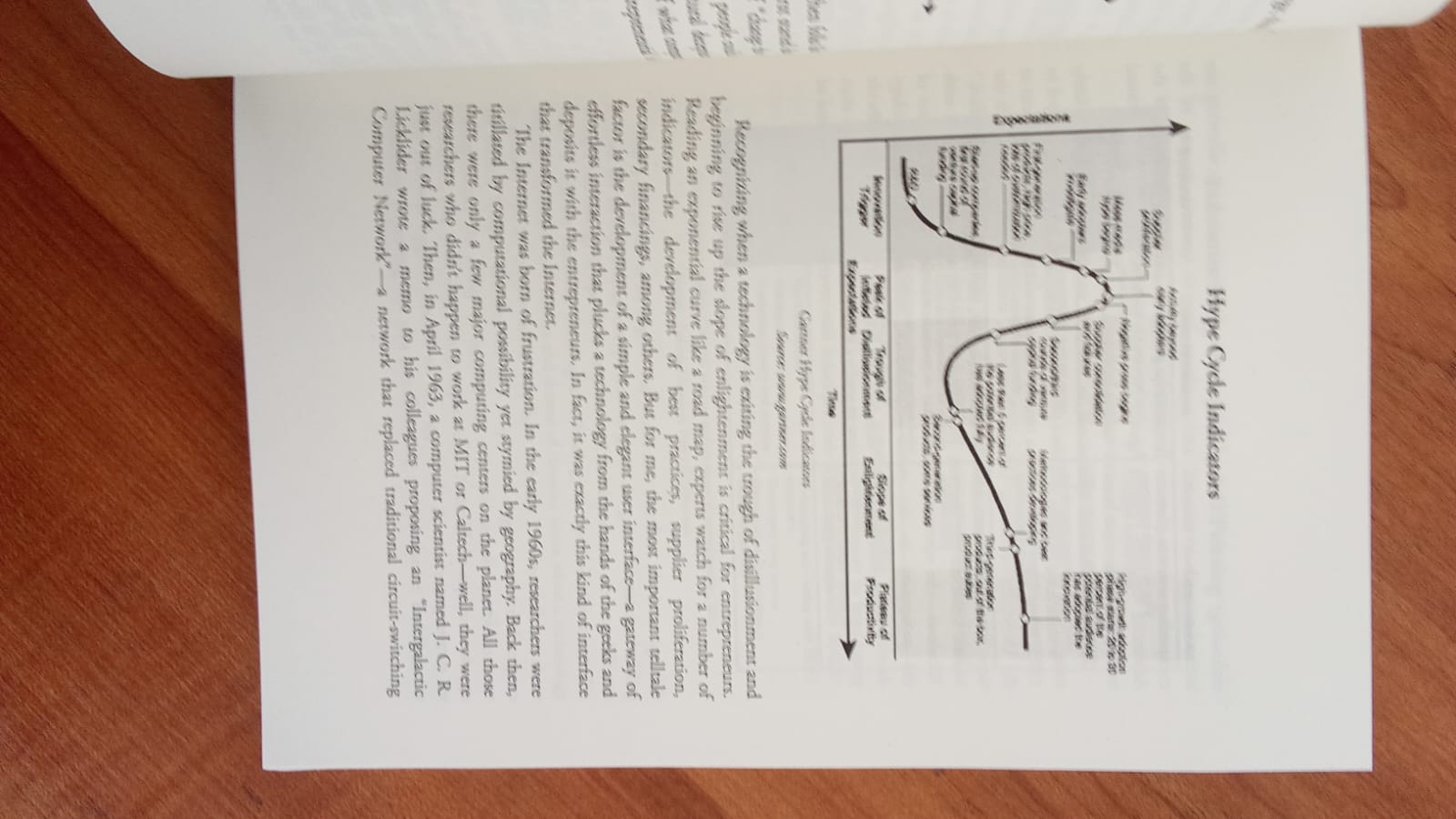
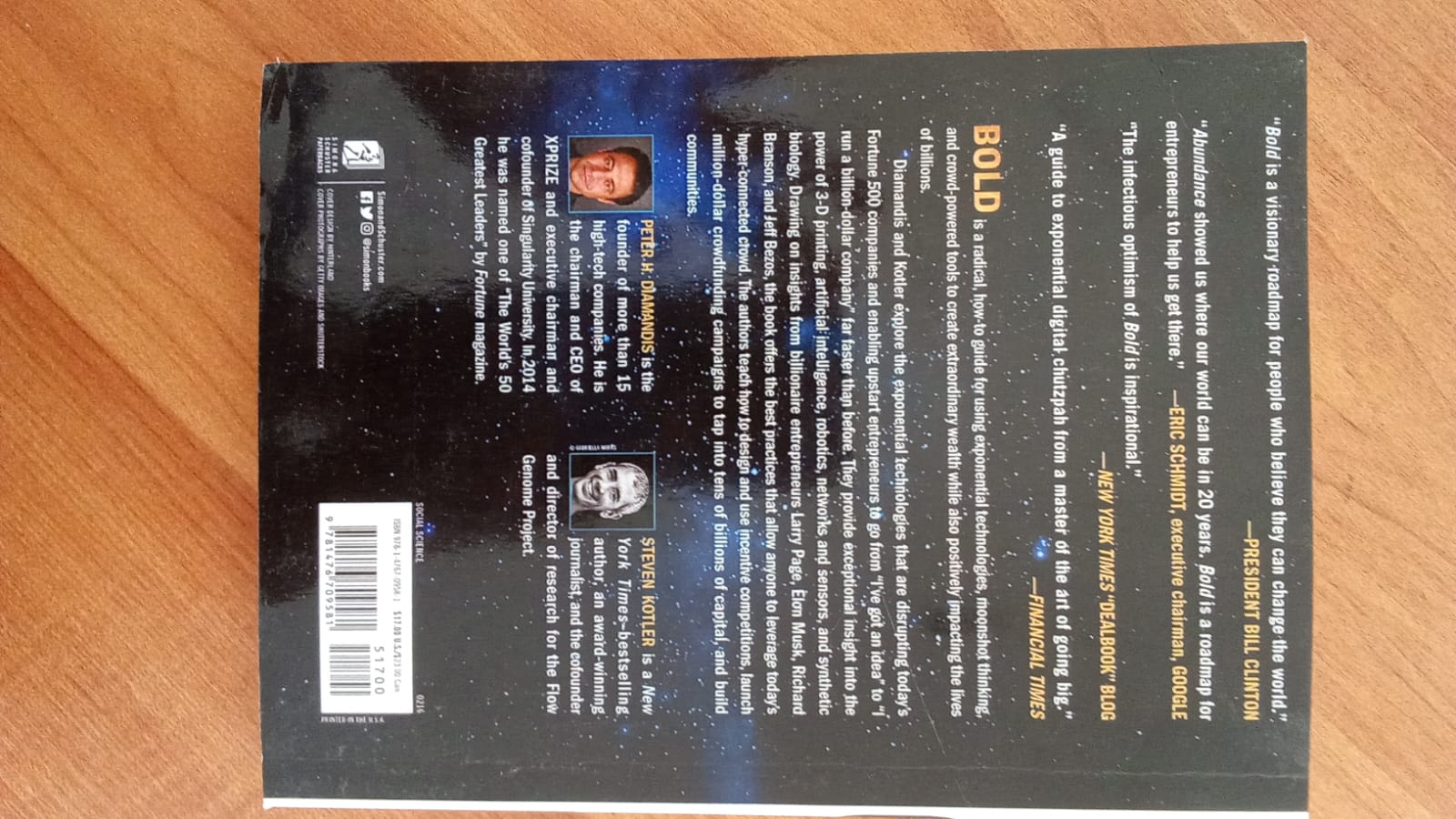



Bold: How to Go Big, Create Wealth and Impact the World by Peter H. Diamandis, Steven Kotler


රු1,900.00
3 X Rs. 633.33 or 8% Cashback with


or 3 X රු633.33 with


or up to 4 X රු475.00 with


Bold: How to Go Big, Create Wealth and Impact the World is an inspiring and practical guide for entrepreneurs, innovators, and dreamers who want to achieve extraordinary success in today’s fast-changing world. Written by Peter H. Diamandis and Steven Kotler, this book explores how bold thinking combined with modern technology can create massive opportunities for growth and global impact.
Rather than encouraging small, safe steps, Bold challenges readers to think beyond limitations and pursue ambitious goals that can transform industries and improve lives.
3 in stock
Bold by Peter Diamandis and Steven Kotler
Bold by Peter Diamandis and Steven Kotler is an ambitious business and entrepreneurship book about thinking bigger, using new technologies, building innovative companies, and creating meaningful impact.
The authors present the book as a practical guide for entrepreneurs, leaders, innovators, and people who want to turn large ideas into real projects.
Rather than focusing only on traditional business strategy, the book looks at technologies and tools that can help relatively small teams attempt goals that once required major corporations or governments.
Why Read Bold?
Bold is a strong choice for readers interested in entrepreneurship, technology, innovation, leadership, startups, and business growth.
The book is organized into three broad parts.
The first looks at exponential technologies.
The second explores the mindset and psychology of ambitious entrepreneurs.
The third examines crowd-powered tools such as crowdfunding, communities, and incentive competitions.
Think Bigger Than Incremental Improvement
Many businesses aim for small improvements.
They may try to increase sales slightly.
They may reduce costs.
They may make an existing product a little better.
Diamandis and Kotler encourage readers to consider much larger possibilities.
Instead of asking how to improve something by ten percent, entrepreneurs can sometimes ask how to make it dramatically better.
The Power of Exponential Technologies
Technology is one of the central themes in Bold.
The authors discuss areas including artificial intelligence, robotics, 3D printing, networks and sensors, and synthetic biology.
These technologies can reduce costs and give entrepreneurs access to capabilities that were previously available only to very large organizations.
The important lesson is to understand how technological change may reshape an industry before competitors do.
Artificial Intelligence and Automation
Artificial intelligence can change how companies analyze information, communicate with customers, develop products, and automate repetitive work.
For entrepreneurs, this can create opportunities to build businesses with fewer resources.
But technology alone does not guarantee success.
The business still needs a genuine customer problem to solve.
Moonshot Thinking
Bold strongly encourages what the authors call moonshot thinking.
A moonshot is an extremely ambitious goal.
Instead of solving a small problem for a small number of people, the entrepreneur asks whether the same effort could create a much larger impact.
This type of thinking requires imagination.
It also requires a willingness to attempt projects where the path is not completely clear.
The Psychology of Bold Entrepreneurs
The second part of the book explores how successful innovators think.
The authors draw lessons from entrepreneurs and business leaders including Larry Page, Elon Musk, Richard Branson, and Jeff Bezos.
The goal is not simply to copy famous founders.
Instead, readers are encouraged to examine how ambitious entrepreneurs approach risk, purpose, scale, and difficult problems.
Purpose Creates Direction
Large projects can require years of effort.
Money alone may not be enough motivation to continue.
A strong sense of purpose can help entrepreneurs decide which opportunities are worth pursuing.
It can also help attract employees, partners, investors, and customers who believe in the same mission.
Start Before Everything Is Perfect
Entrepreneurs rarely have complete information.
Markets change.
Technology develops.
Customer expectations evolve.
Waiting until everything is certain may mean waiting forever.
Bold encourages action combined with learning.
Start.
Test.
Learn.
Then improve.
Use the Power of Crowds
One of the most practical sections of the book examines crowd-powered tools.
The authors discuss crowdfunding, incentive competitions, and communities as ways to access money, ideas, talent, and support.
This can reduce dependence on traditional business structures.
A strong community can become an important asset for an ambitious project.
Crowdfunding and Capital
Traditional companies often needed banks or professional investors to raise significant amounts of money.
Crowdfunding created another route.
Entrepreneurs can present an idea directly to potential supporters.
However, a campaign still requires a strong product, clear communication, trust, and effective marketing.
Crowdfunding does not remove the need for execution.
Incentive Competitions
The book also explores prize-based competitions.
Instead of hiring one team to solve a difficult problem, an organization can create a reward and invite many people to attempt the challenge.
This approach can attract unexpected solutions.
It can also bring new people and ideas into an industry.
Building Communities
A community can help a business grow beyond its internal team.
Supporters may share ideas.
Customers may recommend the product.
Experts may contribute knowledge.
Partners may create new opportunities.
Bold encourages entrepreneurs to think about networks as something that can multiply their capabilities.
Technology Plus Entrepreneurship
The book’s biggest idea is not simply that technology is powerful.
Technology becomes much more valuable when combined with entrepreneurial thinking.
A new tool may create possibilities.
But someone still needs to identify the opportunity, build a useful solution, attract people, and execute the idea.
That combination of technology and entrepreneurship is central to the book.
7 Powerful Lessons from Bold
1. Think bigger.
Do not automatically limit an idea to small improvements.
2. Watch exponential technologies.
Technological change can create entirely new business opportunities.
3. Build around a meaningful purpose.
A strong mission can guide difficult decisions.
4. Use networks and communities.
You do not need to solve every problem alone.
5. Learn to act under uncertainty.
Large opportunities rarely arrive with perfect information.
6. Use modern funding and collaboration tools.
Crowdfunding and incentive competitions can expand what entrepreneurs can attempt.
7. Combine vision with execution.
A bold idea still requires discipline and consistent action.
About Peter Diamandis and Steven Kotler
Peter H. Diamandis is an entrepreneur and founder associated with organizations including XPRIZE and Singularity University. Simon & Schuster describes him as having founded more than twenty-five companies across technology-related industries.
Steven Kotler is an author and journalist whose work focuses heavily on performance, innovation, and human potential. He is also the founder and executive director of the Flow Research Collective.
Together, they also co-authored Abundance.
Book Details
Simon & Schuster lists one trade paperback edition with the following information:
Authors: Peter H. Diamandis and Steven Kotler
Full Title: Bold: How to Go Big, Create Wealth and Impact the World
Format: Trade Paperback
Pages: 336
Publisher: Simon & Schuster
ISBN-13: 9781476709581
Check your physical copy before entering edition-specific details.
Perfect for Readers Interested In
Bold is ideal for readers interested in:
- Entrepreneurship
- Business growth
- Startups
- Innovation
- Technology
- Artificial intelligence
- Leadership
- Wealth creation
- Crowdfunding
- Moonshot thinking
- Business strategy
- Future technology
Buy Bold in Sri Lanka
Looking for Bold in Sri Lanka?
Peter Diamandis and Steven Kotler’s practical business guide is a strong choice for entrepreneurs, innovators, managers, and readers who want to understand how technology, ambitious thinking, and modern collaboration tools can help create larger opportunities.
Learn how to think bigger, use emerging technologies, build strong communities, and turn ambitious ideas into action.
Add Bold to your business and entrepreneurship collection today. https://www.simonandschuster.com/books/Bold/Peter-H-Diamandis/Exponential-Technology-Series/9781476709581
Be the first to review “Bold: How to Go Big, Create Wealth and Impact the World by Peter H. Diamandis, Steven Kotler”
Related products
-26%
Non-Fiction & Knowledge
The 7 Habits of Highly Effective People by Stephen R. Covey – Blue Cover
Original price was: රු2,300.00.රු1,700.00Current price is: රු1,700.00.
3 X Rs. 566.67 or 8% Cashback with
or 3 X රු566.67 with
or up to 4 X රු425.00 with
-33%

Self-Help & Psychology
Original price was: රු2,300.00.රු1,550.00Current price is: රු1,550.00.
3 X Rs. 516.67 or 8% Cashback with
or 3 X රු516.67 with
or up to 4 X රු387.50 with
-24%

Out of stock
Non-Fiction & Knowledge
Original price was: රු2,500.00.රු1,900.00Current price is: රු1,900.00.
3 X Rs. 633.33 or 8% Cashback with
or 3 X රු633.33 with
or up to 4 X රු475.00 with
-24%
Out of stock
Non-Fiction & Knowledge
Original price was: රු2,100.00.රු1,600.00Current price is: රු1,600.00.
3 X Rs. 533.33 or 8% Cashback with
or 3 X රු533.33 with
or up to 4 X රු400.00 with

Out of stock
Autobiography
රු2,750.00
3 X Rs. 916.67 or 8% Cashback with
or 3 X රු916.67 with
or up to 4 X රු687.50 with
-34%

Non-Fiction & Knowledge
Original price was: රු2,250.00.රු1,490.00Current price is: රු1,490.00.
3 X Rs. 496.67 or 8% Cashback with
or 3 X රු496.67 with
or up to 4 X රු372.50 with
-17%
Out of stock
Non-Fiction & Knowledge
Original price was: රු2,900.00.රු2,400.00Current price is: රු2,400.00.
3 X Rs. 800.00 or 8% Cashback with
or 3 X රු800.00 with
or up to 4 X රු600.00 with
-28%

Self-Help & Psychology
Original price was: රු1,800.00.රු1,300.00Current price is: රු1,300.00.
3 X Rs. 433.33 or 8% Cashback with
or 3 X රු433.33 with
or up to 4 X රු325.00 with
Reviews
There are no reviews yet.