
No products in the cart.
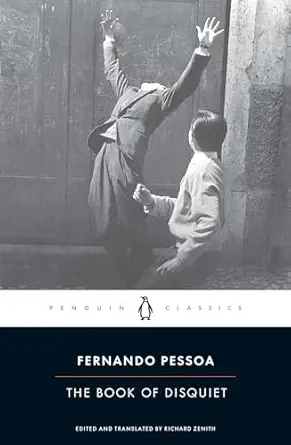
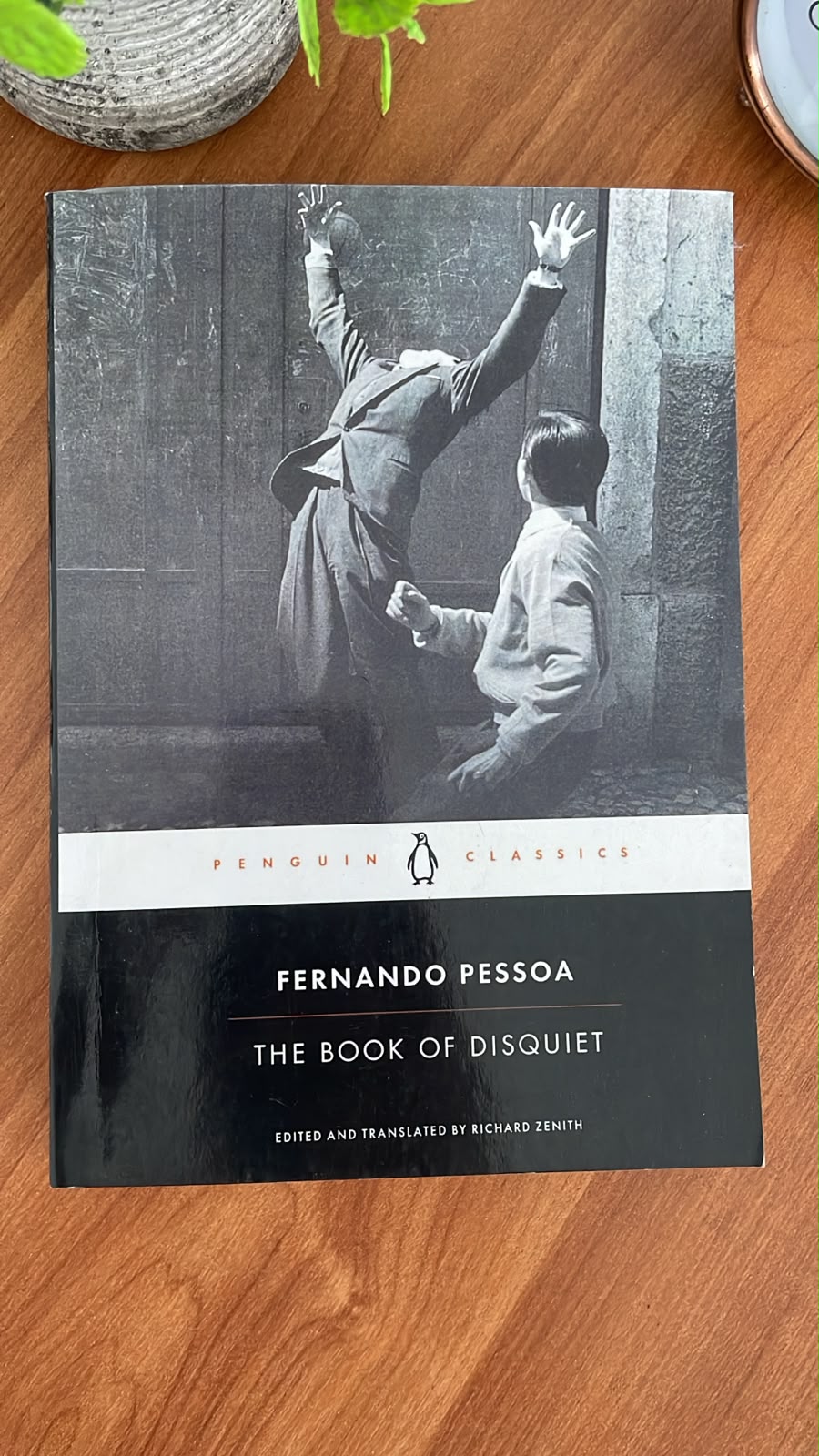

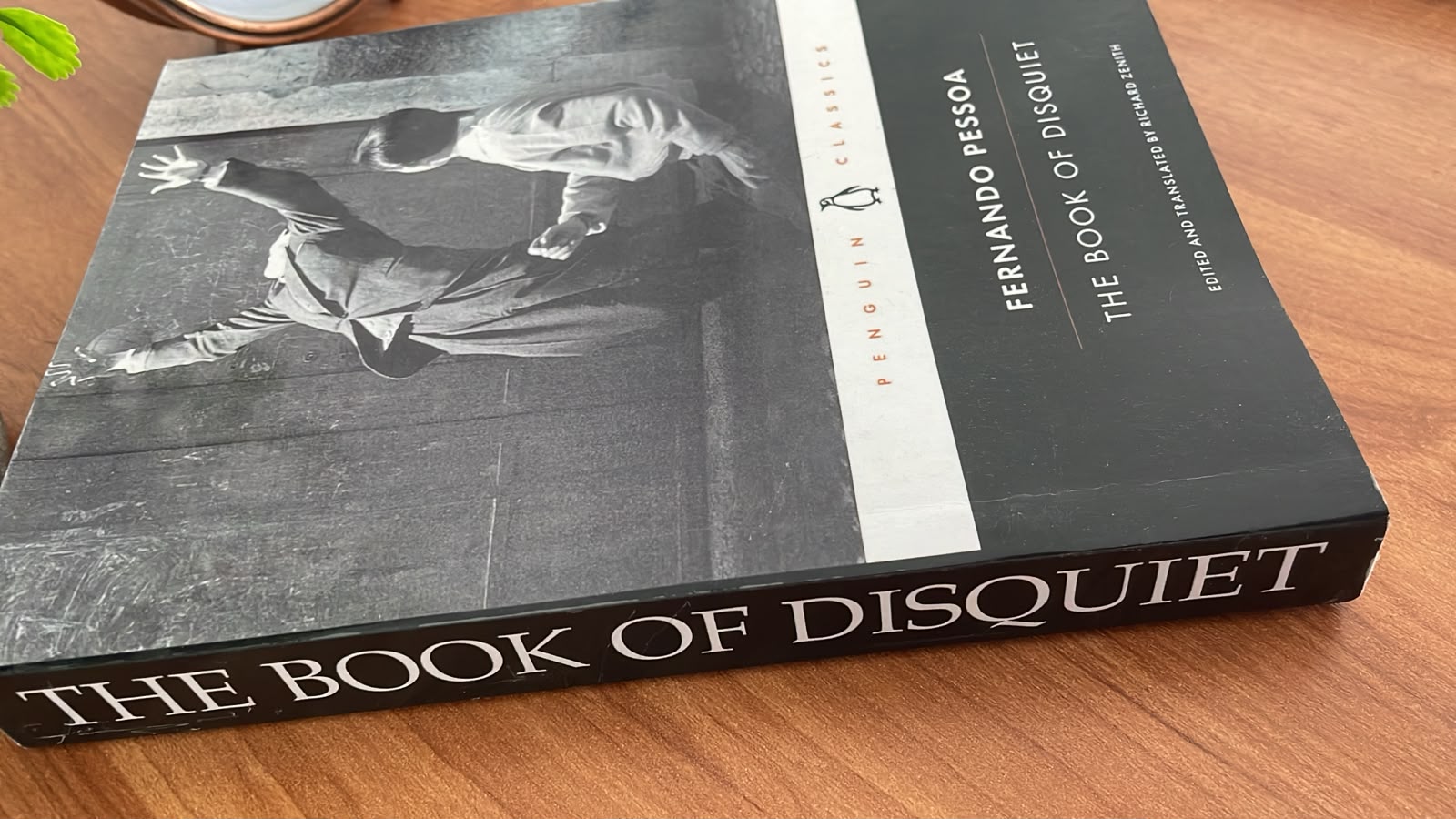
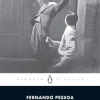
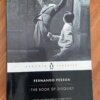
Book Of Disquiet by Fernando Pessoa and RICHARD Zenith


රු2,350.00
3 X Rs. 783.33 or 8% Cashback with


or 3 X රු783.33 with


or up to 4 X රු587.50 with


Product Short Description:
Book Of Disquiet by Fernando Pessoa (Edited by Richard Zenith) is a timeless collection of reflective writings that explores the depths of human thought, identity, and emotion. Through poetic and philosophical fragments, the book invites readers to slow down, embrace solitude, and understand the beauty of everyday life. Perfect for those seeking introspection, self-awareness, and a deeper connection with their inner world.
4 in stock
The Book of Disquiet by Fernando Pessoa
The Book of Disquiet by Fernando Pessoa is a unique literary classic about solitude, dreams, identity, consciousness, melancholy, imagination, and the hidden world of human thought.
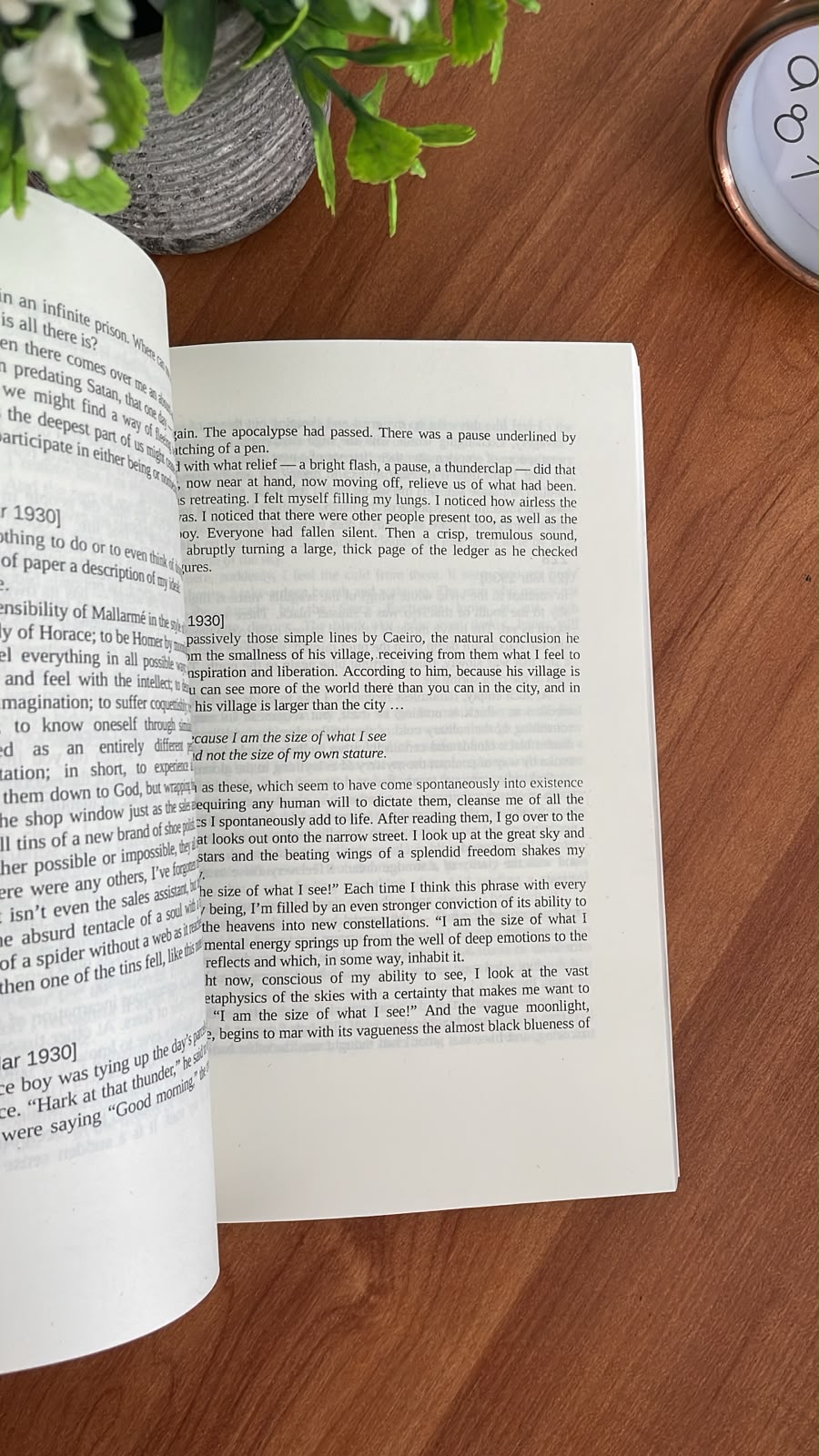
Rather than following a conventional plot, the book is made up of short reflections, observations, memories, dreams, and philosophical fragments.
Penguin Classics describes the work as part diary, part prose poetry, and part descriptive narrative.
Why Read The Book of Disquiet?
The Book of Disquiet is an excellent choice for readers who enjoy philosophical and introspective literature.
The book does not need to be read like a traditional novel.
Readers can move slowly through its fragments.
A single paragraph may contain an idea worth thinking about for much longer than it takes to read.
Meet Bernardo Soares
Much of the book is presented through Bernardo Soares.
Penguin describes Soares as one of Pessoa’s alternate selves and identifies the work as his fictional autobiography.
Soares is an assistant bookkeeper living in Lisbon.
His external life may appear quiet and ordinary.
His internal life is anything but ordinary.
He constantly observes himself, other people, the city, work, dreams, and the strange experience of simply being alive.
A Book About Inner Life
Many novels focus heavily on events.
The Book of Disquiet focuses more on consciousness.
What does it feel like to think too much?
What happens when imagination feels more powerful than reality?
How can someone feel alone even while surrounded by people?
Pessoa repeatedly returns to questions like these.
Solitude and Loneliness
Solitude is one of the strongest themes in the book.
Soares often appears separated from the world around him.
But solitude is not presented only as something negative.
Being alone also gives him space to observe, imagine, and think.
The result is a complicated relationship with loneliness.
He suffers from isolation while also finding meaning inside it.
Dreams and Imagination
Dreaming is central to The Book of Disquiet.
Pessoa often blurs the boundary between imagination and ordinary experience.
A dream can feel more meaningful than an event.
An imagined life can sometimes feel more attractive than a real one.
This gives the book a floating, almost dreamlike atmosphere.
The City of Lisbon
Lisbon plays an important role in the work.
Streets, offices, windows, cafés, weather, and ordinary city scenes become objects of intense observation.
Penguin notes that the book has become strongly associated with Pessoa’s vision of Lisbon.
The city becomes both a real place and a landscape for thought.
Work and Ordinary Life
Soares works in an office.
His routine is not glamorous.
Yet ordinary work gives him endless opportunities for reflection.
The book shows how even repetitive daily life can contain emotional complexity.
A desk, a street, an afternoon, or a quiet room can become the beginning of a philosophical meditation.
Identity and Multiple Selves
Fernando Pessoa is famous for writing through multiple literary identities.
Penguin explains that he created many alternate selves with distinctive biographies, personalities, beliefs, and literary styles.
This makes identity especially important in the book.
A person may not feel like one fixed self.
We may contain different desires, moods, memories, and ways of seeing the world.
Melancholy and Reflection
The Book of Disquiet often has a melancholy tone.
The narrator reflects on disappointment, distance, uncertainty, and the difficulty of finding lasting satisfaction.
But the writing is not simply pessimistic.
There is beauty in observation.
Even sadness can become something carefully examined and transformed into language.
A Different Kind of Novel
Readers expecting a clear beginning, middle, and ending may find this book unusual.
It is deliberately fragmentary.
Pessoa left behind unfinished and unpublished writings that were assembled and published after his death.
That fragmented structure has become part of the book’s identity.
It feels less like following a story and more like entering someone’s private consciousness.
Philosophy Without Being a Textbook
The book asks philosophical questions without presenting itself as an academic philosophy manual.
It examines meaning.
It examines identity.
It examines reality.
It also examines boredom, ambition, imagination, loneliness, work, art, and the strange experience of existing.
Readers do not need formal philosophical training to appreciate it.
Short Passages With Deep Ideas
One reason The Book of Disquiet is easy to revisit is its fragmentary structure.
Many sections are relatively short.
Readers can read a few pages and stop.
Later, they can return without needing to remember a complicated plot.
This makes the book especially suitable for slow reading.
A Posthumous Masterpiece
Pessoa died in 1935, leaving behind extensive unpublished material.
Penguin notes that the writings forming this book were discovered among the papers he left behind and were first published decades after his death.
That unusual publication history contributes to the book’s mysterious reputation.
It feels like a work assembled from a private archive of thoughts.
Richard Zenith Translation
The Penguin Classics edition was edited and translated by Richard Zenith.
Penguin identifies this edition as a complete and unabridged English translation and notes that it won the Calouste Gulbenkian Translation Prize for Portuguese Translation.
Readers buying different editions should check the translator because the arrangement and translation can vary.
About Fernando Pessoa
Fernando Pessoa was a Portuguese poet and writer associated with modernism.
Penguin lists his lifetime as 1888–1935 and describes him as a major figure in Portugal’s Modernist movement.
He became especially famous for creating multiple literary identities rather than writing through only one authorial voice.
This experimentation with identity remains one of the most distinctive features of his work.
7 Powerful Reasons to Read The Book of Disquiet
1. It explores inner life deeply.
Few books spend so much time examining thought itself.
2. It is perfect for slow reading.
You can read one fragment at a time.
3. It explores solitude honestly.
Loneliness appears as both painful and strangely productive.
4. It turns ordinary life into literature.
Work, streets, weather, and quiet moments become meaningful.
5. It explores identity in an unusual way.
Pessoa’s alternate selves challenge the idea of one fixed personality.
6. It combines fiction, diary, and philosophy.
The book refuses to fit neatly into a single genre.
7. It rewards rereading.
A passage may feel completely different when read at another stage of life.
Book Details
For the Penguin Classics paperback edition translated by Richard Zenith:
Author: Fernando Pessoa
Editor & Translator: Richard Zenith
Publisher: Penguin Classics
Format: Paperback
Pages: 544
ISBN: 9780141183046
Publication Date: December 31, 2002
Check your physical copy before entering edition-specific details if your ISBN differs.
Perfect for Readers Interested In
The Book of Disquiet is a strong choice for readers interested in:
- Literary fiction
- Modern classics
- Philosophical fiction
- Fernando Pessoa
- Portuguese literature
- Modernist literature
- Solitude
- Identity
- Existential themes
- Prose poetry
- Journals and diaries
- Reflective writing
Buy The Book of Disquiet in Sri Lanka
Looking for The Book of Disquiet in Sri Lanka?
Fernando Pessoa’s extraordinary work is ideal for readers who enjoy literary classics, philosophical reflections, solitude, dreams, identity, consciousness, and deeply introspective writing.
It is a book to experience slowly rather than rush through.
Add The Book of Disquiet to your literary classics collection today. https://www.penguinrandomhouse.com/books/286380/the-book-of-disquiet-by-fernando-pessoa-edited-and-translated-by-richard-zenith/
Be the first to review “Book Of Disquiet by Fernando Pessoa and RICHARD Zenith”
Related products
Out of stock
Autobiography
රු2,750.00
3 X Rs. 916.67 or 8% Cashback with
or 3 X රු916.67 with
or up to 4 X රු687.50 with

Non-Fiction & Knowledge
රු2,250.00
3 X Rs. 750.00 or 8% Cashback with
or 3 X රු750.00 with
or up to 4 X රු562.50 with
-19%

Out of stock
Non-Fiction & Knowledge
Original price was: රු2,650.00.රු2,150.00Current price is: රු2,150.00.
3 X Rs. 716.67 or 8% Cashback with
or 3 X රු716.67 with
or up to 4 X රු537.50 with

Out of stock
Self-Help & Psychology
රු1,500.00
3 X Rs. 500.00 or 8% Cashback with
or 3 X රු500.00 with
or up to 4 X රු375.00 with

Out of stock
Non-Fiction & Knowledge
රු1,500.00
3 X Rs. 500.00 or 8% Cashback with
or 3 X රු500.00 with
or up to 4 X රු375.00 with
-24%

Out of stock
Non-Fiction & Knowledge
Original price was: රු2,100.00.රු1,600.00Current price is: රු1,600.00.
3 X Rs. 533.33 or 8% Cashback with
or 3 X රු533.33 with
or up to 4 X රු400.00 with

Out of stock
Non-Fiction & Knowledge
රු1,900.00
3 X Rs. 633.33 or 8% Cashback with
or 3 X රු633.33 with
or up to 4 X රු475.00 with
-33%

Self-Help & Psychology
Original price was: රු2,300.00.රු1,550.00Current price is: රු1,550.00.
3 X Rs. 516.67 or 8% Cashback with
or 3 X රු516.67 with
or up to 4 X රු387.50 with
Reviews
There are no reviews yet.