
No products in the cart.
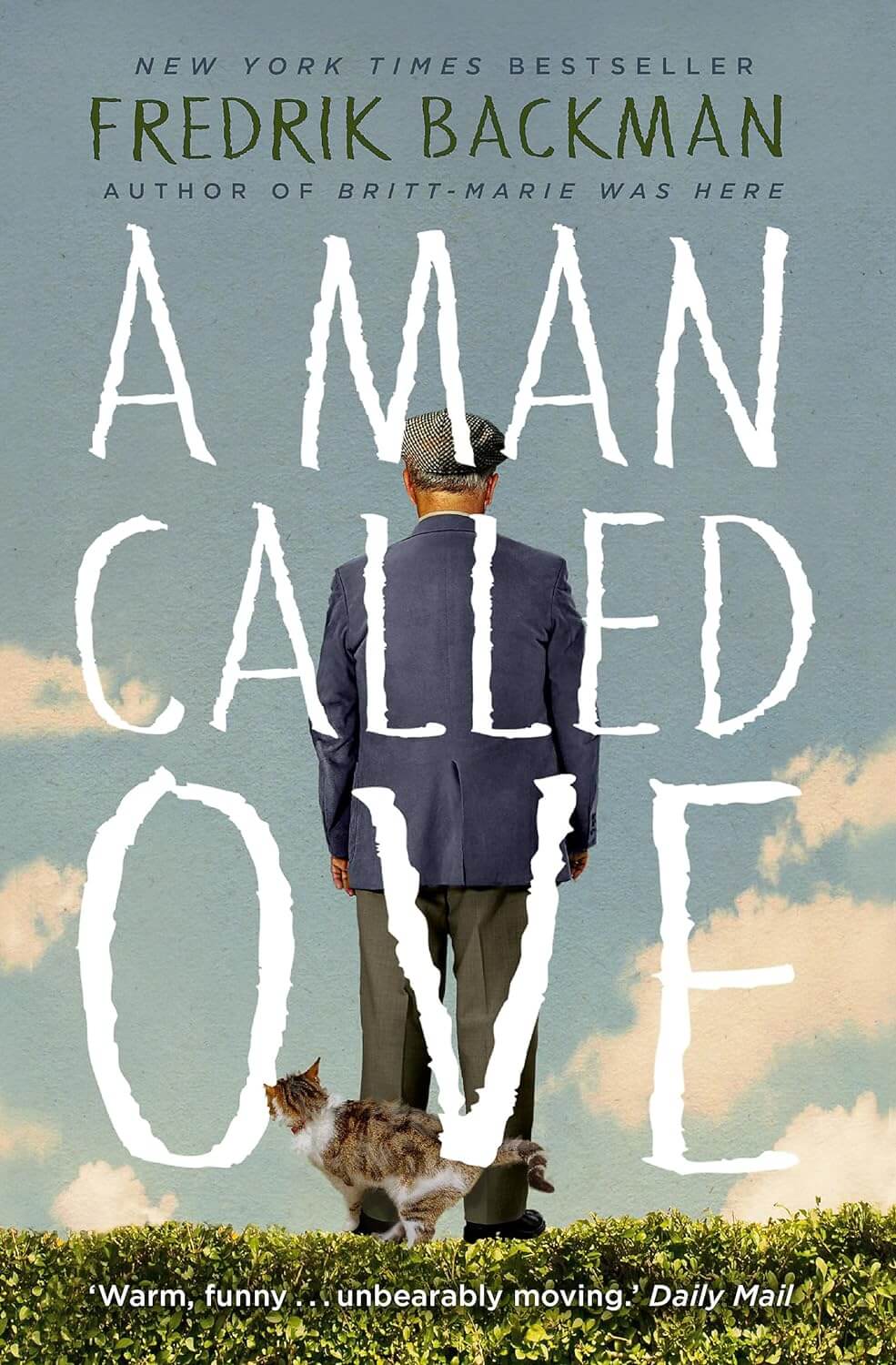
A Man Called Ove by Fredrik Backman


රු1,750.00
3 X Rs. 583.33 or 8% Cashback with


or 3 X රු583.33 with


or up to 4 X රු437.50 with


A Man Called Ove by Fredrik Backman is a moving and humorous novel about a grumpy widower whose carefully ordered life begins to change when lively new neighbors enter his world. As Ove’s past and his love for his late wife Sonja are gradually revealed, unexpected friendships, a stray cat and a growing community help him rediscover purpose. Filled with grief, humor, kindness, found family and second chances, this bestselling standalone novel is ideal for readers who enjoy emotional, character-driven fiction.
Out of stock
Email when stock available
A Man Called Ove by Fredrik Backman is a funny, heartbreaking and deeply human novel about grief, loneliness, friendship, community and the unexpected ways other people can give life new meaning.
Ove is fifty-nine years old.
He likes:
Rules.
Order.
Routine.
Properly parked cars.
Things being done correctly.
He dislikes:
People who ignore rules.
Unnecessary technology.
Bad drivers.
People who do not know how to use tools.
And almost anything that disrupts his carefully controlled life.
To his neighbors, Ove can appear:
Grumpy.
Stubborn.
Difficult.
Argumentative.
But beneath the anger is something much more complicated.
Ove is grieving.
After losing his beloved wife, Sonja, he feels as though the most important part of his life has disappeared.
Then new neighbors arrive.
Among them is Parvaneh, a lively, determined and heavily pregnant woman who refuses to be intimidated by Ove’s personality.
Soon Ove’s quiet plans are interrupted by:
Neighbors needing help.
Cars needing fixing.
Children appearing at his door.
A stray cat.
Old disagreements.
Unexpected friendships.
And a community that slowly begins depending on him.
A Man Called Ove by Fredrik Backman is not simply a story about a grumpy old man.
It is a story about discovering the person underneath someone’s difficult exterior.
It asks:
How much can grief change a person?
Can someone find purpose after believing their best years are over?
What happens when loneliness collides with community?
And can a person who thinks nobody needs him discover that he has quietly become essential to many people’s lives?
A Man Called Ove by Fredrik Backman – Book Overview
A Man Called Ove by Fredrik Backman follows Ove, a widower whose life has become defined by routine, frustration and grief.
Every morning, he makes his rounds through the neighborhood.
He checks:
Parking.
Signs.
Gates.
Rules.
He notices everything that people are doing incorrectly.
From the outside, Ove appears obsessed with small problems.
But as the novel moves between the present and Ove’s past, Fredrik Backman gradually reveals why he became the man he is.
Readers discover:
His childhood.
His values.
His relationship with Sonja.
His working life.
His losses.
His loyalty.
His stubborn sense of fairness.
His belief that people should take responsibility.
The story slowly transforms Ove from a seemingly unpleasant neighbor into a deeply sympathetic character.
Who Is Ove?
Ove is a man who believes actions matter more than words.
He is not particularly interested in:
Emotional speeches.
Polite small talk.
Social performance.
He respects people who:
Work hard.
Keep promises.
Know how to fix things.
Take responsibility.
Do what they say they will do.
This sometimes makes him seem harsh.
But his standards are closely connected to his sense of morality.
A Grumpy Character With a Big Heart
One of the great strengths of A Man Called Ove by Fredrik Backman is the contrast between Ove’s personality and his actions.
He frequently complains.
He becomes irritated.
He criticizes.
Yet when someone genuinely needs help, Ove often helps anyway.
His kindness appears through action rather than language.
Sonja
Sonja is Ove’s late wife and one of the most important people in his story.
She is very different from him.
Where Ove can be rigid, Sonja brings warmth.
Where he sees rules, she often sees people.
Where he sees practical problems, she sees possibility.
Their relationship becomes central to understanding Ove.
Love
The love story inside A Man Called Ove by Fredrik Backman is quiet but powerful.
It is not built mainly around dramatic romance.
Instead, it develops through:
Shared life.
Routine.
Loyalty.
Commitment.
Ordinary moments.
For Ove, Sonja does not simply become his wife.
She becomes the person who gives color to his world.
Grief
After Sonja’s death, Ove’s world becomes much smaller.
Grief changes:
His routines.
His relationships.
His sense of purpose.
His view of the future.
The novel shows how grief can make ordinary life feel meaningless.
Life After Loss
One of the central questions is:
How do you continue after losing the person who gave your life meaning?
There is no simple answer.
Ove cannot simply “move on.”
Instead, he gradually discovers that love for someone who has died can continue while new relationships also become meaningful.
Parvaneh
Parvaneh becomes one of the most important characters in Ove’s present life.
She is energetic.
Intelligent.
Persistent.
Practical.
And not afraid of Ove.
Where other people may avoid him, Parvaneh keeps showing up.
She asks for help.
Argues with him.
Challenges him.
Includes him.
Their relationship becomes one of the emotional highlights of the novel.
An Unlikely Friendship
Ove and Parvaneh are very different.
But that difference helps them.
Parvaneh does not try to transform Ove into a completely different person.
She learns how to understand him.
And Ove gradually learns to care for her family.
Community
Community is one of the strongest themes in A Man Called Ove by Fredrik Backman.
Ove begins the story believing he does not need other people.
But his neighborhood slowly proves otherwise.
People need:
Help.
Advice.
Protection.
Repair work.
Transportation.
Friendship.
Ove keeps becoming involved.
Sometimes reluctantly.
Sometimes angrily.
But still involved.
Being Needed
Purpose often comes from being needed.
A person may believe:
Nobody cares.
Nobody depends on me.
Nothing I do matters.
But community can reveal something different.
A simple action may matter enormously to someone else.
Loneliness
Loneliness is one of the novel’s deepest themes.
Ove is surrounded by houses and people.
Yet he feels emotionally isolated.
This shows that loneliness is not always the absence of people.
Sometimes it is the absence of connection.
Hidden Pain
People rarely know everything another person is carrying.
A rude person may be grieving.
A quiet person may be afraid.
An angry person may feel abandoned.
A Man Called Ove by Fredrik Backman encourages readers to look beyond first impressions.
Judging People Too Quickly
At first, readers may judge Ove the same way his neighbors do.
Grumpy.
Annoying.
Unreasonable.
But Backman gradually reveals more of his history.
That creates an important lesson:
Understanding changes judgment.
Friendship
Friendship in the novel often develops accidentally.
Ove does not go searching for friends.
Friends happen to him.
Someone needs help.
Someone asks a question.
Someone refuses to leave him alone.
A relationship begins.
The Cat
A stray cat becomes another unexpected part of Ove’s life.
Ove does not exactly want a pet.
Naturally, that makes the situation even more entertaining.
The cat contributes both humor and warmth to the story.
Humor
Although A Man Called Ove by Fredrik Backman explores grief and serious emotional themes, it is also extremely funny.
Much of the humor comes from:
Ove’s observations.
His irritation with modern life.
His arguments with neighbors.
His strong opinions.
The difference between what he says and what he actually does.
The humor prevents the novel from becoming overwhelmingly sad.
Humor and Sadness Together
Real life rarely contains one emotion at a time.
People can:
Grieve.
Laugh.
Love.
Become irritated.
Feel hopeful.
all during the same period.
The novel reflects this emotional complexity.
Rules
Ove loves rules.
To him, rules create order.
A properly functioning society requires people to:
Park correctly.
Follow agreements.
Respect boundaries.
Take responsibility.
His obsession can be funny, but it also reflects something deeper.
He wants the world to make sense.
Control
Grief often creates helplessness.
Rules provide something Ove can control.
He cannot control:
Loss.
Time.
Death.
Other people.
But he can control whether a car is parked correctly.
Small rules become a way of maintaining order in a world that has become emotionally chaotic.
Work
Work is another important part of Ove’s identity.
He values:
Reliability.
Competence.
Practical knowledge.
Hard work.
A person’s profession can become closely connected with how they understand themselves.
When work disappears, identity can feel unstable.
Practical Skills
Ove knows how to fix things.
Cars.
Houses.
Mechanical problems.
Practical problems make sense to him.
They have causes.
They have solutions.
Human emotions are more complicated.
Cars
Cars become an entertaining recurring detail throughout the novel.
Ove has extremely strong opinions about what people drive.
To him, a car can reveal something about character.
Readers quickly learn that automotive loyalty is serious business in Ove’s world.
Old Rivalries
Ove’s relationships with longtime neighbors also reveal how small disagreements can grow across years.
Pride makes reconciliation difficult.
But time can change what matters.
Pride
Pride can protect dignity.
But excessive pride can also isolate people.
Sometimes asking for help requires more courage than pretending you need nobody.
Asking for Help
Ove prefers doing things himself.
But life eventually requires people to rely on each other.
Accepting help does not mean weakness.
It can mean trust.
Helping Others
Interestingly, Ove often finds it easier to help than to be helped.
This is common.
Some people are comfortable being useful but uncomfortable admitting vulnerability.
The novel gradually challenges this imbalance.
Purpose
Purpose is central to A Man Called Ove by Fredrik Backman.
What makes life worth continuing?
Career?
Marriage?
Family?
Friendship?
Community?
Responsibility?
Ove’s answer changes throughout the story.
Small Responsibilities
Purpose does not always arrive as one giant mission.
Sometimes it looks like:
Driving someone somewhere.
Repairing something.
Helping a child.
Taking care of a cat.
Protecting a neighbor.
Small responsibilities can reconnect someone with life.
Second Chances
The novel is deeply interested in second chances.
Not necessarily the kind where the past disappears.
The past remains.
But people can still create something meaningful afterward.
Starting Again
Starting again does not mean returning to who you were before.
Sometimes life after loss requires becoming someone different.
Family
Family in A Man Called Ove by Fredrik Backman is broader than biology.
Some families are created through:
Friendship.
Neighbors.
Shared responsibility.
People consistently showing up.
This becomes one of the novel’s most uplifting messages.
Found Family
Ove gradually becomes surrounded by people he did not choose.
Yet they begin functioning like family.
This is a classic example of a found-family theme.
Belonging
Everyone wants some form of belonging.
Even people who claim they do not need anyone.
Belonging means knowing:
Someone notices if you disappear.
Someone expects you.
Someone cares what happens to you.
Kindness Through Actions
Ove rarely expresses affection in conventional ways.
He may not say:
“I care about you.”
Instead, he:
Fixes something.
Drives someone.
Defends someone.
Shows up.
For some people, service is a language of love.
Integrity
Ove has a strong personal moral code.
He believes:
Promises matter.
Work should be done properly.
People should take responsibility.
Power should not be abused.
This can make him difficult, but it also explains much of his loyalty.
Standing Up for Others
Ove can become especially determined when he believes someone is being treated unfairly.
His stubbornness, which sometimes causes conflict, can also become a strength.
Bureaucracy
The novel includes conflict between ordinary people and impersonal institutions.
Ove strongly dislikes systems that treat people as paperwork rather than human beings.
This becomes part of the novel’s broader theme of protecting dignity.
Aging
The story also explores aging.
Older people can sometimes feel increasingly invisible.
Society changes.
Technology changes.
Work changes.
Language changes.
People who once felt useful may begin wondering where they belong.
Older People Still Matter
A Man Called Ove by Fredrik Backman challenges the idea that usefulness disappears with age.
Ove has:
Skills.
Experience.
Loyalty.
Practical knowledge.
His community benefits enormously from those qualities.
Generational Differences
Ove frequently struggles with younger people.
They use technology differently.
Drive differently.
Solve problems differently.
But different generations can still learn from one another.
Technology
Ove’s irritation with modern technology creates several humorous moments.
Yet it also highlights how quickly society changes.
Things one generation considers obvious may feel unnecessary or confusing to another.
Change
Ove dislikes change.
Change threatens routine.
But life continues changing regardless.
Neighbors arrive.
Relationships shift.
People leave.
New responsibilities appear.
Ove must eventually decide whether to resist everything or allow something new into his life.
Acceptance
Acceptance does not mean liking every change.
It means recognizing reality and deciding how to respond.
Depression and Suicidal Thoughts
An important part of A Man Called Ove by Fredrik Backman involves Ove’s severe grief and suicidal thoughts and behavior.
These themes are significant to the plot.
The novel handles them alongside:
Loneliness.
Bereavement.
Human connection.
Community support.
Readers sensitive to suicide-related content should be aware of this before beginning the book.
Human Connection
Connection repeatedly interrupts Ove’s isolation.
A knock on the door.
A request for help.
A neighbor needing transportation.
A child asking something.
These interruptions initially frustrate Ove.
But they gradually reconnect him with the world.
We Affect More People Than We Realize
One of the novel’s strongest ideas is that people often underestimate their impact.
A person may think:
My life does not matter.
But someone else may remember:
The time they helped.
The advice they gave.
The kindness they showed.
The moment they arrived when nobody else did.
Our importance is not always visible to us.
Fredrik Backman
Fredrik Backman is a Swedish author known for emotionally rich novels that combine:
Humor.
Grief.
Community.
Ordinary people.
Complicated relationships.
His other popular books include:
Anxious People
Britt-Marie Was Here
My Grandmother Asked Me to Tell You She’s Sorry
Beartown
Us Against You
The Winners
Readers who enjoy Backman’s combination of humor and emotional depth may find A Man Called Ove by Fredrik Backman an excellent introduction to his work.
Is A Man Called Ove a Romance?
Not primarily.
The love between Ove and Sonja is extremely important, but the novel is better described as:
Contemporary fiction.
Family and community fiction.
Humorous fiction.
Emotional literary fiction.
Its central focus is grief, purpose and human connection.
Is A Man Called Ove Sad?
Yes, parts of the novel are very emotional.
It deals with:
Bereavement.
Loneliness.
Death.
Suicide.
Loss.
But it is not only sad.
The novel also contains considerable:
Humor.
Friendship.
Hope.
Warmth.
Community.
That balance is part of its appeal.
Is A Man Called Ove Easy to Read?
The writing is accessible and the chapters move quickly.
However, the emotional themes can be heavy.
Readers looking for character-driven fiction with both humor and sadness are likely to enjoy it.
Is A Man Called Ove a Standalone?
Yes.
A Man Called Ove by Fredrik Backman is a standalone novel.
You do not need to read any other Fredrik Backman book first.
Film Adaptations
The novel has inspired screen adaptations.
A Swedish film titled A Man Called Ove was released in 2015.
An American adaptation titled A Man Called Otto was later released, adapting the story for a different setting.
Readers who have seen either adaptation may enjoy discovering more of Ove’s thoughts and history in the original novel.
Book Versus Movie
Books and films naturally tell stories differently.
The novel provides more space for:
Ove’s inner thoughts.
His past.
His relationship with Sonja.
Neighborhood details.
Character development.
Readers who enjoyed the movie adaptation may therefore still find plenty of additional depth in the book.
Important Themes
A Man Called Ove by Fredrik Backman explores:
- Grief
- Love
- Friendship
- Loneliness
- Community
- Marriage
- Aging
- Purpose
- Found family
- Responsibility
- Second chances
- Kindness
- Integrity
- Depression
- Hope
- Helping others
- Belonging
- Change
- Human connection
- Life after loss
Content Warning
Readers should be aware that the novel includes mature and potentially sensitive material involving:
- Suicide attempts and suicidal thoughts
- Death of a spouse
- Grief and bereavement
- Depression and loneliness
- Pregnancy loss
- Serious accident and injury
- Illness
- Death
- Family loss
- Emotional distress
Although these themes are significant, the overall novel also contains strong messages about connection, friendship, community and renewed purpose.
7 Powerful Reasons to Read A Man Called Ove by Fredrik Backman
There are many reasons to read A Man Called Ove by Fredrik Backman, but seven stand out:
- Ove is an unforgettable character – His grumpy exterior, strict rules and unexpected acts of kindness make him both funny and deeply moving.
- The novel balances humor and heartbreak beautifully – Serious themes such as grief and loneliness exist alongside genuinely funny everyday situations.
- Ove and Sonja’s love story gives the novel emotional depth – Their relationship helps readers understand the man Ove became and the enormous loss he is carrying.
- Parvaneh brings warmth and energy into Ove’s life – Their unlikely friendship becomes one of the most memorable relationships in the story.
- The neighborhood slowly becomes a found family – Ove discovers that community can provide purpose even when he believes he has nothing left to offer.
- The story encourages readers to look beyond first impressions – Ove appears difficult at first, but understanding his past transforms the way readers see him.
- It offers a powerful message about purpose and second chances – The novel shows that meaningful relationships and responsibilities can appear even when someone believes the important part of life is already over.
Why Read A Man Called Ove by Fredrik Backman?
A Man Called Ove by Fredrik Backman is an excellent choice for readers interested in:
- Fredrik Backman books
- Emotional fiction
- Contemporary fiction
- Family stories
- Grief and healing
- Found family
- Friendship
- Community
- Second chances
- Older protagonists
- Marriage stories
- Character-driven fiction
- Humorous novels
- Books about loneliness
- Books about purpose
- Heartwarming fiction
- Book club novels
- Stories about kindness
- Life after loss
- Books adapted into movies
It is particularly suitable for readers who enjoy stories that can make them laugh and cry within the same chapter.
Who Should Read This Book?
A Man Called Ove by Fredrik Backman may especially appeal to:
- Fredrik Backman fans
- Readers who enjoy emotional fiction
- Fans of character-driven novels
- Readers interested in found-family stories
- Book club readers
- Readers who enjoy grumpy but lovable characters
- Fans of stories about unlikely friendships
- Readers interested in grief and healing
- Readers who enjoy humorous contemporary fiction
- Fans of A Man Called Otto
- Readers looking for meaningful standalone novels
- Anyone who enjoys stories about ordinary people with extraordinary emotional depth
A Man Called Ove by Fredrik Backman – Sometimes Being Needed Is Enough to Begin Again
A Man Called Ove by Fredrik Backman begins with a man who believes his life has already given him everything important it ever will.
He had Sonja.
He had work.
He had routine.
Then those things disappeared.
What remains seems smaller.
Quieter.
Emptier.
But life refuses to leave Ove alone.
Neighbors arrive.
Someone needs help.
A child needs him.
A cat appears.
Someone needs a ride.
Someone needs defending.
Again and again, ordinary people interrupt his isolation.
And gradually those interruptions become relationships.
The novel’s greatest strength is that it does not suddenly turn Ove into another person.
He remains stubborn.
He still complains.
He still has strong opinions.
He still wants people to follow the rules.
But he also begins to understand something important.
A person’s life can have meaning even when it does not look like the life they originally planned.
Purpose can return in unexpected forms.
Through:
Friendship.
Service.
Family.
Responsibility.
Community.
Love does not end simply because someone dies.
Sometimes it changes shape.
And sometimes the people who enter our lives afterward do not replace what was lost.
They simply remind us that there can still be something worth staying for.
For readers who love emotional stories about grief, friendship, community, second chances and the hidden kindness inside difficult people, A Man Called Ove by Fredrik Backman is a moving and memorable novel about how much one ordinary life can matter.
Learn more about A Man Called Ove by Fredrik Backman on the official Simon & Schuster website.
Explore more literary fiction books at Bargain Books.
| Author | Fredrik Backman |
|---|---|
| Type | Paperback Printed Book |
| ISBN/ISSN | 978-1444775815, 9781444775815 |
| Language | English |
| Pages | 320 |
Be the first to review “A Man Called Ove by Fredrik Backman”
Related products
Non-Fiction & Knowledge
රු1,950.00
3 X Rs. 650.00 or 8% Cashback with
or 3 X රු650.00 with
or up to 4 X රු487.50 with
-26%
Non-Fiction & Knowledge
The 7 Habits of Highly Effective People by Stephen R. Covey – Blue Cover
Original price was: රු2,300.00.රු1,700.00Current price is: රු1,700.00.
3 X Rs. 566.67 or 8% Cashback with
or 3 X රු566.67 with
or up to 4 X රු425.00 with
-34%
Non-Fiction & Knowledge
Original price was: රු2,250.00.රු1,490.00Current price is: රු1,490.00.
3 X Rs. 496.67 or 8% Cashback with
or 3 X රු496.67 with
or up to 4 X රු372.50 with
Out of stock
Non-Fiction & Knowledge
රු1,500.00
3 X Rs. 500.00 or 8% Cashback with
or 3 X රු500.00 with
or up to 4 X රු375.00 with
Out of stock
Non-Fiction & Knowledge
රු1,900.00
3 X Rs. 633.33 or 8% Cashback with
or 3 X රු633.33 with
or up to 4 X රු475.00 with
රු2,000.00
3 X Rs. 666.67 or 8% Cashback with
or 3 X රු666.67 with
or up to 4 X රු500.00 with
Non-Fiction & Knowledge
රු2,450.00
3 X Rs. 816.67 or 8% Cashback with
or 3 X රු816.67 with
or up to 4 X රු612.50 with
-7%
Out of stock
Original price was: රු4,500.00.රු4,200.00Current price is: රු4,200.00.
3 X Rs. 1,400.00 or 8% Cashback with
or 3 X රු1,400.00 with
or up to 4 X රු1,050.00 with
Reviews
There are no reviews yet.