No products in the cart.
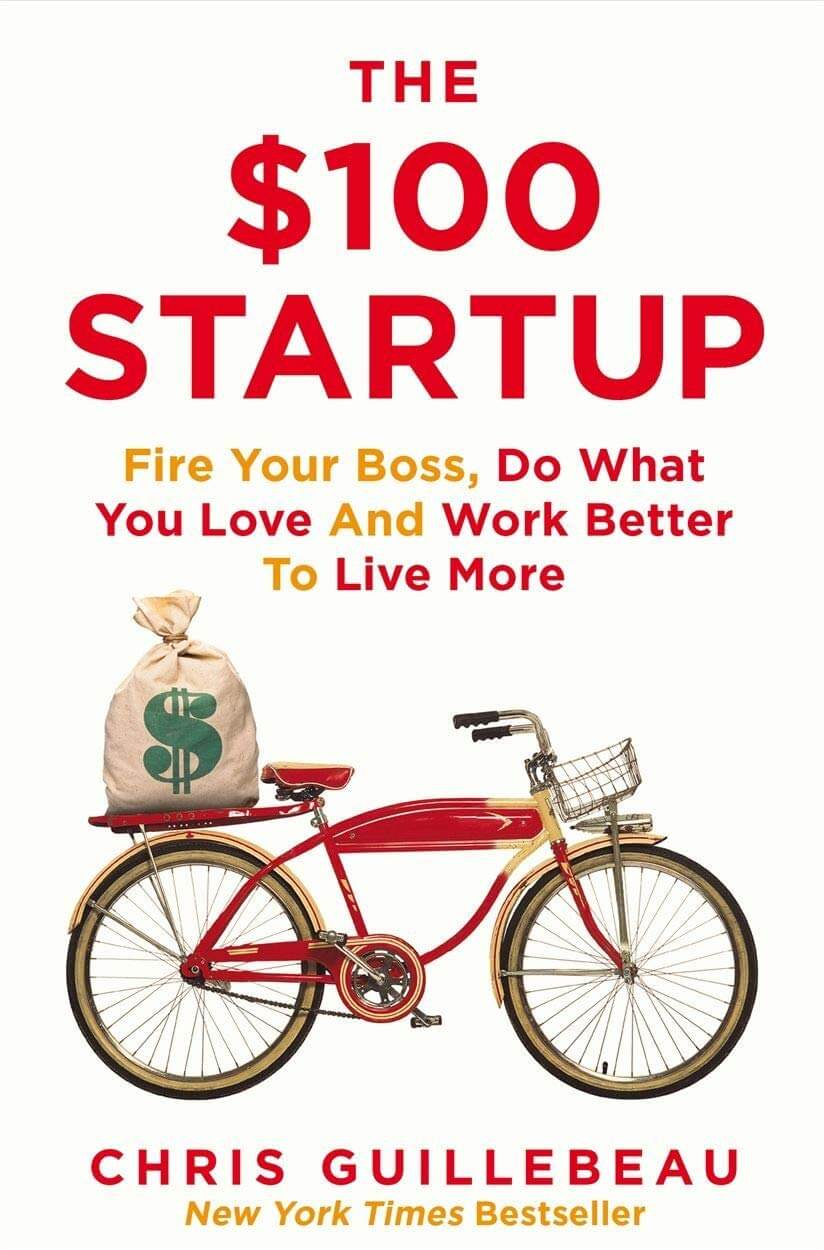
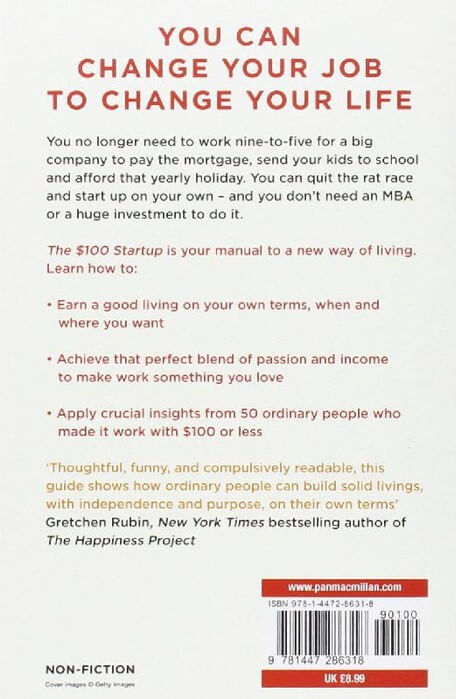
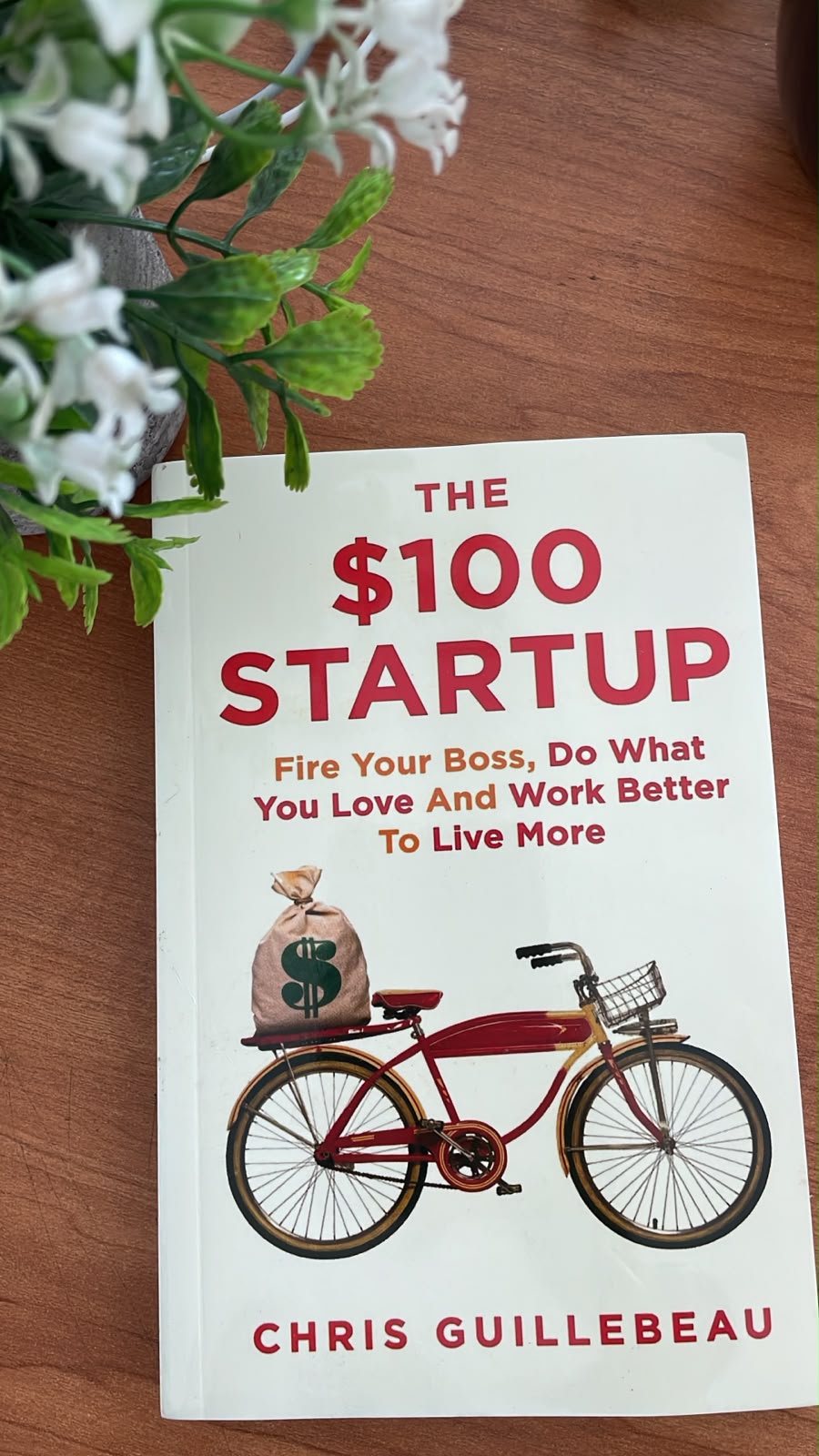
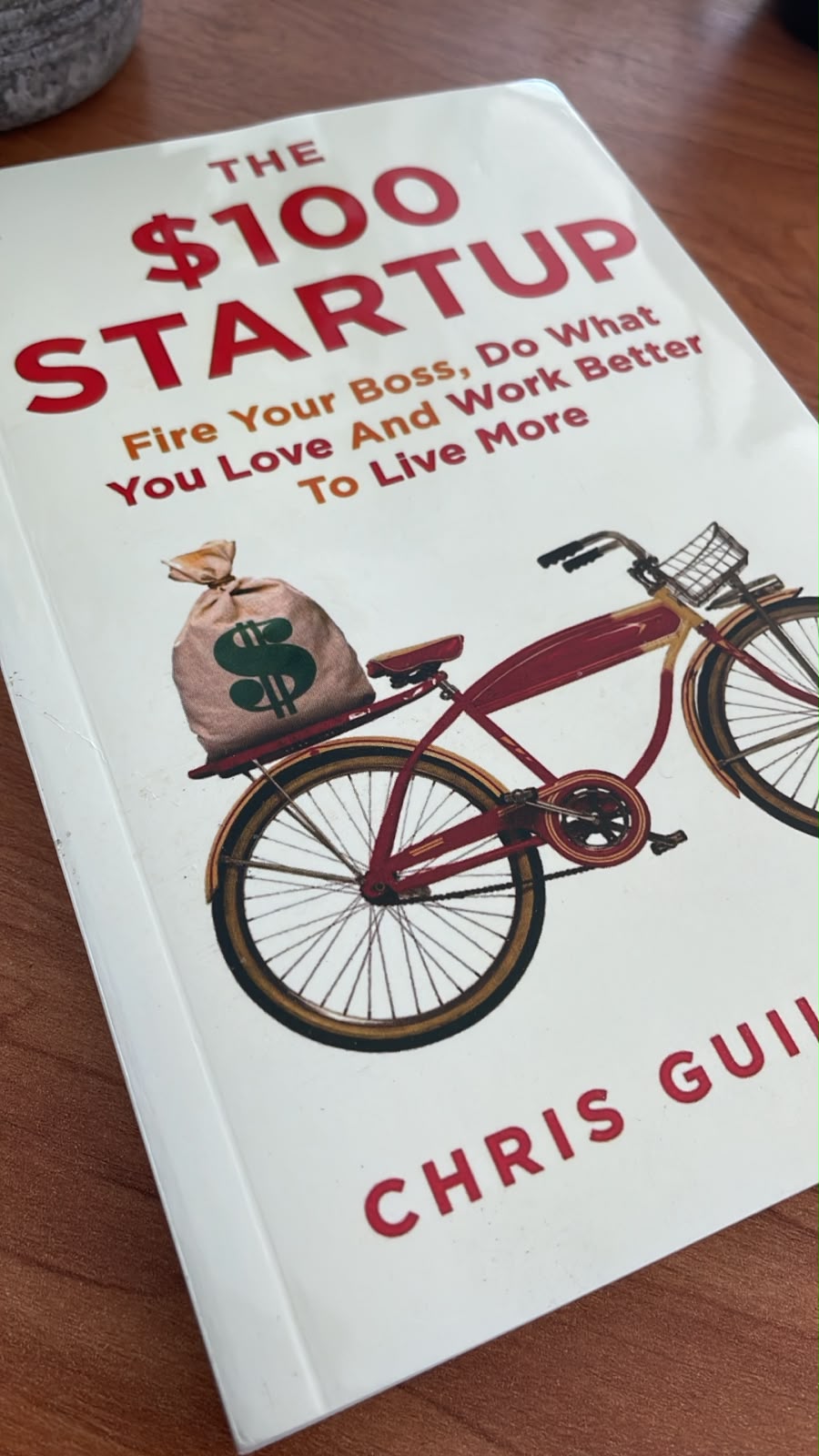




The $100 Startup by Chris Guillebeau

රු1,650.00
3 X Rs. 550.00 or 8% Cashback with


or 3 X රු550.00 with


or up to 4 X රු412.50 with


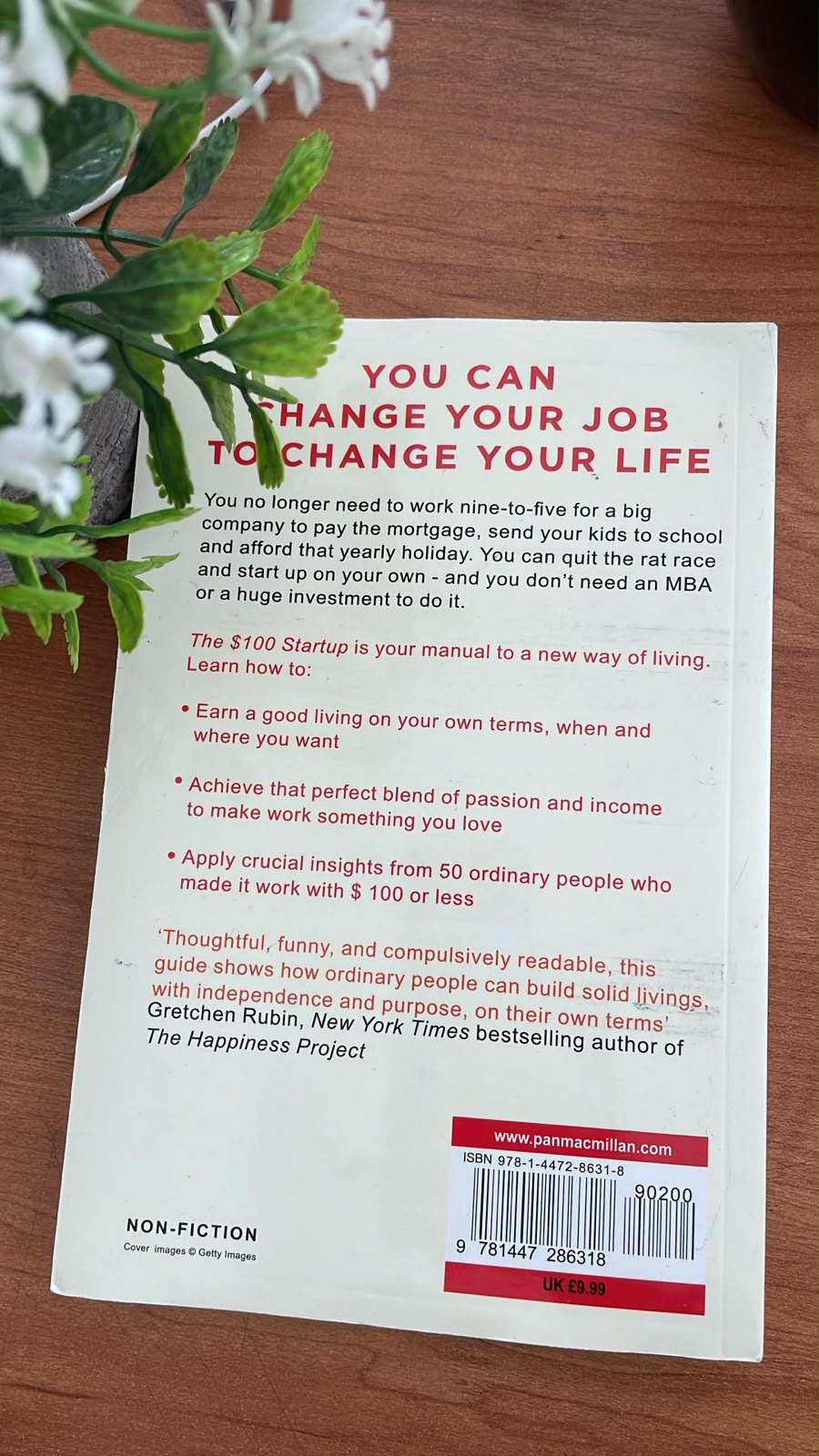
100 Startup by Chris Guillebeau is a practical entrepreneurship guide for anyone who wants to turn useful skills, interests and ideas into a profitable independent business.
Drawing lessons from 50 ordinary people who built businesses with startup costs of $100 or less, Guillebeau explains how entrepreneurs can combine passion with something customers are willing to pay for.
Rather than focusing on complicated business plans or large investments, the book emphasises creating value, finding customers, launching quickly and building a business that supports the life you want.
Product details:
- Full title: The $100 Startup
- Author: Chris Guillebeau
- Publisher: Pan Macmillan
- Imprint: Pan
- Format: Paperback
- Pages: 304
- Language: English
- ISBN-13: 9781447286318
- ISBN-10: 1447286316
- Publication date: 15 January 2015
- Dimensions: Approximately 19.7 × 2 × 13 cm
- Listed weight: Approximately 216 g
- Categories: Business, Entrepreneurship, Personal Success and Self-Help
- Key themes: Starting a business, finding customers, creating value, earning independently and lifestyle entrepreneurship
17 in stock
The $100 Startup
100 Startup by Chris Guillebeau is a practical business and entrepreneurship guide for people who want to create an independent source of income without needing enormous startup capital, an MBA or a complicated business structure.
The central idea is simple: a small, useful business can often begin with skills you already possess, a clearly defined customer problem and the willingness to take action. Chris Guillebeau combines practical advice with examples of ordinary people who created profitable businesses from relatively modest beginnings.
Instead of presenting entrepreneurship as something reserved for wealthy investors or experienced executives, the book shows how individuals can build businesses around valuable skills, services and ideas.
100 Startup by Chris Guillebeau
100 Startup by Chris Guillebeau explores how people can move away from conventional ideas about employment and create work that provides both income and greater independence.
Pan Macmillan highlights lessons from 50 ordinary people who started businesses with $100 or less. Their experiences demonstrate that successful entrepreneurship does not always begin with a large investment, specialist qualifications or an elaborate corporate structure.
The book focuses on practical questions such as:
- What can you already do well?
- Which skills could help another person?
- What problems can you solve?
- What will customers actually pay for?
- How can you test an idea cheaply?
- How quickly can you launch?
- How can you turn a useful idea into sustainable income?
These questions help readers move from simply thinking about entrepreneurship to identifying realistic opportunities.
Turn Skills into Business Opportunities
One important theme in 100 Startup by Chris Guillebeau is the relationship between personal interests, useful skills and customer demand.
Enjoying an activity does not automatically make it a profitable business. A successful idea also needs to provide something other people value.
For example, someone may enjoy photography, writing, teaching, technology, design, travel or fitness. The business opportunity appears when those interests are combined with a specific benefit that customers are willing to purchase.
Readers can ask themselves:
- What skills do people already ask me for help with?
- What knowledge do I have that others would find useful?
- What problem can I solve more easily than most people?
- Which service could I provide with minimal equipment?
- What product could I create from my existing knowledge?
This way of thinking can help transform general interests into more specific commercial ideas.
Start Small Instead of Waiting
A major message of The $100 Startup is that entrepreneurs do not always need to wait until every detail is perfect.
Many potential business owners delay because they believe they first need:
- Large amounts of capital
- An office
- Employees
- Professional investors
- Advanced qualifications
- Expensive equipment
- A complex business plan
- Perfect branding
- Complete confidence
Guillebeau challenges that assumption.
In many small businesses, a better approach is to identify a customer need, create a simple offer and test whether real people are willing to buy it.
Starting small also provides valuable feedback. Instead of investing heavily in an untested idea, an entrepreneur can learn from early customers and improve the offer gradually.
Focus on Creating Value
100 Startup by Chris Guillebeau repeatedly emphasises the importance of value.
A business exists because it provides something useful to another person. Customers generally care less about how difficult something was to create and more about whether it solves their problem or improves their situation.
A useful product or service might:
- Save time
- Save money
- Increase income
- Reduce frustration
- Provide convenience
- Teach an important skill
- Entertain
- Improve an experience
- Help someone complete a difficult task
Understanding the customer’s desired result can make marketing and product development much clearer.
Find What Customers Actually Want
A common business mistake is creating something first and only later asking whether anyone wants it.
The book encourages entrepreneurs to pay attention to what people actually need.
Before committing significant time or money to an idea, readers can investigate:
- Who is the customer?
- What problem does the customer have?
- How is that problem currently being solved?
- What would make a better solution?
- What would the customer pay for it?
- How could the idea be tested quickly?
This approach encourages practical market awareness rather than relying entirely on assumptions.
Launch and Learn
Planning is valuable, but endless preparation can become another form of procrastination.
100 Startup by Chris Guillebeau encourages action.
A small launch provides information that theoretical planning cannot always supply. Entrepreneurs discover which customers respond, what questions they ask, what price they accept and which parts of the offer need improvement.
A simple launch process might include:
- Define the offer.
- Identify the intended customer.
- Set a clear price.
- Explain the main benefit.
- Choose a simple way to sell.
- Tell potential customers.
- Collect feedback.
- Improve the product or service.
The first version does not need to represent the final version of the business.
Entrepreneurship without Huge Investment
The title itself challenges the belief that starting a business necessarily requires substantial money.
Pan Macmillan describes examples involving ordinary people who started with $100 or less and developed income-generating businesses.
The lesson is not that every business can literally be created for exactly $100. Some industries naturally require more capital.
Instead, the broader principle is to examine whether unnecessary spending can be avoided during the earliest stage.
Entrepreneurs can ask:
- Do I actually need an office?
- Can I start from home?
- Can existing equipment be used?
- Can I begin without employees?
- Can the service be tested before building a large website?
- Can customers finance growth through early sales?
Keeping initial costs controlled can reduce risk while the business model is still being tested.
Build a Business Around the Life You Want
Another important idea in 100 Startup by Chris Guillebeau is that entrepreneurship is not only about increasing income.
The book also considers independence and lifestyle.
Some entrepreneurs want flexibility over where they work. Others want more control over their schedules, greater creative freedom or the ability to spend more time with family and personal interests.
Pan Macmillan describes the book as helping readers pursue a combination of passion and income while spending less time trapped in unsatisfying work.
Readers can therefore consider both financial and lifestyle goals when evaluating a business idea.
Practical Lessons from Real Entrepreneurs
Real-world examples are a major part of the book.
Rather than relying entirely on abstract business theory, Guillebeau studies entrepreneurs who found ways to turn skills and interests into sources of income.
These examples help demonstrate that successful small businesses can look very different from traditional companies.
A business might involve:
- Consulting
- Teaching
- Digital products
- Creative services
- Tourism
- Design
- Information products
- Specialised services
- Online businesses
- Freelance expertise
The specific business model matters less than identifying useful value and connecting it with paying customers.
Useful for Side-Hustle Beginners
100 Startup by Chris Guillebeau can also be useful for readers who are not ready to leave full-time employment.
A small business may begin as a side project.
Starting part-time can allow someone to:
- Test demand
- Build skills
- Gain customers
- Learn marketing
- Understand pricing
- Generate additional income
- Evaluate whether the idea could grow
This approach can provide practical experience before making a larger career decision.
Learn Basic Business Thinking
The book introduces readers to several areas of entrepreneurial thinking without requiring advanced business education.
Readers can develop a better understanding of:
- Customer needs
- Value creation
- Offers
- Pricing
- Marketing
- Launching
- Revenue
- Costs
- Profitability
- Business growth
These concepts can be helpful even for someone who ultimately chooses not to start a company.
Employees, freelancers, creators and students may also benefit from thinking more clearly about value and customer needs.
About Chris Guillebeau
Chris Guillebeau is an author and entrepreneur known for books about entrepreneurship, careers and unconventional approaches to work.
His other titles include Side Hustle, The Happiness of Pursuit, Born for This and 100 Side Hustles.
His writing generally focuses on helping people create greater independence through entrepreneurship, meaningful work and alternative career paths.
Who Should Read This Book?
100 Startup by Chris Guillebeau may appeal to:
- Aspiring entrepreneurs
- Small-business owners
- Freelancers
- Students interested in business
- Professionals considering self-employment
- People developing side hustles
- Creators looking to monetise skills
- Readers interested in financial independence
- Anyone considering a career change
It is particularly relevant for readers who have a business idea but believe they need significantly more money or preparation before they can begin.
Product Details
Product title: The $100 Startup
Author: Chris Guillebeau
Subtitle: Fire Your Boss, Do What You Love and Work Better to Live More
Publisher: Pan Macmillan
Imprint: Pan
Format: Paperback
Language: English
Page count: 304 pages
ISBN-13: 9781447286318
ISBN-10: 1447286316
Publication date: 15 January 2015
Dimensions: Approximately 197 × 130 × 20 mm
Listed weight: Approximately 216 grams
Categories: Business, Entrepreneurship, Personal Success and Self-Help
Key themes: Entrepreneurship, small business, value creation, independence, income and lifestyle design
Why Choose 100 Startup by Chris Guillebeau?
100 Startup by Chris Guillebeau offers a practical and encouraging introduction to entrepreneurship for people who do not have huge amounts of capital or traditional business experience.
Through examples of ordinary entrepreneurs, the book demonstrates how skills and interests can become viable businesses when they are connected with genuine customer needs.
Readers learn to focus on value, test ideas, control startup costs, launch without unnecessary delay and develop work that can provide both income and greater independence.
For aspiring entrepreneurs, freelancers and side-hustle beginners, 100 Startup by Chris Guillebeau provides an accessible starting point for turning useful ideas into real-world opportunities.
Explore our complete business and entrepreneurship books collection to discover more books about startups, leadership, money, productivity and building successful businesses.

View the official publication details for
The $100 Startup by Chris Guillebeau on Pan Macmillan
.
| Weight | 0.218 kg |
|---|---|
| Dimensions | 22 × 15 × 2.5 cm |
| Author | Chris Guillebeau |
| Type | Paperback Printed Book |
| Language | English |
| ISBN/ISSN | 978-1447286318 |
Be the first to review “The $100 Startup by Chris Guillebeau”
Related products

Non-Fiction & Knowledge
රු1,700.00
3 X Rs. 566.67 or 8% Cashback with
or 3 X රු566.67 with
or up to 4 X රු425.00 with
-34%

Self-Help & Psychology
Original price was: රු2,350.00.රු1,550.00Current price is: රු1,550.00.
3 X Rs. 516.67 or 8% Cashback with
or 3 X රු516.67 with
or up to 4 X රු387.50 with
-17%
Out of stock
Non-Fiction & Knowledge
Original price was: රු2,900.00.රු2,400.00Current price is: රු2,400.00.
3 X Rs. 800.00 or 8% Cashback with
or 3 X රු800.00 with
or up to 4 X රු600.00 with
රු2,000.00
3 X Rs. 666.67 or 8% Cashback with
or 3 X රු666.67 with
or up to 4 X රු500.00 with
-33%

Self-Help & Psychology
Original price was: රු2,300.00.රු1,550.00Current price is: රු1,550.00.
3 X Rs. 516.67 or 8% Cashback with
or 3 X රු516.67 with
or up to 4 X රු387.50 with
Out of stock
Non-Fiction & Knowledge
රු1,500.00
3 X Rs. 500.00 or 8% Cashback with
or 3 X රු500.00 with
or up to 4 X රු375.00 with

Out of stock
Autobiography
රු2,750.00
3 X Rs. 916.67 or 8% Cashback with
or 3 X රු916.67 with
or up to 4 X රු687.50 with
Out of stock
Non-Fiction & Knowledge
රු1,600.00
3 X Rs. 533.33 or 8% Cashback with
or 3 X රු533.33 with
or up to 4 X රු400.00 with
Reviews
There are no reviews yet.