
No products in the cart.
-31%
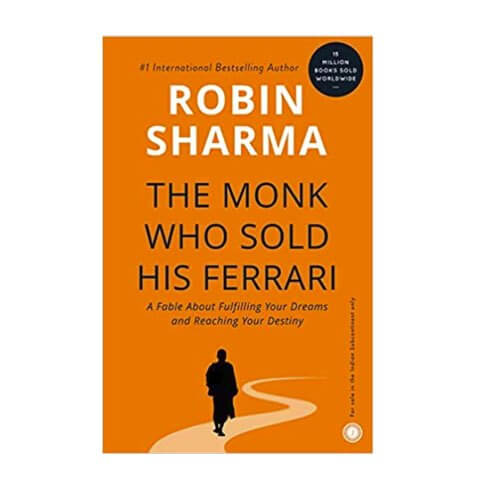
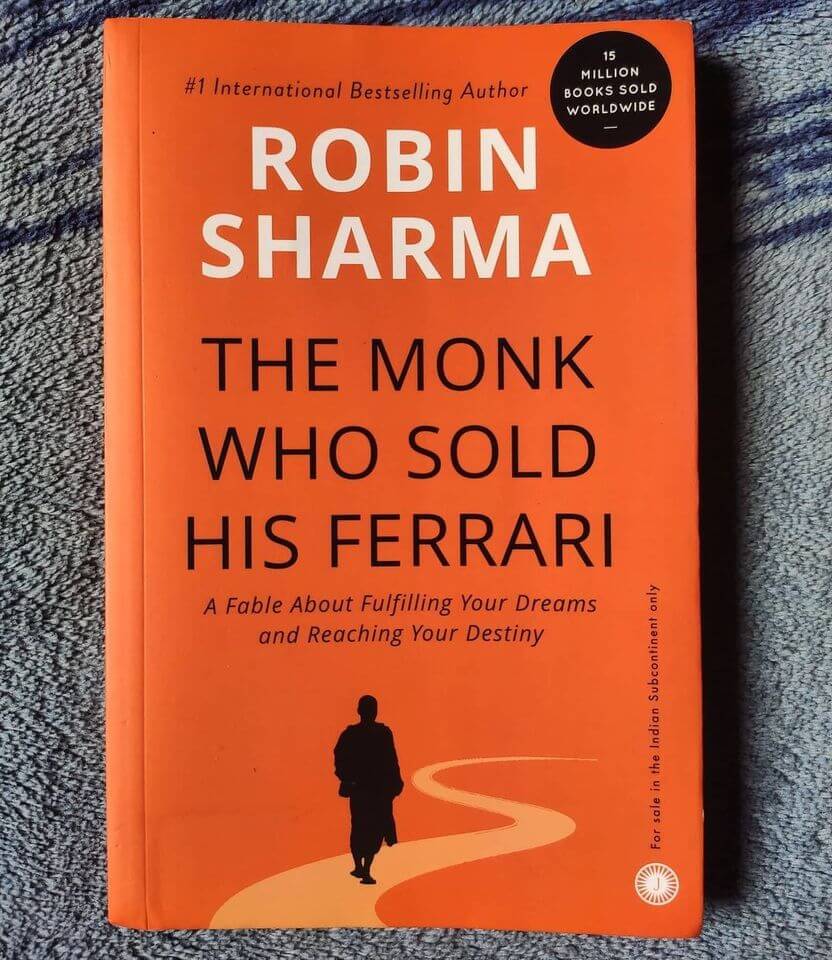


Monk Who Sold His Ferrari by Robin Sharma


Original price was: රු2,100.00.රු1,450.00Current price is: රු1,450.00.
3 X Rs. 483.33 or 8% Cashback with


or 3 X රු483.33 with


or up to 4 X රු362.50 with


The Monk Who Sold His Ferrari by Robin Sharma is an inspiring personal-development fable about Julian Mantle, a successful lawyer whose health crisis forces him to reconsider his pursuit of money and status. Through his journey to India and lessons from the Sages of Sivana, the book explores seven powerful principles: mastering the mind, following purpose, practicing Kaizen, building discipline, respecting time, serving others and embracing the present. Ideal for readers interested in self-help, motivation, work-life balance, mindfulness and meaningful success.
Out of stock
Email when stock available
The Monk Who Sold His Ferrari by Robin Sharma is an inspiring personal-development fable about success, stress, purpose, self-discipline and discovering what truly makes a life meaningful.
Julian Mantle seems to have everything society associates with success.
He is a highly successful lawyer.
He earns enormous amounts of money.
He lives an impressive lifestyle.
He owns expensive possessions, including his beloved Ferrari.
From the outside, his life appears extraordinary.
But internally, Julian is exhausted.
Years of relentless work have damaged his health and left him disconnected from the deeper parts of life.
Then everything changes when he collapses during a courtroom appearance.
The health crisis forces Julian to confront a question he has avoided for years:
What is the value of success if you lose yourself while achieving it?
Julian leaves his old life behind, sells his possessions—including the Ferrari—and travels to India searching for a different way to live.
His journey eventually leads him to the legendary Sages of Sivana, where he learns principles about:
Mastering the mind.
Finding purpose.
Continuous self-improvement.
Building discipline.
Respecting time.
Serving others.
Living fully in the present.
When Julian later returns, he shares what he has learned with his friend and former colleague John.
Through their conversation, Robin Sharma turns Julian’s transformation into a practical framework for readers.
The Monk Who Sold His Ferrari is not really about giving up possessions or literally becoming a monk.
Its deeper message is about learning to define success more broadly.
Money and career achievement may matter.
But so can:
Health.
Relationships.
Peace of mind.
Purpose.
Time.
Contribution.
Personal growth.
The book asks readers to examine whether they are building a successful life—or simply a busy one.
The Monk Who Sold His Ferrari – Book Overview
The Monk Who Sold His Ferrari begins with Julian Mantle at the height of his professional success.
He is brilliant, respected and financially successful.
But the lifestyle required to maintain this success has become destructive.
Long hours.
Constant pressure.
Poor health.
Little balance.
Eventually, his body forces him to stop.
His collapse becomes the beginning of a transformation.
Julian walks away from the life that once defined him and begins searching for something that money could not provide.
Julian Mantle
Julian is important because he represents a recognizable form of success.
He has achieved what many people spend their entire lives pursuing.
Prestige.
Money.
Status.
Material comfort.
Yet he is deeply unhappy.
Robin Sharma uses Julian to challenge the assumption that external achievement automatically creates internal fulfillment.
Success Without Fulfillment
Imagine spending twenty years climbing a ladder.
You finally reach the top.
Then you realize the ladder was leaning against the wrong building.
That is essentially Julian’s problem.
He succeeded according to one definition of success.
But he neglected:
Health.
Inner peace.
Meaning.
Relationships.
Time.
The book encourages readers to define success before spending decades pursuing it.
The Journey to India
After leaving his legal career, Julian travels to India.
His journey is both physical and symbolic.
He is moving away from:
Status.
Competition.
Material obsession.
And toward:
Reflection.
Wisdom.
Purpose.
Eventually, he learns about the Sages of Sivana.
The Sages of Sivana
The Sages of Sivana are a fictional community of wise teachers living in the Himalayas.
They have devoted themselves to principles involving:
Mind mastery.
Discipline.
Purpose.
Service.
Health.
Happiness.
Julian becomes their student.
Their teachings form the philosophical heart of The Monk Who Sold His Ferrari.
Yogi Raman
Among the sages, Julian learns from Yogi Raman.
Raman teaches him through an unusual symbolic fable.
Instead of presenting the lessons as dry rules, the book uses memorable images.
A garden.
A lighthouse.
A sumo wrestler.
A cable.
A stopwatch.
Roses.
A path of diamonds.
Each symbol represents one major principle.
The Seven Timeless Virtues
At the center of The Monk Who Sold His Ferrari are seven major virtues:
- Master Your Mind
- Follow Your Purpose
- Practice Kaizen
- Live With Discipline
- Respect Your Time
- Selflessly Serve Others
- Embrace the Present
Together, they form the book’s practical philosophy for a more intentional life.
1. Master Your Mind
The first principle is Master Your Mind.
The mind influences how we interpret:
Problems.
Opportunities.
Failure.
Other people.
Ourselves.
Sharma argues that people need to protect what repeatedly enters their mental world.
If the mind is constantly filled with:
Fear.
Negativity.
Comparison.
Resentment.
those patterns can shape behavior.
The Garden of the Mind
In the book’s symbolic fable, the mind is represented by a beautiful garden.
A garden requires care.
If you intentionally plant useful things, it can flourish.
If completely neglected, weeds may take over.
The metaphor suggests that thoughts also require attention.
You Cannot Control Every Thought
Mind mastery should not be interpreted as:
Never think negatively.
Never feel afraid.
Never become sad.
Human beings cannot control every thought that appears.
A more realistic application is learning to choose which thoughts receive continued attention.
Attention Is Powerful
Suppose you make a mistake at work.
You can spend the entire day repeating:
“I am terrible.”
Or you can ask:
“What happened, and what can I learn?”
The event is the same.
The mental response changes what happens next.
Focus
A scattered mind struggles to do meaningful work.
One task.
Phone notification.
Another task.
Email.
Social media.
Another message.
Constant switching reduces concentration.
The Monk Who Sold His Ferrari encourages deliberate mental focus.
The Heart of the Rose
One exercise in the book involves concentrating deeply on a rose.
The broader purpose is training attention.
Observe one object.
Notice its details.
When the mind wanders, return.
The exercise reflects a larger principle:
Concentration can be trained.
2. Follow Your Purpose
The second virtue is Follow Your Purpose.
In the fable, purpose is represented by a lighthouse.
A lighthouse provides direction.
Without direction, activity can become meaningless.
You may be extremely busy while moving toward nothing you actually value.
What Do You Want Your Life to Be About?
Purpose does not necessarily mean discovering one enormous destiny.
It may involve:
Family.
Teaching.
Business.
Creativity.
Service.
Learning.
Leadership.
Community.
The important thing is understanding what matters enough to guide decisions.
Goals Give Direction
Goals translate purpose into action.
“I want to become healthier.”
becomes:
“I will exercise four times each week.”
“I want to read more.”
becomes:
“I will read ten pages every morning.”
Clear goals make purpose more actionable.
Write Goals Down
Writing forces clarity.
A vague ambition inside the mind can remain vague indefinitely.
Once written, you can ask:
What is the next action?
The Five-Step Method
The book encourages readers to:
Create a clear vision.
Add positive pressure.
Set deadlines.
Build supporting habits.
Enjoy the process.
The exact techniques matter less than the broader lesson:
A goal needs structure.
3. Practice Kaizen
The third virtue is Practice Kaizen.
Kaizen is commonly associated with continuous improvement.
Instead of attempting to transform everything overnight, become slightly better repeatedly.
The Sumo Wrestler
In the fable, the sumo wrestler represents Kaizen and continuous self-development.
Growth requires challenging limitations.
Physical.
Mental.
Emotional.
Professional.
Small Improvements Compound
Read ten pages.
Walk twenty minutes.
Practice a skill.
Save a little money.
Improve one process.
None looks dramatic in isolation.
Repeated over months and years, the effects can become significant.
Become Comfortable Being a Beginner
Growth requires temporarily being bad at things.
Learning English.
Coding.
Public speaking.
Managing people.
Starting a business.
At first, mistakes are unavoidable.
People who require themselves to look competent immediately may avoid learning.
Do the Things You Fear
Fear often marks an area where growth may exist.
That does not mean taking reckless risks.
It means recognizing when fear rather than logic is making the decision.
Afraid of public speaking?
Practice gradually.
Afraid of asking customers?
Make the first call.
Action can reduce fear.
Improve the Person Behind the Goal
People often focus only on outcomes.
More money.
Better career.
Successful business.
But those results may require becoming:
More disciplined.
Better informed.
More patient.
More capable.
Self-development expands what you can handle.
4. Live With Discipline
The fourth virtue is Live With Discipline.
Motivation feels powerful.
But motivation changes.
Monday:
Highly motivated.
Thursday:
Exhausted.
A life built entirely on motivation becomes inconsistent.
Discipline means creating habits that continue even when enthusiasm decreases.
The Pink Wire Cable
The fable uses a wire cable to symbolize discipline.
A strong cable is created from many smaller strands.
Similarly, self-discipline can be built through many small acts.
Wake when planned.
Keep a commitment.
Exercise.
Read.
Complete the difficult task.
Each act strengthens the pattern.
Keep Promises to Yourself
Imagine repeatedly telling yourself:
“I will start tomorrow.”
Then tomorrow comes.
Nothing happens.
Eventually, you stop believing yourself.
The opposite is also true.
Keeping small commitments can build self-trust.
Start Small
Do not begin with:
Meditate one hour daily.
Exercise two hours daily.
Read 100 pages daily.
Wake at 4 AM.
An unrealistic system often collapses quickly.
Begin with habits you can maintain.
Discipline Creates Freedom
This sounds contradictory.
But consider money.
Financial discipline can create financial freedom.
Health discipline can create greater physical freedom.
Time discipline can create more free time.
Short-term structure can create long-term options.
5. Respect Your Time
The fifth virtue is Respect Your Time.
In the book’s fable, time is represented by a golden stopwatch.
Everyone receives limited time.
Money can sometimes be earned again.
A lost hour cannot be recovered.
Being Busy Is Not the Same as Being Productive
A person can spend twelve hours doing:
Emails.
Meetings.
Messages.
Small tasks.
Then reach evening having accomplished nothing meaningful.
Ask:
What actually matters today?
Protect Your Priorities
Important activities often have no urgent notification.
Exercise does not send a warning.
Reading does not demand immediate attention.
Family time may not appear urgent.
Yet these things can matter enormously over years.
Schedule what matters before urgent distractions consume all available time.
Learn to Say No
Every yes costs time.
Yes to a meeting.
Yes to another project.
Yes to another commitment.
The time must come from somewhere.
Learning to say no protects your priorities.
The 80/20 Principle
A small number of activities often create a large portion of useful results.
Ask:
Which actions genuinely move my goals forward?
Then protect time for them.
Death Clarifies Time
One of the uncomfortable truths behind The Monk Who Sold His Ferrari is that life is finite.
You do not have unlimited:
Mornings.
Weekends.
Years.
Recognizing this can make ordinary time more valuable.
6. Selflessly Serve Others
The sixth virtue is Selflessly Serve Others.
In the symbolic fable, fragrant roses represent contribution and service.
Success focused only on personal accumulation can eventually feel empty.
Helping others can add meaning.
Contribution
Contribution can happen through:
Teaching.
Mentoring.
Helping family.
Serving customers.
Building useful products.
Volunteering.
Listening.
Generosity.
You do not need extraordinary wealth to contribute.
Business and Service
This principle applies strongly to business.
The best businesses solve real problems.
A customer gives money because the product or service provides value.
Instead of asking only:
“How can I make more money?”
ask:
“How can I become more useful?”
Value creation can benefit both the customer and business.
Small Acts Matter
Helping someone does not always require a dramatic gesture.
A useful introduction.
A thoughtful message.
Helping a colleague.
Listening carefully.
Sharing knowledge.
Small actions can have effects we never fully see.
Success Beyond Yourself
Achievement becomes richer when it benefits more than one person.
You can pursue:
Ambition.
Profit.
Career development.
while also contributing.
The two do not have to conflict.
7. Embrace the Present
The seventh virtue is Embrace the Present.
In the fable, this is represented by a path of diamonds.
People often live mentally somewhere else.
Past:
“I wish I had…”
Future:
“I’ll be happy when…”
Meanwhile, the actual day is happening now.
The Arrival Fallacy
People often imagine happiness exists after the next achievement.
After graduation.
After promotion.
After marriage.
After buying the house.
After earning more money.
Then the goal arrives.
Soon another goal replaces it.
If happiness is always postponed, it remains permanently ahead.
Enjoy the Journey
Goals matter.
Ambition matters.
But life happens while you pursue them.
Do not become so focused on tomorrow that today becomes invisible.
Ordinary Moments
Some of life’s most meaningful experiences are not dramatic.
A meal with family.
Talking with a friend.
Reading.
Walking.
Watching the evening sky.
A quiet morning.
If attention is constantly elsewhere, these moments disappear unnoticed.
Presence and Technology
The message of The Monk Who Sold His Ferrari may feel even more relevant in the smartphone era.
You can be physically with someone while mentally somewhere else.
Notifications.
Messages.
Scrolling.
Presence increasingly requires conscious effort.
Put the Phone Down Sometimes
A simple form of mindfulness is giving one experience your full attention.
Eat without scrolling.
Talk without checking messages.
Walk without constantly looking at the screen.
Small periods of undivided attention can make life feel less fragmented.
Wealth Versus Fulfillment
One of the most important themes in The Monk Who Sold His Ferrari is the difference between material success and personal fulfillment.
The book does not necessarily argue:
Money is bad.
Career is bad.
Ambition is bad.
Its warning is about imbalance.
The Ferrari as a Symbol
Julian’s Ferrari represents:
Status.
Achievement.
Luxury.
Identity.
Selling it symbolizes his decision to stop measuring himself primarily through possessions.
The problem was not the car itself.
The problem was what it represented in his life.
Owning Things Versus Being Owned by Them
Possessions can improve life.
But they can also create pressure.
Larger house.
Larger payment.
More expensive lifestyle.
More work needed to maintain it.
Ask:
Does this possession serve my life?
Or does my life increasingly serve the possession?
Career Success
Julian’s career gives him:
Money.
Recognition.
Professional status.
But his obsession with work costs him greatly.
The book therefore challenges workaholism.
Work Should Not Consume Everything
Hard work can be valuable.
But a life needs room for:
Health.
Relationships.
Rest.
Learning.
Reflection.
Achievement loses some meaning if everything else collapses.
Burnout
Julian’s story strongly resembles what modern readers would describe as severe burnout and chronic overwork.
Warning signs in real life can include:
Persistent exhaustion.
Poor sleep.
Irritability.
Reduced motivation.
Health problems.
Emotional detachment.
A motivational book can encourage reflection, but serious physical or psychological symptoms deserve appropriate professional care.
Health
Health is easy to ignore while it appears stable.
Then illness makes it suddenly important.
One of Julian’s biggest realizations is that professional success cannot compensate for completely neglected health.
Exercise
Regular physical activity can support:
Strength.
Energy.
Health.
Mood.
A meaningful life depends partly on having a body capable of participating in it.
Rest
Rest is not laziness.
The body and brain require recovery.
Constant work without recovery eventually affects:
Performance.
Judgment.
Creativity.
Health.
Sleep
Modern productivity culture sometimes celebrates sleeping less.
That can be harmful.
Adequate sleep supports:
Memory.
Attention.
Mood.
Physical health.
Discipline should include recovery, not only effort.
Morning Rituals
Robin Sharma frequently emphasizes morning practices across his work.
Quiet morning time can be used for:
Reflection.
Reading.
Exercise.
Planning.
Meditation.
The exact routine matters less than creating intentional time before the day’s distractions take over.
Reading
Reading is one of the simplest ways to learn from other people’s experience.
A book can represent:
Years of research.
Years of mistakes.
Years of knowledge.
Reading regularly can gradually expand how you think.
Lifelong Learning
Education should not stop after school or university.
Jobs change.
Technology changes.
Business changes.
People change.
Continued learning helps us adapt.
Self-Leadership
Before leading a:
Team.
Company.
Family.
Organization.
the book encourages self-leadership.
Can you manage:
Your time?
Your reactions?
Your habits?
Your priorities?
Leadership begins internally.
Emotional Control
Self-mastery does not mean becoming emotionless.
Anger.
Fear.
Sadness.
Stress.
are normal.
The useful question is whether every emotion automatically controls behavior.
Pause Before Reacting
Someone criticizes you.
Immediate reaction:
Defend.
Attack.
A pause creates another possibility.
Listen.
Evaluate.
Respond.
That small space can prevent unnecessary conflict.
Relationships
One cost of extreme ambition can be neglected relationships.
People often assume:
Family will always be there.
Friends will understand.
But relationships also require:
Time.
Attention.
Communication.
Presence.
Do Not Give People Only Your Leftover Time
If work receives the best hours and people you love receive only whatever remains, priorities may gradually become distorted.
The book encourages more deliberate balance.
Happiness
The Monk Who Sold His Ferrari challenges the idea that happiness is something purchased after enough success.
Happiness can also come from:
Purpose.
Connection.
Growth.
Health.
Contribution.
Presence.
Gratitude
Gratitude redirects attention toward what already exists.
This does not mean ignoring problems.
It means avoiding the habit of noticing only what is missing.
Comparison
Comparison can destroy contentment.
Someone always has:
More money.
A larger business.
A newer car.
More followers.
A better title.
If self-worth depends entirely on outperforming everyone else, satisfaction becomes difficult.
Define Your Own Success
This may be one of the most important applications of The Monk Who Sold His Ferrari.
What would a successful life mean to you?
Perhaps:
Financial security.
Good health.
Meaningful work.
Strong relationships.
Freedom.
Contribution.
Your definition does not need to match someone else’s.
Simplicity
Julian begins with an extremely complicated lifestyle.
His transformation moves toward simplicity.
Less noise.
More clarity.
Less constant chasing.
More deliberate living.
Minimalism Without Extremes
You do not need to sell everything.
The useful principle is asking whether something adds real value.
This applies to:
Possessions.
Commitments.
Apps.
Meetings.
Projects.
Sometimes improvement comes from removing rather than adding.
Purpose and Business
Entrepreneurs can apply The Monk Who Sold His Ferrari by asking:
Why does this business exist?
Who does it help?
What kind of life am I building while building the company?
A profitable company that destroys the founder’s health may require redesign.
Business Success With Balance
You can pursue:
Growth.
Profit.
Expansion.
while still protecting:
Health.
Family.
Time.
Ethics.
The book’s lesson is balance, not abandoning ambition.
Discipline for Entrepreneurs
Entrepreneurship often requires doing important tasks even when nobody forces you.
Sales.
Planning.
Finance.
Customer service.
Learning.
Self-discipline becomes essential because there may be no manager watching.
Time for Entrepreneurs
Founders can become trapped handling everything.
Messages.
Invoices.
Small issues.
Operations.
Eventually, they need to identify which activities truly require their attention.
Delegation and systems can protect time.
Service for Entrepreneurs
A strong business begins with serving customers.
What problem are you solving?
How can you improve the experience?
Profit becomes easier to understand when connected with customer value.
Students
Students can also apply the seven virtues.
Master the mind:
Improve focus.
Follow purpose:
Understand what you are studying toward.
Practice Kaizen:
Improve gradually.
Build discipline:
Study consistently.
Respect time:
Avoid unnecessary procrastination.
Serve others:
Share knowledge.
Embrace the present:
Do today’s work rather than constantly worrying about the final result.
Professionals
Professionals may relate strongly to Julian’s story.
Career ambition can become all-consuming.
A promotion arrives.
Then another target.
Then another.
The book encourages professionals to pursue success while continuing to ask:
What is this success for?
Is The Monk Who Sold His Ferrari a True Story?
No.
The Monk Who Sold His Ferrari is presented as a motivational and spiritual fable.
Julian Mantle is a fictional character used to communicate personal-development lessons.
Readers should not approach it as a literal autobiography of a lawyer who became a Himalayan monk.
Is It a Novel or Self-Help Book?
It combines both forms.
There is a fictional story involving Julian and John, but the primary purpose is to communicate self-help principles.
It fits well under:
Self-help.
Personal development.
Motivation.
Spiritual growth.
Is It About Buddhism?
Not specifically.
The book draws broadly on Eastern-inspired spiritual and self-development ideas, but it is not a detailed introduction to Buddhist doctrine.
Readers of different backgrounds can engage with its practical principles.
Do You Need to Be Religious?
No.
The lessons can be interpreted in secular ways around:
Purpose.
Discipline.
Time.
Focus.
Service.
Presence.
Readers interested in spirituality may also appreciate the symbolic elements.
Is The Monk Who Sold His Ferrari Good for Beginners?
Yes.
Its storytelling format makes the concepts accessible.
Instead of presenting complex academic psychology, Robin Sharma uses:
Stories.
Metaphors.
Simple exercises.
Memorable symbols.
This makes it approachable for readers new to personal-development books.
Is It Easy English?
The writing is generally accessible compared with dense academic nonfiction.
Readers learning English may also benefit from the narrative structure because concepts are explained through repeated examples and straightforward motivational language.
Is It a Business Book?
Not primarily.
It is a personal-development book.
However, many lessons are relevant to:
Entrepreneurs.
Managers.
Leaders.
Professionals.
Especially those dealing with:
Purpose.
Time management.
Self-discipline.
Burnout.
Can This Book Change Your Life?
A book alone does not automatically transform a person’s life.
Its value depends partly on application.
Reading about discipline is different from practicing discipline.
Reading about time is different from changing your schedule.
The useful question is:
What will you actually do differently after reading?
Practical Ways to Apply The Monk Who Sold His Ferrari
After reading The Monk Who Sold His Ferrari, you could begin with a few small actions.
Choose one meaningful goal.
Read daily.
Exercise consistently.
Protect an hour from unnecessary distraction.
Spend focused time with family.
Help someone.
Practice a few minutes of quiet reflection.
The goal is not changing everything immediately.
One Change at a Time
Trying to transform:
Diet.
Sleep.
Career.
Finances.
Relationships.
Exercise.
Reading.
all on Monday may be unsustainable.
Choose one meaningful change.
Build consistency.
Then add another.
That itself reflects Kaizen.
Important Themes
The Monk Who Sold His Ferrari explores:
- Personal development
- Purpose
- Self-discipline
- Mind mastery
- Time management
- Kaizen
- Continuous improvement
- Happiness
- Success
- Work-life balance
- Burnout
- Health
- Mindfulness
- Gratitude
- Service
- Leadership
- Goal setting
- Personal growth
- Simplicity
- Living in the present
7 Powerful Lessons From The Monk Who Sold His Ferrari
There are many lessons in The Monk Who Sold His Ferrari, but seven form the heart of the book:
- Master your mind – Pay attention to what repeatedly occupies your thoughts and train your ability to focus instead of allowing every distraction or negative thought to control your attention.
- Follow a meaningful purpose – Define what genuinely matters so that your goals and daily actions move in a direction you value.
- Practice continuous improvement – Small improvements repeated consistently can create significant changes over time.
- Develop self-discipline – Motivation comes and goes, but habits and commitments help you continue when enthusiasm disappears.
- Respect your limited time – Being busy is not the same as living meaningfully; protect time for the people, goals and experiences that matter.
- Serve other people – Success becomes more meaningful when your abilities, work and resources create value beyond yourself.
- Live more fully in the present – Do not postpone all happiness until the next achievement. Goals matter, but life is also happening while you pursue them.
Why Read The Monk Who Sold His Ferrari?
The Monk Who Sold His Ferrari is an excellent choice for readers interested in:
- Robin Sharma
- Personal development
- Self-help
- Motivation
- Life purpose
- Discipline
- Time management
- Mindfulness
- Happiness
- Work-life balance
- Burnout recovery themes
- Goal setting
- Kaizen
- Self-mastery
- Leadership
- Spiritual growth
- Success mindset
- Productivity
- Personal transformation
- Meaningful living
It is especially suitable for readers who are achieving more externally but beginning to wonder whether their internal life is receiving enough attention.
Who Should Read This Book?
The Monk Who Sold His Ferrari may especially appeal to:
- Professionals
- Entrepreneurs
- Business owners
- Managers
- Leaders
- Students
- Personal-development readers
- People experiencing work-life imbalance
- Readers interested in purpose
- People trying to become more disciplined
- Readers interested in mindfulness
- People reconsidering their definition of success
- Readers who enjoy motivational fables
- Anyone wanting a simpler introduction to personal growth
The Monk Who Sold His Ferrari – What Is Success Really Worth?
The Monk Who Sold His Ferrari begins with a man who appears to have won.
Money.
Career.
Status.
Ferrari.
But Julian Mantle eventually realizes that achieving everything on one side of life cannot compensate for abandoning everything on the other.
Health matters.
Time matters.
Relationships matter.
Peace matters.
Purpose matters.
The Ferrari itself is not the enemy.
Success is not the enemy.
Ambition is not the enemy.
The real danger is becoming so focused on collecting external achievements that you never ask whether those achievements are creating the life you actually want.
Julian’s journey therefore becomes a reminder to examine the direction before simply increasing the speed.
Master your attention.
Know your purpose.
Improve continuously.
Build discipline.
Respect time.
Help others.
And remain present enough to experience the life you are working so hard to build.
These principles are simple.
Applying them consistently is much harder.
That is why The Monk Who Sold His Ferrari remains useful as a personal-development fable.
It asks readers to stop for a moment and consider:
What am I chasing?
Why am I chasing it?
What am I sacrificing?
What would enough look like?
What kind of person am I becoming?
Those questions may be more important than another productivity technique.
Because at the end of the journey, the goal is not simply to say:
“I achieved a lot.”
It is to be able to say:
“I built a life that was worth living.”
For readers interested in purpose, discipline, mindfulness, personal transformation and creating a healthier relationship with ambition, The Monk Who Sold His Ferrari offers an accessible and memorable story about moving from outward success toward a more balanced and meaningful definition of a successful life.
Learn more about The Monk Who Sold His Ferrari by Robin Sharma on Robin Sharma’s official website.
Explore more personal development and inspirational books at Bargain Books.
| Author | Robin Sharma |
|---|---|
| Language | English |
| Type | Paperback Printed Book (Second Quality Copy) |
Be the first to review “Monk Who Sold His Ferrari by Robin Sharma”
Related products

Non-Fiction & Knowledge
රු1,700.00
3 X Rs. 566.67 or 8% Cashback with
or 3 X රු566.67 with
or up to 4 X රු425.00 with
-19%

Biography
Original price was: රු2,400.00.රු1,950.00Current price is: රු1,950.00.
3 X Rs. 650.00 or 8% Cashback with
or 3 X රු650.00 with
or up to 4 X රු487.50 with

Out of stock
Non-Fiction & Knowledge
රු1,500.00
3 X Rs. 500.00 or 8% Cashback with
or 3 X රු500.00 with
or up to 4 X රු375.00 with
-24%
Out of stock
Non-Fiction & Knowledge
Original price was: රු2,100.00.රු1,600.00Current price is: රු1,600.00.
3 X Rs. 533.33 or 8% Cashback with
or 3 X රු533.33 with
or up to 4 X රු400.00 with

Out of stock
Autobiography
රු2,750.00
3 X Rs. 916.67 or 8% Cashback with
or 3 X රු916.67 with
or up to 4 X රු687.50 with

Non-Fiction & Knowledge
රු1,550.00
3 X Rs. 516.67 or 8% Cashback with
or 3 X රු516.67 with
or up to 4 X රු387.50 with

Non-Fiction & Knowledge
රු1,950.00
3 X Rs. 650.00 or 8% Cashback with
or 3 X රු650.00 with
or up to 4 X රු487.50 with
-14%

Out of stock
Self-Help & Psychology
Original price was: රු2,900.00.රු2,500.00Current price is: රු2,500.00.
3 X Rs. 833.33 or 8% Cashback with
or 3 X රු833.33 with
or up to 4 X රු625.00 with
Reviews
There are no reviews yet.