
No products in the cart.

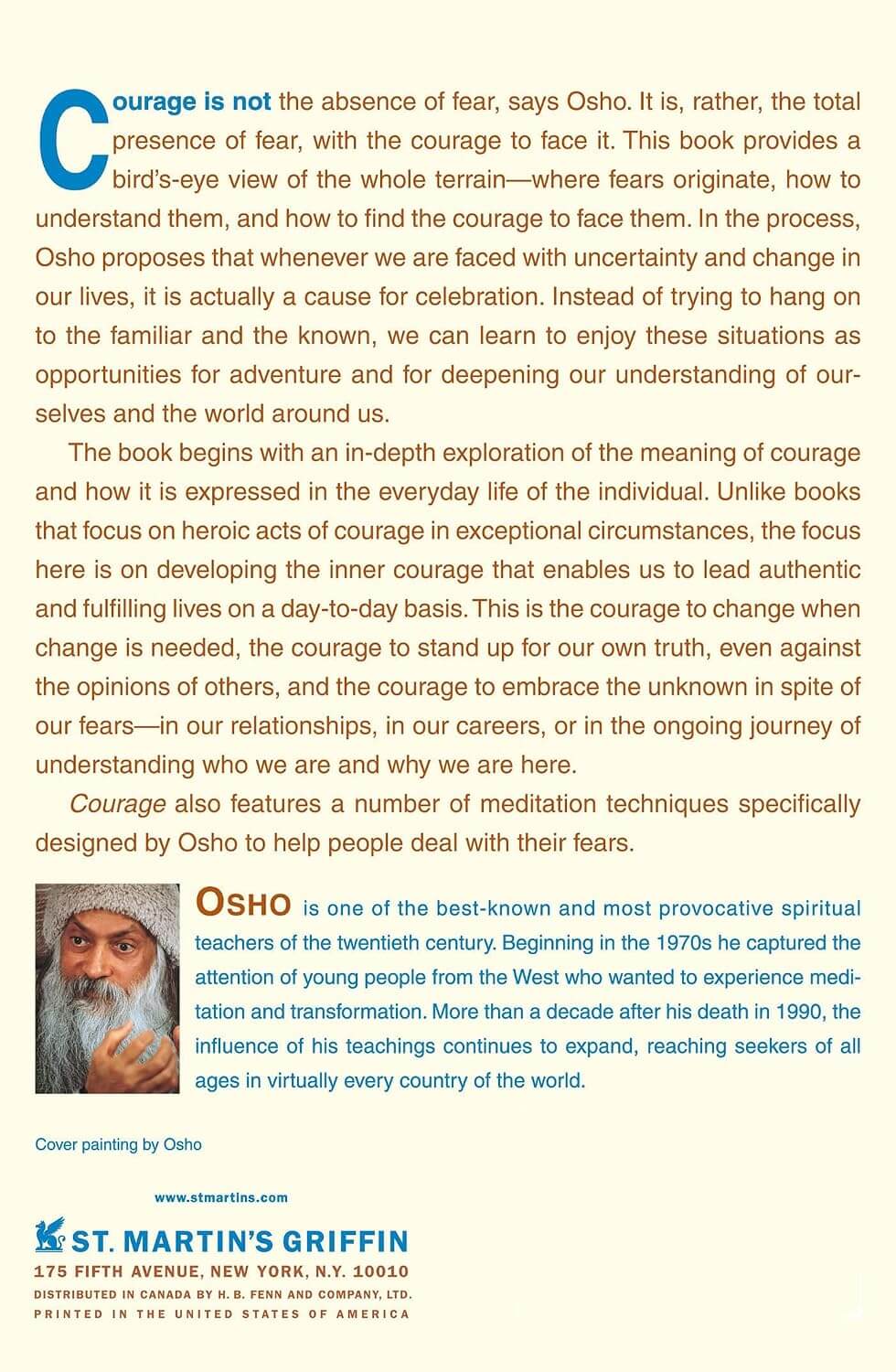









Courage: The Joy of Living Dangerously by Osho


රු900.00
3 X Rs. 300.00 or 8% Cashback with


or 3 X රු300.00 with


or up to 4 X රු225.00 with


What does it mean to be courageous when fear is still present?
In Courage: The Joy of Living Dangerously, Osho explores fear, uncertainty, love, individuality and the willingness to move beyond the familiar.
The book explores:
- Courage and Fear
- Embracing Change
- Moving Into the Unknown
- Love and Vulnerability
- Individuality
- Authentic Living
- Fearlessness
- Meditation
- Personal Growth
- Spiritual Awareness
Includes meditation techniques designed to help readers examine and work with fear.
Paperback | 208 pages | St. Martin’s / Macmillan | ISBN 9780312205171
1 in stock
Courage: The Joy of Living Dangerously by Osho
Courage: The Joy of Living Dangerously by Osho is a spiritual and personal-development book exploring what it really means to live courageously.
Rather than describing courage as the absence of fear, Osho presents it as the willingness to move forward while fear is still present.
The book examines why people become attached to what is familiar, why uncertainty creates anxiety, and how embracing change can become an important part of personal growth.
Macmillan describes the book as an exploration of where fears come from, how they can be understood and how people can develop the inner strength needed to face them.
What Is Courage?
A central idea throughout the book is that courage and fear are not opposites.
A person does not necessarily become courageous only after fear disappears.
Instead, courage begins when someone recognises fear but chooses not to let it completely control their actions.
This can apply to everyday situations such as:
- Changing careers
- Starting something new
- Leaving familiar environments
- Speaking honestly
- Making difficult decisions
- Forming relationships
- Facing uncertainty
- Challenging personal beliefs
The book therefore treats courage as something relevant to ordinary life rather than only dramatic or heroic situations.
Moving Into the Unknown
One of Osho’s recurring themes is the difference between:
the known
and
the unknown.
The known can feel safe because it is predictable.
Even when a familiar situation is unsatisfying, people may remain attached to it simply because they understand it.
The unknown creates uncertainty.
There is no guarantee about what will happen next.
According to Osho’s approach, that uncertainty is not only something to fear. It can also be where growth, discovery and transformation occur.
Macmillan describes this as learning to see change and uncertainty as opportunities for adventure and deeper understanding rather than simply as threats.
When the New Knocks on Your Door
One of the major sections of the book focuses on how people respond when something new appears in their lives.
A new possibility can be exciting, but it can also create resistance.
People may think:
- What if I fail?
- What if I regret this?
- What will other people think?
- What if the familiar option is safer?
- What if I am not capable?
Courage encourages readers to observe these reactions.
The goal is not reckless behaviour.
Instead, it is becoming more aware of when fear is protecting us from genuine danger and when it is simply protecting an old comfort zone.
The Courage of Love
The book also connects courage with love and emotional openness.
Relationships require vulnerability.
To genuinely connect with another person, people often need to risk:
- Rejection
- Disappointment
- Emotional exposure
- Loss of control
- Being misunderstood
Osho argues that meaningful relationships cannot be built entirely around self-protection.
Love requires openness, and openness always includes some uncertainty.
This makes courage important not only in work or adventure but also in emotional life.
Leaving the Crowd
Another major theme is individuality.
People often absorb ideas from:
- Family
- Culture
- Religion
- School
- Society
- Friends
- Workplaces
Some of those ideas may be useful.
Others may simply become habits that are never examined.
Courage encourages readers to question inherited assumptions and think more independently.
The official Osho shop describes the book as helping readers examine fear, uncertainty and change while deepening their understanding of themselves and the world around them.
Living Authentically
Courage is closely connected to authenticity throughout the book.
Living authentically means becoming more honest about:
- What matters to you
- What you believe
- What you want
- What you fear
- What needs to change
That does not mean ignoring every social responsibility.
Instead, it means reducing the gap between the person someone appears to be and the person they actually feel themselves to be.
The book encourages readers to recognise when fear of criticism or rejection is causing them to live according to someone else’s expectations.
The Joy of Living Dangerously
The word dangerously in the title should not be understood simply as taking unnecessary physical risks.
Osho uses the idea more broadly.
Living dangerously means accepting that life contains uncertainty.
No career, relationship or long-term plan can remove every possible risk.
Trying to eliminate uncertainty entirely can sometimes result in avoiding meaningful experiences.
The book therefore encourages a willingness to participate more fully in life even when outcomes cannot be guaranteed.
Fearlessness
The later sections explore the idea of fearlessness.
Osho’s perspective is that fearlessness does not necessarily appear before courageous action.
Instead, repeatedly facing fear can gradually change a person’s relationship with it.
The book’s official contents include sections on:
- What Is Courage?
- When the New Knocks on Your Door, Open It!
- The Courage of Love
- Take Yourself Out of the Crowd
- The Joy of Living Dangerously
- In Search of Fearlessness.
Meditation Techniques
Courage also contains meditation techniques and responses to questions about fear.
The book therefore combines philosophical discussion with practical reflective material.
Macmillan specifically notes that meditation techniques are included to help readers work with their fears.
For readers already interested in Osho’s broader teachings, this creates a connection between courage and meditation.
About Osho
Osho was an Indian spiritual teacher known for talks and writings about meditation, awareness, freedom, relationships and personal transformation.
His works have been published internationally across many languages.
Courage forms part of the Osho Insights for a New Way of Living collection. Google Books and trade catalogues identify the book within this collection.
Other well-known Osho titles include books dealing with:
- Love
- Freedom
- Awareness
- Creativity
- Intelligence
- Meditation
- Intimacy
Who Will Enjoy Courage?
This book may especially appeal to readers interested in:
- Personal growth
- Spirituality
- Meditation
- Self-awareness
- Overcoming fear
- Authentic living
- Relationships
- Change
- Freedom
- Osho’s philosophy
It may be particularly useful for readers going through transitions or questioning whether fear is preventing them from making meaningful changes.
Important Classification Note
Courage is best treated as a:
Spirituality / Personal Growth / Self-Help
title.
It is not a clinical psychology or mental-health treatment manual.
Its discussions of fear and meditation are philosophical and spiritual rather than medical treatment advice.
Be the first to review “Courage: The Joy of Living Dangerously by Osho”
Related products

Out of stock
Non-Fiction & Knowledge
රු1,600.00
3 X Rs. 533.33 or 8% Cashback with
or 3 X රු533.33 with
or up to 4 X රු400.00 with

රු2,000.00
3 X Rs. 666.67 or 8% Cashback with
or 3 X රු666.67 with
or up to 4 X රු500.00 with

Out of stock
Self-Help & Psychology
රු2,200.00
3 X Rs. 733.33 or 8% Cashback with
or 3 X රු733.33 with
or up to 4 X රු550.00 with
-21%

Non-Fiction & Knowledge
7 Secrets to Investing Like Warren Buffett by Mary Buffett & Sean Seah
Original price was: රු1,900.00.රු1,500.00Current price is: රු1,500.00.
3 X Rs. 500.00 or 8% Cashback with
or 3 X රු500.00 with
or up to 4 X රු375.00 with
-34%
Non-Fiction & Knowledge
Original price was: රු2,250.00.රු1,490.00Current price is: රු1,490.00.
3 X Rs. 496.67 or 8% Cashback with
or 3 X රු496.67 with
or up to 4 X රු372.50 with
Out of stock
Self-Help & Psychology
රු1,900.00
3 X Rs. 633.33 or 8% Cashback with
or 3 X රු633.33 with
or up to 4 X රු475.00 with
-26%
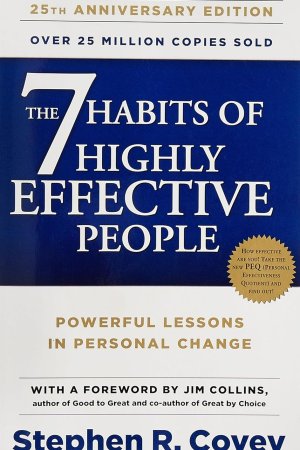
Non-Fiction & Knowledge
The 7 Habits of Highly Effective People by Stephen R. Covey – Blue Cover
Original price was: රු2,300.00.රු1,700.00Current price is: රු1,700.00.
3 X Rs. 566.67 or 8% Cashback with
or 3 X රු566.67 with
or up to 4 X රු425.00 with
-13%

Out of stock
Non-Fiction & Knowledge
Original price was: රු3,900.00.රු3,400.00Current price is: රු3,400.00.
3 X Rs. 1,133.33 or 8% Cashback with
or 3 X රු1,133.33 with
or up to 4 X රු850.00 with
Reviews
There are no reviews yet.