
No products in the cart.
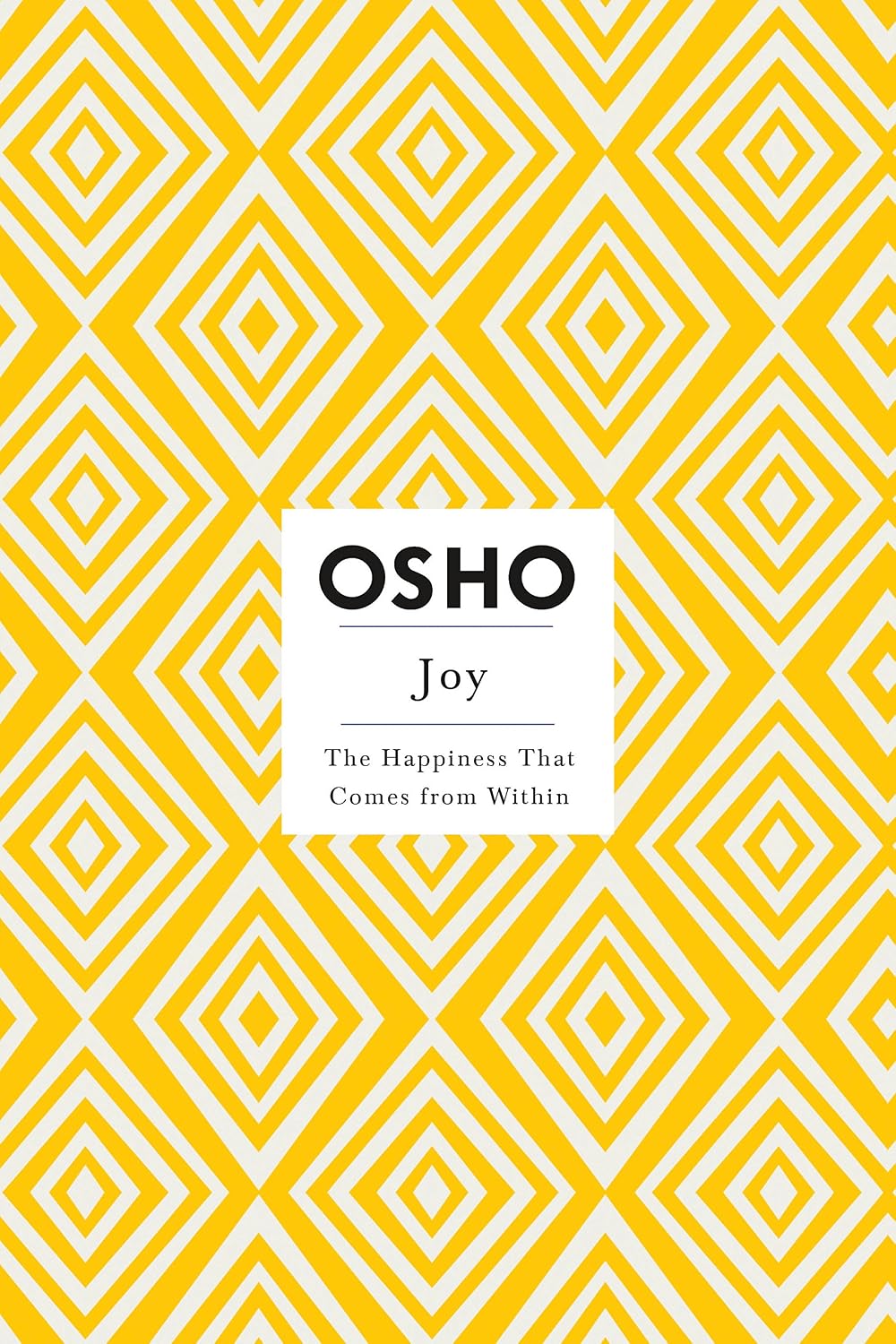








Joy: The Happiness That Comes from Within (Osho Insights for a New Way of Living) by Osho


රු900.00
3 X Rs. 300.00 or 8% Cashback with


or 3 X රු300.00 with


or up to 4 X රු225.00 with


Book Details / WooCommerce
| Field | Enter This |
|---|---|
| Title | Joy: The Happiness That Comes from Within |
| Author | Osho |
| ISBN-13 | 9780312538576 |
| ISBN-10 | 031253857X |
| Series | Osho Insights for a New Way of Living |
| Series Position | #10 in current Pan Macmillan series listing |
| Format | Trade Paperback |
| Publisher | St. Martin’s Publishing Group |
| Imprint | St. Martin’s Essentials / St. Martin’s Griffin |
| Publication Date | 20 January 2009 |
| Pages | 192 |
| Language | English |
| Audience | Adult / General |
| Genre | Self-Help / Spirituality / Personal Growth |
| Weight | Approx. 0.182 kg |
| Length | Approx. 21.0 cm |
| Width | Approx. 14.0 cm |
| Height / Thickness | Approx. 1.3 cm |
| Dimensions | Approx. 21.0 × 14.0 × 1.3 cm |
1 in stock
A Philosophical Exploration of Inner Joy
Joy: The Happiness That Comes from Within by Osho is a reflective work of spirituality and personal development that examines what it means to experience happiness without depending entirely on external circumstances.
Part of the Osho Insights for a New Way of Living series, the book challenges familiar assumptions about success, ambition, pleasure and happiness. Rather than presenting joy as something to be obtained through possessions, status or achievement, Osho approaches it as an inner quality connected with awareness and the way a person experiences life.
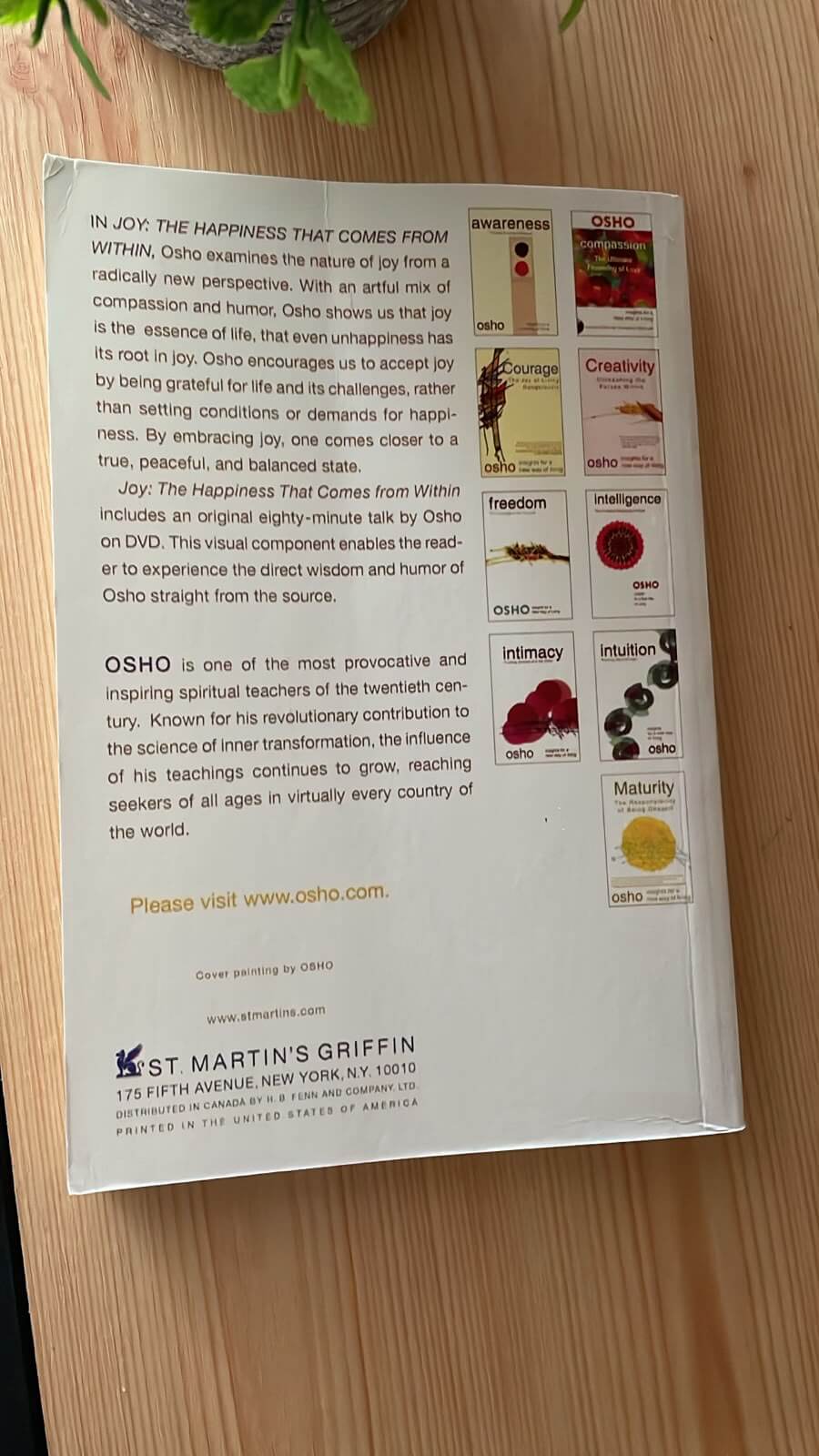
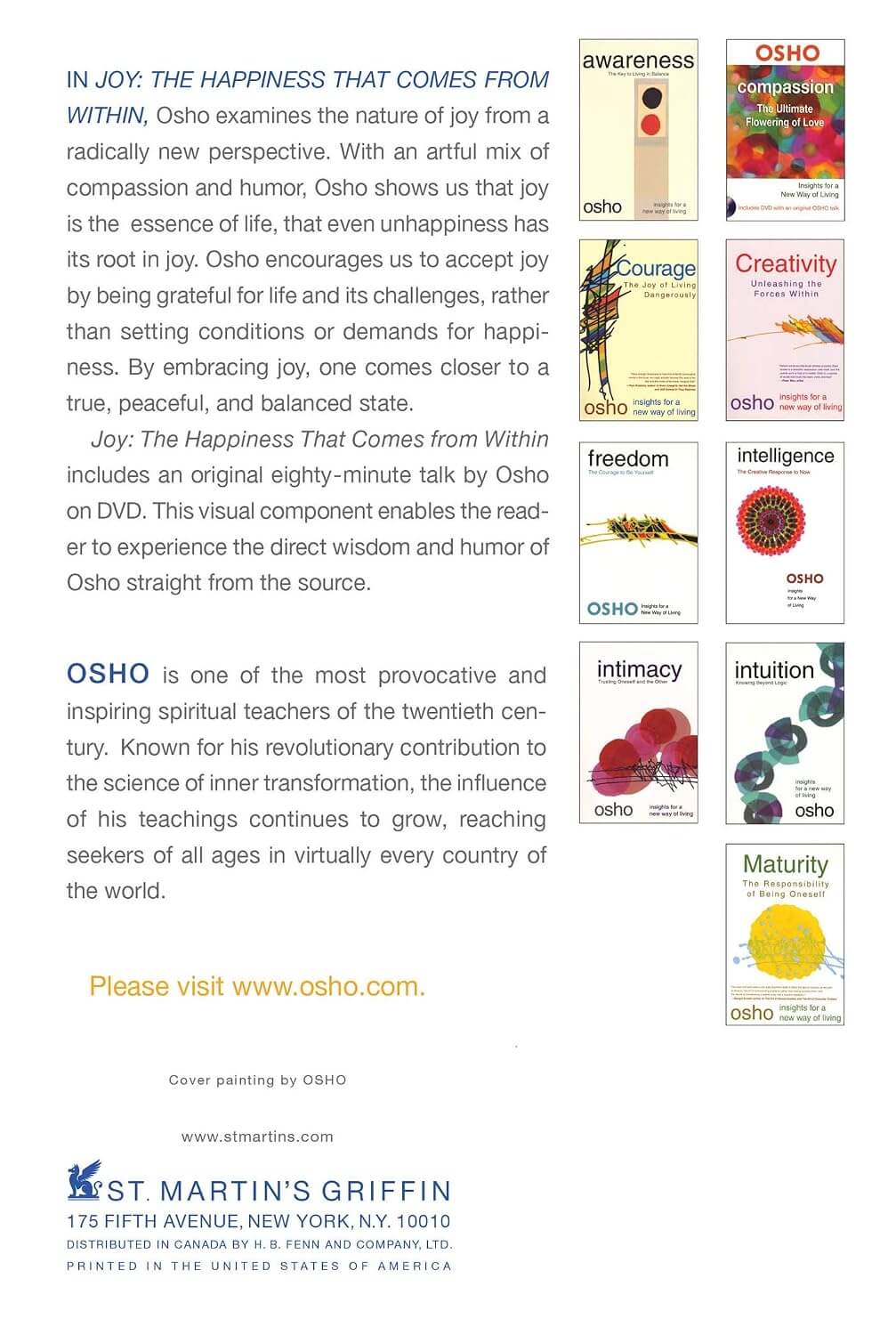
Macmillan describes the book as an exploration of both the elation and sadness involved in human experience, with Osho encouraging readers to appreciate life, its opportunities and its challenges rather than continually establishing conditions that must be met before they allow themselves to feel happy.
What Is Happiness?
One of the central questions in the book is simple:
What actually makes a person happy?
Osho questions the assumption that happiness automatically follows success, money, recognition or achievement.
Instead, he asks readers to observe the way their own expectations shape their experience.
Many people postpone happiness:
“I will be happy when I achieve this.”
“I will be happy when I have more money.”
“I will be happy when my circumstances change.”
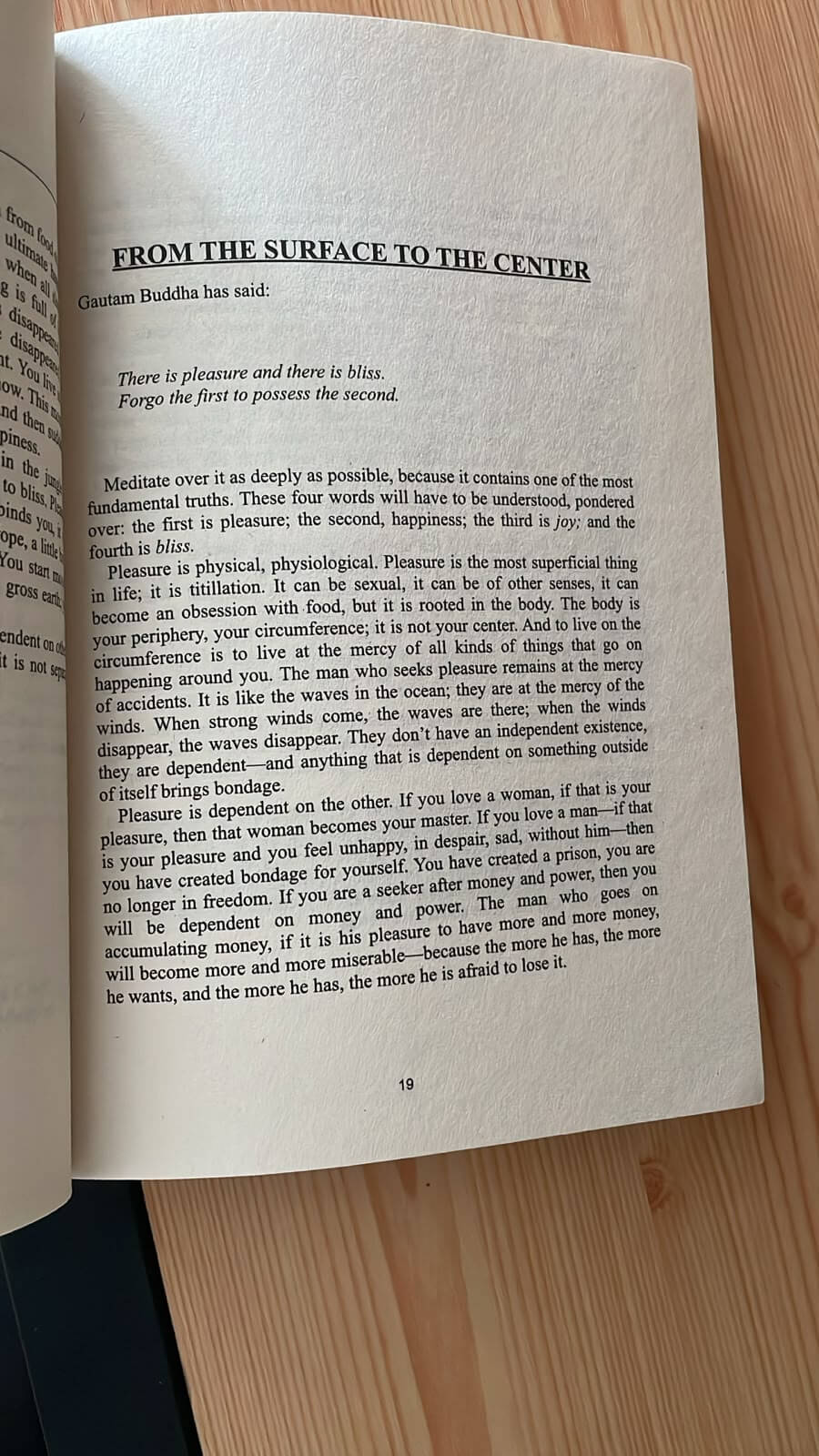
Osho challenges this pattern and argues from his philosophical and spiritual perspective that continually attaching happiness to future conditions can prevent people from recognising meaningful experiences in the present.
The book therefore encourages readers to examine the difference between temporary pleasure and a deeper sense of contentment.
From Agony to Ecstasy
The book does not suggest that life contains only pleasant experiences.
Sadness, disappointment, frustration and uncertainty are also part of human life.
One of its recurring ideas is that trying to eliminate every uncomfortable emotion may be less useful than developing greater awareness of those emotions.
Osho encourages readers to observe experiences rather than immediately judging them as good or bad.
This reflects his broader spiritual philosophy, which often emphasises awareness, acceptance and living more fully in the present moment.
These ideas should be understood as Osho’s philosophical and spiritual teachings rather than established psychological or medical treatments.
The book is therefore best read as reflective self-development or spiritual philosophy, not as a replacement for professional mental-health care.
Gratitude and Everyday Life
Gratitude is another important theme.
Rather than waiting for perfect circumstances, Osho encourages readers to recognise the value already present in ordinary life.
Macmillan summarises this approach as appreciating being alive, accepting both challenges and opportunities, and recognising what is good in the present rather than constantly creating new requirements for happiness.
This does not mean pretending that difficult circumstances are pleasant.
Instead, the book presents gratitude as a change in perspective: acknowledging that difficulty and joy can exist within the same life.
Understanding the Roots of Misery
A significant portion of the book explores why people may remain dissatisfied even when their circumstances improve.
Osho discusses subjects including:
- Desire
- Expectations
- Comparison
- Ambition
- Attachment
- Social conditioning
- Fear
- Awareness
- Pleasure
- Consciousness
- Gratitude
Google Books’ contents for the earlier edition include sections such as “What Is Happiness?”, “In Pursuit,” “From Agony to Ecstasy,” “Understanding the Roots of Misery,” and “Live in Joy.”
Rather than offering a conventional step-by-step self-help programme, the book uses observations, anecdotes, questions and philosophical discussion to encourage readers to examine their assumptions.
Breaking Away from Conditioning
The wider Insights for a New Way of Living series is built around the idea that cultural beliefs, social expectations and learned attitudes can influence the way people understand themselves.
Macmillan describes the series as encouraging readers to examine conditioned beliefs and attitudes that may prevent them from living authentically.
In Joy, this approach is applied specifically to happiness.
Readers are encouraged to ask whether their definition of happiness genuinely comes from their own experience or from expectations absorbed from family, society, status or culture.
Is Joy a Psychology Book?
Not in the academic or clinical sense.
Although Joy discusses emotions, awareness and personal development, Osho’s arguments come primarily from spiritual philosophy and his own teachings.
It should therefore be categorised mainly under:
- Spirituality
- Personal growth
- Self-help
- Philosophy
- Happiness and wellbeing
Readers looking for evidence-based psychology or clinical guidance should distinguish those fields from the philosophical approach used here.
Osho Insights for a New Way of Living
Joy belongs to the larger Osho Insights for a New Way of Living collection.
Macmillan’s series catalogue includes titles such as:
- Courage
- Maturity
- Creativity
- Awareness
- Intimacy
- Intuition
- Intelligence
- Freedom
- Compassion
- Joy
- Trust
- Happiness
- Forgiveness.
Pan Macmillan India currently identifies Joy as #10 in the series.
However, each volume is thematic and can generally be read independently.
You do not need to read the earlier titles before starting Joy.
Who Will Enjoy This Book?
Joy may appeal particularly to readers interested in:
- Spirituality
- Personal growth
- Happiness
- Mindfulness-style reflection
- Self-awareness
- Philosophy
- Gratitude
- Meditation
- Inner peace
- Emotional reflection
- Osho’s teachings
- Non-traditional self-help
Readers who prefer conversational philosophy rather than highly structured exercises may especially appreciate the format.
About Osho
Osho was an Indian spiritual teacher whose talks and teachings were later published extensively in book form.
His works frequently explore meditation, awareness, relationships, creativity, freedom, consciousness and personal transformation.
Macmillan describes him as an influential and provocative twentieth-century spiritual teacher whose work continues to reach readers internationally.
Other well-known titles associated with Osho include:
- Courage
- Awareness
- Intimacy
- Freedom
- Creativity
- Love, Freedom, Aloneness
- The Book of Secrets
For Sri Lankan readers interested in reflective spirituality and personal development, Joy: The Happiness That Comes from Within offers an accessible introduction to Osho’s ideas about happiness, awareness and living with greater appreciation of the present.
Be the first to review “Joy: The Happiness That Comes from Within (Osho Insights for a New Way of Living) by Osho”
Related products
-33%

Self-Help & Psychology
Original price was: රු2,300.00.රු1,550.00Current price is: රු1,550.00.
3 X Rs. 516.67 or 8% Cashback with
or 3 X රු516.67 with
or up to 4 X රු387.50 with
Out of stock
Autobiography
රු2,750.00
3 X Rs. 916.67 or 8% Cashback with
or 3 X රු916.67 with
or up to 4 X රු687.50 with
-14%

Out of stock
Self-Help & Psychology
Original price was: රු2,900.00.රු2,500.00Current price is: රු2,500.00.
3 X Rs. 833.33 or 8% Cashback with
or 3 X රු833.33 with
or up to 4 X රු625.00 with
-34%

Self-Help & Psychology
Original price was: රු2,350.00.රු1,550.00Current price is: රු1,550.00.
3 X Rs. 516.67 or 8% Cashback with
or 3 X රු516.67 with
or up to 4 X රු387.50 with
-17%

Out of stock
Non-Fiction & Knowledge
Original price was: රු2,900.00.රු2,400.00Current price is: රු2,400.00.
3 X Rs. 800.00 or 8% Cashback with
or 3 X රු800.00 with
or up to 4 X රු600.00 with

Non-Fiction & Knowledge
රු1,950.00
3 X Rs. 650.00 or 8% Cashback with
or 3 X රු650.00 with
or up to 4 X රු487.50 with

Out of stock
Self-Help & Psychology
රු1,500.00
3 X Rs. 500.00 or 8% Cashback with
or 3 X රු500.00 with
or up to 4 X රු375.00 with
-34%

Non-Fiction & Knowledge
Original price was: රු2,250.00.රු1,490.00Current price is: රු1,490.00.
3 X Rs. 496.67 or 8% Cashback with
or 3 X රු496.67 with
or up to 4 X රු372.50 with
Reviews
There are no reviews yet.