
No products in the cart.



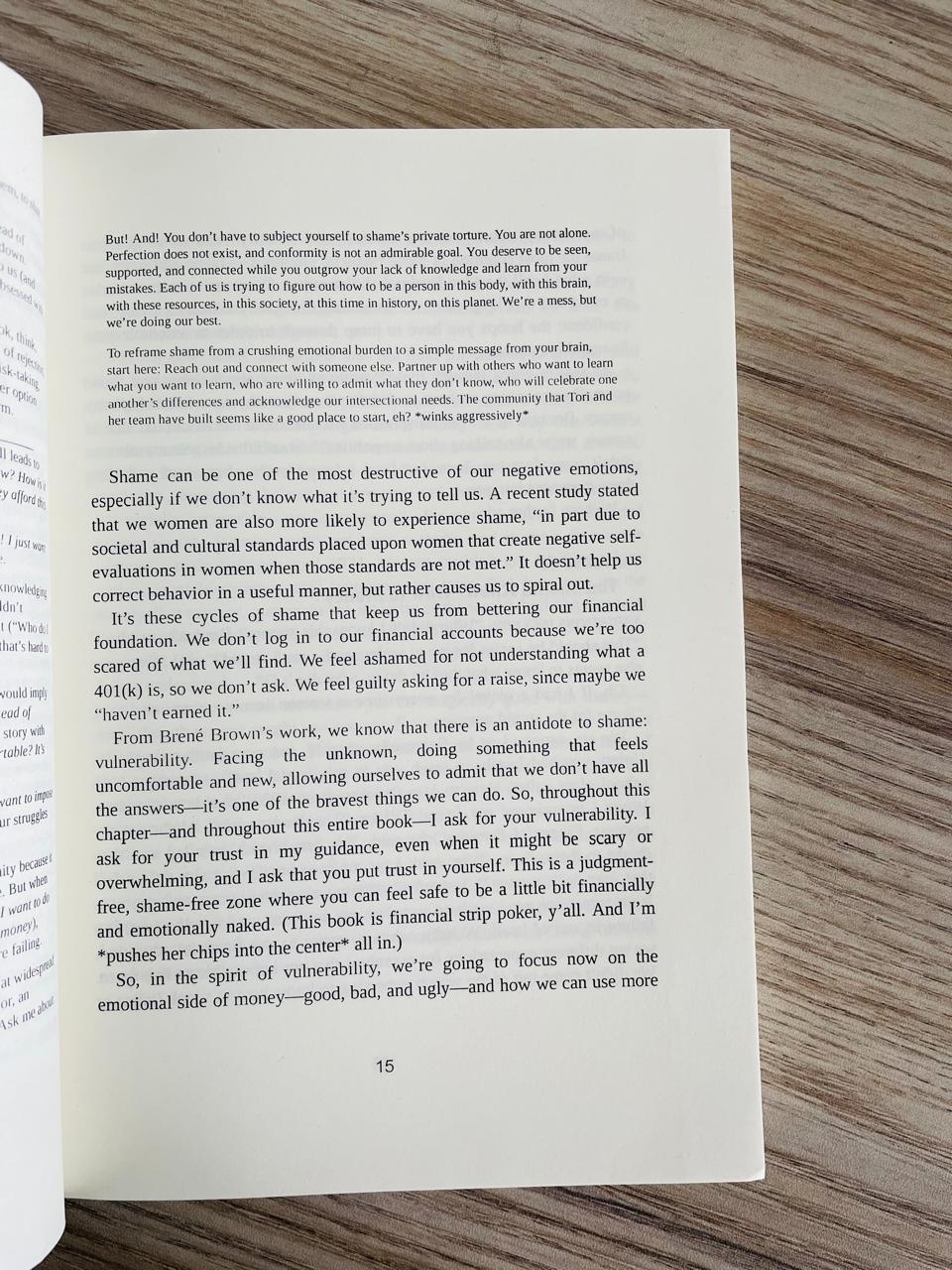








Financial Feminist by Tori Dunlap


රු1,950.00
3 X Rs. 650.00 or 8% Cashback with


or 3 X රු650.00 with


or up to 4 X රු487.50 with


Book Details
- Title: Financial Feminist
- Author: Tori Dunlap
- Genre: Personal Finance, Self-Improvement, Business
- Language: English
- Category: Finance & Personal Development
- Topics Covered: Budgeting, Investing, Financial Independence, Career Growth, Money Mindset
- Recommended For: Women, Young Professionals, Entrepreneurs, Finance Readers
- Indian locally published copy
4 in stock
Financial Feminist by Tori Dunlap is a practical guide to understanding money, building financial confidence, and creating greater freedom in your life.
Saving.
Spending.
Debt.
Investing.
Negotiating your salary.
Building wealth.
These topics affect almost everyone.
Yet many people reach adulthood without receiving a clear financial education.
Tori Dunlap created Financial Feminist to change that.
Rather than simply telling readers to spend less, the book explores both the practical skills needed to manage money and the wider social systems that can make financial progress more difficult.
The result is a personal-finance book that combines actionable advice with discussions about inequality, confidence, careers, investing, and financial independence.
Why Read Financial Feminist?
Financial Feminist is ideal for readers who want to feel more confident about money.
The book explores:
- Saving money
- Paying off debt
- Investing
- Salary negotiation
- Spending
- Financial goals
- Money psychology
- Building wealth
- Career decisions
- Financial independence
- Social inequality
- Voting with your money
Tori’s approach is different from traditional personal-finance advice that focuses almost entirely on cutting expenses.
She argues that financial success is not simply about avoiding coffee or eliminating every enjoyable purchase.
It is about understanding your priorities, increasing your earning power, building wealth, and making intentional financial decisions.
Financial Feminist and Money Confidence
Many people feel uncomfortable talking about money.
They may feel embarrassed about debt.
Confused about investing.
Afraid to negotiate a salary.
Or unsure whether they are making the right financial decisions.
Financial Feminist tries to replace that fear with knowledge.
The more you understand money, the easier it becomes to make confident choices.
That does not mean every decision becomes simple.
It means you are less likely to feel completely powerless.
Financial Feminist and Saving Money
Saving is one of the foundations of financial stability.
Emergency expenses happen.
Jobs change.
Medical costs appear.
Cars break.
Unexpected bills arrive.
Having savings can reduce the pressure created by these moments.
Tori became widely known after setting a goal to save $100,000 by age 25, and her financial-education work later grew into Her First $100K.
But Financial Feminist is not simply about reaching one dramatic savings number.
The broader goal is to help readers create financial options.
Financial Feminist and Emergency Funds
An emergency fund can create breathing room.
Without one, even a small unexpected expense may become stressful.
With one, you have more choices.
You may be able to handle:
A medical bill.
A broken appliance.
A sudden move.
A temporary job loss.
An urgent family expense.
That financial buffer can make life feel more manageable.
Financial Feminist and Debt
Debt is another major subject.
Many people carry:
Student loans.
Credit-card debt.
Personal loans.
Medical debt.
Car loans.
The emotional response to debt can be almost as difficult as the financial problem itself.
Shame can make people avoid looking at their numbers.
Avoidance then makes planning harder.
Financial Feminist encourages readers to understand their debt clearly rather than treating it as a personal failure.
The book’s publisher describes it as an inclusive money-management guide covering everything from managing debt to investing.
Financial Feminist and Investing
Investing is one of the most important themes in the book.
Saving protects money.
Investing gives money the opportunity to grow.
Yet many beginners avoid investing because it seems complicated.
Stocks.
Funds.
Markets.
Risk.
Retirement accounts.
Financial terminology can make investing feel inaccessible.
Financial Feminist aims to make those concepts easier to approach.
Tori argues that investing should not be reserved for experts or wealthy people.
Building long-term wealth usually requires learning how to make your money work for you.
Why Starting Matters
Waiting until you feel perfectly prepared can delay investing for years.
The problem is that time is extremely valuable.
Compounding needs time.
That means starting with a simple plan can sometimes be more important than waiting until you understand every possible investment product.
Financial Feminist encourages readers to build knowledge and begin making intentional financial decisions rather than remaining frozen by uncertainty.
Financial Feminist and Salary Negotiation
Income matters.
Saving Rs. 500 is useful.
But increasing your income can sometimes change your financial situation much faster.
That is why Financial Feminist also discusses salary negotiation.
Many employees never negotiate.
They may feel uncomfortable.
They may worry about appearing greedy.
They may not know how to research appropriate compensation.
Tori includes guidance on finding relevant data and negotiating the money you deserve.
Know What Your Work Is Worth
Negotiation becomes easier when you have information.
What do similar positions pay?
What experience do you bring?
What measurable results have you achieved?
What responsibilities do you handle?
These questions help turn negotiation into a professional discussion rather than an emotional request.
Financial Feminist encourages readers to understand the value they bring to the workplace.
Financial Feminist and Spending
Traditional financial advice often focuses heavily on spending.
Stop buying coffee.
Stop eating out.
Stop enjoying anything expensive.
Tori takes a more balanced approach.
Spending is not automatically bad.
The question is whether your spending reflects what you genuinely value.
A purchase that brings real value to your life may be very different from something bought automatically or because of social pressure.
Spend According to Your Values
Money is a tool.
That means spending should support the life you want.
One person may value travel.
Another may value books.
Another may value a comfortable home.
Someone else may prioritize education or family.
Financial Feminist encourages readers to think intentionally about where their money goes.
The goal is not necessarily to spend as little as possible.
The goal is to spend consciously.
Financial Feminist and Money Psychology
Personal finance is not only mathematics.
People have emotional relationships with money.
Family experiences matter.
Childhood matters.
Culture matters.
Fear matters.
Social expectations matter.
A person may understand exactly what they should do financially and still find it difficult to act.
That is why Financial Feminist includes journaling prompts and discussions about the less visible psychological and social dimensions of money.
Where Did Your Money Beliefs Come From?
Some people grow up hearing:
“Money is always scarce.”
“Rich people are greedy.”
“You should never talk about salary.”
“Investing is too risky.”
“You are bad with money.”
These ideas can become deeply embedded.
But they are not necessarily permanent truths.
Understanding where those beliefs came from can help you decide whether they still serve you.
Financial Feminist and Financial Independence
Financial independence does not necessarily mean becoming extremely rich.
It means having options.
Enough money can help someone:
Leave a bad job.
Move out of an unhealthy living situation.
Take time off.
Start a business.
Study something new.
Travel.
Support family.
Make decisions without every choice being controlled by immediate financial pressure.
That connection between money and freedom is central to Tori Dunlap’s financial philosophy.
Financial Feminist and Women
The title matters.
Financial Feminist argues that money and gender cannot always be separated.
Women have historically faced barriers involving:
Income.
Property ownership.
Access to financial education.
Career advancement.
Care responsibilities.
Investing.
Wealth accumulation.
Tori’s argument is that personal financial education can help individuals navigate the existing system while broader structural problems still need to be addressed.
Financial Feminist and Wealth
The book also challenges discomfort around the idea of women building wealth.
Wealth can provide influence.
Security.
Options.
And the ability to support other people or causes.
The issue is not simply accumulating money for status.
It is understanding what money can make possible.
That turns financial education into something larger than budgeting.
Financial Feminist and Your Career
Your career is one of your most important financial assets.
A higher salary can improve your ability to:
Save.
Invest.
Pay off debt.
Build an emergency fund.
Reach long-term goals.
That is why career decisions should be treated as financial decisions too.
Negotiation, promotions, changing jobs, and learning valuable skills can all influence your long-term financial position.
Financial Feminist for Beginners
You do not need to be a finance expert to read this book.
That is one of its main strengths.
Financial Feminist is particularly suitable for readers who think:
“I don’t understand investing.”
“I don’t know where to start.”
“I need to organize my finances.”
“I want to pay off debt.”
“I want to become better with money.”
“I want to build wealth but finance feels intimidating.”
The book is designed to make money conversations more approachable.
Financial Feminist for Young Adults
Young adults may find the book especially useful.
Early financial decisions can have long-term consequences.
Learning about saving and investing earlier gives more time for good habits to grow.
The book can also help readers think more carefully about:
Salary.
Debt.
Credit.
Lifestyle choices.
Financial goals.
Career decisions.
And long-term wealth.
Financial Feminist for Professionals
Professionals can also benefit.
A person may already earn a good salary while still feeling financially uncertain.
High income does not automatically create financial confidence.
If spending rises with every pay increase, wealth may not grow.
If money is never invested, long-term opportunities may be missed.
If salaries are never negotiated, lifetime earnings may be lower than necessary.
Financial Feminist encourages readers to look at the complete financial picture.
Financial Feminist and Voting With Your Dollars
Money can also express values.
Where you shop.
What businesses you support.
What causes you donate to.
What investments you choose.
These decisions can have social consequences.
The publisher specifically highlights “voting with your dollars” as one of the themes discussed in the book.
That expands personal finance beyond simply maximizing individual wealth.
Financial Feminist Is Not Just a Budgeting Book
Budgeting matters.
But the book covers much more.
It connects:
Money and identity.
Money and career.
Money and gender.
Money and freedom.
Money and relationships.
Money and social systems.
That broader perspective separates Financial Feminist from many traditional personal-finance books.
7 Powerful Lessons From Financial Feminist
- Money can create options. Financial security can give you more control over major life decisions.
- Saving is important, but earning matters too. Increasing income can accelerate financial progress.
- Investing is essential for long-term wealth. Saving alone may not be enough to reach larger financial goals.
- Salary negotiation is a financial skill. Understanding your market value can affect your lifetime earnings.
- Spending should reflect your values. Personal finance does not require eliminating everything you enjoy.
- Money beliefs deserve examination. Your financial habits may be shaped by childhood, culture, fear, and social expectations.
- Financial education can increase freedom. Financial Feminist treats money knowledge as a tool for creating greater independence and choice.
What You Can Expect From Financial Feminist
Readers can expect:
- Personal finance
- Saving strategies
- Debt management
- Investing basics
- Salary negotiation
- Spending guidance
- Money psychology
- Financial confidence
- Wealth building
- Journaling prompts
- Career advice
- Social inequality discussions
- Financial independence
- Practical exercises
Who Should Read Financial Feminist?
Financial Feminist is ideal for:
Young adults.
Professionals.
Women wanting greater financial confidence.
Beginners learning personal finance.
People struggling with debt.
People interested in investing.
Readers wanting to negotiate better salaries.
Anyone interested in building long-term wealth.
Readers who want personal-finance advice combined with discussions about inequality and financial systems.
A Powerful Guide to Building Financial Confidence
Financial Feminist challenges the idea that managing money should feel confusing, shameful, or inaccessible.
Tori Dunlap encourages readers to understand their finances clearly.
Save intentionally.
Pay down debt strategically.
Invest for the future.
Negotiate their compensation.
Spend according to their values.
And think about money as a tool for creating choices.
The central idea is not simply becoming rich.
It is becoming financially capable enough to have more control over your life.
For readers who want practical money guidance combined with discussions about confidence, inequality, careers, investing, and financial independence, Financial Feminist is an accessible and thought-provoking personal-finance guide.
Book Details
Title: Financial Feminist
Full Title: Financial Feminist: Overcome the Patriarchy’s Bullsht to Master Your Money and Build a Life You Love*
Author: Tori Dunlap
Genre: Personal Finance / Money Management / Self-Development
Publisher: Dey Street Books / William Morrow / HarperCollins
Original Publication: December 27, 2022
Pages: around 320 pages in a widely listed edition.Print Edition Details
A commonly listed print edition has:
ISBN-13: 9780063260269
Publisher: Dey Street Books
Format: Print edition.Edition Note
Different editions of Financial Feminist may have different page counts, bindings, covers, and ISBNs.
For example, some catalogues list approximately 305 pages, while another HarperCollins listing shows 320 pages.
Use the ISBN printed on your physical copy before entering exact edition details on your website.
Learn more about Financial Feminist by Tori Dunlap on Google Books.
Explore more books at Bargain Books.
Be the first to review “Financial Feminist by Tori Dunlap”
Related products
-17%

Out of stock
Business, Finance & Economics
Original price was: රු1,800.00.රු1,500.00Current price is: රු1,500.00.
3 X Rs. 500.00 or 8% Cashback with
or 3 X රු500.00 with
or up to 4 X රු375.00 with
Business, Finance & Economics
රු2,500.00
3 X Rs. 833.33 or 8% Cashback with
or 3 X රු833.33 with
or up to 4 X රු625.00 with

Out of stock
Analysis & Strategy
රු1,750.00
3 X Rs. 583.33 or 8% Cashback with
or 3 X රු583.33 with
or up to 4 X රු437.50 with
-16%

Business, Finance & Economics
Original price was: රු3,150.00.රු2,650.00Current price is: රු2,650.00.
3 X Rs. 883.33 or 8% Cashback with
or 3 X රු883.33 with
or up to 4 X රු662.50 with

Out of stock
රු1,950.00
3 X Rs. 650.00 or 8% Cashback with
or 3 X රු650.00 with
or up to 4 X රු487.50 with

Out of stock
Business, Finance & Economics
රු1,900.00
3 X Rs. 633.33 or 8% Cashback with
or 3 X රු633.33 with
or up to 4 X රු475.00 with

Out of stock
Business, Finance & Economics
රු1,700.00
3 X Rs. 566.67 or 8% Cashback with
or 3 X රු566.67 with
or up to 4 X රු425.00 with
-31%

Business, Finance & Economics
Original price was: රු1,600.00.රු1,100.00Current price is: රු1,100.00.
3 X Rs. 366.67 or 8% Cashback with
or 3 X රු366.67 with
or up to 4 X රු275.00 with
Reviews
There are no reviews yet.