
No products in the cart.
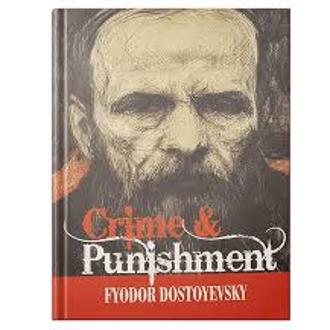
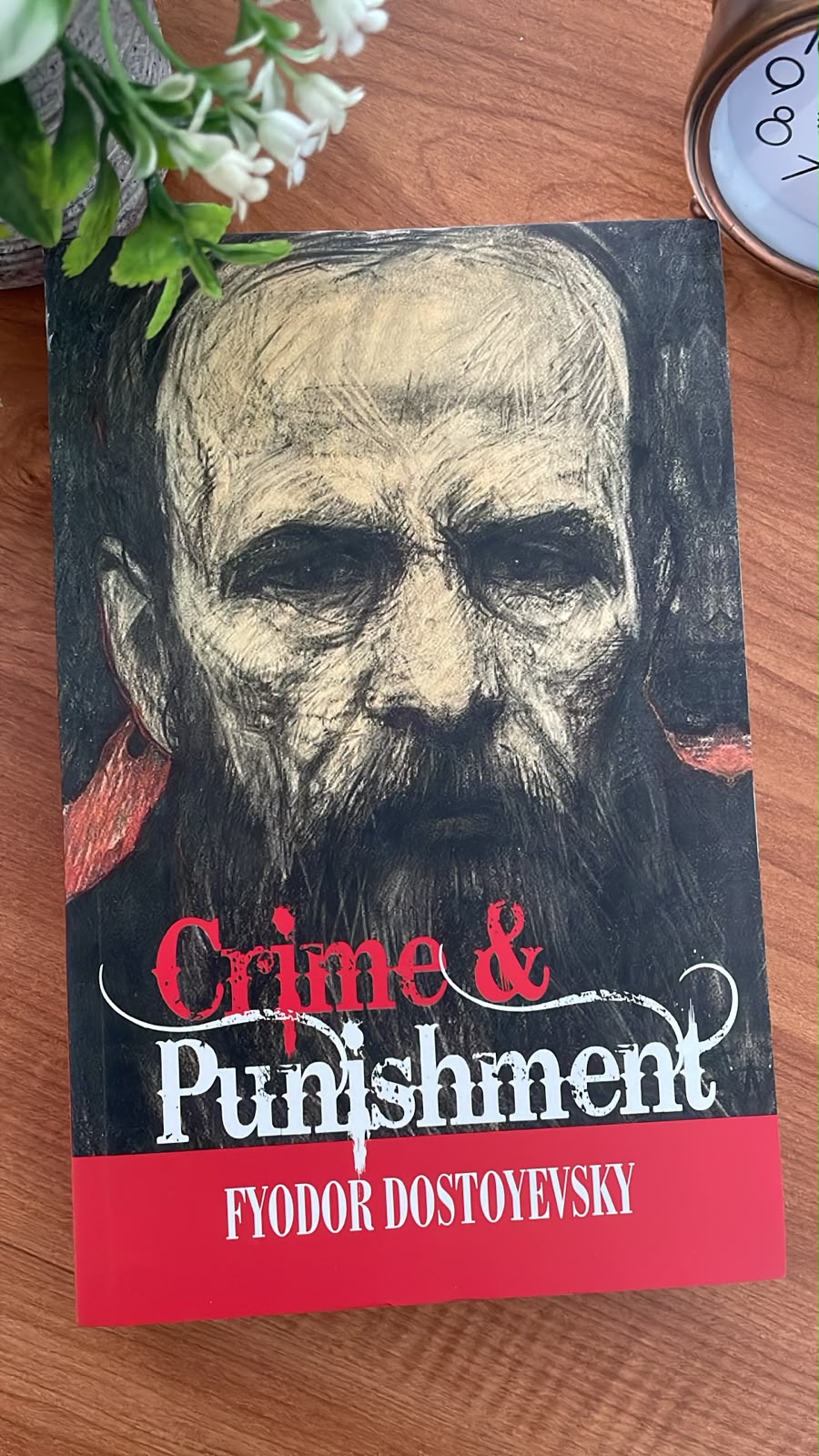


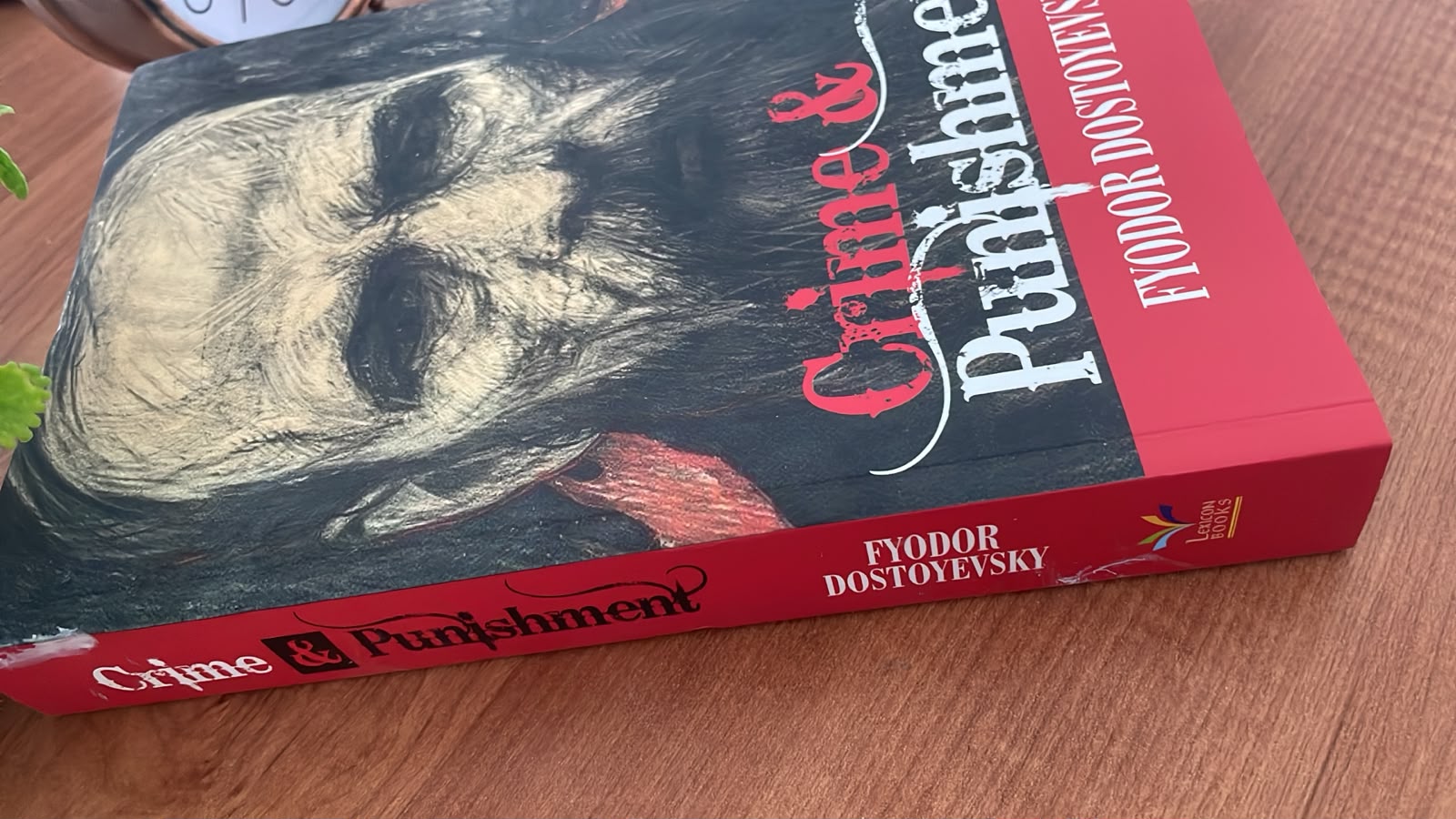





Crime And Punishment by Fyodor Dostoevsky


රු2,500.00
3 X Rs. 833.33 or 8% Cashback with


or 3 X රු833.33 with


or up to 4 X රු625.00 with


Crime and Punishment, Fyodor Dostoevsky, Classic Literature, Russian Literature, Psychological Fiction, Philosophy Books, Crime Fiction, Literary Classics, Dostoevsky Books, Classic Novels
3 in stock
Crime and Punishment by Fyodor Dostoevsky is a powerful psychological novel that explores guilt, morality, and redemption through the troubled mind of a young man living in poverty. Unlike simple crime stories, this book dives deep into human conscience, asking whether a person can justify wrongdoing for a greater purpose. The central idea of Crime and Punishment is that actions driven by pride, desperation, or misguided beliefs inevitably lead to inner conflict and suffering. True peace, the novel suggests, comes not from escaping consequences, but from accepting responsibility and seeking redemption.
Crime and Punishment by Fyodor Dostoevsky is one of the most influential psychological novels in world literature.
Set in nineteenth-century St. Petersburg, the story follows Rodion Raskolnikov, a poor former student struggling with poverty and isolation.
Raskolnikov develops dangerous ideas about morality and believes certain extraordinary people may be able to place themselves above ordinary rules.
Those ideas eventually lead him toward a terrible decision.
After committing a serious crime, Raskolnikov must confront fear, guilt and the consequences of his actions.
Crime and Punishment explores morality, justice, poverty, isolation, conscience and redemption.
Why Read Crime and Punishment?
Crime and Punishment is much more than a traditional crime novel.
The story focuses heavily on what happens inside the mind of the person responsible for the crime.
Raskolnikov attempts to justify his actions through philosophical reasoning.
However, his emotions quickly begin to challenge those beliefs.
Fear and guilt become increasingly difficult to control.
This creates powerful psychological tension throughout the novel.
Meet Rodion Raskolnikov
Raskolnikov is one of literature’s most complex characters.
He is intelligent, proud and deeply isolated.
His difficult financial situation increases his frustration with society.
At the same time, he begins developing dangerous theories about morality.
Crime and Punishment follows him as these beliefs are tested against reality.
His confidence slowly collapses under the pressure of guilt.
A Powerful Psychological Novel
One of the greatest strengths of Crime and Punishment is its psychological depth.
Dostoevsky explores how guilt can affect thought, behaviour and relationships.
Raskolnikov struggles to behave normally after his actions.
Small conversations begin to feel threatening.
Ordinary situations create anxiety and suspicion.
Readers experience much of the story through his increasingly troubled mind.
Crime, Guilt and Conscience
Guilt is one of the strongest themes in Crime and Punishment.
Raskolnikov initially believes he can justify what he has done.
However, his conscience refuses to remain quiet.
The novel explores the difference between intellectual reasoning and emotional reality.
Raskolnikov’s greatest punishment begins inside his own mind.
Morality and Justice
Crime and Punishment asks difficult questions about morality.
Can someone justify a harmful action if they believe the final result will be beneficial?
Can intelligence or ambition place someone above ordinary moral rules?
Dostoevsky explores these questions through Raskolnikov’s choices.
The consequences reveal how dangerous such beliefs can become.
Poverty and Social Inequality
Poverty plays an important role throughout the novel.
Many characters live under extremely difficult financial conditions.
Lack of money affects their relationships and choices.
Raskolnikov’s poverty contributes to his anger and isolation.
However, the novel never presents poverty as a simple excuse for wrongdoing.
Sonia and Compassion
Sonia Marmeladova becomes one of the most important characters in Crime and Punishment.
She has experienced great hardship but remains compassionate.
Her kindness creates a strong contrast with Raskolnikov’s isolation.
Sonia represents connection, forgiveness and hope.
Her relationship with Raskolnikov becomes central to the novel’s themes of redemption.
Porfiry Petrovich and the Investigation
Porfiry Petrovich is the investigator who becomes interested in Raskolnikov.
His approach is highly psychological.
Rather than relying only on physical evidence, he studies behaviour and conversation.
The exchanges between Porfiry and Raskolnikov create intense suspense.
Raskolnikov is never certain how much the investigator actually knows.
Isolation and Human Connection
Isolation is another major theme in Crime and Punishment.
Raskolnikov repeatedly pushes away the people who care about him.
He avoids friends and family.
This makes his psychological suffering even worse.
The novel gradually shows how human connection can become an important part of healing.
Suffering and Redemption
Redemption is central to the story.
Crime and Punishment asks whether someone who has done something terrible can still change.
Redemption is not presented as easy.
It requires honesty and responsibility.
Raskolnikov must eventually confront the truth about himself.
Philosophy and Human Nature
The novel contains many philosophical ideas.
Characters discuss morality, religion, society and responsibility.
However, these ideas are always connected to real human behaviour.
Dostoevsky shows what happens when abstract theories influence real decisions.
This makes Crime and Punishment especially interesting for readers who enjoy philosophy and psychology.
The Atmosphere of St. Petersburg
The setting adds to the tension of the novel.
St. Petersburg is often shown as crowded, uncomfortable and oppressive.
Small rooms and busy streets create a feeling of pressure.
The environment mirrors Raskolnikov’s mental state.
This makes the city feel like an important part of the story.
7 Powerful Reasons to Read Crime and Punishment
- Deep Psychology – Explore guilt, fear and inner conflict.
- Complex Characters – Meet unforgettable and morally complicated people.
- Philosophical Questions – Consider morality, justice and responsibility.
- Powerful Themes – Explore guilt, poverty, isolation and redemption.
- Psychological Suspense – Experience intense encounters between Raskolnikov and investigators.
- Classic Literature – Discover one of Dostoevsky’s most famous novels.
- Timeless Ideas – The questions raised by the story remain relevant today.
What You Can Expect From Crime and Punishment
Readers can expect:
- Psychological fiction
- Classic literature
- Crime and investigation
- Moral conflict
- Guilt and conscience
- Philosophical ideas
- Social inequality
- Complex characters
- Emotional tension
- Justice and responsibility
- Redemption
- Russian literature
- Powerful dialogue
- Thought-provoking storytelling
Who Should Read Crime and Punishment?
Crime and Punishment is ideal for readers who enjoy classic literature.
It is also suitable for readers interested in psychology and philosophy.
Students may appreciate its themes, symbolism and complex characters.
Fans of crime fiction may also enjoy its unusual psychological approach.
The novel focuses less on discovering who committed the crime and more on understanding the mind behind it.
A Powerful Classic of World Literature
Crime and Punishment remains one of the most important novels in world literature.
It explores what happens when a person attempts to place intellectual theories above morality.
The novel also asks whether guilt can become its own form of punishment.
Through Raskolnikov’s journey, Dostoevsky examines crime, conscience, suffering and redemption.
For readers searching for a deeply psychological and thought-provoking classic, Crime and Punishment is an essential addition to any literature collection.
https://yourwebsite.com/crime-and-punishment/
Be the first to review “Crime And Punishment by Fyodor Dostoevsky”
Related products
-14%

Classics & Literary Fiction
Original price was: රු1,800.00.රු1,550.00Current price is: රු1,550.00.
3 X Rs. 516.67 or 8% Cashback with
or 3 X රු516.67 with
or up to 4 X රු387.50 with
Out of stock
Classics & Literary Fiction
රු1,950.00
3 X Rs. 650.00 or 8% Cashback with
or 3 X රු650.00 with
or up to 4 X රු487.50 with
-16%

Classics & Literary Fiction
Original price was: රු3,100.00.රු2,600.00Current price is: රු2,600.00.
3 X Rs. 866.67 or 8% Cashback with
or 3 X රු866.67 with
or up to 4 X රු650.00 with
Out of stock
Classics & Literary Fiction
රු1,800.00
3 X Rs. 600.00 or 8% Cashback with
or 3 X රු600.00 with
or up to 4 X රු450.00 with
-16%

Classics & Literary Fiction
Original price was: රු3,200.00.රු2,700.00Current price is: රු2,700.00.
3 X Rs. 900.00 or 8% Cashback with
or 3 X රු900.00 with
or up to 4 X රු675.00 with

Out of stock
Adventure Fiction
Death on the Nile – Film Tie-In Edition | Agatha Christie Paperback
රු2,400.00
3 X Rs. 800.00 or 8% Cashback with
or 3 X රු800.00 with
or up to 4 X රු600.00 with

Out of stock
Classics & Literary Fiction
රු1,600.00
3 X Rs. 533.33 or 8% Cashback with
or 3 X රු533.33 with
or up to 4 X රු400.00 with
-37%

Out of stock
Classics & Literary Fiction
Original price was: රු3,000.00.රු1,900.00Current price is: රු1,900.00.
3 X Rs. 633.33 or 8% Cashback with
or 3 X රු633.33 with
or up to 4 X රු475.00 with
Reviews
There are no reviews yet.