No products in the cart.
-17%
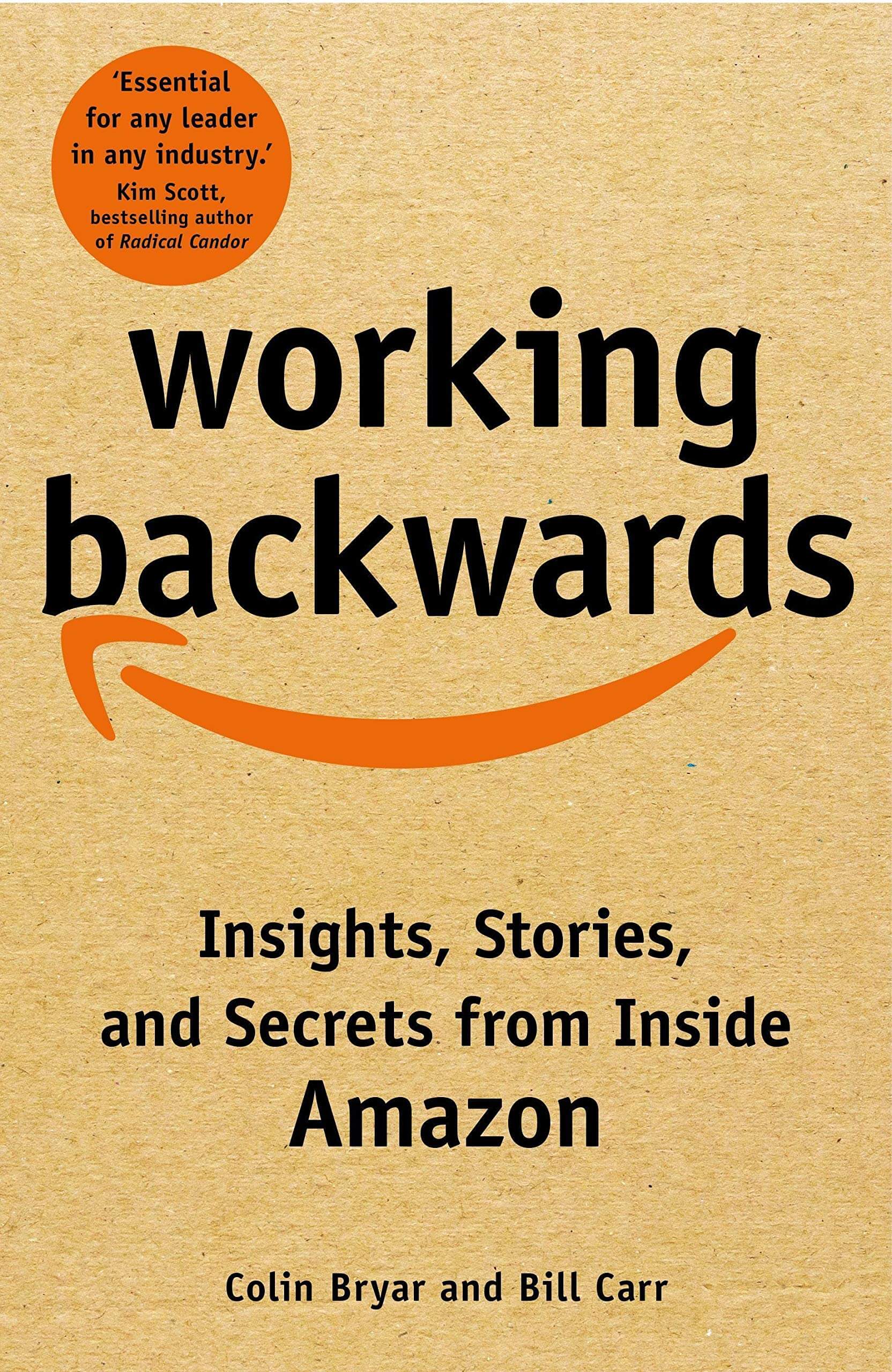
Working Backwards by Bill Carr and Colin Bryar


Original price was: රු3,000.00.රු2,500.00Current price is: රු2,500.00.
3 X Rs. 833.33 or 8% Cashback with


or 3 X රු833.33 with


or up to 4 X රු625.00 with


This book is a insight into the culture of Amazon and how that, in the authors’ opinion, has driven their success. In that respect, the book is a success: the way Amazon is organised and the principles it is built on is very interesting. The book is an endless veneration of Amazon. Amazon, its employees, and especially Bezos are worshipped. Mistakes Amazon made are only mentioned to show how Amazon used them to improve their process. There’s no mention of issues that Amazon had and continues to have problems with, such as user interfaces, as anyone who has tried to navigate the categories on the website or used the AWS console can testify.
Out of stock
Email when stock available
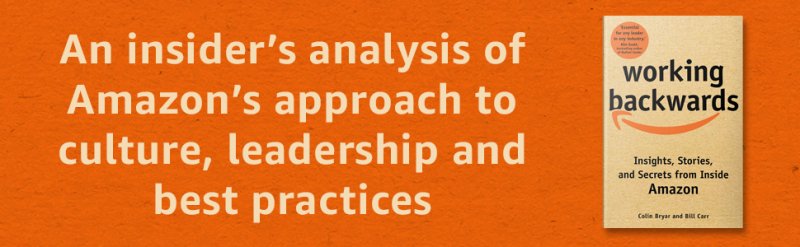
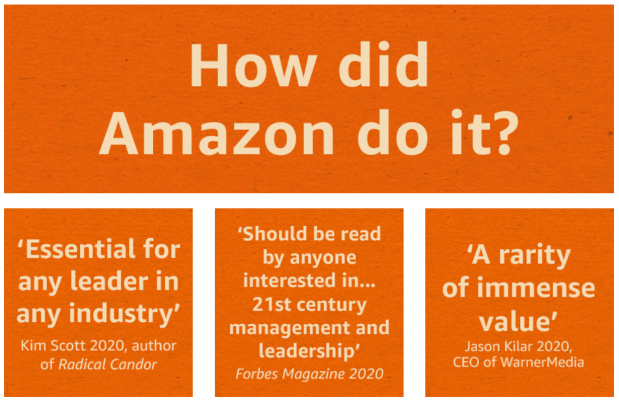
Working Backwards by Colin Bryar and Bill Carr
Working Backwards by Colin Bryar and Bill Carr is a practical business book about Amazon’s culture, leadership, innovation, decision-making, and operational systems.
The authors spent years inside Amazon.
They worked during a period that produced major businesses and products such as Prime, Kindle, Alexa, and Amazon Web Services.
The book explains the processes behind that growth.
About Working Backwards
Working Backwards is both a business guide and an inside story of Amazon.
Colin Bryar and Bill Carr explain how the company built repeatable systems rather than depending only on individual talent.
The central idea is simple.
Start with the customer.
Then work backwards.
Instead of beginning with a product and trying to sell it, Amazon often begins by defining the customer problem first.
7 Powerful Lessons from Working Backwards
1. Start With the Customer
Customer obsession is one of Amazon’s best-known ideas.
The company tries to understand what customers actually need.
Then it designs products and services around those needs.
This is different from building something first and looking for customers later.
2. Write Before You Build
One of the most interesting ideas in Working Backwards is the PR/FAQ process.
Teams often write a future press release before a product is built.
The document explains what the product will do.
It describes why customers should care.
It also forces the team to think clearly before spending time and money.
3. Replace Slides With Narratives
Amazon is famous for using written narratives instead of traditional presentation slides in many meetings.
The goal is deeper thinking.
A written document forces people to explain assumptions, logic, and evidence.
It can also create a more focused discussion.
4. Use the Right Metrics
Metrics are essential.
But not every metric is useful.
The authors explain the importance of distinguishing between inputs and outputs.
Revenue is an output.
Customer experience, selection, speed, and pricing can be inputs.
Teams should focus on the factors they can influence directly.
5. Hire Carefully
Amazon places strong emphasis on hiring.
The book discusses mechanisms such as the Bar Raiser process.
The goal is to protect hiring standards as the company grows.
Bad hiring decisions can damage teams for years.
6. Think Long Term
Amazon has often accepted short-term pressure in exchange for long-term advantage.
That can mean investing before profits are obvious.
It can also mean developing infrastructure that takes years to pay off.
Working Backwards shows how long-term thinking became part of Amazon’s culture.
7. Build Processes That Scale
Success becomes difficult to repeat if everything depends on one brilliant person.
Amazon developed systems.
Hiring systems.
Meeting systems.
Planning systems.
Metric systems.
Product-development systems.
The lesson is that strong processes can help good decisions happen more consistently.
What Does Working Backwards Mean?
Working backwards begins with the customer.
A team asks:
Who is the customer?
What problem do they have?
Why does the problem matter?
What would an ideal solution look like?
Only after those questions are clear does the product-development process begin.
This reduces the risk of building something impressive that nobody needs.
The PR/FAQ Process
PR/FAQ means Press Release and Frequently Asked Questions.
The team writes the press release as if the product already exists.
The document describes the customer benefit.
It explains the problem.
It explains the solution.
The FAQ then explores difficult questions.
Cost.
Technology.
Risks.
Competition.
Operations.
This process can reveal weaknesses early.
Customer Obsession
Customer obsession is deeper than customer service.
It means using customer needs as a starting point.
Teams are expected to understand pain points.
They also need to think ahead.
Sometimes customers cannot clearly describe the product they need.
The company must still understand the underlying problem.
Leadership Principles
Amazon uses leadership principles to guide behavior and decisions.
The book explains how these principles influence hiring, meetings, product development, and management.
At the time described in the book, Amazon operated around principles such as customer obsession, ownership, invent and simplify, and dive deep.
The larger lesson is that company values matter only when they influence real decisions.
The Bar Raiser Process
Hiring becomes harder as a company grows.
Standards can fall.
Teams may hire quickly because they are under pressure.
The Bar Raiser process is designed to create more consistency.
An experienced interviewer participates independently of the hiring manager.
The aim is to raise or maintain the quality bar.
Written Narratives
Many companies rely heavily on presentation slides.
Amazon developed a strong culture of written documents.
A six-page narrative can force clearer reasoning.
Writers must connect ideas.
They must explain evidence.
They must address contradictions.
Readers also have time to process the argument carefully.
Meetings
The book explains that some Amazon meetings begin with silent reading.
Participants read the document first.
Then discussion begins.
This reduces the advantage of people who speak first or speak most confidently.
The discussion can focus more directly on the written argument.
Input Metrics
One of the most useful sections of Working Backwards concerns metrics.
Output metrics tell you what happened.
Input metrics can tell you what to improve.
For example, sales may be an output.
Selection, availability, delivery speed, and pricing may help drive that output.
The book encourages teams to identify controllable inputs.
Weekly Business Reviews
The Weekly Business Review, or WBR, is another important mechanism.
Teams regularly review performance.
They look for trends.
They examine metrics.
They investigate unexpected changes.
The goal is disciplined operating management.
Innovation
Amazon’s success did not come from one product.
The company repeatedly experimented.
Some ideas succeeded.
Others failed.
The book shows that innovation requires a system that allows teams to test, learn, and keep improving.
Amazon Prime
Amazon Prime is one of the major examples discussed.
Prime required a major shift in thinking.
Faster shipping normally costs more.
Amazon had to rethink the customer experience and the economics behind it.
The result eventually became a major part of the company’s ecosystem.
Kindle
Kindle is another example.
Amazon was originally known as an online retailer.
Building a hardware product created new challenges.
The company had to think about content, devices, publishing, and customer experience together.
This shows how working backwards can support expansion into unfamiliar markets.
Amazon Web Services
Amazon Web Services is one of the most important business stories in the book.
AWS emerged from internal technology capabilities.
The company realized other organizations faced similar infrastructure problems.
That created an entirely new business.
Long-Term Thinking
Many companies are pressured by quarterly results.
Amazon became known for making decisions with longer time horizons.
That does not mean short-term results do not matter.
It means some important investments need time.
The book argues that leaders should distinguish between temporary cost and long-term value.
Operational Excellence
Innovation attracts attention.
Operations often receive less attention.
But Amazon’s growth also depended on execution.
Processes.
Metrics.
Fulfillment.
Technology.
Planning.
Customer support.
Working Backwards shows that operational discipline is just as important as creative ideas.
Culture Through Mechanisms
A company can write values on a wall.
That does not guarantee anyone will follow them.
Amazon uses mechanisms.
Processes make cultural ideas concrete.
Hiring practices support standards.
Narratives support clear thinking.
Metrics support accountability.
The lesson is that culture should appear in daily systems.
Who Should Read This Book?
Working Backwards is ideal for entrepreneurs, managers, business owners, product managers, executives, and startup founders.
It is also useful for readers interested in Amazon.
Business students may appreciate the examples of leadership and organizational design.
Product teams may especially enjoy the PR/FAQ and customer-first sections.
About Colin Bryar and Bill Carr
Colin Bryar and Bill Carr are former Amazon executives.
Together, they accumulated twenty-seven years of Amazon experience during major periods of growth and innovation. Macmillan Publishers
Their official Working Backwards site now focuses on teaching companies how to apply Amazon-style management practices.
Readers can learn more through the official Working Backwards website.
Product Details
Title: Working Backwards
Subtitle: Insights, Stories, and Secrets from Inside Amazon
Authors: Colin Bryar and Bill Carr
Genre: Business / Leadership / Management / Entrepreneurship
Language: English
Original Publication: 2021
Common Pan Paperback Edition
Publisher: Pan Macmillan
Imprint: Pan
ISBN-13: 9781529033847
Format: Paperback
Pages: 304
Publication Date: August 18, 2022
Pan Macmillan confirms this paperback edition and its 304-page length. Pan Macmillan Australia –
US Hardcover Edition
Publisher: St. Martin’s Press
ISBN-13: 9781250267597
Format: Hardcover
Pages: 304
Original Publication Date: February 9, 2021
Macmillan confirms the original U.S. publication in 2021. Macmillan Publishers
Important Edition Note
Different international editions may have different ISBNs, covers, dimensions, and publication dates.
For Bargain Books, use ISBN 9781529033847 only if it matches the barcode on your physical paperback.
Always verify the physical copy before publishing WooCommerce specifications.
Explore More Business Books
Working Backwards shows that successful companies are not built only through big ideas.
They are built through repeatable systems.
Customer focus.
Clear writing.
Strong hiring.
Useful metrics.
Long-term thinking.
And disciplined execution.
Readers can explore more [Business, Finance & Economics Books at Barg
| Author | Bill Carr and Colin Bryar |
|---|---|
| Language | English |
| Type | Paperback Printed Book (Second Quality Copy) |
Be the first to review “Working Backwards by Bill Carr and Colin Bryar”
Related products
-24%

Out of stock
Non-Fiction & Knowledge
Original price was: රු2,100.00.රු1,600.00Current price is: රු1,600.00.
3 X Rs. 533.33 or 8% Cashback with
or 3 X රු533.33 with
or up to 4 X රු400.00 with
-24%
Out of stock
Non-Fiction & Knowledge
Original price was: රු2,100.00.රු1,600.00Current price is: රු1,600.00.
3 X Rs. 533.33 or 8% Cashback with
or 3 X රු533.33 with
or up to 4 X රු400.00 with

Out of stock
Self-Help & Psychology
රු1,900.00
3 X Rs. 633.33 or 8% Cashback with
or 3 X රු633.33 with
or up to 4 X රු475.00 with
-34%

Non-Fiction & Knowledge
Original price was: රු2,250.00.රු1,490.00Current price is: රු1,490.00.
3 X Rs. 496.67 or 8% Cashback with
or 3 X රු496.67 with
or up to 4 X රු372.50 with

Non-Fiction & Knowledge
රු1,700.00
3 X Rs. 566.67 or 8% Cashback with
or 3 X රු566.67 with
or up to 4 X රු425.00 with
-19%

Out of stock
Biography
Original price was: රු2,400.00.රු1,950.00Current price is: රු1,950.00.
3 X Rs. 650.00 or 8% Cashback with
or 3 X රු650.00 with
or up to 4 X රු487.50 with
-24%

Out of stock
Non-Fiction & Knowledge
Original price was: රු2,500.00.රු1,900.00Current price is: රු1,900.00.
3 X Rs. 633.33 or 8% Cashback with
or 3 X රු633.33 with
or up to 4 X රු475.00 with
-13%

Out of stock
Non-Fiction & Knowledge
Original price was: රු3,900.00.රු3,400.00Current price is: රු3,400.00.
3 X Rs. 1,133.33 or 8% Cashback with
or 3 X රු1,133.33 with
or up to 4 X රු850.00 with
Reviews
There are no reviews yet.