
No products in the cart.
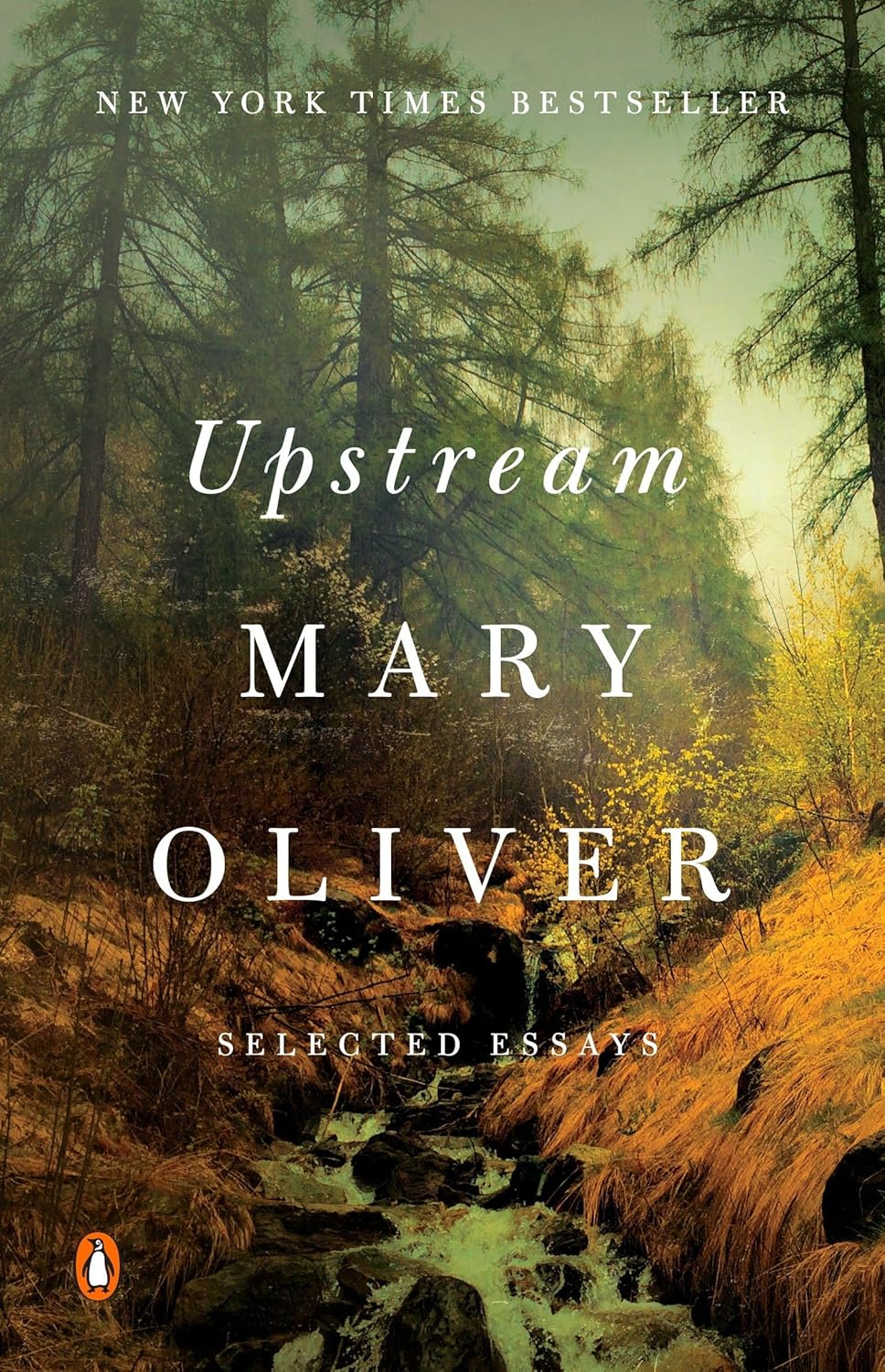
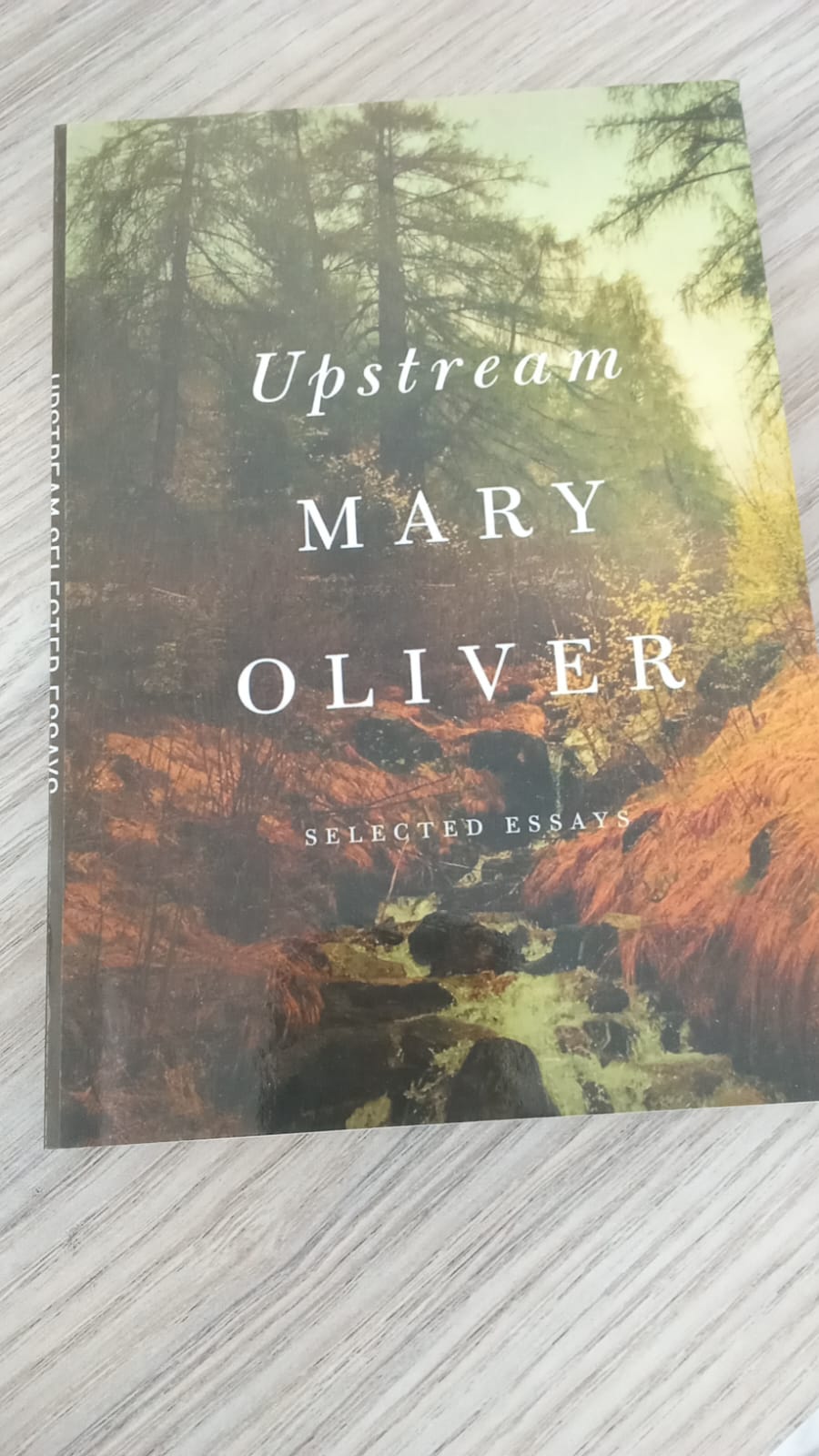

Upstream by Mary Oliver


රු1,700.00
3 X Rs. 566.67 or 8% Cashback with


or 3 X රු566.67 with


or up to 4 X රු425.00 with


Short Description – Upstream
Upstream by Mary Oliver is a reflective collection of essays that explores nature, creativity, and the importance of attention, encouraging readers to find meaning in simple, everyday experiences.
Out of stock
Email when stock available
Upstream by Mary Oliver
Upstream by Mary Oliver is a thoughtful collection of essays about nature, creativity, literature, solitude, attention, and the search for a meaningful life.
Mary Oliver was best known as a poet.
In Upstream, readers encounter her voice through prose.
She reflects on the natural world that inspired her writing.
She also considers the writers who influenced her, the discipline required to create art, and the importance of paying close attention to the world around us.
The result is a quiet but deeply rewarding book.
About Upstream by Mary Oliver
Upstream by Mary Oliver gathers essays that move between memoir, literary reflection, nature writing, and thoughts about creativity.
Oliver writes about walking through woods.
She observes birds, plants, water, and animals.
She remembers her childhood.
She reflects on poetry.
She also discusses writers whose work helped shape her own imagination.
Penguin Random House notes that the collection brings together Oliver’s thoughts on the natural, spiritual, and artistic worlds.
7 Powerful Reflections from Upstream by Mary Oliver
1. Pay Attention to the World
One of the strongest ideas in Upstream by Mary Oliver is the importance of attention.
Oliver notices small things.
The movement of water.
The shape of a leaf.
The behavior of an animal.
A changing season.
These observations become more than description.
They become a way of understanding life.
The book suggests that attention itself can be a form of gratitude.
2. Nature Can Teach Us
The natural world is central to Mary Oliver’s writing.
She does not treat nature merely as scenery.
It is a teacher.
A source of wonder.
A place of solitude.
And a way to understand change, mortality, beauty, and belonging.
Readers who enjoy walking, gardening, birdwatching, or simply spending time outdoors may especially appreciate these essays.
3. Creativity Requires Discipline
Oliver presents writing as both inspiration and work.
A writer cannot simply wait for a perfect mood.
Creative work requires time.
Attention.
Practice.
And persistence.
This makes Upstream especially interesting for writers and artists.
The essays remind readers that creativity often depends on routine as much as inspiration.
4. Solitude Can Be Valuable
Modern life often treats solitude as something negative.
Oliver approaches it differently.
Being alone can create space for observation.
It can help people think.
It can also make creative work possible.
Her essays show that solitude does not always mean loneliness.
Sometimes it creates clarity.
5. Literature Can Shape a Life
Mary Oliver writes about the authors who influenced her.
Walt Whitman is especially important.
She also reflects on writers such as Emerson, Wordsworth, Shelley, Poe, and Robert Frost.
Books became companions.
They gave her ways to think about language, nature, art, and life.
The collection therefore becomes partly a celebration of reading itself.
6. Curiosity Matters
Oliver approaches the world with curiosity.
She wants to understand.
She wants to notice.
She wants to explore.
This curiosity appears in her relationship with nature and literature.
It also shapes her creative process.
The book encourages readers to remain interested in the world rather than moving through it without noticing.
7. A Meaningful Life Requires Presence
Upstream by Mary Oliver repeatedly returns to presence.
Life can become crowded with obligations.
Work.
Noise.
Technology.
Routine.
Oliver’s essays ask readers to notice what is happening now.
A bird.
A tree.
A conversation.
A moment of beauty.
Presence does not solve every problem.
But it can change how we experience ordinary life.
Nature and Mary Oliver
Nature was essential to Oliver’s work.
She spent long periods walking outdoors.
Those walks became part of her creative process.
She observed animals.
Plants.
Water.
Weather.
The essays in Upstream show how closely her writing life was connected to the landscape around her.
Penguin Random House notes that Oliver described the natural world as essential to her identity as a poet.
Walt Whitman
Walt Whitman had a major influence on Oliver.
She encountered his work when she was young.
His poetry showed her that literature could become a place to enter emotionally and imaginatively.
In Upstream, she reflects on that influence.
Whitman becomes more than a famous poet.
He becomes an example of how one writer can change another person’s life.
Ralph Waldo Emerson
Oliver also reflects on Ralph Waldo Emerson.
His writing about nature, individuality, and thought connects naturally with many of her own interests.
She considers not only his ideas but also what writers inherit from earlier generations.
This creates a conversation between past and present.
Robert Frost
Robert Frost is another writer discussed in the collection.
Oliver examines his poems closely.
She considers technique.
Structure.
Language.
Meaning.
These essays reveal the analytical side of her work.
She was not simply inspired by poetry.
She studied it carefully.
The Writing Life
Writers often romanticize inspiration.
Oliver is more practical.
Writing requires showing up.
It requires attention.
It requires reading.
It requires patience.
The essays in Upstream by Mary Oliver show that beautiful writing often emerges from disciplined observation.
That lesson applies beyond poetry.
Any creative field benefits from practice.
Walking and Thinking
Walking plays an important role in Oliver’s life.
Movement through nature gives her time to observe.
It also creates space for thought.
Many people experience something similar.
Ideas can appear during a walk because the mind is not being forced in one direction.
The book makes walking feel like both a physical and intellectual activity.
Wonder
One of Mary Oliver’s greatest strengths is her ability to treat ordinary things as worthy of attention.
A bird does not need to be rare to be interesting.
A tree does not need to be famous.
Wonder can exist in ordinary places.
This idea gives Upstream its calm and reflective tone.
Childhood and Memory
The book also includes personal memories.
Oliver reflects on her younger years.
She considers how reading and nature became forms of refuge.
These sections add emotional depth.
They help explain why literature and the natural world became so important to her.
Art and Responsibility
Oliver treats artistic work seriously.
A writer inherits traditions.
They learn from earlier writers.
Then they create something of their own.
That creates responsibility.
Artists should pay attention.
They should work carefully.
They should respect language.
This idea appears throughout the essays.
The Importance of Reading
Reading becomes a form of apprenticeship.
Oliver learned from writers who came before her.
She studied their sentences.
Their rhythms.
Their ideas.
Their courage.
The book suggests that serious reading can change how a person thinks and creates.
Quiet Books Can Be Powerful
Upstream does not depend on dramatic plot twists.
There is no central mystery.
No villain.
No huge conflict.
Its power comes from reflection.
Readers are invited to slow down.
That makes the book especially suitable for people who enjoy thoughtful nonfiction.
Who Should Read This Book?
Upstream by Mary Oliver is ideal for readers who enjoy essays, poetry, nature writing, literary criticism, philosophy, creativity, and reflective nonfiction.
Writers may appreciate her thoughts about craft.
Nature lovers may enjoy her observations.
Readers looking for a quieter and more contemplative book may also find it rewarding.
Fans of Mary Oliver’s poetry will gain additional insight into the ideas behind her work.
About Mary Oliver
Mary Oliver was an American poet and essayist known for writing about nature, attention, wonder, mortality, and the ordinary beauty of everyday life.
Her poetry collection American Primitive won the Pulitzer Prize for Poetry in 1984. Penguin Random House also notes that she published her first poetry collection in 1963 and continued writing for more than five decades.
Readers can learn more through the official Penguin Random House page for Upstream.
Product Details
Title: Upstream
Author: Mary Oliver
Genre: Essays / Nature Writing / Literary Non-Fiction / Creativity
Language: English
Original Publication: 2016
Common Penguin Paperback Edition
Publisher: Penguin Books
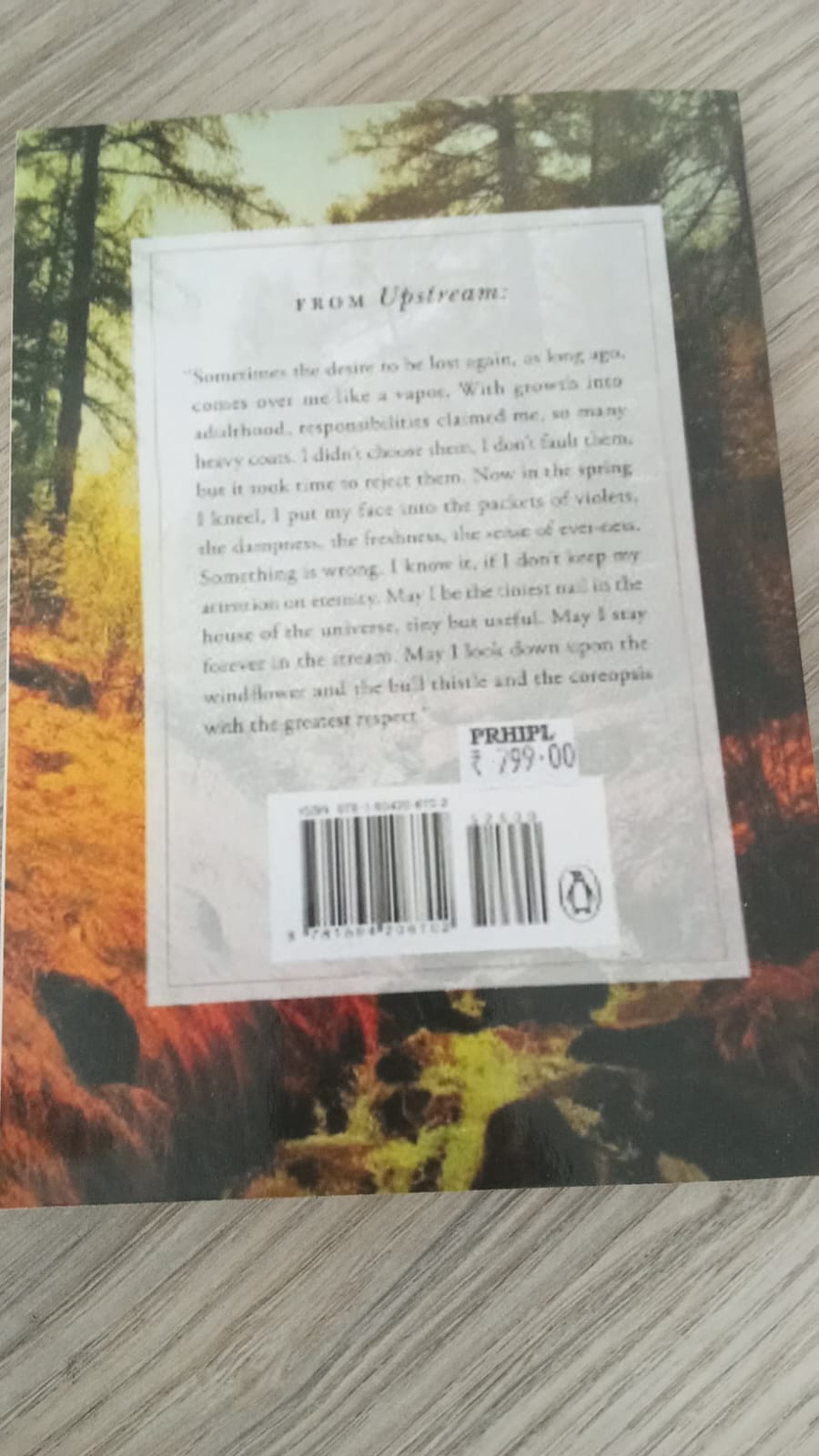
ISBN-13: 9780143130086
Format: Paperback
Pages: 192
Publication Date: October 29, 2019
Dimensions: 5 × 7¾ inches
Penguin Random House confirms these specifications for the paperback edition.
Hardcover Edition
Format: Hardcover
Pages: 192
Original Hardcover Publication Date: October 11, 2016
Different editions may have different covers, ISBNs, dimensions, and weights.
Always check the ISBN printed on your physical copy before entering final WooCommerce specifications.
Explore More Non-Fiction Books
Upstream by Mary Oliver is a book about looking more closely.
At nature.
At literature.
At creativity.
At memory.
And at the life happening around us every day.
Oliver’s essays remind readers that attention is not passive.
It can shape how we think, how we create, and how we experience the world.
Readers looking for more reflective nonfiction can explore Non-Fiction & Knowledge Books at Bargain Books.
You can also explore Self-Help & Psychology Books at Bargain Books.
For readers who enjoy Mary Oliver’s poetry, nature writing, literary reflection, and thoughtful books about creativity and life, Upstream is a beautiful collection to read slowly and return to often.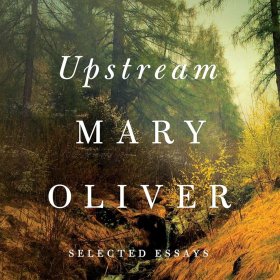
Be the first to review “Upstream by Mary Oliver”
Related products
-24%
Non-Fiction & Knowledge
Original price was: රු2,300.00.රු1,750.00Current price is: රු1,750.00.
3 X Rs. 583.33 or 8% Cashback with
or 3 X රු583.33 with
or up to 4 X රු437.50 with

Out of stock
Non-Fiction & Knowledge
රු1,900.00
3 X Rs. 633.33 or 8% Cashback with
or 3 X රු633.33 with
or up to 4 X රු475.00 with
-7%

Out of stock
Original price was: රු4,500.00.රු4,200.00Current price is: රු4,200.00.
3 X Rs. 1,400.00 or 8% Cashback with
or 3 X රු1,400.00 with
or up to 4 X රු1,050.00 with
-24%
Out of stock
Non-Fiction & Knowledge
Original price was: රු2,500.00.රු1,900.00Current price is: රු1,900.00.
3 X Rs. 633.33 or 8% Cashback with
or 3 X රු633.33 with
or up to 4 X රු475.00 with
-19%

Out of stock
Biography
Original price was: රු2,400.00.රු1,950.00Current price is: රු1,950.00.
3 X Rs. 650.00 or 8% Cashback with
or 3 X රු650.00 with
or up to 4 X රු487.50 with
-26%
Out of stock
Non-Fiction & Knowledge
Original price was: රු2,000.00.රු1,490.00Current price is: රු1,490.00.
3 X Rs. 496.67 or 8% Cashback with
or 3 X රු496.67 with
or up to 4 X රු372.50 with
Out of stock
Non-Fiction & Knowledge
රු1,600.00
3 X Rs. 533.33 or 8% Cashback with
or 3 X රු533.33 with
or up to 4 X රු400.00 with

රු2,000.00
3 X Rs. 666.67 or 8% Cashback with
or 3 X රු666.67 with
or up to 4 X රු500.00 with
Reviews
There are no reviews yet.