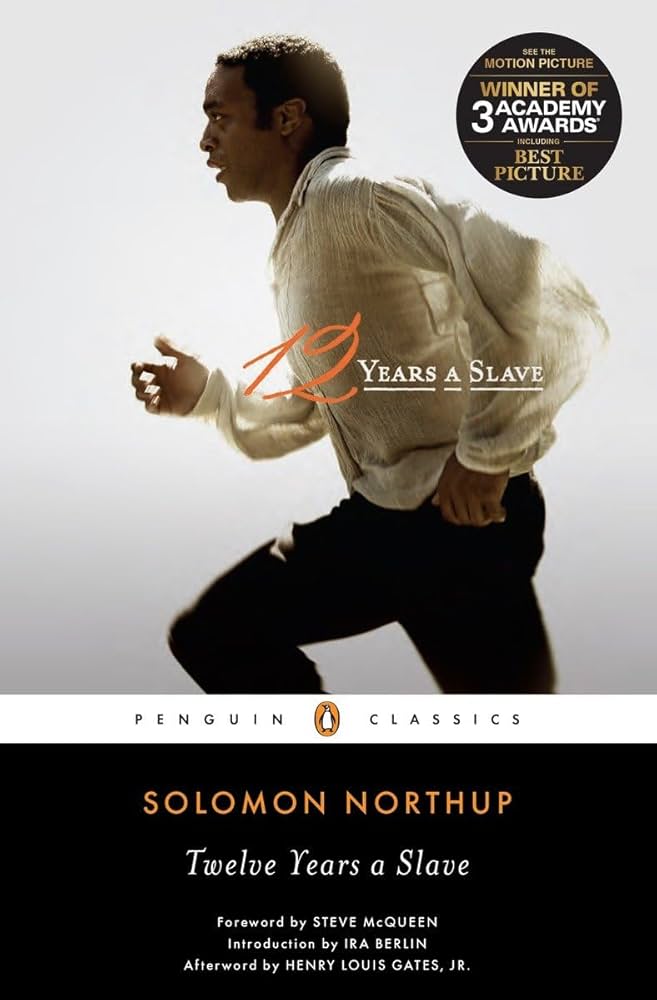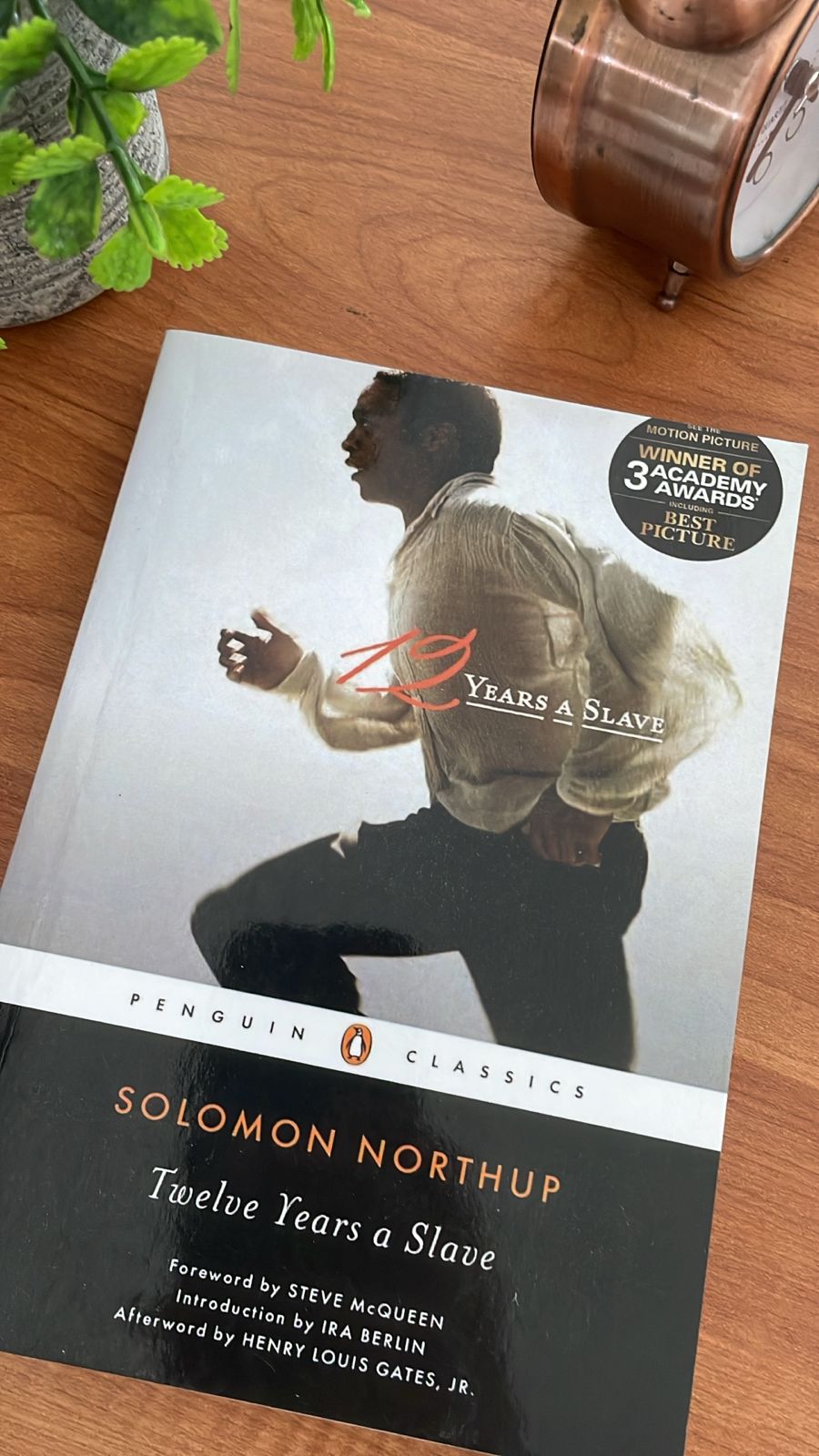
Twelve Years a Slave by Solomon Northup

Twelve Years a Slave by Solomon Northup is a powerful firsthand memoir about kidnapping, enslavement, survival, injustice, resilience, and the struggle to regain freedom.

Solomon Northup was born free in New York.
He had a family.
He had work.
He had legal status as a free man.
Then, in 1841, he was deceived, kidnapped, and sold into slavery in the American South.
For the next twelve years, he lived under brutal conditions while trying to survive and find a way back to his family.
About Twelve Years a Slave
Twelve Years a Slave was first published in 1853.
It records Northup’s own account of being abducted from freedom and forced into slavery.
The memoir is especially important because it was written by someone who had lived as a free man before being enslaved.
That perspective gives the book a distinctive voice.
Northup compares the rights he once had with the complete loss of control he experienced after kidnapping.
His story exposes the violence of slavery in direct, personal terms.
Solomon Northup’s Life Before Enslavement
Before his kidnapping, Solomon Northup lived in New York State.
He was married.
He had children.
He worked in several occupations.
He was also a skilled violinist.
His musical ability becomes important later in the story.
Northup’s life changes when he travels to Washington, D.C., after being offered work.
There, he is drugged or otherwise incapacitated, robbed of his identity, and sold into slavery.
7 Powerful Reasons to Read Twelve Years a Slave
1. It Is a Firsthand Historical Account
One of the most important reasons to read Twelve Years a Slave is that it comes from someone who experienced slavery directly.
Northup does not describe slavery from a distance.
He lived through it.
That makes the memoir an important primary source.
Readers encounter the system through daily routines, punishments, forced labor, family separation, and fear.
2. It Shows the Fragility of Freedom
Northup begins the story as a legally free man.
Then his freedom is stolen.
This makes the book especially powerful.
It shows how vulnerable Black Americans could be even in free states during the 19th century.
Legal freedom did not always protect someone from kidnapping or racial violence.
3. It Documents the Violence of Slavery
The memoir does not romanticize plantation life.
Northup describes beatings.
He describes hunger.
He describes forced labor.
He describes humiliation.
He also describes the constant threat of violence.
These details help readers understand slavery as a system built on control and coercion.
4. It Shows Different Forms of Resistance
Resistance in Twelve Years a Slave is not always dramatic.
Sometimes survival itself is an act of resistance.
Northup watches carefully.
He remembers names.
He looks for opportunities to communicate.
He protects what he can.
He tries to preserve his identity.
These small acts matter because the system is designed to strip enslaved people of control.
5. It Preserves Individual Stories
The memoir is not only about Solomon Northup.
He also describes other enslaved people.
Some are separated from children.
Some suffer under violent enslavers.
Some try to survive through silence.
Others resist in different ways.
These individual stories give the book emotional and historical depth.
6. It Exposes the Economics of Slavery
Northup describes slave markets, plantations, labor systems, prices, and the financial interests behind slavery.
This shows that slavery was not only a social or legal institution.
It was also deeply tied to economics.
Human beings were treated as property and sources of profit.
7. It Ends with a Search for Justice and Freedom
The memoir does not stay entirely within captivity.
Northup eventually finds a possible path to freedom.
That process is difficult and dangerous.
His return to freedom does not erase what happened.
But it gives the story a powerful conclusion centered on recovery, identity, and justice.
Kidnapping and Identity
One of the most disturbing parts of Twelve Years a Slave is how quickly Northup’s identity is taken away.
He is told that claiming to be free could make his situation more dangerous.
His real name becomes risky to use.
His past must be hidden.
This loss of identity is central to the memoir.
The system of slavery depends on denying people legal and personal autonomy.
The Slave Market
Northup describes being sold.
This is one of the most important sections of the book.
People are inspected.
Families are separated.
Children may be sold away from parents.
The market treats human beings as commodities.
Northup’s descriptions make clear how ordinary this process had become within the slave economy.
Plantation Life
Much of the memoir takes place on plantations.
Northup describes different owners and overseers.
Some are less violent than others.
But even under comparatively less brutal conditions, he remains enslaved.
He has no legal freedom.
He cannot simply leave.
This distinction is important.
A less cruel enslaver does not make slavery itself acceptable.
Edwin Epps
One of the most notorious figures in the memoir is Edwin Epps.
Epps is violent and unpredictable.
Northup describes severe abuse under his control.
The sections involving Epps are among the darkest parts of the book.
They show the extreme power enslavers could exercise over the lives of enslaved people.
Patsey
Patsey is one of the most memorable people in the memoir.
Northup describes her as highly productive in plantation labor.
But she is also subjected to extreme abuse.
Her story illustrates the particular vulnerability of enslaved women.
She suffers both physical violence and sexual exploitation.
Her experience is one of the clearest examples of how slavery affected people differently depending on gender and power.
Family Separation
Family separation appears repeatedly in Twelve Years a Slave.
People are sold away from spouses.
Parents lose children.
Siblings are separated.
These separations are treated as commercial transactions.
For enslaved people, the emotional consequences are devastating.
Northup’s own separation from his wife and children gives this theme additional weight.
Music and Survival
Northup’s skill as a violinist becomes useful during his enslavement.
He is sometimes hired to perform at gatherings.
This gives him small advantages.
It also reminds readers that he had talents and an identity far beyond the labor forced upon him.
Music becomes one of the few parts of his earlier life that survives captivity.
Literacy and Danger
Northup understands the importance of communication.
But writing a letter is dangerous.
If an enslaver discovers an attempt to contact authorities or family, the consequences could be severe.
This makes every attempt to communicate a calculated risk.
The ability to write becomes both a tool and a source of danger.
Freedom and Legal Recognition
Northup eventually gains help.
His status as a free man becomes central to the legal process of recovering his freedom.
The story therefore highlights an important contradiction.
He had always been free under the law.
Yet the system allowed him to be enslaved for twelve years.
That failure is part of what makes the memoir historically significant.
Historical Importance
Twelve Years a Slave became part of the wider abolitionist literature of the 19th century.
Its detailed descriptions provided evidence against pro-slavery claims that plantation life was humane or paternalistic.
The memoir gave readers a direct account of kidnapping, forced labor, family separation, and violence.
It remains widely studied today as both literature and historical testimony.
The 2013 Film Adaptation
The memoir was adapted into the acclaimed 2013 film 12 Years a Slave.
The film was directed by Steve McQueen.
Chiwetel Ejiofor played Solomon Northup.
Lupita Nyong’o played Patsey.
The adaptation introduced Northup’s story to a much larger modern audience.
The film also won the Academy Award for Best Picture.
Who Should Read This Book?
Twelve Years a Slave is ideal for readers interested in memoir, American history, slavery, civil rights, social history, and firsthand historical testimony.
It may also appeal to students studying the 19th century.
Because the book includes descriptions of violence, abuse, racism, and exploitation, some readers may find parts emotionally difficult.
However, those same elements are central to its historical importance.
About Solomon Northup
Solomon Northup was a free Black American born in New York State.
He worked as a farmer, laborer, and musician.
In 1841, he was kidnapped and sold into slavery.
He regained his freedom in 1853.
Soon afterward, he published Twelve Years a Slave, documenting his experience.
His memoir became one of the most important firsthand accounts of American slavery.
Readers can learn more through the Library of Congress resources on Solomon Northup.
Product Details
Title: Twelve Years a Slave
Author: Solomon Northup
Genre: Memoir / History / Biography / Slave Narrative
Language: English
Original Publication: 1853
Setting: United States, primarily Louisiana
Themes: Slavery, Freedom, Identity, Family, Injustice, Survival, Racism, Resistance
Because Twelve Years a Slave is in the public domain, there are many editions from different publishers.
ISBNs, page counts, dimensions, cover designs, and formats vary significantly.
Always check the ISBN and specifications printed on your physical copy before entering final WooCommerce product details.
Explore More History and Biography Books
Twelve Years a Slave remains one of the most important firsthand accounts of American slavery.
It is personal.
It is historical.
It is painful.
And it provides a direct record of what it meant for one free man to lose his liberty and spend twelve years fighting to regain it.
Readers looking for more historical works can explore History Books at Bargain Books.
You can also explore Biography Books at Bargain Books.
For readers interested in firsthand history, memoir, slavery, civil rights, and survival, Twelve Years a Slave is an essential and deeply important book.


Reviews
There are no reviews yet.