
No products in the cart.


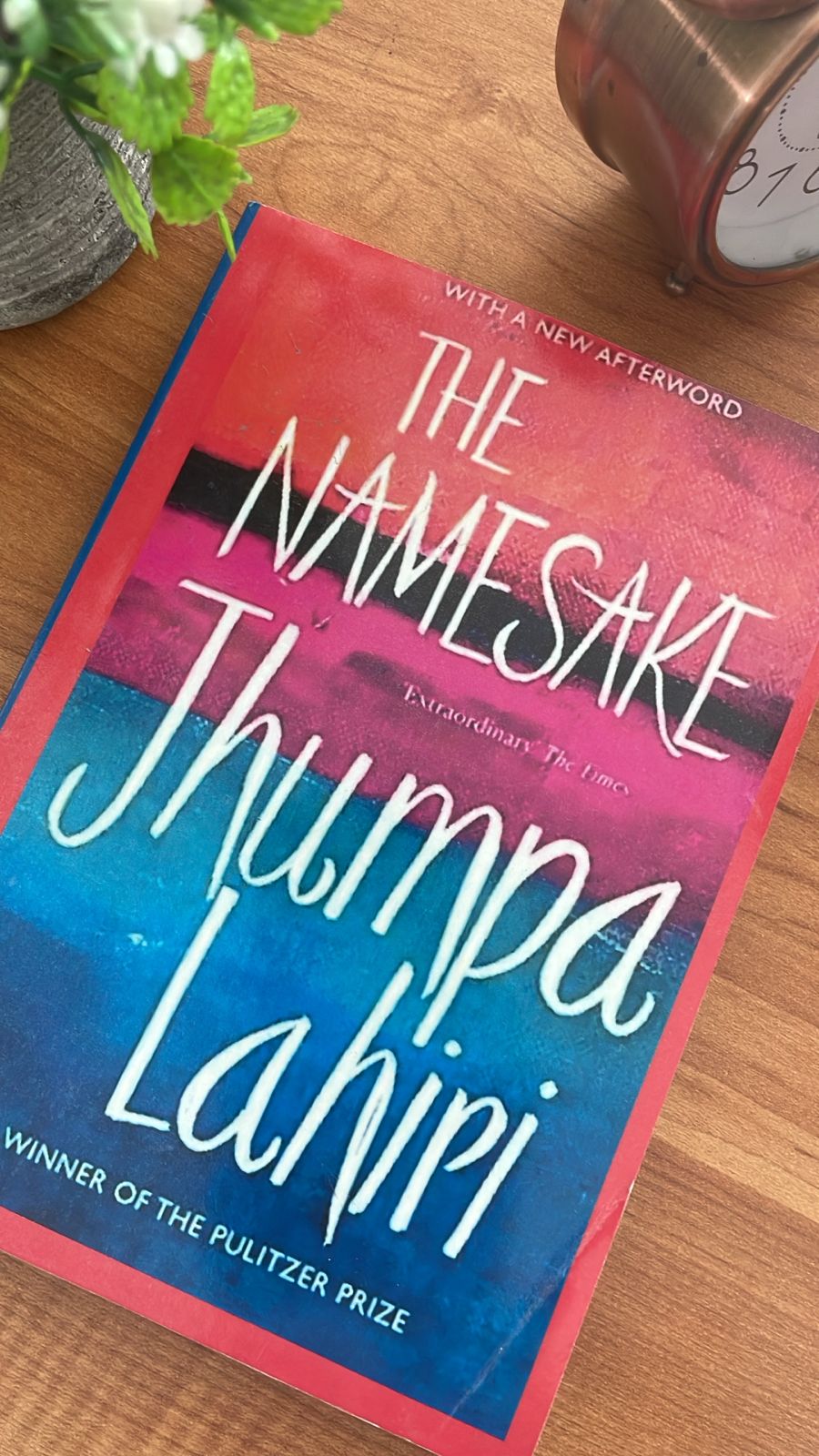






Namesake by Jhumpa Lahiri


රු1,800.00
3 X Rs. 600.00 or 8% Cashback with


or 3 X රු600.00 with


or up to 4 X රු450.00 with


The Namesake by Jhumpa Lahiri is a moving literary novel following the Ganguli family as Bengali immigrants Ashoke and Ashima build a new life in America and their son Gogol grows up questioning his unusual name, cultural identity and place between two worlds. Exploring immigration, family, belonging, generational differences, love, grief and the meaning of home, this beautifully written standalone novel is ideal for readers who enjoy thoughtful, character-driven fiction and powerful stories about identity.
4 in stock
The Namesake by Jhumpa Lahiri is a beautifully written literary novel about identity, family, immigration, belonging and the complicated experience of growing up between two cultures.
At the heart of the story is the Ganguli family.
Ashoke and Ashima Ganguli leave India and begin a new life in the United States, far from the language, traditions, relatives and familiar routines of home.
Their son is born in America.
Because of an unexpected problem surrounding his official name, he is given the unusual name Gogol.
As a child, the name is simply his name.
As he grows older, however, Gogol begins to feel uncomfortable with it.
It sounds strange.
It does not seem fully Indian.
It does not seem fully American.
And he does not yet understand why the name matters so much to his father.
This struggle becomes symbolic of a much larger question:
Who am I supposed to be?
Gogol grows up inside two worlds.
At home, there are Bengali traditions, family expectations and parents whose idea of belonging is still deeply connected to India.
Outside the home, there is American school, American friends, dating, independence and the desire to create a life that feels entirely his own.
As he grows into adulthood, Gogol begins questioning his name, his family, his relationships and the cultural inheritance his parents have given him.
But distance from family does not necessarily mean freedom from the past.
The Namesake by Jhumpa Lahiri explores the quiet emotional spaces between generations—between parents who left one country and children who grow up in another.
It is a thoughtful, deeply human novel for readers interested in family stories, immigrant experiences, identity, cultural belonging and the ways our understanding of our parents can change as we grow older.
The Namesake by Jhumpa Lahiri – Book Overview
The Namesake by Jhumpa Lahiri follows the Ganguli family across years of change.
Ashoke and Ashima arrive in America as immigrants.
Their children, especially Gogol, grow up as Americans with Bengali family roots.
This creates a complicated emotional situation.
The parents sometimes feel like outsiders in the country where they live.
The children sometimes feel like outsiders inside the traditions of their own family.
Neither experience is simple.
Ashima Ganguli
Ashima’s experience is central to the emotional foundation of the novel.
She leaves India for a new married life in America.
That move involves much more than geography.
She leaves behind:
Parents.
Relatives.
Language.
Food.
Customs.
Familiar social life.
Everything that once made daily life feel natural.
In America, even ordinary experiences can feel unfamiliar.
Immigration and Loneliness
The Namesake by Jhumpa Lahiri does not present immigration only as an exciting opportunity.
It also shows the loneliness that can accompany it.
Starting over in another country may mean:
Missing family.
Learning unfamiliar systems.
Feeling culturally isolated.
Trying to preserve traditions.
Raising children in a society different from the one you knew.
The Gangulis build a life in America while remaining emotionally connected to India.
Ashoke Ganguli
Ashoke has his own history and reasons for seeing life differently.
He approaches America with curiosity and possibility.
His past contains an experience that profoundly shapes his relationship with books, travel and eventually his son’s name.
Gogol does not initially understand this connection.
That gap between what parents know and what children understand becomes one of the novel’s most moving elements.
Gogol Ganguli
Gogol is the central figure of The Namesake by Jhumpa Lahiri.
He grows up as the American-born child of Bengali immigrants.
His struggle is not simply:
Indian versus American.
It is more complicated.
He belongs to both worlds.
And sometimes feels fully comfortable in neither.
The Meaning of a Name
The title of the novel immediately points toward one of its biggest themes:
Names.
A name can carry:
Family history.
Cultural identity.
Memory.
Expectation.
Love.
Pain.
But the person carrying the name may not know any of that.
Why Gogol Dislikes His Name
As Gogol becomes older, he increasingly dislikes having such an unusual name.
He feels embarrassed by it.
He wants distance from it.
Changing his name seems like a way to create a new identity.
But changing a name does not automatically erase everything attached to the old one.
Gogol and Nikhil
As he grows older, Gogol begins using Nikhil.
The difference between these two names becomes symbolic.
Gogol is connected with:
Family.
Childhood.
Parents.
History.
Nikhil seems to offer:
Reinvention.
Independence.
Adulthood.
A more confident social identity.
But a new name cannot instantly create a completely new person.
Identity
Identity is perhaps the most important theme in The Namesake by Jhumpa Lahiri.
Who are you?
The person your parents raised?
The person your culture expects?
The person your friends see?
The person you choose?
The novel refuses to give a simple answer.
Identity can contain all of these things simultaneously.
Growing Up Between Two Cultures
Second-generation immigrant children often experience culture differently from their parents.
Parents may think:
We are preserving something important.
Children may think:
Why are we different from everyone else?
Both perspectives make emotional sense.
Bengali Culture
The Ganguli family maintains connections with Bengali culture through:
Food.
Language.
Celebrations.
Family friendships.
Trips to India.
Naming traditions.
Social expectations.
These details give the story a strong sense of cultural life without turning the characters into symbols instead of people.
America as Home
For Gogol, America is not a foreign country.
It is where he grows up.
This creates a fundamental difference between him and his parents.
Ashima and Ashoke remember another home.
Gogol’s memory begins in America.
That difference shapes how each generation understands belonging.
Where Is Home?
One of the quiet questions throughout The Namesake by Jhumpa Lahiri is:
Where is home?
Is home the country where you were born?
The country where you live?
The place where your family is?
The place where your memories are?
The answer can change throughout life.
Parents and Children
Children often believe they know their parents.
But as children grow older, they may discover that they understood only the parent version of those people.
Before becoming parents, Ashoke and Ashima were:
Young.
Uncertain.
Hopeful.
Homesick.
Afraid.
They had entire lives their children never witnessed.
Understanding Parents Later
This is one of the novel’s most powerful emotional ideas.
Sometimes we understand our parents only when we become older ourselves.
A decision that once seemed irritating may later make sense.
A tradition that once felt restrictive may later feel precious.
Time changes interpretation.
Family Expectations
The Gangulis want their children to succeed while remaining connected to Bengali culture.
But children raised in another country naturally develop different expectations.
This creates tension around:
Dating.
Marriage.
Social life.
Career choices.
Independence.
Cultural identity.
Assimilation
Assimilation is not portrayed as a simple decision.
The Ganguli family adopts parts of American life while preserving parts of Indian life.
This creates a hybrid existence.
People rarely move from one cultural identity to another completely.
They combine.
Adapt.
Keep some things.
Leave others.
Belonging
Gogol’s search for belonging influences many of his choices.
He sometimes tries to distance himself from his family because he thinks another environment may allow him to feel more comfortable.
But belonging is not always created by escaping one’s history.
Relationships
Romantic relationships become another way Gogol explores identity.
Different partners represent different worlds and different possibilities.
Through relationships, he sees how other families live.
He notices differences in:
Communication.
Money.
Culture.
Family closeness.
Expectations.
Love and Self-Understanding
Romance cannot automatically solve an identity crisis.
A partner may provide companionship.
But another person cannot completely answer:
Who am I?
Gogol still has to understand himself.
Independence
Adulthood gives Gogol increasing independence.
He can choose:
Where to live.
What to study.
Who to date.
What name to use.
But independence also brings responsibility.
Your choices become your own.
Architecture and Design
Gogol becomes interested in architecture.
This career choice is interesting symbolically.
Architecture involves:
Space.
Structure.
Design.
Home.
How people inhabit places.
These ideas connect beautifully with a novel so concerned with belonging and home.
The Immigrant Family Experience
The Namesake by Jhumpa Lahiri is especially powerful because it does not tell only one immigration story.
It tells at least two.
The immigrant parents.
And the children born into the new country.
Their experiences overlap but are not identical.
First Generation
Ashoke and Ashima know what they left behind.
Their memories contain another country.
Their idea of themselves was formed before immigration.
Second Generation
Gogol grows up differently.
He inherits a culture he did not personally leave.
India is connected to:
Parents.
Relatives.
Family visits.
Tradition.
But his everyday social identity develops in America.
Cultural Hybridity
The novel suggests that identity does not always need to fit neatly into one category.
A person can be:
American.
Bengali.
Indian American.
A child of immigrants.
An individual with personal preferences beyond all those labels.
People can carry multiple identities simultaneously.
Food and Memory
Food plays an important role in immigrant family life.
A familiar dish can carry:
Memory.
Comfort.
Tradition.
Family history.
Cooking can become one way of recreating home somewhere else.
Celebrations
Family gatherings and cultural celebrations help the Gangulis maintain community.
When relatives are thousands of miles away, friends from a similar cultural background may begin functioning almost like extended family.
Community
Immigrants often build networks with people facing similar experiences.
These communities can provide:
Language.
Advice.
Shared traditions.
Friendship.
Familiarity.
For Ashima especially, community helps reduce isolation.
Loneliness
Despite community, loneliness appears throughout The Namesake by Jhumpa Lahiri.
A person can be surrounded by people and still feel disconnected.
Gogol’s loneliness differs from Ashima’s, but both demonstrate that belonging is emotional as well as geographical.
Marriage
The novel also explores different ideas about marriage.
Ashoke and Ashima’s marriage begins within a different cultural framework from many of the relationships Gogol encounters.
Yet the novel avoids making a simple argument that one model is always superior.
Relationships depend on the people inside them.
Love Over Time
Love can grow slowly.
It can change shape.
What appears formal at the beginning of a relationship may become deep companionship through years of shared life.
That is especially visible in the older generation.
Generational Differences
Parents may sometimes fear that children are forgetting their heritage.
Children may fear that parents do not understand modern life.
Both can feel misunderstood.
This tension appears in many immigrant families and gives the novel broad emotional relevance.
Cultural Expectations and Individual Choice
Tradition can create belonging.
But it can also create pressure.
Individual freedom can feel liberating.
But it can also create uncertainty.
The Namesake by Jhumpa Lahiri explores the tension rather than presenting either side as entirely correct.
Memory
Memory connects generations.
Objects.
Names.
Books.
Family stories.
Food.
Places.
All can carry the past forward.
A child may not understand why something matters until much later.
Books
Books have a particularly important symbolic presence within the story.
Literature becomes connected with:
Survival.
Memory.
Naming.
Family.
The relationship between Gogol’s name and the Russian writer Nikolai Gogol is central to the title’s meaning.
The Namesake
A namesake is a person or thing that shares another’s name.
Gogol’s name therefore creates an unusual relationship between:
A child.
A writer.
And a private piece of family history.
The deeper significance is something Gogol only gradually comes to understand.
Grief
Grief is an important element in The Namesake by Jhumpa Lahiri.
Without revealing major plot details, readers should know that the story includes family loss and the emotional consequences of death.
Grief can transform our understanding of relationships.
Sometimes absence reveals the importance of something we once took for granted.
Growing Older
One of the strengths of the novel is that characters change across time.
Children become adults.
Parents age.
Relationships change.
Places change.
What someone wants at twenty may not be what they want later.
The Meaning of Family Changes
A teenager may think family means restriction.
An adult may begin seeing family as history.
Continuity.
Memory.
Connection.
The novel allows these meanings to evolve naturally.
Jhumpa Lahiri’s Writing Style
Jhumpa Lahiri is known for precise, understated prose.
Her writing often focuses on:
Small gestures.
Domestic spaces.
Family conversations.
Emotional distance.
Cultural displacement.
The emotional power comes less from dramatic speeches and more from carefully observed everyday moments.
Quiet Fiction
Readers expecting a thriller-style plot should understand that The Namesake by Jhumpa Lahiri is primarily character-driven literary fiction.
Its power comes from:
Relationships.
Identity.
Time.
Memory.
Family change.
It is not built around constant twists.
Emotional Subtlety
Characters do not always explain everything they feel.
That is realistic.
People frequently:
Avoid conversations.
Misunderstand each other.
Realize things too late.
Lahiri allows meaning to emerge through behavior rather than explaining every emotion directly.
Is The Namesake a Standalone Novel?
Yes.
The Namesake by Jhumpa Lahiri is a complete standalone novel.
You do not need to read another Jhumpa Lahiri book before or after it to understand the story.
Is The Namesake a Romance?
No.
Romantic relationships play an important role in Gogol’s adulthood, but the novel is primarily about:
Identity.
Family.
Immigration.
Culture.
Generational change.
Belonging.
It should be categorized as literary/contemporary fiction rather than primarily romance.
Is The Namesake Based on a True Story?
No.
It is a work of fiction.
However, its exploration of Bengali immigrant life in the United States draws on cultural experiences that give the novel a strong sense of authenticity.
Is It Difficult to Read?
The language is generally accessible.
The deeper challenge is emotional and thematic rather than linguistic.
Readers who enjoy character-driven novels should find it approachable.
Is It Good for Students?
Yes.
The Namesake by Jhumpa Lahiri offers rich material for discussions about:
Identity.
Immigration.
Diaspora.
Names.
Family.
Culture.
Generational conflict.
Assimilation.
Home.
It is frequently suitable for literary study because many everyday details carry symbolic meaning.
Film Adaptation
The Namesake was adapted into a film directed by Mira Nair, with Kal Penn as Gogol and Tabu and Irrfan Khan as Ashima and Ashoke.
The film brought the Ganguli family’s story to a wider audience.
Readers who have seen the movie may enjoy returning to the original novel for greater access to the characters’ inner lives and the gradual development of family relationships.
Should You Read the Book Before the Movie?
For the fullest experience, yes.
The novel has more room to explore:
Gogol’s thoughts.
Ashima’s experience.
Family history.
Cultural detail.
The passage of time.
Film necessarily compresses some of this material.
Jhumpa Lahiri
Jhumpa Lahiri is an acclaimed author known for writing about:
Immigration.
Family.
Displacement.
Identity.
Belonging.
Relationships.
Her debut story collection Interpreter of Maladies won the Pulitzer Prize for Fiction.
The Namesake was her first novel.
Content Considerations
The Namesake by Jhumpa Lahiri contains themes and situations including:
- Death and grief
- Family loss
- Relationship breakdown
- Infidelity
- Cultural displacement
- Loneliness and isolation
- Family conflict
- Alcohol and smoking references
- Adult relationships and sexual references
- Emotional distress
The novel handles these subjects through literary and emotional storytelling rather than graphic sensationalism.
Important Themes
The Namesake by Jhumpa Lahiri explores:
- Identity
- Immigration
- Bengali-American culture
- Family
- Names and naming
- Belonging
- Home
- Generational differences
- Assimilation
- Cultural heritage
- Relationships
- Marriage
- Grief
- Memory
- Independence
- Parents and children
- Diaspora
- Adulthood
- Tradition
- Change
7 Powerful Reasons to Read The Namesake by Jhumpa Lahiri
- It explores identity with extraordinary depth – Gogol’s struggle with his name becomes a larger exploration of how family, culture and personal choice shape who we become.
- The immigrant experience feels deeply human – Ashoke and Ashima’s adjustment to America is shown through everyday moments of loneliness, adaptation, community and family life.
- The generational conflict is beautifully written – Parents who remember India and children raised in America naturally understand culture differently, creating tension without making either side simply wrong.
- The meaning of family changes as the characters grow – Relationships that once seem restrictive or ordinary can take on completely different meanings with age and experience.
- Jhumpa Lahiri finds emotion in quiet details – Food, names, books, homes and small conversations often carry more meaning than dramatic events.
- It asks what “home” really means – The novel explores whether home is a birthplace, a country, a family, a memory or something we gradually create for ourselves.
- It remains relevant to anyone who has ever felt between worlds – Readers do not need to share Gogol’s exact cultural background to understand the desire to belong while still becoming an individual.
Why Read The Namesake by Jhumpa Lahiri?
The Namesake by Jhumpa Lahiri is an excellent choice for readers interested in literary fiction, immigrant stories, family sagas, Indian-American fiction, Bengali culture, identity, cultural belonging, generational relationships and emotionally rich character-driven novels.
It may especially appeal to readers who enjoy books where the most important transformation happens slowly inside the characters rather than through constant external action.
The novel encourages readers to think about their own:
Names.
Parents.
Family histories.
Cultural traditions.
Ideas of home.
And the stories that existed before they were born.
Who Should Read This Book?
The Namesake by Jhumpa Lahiri may especially appeal to:
- Readers of literary fiction
- Jhumpa Lahiri fans
- Readers interested in immigrant experiences
- Indian and South Asian diaspora readers
- Students studying identity and culture
- Readers interested in family relationships
- Fans of multigenerational stories
- Readers who enjoy emotionally subtle fiction
- People interested in Bengali-American experiences
- Readers who enjoy coming-of-age stories
- Anyone who has ever questioned where they belong
The Namesake by Jhumpa Lahiri – A Name Can Carry an Entire History
The Namesake by Jhumpa Lahiri begins with something that appears simple.
A name.
Gogol.
To a child, it is merely the word people use when they call him.
Later, it becomes embarrassing.
Different.
Something he wants to escape.
He believes another name might allow him to become another version of himself.
But names do not exist alone.
They are connected to people.
Memories.
Moments.
Choices.
Stories.
And sometimes those stories begin before we are old enough to understand them.
That is what makes The Namesake so moving.
Gogol’s journey is not simply about accepting one name.
It is about learning that identity cannot be created only by rejecting the past.
His parents’ lives matter.
Their sacrifices matter.
Their memories matter.
But his own choices matter too.
Growing up requires finding a way to carry both.
Ashoke and Ashima also change.
America gradually becomes more familiar.
Their children grow independent.
The meaning of home shifts.
The family they created begins developing in ways they could not completely predict.
That is the quiet truth at the heart of the novel:
Families continue changing.
Children become adults.
Parents become people we understand differently.
Places that once felt foreign can become home.
Traditions that once felt inconvenient can become precious.
And names that once felt like burdens can reveal stories we never knew we were carrying.
For readers who appreciate thoughtful literary fiction about identity, immigration, family, culture and belonging, The Namesake by Jhumpa Lahiri is a deeply moving novel about learning that understanding where we come from can become an important part of deciding who we want to be.
Learn more about The Namesake by Jhumpa Lahiri on the official Houghton Mifflin Harcourt page.
Explore more literary fiction books at Bargain Books.
Be the first to review “Namesake by Jhumpa Lahiri”
Related products

Out of stock
Classics & Literary Fiction
රු1,600.00
3 X Rs. 533.33 or 8% Cashback with
or 3 X රු533.33 with
or up to 4 X රු400.00 with
-20%

Classics & Literary Fiction
Original price was: රු2,000.00.රු1,600.00Current price is: රු1,600.00.
3 X Rs. 533.33 or 8% Cashback with
or 3 X රු533.33 with
or up to 4 X රු400.00 with
-16%

Classics & Literary Fiction
Original price was: රු3,100.00.රු2,600.00Current price is: රු2,600.00.
3 X Rs. 866.67 or 8% Cashback with
or 3 X රු866.67 with
or up to 4 X රු650.00 with
-20%
Classics & Literary Fiction
Original price was: රු2,450.00.රු1,950.00Current price is: රු1,950.00.
3 X Rs. 650.00 or 8% Cashback with
or 3 X රු650.00 with
or up to 4 X රු487.50 with

Out of stock
Classics & Literary Fiction
රු4,300.00
3 X Rs. 1,433.33 or 8% Cashback with
or 3 X රු1,433.33 with
or up to 4 X රු1,075.00 with

Out of stock
Classics & Literary Fiction
රු1,750.00
3 X Rs. 583.33 or 8% Cashback with
or 3 X රු583.33 with
or up to 4 X රු437.50 with
-29%

Classics & Literary Fiction
Original price was: රු2,100.00.රු1,500.00Current price is: රු1,500.00.
3 X Rs. 500.00 or 8% Cashback with
or 3 X රු500.00 with
or up to 4 X රු375.00 with

Out of stock
Classics & Literary Fiction
රු1,800.00
3 X Rs. 600.00 or 8% Cashback with
or 3 X රු600.00 with
or up to 4 X රු450.00 with
Reviews
There are no reviews yet.