
No products in the cart.
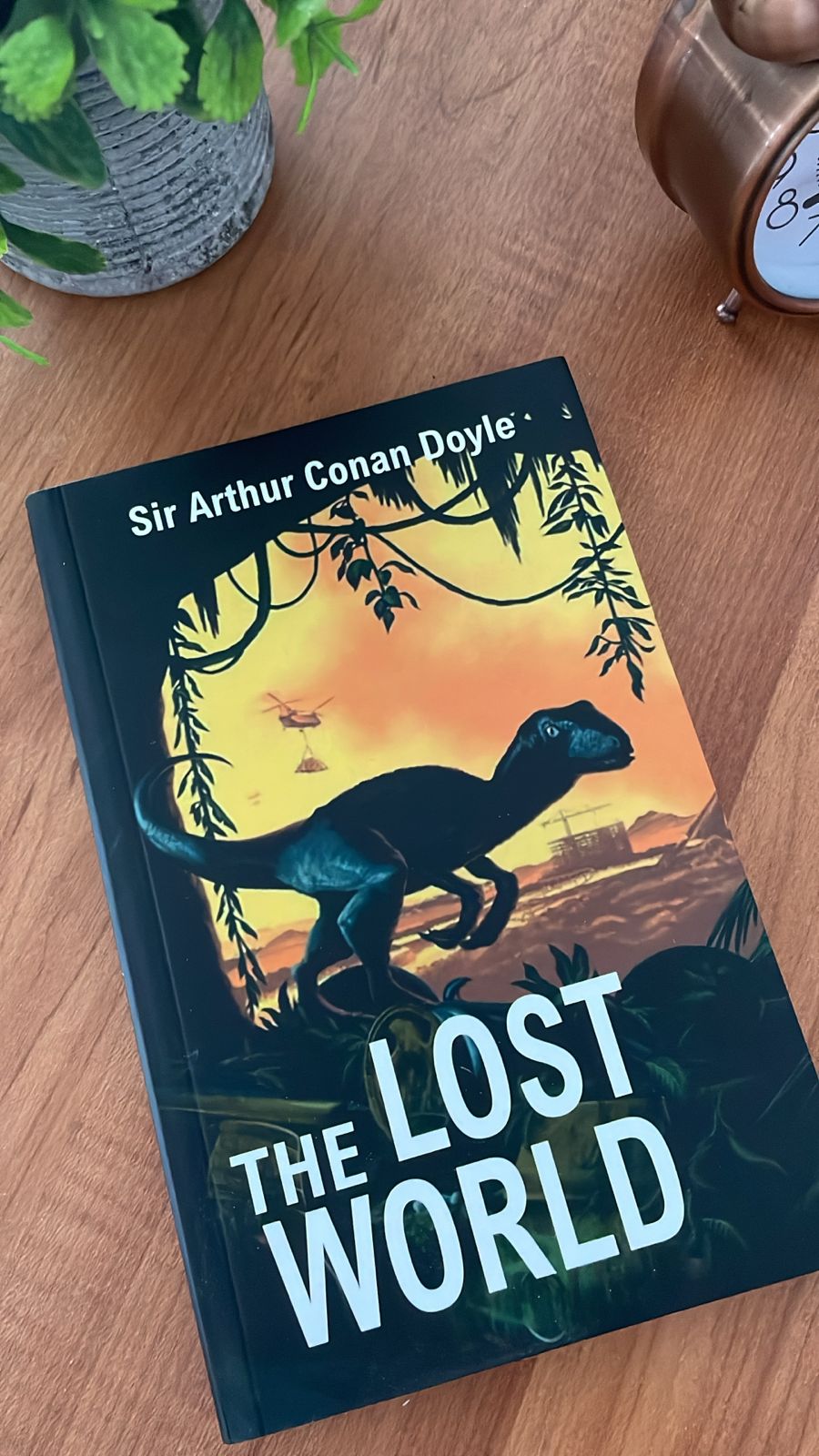
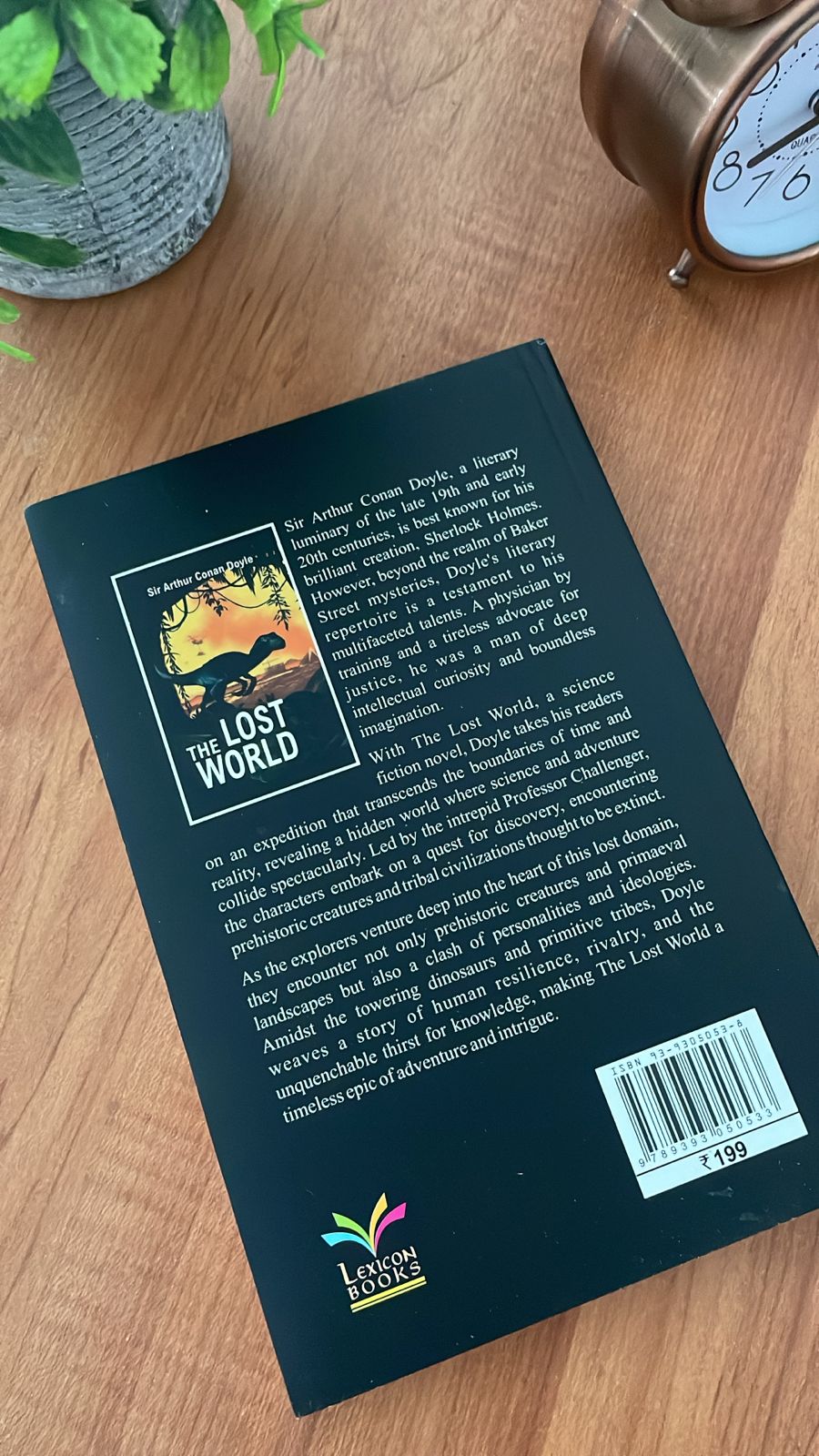
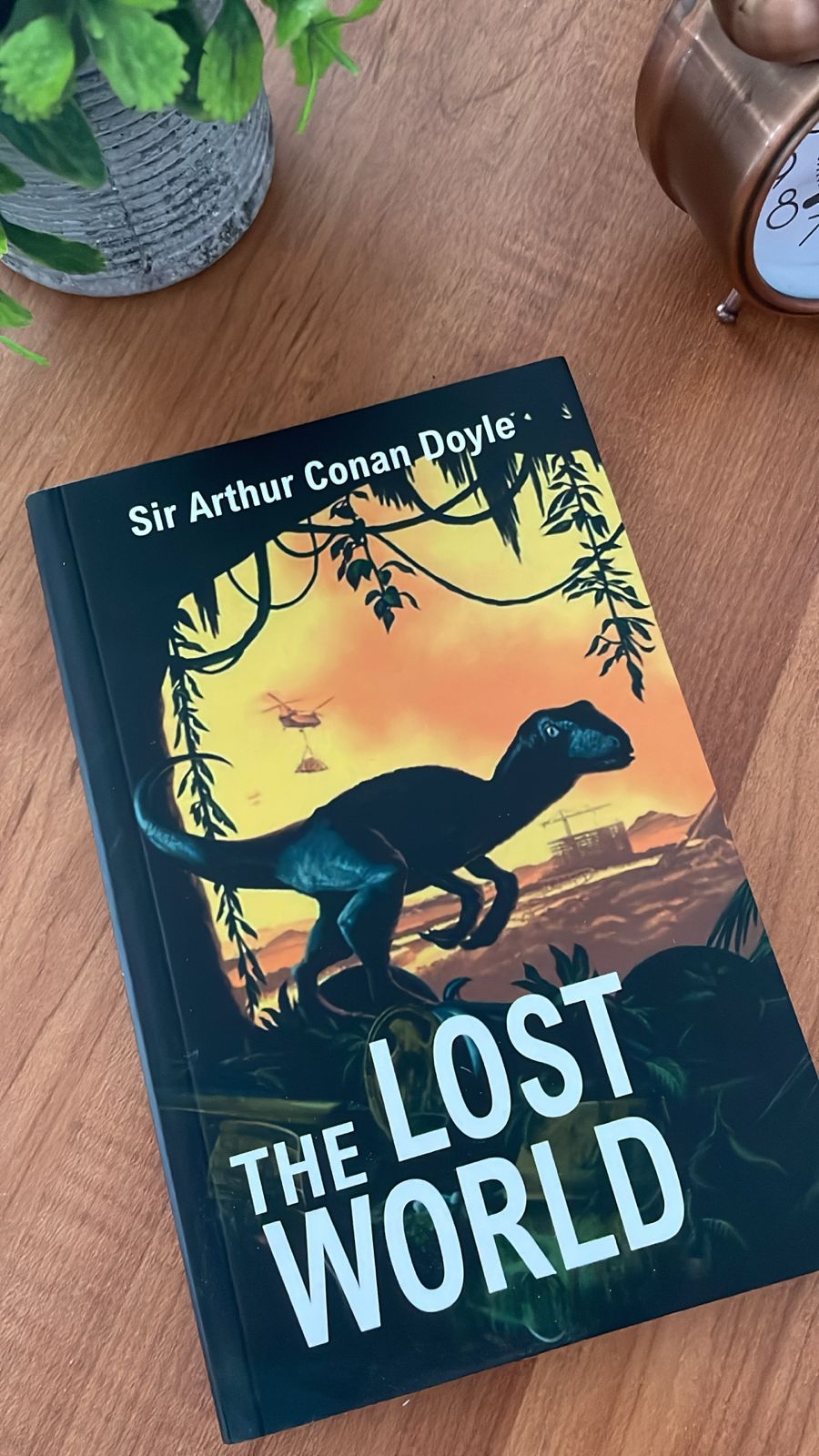
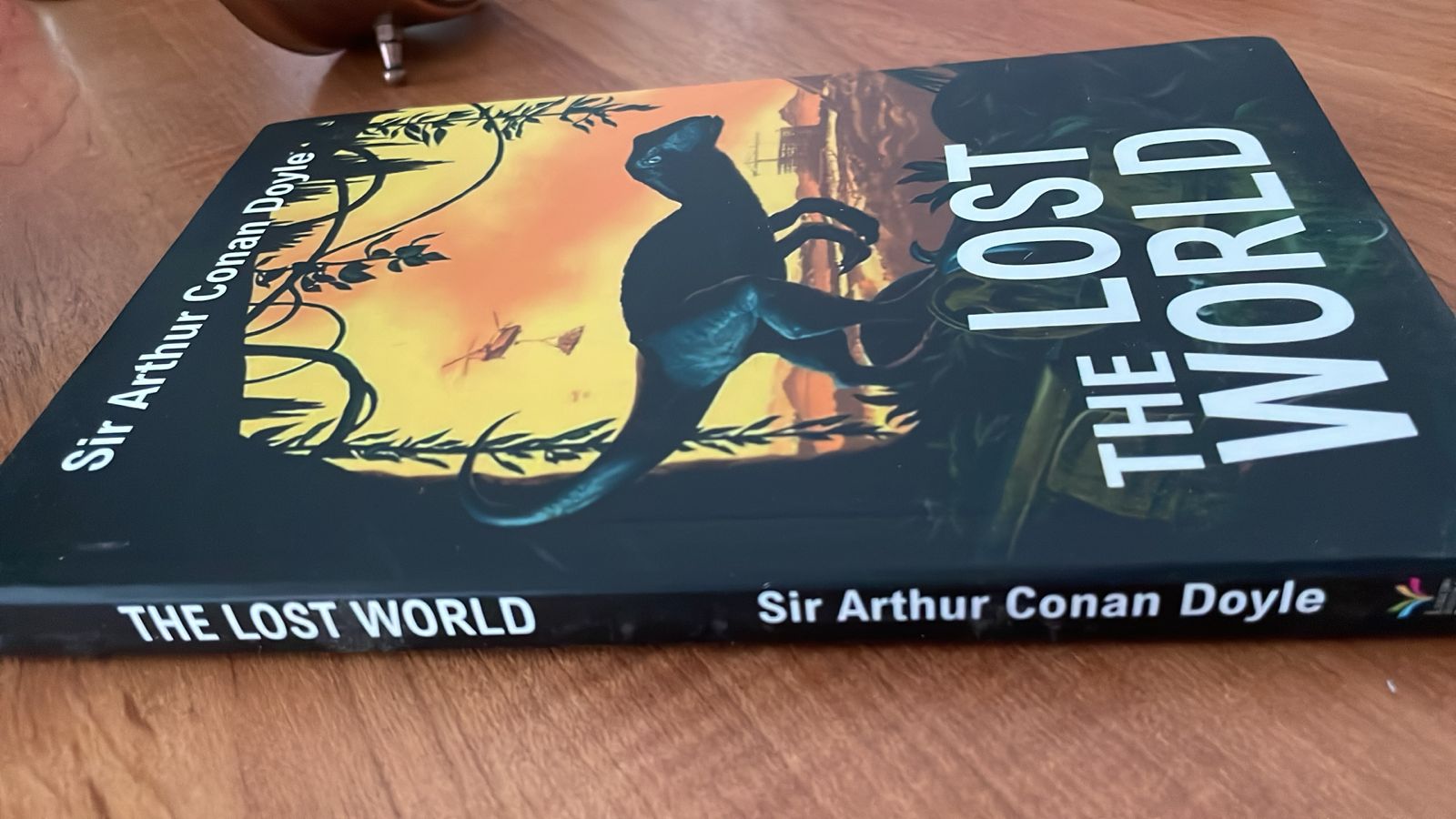
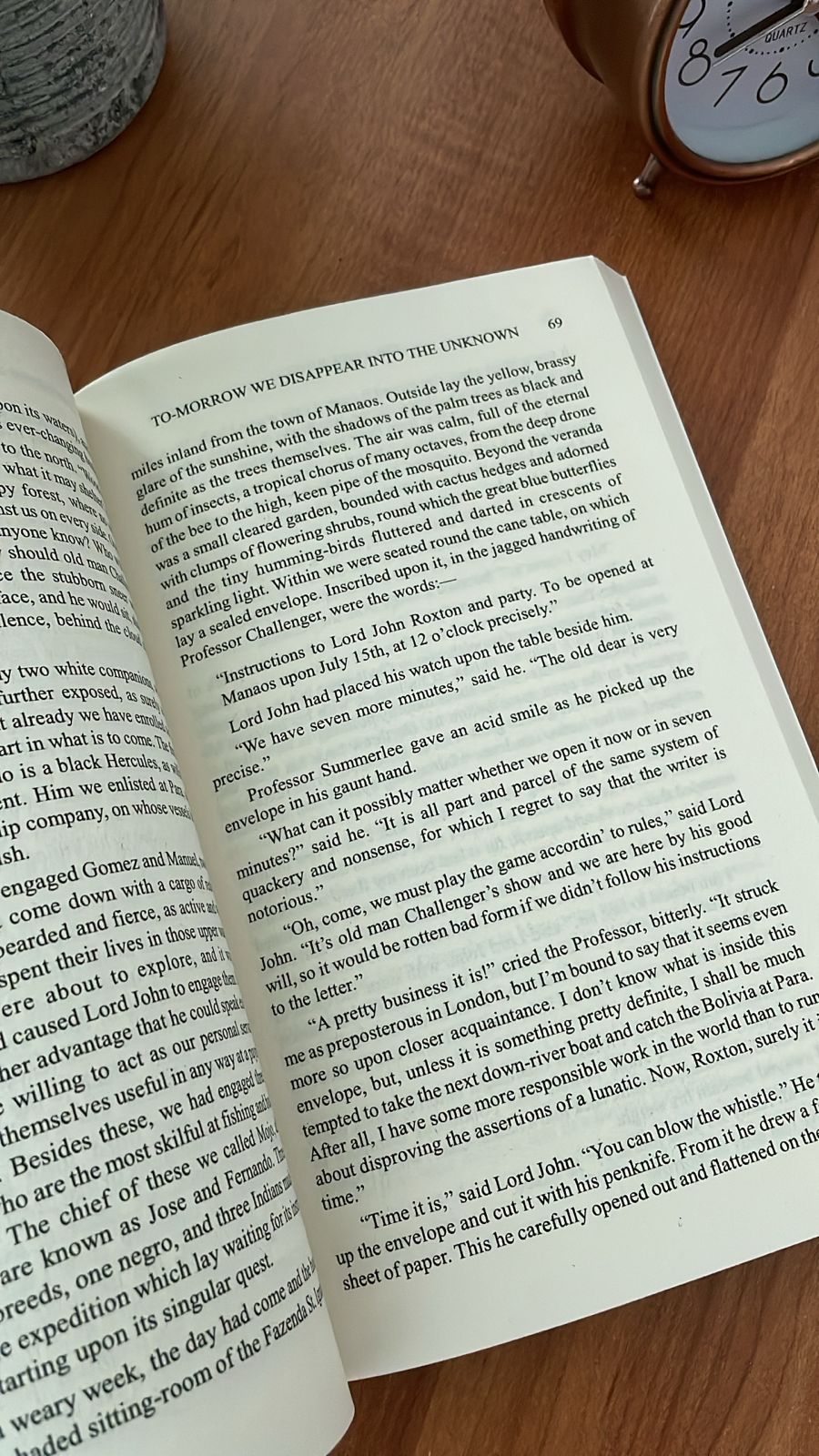
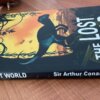

Lost World by Arthur Conan Doyle
රු2,100.00
3 X Rs. 700.00 or 8% Cashback with


or 3 X රු700.00 with


or up to 4 X රු525.00 with


The Lost World by Michael Crichton is the thrilling sequel to Jurassic Park, following Ian Malcolm and a scientific expedition to Isla Sorna, the secret Site B where genetically engineered dinosaurs have survived and developed their own ecosystem. Combining T. rex, velociraptors, evolution, genetics, chaos theory, corporate greed and intense survival action, this gripping science-fiction thriller is perfect for Jurassic Park fans, dinosaur lovers and readers who enjoy intelligent adventure stories.
4 in stock
The Lost World by Michael Crichton is a gripping science-fiction thriller and the sequel to Jurassic Park, returning readers to a world where genetic engineering has brought dinosaurs back to life—with consequences that humanity still does not fully understand.
Several years have passed since the disaster at Jurassic Park.
The original park is gone.
Its terrible experiment appears to be finished.
But strange evidence begins appearing.
Unusual animal remains wash ashore.
Rumors spread about mysterious creatures.
And mathematician Ian Malcolm begins to suspect that the Jurassic Park disaster was not the whole story.
There may be another island.
A hidden facility.
A place where dinosaurs were actually created before being transported to Jurassic Park.
That place is Isla Sorna, known as Site B.
Unlike the controlled attractions planned for Jurassic Park, the dinosaurs on Site B have been living in the wild.
They hunt.
Compete.
Reproduce.
Form groups.
And develop an ecosystem that humans never intended to create.
When researcher Richard Levine becomes determined to investigate the island, Malcolm and a small team are pulled into a dangerous expedition.
Their scientific curiosity soon becomes a fight for survival.
The Lost World by Michael Crichton combines dinosaurs, evolutionary science, chaos theory, genetics, corporate greed and intense survival action in a sequel that asks a fascinating question:
What happens after humans create prehistoric life and then abandon it?
The Lost World by Michael Crichton – Book Overview
The Lost World by Michael Crichton takes place after the events of Jurassic Park and expands the world introduced in the first novel.
Ian Malcolm survived his previous encounter with genetically engineered dinosaurs.
His experience has changed the way he thinks about:
Complex systems.
Evolution.
Extinction.
Human control.
Technology.
Malcolm understands something many other characters still struggle to accept:
Nature cannot simply be programmed like a machine.
The dinosaurs may have been designed in laboratories, but once they begin living independently, they become part of a complex biological system.
The result is unpredictable.
Return of Ian Malcolm
One of the most important characters in The Lost World by Michael Crichton is Ian Malcolm.
Readers of Jurassic Park will already know him as the mathematician fascinated by chaos theory.
Malcolm is skeptical of systems that appear perfectly controlled.
He understands that complicated systems can behave in unexpected ways.
Jurassic Park proved his warnings correct.
Now another dinosaur population gives him an opportunity to investigate an even larger scientific mystery.
Richard Levine
Richard Levine is a wealthy and highly enthusiastic researcher fascinated by extinct ecosystems.
He becomes convinced that a surviving population of dinosaurs exists somewhere near Costa Rica.
His determination to discover the truth helps set the expedition in motion.
Levine represents one of the novel’s recurring themes:
Scientific curiosity can produce extraordinary discoveries.
But curiosity without caution can also become dangerous.
Isla Sorna – Site B
The central setting of the novel is Isla Sorna.
The island was used as a production facility associated with InGen’s dinosaur cloning program.
Dinosaurs were created and raised there before the planned operations of Jurassic Park.
After the collapse of the project, Site B was largely abandoned.
But the animals remained.
Over time, they created something unexpected:
A functioning dinosaur ecosystem.
A World Without Human Control
Jurassic Park was designed as an attraction.
Site B is different.
There are no visitors standing safely behind fences.
There are no carefully organized tours.
The dinosaurs are living according to their own behaviors.
Predators hunt.
Herbivores gather.
Animals defend territory.
Young dinosaurs depend on social groups.
The island therefore becomes a giant natural experiment.
Evolution
Evolution is one of the strongest scientific themes in The Lost World by Michael Crichton.
The characters are not merely trying to survive dinosaurs.
They are also observing how prehistoric species behave within an environment completely different from the ancient world in which they originally evolved.
The novel raises questions such as:
Can an extinct species truly be recreated?
Does possessing the DNA mean humans have recreated the original animal?
How much does environment affect behavior?
Can a manufactured ecosystem ever become natural?
Genetics
As in Jurassic Park, genetic engineering remains central.
The dinosaurs exist because scientists reconstructed genetic material and used biotechnology to create living animals.
But Crichton’s story warns that scientific capability and scientific wisdom are not the same thing.
Being able to create something does not automatically mean humanity understands the consequences.
Science Without Complete Knowledge
Humans often act using incomplete information.
Scientists may understand:
Genes.
Cells.
Computer models.
Animal anatomy.
But ecosystems contain thousands of interactions.
One change may affect many others.
That complexity is central to the danger of Site B.
Chaos Theory
Ian Malcolm’s ideas about complex systems continue to influence The Lost World by Michael Crichton.
Chaos theory emphasizes that apparently small changes can produce major consequences in complicated systems.
A tiny difference in one part of a system may eventually lead to a dramatically different outcome.
This matters in:
Weather.
Populations.
Economies.
Ecosystems.
And cloned dinosaur islands.
Control Is an Illusion
The creators of Jurassic Park believed technology could control nature.
Computer systems.
Electric fences.
Security procedures.
Genetic modifications.
But complex living systems do not always obey human expectations.
The same lesson returns on Site B.
Sarah Harding
Sarah Harding is an animal behavior specialist and one of the major characters in the novel.
She is intelligent, experienced and capable under extreme pressure.
Her knowledge of animal behavior becomes valuable when the group encounters dinosaur species whose actions cannot be understood simply by looking at their physical appearance.
Animal Behavior
One of the interesting aspects of the novel is its focus on how dinosaurs might behave socially.
The characters observe:
Hunting.
Parenting.
Group behavior.
Territorial behavior.
Competition.
Social learning.
The dinosaurs are treated not simply as movie monsters but as animals participating in an ecosystem.
Predators
Of course, some of those animals are extremely dangerous predators.
The novel contains encounters with several prehistoric species.
Among the most terrifying are:
Tyrannosaurus rex.
Velociraptors.
And other dinosaurs capable of turning scientific observation into a survival emergency.
Tyrannosaurus rex
The T. rex remains one of the most iconic dinosaurs associated with the Jurassic Park world.
Its strength and predatory behavior make encounters extremely dangerous.
But Crichton often treats the animal as more than a monster.
It is a living predator following biological instincts.
Humans are the intruders.
Velociraptors
Velociraptors remain especially frightening.
Their danger comes from a combination of:
Speed.
Intelligence.
Coordination.
Aggression.
They represent a threat very different from a large predator like the T. rex.
Survival
Once the expedition becomes dangerous, scientific observation turns into survival.
The characters must think about:
Shelter.
Communication.
Vehicles.
Food.
Escape routes.
Predator behavior.
Every mistake can have serious consequences.
Technology
Technology plays an important role in the expedition.
Special vehicles and equipment are brought to Site B.
But technology does not guarantee safety.
This is another classic Michael Crichton idea:
Technology is powerful.
But technology exists within larger systems that humans cannot always control.
The Limits of Technology
A machine may work perfectly in a laboratory.
Then reality introduces:
Weather.
Animals.
Human error.
Unexpected damage.
Limited power.
Suddenly the perfect system becomes vulnerable.
Human Intelligence Versus Nature
Humans often assume intelligence makes them dominant.
But intelligence does not eliminate biological reality.
A scientist on an island with predators still has to obey the physical rules of survival.
Nature does not care about academic qualifications.
Corporate Greed
Corporate ambition also remains part of The Lost World by Michael Crichton.
The original dinosaur program existed partly because of commercial opportunity.
Dinosaurs represented:
Scientific prestige.
Entertainment.
Profit.
Competitive advantage.
The discovery of Site B creates another opportunity for people who want to exploit what InGen created.
Lewis Dodgson
Lewis Dodgson is associated with Biosyn, a rival biotechnology company.
Readers familiar with Jurassic Park will recognize the corporate competition surrounding dinosaur technology.
Dodgson’s involvement reinforces the danger of treating scientific discoveries merely as commercial property.
Science and Ethics
The novel repeatedly asks:
Just because something can be taken, should it be?
Just because something can be created, should it be?
Just because technology is profitable, does that make it responsible?
These questions give the thriller more depth than a simple dinosaur adventure.
Human Greed
Sometimes the most dangerous creatures in a story are not prehistoric predators.
Human beings can knowingly create danger because they want:
Money.
Power.
Knowledge.
Recognition.
Crichton’s stories often explore this tension.
Extinction
The title The Lost World connects naturally with extinction.
Dinosaurs represent a world that disappeared millions of years ago.
Genetic engineering seems to reverse extinction.
But can extinction really be reversed?
A recreated dinosaur does not live in the original Jurassic or Cretaceous ecosystem.
Its environment is artificial.
Its behavior may develop differently.
This complicates the idea of bringing extinct species back.
Nature Cannot Be Recreated Perfectly
A species is not only its DNA.
It is also shaped by:
Environment.
Other species.
Climate.
Food.
Learning.
Social behavior.
This gives The Lost World by Michael Crichton an interesting philosophical dimension.
Scientific Curiosity
The characters are scientists and researchers because they want answers.
That curiosity is valuable.
Human progress depends on people asking:
Why?
How?
What if?
But curiosity must be balanced with responsibility.
Knowledge Has Risks
Discovering something powerful can create new dangers.
Once knowledge exists, other people may use it differently from the person who discovered it.
Genetic engineering is a perfect example.
A scientist may pursue knowledge.
A corporation may see profit.
A government may see strategic value.
The same discovery can serve many purposes.
Children and Young Characters
Like Jurassic Park, the story also includes younger characters caught in the dangerous world created by adults.
Their presence reinforces another theme:
Adults make technological decisions, but consequences can affect people who had no role in creating those decisions.
Intelligence and Adaptability
Survival does not always depend on physical strength.
Humans cannot outrun or overpower many dinosaurs.
They survive through:
Observation.
Planning.
Teamwork.
Technology.
Adaptability.
Understanding behavior.
Teamwork
The expedition cannot survive if everyone behaves independently.
Different members contribute different expertise.
A strong team needs:
Scientific knowledge.
Engineering.
Animal behavior expertise.
Practical problem-solving.
Communication.
No single person knows everything.
Fear
Fear is a natural response to danger.
The challenge is not eliminating fear.
It is continuing to think while afraid.
Panic can lead to bad decisions.
Observation and planning become essential.
The Lost World by Michael Crichton and Jurassic Park
The Lost World by Michael Crichton is the direct sequel to Jurassic Park.
The recommended reading order is:
1. Jurassic Park
2. The Lost World
Reading Jurassic Park first is strongly recommended because the sequel refers to the earlier disaster, the dinosaur cloning program and characters such as Ian Malcolm.
Do You Need to Read Jurassic Park First?
Technically, readers may understand much of the second novel independently.
However, Jurassic Park provides important background about:
InGen.
John Hammond.
Dinosaur cloning.
Ian Malcolm.
The original park disaster.
Biosyn.
Reading the books in order provides the best experience.
How Is The Lost World Different From Jurassic Park?
Jurassic Park focuses heavily on a controlled theme park that collapses.
The Lost World by Michael Crichton explores something different.
The dinosaurs are already living without normal human management.
Instead of asking:
Can humans control a dinosaur park?
the sequel asks:
What happens when dinosaurs create their own ecosystem?
That gives the sequel a stronger focus on:
Evolution.
Animal behavior.
Ecology.
Extinction.
Michael Crichton
Michael Crichton became famous for thrillers that combine scientific or technological ideas with fast-moving suspense.
His novels often explore what happens when human beings develop powerful technologies without fully understanding their consequences.
Other well-known Michael Crichton books include:
Jurassic Park
The Andromeda Strain
Sphere
Congo
Timeline
Prey
State of Fear
Science Thriller
Crichton’s style combines real scientific concepts with fictional scenarios.
That makes The Lost World by Michael Crichton suitable for readers who enjoy:
Science.
Technology.
Adventure.
Mystery.
Action.
Speculative fiction.
The scientific explanations add intellectual interest without removing the excitement of the thriller.
The Lost World Movie
The novel helped inspire the 1997 film The Lost World: Jurassic Park, directed by Steven Spielberg.
The film uses major concepts from the book, including:
Ian Malcolm.
Site B.
Isla Sorna.
A surviving dinosaur population.
However, the film adaptation changes characters, events and plot elements.
Readers who know the movie should therefore expect a significantly different experience from the novel.
Book Versus Movie
The novel places greater emphasis on:
Scientific ideas.
Evolution.
Animal behavior.
Chaos theory.
The structure of ecosystems.
The film places more emphasis on cinematic action.
Both share the central idea of returning to an island where dinosaurs survived beyond the original Jurassic Park.
Is The Lost World a Standalone?
It is better treated as Jurassic Park Book 2 rather than a completely standalone novel.
The story is closely connected to the events and ideas of the first book.
Readers should ideally begin with Jurassic Park.
Themes in The Lost World by Michael Crichton
Major themes include:
- Genetic engineering
- Evolution
- Extinction
- Chaos theory
- Ecology
- Scientific responsibility
- Corporate greed
- Animal behavior
- Human arrogance
- Survival
- Technology
- Ethics
- Natural selection
- Complexity
- The limits of human control
Humans Playing With Nature
A central question throughout Crichton’s dinosaur novels is whether humans understand enough to control the biological systems they create.
Technology may make resurrection possible.
But resurrection creates responsibilities.
What happens to the animals?
What happens to ecosystems?
Who owns a genetically recreated species?
Who is responsible when something goes wrong?
Responsibility
Creation creates responsibility.
If humans manufacture a living creature, they cannot simply pretend the consequences disappear when a project is abandoned.
Site B becomes evidence of decisions that powerful organizations would rather forget.
Natural Selection
The island also allows researchers to observe how populations respond to environmental pressure.
Competition.
Food.
Disease.
Predation.
Reproduction.
These forces shape survival.
This creates a fascinating intersection between biotechnology and evolutionary theory.
Complexity
One of the book’s deepest messages is that complex systems resist simple explanations.
Humans like predictable rules.
Push this button.
Get this result.
But ecosystems are filled with feedback loops and interactions.
Changing one element may change everything.
Unintended Consequences
This is also why the novel remains relevant far beyond dinosaurs.
Technological innovation can create effects nobody intended.
An invention solves one problem.
Then creates three new ones.
Responsible innovation requires thinking beyond immediate success.
Adventure
Despite its scientific themes, The Lost World by Michael Crichton remains a highly entertaining adventure.
There are:
Dinosaurs.
Expeditions.
Hidden facilities.
Dangerous predators.
Corporate rivals.
Survival situations.
Scientific mysteries.
Readers who enjoyed the suspense of Jurassic Park will find many familiar pleasures.
Suspense
Crichton frequently builds suspense by allowing readers to understand that something is wrong before the characters fully see the danger.
A sound.
A movement.
A missing animal.
An unexpected pattern.
Small clues gradually become serious threats.
Content Warning
The Lost World by Michael Crichton contains mature and potentially intense material, including:
- Dinosaur attacks
- Death
- Animal violence
- Human injuries
- Blood
- Predation
- Weapons
- Dangerous survival situations
- Children in danger
- Corporate violence and unethical behavior
- Scientific experimentation
- Threatening scenes
Readers who enjoy action-heavy science fiction and survival thrillers are likely to be comfortable with the book’s darker moments.
7 Epic Reasons to Read The Lost World by Michael Crichton
There are many reasons to read The Lost World by Michael Crichton, but seven stand out:
- It continues the Jurassic Park story – Readers discover what happened beyond the original island and learn about the hidden Site B dinosaur facility.
- Ian Malcolm returns – His ideas about chaos, complexity and human arrogance remain central to the story.
- Isla Sorna creates an exciting new setting – Instead of dinosaurs inside a controlled park, readers encounter prehistoric animals living in a wild ecosystem.
- The novel explores fascinating scientific ideas – Evolution, genetics, extinction, ecology and animal behavior are woven into the adventure.
- The dinosaurs feel like animals rather than simple monsters – Their hunting, parenting, social structures and competition make the island feel alive.
- The story combines intelligent science with intense survival action – Readers receive both thought-provoking ideas and frightening encounters with predators.
- It offers a different experience from the movie – Fans of The Lost World: Jurassic Park can discover characters, scientific discussions and plotlines that differ significantly from the screen adaptation.
Why Read The Lost World by Michael Crichton?
The Lost World by Michael Crichton is an excellent choice for readers interested in:
- Jurassic Park
- Michael Crichton
- Dinosaurs
- Science fiction
- Thriller novels
- Genetic engineering
- Evolution
- Chaos theory
- Survival stories
- Isla Sorna
- Site B
- Ian Malcolm
- Velociraptors
- Tyrannosaurus rex
- Biotechnology
- Adventure fiction
- Scientific thrillers
- Books adapted into movies
- Ecology
- Corporate conspiracies
It is particularly suitable for readers who enjoyed Jurassic Park and want to continue exploring Crichton’s frightening vision of genetically resurrected dinosaurs.
Who Should Read This Book?
The Lost World by Michael Crichton may especially appeal to:
- Jurassic Park fans
- Michael Crichton readers
- Dinosaur enthusiasts
- Science-fiction readers
- Thriller readers
- Adventure fans
- Readers interested in genetics
- Readers interested in evolution
- Fans of survival stories
- Readers who enjoy science-based fiction
- Fans of the Jurassic Park movies
- Readers interested in ethical questions about technology
- Teen and adult readers comfortable with violent dinosaur scenes
The Lost World by Michael Crichton – When Extinction Is No Longer the End
The Lost World by Michael Crichton takes one of the most fascinating questions from Jurassic Park and pushes it further.
Human beings have already brought dinosaurs back.
The question is no longer whether they can do it.
The question is:
What happens next?
On Isla Sorna, the animals have escaped the systems designed by humans.
They live.
Hunt.
Reproduce.
Compete.
Adapt.
What began as a biotechnology project has become something closer to a real ecosystem.
That transformation makes Site B both scientifically fascinating and terrifyingly dangerous.
Ian Malcolm and the expedition discover that nature cannot simply be reduced to a computer model.
Living systems change.
Small events create large consequences.
Predators behave unpredictably.
Human plans collapse.
And people who believe they can control powerful technologies often discover that control was never as complete as they imagined.
At the same time, the story never forgets to be exciting.
Dinosaurs stalk the island.
Corporate rivals pursue their own objectives.
Scientific exploration becomes survival.
And every journey outside the team’s temporary safety can become deadly.
For readers interested in dinosaurs, genetic engineering, evolution, survival, chaos theory and intelligent science-fiction thrillers, The Lost World by Michael Crichton is an exciting continuation of Jurassic Park and a powerful warning about what can happen when humanity creates something it does not truly understand.
Learn more about The Lost World by Arthur Conan Doyle on the official Penguin Random House website.
Explore more classic and science fiction books at Bargain Books.
Be the first to review “Lost World by Arthur Conan Doyle”
Related products
-26%
Out of stock
Classics & Literary Fiction
Original price was: රු1,900.00.රු1,400.00Current price is: රු1,400.00.
3 X Rs. 466.67 or 8% Cashback with
or 3 X රු466.67 with
or up to 4 X රු350.00 with

Out of stock
Classics & Literary Fiction
රු1,600.00
3 X Rs. 533.33 or 8% Cashback with
or 3 X රු533.33 with
or up to 4 X රු400.00 with
-22%

Out of stock
Classics & Literary Fiction
Original price was: රු2,250.00.රු1,750.00Current price is: රු1,750.00.
3 X Rs. 583.33 or 8% Cashback with
or 3 X රු583.33 with
or up to 4 X රු437.50 with
Adventure Fiction
රු2,550.00
3 X Rs. 850.00 or 8% Cashback with
or 3 X රු850.00 with
or up to 4 X රු637.50 with
-11%
Out of stock
Classics & Literary Fiction
Original price was: රු1,800.00.රු1,600.00Current price is: රු1,600.00.
3 X Rs. 533.33 or 8% Cashback with
or 3 X රු533.33 with
or up to 4 X රු400.00 with
-17%
Out of stock
Classics & Literary Fiction
Original price was: රු2,900.00.රු2,400.00Current price is: රු2,400.00.
3 X Rs. 800.00 or 8% Cashback with
or 3 X රු800.00 with
or up to 4 X රු600.00 with
Adventure Fiction
රු1,950.00
3 X Rs. 650.00 or 8% Cashback with
or 3 X රු650.00 with
or up to 4 X රු487.50 with
Action & Adventure
රු25,000.00
3 X Rs. 8,333.33 or 8% Cashback with
or 3 X රු8,333.33 with
or up to 4 X රු6,250.00 with
Reviews
There are no reviews yet.