
No products in the cart.
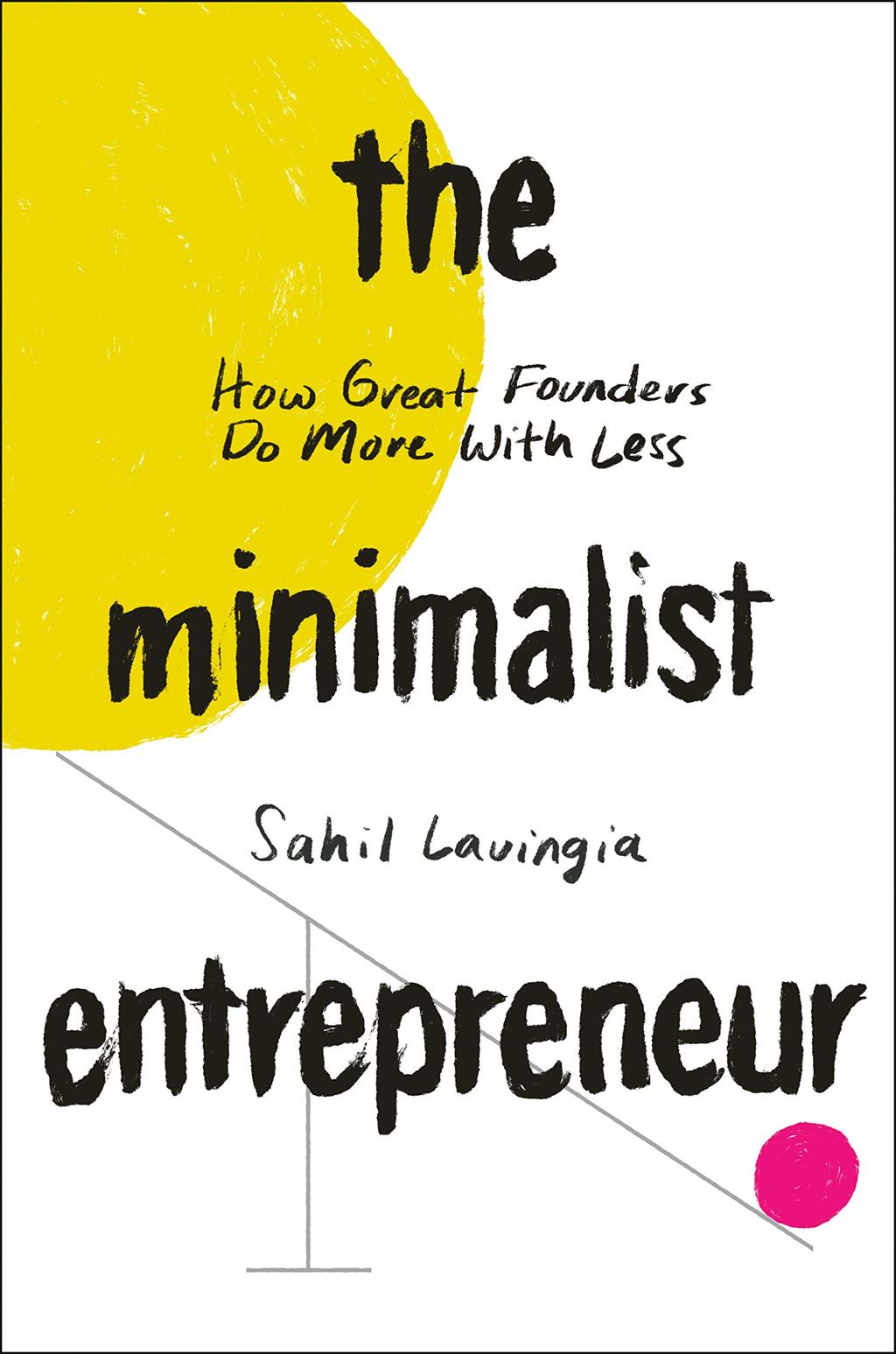

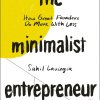


Minimalist Entrepreneu by Sahil Lavingia
රු1,600.00
3 X Rs. 533.33 or 8% Cashback with


or 3 X රු533.33 with


or up to 4 X රු400.00 with


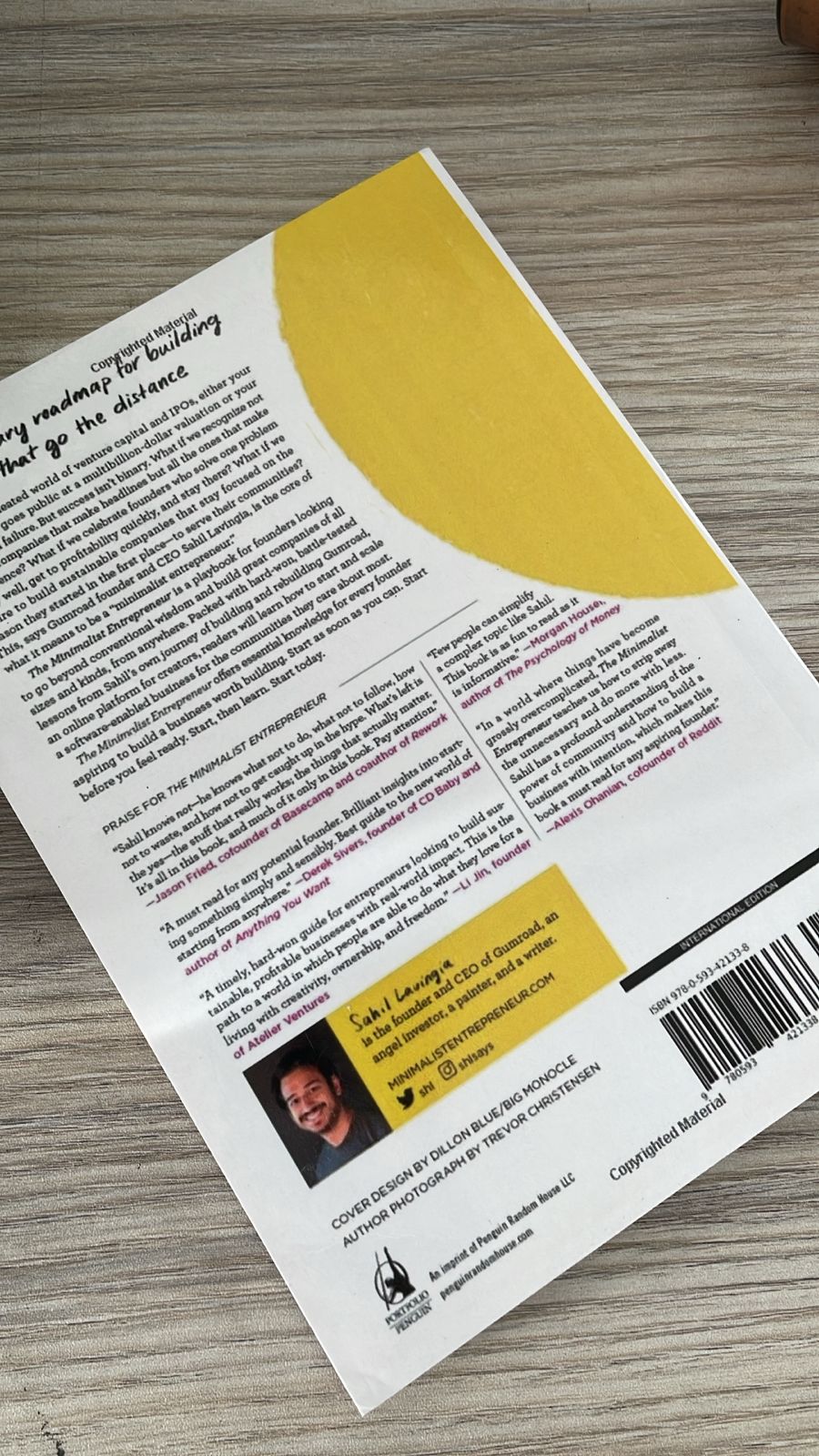
The Minimalist Entrepreneur by Sahil Lavingia is a practical entrepreneurship guide about building profitable, sustainable businesses with less complexity. Drawing from his experience founding Gumroad, Sahil Lavingia explains how to start with community, solve real customer problems, build as little as possible, sell to early customers, market authentically, control costs and grow mindfully. Ideal for startup founders, small-business owners, creators and entrepreneurs who want to build a great company without automatically chasing maximum size, funding or headcount.
6 in stock
The Minimalist Entrepreneur by Sahil Lavingia is a practical entrepreneurship guide for founders who want to build profitable, sustainable businesses without automatically chasing huge teams, massive funding rounds or growth at any cost.
Modern startup culture often celebrates:
Raising millions of dollars.
Hiring rapidly.
Opening impressive offices.
Growing as fast as possible.
Reaching enormous valuations.
Becoming the next billion-dollar company.
Sahil Lavingia offers another path.
Instead of asking:
“How can I build the biggest possible company?”
he encourages entrepreneurs to ask:
“What is the smallest successful business I can build that genuinely solves a problem for people I care about?”
That difference changes almost everything.
How you find an idea.
How you build a product.
How much money you spend.
Who you hire.
How you market.
How quickly you grow.
And even how you define success.
Drawing from his experience building Gumroad, Lavingia presents a model of entrepreneurship focused on:
Community.
Customers.
Profitability.
Simplicity.
Ownership.
Sustainable growth.
Personal freedom.
The central idea behind The Minimalist Entrepreneur by Sahil Lavingia is not that entrepreneurs should avoid ambition.
It is that ambition does not always have to mean becoming enormous.
A business can be successful because it:
Serves customers well.
Generates profit.
Provides meaningful work.
Supports its founder.
Creates freedom.
And remains sustainable for years.
The Minimalist Entrepreneur by Sahil Lavingia – Book Overview
The Minimalist Entrepreneur by Sahil Lavingia challenges the traditional Silicon Valley idea that every startup should try to become a giant venture-backed company.
Instead, Lavingia encourages founders to begin with something much more basic:
People.
Find a community.
Understand its problems.
Build something useful.
Charge for it.
Learn from customers.
Improve gradually.
Grow only when growth makes sense.
This approach reduces one of the biggest risks in entrepreneurship:
Building something nobody wants.
Start With Community
One of the book’s most important ideas is:
Start with community before starting with the product.
Many entrepreneurs begin like this:
“I have an amazing idea.”
Then they build it.
Months later, they search for customers.
Lavingia suggests reversing the sequence.
First:
Find people you understand.
Spend time with them.
Learn what they struggle with.
Then create something useful for them.
Community Before Product
A community can be:
Designers.
Writers.
Teachers.
Parents.
Developers.
Book lovers.
Small-business owners.
Freelancers.
Restaurant owners.
Students.
The important thing is understanding the group.
What problems appear repeatedly?
What takes too much time?
What is expensive?
What is frustrating?
What do people already pay to solve?
Those questions can reveal better business opportunities than random brainstorming.
Solve a Real Problem
Businesses become stronger when they solve problems customers actually care about.
A founder may think:
“This idea is brilliant.”
But the customer asks:
“Why do I need it?”
The customer ultimately decides whether the product creates value.
Talk to Customers
The Minimalist Entrepreneur by Sahil Lavingia encourages entrepreneurs to stay close to the people they serve.
Talk to them.
Listen.
Observe.
Ask questions.
Customer conversations can reveal:
What they need.
What they dislike.
What they already use.
What they would pay for.
What they do not care about.
This information is extremely valuable before investing heavily.
Build as Little as Possible
Another major principle is:
Build as little as possible.
Entrepreneurs often imagine a complete product before launching.
Twenty features.
Perfect website.
Mobile app.
Automation.
Complicated dashboard.
But most of those things may not be necessary initially.
Instead, build the smallest useful solution.
Small Does Not Mean Bad
Minimal does not mean low quality.
It means avoiding unnecessary complexity.
Ask:
What does the customer actually need?
What can wait?
What is the smallest version that creates value?
This approach helps entrepreneurs:
Launch faster.
Spend less.
Learn sooner.
Reduce risk.
Avoid Overbuilding
Overbuilding is expensive.
Imagine spending six months developing ten features.
Then customers only use two.
Eight features consumed:
Time.
Money.
Development work.
Testing.
Maintenance.
Yet created little value.
Starting smaller allows customers to help shape what comes next.
Manual Before Automated
At the beginning, many processes can be manual.
You may personally:
Reply to customers.
Create invoices.
Process orders.
Send updates.
Handle support.
This can feel inefficient.
But manual work teaches you how the business actually operates.
Only after understanding the process should you decide what to automate.
Automate What You Understand
Automation is powerful when it improves a proven process.
Automating something too early can simply make the wrong process happen faster.
First:
Learn.
Then:
Systemize.
Then:
Automate.
Start Then Learn
Some people wait until they understand everything before starting.
But entrepreneurship contains too many unknowns.
You cannot predict every customer reaction.
You cannot predict every competitor.
You cannot predict every operational problem.
So learning often happens after starting.
Action Produces Information
You can spend months asking:
Will customers buy?
Or you can make an offer and discover the answer.
Real-world feedback often teaches faster than speculation.
Sell Early
A powerful principle in The Minimalist Entrepreneur by Sahil Lavingia is getting customers early.
Do not assume interest equals demand.
Someone saying:
“That sounds cool.”
is not the same as:
“I will pay for it.”
Payment provides stronger evidence.
Charge for Value
Founders sometimes hesitate to charge because they feel:
The product is too small.
The company is too new.
They are not famous enough.
But if the product genuinely solves a problem, charging helps answer an important question:
Is this valuable enough that someone will exchange money for it?
Your First Customers Matter Most
The first customers provide more than revenue.
They provide:
Feedback.
Questions.
Complaints.
Ideas.
Referrals.
Stories.
Understanding.
They help you discover what business you are actually building.
Sell to Your First Hundred Customers
Instead of immediately asking:
“How do I get one million customers?”
focus on:
How do I get the first ten?
Then:
The first hundred?
Early customers often require personal effort.
Direct conversations.
Emails.
Community participation.
Individual support.
This does not scale perfectly.
That is okay.
Do Things That Do Not Scale Yet
Early entrepreneurship often involves work that would be impossible with 100,000 customers.
But with ten customers, personal attention can teach you enormously valuable lessons.
For example:
Call every customer.
Ask why they bought.
Ask what confused them.
Ask what nearly stopped them.
This information helps shape future growth.
Build Relationships
People prefer buying from businesses they:
Trust.
Understand.
Feel connected to.
A community-based business can develop stronger relationships than one built entirely around anonymous transactions.
Community as an Advantage
Community can become a competitive advantage.
Competitors can copy:
Features.
Pricing.
Website design.
But copying genuine relationships is harder.
A strong community can provide:
Feedback.
Word of mouth.
Loyalty.
Ideas.
Early customers.
Marketing by Being You
The Minimalist Entrepreneur by Sahil Lavingia also presents a more personal approach to marketing.
Many founders imagine marketing means:
Huge advertising campaigns.
Expensive agencies.
Complex funnels.
But founders can begin by sharing what they know.
Teach What You Know
Useful content can attract customers.
Share:
Lessons.
Mistakes.
Behind-the-scenes processes.
Helpful advice.
Industry knowledge.
Your perspective.
People begin discovering your expertise before ever buying.
Authentic Marketing
You do not need to pretend your company is larger than it is.
Customers may appreciate knowing:
Who built it.
Why it exists.
What you are learning.
What you believe.
A founder’s personality can become part of a brand.
Content Marketing
A founder can use:
Blog posts.
Social media.
Email.
Videos.
Podcasts.
Guides.
These channels allow businesses to educate potential customers before selling.
Help Before Asking
Useful marketing often starts by providing value.
Teach something.
Answer a question.
Solve a small problem.
People become more likely to trust the business.
Word of Mouth
Great products can create their own marketing.
A satisfied customer tells another person.
That person tries the product.
Then recommends it.
Word-of-mouth growth may be slower than aggressive paid advertising initially, but it can produce stronger trust.
Profitability
Profitability is an important theme in The Minimalist Entrepreneur by Sahil Lavingia.
Startup culture sometimes treats profit as something to think about later.
Growth comes first.
Profit eventually.
Lavingia argues that businesses should care about becoming financially sustainable.
Revenue Is Not Success by Itself
A company can generate significant revenue and still lose money.
Revenue:
Money coming in.
Profit:
What remains after expenses.
A sustainable business needs to understand both.
Control Costs
Minimalist businesses pay careful attention to expenses.
Do you really need:
A large office?
A huge team?
Expensive software?
Complex infrastructure?
Every recurring expense increases the amount of revenue required just to survive.
Keep the Business Lean
Being lean increases flexibility.
Lower fixed costs can make it easier to survive:
Slow months.
Economic downturns.
Failed experiments.
Unexpected problems.
A company with enormous expenses has less room for mistakes.
Funding Is a Tool, Not a Goal
Raising venture capital is often celebrated as success.
But investment is not profit.
It is money given to a company with expectations attached.
Funding can be extremely useful for certain businesses.
But it should not automatically become the goal of every founder.
Understand What Funding Changes
External investors may expect:
Faster growth.
Larger markets.
Bigger returns.
Different strategic priorities.
That may be appropriate.
But founders should understand the trade-offs before accepting investment.
Bootstrapping
Bootstrapping means building a business using:
Customer revenue.
Personal resources.
Limited external capital.
This can encourage:
Careful spending.
Earlier revenue.
Greater ownership.
Smaller experiments.
Bootstrapping Is Not Always Easy
Operating without significant outside capital can create limitations.
Growth may be slower.
Resources may be limited.
The founder may carry more financial pressure.
There is no universal answer.
The important lesson is choosing intentionally.
Growth
Most business advice assumes:
More growth = better.
But The Minimalist Entrepreneur by Sahil Lavingia asks entrepreneurs to think more carefully.
What kind of growth?
At what cost?
Why?
Growth Should Serve the Business
Growth is useful when it creates:
More value.
More profit.
Stronger operations.
Better customer experiences.
Growth that destroys:
Cash flow.
Quality.
Culture.
Founder health.
may not be healthy growth.
Sustainable Growth
Sustainable growth means expanding at a rate the company can support.
New customers require:
Support.
Infrastructure.
Inventory.
Employees.
Systems.
Growing faster than those areas can handle may damage the company.
Do Not Chase Vanity Metrics
Large numbers look impressive.
Followers.
Downloads.
Website traffic.
Registered users.
But ask:
Do these numbers improve the business?
A smaller number of paying loyal customers may be far more valuable.
Measure What Matters
Useful metrics can include:
Revenue.
Profit.
Customer retention.
Repeat purchases.
Conversion.
Customer satisfaction.
Cash flow.
The right metrics depend on the business.
Stay Close to Customers as You Grow
Growth can create distance.
At the beginning, the founder knows customers personally.
Later, reports and dashboards replace conversations.
That can become dangerous.
Customer contact should not disappear simply because the company becomes larger.
Hiring
Hiring is another area where traditional startup culture often celebrates speed.
“We hired 100 people this year.”
But more employees are not automatically a sign of success.
Every hire creates:
Salary costs.
Management needs.
Communication complexity.
Responsibility.
Hire When Necessary
A minimalist entrepreneur asks:
Do we truly need another employee?
Can the existing system be improved?
Can the process be simplified?
Can technology help?
Hire because the role creates meaningful value, not because a larger team looks impressive.
Small Teams
Small teams can have advantages.
Faster communication.
Clearer responsibility.
Lower costs.
Greater flexibility.
Less bureaucracy.
But small teams require strong priorities.
They cannot do everything.
Focus
Focus becomes essential when resources are limited.
A minimalist business cannot pursue:
Every market.
Every customer.
Every feature.
Every idea.
You must choose.
Saying No
Every yes creates a cost.
A new product.
New service.
New partnership.
New market.
Each consumes:
Time.
Money.
Attention.
Saying no protects the work that matters most.
Remote Work
Modern businesses can operate with less physical infrastructure than before.
Remote tools can allow teams to work across locations.
This can reduce some costs and increase access to talent.
But remote work also requires:
Clear communication.
Documentation.
Trust.
Good systems.
Documentation
When information exists only inside one person’s head, the company becomes fragile.
Document:
Processes.
Responsibilities.
Decisions.
Instructions.
This helps teams operate more independently.
Systems
The goal is not creating bureaucracy.
It is creating enough structure that routine work does not require constant founder intervention.
Good systems create freedom.
The Founder Should Not Be the Bottleneck
If every decision requires the founder:
Growth becomes limited.
Customers wait.
Employees wait.
The founder becomes exhausted.
Eventually, responsibilities need to be distributed.
Founder Energy
One of the most important resources in entrepreneurship is not money.
It is energy.
A founder who becomes completely burned out may lose the ability to:
Think clearly.
Lead.
Create.
Solve problems.
Avoid Running Out of Energy
Many entrepreneurs treat exhaustion as proof of commitment.
But constant burnout can reduce decision quality.
Sustainable entrepreneurship requires:
Rest.
Boundaries.
Priorities.
Delegation.
Work Should Support Life
This leads to one of the deepest ideas in The Minimalist Entrepreneur by Sahil Lavingia:
Own a business without allowing the business to own you.
A business may make money while destroying:
Health.
Relationships.
Freedom.
Happiness.
Is that success?
Lavingia encourages founders to define success more personally.
Build the House You Want to Live In
The book uses the idea of building the kind of organization you actually want to be part of.
You are not only creating:
A product.
You are creating:
A workplace.
A culture.
A daily life.
If the company succeeds, you may spend years inside the environment you created.
Build carefully.
Company Culture
Culture is not only slogans.
It is how people actually behave.
How are mistakes treated?
How are employees trusted?
How are customers treated?
How are decisions made?
Those behaviors become the real culture.
Values
Founders should understand what they care about.
Maybe:
Independence.
Flexibility.
Creativity.
Customer service.
Profitability.
Remote work.
Work-life balance.
Your business structure should support those values.
Great Company Versus Big Company
One of the most important distinctions in The Minimalist Entrepreneur by Sahil Lavingia is between being:
Great
and being:
Big.
A company can be huge and unhealthy.
Another can be small and excellent.
Size is not the only measurement of success.
What Makes a Great Business?
A great business may:
Solve a real problem.
Treat customers well.
Generate profit.
Support employees.
Create useful products.
Give owners freedom.
Remain sustainable.
It does not need billions in valuation to matter.
Entrepreneurship Without the Unicorn Obsession
Startup media often focuses heavily on unicorns—private companies valued at more than a billion dollars.
But most businesses will never become unicorns.
And most do not need to.
A local company with:
Healthy profits.
Loyal customers.
A good team.
A respected brand.
can still be an extraordinary success.
Small Business Is Real Entrepreneurship
Entrepreneurship is not limited to technology startups.
The minimalist approach can apply to:
Retail.
Bookstores.
Consulting.
Design.
Education.
Restaurants.
Software.
Online stores.
Agencies.
Professional services.
The underlying principles remain similar.
Minimalist Entrepreneurship for Retail
Imagine a bookstore wants to introduce a new product category.
Traditional approach:
Buy huge quantities.
Launch everything.
Hope customers purchase.
Minimalist approach:
Test a small selection.
Measure demand.
Ask customers.
Reorder what sells.
Remove what does not.
Less capital is exposed to risk.
Minimalist Entrepreneurship for E-Commerce
An online store can test:
New categories.
Bundles.
Gift packs.
Subscriptions.
Corporate sales.
Limited editions.
before investing heavily.
Use customer behavior to guide expansion.
Minimalist Entrepreneurship for Software
A software founder can begin with a narrow problem.
Do not immediately build:
Accounting.
HR.
CRM.
Inventory.
Analytics.
Marketing.
all in one system.
Solve one painful problem well.
Then expand based on evidence.
Minimalist Entrepreneurship for Freelancers
A freelancer can also use these ideas.
Start with a community.
Find a repeated problem.
Package the service.
Charge.
Create repeatable processes.
Eventually, the freelancer may build:
Templates.
Software.
Products.
A small team.
The business becomes less dependent on selling every hour individually.
Product-Market Fit
A business becomes stronger when customers clearly value the solution.
Signs may include:
People paying.
Returning.
Recommending.
Requesting improvements.
Complaining when the product is unavailable.
Early entrepreneurs should focus more on this than on looking impressive.
Customer Retention
Getting a customer once is useful.
Keeping them can be more valuable.
If customers repeatedly leave, ask why.
Retention can reveal whether the product truly provides ongoing value.
Listen to Complaints
Customer complaints can feel unpleasant.
But complaints provide information.
Something failed.
Delivery?
Product?
Expectation?
Communication?
Every recurring complaint can reveal an opportunity for improvement.
Build With Customers
Instead of treating the company as:
Founder versus customer,
think:
Founder with customer.
Customers help you understand what to build next.
Pricing
Minimalist entrepreneurs should not automatically compete by being cheapest.
Low pricing can create unsustainable economics.
Pricing must support:
Costs.
Profit.
Quality.
Growth.
A business that loses money on every customer cannot solve problems for long.
Cash Flow
Cash flow matters enormously for small businesses.
A company may be profitable on paper yet struggle because money is tied up in:
Inventory.
Outstanding invoices.
Equipment.
Growth.
Understand when cash enters and leaves.
Runway
Runway describes how long a business can survive before money runs out.
Lower expenses generally create longer runway.
That means more time to:
Experiment.
Improve.
Find customers.
Profit Creates Independence
Profit can give founders options.
Reinvest.
Hire.
Save.
Expand.
Take time.
Without profit, the company may remain dependent on external funding.
Competition
Do not obsess over competitors.
Study them.
Learn.
But stay focused on customers.
Your strongest advantage may come from understanding one community more deeply than anyone else.
Niche Markets
A niche can be a strength.
Instead of selling to everyone, become extremely useful to:
One type of customer.
Specificity often improves:
Marketing.
Product decisions.
Customer understanding.
Start Narrow
A business can expand later.
Beginning narrowly creates focus.
For example:
Not:
“Software for all businesses.”
But:
“Inventory software for independent bookstores.”
The second creates clearer product decisions.
Customer Language
Listen to how customers describe their problems.
Their language can improve:
Website copy.
Advertising.
Sales conversations.
Product design.
People respond when they feel:
“This company understands me.”
Marketing Without Pretending
Authenticity is especially useful for small companies.
You do not need to claim:
“World’s greatest.”
You can say:
Here is what we built.
Here is why.
Here is who it is for.
Honest positioning creates trust.
Founder-Led Marketing
Founders often know the story better than anyone.
Why did you start?
What problem frustrated you?
What have you learned?
Sharing these stories can create stronger connections.
Personal Brand and Business Brand
The founder’s identity may help the business early.
But eventually, decide how dependent the company should remain on one person.
A business entirely dependent on the founder’s personality can become difficult to transfer or scale.
Build an Asset
A sustainable business should gradually become an asset.
It has:
Customers.
Processes.
Brand.
Revenue.
Systems.
Knowledge.
A business that can function beyond the founder’s constant personal involvement creates greater freedom.
Freedom
Freedom is a recurring theme in The Minimalist Entrepreneur by Sahil Lavingia.
Why become an entrepreneur?
Only money?
Or also:
Control.
Creativity.
Flexibility.
Meaning.
Independence.
There is no point building a company that gives you less freedom than the job you escaped unless that trade-off is genuinely what you want.
Define Enough
This leads to a difficult question:
How much is enough?
More revenue?
More employees?
More customers?
More offices?
Growth can become endless if success has no definition.
Founders should know what they actually want.
Lifestyle Business Is Not an Insult
Some startup circles use “lifestyle business” dismissively.
But a business that:
Generates healthy profit.
Supports the founder.
Serves customers.
Provides freedom.
can be extremely successful.
The important thing is intentional design.
Minimalism Is About Removing What Does Not Matter
Minimalist entrepreneurship is not simply:
Spend no money.
Hire nobody.
Stay tiny forever.
It is about removing unnecessary things so resources can be concentrated on what matters.
Customers.
Product.
Profitability.
Team.
Founder well-being.
Quality Over Quantity
More is not always better.
More features may create confusion.
More employees may create bureaucracy.
More customers may overwhelm systems.
More revenue with terrible margins may create little profit.
Ask what actually improves the business.
Long-Term Thinking
A company built responsibly may survive longer.
That matters.
Entrepreneurship should not necessarily be:
Launch.
Explode.
Sell.
Repeat.
Some founders may prefer to build companies they can operate for decades.
Sustainable Entrepreneurship
Sustainability means considering:
Financial sustainability.
Founder sustainability.
Employee sustainability.
Customer sustainability.
A business should not require permanent crisis to survive.
The Anti-Hustle Lesson
Hard work still matters.
But constant overwork should not become the business model.
If success requires the founder working sixteen hours every day forever, the system may need redesign.
Better Systems Instead of More Hours
When overwhelmed, ask:
What can be eliminated?
What can be automated?
What can be delegated?
What can be simplified?
The answer is not always:
Work longer.
Who Is Sahil Lavingia?
Sahil Lavingia is the founder and CEO of Gumroad, a platform that enables creators to sell their work directly.
His entrepreneurial experiences provide the foundation for many of the lessons in the book.
Rather than presenting entrepreneurship only through theory, he reflects on:
Growth.
Funding.
Hiring.
Downsizing.
Profitability.
Community.
And sustainable company building.
Gumroad and the Minimalist Philosophy
Gumroad became central to Lavingia’s thinking about what a successful company should look like.
His experiences challenged assumptions that every technology startup must continually:
Raise.
Hire.
Expand.
Chase enormous valuation.
That journey helped shape the minimalist approach described throughout the book.
Is The Minimalist Entrepreneur a Startup Book?
Yes.
But The Minimalist Entrepreneur by Sahil Lavingia is useful beyond traditional technology startups.
Its ideas can apply to:
Small businesses.
Freelancers.
Online businesses.
Retailers.
Creators.
Consultants.
Product teams.
Is It Only for Minimalists?
No.
You do not need to follow a minimalist lifestyle.
The term refers to business design:
Build only what matters.
Spend intentionally.
Grow carefully.
Keep complexity under control.
Is It Against Business Growth?
No.
The book is not anti-growth.
It is against growth becoming an unquestioned goal.
Grow when growth:
Benefits customers.
Improves the business.
Creates sustainable value.
Is It Against Venture Capital?
Not completely.
External investment can be useful.
But founders should understand what it requires and whether their business actually needs it.
Funding should support a strategy rather than become a status symbol.
Is It Good for New Entrepreneurs?
Yes.
The book can help beginners avoid several common mistakes:
Building too much.
Hiring too early.
Spending excessively.
Ignoring customers.
Chasing vanity metrics.
Waiting too long to charge.
Is It Good for Existing Business Owners?
Yes.
Existing founders can use the principles to simplify:
Products.
Teams.
Operations.
Marketing.
Expenses.
Growth strategies.
Sometimes the best business improvement is removing something.
Is It a Step-by-Step Business Plan?
Not exactly.
It provides principles and a broad roadmap rather than a rigid formula that guarantees success.
Every business still requires adaptation to:
Industry.
Customers.
Location.
Economics.
Important Themes
The Minimalist Entrepreneur by Sahil Lavingia explores:
- Entrepreneurship
- Startups
- Community
- Customer discovery
- Minimal viable products
- Business profitability
- Bootstrapping
- Sustainable growth
- Business ownership
- Marketing
- First customers
- Product development
- Small teams
- Remote work
- Founder well-being
- Business systems
- Customer feedback
- Focus
- Financial discipline
- Personal freedom
7 Powerful Business Lessons From The Minimalist Entrepreneur by Sahil Lavingia
There are many lessons in The Minimalist Entrepreneur by Sahil Lavingia, but seven stand out:
- Start with a community before building a product – Understand a specific group of people, identify their real problems and create something useful for them instead of inventing a product first and searching for customers later.
- Build as little as possible at the beginning – A smaller first version costs less, launches faster and allows real customers to influence what should be built next.
- Charge early to validate real demand – Compliments and interest are useful, but paying customers provide much stronger evidence that your solution creates meaningful value.
- Focus intensely on your first customers – Early users provide feedback, referrals and insights that can shape the entire future of the business.
- Profitability matters more than impressive appearances – Revenue, headcount, investment rounds and growth percentages can look exciting, but a sustainable company ultimately needs healthy economics.
- Grow intentionally instead of automatically chasing size – More employees, customers and features are valuable only when they improve the company rather than creating unnecessary complexity.
- Build a business that supports the life you actually want – Entrepreneurship should ideally create value, freedom and meaningful work rather than becoming a machine that consumes all of the founder’s time and energy.
Why Read The Minimalist Entrepreneur by Sahil Lavingia?
The Minimalist Entrepreneur by Sahil Lavingia is an excellent choice for readers interested in:
- Entrepreneurship
- Startups
- Small business
- Bootstrapping
- Sahil Lavingia
- Gumroad
- Business growth
- Business profitability
- Community building
- Customer validation
- Business ideas
- Online business
- Sustainable businesses
- Product development
- Small teams
- Business systems
- Marketing
- Startup strategy
- Founder mindset
- Building a business with less
It is especially valuable for people who want to build something profitable and meaningful without automatically following the venture-capital-driven model of maximum growth.
Who Should Read This Book?
The Minimalist Entrepreneur by Sahil Lavingia may especially appeal to:
- Aspiring entrepreneurs
- Startup founders
- Small-business owners
- Freelancers
- Creators
- Online-business owners
- Software founders
- Retail entrepreneurs
- Consultants
- Product managers
- Marketing professionals
- People considering bootstrapping
- Founders experiencing burnout
- Entrepreneurs trying to simplify their businesses
- Anyone who wants a sustainable alternative to growth-at-all-costs entrepreneurship
The Minimalist Entrepreneur by Sahil Lavingia – Build a Great Business, Not Simply a Big One
The Minimalist Entrepreneur by Sahil Lavingia asks entrepreneurs to reconsider what success should look like.
Maybe success is not:
500 employees.
Ten offices.
A billion-dollar valuation.
Endless fundraising.
Maybe success is:
A valuable product.
Happy customers.
Healthy profit.
A good team.
Enough freedom to enjoy your life.
This does not mean thinking small.
It means thinking intentionally.
Start with people.
Find a real problem.
Build the simplest useful solution.
Ask customers to pay.
Learn from them.
Improve what matters.
Ignore what does not.
Keep expenses under control.
Hire when necessary.
Grow when growth improves the business.
And remember why you wanted to become an entrepreneur in the first place.
It is easy to build complexity.
A new feature.
Another employee.
Another subscription.
Another market.
Another strategy.
Soon the founder may discover that they created a company too complicated to understand and too demanding to enjoy.
Minimalist entrepreneurship moves in the opposite direction.
Ask:
What can we remove?
What can we simplify?
What do customers genuinely value?
What kind of company do we want to work inside?
What level of growth actually makes sense?
These questions produce a different kind of ambition.
Not:
Become as large as possible.
But:
Become as useful, profitable and sustainable as possible.
For entrepreneurs, creators, small-business owners and founders searching for a practical alternative to startup hype, The Minimalist Entrepreneur by Sahil Lavingia offers a clear reminder that a great company does not have to be enormous.
Sometimes doing less—more deliberately—is exactly what allows a business to do better.
Learn more about The Minimalist Entrepreneur by Sahil Lavingia on the official Penguin Random House website.
Explore more business and entrepreneurship books at Bargain Books.
Be the first to review “Minimalist Entrepreneu by Sahil Lavingia”
Related products
Out of stock
Entrepreneurship
රු1,700.00
3 X Rs. 566.67 or 8% Cashback with
or 3 X රු566.67 with
or up to 4 X රු425.00 with
Entrepreneurship
රු1,990.00
3 X Rs. 663.33 or 8% Cashback with
or 3 X රු663.33 with
or up to 4 X රු497.50 with
Out of stock
Business
රු2,700.00
3 X Rs. 900.00 or 8% Cashback with
or 3 X රු900.00 with
or up to 4 X රු675.00 with
Out of stock
Business, Finance & Economics
රු1,900.00
3 X Rs. 633.33 or 8% Cashback with
or 3 X රු633.33 with
or up to 4 X රු475.00 with
Out of stock
රු1,500.00
3 X Rs. 500.00 or 8% Cashback with
or 3 X රු500.00 with
or up to 4 X රු375.00 with
Business, Finance & Economics
රු1,950.00
3 X Rs. 650.00 or 8% Cashback with
or 3 X රු650.00 with
or up to 4 X රු487.50 with
Entrepreneurship
රු2,500.00
3 X Rs. 833.33 or 8% Cashback with
or 3 X රු833.33 with
or up to 4 X රු625.00 with
Reviews
There are no reviews yet.