
No products in the cart.
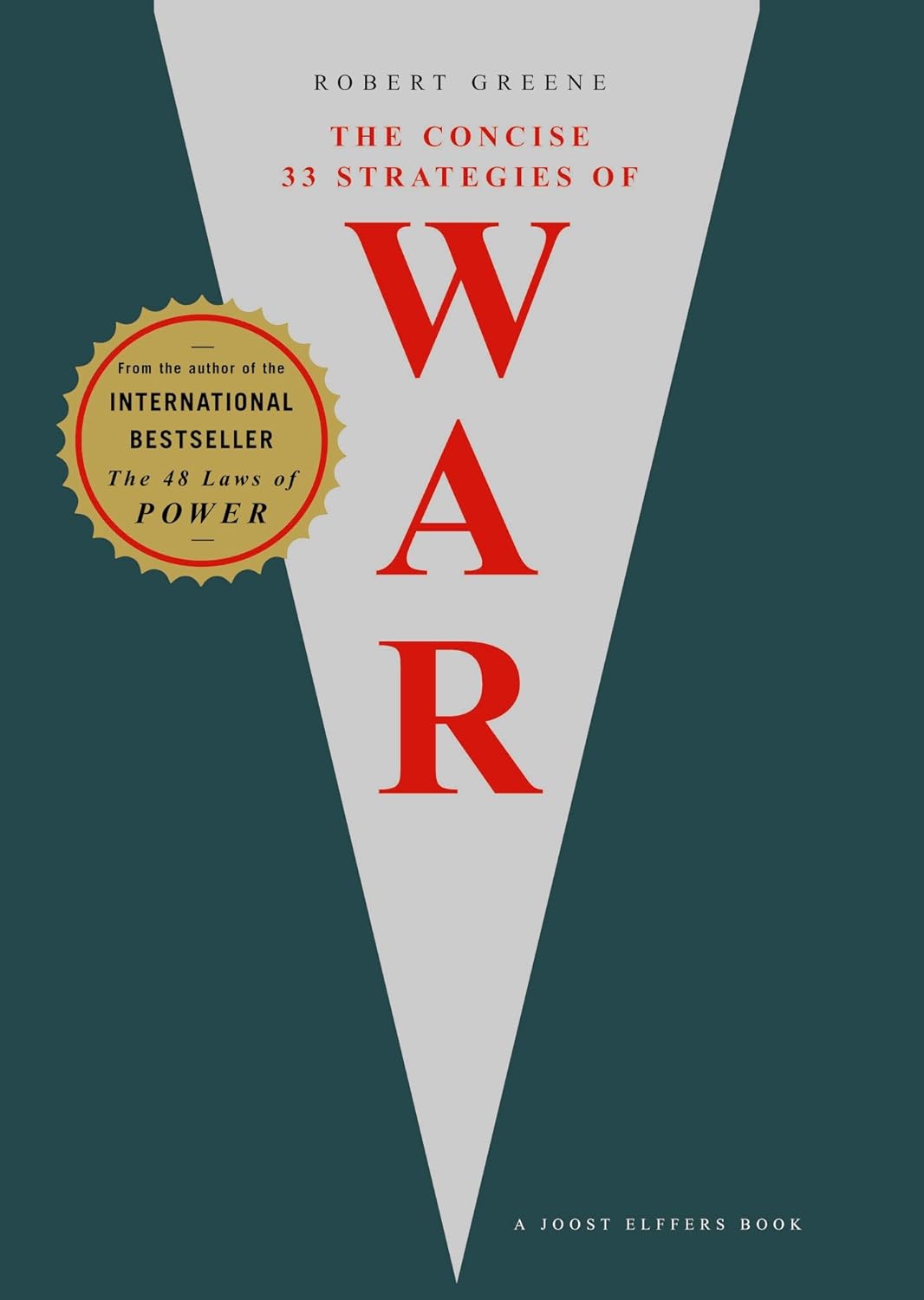



Concise 33 Strategies of War
The Concise 33 Strategies of War by Robert Greene is a practical guide to strategy, conflict, leadership and intelligent decision-making.
Drawing inspiration from military history, political leaders, strategists and famous historical conflicts, Robert Greene transforms the principles of warfare into lessons that can be applied to modern life.
The Concise 33 Strategies of War focuses on how to remain calm under pressure, understand opponents, plan ahead and avoid emotional reactions during difficult situations.
It is ideal for readers interested in psychology, leadership, business, personal development and strategic thinking.
Why Read The Concise 33 Strategies of War?
The Concise 33 Strategies of War teaches readers that many challenges can be handled more effectively when approached strategically rather than emotionally.
People often make poor decisions when they feel angry, afraid or pressured.
Greene encourages readers to examine the situation, understand the people involved and consider the long-term consequences before taking action.
This mindset can be useful in professional environments, negotiations, competition and everyday decision-making.
33 Strategies for Smarter Decision-Making
The book presents 33 different strategies inspired by historical conflicts and influential leaders.
Each strategy focuses on a different aspect of planning, competition or self-control.
Some lessons involve choosing the right battles.
Others focus on timing, preparation, defence, leadership and understanding an opponent’s weaknesses.
The The Concise 33 Strategies of War format presents Robert Greene’s core ideas in a more compact form, making the book convenient for readers who prefer a faster introduction to his strategic philosophy.
Control Your Emotions
One of the important themes in The Concise 33 Strategies of War is emotional discipline.
Strong emotions can make it difficult to evaluate situations clearly.
Anger may cause someone to react too quickly, while fear can prevent them from acting when necessary.
Greene encourages readers to create distance between their emotions and their decisions.
Remaining calm can make it easier to identify opportunities, avoid mistakes and respond intelligently to difficult circumstances.
Choose Your Battles Carefully
Not every conflict deserves your time or energy.
The book explains why constantly fighting unnecessary battles can weaken your position.
Strategic individuals learn when to act, when to wait and when to avoid conflict entirely.
This lesson can apply to business disagreements, workplace competition and personal relationships.
The Concise 33 Strategies of War encourages readers to focus their resources on situations that truly matter.
Think Several Steps Ahead
Planning is another major theme throughout the book.
A strong strategy considers not only the immediate result but also what may happen afterward.
Greene encourages readers to anticipate reactions and prepare for different possibilities.
Thinking ahead can reduce impulsive decisions and help people remain prepared when circumstances change.
This is especially useful for leaders, entrepreneurs and professionals who regularly make important decisions.
Understand Your Opponent
Effective strategy requires understanding other people.
Greene explains the importance of studying motivations, behaviour, strengths and weaknesses.
When you understand what another person wants, you may be better prepared to predict their actions.
The The Concise 33 Strategies of War encourages observation before action.
Instead of making assumptions, readers are encouraged to collect information and examine situations carefully.
Leadership and Team Strategy
The book also contains lessons relevant to leadership.
A leader must create direction, maintain morale and encourage people to work toward a common objective.
Confusion and poor communication can weaken a team.
Clear goals and strong organisation can create greater unity.
These principles can apply to business teams, organisations, projects and other group environments.
The Importance of Adaptability
Even the best plan may need to change.
Situations develop, competitors react and unexpected problems appear.
The Concise 33 Strategies of War highlights the importance of remaining flexible.
A strategy should guide your actions without preventing you from adapting when new information becomes available.
Readers are encouraged to observe changing circumstances and adjust their approach when necessary.
Learn From Historical Examples
Robert Greene uses historical events and famous personalities to illustrate strategic principles.
Military commanders, political leaders and influential thinkers provide examples of successful and unsuccessful approaches to conflict.
These stories make strategic ideas easier to understand.
Readers can examine how planning, timing, discipline and miscalculation affected important historical events.
What You Can Learn From The Concise 33 Strategies of War
Readers can explore lessons about:
- Strategic thinking
- Emotional self-control
- Leadership
- Planning ahead
- Choosing battles carefully
- Understanding competitors
- Handling pressure
- Timing decisions effectively
- Defending your position
- Recognising weaknesses
- Adapting to changing circumstances
- Building stronger teams
- Managing conflict
- Long-term thinking
- Personal discipline
Who Should Read This Book?
The Concise 33 Strategies of War is suitable for readers interested in psychology, strategy, leadership and personal development.
Entrepreneurs and managers may find its lessons useful when thinking about competition and decision-making.
Students can use the book to explore historical examples of strategy.
Readers of Robert Greene’s other works, including The 48 Laws of Power, Mastery and The Laws of Human Nature, may also enjoy the themes explored in this title.
A Compact Guide to Strategy
One of the advantages of The Concise 33 Strategies of War is its compact format.
It presents the key ideas of Robert Greene’s strategic philosophy without requiring readers to immediately work through the longer original edition.
This makes it useful both as an introduction and as a reference book.
Readers can return to individual strategies whenever they face challenging decisions or want to reconsider how they approach conflict.
Build a More Strategic Mindset
The Concise 33 Strategies of War is ultimately about developing a more disciplined way of thinking.
Instead of reacting immediately, readers are encouraged to observe, prepare and choose their actions carefully.
The book shows how patience, awareness, timing and adaptability can influence the outcome of challenging situations.
For readers who want to strengthen their strategic thinking and better understand conflict, The Concise 33 Strategies of War by Robert Greene is a valuable addition to a business, psychology or personal-development collection.
Learn more about Robert Greene and The 33 Strategies of War, including his ideas on strategy, conflict, and human behaviour, through Robert Greene’s official website.
Be the first to review “Concise 33 Strategies of War”
Related products

රු2,000.00
3 X Rs. 666.67 or 8% Cashback with


or 3 X රු666.67 with


or up to 4 X රු500.00 with


Non-Fiction & Knowledge
රු1,950.00
3 X Rs. 650.00 or 8% Cashback with
or 3 X රු650.00 with
or up to 4 X රු487.50 with

Non-Fiction & Knowledge
රු2,450.00
3 X Rs. 816.67 or 8% Cashback with
or 3 X රු816.67 with
or up to 4 X රු612.50 with
-28%

Self-Help & Psychology
Original price was: රු1,800.00.රු1,300.00Current price is: රු1,300.00.
3 X Rs. 433.33 or 8% Cashback with
or 3 X රු433.33 with
or up to 4 X රු325.00 with
-24%
Out of stock
Non-Fiction & Knowledge
Original price was: රු2,100.00.රු1,600.00Current price is: රු1,600.00.
3 X Rs. 533.33 or 8% Cashback with
or 3 X රු533.33 with
or up to 4 X රු400.00 with
Out of stock
Self-Help & Psychology
රු1,900.00
3 X Rs. 633.33 or 8% Cashback with
or 3 X රු633.33 with
or up to 4 X රු475.00 with
-14%

Out of stock
Self-Help & Psychology
Original price was: රු2,900.00.රු2,500.00Current price is: රු2,500.00.
3 X Rs. 833.33 or 8% Cashback with
or 3 X රු833.33 with
or up to 4 X රු625.00 with
-17%
Out of stock
Non-Fiction & Knowledge
Original price was: රු2,900.00.රු2,400.00Current price is: රු2,400.00.
3 X Rs. 800.00 or 8% Cashback with
or 3 X රු800.00 with
or up to 4 X රු600.00 with
Reviews
There are no reviews yet.