
No products in the cart.
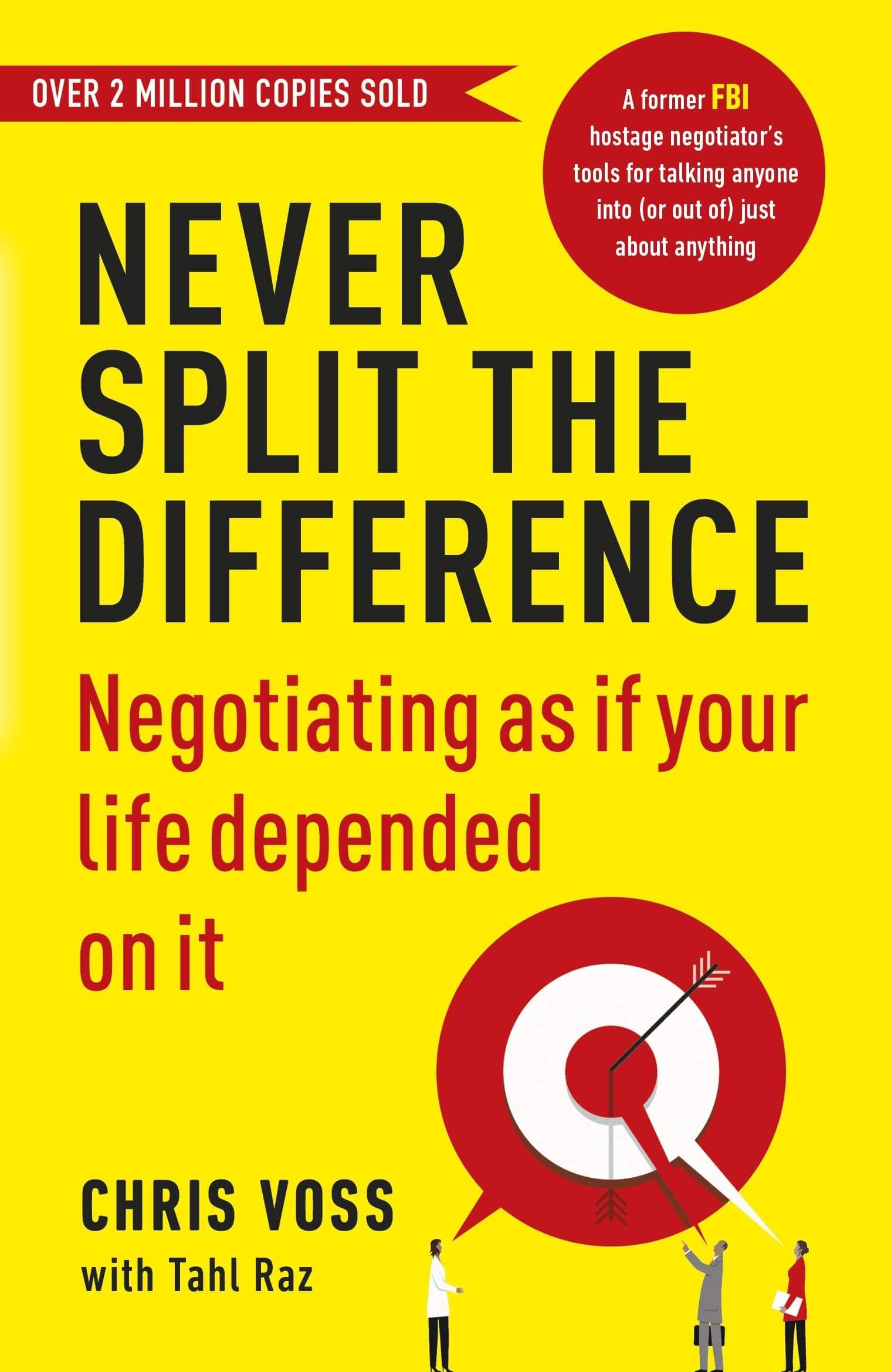
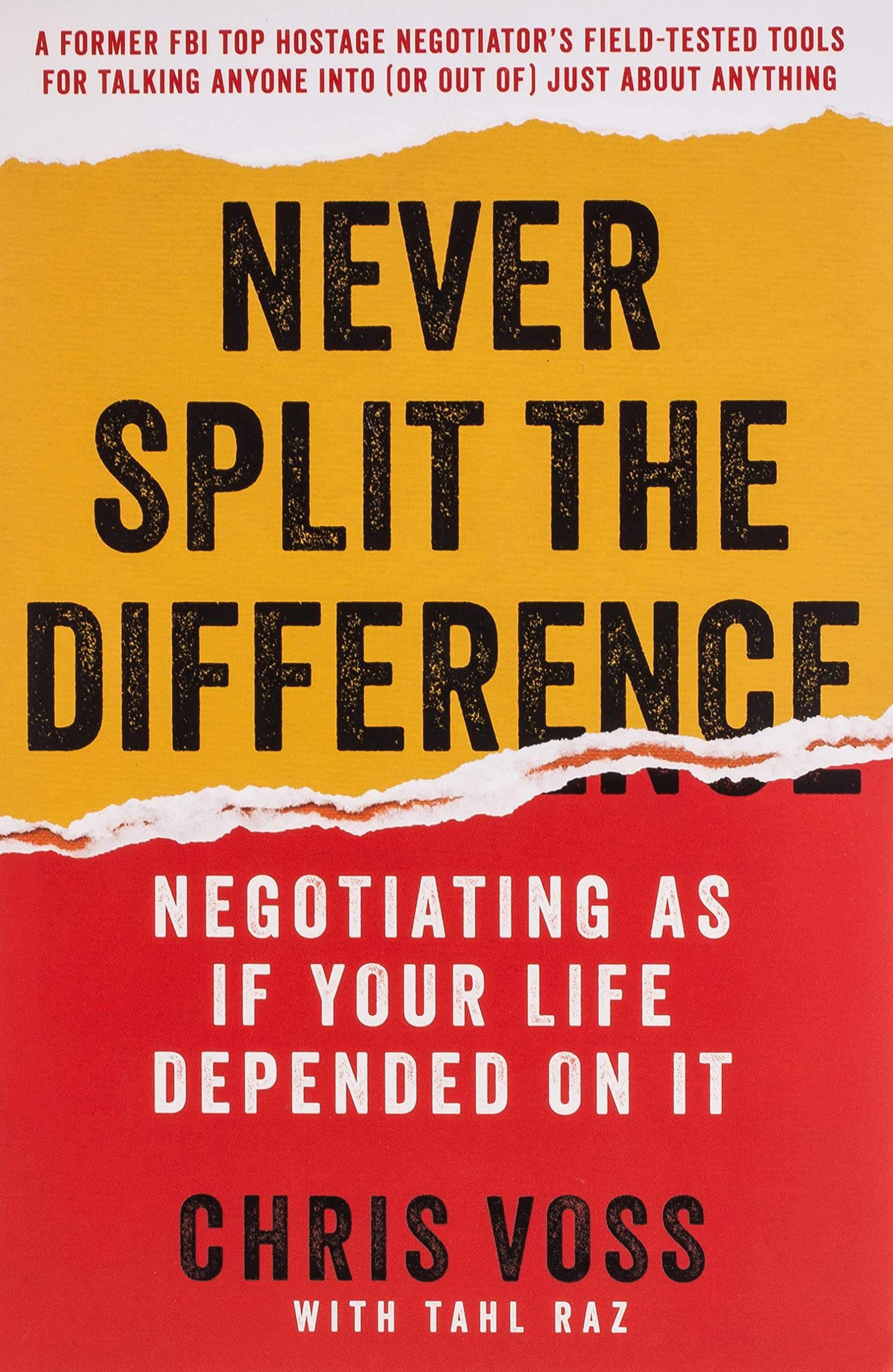
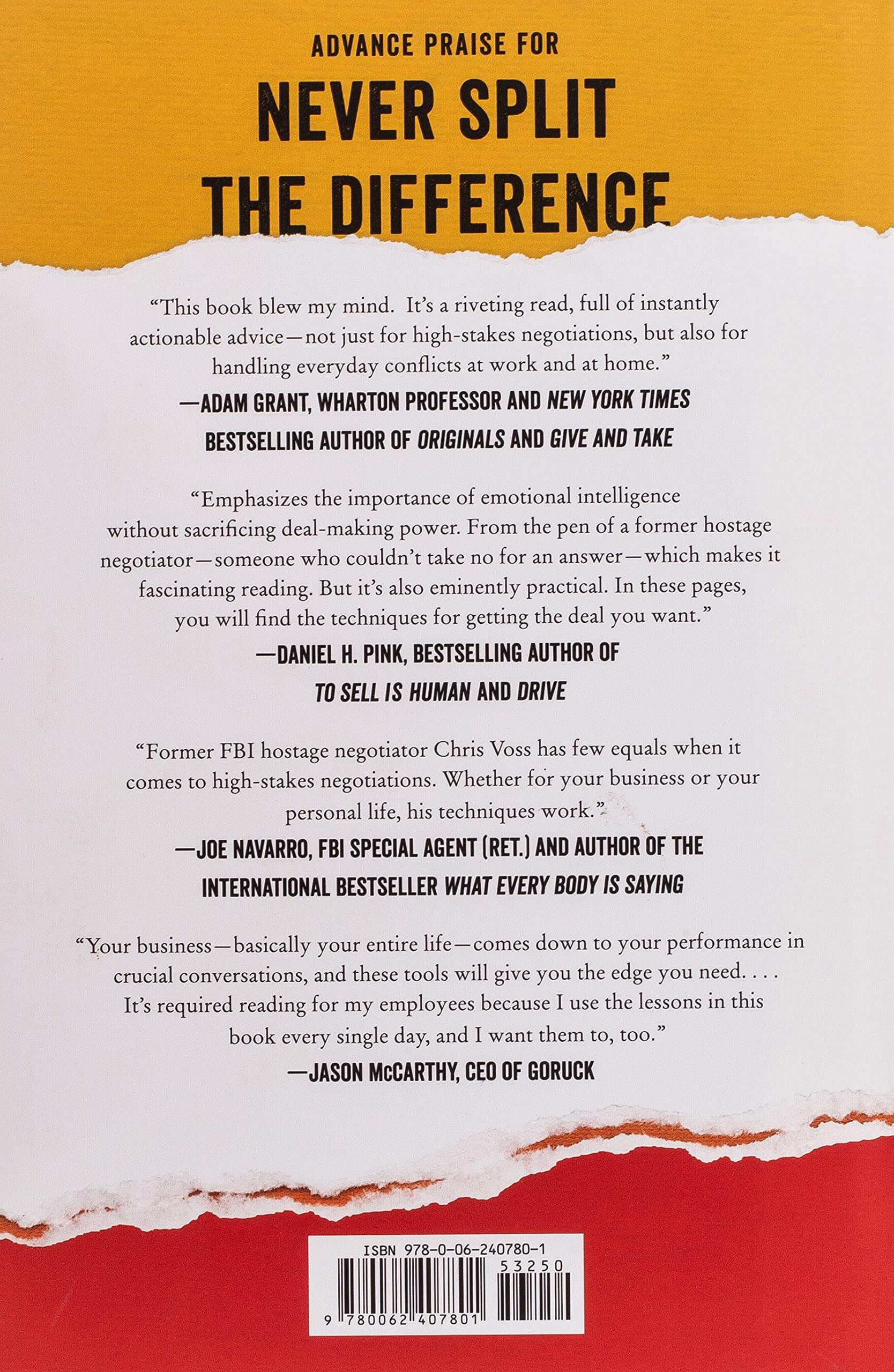

Never split the difference by Chris Voss

රු1,750.00
3 X Rs. 583.33 or 8% Cashback with


or 3 X රු583.33 with


or up to 4 X රු437.50 with


Never Split the Difference by Chris Voss is a bestselling negotiation guide based on lessons from Voss’s career as a former FBI lead international hostage negotiator. Written with Tahl Raz, the book introduces practical techniques including tactical empathy, mirroring, labeling, calibrated questions, no-oriented communication, emotional control and identifying hidden “Black Swans.” Packed with real high-stakes stories and practical applications for business, sales, salary discussions, supplier negotiations and everyday communication, it is an essential read for anyone who wants to negotiate more intelligently and reach stronger agreements.
Out of stock
Email when stock available
Never Split the Difference by Chris Voss is a practical and fascinating guide to negotiation from a former FBI lead international hostage negotiator who learned how to communicate when misunderstanding, pressure and poor decisions could have life-or-death consequences.
Most people imagine negotiation as a battle.
One person wants a higher price.
The other wants a lower price.
Each side argues.
Eventually they meet somewhere in the middle.
Chris Voss challenges that traditional picture.
Drawing on decades of high-stakes negotiation experience, he argues that successful negotiation depends less on overpowering the other person and more on understanding:
What they actually want.
What they fear.
What they are not saying.
What is preventing agreement.
And how they see the situation.
The book introduces practical techniques such as:
Tactical empathy.
Mirroring.
Labeling emotions.
Calibrated questions.
No-oriented questions.
Accusation audits.
Careful tone of voice.
Summarizing.
Finding hidden information or “Black Swans.”
And structured bargaining.
These tools are presented through dramatic hostage-negotiation stories as well as examples from:
Business.
Sales.
Salary negotiations.
Contracts.
Buying and selling.
Workplace conversations.
Relationships.
Everyday disagreements.
Never Split the Difference by Chris Voss is not simply about getting a lower price or winning an argument.
Its deeper lesson is that negotiation is fundamentally about human behavior.
If you understand how people:
Feel.
React.
Protect themselves.
Make decisions.
And interpret risk,
you can communicate much more effectively.
Never Split the Difference by Chris Voss – Book Overview
Never Split the Difference by Chris Voss begins from an unusual professional background.
Chris Voss spent 24 years with the FBI and eventually became its lead international hostage negotiator. His work involved kidnappings, hostage situations and other negotiations where the stakes were extraordinarily high.
Those experiences taught him something important:
People do not make decisions using pure logic alone.
Emotion matters.
Fear matters.
Status matters.
The feeling of being respected matters.
The feeling of being heard matters.
A technically perfect argument can fail if the other person feels ignored or threatened.
Negotiation Is Everywhere
You may think:
“I am not a salesperson. Why do I need negotiation?”
But negotiation happens constantly.
You negotiate:
Salary.
Deadlines.
Prices.
Responsibilities.
Work schedules.
Business contracts.
Supplier terms.
Family decisions.
Client expectations.
Project scope.
Delivery dates.
Even questions such as:
“Who is doing this task?”
can become negotiations.
That is why Never Split the Difference by Chris Voss has relevance far beyond professional negotiators.
Tactical Empathy
One of the central concepts in the book is tactical empathy.
Empathy is sometimes misunderstood as:
Agreeing.
Being soft.
Giving the other side what they want.
That is not what Voss means.
Tactical empathy is about accurately recognizing the other person’s perspective and showing them that you understand it—even when you disagree with it. Black Swan Group describes the approach as deliberately demonstrating understanding of another person’s perspective rather than simply assuming you understand them.
You can understand someone’s position without accepting it.
That distinction is extremely important.
Understanding Is Not Agreement
Suppose a supplier says:
“Our price cannot go lower.”
You can immediately argue:
“Yes, it can. Another supplier is cheaper.”
Or you can first understand the concern.
Perhaps their issue is:
Margin.
Shipping cost.
Payment delay.
Order quantity.
Risk.
Once you know the real concern, the negotiation changes.
People Want to Feel Heard
When people believe nobody is listening, they often repeat themselves more strongly.
They become:
Defensive.
Emotional.
Rigid.
Good negotiation therefore begins with curiosity.
Before trying to persuade, understand.
Mirroring
One famous technique in Never Split the Difference by Chris Voss is mirroring.
A mirror involves repeating a few important words from what the other person just said.
For example:
“We cannot deliver before Friday because the warehouse is overloaded.”
You might respond:
“Warehouse is overloaded?”
Then stop talking.
The other person may naturally explain more.
Black Swan Group continues to teach mirrors as one of its core trust-building techniques alongside labels and calibrated questions.
Why Mirroring Works
Most people respond to a question by explaining.
A mirror can create that same effect without turning the conversation into an interrogation.
It communicates:
I heard that.
Tell me more.
The silence afterward matters.
Silence
Many people become uncomfortable with silence.
They ask a question.
Then immediately speak again.
But silence gives the other person room to think.
In negotiation, unnecessary talking can reveal information you did not intend to reveal.
Listening can be more valuable.
Labeling
Another core technique is labeling.
A label identifies an emotion, concern or perspective.
Examples might be:
“It seems like timing is the biggest concern.”
“It sounds like you are worried about the risk.”
“It looks like this previous experience caused a lot of frustration.”
The purpose is not to tell someone what they feel with absolute certainty.
It is to test your understanding.
Naming Emotion Can Reduce Tension
An unspoken fear can control a conversation.
Once it is acknowledged, people can discuss it.
For example:
A customer says:
“Your price is too high.”
Perhaps the deeper concern is not simply money.
Maybe they fear:
Making a bad purchase.
Explaining the expense to a manager.
Choosing the wrong supplier.
The price objection may be the visible part of a different problem.
The Accusation Audit
Before a difficult negotiation, Voss recommends thinking about the negative things the other side may already believe about you or your proposal.
Perhaps they think:
You are expensive.
You are inexperienced.
You are demanding.
You are going to waste their time.
Instead of pretending those thoughts do not exist, address them proactively.
This is known as an Accusation Audit.
Black Swan Group still describes it as an important negotiation-preparation tool.
Remove the Hidden Objection
When you acknowledge a negative perception before the other person attacks you with it, the conversation can become less defensive.
For example:
“You may feel like we’re asking for too large a discount.”
Now the concern is visible.
You can discuss it.
Calibrated Questions
Another major technique in Never Split the Difference by Chris Voss is the use of calibrated questions.
These are generally open questions beginning with words such as:
What.
How.
And, more selectively, why.
They encourage the other person to think through the problem rather than simply defend a position. Black Swan Group describes calibrated questions as a way to encourage the counterpart to talk, reveal information and participate in finding a solution.
Make the Other Side Solve the Problem
Imagine a customer demands an impossible discount.
Instead of saying:
“No.”
You might ask:
“How could we make that work while still including everything you need?”
Now the conversation becomes a problem-solving exercise.
The other person has to think about the constraints too.
Avoid Aggressive Why Questions
“Why did you do that?”
can sound accusatory.
It can make someone defensive.
A carefully phrased:
“What led to that decision?”
may produce a better answer.
The goal is not simply asking open questions.
The goal is asking questions that keep the other person thinking rather than defending themselves.
The Power of No
Traditional sales advice often teaches:
Get the customer saying yes.
Voss takes a different approach.
Sometimes people feel safer saying:
No.
No gives a feeling of:
Control.
Protection.
Autonomy.
That can make the conversation more comfortable.
No Is Not Always Rejection
If someone says no, the negotiation is not automatically dead.
No may mean:
I am not ready.
I need more information.
I do not understand.
I do not like this version.
I am afraid of committing.
A good negotiator becomes curious about what the no actually means.
No-Oriented Questions
Instead of asking:
“Do you have five minutes to talk?”
a negotiator might use a question that makes no feel safe.
The broader principle is to remove the pressure people sometimes feel when they believe someone is trying to force them toward yes.
That’s Right Versus You’re Right
Never Split the Difference by Chris Voss makes an interesting distinction between hearing:
“That’s right.”
and:
“You’re right.”
They sound similar.
But Voss treats them differently.
“That’s right” can indicate that the other person feels accurately understood.
“You’re right” can sometimes be a polite way of ending an annoying conversation.
The goal is genuine understanding rather than superficial agreement. Black Swan Group continues to describe reaching a “that’s right” response as an important result of tactical empathy.
Summaries
A strong summary combines:
Facts.
Feelings.
Priorities.
Concerns.
If your counterpart responds as though:
“Yes, that is exactly what I mean,”
you have demonstrated that you understand their situation.
That creates a stronger foundation for influence.
Tone of Voice
What you say matters.
How you say it also matters.
A calm voice can reduce tension.
An aggressive voice can make an ordinary question sound threatening.
Never Split the Difference by Chris Voss therefore pays considerable attention to vocal delivery.
The Late-Night FM DJ Voice
Voss describes using a calm, slow, reassuring tone in certain high-pressure situations.
The principle is straightforward:
Calm can influence calm.
Escalation can create more escalation.
When someone becomes emotional, matching their aggression may make the situation worse.
Emotional Control
Negotiation becomes much harder when ego takes over.
Suppose someone insults your offer.
Your instinct may be:
Defend yourself.
Attack them.
Prove them wrong.
But now the negotiation is no longer about achieving a useful outcome.
It has become about winning emotionally.
Do Not Negotiate Against Yourself
One common mistake is making concessions before the other person even asks for them.
You say:
“The price is Rs. 10,000, but I can probably do Rs. 9,000.”
The customer said nothing.
You negotiated with yourself.
Patience can prevent unnecessary concessions.
Never Split the Difference
What does the title actually mean?
It does not mean every compromise is always bad.
The warning is against treating the midpoint as automatically fair or intelligent.
Imagine:
One person wants something at 10.
The other wants it at 0.
Splitting the difference gives 5.
But why should 5 be correct?
Maybe the true value is 8.
Maybe it is 2.
The midpoint alone tells you nothing.
Compromise Can Produce a Bad Result
Imagine two people negotiating over a product.
One wants it delivered correctly.
The other proposes delivering only half correctly.
Meeting halfway would be absurd.
Some issues cannot be solved by averaging positions.
Good negotiation looks for the underlying problem rather than mechanically finding the middle.
Fairness
The word fair can become emotionally powerful in negotiation.
People strongly dislike feeling cheated.
But “fair” can also be used strategically.
Someone may say:
“I just want a fair deal.”
Of course.
Almost everyone does.
The important question is:
What does fair mean in this specific situation?
Loss Aversion
People often feel the pain of losing something more strongly than the pleasure of gaining something comparable.
This has important implications for negotiation.
A proposal framed around:
“What you risk losing”
may sometimes feel more urgent than one framed only around:
“What you could gain.”
Deadlines
Deadlines create pressure.
But people sometimes treat them as more absolute than they really are.
Before making a poor deal simply because of a deadline, ask:
What actually happens if the deadline passes?
Is it real?
Flexible?
Internal?
Artificial?
Information reduces unnecessary pressure.
Hidden Information
A major negotiation can appear impossible because one critical piece of information is missing.
Voss uses the term Black Swan for highly valuable hidden information that can transform your understanding of the negotiation.
Black Swans
Imagine you are negotiating with a supplier who refuses to reduce price.
You assume:
They are greedy.
Later you discover:
They cannot reduce the unit price, but they desperately need a larger order before month-end.
Now you might negotiate:
Higher quantity.
Better payment terms.
Free shipping.
Extra services.
The original disagreement was not the complete picture.
Find What Matters Differently
A strong negotiation often involves things that have different values to each side.
Something cheap for them may be valuable to you.
Something valuable to them may be easy for you to provide.
That creates room for better outcomes without simply cutting the difference in half.
Black Swan Group similarly emphasizes identifying different value perceptions to create more possible solutions.
Negotiating Price
Price negotiation is one of the most obvious uses for Never Split the Difference by Chris Voss.
But price should rarely be the only variable.
You can also negotiate:
Quantity.
Delivery.
Payment timing.
Warranty.
Support.
Contract length.
Scope.
Extras.
Deadlines.
The Ackerman Model
The book also introduces a structured bargaining approach commonly known as the Ackerman model.
Its broader lesson is that monetary negotiation should be planned before the conversation.
Know:
Your target.
Your limits.
Your concession pattern.
What non-monetary terms matter.
Randomly reducing your price under pressure is usually weaker than having a strategy.
Exact Numbers
Specific numbers can sometimes appear more carefully calculated than round numbers.
For example:
Rs. 187,500
may psychologically appear as though it came from a real calculation, while:
Rs. 200,000
can sound like a broad estimate.
That does not magically guarantee agreement, but presentation affects perception.
Prepare Before Negotiating
One of the most practical lessons in Never Split the Difference by Chris Voss is preparation.
Before negotiating, consider:
What do I want?
What might they want?
What are they afraid of?
What might they accuse me of?
What information am I missing?
What questions should I ask?
What terms besides money matter?
Black Swan Group continues to offer a “Negotiation One Sheet” based on preparation concepts discussed in the book.
Negotiation in Business
Business owners can use these concepts when negotiating with:
Suppliers.
Customers.
Employees.
Landlords.
Partners.
Investors.
Service providers.
Supplier Negotiation
Suppose a supplier says:
“This is our final price.”
Instead of instantly asking for 10% less, explore:
What quantity changes the price?
What payment method helps?
What delivery schedule matters?
What inventory are they trying to clear?
What other terms can change?
The best information may appear after the price conversation.
Sales
Salespeople sometimes talk too much.
They explain:
Every feature.
Every benefit.
Every specification.
But good negotiation and good sales both require understanding the customer’s world.
Ask.
Listen.
Label concerns.
Discover the real decision criteria.
Customer Objections
A customer says:
“Too expensive.”
Weak response:
“But ours is high quality.”
Better response:
Understand what “too expensive” means.
Compared with what?
Is budget really the problem?
Are they worried about value?
Cash flow?
Approval?
Risk?
Salary Negotiation
Never Split the Difference by Chris Voss can also help with salary conversations.
Instead of focusing only on:
“I want more money,”
understand:
What does the organization value?
What problems can you solve?
What constraints does the manager face?
What other benefits could matter?
Workplace Communication
Negotiation skills can improve conversations involving:
Deadlines.
Workload.
Responsibilities.
Promotions.
Performance.
Remote work.
Team conflict.
Not every negotiation involves money.
Leadership
Leaders negotiate constantly.
A manager cannot simply order people to genuinely care.
Leadership requires:
Understanding.
Communication.
Trust.
Influence.
Good listening therefore becomes a leadership skill.
Relationships
The techniques can also be useful outside business.
But they should not be used to manipulate partners or family members.
Tactical empathy works best when the goal is genuinely understanding another person’s perspective.
Ethical Negotiation
This point matters.
A communication technique can be used ethically or manipulatively.
If you use empathy only to trick someone into doing something harmful to themselves, that is not healthy communication.
The strongest long-term negotiation outcomes preserve:
Trust.
Reputation.
Relationships.
Win-Win Does Not Mean 50/50
A good deal does not necessarily mean both sides receive identical value.
It means both sides prefer the agreement to the realistic alternatives.
One side may care deeply about price.
The other may care more about speed.
Recognizing different priorities can create a better agreement.
Negotiation Is Information Discovery
This may be the biggest shift in Never Split the Difference by Chris Voss.
Do not think:
How do I convince them?
Think:
What do I still need to understand?
Negotiation becomes less about performing and more about discovering.
Curiosity
Curiosity is one of the most underrated negotiation skills.
When someone says something surprising, resist the urge to attack immediately.
Ask:
What is behind that?
What information am I missing?
Listening
Most people do not listen.
They wait for their opportunity to speak.
Negotiation requires deeper listening.
Listen for:
Facts.
Emotion.
Priorities.
Fear.
Contradictions.
Things that are deliberately avoided.
Labels and Mirrors Together
Mirrors help the other person continue talking.
Labels show that you understand the emotional meaning.
Calibrated questions help explore the problem.
Summaries bring the information together.
Black Swan Group still teaches these techniques as interconnected tools rather than isolated tricks.
Negotiation Is Not Magic
No technique guarantees success.
You can use perfect communication and still face:
A bad offer.
An unreasonable person.
No budget.
No authority.
No common ground.
Sometimes the best negotiation outcome is walking away.
Know Your Limits
Before entering a negotiation, know what you cannot accept.
Otherwise, pressure can push you into a deal you later regret.
A successful negotiation is not:
“I got them to say yes.”
It is:
“I reached an agreement that actually works.”
Implementation Matters
A deal that looks excellent on paper can fail during implementation.
Can the supplier actually deliver?
Can your company meet the promised deadline?
Did everyone who needs to approve the agreement agree?
Black Swan Group emphasizes calibrated questions that test implementation problems and the concerns of people who are not directly at the negotiating table.
Decision Makers
One common mistake is assuming the person you are speaking with has complete authority.
Ask:
Who else is involved?
What does their manager think?
What will finance say?
Who can stop the deal?
Understanding the decision structure prevents surprises.
Negotiation and Entrepreneurship
Entrepreneurs negotiate almost everything:
Rent.
Software.
Supplier pricing.
Hiring.
Freelancers.
Investor terms.
Partnerships.
Customer contracts.
Because cash is limited, better negotiation can have a direct effect on survival.
Small Business Example
Imagine a bookstore negotiating with a wholesaler.
Instead of asking only:
“Can you reduce the price?”
you could investigate:
What quantity qualifies for better pricing?
Can damaged copies be returned?
Can shipping be combined?
Can payment be delayed?
Can slow-moving titles be exchanged?
Can popular titles receive priority allocation?
Now negotiation becomes about the entire commercial relationship.
Procurement
For procurement teams, Never Split the Difference by Chris Voss is particularly relevant.
The goal should not always be:
Force the supplier to the lowest possible number.
Destroying supplier margin may create:
Poor service.
Quality issues.
Delayed delivery.
Relationship damage.
A sustainable deal may be more valuable than a temporary victory.
Sales Negotiation
The same principle works from the other side.
A salesperson should understand why the customer is negotiating.
Do they truly need a lower price?
Or do they need to feel they received a meaningful concession?
Understanding the motivation matters.
Negotiating Under Pressure
Pressure reduces clear thinking.
That is why preparation matters.
You do not want to invent your strategy while:
Angry.
Scared.
Excited.
Desperate.
Emotional Regulation
If you can remain calm while the other side becomes emotional, you gain an important advantage.
Not because you can dominate them.
Because you can still think.
Ego Is Expensive
The need to prove:
“I won.”
can destroy value.
Sometimes the strongest move is allowing the other person to feel they have control while you continue guiding the conversation toward a workable outcome.
Is Never Split the Difference a Business Book?
Yes.
Penguin categorizes it within business and presents it as a negotiation book applicable well beyond FBI hostage situations.
It is particularly relevant to:
Sales.
Leadership.
Management.
Entrepreneurship.
Procurement.
Business development.
Communication.
Is Never Split the Difference Only for Salespeople?
No.
Negotiation happens wherever people have different:
Preferences.
Priorities.
Constraints.
Expectations.
The techniques can be useful for professionals, managers, business owners and everyday conversations.
Is It Based on Real Experience?
Yes.
Voss draws extensively from his FBI negotiation career. Penguin states that he spent 24 years with the FBI and ultimately became the bureau’s lead international hostage negotiator.
The book connects those experiences with lower-stakes business and personal negotiations.
Is Never Split the Difference Difficult to Read?
No.
Although it deals with psychology and negotiation, the book is written in an accessible style.
Real cases help explain abstract concepts.
Readers do not need formal business or psychology training.
Do You Need Negotiation Experience First?
No.
Beginners can use it as an introduction.
Experienced negotiators may recognize familiar situations but gain a different framework for:
Listening.
Emotion.
Questions.
Preparation.
Chris Voss
Chris Voss spent 24 years with the FBI and later taught negotiation in university settings, including Georgetown University’s McDonough School of Business. He also founded the Black Swan Group, which applies negotiation techniques to professional and business environments.
Tahl Raz
The book was written with Tahl Raz, a writer known for collaborating on business and nonfiction books.
For accurate website metadata, you can list:
Chris Voss with Tahl Raz
or
Chris Voss, Tahl Raz
depending on how your WooCommerce author field is structured.
Official UK Edition Details
For the edition that appears to correspond most closely with your stock:
Title: Never Split the Difference
Subtitle: Negotiating as if Your Life Depended on It
Authors: Chris Voss and Tahl Raz
Imprint: Random House Business
Format: Paperback
Pages: 288
ISBN-13: 9781847941497
Current paperback edition date: January 19, 2023
Dimensions: 197 × 128 × 18 mm
Weight: approximately 200 g.
Inventory ISBN Correction
Your inventory currently records:
9781847941490.
Penguin’s official ISBN is:
9781847941497.
I recommend checking the barcode on the actual book before editing the product, but 1497 is the official UK paperback ISBN.
Important Concepts
Never Split the Difference by Chris Voss explores negotiation, tactical empathy, mirroring, labeling, calibrated questions, active listening, emotional intelligence, bargaining, persuasion, decision-making, communication, Black Swans, preparation, business negotiation, supplier negotiation, sales, leadership, conflict resolution and human psychology.
7 Powerful Lessons From Never Split the Difference by Chris Voss
- Understand before trying to persuade. Tactical empathy helps you recognize the other person’s perspective and demonstrate that you have genuinely heard their concerns.
- Listen for what is not being said. The most valuable information in a negotiation may be hidden behind an objection, fear or unstated priority.
- Use calibrated questions to make problems collaborative. Thoughtful “what” and “how” questions can encourage the other person to participate in finding a workable solution instead of simply defending a position.
- Do not chase yes at any cost. Allowing someone to say no can reduce pressure and create a greater sense of safety and control.
- Never assume the midpoint is automatically the best deal. Splitting the difference can ignore the actual value, constraints and interests behind each side’s position.
- Control your own emotions before trying to influence someone else’s. Ego, anger and desperation can cause unnecessary concessions and poor decisions.
- Search for the Black Swan. A hidden piece of information can completely change the negotiation, so remain curious until you understand what truly matters to the other side.
Why Read Never Split the Difference by Chris Voss?
Never Split the Difference by Chris Voss is an excellent choice for readers interested in:
Negotiation.
Sales.
Business.
Entrepreneurship.
Leadership.
Communication.
Psychology.
Persuasion.
Procurement.
Salary negotiation.
Conflict resolution.
Customer management.
Supplier management.
Emotional intelligence.
Decision-making.
It is particularly valuable because its techniques are practical.
You can finish a chapter and immediately experiment with:
Listening more carefully.
Mirroring.
Labeling concerns.
Asking better questions.
Preparing for difficult conversations.
Who Should Read This Book?
Never Split the Difference by Chris Voss may especially appeal to business owners, salespeople, managers, entrepreneurs, procurement professionals, freelancers, consultants, students, job seekers, customer-service professionals, leaders and anyone who regularly needs to reach agreements with other people.
You do not need to negotiate million-dollar contracts to benefit.
Sometimes the most important negotiation is simply learning how to have one difficult conversation without turning it into a fight.
Never Split the Difference by Chris Voss – Negotiation Begins With Understanding
Never Split the Difference by Chris Voss changes the way many readers think about negotiation.
The traditional image is confrontation.
You have your position.
They have theirs.
You push.
They push.
Eventually somebody gives up.
Voss presents something more sophisticated.
Listen.
Understand.
Find the emotion beneath the position.
Ask better questions.
Identify hidden constraints.
Discover what matters.
Then negotiate.
That approach can feel slower at first.
But it often produces information that aggressive bargaining misses.
A customer saying:
“Too expensive”
may not actually need the cheapest option.
A supplier saying:
“No discount”
may have flexibility elsewhere.
An employee asking for more money may also value:
Flexibility.
Training.
Responsibility.
Recognition.
A manager rejecting your proposal may be worried about another decision maker who is not even in the room.
Once those hidden factors become visible, the negotiation changes.
That is the deeper meaning behind Never Split the Difference by Chris Voss.
Negotiation is not simply trading numbers.
It is discovering reality.
Who is involved?
What matters?
What is feared?
What is hidden?
What is possible?
And what agreement can actually work?
The strongest negotiator is therefore not necessarily the loudest person.
Or the most aggressive.
Or the person with the best speech.
It may be the person who listens long enough to understand what everyone else missed.
Learn more about Never Split the Difference by Chris Voss on The Black Swan Group’s official website.
Explore more negotiation and business books at Bargain Books.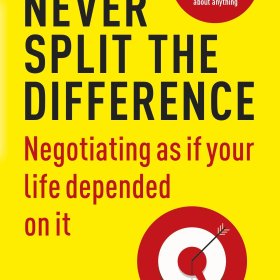
| Author | Chris Voss |
|---|---|
| Language | English |
| Type | Paperback Printed Book (Second Quality Copy) |
Be the first to review “Never split the difference by Chris Voss”
Related products
-23%

Non-Fiction & Knowledge
Original price was: රු2,200.00.රු1,700.00Current price is: රු1,700.00.
3 X Rs. 566.67 or 8% Cashback with
or 3 X රු566.67 with
or up to 4 X රු425.00 with

Non-Fiction & Knowledge
රු1,550.00
3 X Rs. 516.67 or 8% Cashback with
or 3 X රු516.67 with
or up to 4 X රු387.50 with
Non-Fiction & Knowledge
රු2,450.00
3 X Rs. 816.67 or 8% Cashback with
or 3 X රු816.67 with
or up to 4 X රු612.50 with
-26%
Out of stock
Non-Fiction & Knowledge
Original price was: රු2,000.00.රු1,490.00Current price is: රු1,490.00.
3 X Rs. 496.67 or 8% Cashback with
or 3 X රු496.67 with
or up to 4 X රු372.50 with
-24%
Out of stock
Non-Fiction & Knowledge
Original price was: රු2,100.00.රු1,600.00Current price is: රු1,600.00.
3 X Rs. 533.33 or 8% Cashback with
or 3 X රු533.33 with
or up to 4 X රු400.00 with
-33%

Self-Help & Psychology
Original price was: රු2,300.00.රු1,550.00Current price is: රු1,550.00.
3 X Rs. 516.67 or 8% Cashback with
or 3 X රු516.67 with
or up to 4 X රු387.50 with
Out of stock
Self-Help & Psychology
රු1,900.00
3 X Rs. 633.33 or 8% Cashback with
or 3 X රු633.33 with
or up to 4 X රු475.00 with
Out of stock
Self-Help & Psychology
රු2,200.00
3 X Rs. 733.33 or 8% Cashback with
or 3 X රු733.33 with
or up to 4 X රු550.00 with
Reviews
There are no reviews yet.