
No products in the cart.
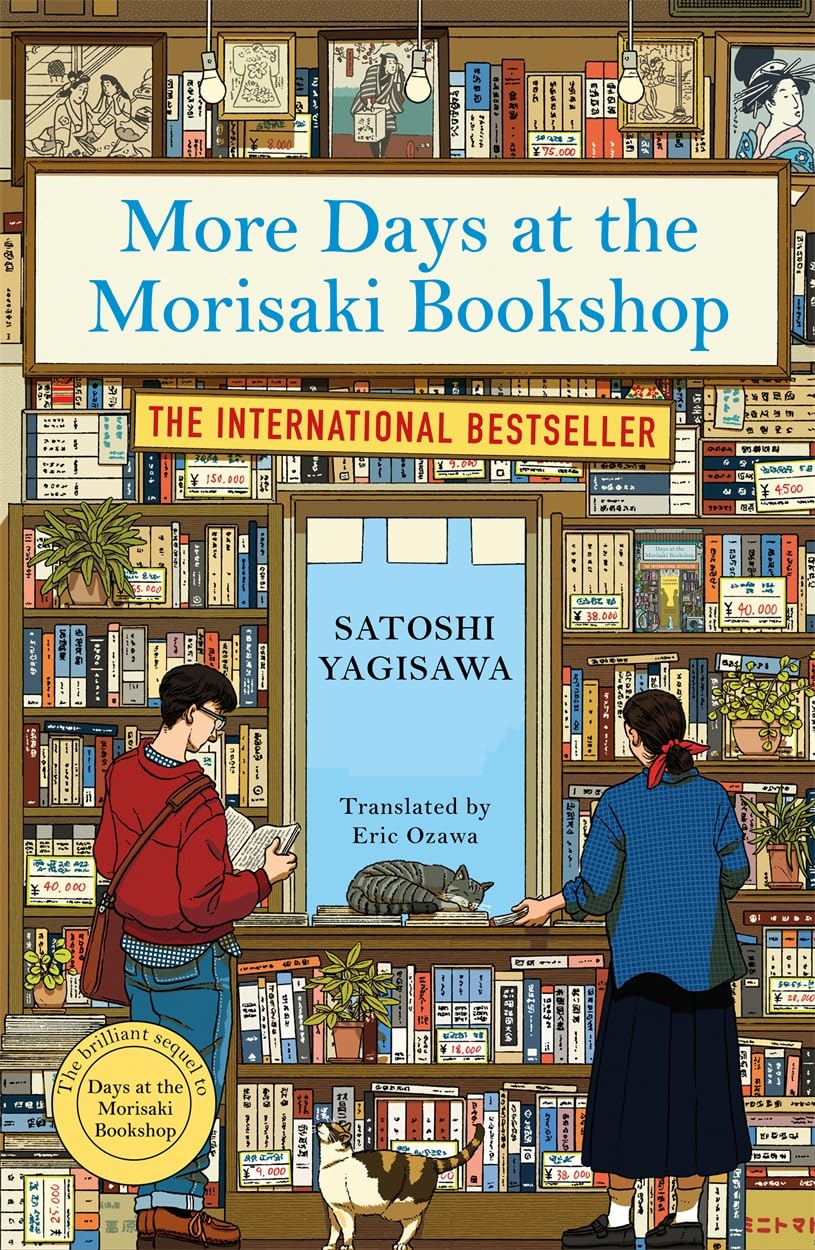
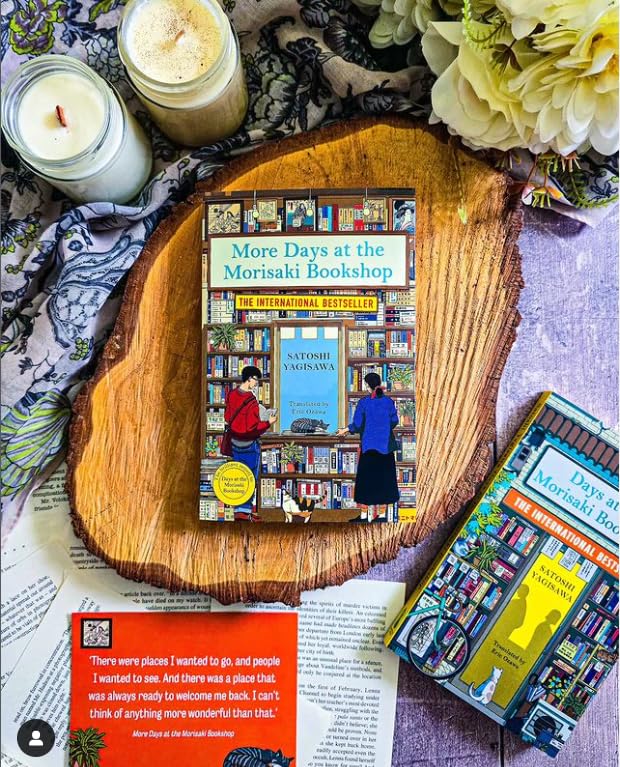
More Days at the Morisaki Bookshop by Satoshi Yagisawa


රු1,600.00
3 X Rs. 533.33 or 8% Cashback with


or 3 X රු533.33 with


or up to 4 X රු400.00 with


More Days at the Morisaki Bookshop by Satoshi Yagisawa is the heartfelt sequel to Days at the Morisaki Bookshop. Returning to Tokyo’s beloved Jinbocho book district, the novel follows Takako, her uncle Satoru, Momoko and the community surrounding their tiny second-hand bookshop as they navigate friendship, family, love, grief and change. Warm, reflective and deeply comforting, it is an ideal read for book lovers and fans of Japanese slice-of-life fiction.
Out of stock
Email when stock available
More Days at the Morisaki Bookshop by Satoshi Yagisawa is a warm, reflective Japanese novel about books, family, friendship, love, change and the quiet ways people help one another through difficult moments.
The story returns readers to Jinbocho, Tokyo’s famous book district, and to the small family-run Morisaki Bookshop.
The shelves are crowded.
Books seem to occupy every available corner.
Uncle Satoru remains behind the counter.
Momoko is once again part of the shop’s daily life.
And Takako, whose life changed so deeply through her connection with the bookshop, continues visiting and helping whenever she can.
At first glance, little seems to have changed.
But life never remains completely still.
Relationships develop.
People face new difficulties.
Friendships deepen.
Love becomes more complicated.
Loss arrives unexpectedly.
And the characters discover once again that books cannot solve every problem—but the people we meet through them can make difficult times easier to endure.
More Days at the Morisaki Bookshop continues the gentle atmosphere that made the first novel so comforting while exploring more mature emotional themes involving family, grief, companionship and the importance of being present for the people we love.
It is an ideal read for anyone who enjoys:
Bookshop fiction.
Japanese contemporary fiction.
Comforting stories.
Quiet character-driven novels.
Books about books.
Found family.
Friendship.
Healing.
Everyday life.
And emotional stories that find meaning in small moments.
More Days at the Morisaki Bookshop – Book Overview
More Days at the Morisaki Bookshop brings readers back to the world introduced in Days at the Morisaki Bookshop.
Takako is no longer exactly the person she was when she first arrived at her uncle’s second-hand bookshop.
In the first story, the Morisaki Bookshop became a place where she could recover from heartbreak and begin rebuilding her life.
Books became part of that healing.
But so did the people around her.
Now the sequel broadens the story.
Instead of focusing only on Takako’s personal recovery, the novel turns more attention toward the relationships that have formed around the bookshop.
Returning to Jinbocho
Jinbocho is central to the atmosphere of the novel.
This Tokyo neighborhood is famous for its bookstores, publishers and literary culture.
For book lovers, it feels almost like a city within a city.
Second-hand books.
Rare editions.
Small bookshops.
Cafés.
Narrow shelves.
Quiet conversations.
The Morisaki Bookshop belongs naturally in this world.
The Morisaki Bookshop
The bookshop is small.
Very small.
Books fill the shelves and spill into almost every available space.
But its physical size does not reflect its emotional importance.
For the characters, the shop becomes:
A workplace.
A meeting place.
A refuge.
A family space.
A connection to memory.
A bridge between strangers.
That is one of the major charms of More Days at the Morisaki Bookshop.
The bookshop is not merely a setting.
It becomes part of the emotional life of everyone around it.
Takako
Takako remains one of the central characters.
Readers who followed her through the first novel will recognize how much she has changed.
She has experienced heartbreak.
Isolation.
Confusion.
And gradual recovery.
Her relationship with books helped open another part of her life.
But the sequel shows that healing does not mean every future problem disappears.
Growth continues.
Life After Healing
One powerful idea in More Days at the Morisaki Bookshop is that personal recovery is not a final destination.
You do not suddenly become:
Completely healed.
Completely confident.
Completely certain.
Life keeps changing.
New relationships appear.
Old relationships evolve.
New worries replace old ones.
Healing gives you new ways to face them.
Uncle Satoru
Satoru remains the heart of the Morisaki Bookshop.
He is eccentric, warm and deeply connected to the store.
His life is not built around conventional definitions of success.
The bookshop matters to him because it represents:
Books.
Family.
History.
Community.
A way of living.
Through Satoru, the novel quietly asks what makes a life valuable.
Momoko
Momoko’s presence becomes especially important.
Her relationship with Satoru brings tenderness, complexity and emotional depth to the story.
She is not simply another character in the background.
Her presence influences Takako and the wider Morisaki family.
The relationships between Takako, Satoru and Momoko help give the sequel much of its emotional power.
Family
Family is one of the strongest themes in More Days at the Morisaki Bookshop.
But family here is not portrayed as perfectly harmonious.
People misunderstand each other.
They worry.
They avoid difficult conversations.
They sometimes fail to say what they truly feel.
That is what makes the relationships believable.
Love Does Not Always Look Dramatic
The novel is interested in quieter forms of love.
Making time for someone.
Showing up.
Remembering small details.
Sitting together.
Working beside each other.
Helping without demanding recognition.
These actions may look ordinary.
But ordinary care can become extraordinary when someone is struggling.
Friendship
Friendship also matters deeply.
Some relationships begin through:
The bookstore.
Coffee shops.
Shared interests.
Books.
Ordinary conversations.
Over time, those small encounters become important.
Books Bring People Together
One of the most comforting ideas in More Days at the Morisaki Bookshop is that books can create connections between people who might otherwise never meet.
Someone recommends a novel.
Another person begins reading.
A conversation starts.
Friendship follows.
Books become more than objects.
They become invitations.
Books as Comfort
Readers often turn to books during difficult periods.
Why?
Because a book provides:
Company.
Perspective.
Escape.
Recognition.
Sometimes you read about a character and think:
Someone else understands this feeling.
That recognition can be powerful.
Books Cannot Fix Everything
At the same time, the novel does not treat books as magical solutions.
Reading cannot prevent every:
Loss.
Illness.
Heartbreak.
Disappointment.
But books can help people process experience.
And bookshops can become places where human connection happens.
A Bookshop as a Safe Place
Many readers understand the feeling of entering a bookstore and immediately slowing down.
Outside:
Traffic.
Work.
Messages.
Deadlines.
Inside:
Shelves.
Quiet.
Possibility.
A bookshop can create temporary distance from everyday pressure.
The Morisaki Bookshop captures that feeling beautifully.
The Beauty of Small Spaces
The shop is not glamorous.
It is cramped.
Old-fashioned.
Packed with books.
Yet readers may find it more emotionally appealing than a huge modern store.
Why?
Because it feels personal.
Every shelf has history.
Every customer feels visible.
Smallness creates intimacy.
Japanese Slice-of-Life Fiction
More Days at the Morisaki Bookshop fits naturally with readers who enjoy Japanese slice-of-life fiction.
These stories often focus less on enormous plot twists and more on:
Daily routines.
Relationships.
Food.
Work.
Weather.
Neighborhoods.
Small emotional changes.
The drama comes from ordinary life.
Quiet Fiction
Some novels ask:
Can the hero save the world?
This novel asks quieter questions.
Can people understand each other better?
Can someone survive grief?
Can relationships recover?
Can books make life less lonely?
For some readers, these smaller questions feel more personal.
Healing
Healing remains an important theme.
But healing is not presented as forgetting.
People carry memories.
Past relationships remain part of them.
Loss remains meaningful.
Healing means learning how to continue living while carrying what happened.
Grief
The sequel moves into deeper territory around grief and loss.
This gives More Days at the Morisaki Bookshop a more emotional tone than readers might initially expect from its cozy setting.
The warmth remains.
But so does sadness.
Comfort and Sadness Can Exist Together
A comforting book does not need to avoid difficult emotions.
In fact, comfort can feel stronger when the story acknowledges that life includes:
Loss.
Loneliness.
Uncertainty.
Change.
The comfort comes from discovering that people do not always have to face those experiences alone.
Community
The world around the Morisaki Bookshop forms a small community.
Regular customers.
Friends.
Family.
People from nearby cafés.
The novel demonstrates how repeated ordinary interactions can create belonging.
Belonging
Belonging does not always come from finding hundreds of people.
Sometimes it comes from:
One shop.
One neighborhood.
A handful of familiar faces.
People who notice when you are absent.
That is enough to change how a place feels.
Loneliness
Loneliness appears throughout the Morisaki stories.
People can feel lonely even when surrounded by others.
What reduces loneliness is not simply physical company.
It is connection.
Being understood.
Being remembered.
Being able to speak honestly.
Conversations Matter
Some of the most meaningful moments in More Days at the Morisaki Bookshop are built around conversation rather than dramatic action.
Someone says something they had avoided saying.
Someone finally listens.
Someone reveals a fear.
The relationship changes slightly.
These moments feel realistic because many important life changes happen through conversation.
Listening
People often listen while preparing their own reply.
Real listening is different.
It requires attention.
In the Morisaki world, listening becomes a form of care.
Romance
Romantic relationships appear in the story, but More Days at the Morisaki Bookshop should not be categorized primarily as a romance novel.
Love is part of the book.
But so are:
Family.
Friendship.
Books.
Grief.
Community.
Personal growth.
The emotional focus is broader.
Love Changes Over Time
New love can feel exciting.
Long-term love can look quieter.
Shared routines.
Patience.
Forgiveness.
Care.
The novel gives space to different stages of relationships.
Relationships Are Imperfect
People sometimes imagine the perfect relationship as one without misunderstandings.
Real relationships are messier.
People:
Say the wrong thing.
Avoid conversations.
Misread each other.
Become afraid.
The important question is whether people are willing to reconnect.
Memory
Bookshops are filled with memory.
An old book may once have belonged to someone else.
A note may be written inside.
A name may appear on the first page.
Used books remind us that objects can pass through many lives.
Second-Hand Books
The Morisaki Bookshop specializes in second-hand books.
That detail beautifully reflects one of the novel’s deeper themes.
A used book is not useless because someone else has already read it.
It can begin another life with another reader.
People can also begin again.
New Chapters
A difficult chapter is still only a chapter.
Takako’s earlier heartbreak did not become the entire story of her life.
The sequel itself demonstrates this.
There are more days.
More experiences.
More relationships.
More possibilities.
That makes the title especially meaningful.
The Meaning of More Days
More Days at the Morisaki Bookshop suggests continuation.
Life did not end after the first book.
People did not become frozen at the moment the previous story finished.
There are always more days.
Some joyful.
Some painful.
Some ordinary.
And ordinary days may become precious in retrospect.
The Value of Ordinary Life
The book does not require its characters to become famous or extraordinary.
Meaning can exist in:
Opening the shop.
Making coffee.
Talking to someone.
Reading.
Walking through Jinbocho.
Sharing dinner.
Being present.
Slow Living
Readers interested in slow-living themes may especially enjoy the book.
The Morisaki environment encourages a slower rhythm.
Browse books.
Sit in a café.
Have a conversation.
Notice the neighborhood.
The novel reminds readers that life does not need to move at maximum speed all the time.
Modern Life and Busyness
Modern culture often celebrates constant activity.
More work.
More goals.
More productivity.
The Morisaki books offer a quieter alternative.
Sometimes the meaningful thing is simply:
Being there.
Reading as a Form of Slowing Down
Reading itself requires slowing down.
One page.
Then another.
Unlike endless scrolling, a book creates a defined space for attention.
That makes a novel about bookshops feel especially fitting.
Japanese Book Culture
The setting gives international readers a glimpse into Japan’s rich culture of independent and second-hand bookshops.
Jinbocho is particularly associated with books and literary life.
This cultural setting adds much of the novel’s charm.
Translation
The English edition is translated by Eric Ozawa.
Translation matters because the tone of this novel depends heavily on:
Warmth.
Subtle humor.
Gentle dialogue.
Quiet emotional shifts.
The English version preserves the story’s accessible, understated feeling.
Satoshi Yagisawa
Satoshi Yagisawa is a Japanese novelist best known internationally for the Morisaki Bookshop stories.
His fiction focuses strongly on:
Books.
Relationships.
Everyday life.
Healing.
Community.
The popularity of the Morisaki novels has introduced many international readers to his gentle style of contemporary Japanese fiction.
Is More Days at the Morisaki Bookshop a Sequel?
Yes.
More Days at the Morisaki Bookshop is the direct sequel to Days at the Morisaki Bookshop.
It continues with:
Takako.
Satoru.
Momoko.
The Morisaki Bookshop.
Jinbocho.
The existing relationships from the first novel.
Correct Reading Order
For the best experience, read the series in this order:
Book 1 – Days at the Morisaki Bookshop
Introduces Takako, her heartbreak, Uncle Satoru and the Morisaki Bookshop.
Book 2 – More Days at the Morisaki Bookshop
Continues the characters’ lives and explores family, friendship, love and loss more deeply.
Should You Read Days at the Morisaki Bookshop First?
Yes, it is strongly recommended.
You may understand much of the sequel without remembering every detail.
However, the emotional impact is significantly stronger if you already know:
Takako.
Satoru.
Momoko.
The history of the bookshop.
The relationships established in the first book.
Therefore, first-time readers should begin with Days at the Morisaki Bookshop.
Is More Days at the Morisaki Bookshop a Standalone?
Technically, a reader may still understand much of the central story.
But it is best treated as Book 2, not as a completely independent standalone novel.
Is It a Romance Novel?
Not primarily.
Romantic relationships appear, but the book is better categorized as:
Contemporary fiction.
Japanese fiction.
Slice-of-life fiction.
Books-about-books fiction.
Is It a Cozy Book?
Yes, but “cozy” should not be misunderstood as emotionally weightless.
The setting is comforting.
The characters are warm.
The bookshop atmosphere is gentle.
But the story also deals with serious emotions, including loss and grief.
Is It Sad?
There are emotional and sad moments.
Readers should expect deeper emotional material than pure comfort fiction.
However, the overall tone remains humane, warm and life-affirming.
Is It Fast-Paced?
No.
Readers looking for:
Action.
Thriller twists.
Constant suspense.
may find the novel slow.
Its strength is atmosphere and character.
The pleasure comes from spending time with the people and place.
Is It Easy to Read?
Yes.
The writing is accessible, and the novel is relatively short.
It can be a good choice for readers looking for a gentle contemporary novel that can be completed without committing to a very long book.
Is It Good for Book Lovers?
Absolutely.
Few things are more appealing to book lovers than fiction set inside a second-hand bookshop.
The story understands why readers can become emotionally attached to:
Books.
Bookstores.
Reading routines.
Literary communities.
Is It Similar to Days at the Morisaki Bookshop?
Yes.
Readers will recognize:
The same bookshop.
The same neighborhood.
The same central characters.
The same gentle style.
However, More Days at the Morisaki Bookshop expands the emotional focus and gives greater attention to relationships and loss.
Books About Bookshops
If you enjoy stories where bookshops become emotional spaces rather than merely commercial businesses, this sequel is an excellent choice.
The Morisaki Bookshop represents something many readers understand:
A bookstore can feel like home.
Found Family
While the biological family relationships are important, the broader community also creates a found-family feeling.
Regulars.
Friends.
Neighbors.
People connected through books.
Together they form an informal support network.
Content Considerations
More Days at the Morisaki Bookshop contains emotional themes that some readers may find sensitive, including:
- Grief and loss
- Death and mortality
- Illness
- Relationship difficulties
- Romantic disappointment
- Loneliness
- Family conflict
- Emotional distress
The novel generally handles these subjects gently and reflectively rather than graphically.
Important Themes
More Days at the Morisaki Bookshop explores:
- Books and reading
- Bookshops
- Family
- Friendship
- Love
- Grief
- Loss
- Healing
- Community
- Belonging
- Memory
- Everyday life
- Relationships
- Second chances
- Jinbocho
- Japanese culture
- Slow living
- Human connection
- Change
- Finding meaning in ordinary days
7 Heartwarming Reasons to Read More Days at the Morisaki Bookshop
There are many reasons to return to this world, but seven stand out:
- You get to return to the Morisaki Bookshop – The tiny second-hand shop remains one of the most comforting settings in contemporary Japanese fiction.
- Takako’s story continues naturally – Instead of ending her growth with the first novel, the sequel shows that healing and adulthood continue through new experiences.
- The family relationships become deeper – Satoru, Momoko and Takako receive more emotional development as they face changing circumstances together.
- It celebrates the quiet power of books – Books do not magically fix people’s lives, but they create comfort, connection, conversation and community.
- It balances coziness with genuine emotion – The warm bookstore atmosphere exists alongside themes of grief, love, mortality and change, giving the story greater depth.
- It is perfect for readers who enjoy Japanese slice-of-life fiction – Rather than depending on huge twists, the novel finds meaning in conversations, routines, friendships and ordinary days.
- It reminds readers to value people while they are still present – One of the sequel’s most moving ideas is that ordinary time with the people we love may eventually become some of our most precious memories.
Why Read More Days at the Morisaki Bookshop?
More Days at the Morisaki Bookshop is an excellent choice for readers interested in:
- Japanese fiction
- Contemporary fiction
- Cozy books
- Bookshop fiction
- Books about books
- Satoshi Yagisawa
- Jinbocho
- Slice-of-life fiction
- Healing fiction
- Family stories
- Friendship
- Emotional fiction
- Slow living
- Found family
- Literary communities
- Short novels
- Comfort reads
- Books for book lovers
- Japanese culture
- Heartwarming fiction
It is particularly suitable for readers who loved the first Morisaki Bookshop novel and want to spend more time with Takako, Satoru, Momoko and the small community surrounding the store.
Who Should Read This Book?
More Days at the Morisaki Bookshop may especially appeal to:
- Readers of Days at the Morisaki Bookshop
- Fans of Japanese contemporary fiction
- Book lovers
- Bookshop lovers
- Readers who enjoy quiet fiction
- Fans of slice-of-life stories
- Readers interested in family relationships
- People who enjoy emotional but comforting novels
- Readers who prefer character-driven stories
- Fans of short contemporary fiction
- Readers looking for cozy reading
- People interested in stories about healing
- Readers who appreciate books about community and belonging
More Days at the Morisaki Bookshop – There Are Always More Days
More Days at the Morisaki Bookshop is ultimately a story about continuation.
Life does not stop after heartbreak.
It does not stop after recovery.
It does not stop when one chapter appears to close.
There are more days.
Days when the bookshop opens as usual.
Days when someone walks through the door.
Days when old friends return.
Days when relationships change.
Days when difficult news arrives.
Days when people laugh.
Days when people grieve.
The beauty of the Morisaki Bookshop novels is that they recognize something easy to forget:
A meaningful life is often made from ordinary days.
People do not always understand which moments matter while they are happening.
A conversation in a bookshop may feel ordinary.
Coffee with someone may feel routine.
Helping your uncle for an afternoon may seem unimportant.
Years later, these can become the moments remembered most clearly.
That is why books are such an appropriate center for the story.
A book preserves something.
A voice.
A thought.
A moment.
A person can leave, but the words remain.
A bookstore is filled with thousands of those preserved voices.
And within that space, Takako and the people she loves learn that life also leaves traces.
In memories.
In relationships.
In habits.
In the people we have influenced.
The novel does not promise that reading makes pain disappear.
It does not pretend people never lose one another.
Instead, it suggests something gentler:
We can still be present.
We can still listen.
We can still care.
We can still open a book.
And while we have more days, we can choose how to spend them.
For readers who love bookshops, Japanese fiction, quiet emotional stories and novels that find beauty in ordinary human connection, More Days at the Morisaki Bookshop is a warm and moving return to one of contemporary fiction’s most comforting literary spaces
Learn more about More Days at the Morisaki Bookshop by Satoshi Yagisawa on the Bonnier Books website.
Explore more fiction books at Bargain Books.
Be the first to review “More Days at the Morisaki Bookshop by Satoshi Yagisawa”
Related products

Contemporary Fiction
රු2,400.00
3 X Rs. 800.00 or 8% Cashback with
or 3 X රු800.00 with
or up to 4 X රු600.00 with

Contemporary Fiction
රු3,050.00
3 X Rs. 1,016.67 or 8% Cashback with
or 3 X රු1,016.67 with
or up to 4 X රු762.50 with

Out of stock
Classics & Literary Fiction
රු1,800.00
3 X Rs. 600.00 or 8% Cashback with
or 3 X රු600.00 with
or up to 4 X රු450.00 with
Out of stock
Contemporary Fiction
රු1,450.00
3 X Rs. 483.33 or 8% Cashback with
or 3 X රු483.33 with
or up to 4 X රු362.50 with

Out of stock
Contemporary Fiction
රු2,450.00
3 X Rs. 816.67 or 8% Cashback with
or 3 X රු816.67 with
or up to 4 X රු612.50 with
-21%

Out of stock
Contemporary Fiction
Original price was: රු2,400.00.රු1,900.00Current price is: රු1,900.00.
3 X Rs. 633.33 or 8% Cashback with
or 3 X රු633.33 with
or up to 4 X රු475.00 with
Out of stock
Contemporary Fiction
රු1,750.00
3 X Rs. 583.33 or 8% Cashback with
or 3 X රු583.33 with
or up to 4 X රු437.50 with
-21%

Out of stock
Contemporary Fiction
Original price was: රු2,400.00.රු1,900.00Current price is: රු1,900.00.
3 X Rs. 633.33 or 8% Cashback with
or 3 X රු633.33 with
or up to 4 X රු475.00 with
Reviews
There are no reviews yet.