
No products in the cart.
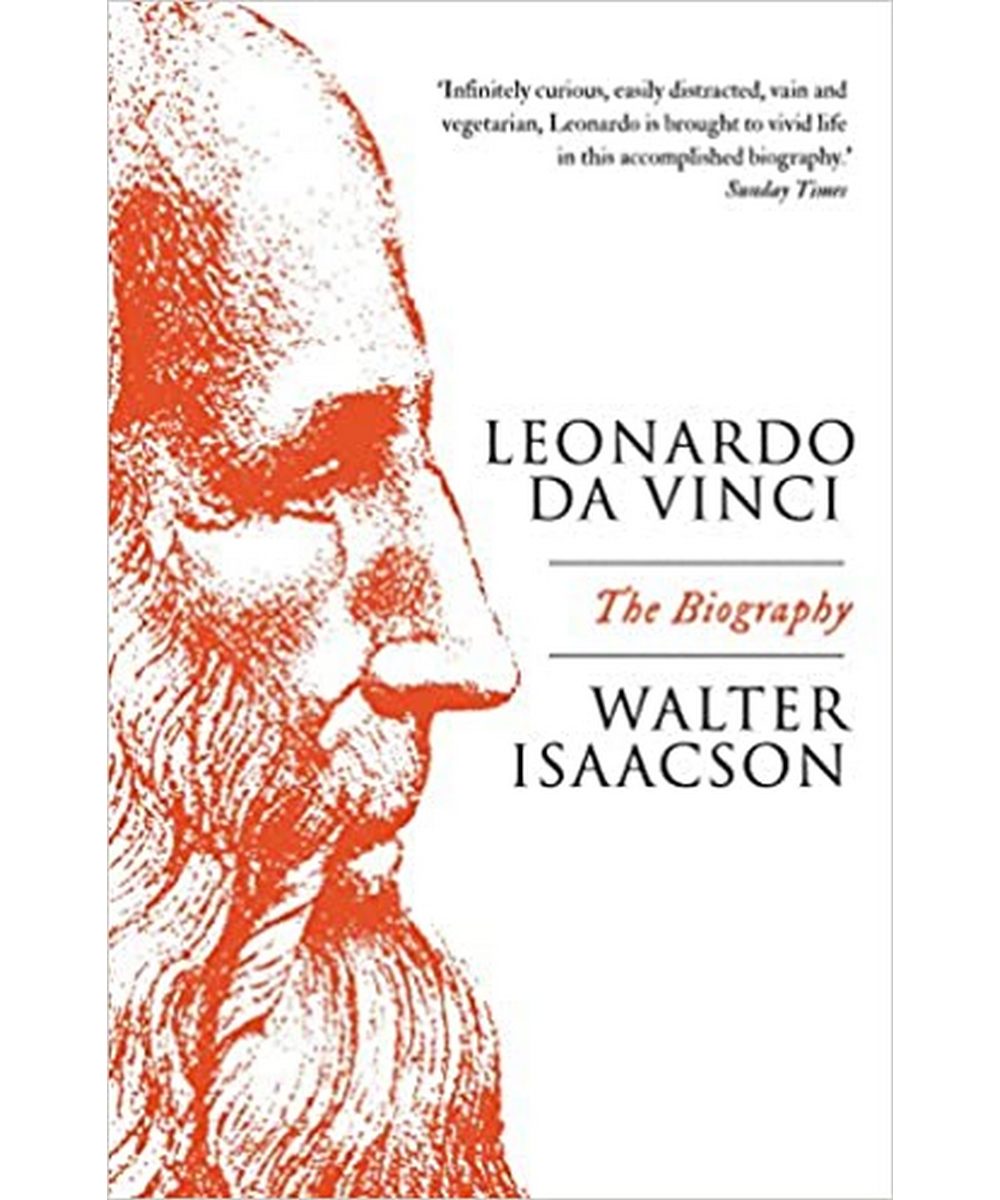
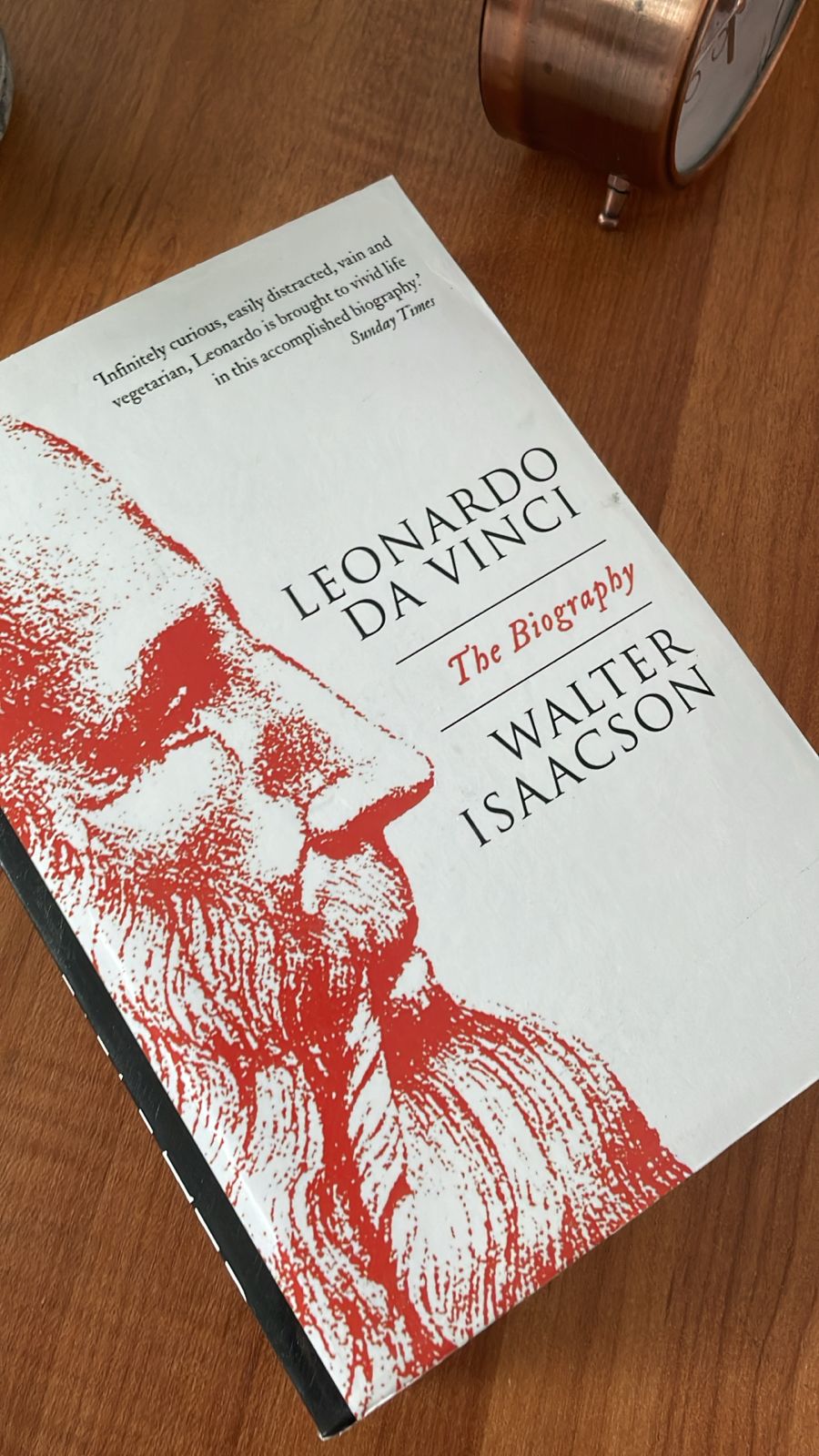

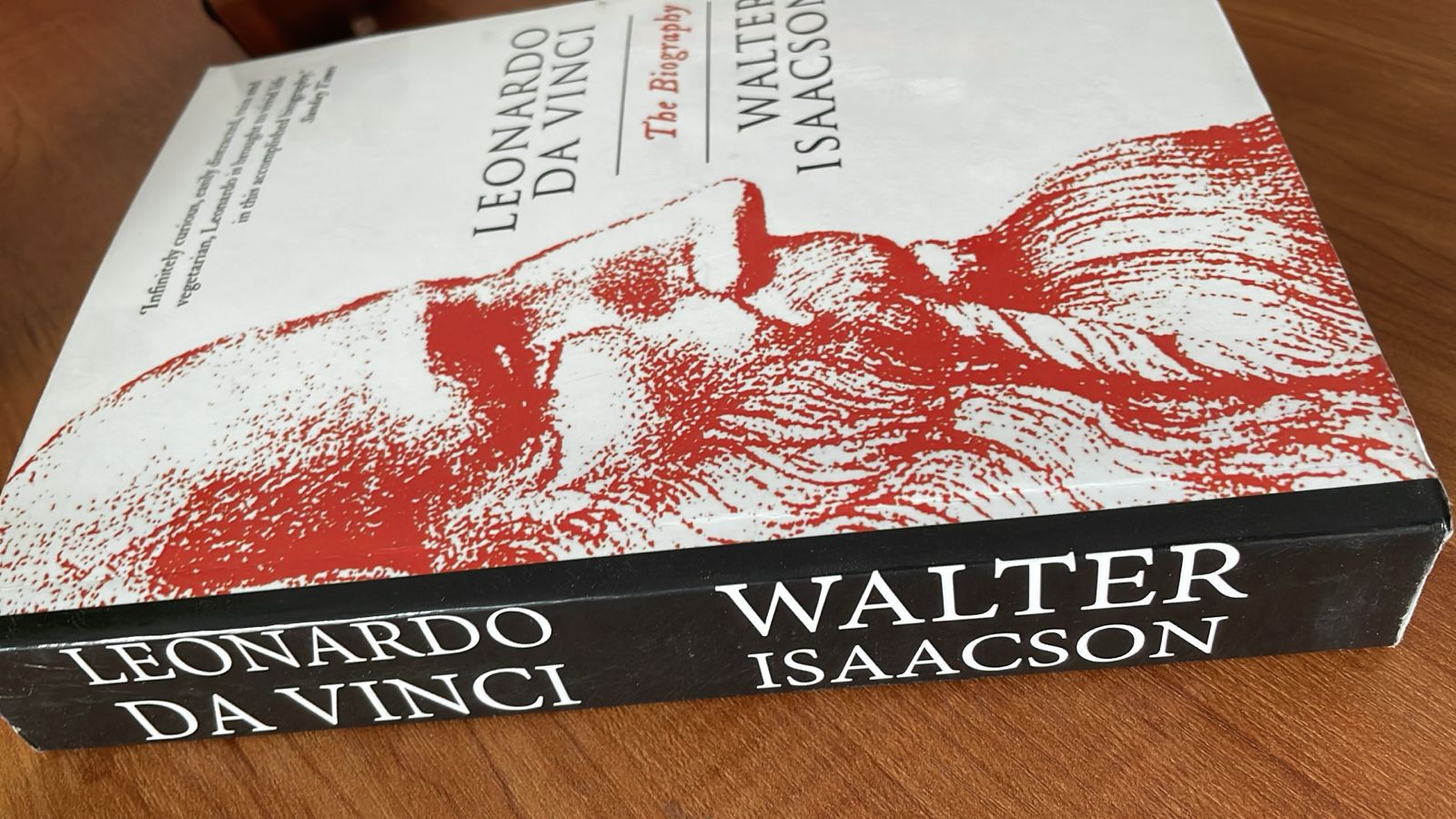



Leonardo Da Vinci by Walter Isaacson

රු2,950.00
3 X Rs. 983.33 or 8% Cashback with


or 3 X රු983.33 with


or up to 4 X රු737.50 with


Leonardo da Vinci by Walter Isaacson is a bestselling biography exploring the extraordinary life and mind behind the Mona Lisa, The Last Supper and Vitruvian Man. Drawing extensively on Leonardo’s notebooks, Walter Isaacson connects his art with his investigations into anatomy, engineering, optics, geology, flight and nature. More than a biography, it is a fascinating study of curiosity, observation, imagination and interdisciplinary creativity, making it ideal for readers interested in history, art, science, innovation and the habits of genius.
1 in stock
Leonardo da Vinci by Walter Isaacson is a fascinating biography of one of history’s greatest creative minds, exploring Leonardo’s art, science, engineering, anatomy, inventions, notebooks, imagination and extraordinary curiosity.
Leonardo da Vinci is remembered around the world as the creator of masterpieces such as:
Mona Lisa
The Last Supper
and
Vitruvian Man
But Leonardo was much more than a painter.
He was interested in:
Anatomy.
Engineering.
Flying machines.
Optics.
Mathematics.
Geology.
Botany.
Water.
Weapons.
Architecture.
Human movement.
Birds.
The heart.
Light.
Perspective.
Almost anything capable of making him ask:
Why?
Walter Isaacson uses Leonardo’s notebooks and surviving work to explore the habits behind this extraordinary curiosity.
Rather than presenting Leonardo only as a mysterious genius born with impossible talent, Isaacson shows how many of his greatest abilities were connected to habits that ordinary people can also develop.
Observe carefully.
Ask questions.
Stay curious.
Combine different fields.
Challenge assumptions.
Study details other people ignore.
Allow imagination and reality to interact.
That makes Leonardo da Vinci by Walter Isaacson much more than a biography.
It is also a book about creativity.
Leonardo da Vinci by Walter Isaacson – Book Overview
Leonardo da Vinci by Walter Isaacson explores Leonardo’s life by connecting his personality, notebooks, art and scientific investigations.
Leonardo lived during the Italian Renaissance.
It was a period of extraordinary development in:
Art.
Architecture.
Science.
Philosophy.
Engineering.
Politics.
Commerce.
Leonardo became one of the most remarkable figures of that era because he refused to remain inside one discipline.
He did not see art and science as opposites.
He saw them as connected.
To paint a human body accurately, he wanted to understand anatomy.
To paint light realistically, he studied optics.
To understand movement, he studied muscles.
To understand water, he studied currents.
To imagine machines, he studied birds, mechanics and geometry.
This interconnected way of thinking is one of the central themes of Leonardo da Vinci by Walter Isaacson.
Walter Isaacson
Walter Isaacson is known for biographies of highly influential and creative figures.
His subjects have included:
Steve Jobs.
Albert Einstein.
Benjamin Franklin.
Jennifer Doudna.
Elon Musk.
Leonardo da Vinci.
Isaacson often examines not only what successful people accomplished but how they thought.
That approach is especially effective with Leonardo.
Leonardo left behind enormous numbers of notes, sketches and questions.
These notebooks give historians an unusual opportunity to see how his mind worked.
Leonardo’s Notebooks
The notebooks are essential to Leonardo da Vinci by Walter Isaacson.
Leonardo constantly wrote and drew.
His pages contain:
Anatomical studies.
Mathematical problems.
Mechanical designs.
Water experiments.
Flying machines.
Faces.
Maps.
Questions.
Observations.
To-do lists.
Many pages move between unrelated subjects.
A drawing of a machine may sit beside a study of a human face.
An anatomical observation may appear near a geometric problem.
This reflects the way Leonardo thought.
Knowledge was connected.
Curiosity
Curiosity may be the most important characteristic Walter Isaacson emphasizes.
Leonardo wanted to understand things other people accepted without questioning.
Why is the sky blue?
How does a bird’s wing move?
How does blood flow?
What does the tongue of a woodpecker look like?
How does light interact with the eye?
Why do shells appear in mountains?
These questions demonstrate a mind that refused to stop at appearances.
Ask Better Questions
A major lesson from Leonardo da Vinci by Walter Isaacson is that intelligence begins with questions.
Most people stop noticing familiar things.
Leonardo continued looking.
He could observe an ordinary phenomenon and ask:
How?
Why?
What happens underneath?
That habit turned ordinary experiences into opportunities for discovery.
Observation
Leonardo’s powers of observation were extraordinary.
He studied:
Faces.
Muscles.
Water.
Clouds.
Light.
Animals.
Plants.
Movement.
His paintings became more realistic because he understood details that many artists ignored.
Careful observation helped connect science with art.
Look Closely
One practical lesson is simple:
Look again.
A person may believe they already understand something because they recognize it.
Leonardo did not settle for recognition.
He wanted understanding.
That difference can improve creativity in:
Art.
Business.
Science.
Design.
Engineering.
Writing.
Art and Science
One of the strongest themes in Leonardo da Vinci by Walter Isaacson is the connection between art and science.
Modern education often divides subjects.
Art belongs here.
Science belongs there.
Leonardo did not think that way.
His scientific investigation improved his art.
His artistic ability improved his scientific observation.
Anatomy
Leonardo became deeply interested in human anatomy.
He dissected bodies and produced detailed anatomical drawings.
He studied:
Bones.
Muscles.
Organs.
The heart.
The skull.
Facial structures.
Human proportions.
These investigations helped him understand how bodies actually worked.
Anatomy and Painting
If an artist wants to paint a hand realistically, understanding the structure underneath the skin can help.
If an artist wants to portray movement, understanding muscles can improve accuracy.
Leonardo’s anatomical knowledge therefore became part of his artistic skill.
The Human Heart
Leonardo studied the heart with remarkable curiosity.
He examined its structure and attempted to understand how blood moved.
His investigations show how far his interests extended beyond traditional artistic training.
Engineering
Leonardo also imagined and designed machines.
His notebooks contain concepts involving:
Military devices.
Bridges.
Mechanical systems.
Flying machines.
Water systems.
Engineering mechanisms.
Many designs were never constructed during his lifetime.
But they demonstrate his ability to combine imagination with mechanical thinking.
Flying Machines
Human flight fascinated Leonardo.
He studied birds.
Wings.
Air.
Movement.
He tried to understand how natural flight worked before imagining mechanical ways humans might imitate it.
This demonstrates another important lesson:
Study nature before trying to improve upon it.
Learning From Nature
Nature became one of Leonardo’s greatest teachers.
He observed:
Birds.
Water.
Plants.
Animals.
The human body.
Rock formations.
Instead of beginning with assumptions, he often began with observation.
Water
Leonardo was fascinated by water.
He studied:
Currents.
Whirlpools.
Flow.
Erosion.
Movement.
Patterns.
He noticed similarities between moving water and other natural systems.
This habit of finding patterns across disciplines helped strengthen his creative thinking.
Geology
Leonardo also investigated geological questions.
He thought about:
Fossils.
Mountains.
Rocks.
Erosion.
Natural history.
These studies demonstrate how far his curiosity reached.
He was not satisfied with simply painting landscapes.
He wanted to understand how landscapes formed.
Optics
Understanding light was essential for Leonardo.
He studied how light travels.
How the eye perceives objects.
How perspective works.
How shadows appear.
These investigations influenced his painting techniques.
Light and Shadow
Leonardo became famous for subtle transitions between light and shadow.
His careful study of optics helped him create faces and forms that appear more natural and dimensional.
Science improved artistic expression.
Perspective
Perspective allows artists to represent three-dimensional space on a two-dimensional surface.
Leonardo explored geometry and optics to understand how viewers perceive depth.
This knowledge influenced major works such as The Last Supper.
The Last Supper
The Last Supper is one of Leonardo’s most famous paintings.
Isaacson examines how Leonardo used:
Perspective.
Composition.
Emotion.
Gesture.
Light.
to create an extraordinary scene.
Instead of presenting the figures as static symbols, Leonardo gives each person a reaction.
The painting becomes a study of human emotion.
Human Emotion
Leonardo was interested in how emotion appears physically.
A face.
A hand.
A posture.
A gesture.
All can communicate feeling.
This attention helped make his characters feel alive.
Mona Lisa
The Mona Lisa is perhaps the most famous painting in the world.
Walter Isaacson uses the painting to explore Leonardo’s understanding of:
Light.
Perception.
Anatomy.
Emotion.
Landscape.
Optics.
The famous expression feels difficult to define partly because Leonardo understood how perception changes depending on where the viewer focuses.
The Mona Lisa Smile
The smile has fascinated viewers for centuries.
It can seem to appear.
Disappear.
Change.
That mystery reflects Leonardo’s deep interest in how the human eye processes detail and shadow.
The painting demonstrates how scientific knowledge can produce artistic emotion.
Vitruvian Man
Vitruvian Man has become a global symbol of the relationship between:
Art.
Mathematics.
Anatomy.
Human proportion.
The drawing represents Leonardo’s ability to combine different kinds of knowledge into one image.
It is not merely artistic.
It is analytical.
Connecting Disciplines
This may be one of the most useful lessons in Leonardo da Vinci by Walter Isaacson.
Innovation often happens between fields.
Technology and design.
Science and art.
Psychology and marketing.
Engineering and biology.
Leonardo’s genius often emerged because he refused to stay inside one category.
Interdisciplinary Thinking
Specialization can be useful.
But excessive specialization can create blind spots.
Leonardo constantly moved between subjects.
An idea from one field could influence another.
This helped generate unusual connections.
Imagination
Leonardo had an enormous imagination.
He designed machines that could not yet be built.
Imagined cities.
Studied flight.
Created theatrical designs.
Explored possibilities beyond available technology.
His imagination was not disconnected from reality.
It often began with observation.
Imagination Plus Observation
Pure imagination can become fantasy.
Pure observation can become documentation.
Leonardo combined both.
Observe reality carefully.
Then ask:
What could this become?
That combination is powerful.
Creativity
Walter Isaacson uses Leonardo’s life as a broader study of creativity.
Creativity is not simply sudden inspiration.
It can involve:
Curiosity.
Observation.
Experimentation.
Knowledge.
Persistence.
Playfulness.
Connections between ideas.
Playfulness
Leonardo often treated intellectual exploration as play.
He enjoyed:
Puzzles.
Visual tricks.
Stories.
Mechanical ideas.
Unusual questions.
Creativity often becomes stronger when people allow themselves to explore without demanding immediate practical results.
Experimentation
Leonardo experimented constantly.
Not every experiment succeeded.
Some artworks remained unfinished.
Some designs were unrealistic.
Some scientific conclusions were incorrect.
But experimentation generated learning.
Unfinished Projects
Leonardo became famous for leaving projects unfinished.
This can be seen as a weakness.
But it also reveals something about his personality.
He was constantly attracted to new questions.
His curiosity sometimes moved faster than his ability to complete projects.
Perfectionism
Perfectionism influenced Leonardo.
He continued revising works.
Studying.
Observing.
Trying to improve.
High standards produced extraordinary results.
But perfectionism could also slow completion.
This creates an important lesson:
Excellence and completion need balance.
Procrastination
Leonardo’s tendency to delay or abandon work reminds readers that even extraordinary people can struggle with productivity.
Genius does not automatically create perfect discipline.
A brilliant mind can still become distracted.
Distraction
Leonardo’s interests were incredibly broad.
That breadth created connections.
But it also created distraction.
A new scientific question could pull him away from an existing artistic project.
This shows that strengths and weaknesses can sometimes come from the same personality trait.
Curiosity as a Strength
His curiosity created:
Discoveries.
Art.
Ideas.
Experiments.
But it also created unfinished work.
The lesson is not to eliminate curiosity.
It is to learn how to manage it.
Learning for Its Own Sake
Leonardo often investigated questions without immediate commercial value.
Why?
Because he wanted to know.
This is increasingly rare in environments focused entirely on productivity.
Leonardo da Vinci by Walter Isaacson reminds readers that curiosity without immediate reward can still create enormous long-term value.
The Renaissance
Understanding Leonardo requires understanding the Renaissance.
Italian cities became centres of:
Art.
Trade.
Politics.
Architecture.
Learning.
Patronage.
Powerful families and institutions funded artists and engineers.
Leonardo moved through this environment while developing his work.
Florence
Florence played a major role in Leonardo’s early development.
The city was one of the most important artistic centres of Renaissance Italy.
Leonardo trained in an environment filled with:
Painters.
Sculptors.
Architects.
Craftsmen.
Engineers.
This multidisciplinary environment suited his personality.
Andrea del Verrocchio
Leonardo trained in the workshop of Andrea del Verrocchio.
Renaissance workshops were different from modern art schools.
Students could encounter:
Painting.
Sculpture.
Metalwork.
Engineering.
Design.
This broad training helped shape Leonardo’s interdisciplinary approach.
Milan
Leonardo later spent significant time in Milan.
There he worked for Ludovico Sforza and pursued a wide range of artistic and engineering projects.
His ability to present himself not only as an artist but also as an engineer demonstrates his versatility.
Leonardo the Engineer
Leonardo could offer skills involving:
Military engineering.
Architecture.
Hydraulics.
Entertainment.
Painting.
This combination made him valuable to powerful patrons.
Patrons
Artists during the Renaissance often relied on patrons.
Powerful families.
Rulers.
Religious institutions.
Patronage allowed artists to create major works.
But it also meant artists had to navigate:
Politics.
Expectations.
Money.
Deadlines.
Leonardo’s career was influenced by these relationships.
Politics
Renaissance Italy was politically complex.
Cities and rulers competed.
Alliances shifted.
War was common.
Leonardo’s opportunities often changed because of these political conditions.
Cesare Borgia
Leonardo worked for Cesare Borgia as an engineer and mapmaker.
This period demonstrates another side of his abilities.
He was not confined to a studio.
He travelled.
Inspected fortifications.
Created maps.
Studied military problems.
Mapping
Leonardo’s maps demonstrated extraordinary observation and technical skill.
Accurate mapping requires combining:
Measurement.
Geometry.
Drawing.
Perspective.
Geography.
Again, different disciplines came together.
Michelangelo
Leonardo lived during the same broader era as Michelangelo.
Their personalities and artistic approaches were very different.
The existence of multiple extraordinary artists in Renaissance Italy makes the period especially fascinating.
Rivalry
Competition can sometimes push creative people.
Seeing another talented person succeed may generate:
Jealousy.
Pressure.
Motivation.
Innovation.
Creative rivalry becomes part of the broader Renaissance story.
Leonardo as a Human Being
One strength of Leonardo da Vinci by Walter Isaacson is that it does not present Leonardo as an untouchable myth.
He had:
Strengths.
Weaknesses.
Distractions.
Unfinished projects.
Personal habits.
Unusual interests.
This makes his creativity more understandable.
Genius Is Not Perfection
A genius can still:
Procrastinate.
Make mistakes.
Change direction.
Leave work unfinished.
Become distracted.
This is encouraging.
Extraordinary achievement does not require being perfect in every area.
Being Different
Leonardo often existed outside conventional expectations.
His background and personality helped make him different from many people around him.
Isaacson argues that this outsider quality contributed to his creativity.
Individuality
Creative people often resist pressure to think exactly like everyone else.
Leonardo followed questions that interested him even when they did not produce immediate recognition.
That independence helped create original thinking.
Curiosity Over Credentials
Leonardo did not follow the traditional scholarly path available to some Renaissance intellectuals.
Yet he became an extraordinary learner through:
Observation.
Experimentation.
Reading.
Conversation.
Drawing.
Practice.
This makes his life especially relevant to self-directed learners.
Learning by Doing
Leonardo did not only read theories.
He:
Drew.
Dissected.
Measured.
Designed.
Observed.
Built models.
Learning became active.
Visualization
Drawing was part of Leonardo’s thinking process.
He did not draw only after understanding something.
He often drew in order to understand it.
Visualization can be a powerful learning tool.
Draw What You Want to Understand
A diagram forces you to identify:
Parts.
Relationships.
Movement.
Structure.
This is why visual thinking remains useful in:
Engineering.
Science.
Business.
Design.
Education.
Pattern Recognition
Leonardo noticed patterns across different systems.
Water curls.
Hair curls.
Air moves.
Bodies move.
Nature repeats forms.
Pattern recognition allowed him to transfer insights from one area to another.
Creativity Through Connection
Many breakthrough ideas come from connecting things that were previously separated.
Leonardo repeatedly did this.
Art + anatomy.
Engineering + nature.
Optics + painting.
Mathematics + proportion.
That is a powerful model for modern innovation.
Curiosity in Business
Business leaders can also learn from Leonardo’s curiosity.
Instead of accepting:
“Customers always behave this way.”
Ask:
Why?
Instead of saying:
“This process has always worked.”
Ask:
Could it be improved?
Curiosity helps organizations avoid becoming complacent.
Curiosity in Technology
Technology changes quickly.
People who remain curious are more likely to:
Learn new tools.
Understand new systems.
Experiment.
Adapt.
Leonardo’s mindset remains relevant even centuries later.
Curiosity in Education
Students can also benefit from Leonardo’s approach.
Do not study only for exams.
Ask questions.
Connect subjects.
Explore interests beyond the syllabus.
Learning becomes more powerful when curiosity drives it.
Observation in Leadership
Good leaders need observation.
What is happening inside the team?
What are people not saying?
Where is the process failing?
Which customer problem keeps repeating?
Observation often reveals opportunities before reports do.
Creativity and Innovation
Businesses frequently say they want innovation.
But innovation requires an environment where people can:
Ask unusual questions.
Experiment.
Explore.
Combine disciplines.
Challenge accepted assumptions.
Leonardo’s life provides an extraordinary historical example.
Technology and Humanity
Leonardo’s work reminds us that technology and humanity do not need to be separated.
He was interested in machines.
But also:
Faces.
Emotion.
Bodies.
Beauty.
Nature.
This combination is valuable in modern product design.
Technology becomes more useful when it understands human experience.
Curiosity About Everything
Leonardo could become interested in almost anything.
That is perhaps his most inspiring characteristic.
He did not say:
“That subject has nothing to do with me.”
Instead, he often asked:
How does it work?
Lifelong Learning
Leonardo continued learning throughout his life.
There was always another question.
Another drawing.
Another experiment.
Another observation.
This makes him a powerful example of lifelong learning.
The Value of Not Knowing
Curiosity begins with admitting:
I do not know.
People sometimes hide uncertainty because they fear appearing unintelligent.
Leonardo turned uncertainty into questions.
That mindset makes learning possible.
Question Assumptions
One of the best habits readers can take from Leonardo da Vinci by Walter Isaacson is to question what seems obvious.
Why is this done this way?
What if the assumption is wrong?
What are we not noticing?
These questions can produce innovation.
Creativity Is Trainable
Isaacson’s portrait suggests that some aspects of creativity can be developed.
You may not become Leonardo.
But you can become:
More curious.
More observant.
More interdisciplinary.
More willing to experiment.
More imaginative.
These are useful habits.
7 Powerful Lessons From Leonardo da Vinci
There are many lessons in Leonardo da Vinci by Walter Isaacson, but seven stand out:
- Stay relentlessly curious – Leonardo constantly asked questions about ordinary things that most people ignored.
- Observe more carefully – His art and science improved because he noticed details other people missed.
- Connect different disciplines – Leonardo’s greatest strengths often emerged where art, science, anatomy, engineering and mathematics met.
- Let imagination interact with reality – He studied the natural world carefully and then used imagination to explore what might be possible.
- Learn by doing – Leonardo drew, dissected, measured, experimented and designed rather than relying only on theory.
- Accept imperfection and failure as part of creativity – Many of his projects remained unfinished, yet his experiments still produced extraordinary insights.
- Never stop learning – Leonardo’s notebooks reveal a lifelong habit of questioning, studying and exploring new ideas.
Why Read Leonardo da Vinci by Walter Isaacson?
Leonardo da Vinci by Walter Isaacson is an excellent choice for readers interested in:
- Leonardo da Vinci
- Walter Isaacson books
- Biography
- Renaissance history
- Art history
- Creativity
- Innovation
- Science
- Engineering
- Inventions
- Mona Lisa
- The Last Supper
- Vitruvian Man
- Anatomy
- Curiosity
- Creative thinking
- Famous artists
- Historical biographies
- Lifelong learning
- Genius and innovation
It is especially valuable for readers interested in understanding how creativity develops when curiosity crosses traditional boundaries.
Who Should Read This Book?
Leonardo da Vinci by Walter Isaacson may especially appeal to:
- Biography readers
- Walter Isaacson fans
- Artists
- Designers
- Engineers
- Scientists
- Entrepreneurs
- Innovators
- Students
- History readers
- Art-history readers
- Creative professionals
- Business leaders
- Readers interested in the Renaissance
- Readers interested in famous inventors
- Anyone wanting to become more curious and creative
The Story of a Mind That Refused to Stop Asking Questions
Leonardo da Vinci by Walter Isaacson is ultimately the story of curiosity.
Leonardo painted masterpieces.
Designed machines.
Studied anatomy.
Investigated light.
Observed water.
Examined birds.
Drew maps.
Explored mathematics.
Imagined flight.
But beneath all these achievements was one recurring habit:
He wanted to understand.
That curiosity connected everything.
He did not believe an artist should ignore science.
He did not believe an engineer should ignore beauty.
He did not believe an observation was too ordinary to investigate.
This ability to move between disciplines made Leonardo extraordinary.
It also provides the most useful lesson for modern readers.
Be curious.
Look carefully.
Ask questions.
Explore outside your field.
Draw connections.
Experiment.
Do not be afraid to look strange while pursuing an interesting question.
For readers interested in biography, creativity, art, science, innovation, history and the habits behind extraordinary achievement, Leonardo da Vinci by Walter Isaacson is a fascinating exploration of one of history’s most creative minds.
Learn more about Leonardo da Vinci by Walter Isaacson on the official Simon & Schuster website.
Explore more biography and history books at Bargain Books.
Be the first to review “Leonardo Da Vinci by Walter Isaacson”
Related products
-29%

Self-Help & Psychology
Original price was: රු1,750.00.රු1,250.00Current price is: රු1,250.00.
3 X Rs. 416.67 or 8% Cashback with
or 3 X රු416.67 with
or up to 4 X රු312.50 with
Non-Fiction & Knowledge
රු1,600.00
3 X Rs. 533.33 or 8% Cashback with
or 3 X රු533.33 with
or up to 4 X රු400.00 with
Non-Fiction & Knowledge
රු2,250.00
3 X Rs. 750.00 or 8% Cashback with
or 3 X රු750.00 with
or up to 4 X රු562.50 with
-19%
Out of stock
Non-Fiction & Knowledge
Original price was: රු2,650.00.රු2,150.00Current price is: රු2,150.00.
3 X Rs. 716.67 or 8% Cashback with
or 3 X රු716.67 with
or up to 4 X රු537.50 with

Non-Fiction & Knowledge
රු1,950.00
3 X Rs. 650.00 or 8% Cashback with
or 3 X රු650.00 with
or up to 4 X රු487.50 with
-24%
Out of stock
Non-Fiction & Knowledge
Original price was: රු2,500.00.රු1,900.00Current price is: රු1,900.00.
3 X Rs. 633.33 or 8% Cashback with
or 3 X රු633.33 with
or up to 4 X රු475.00 with
-23%
Non-Fiction & Knowledge
Original price was: රු2,200.00.රු1,700.00Current price is: රු1,700.00.
3 X Rs. 566.67 or 8% Cashback with
or 3 X රු566.67 with
or up to 4 X රු425.00 with
-39%
Self-Help & Psychology
Original price was: රු2,450.00.රු1,500.00Current price is: රු1,500.00.
3 X Rs. 500.00 or 8% Cashback with
or 3 X රු500.00 with
or up to 4 X රු375.00 with
Reviews
There are no reviews yet.