
No products in the cart.
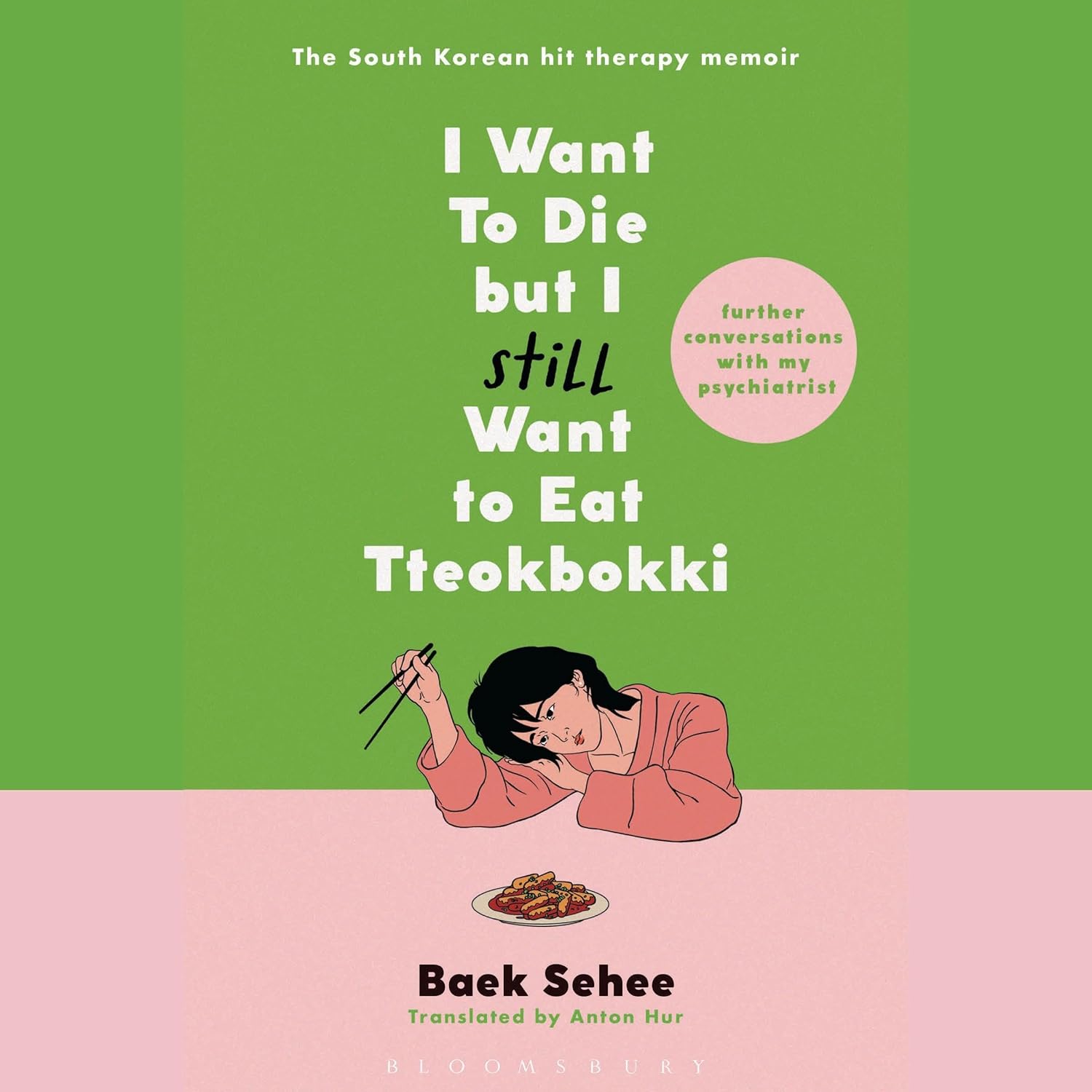
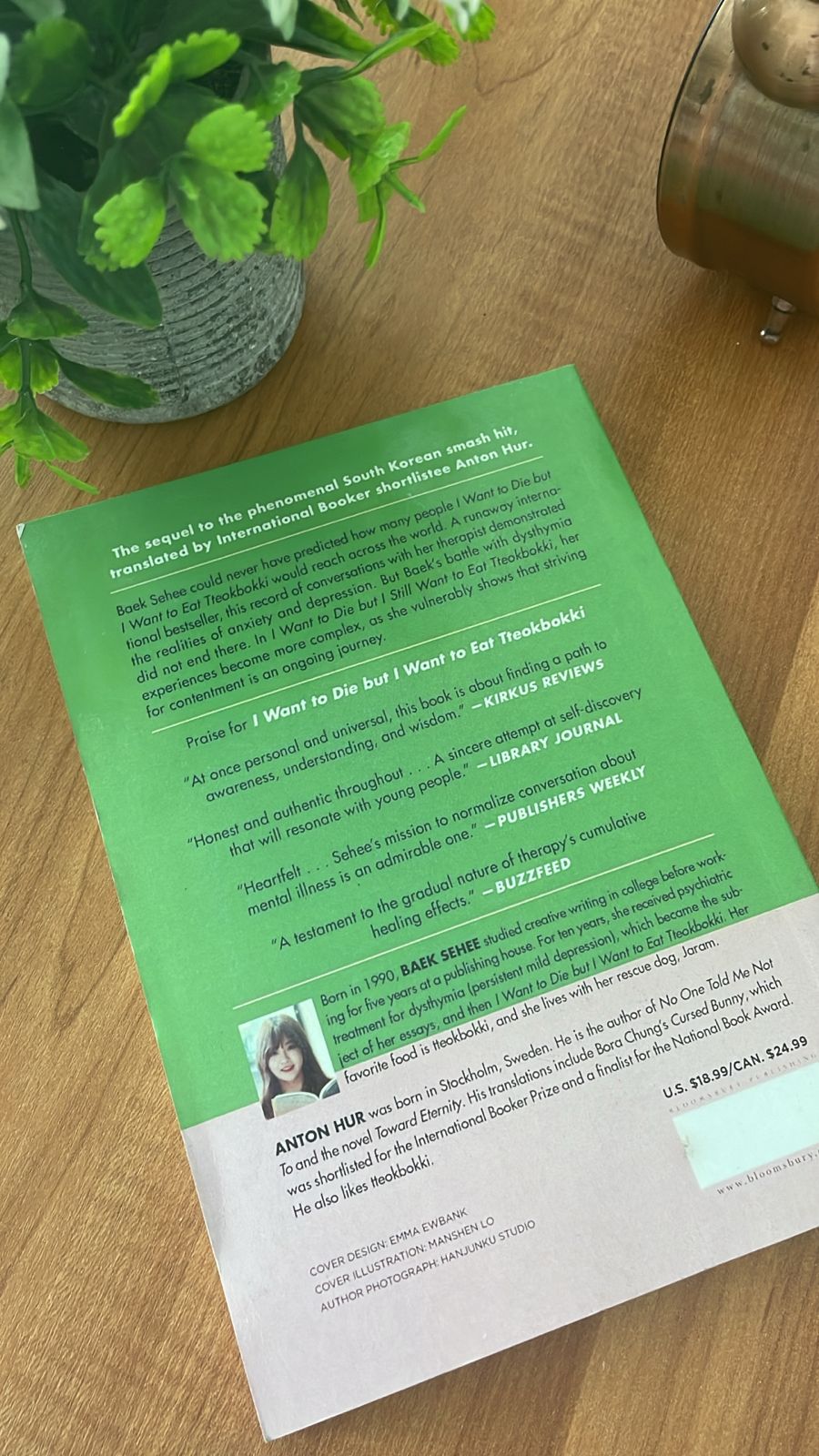
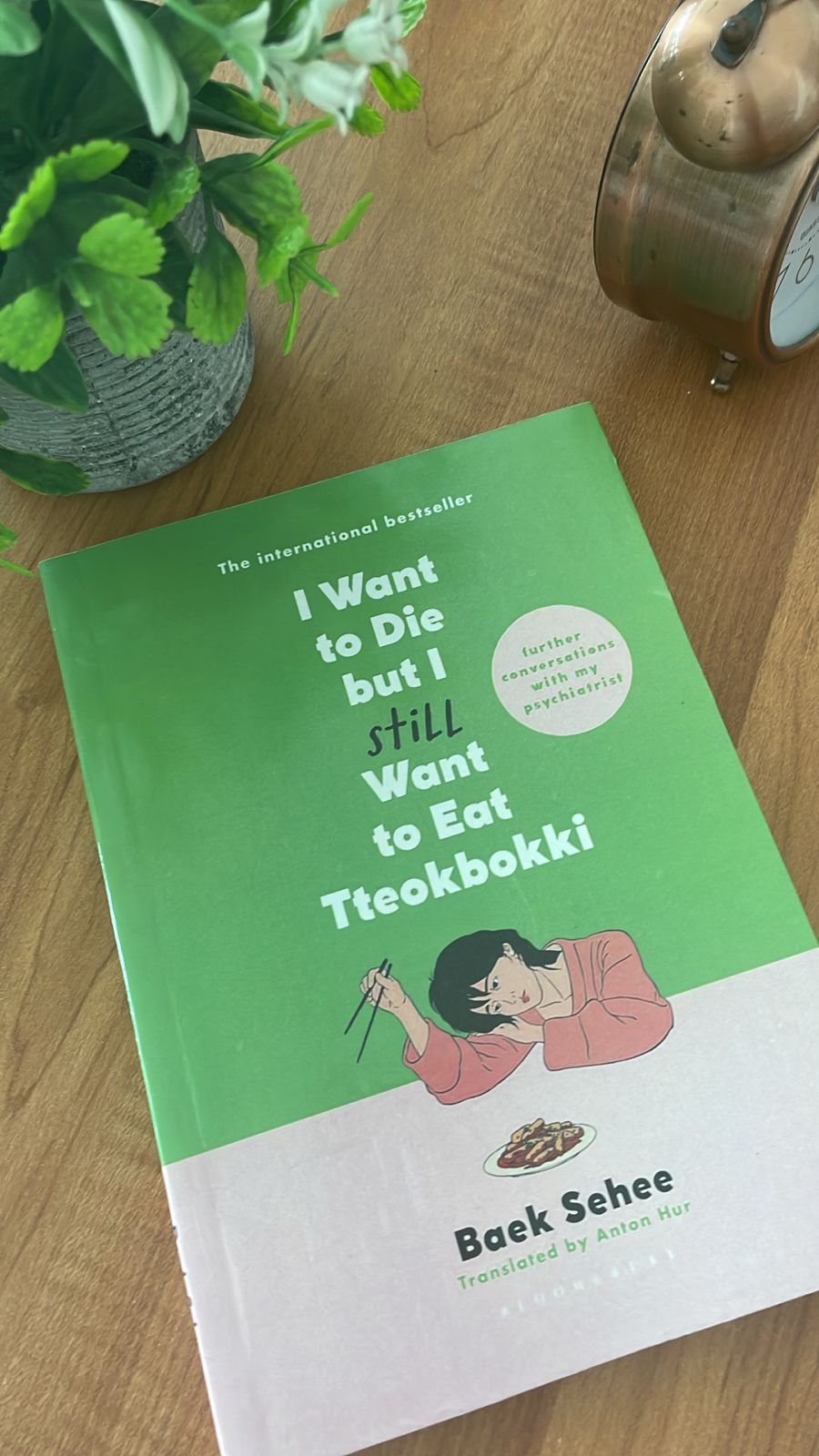
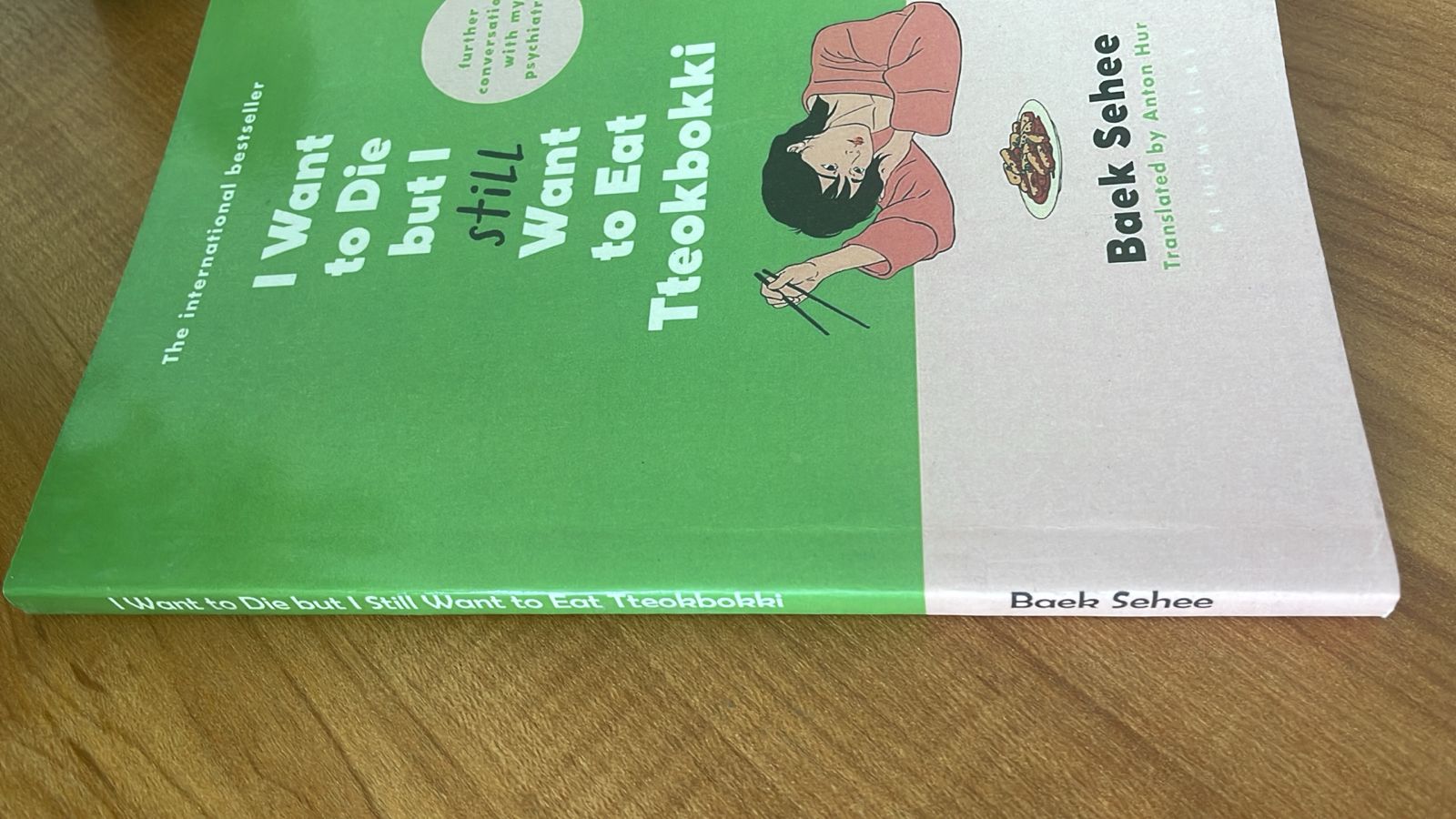
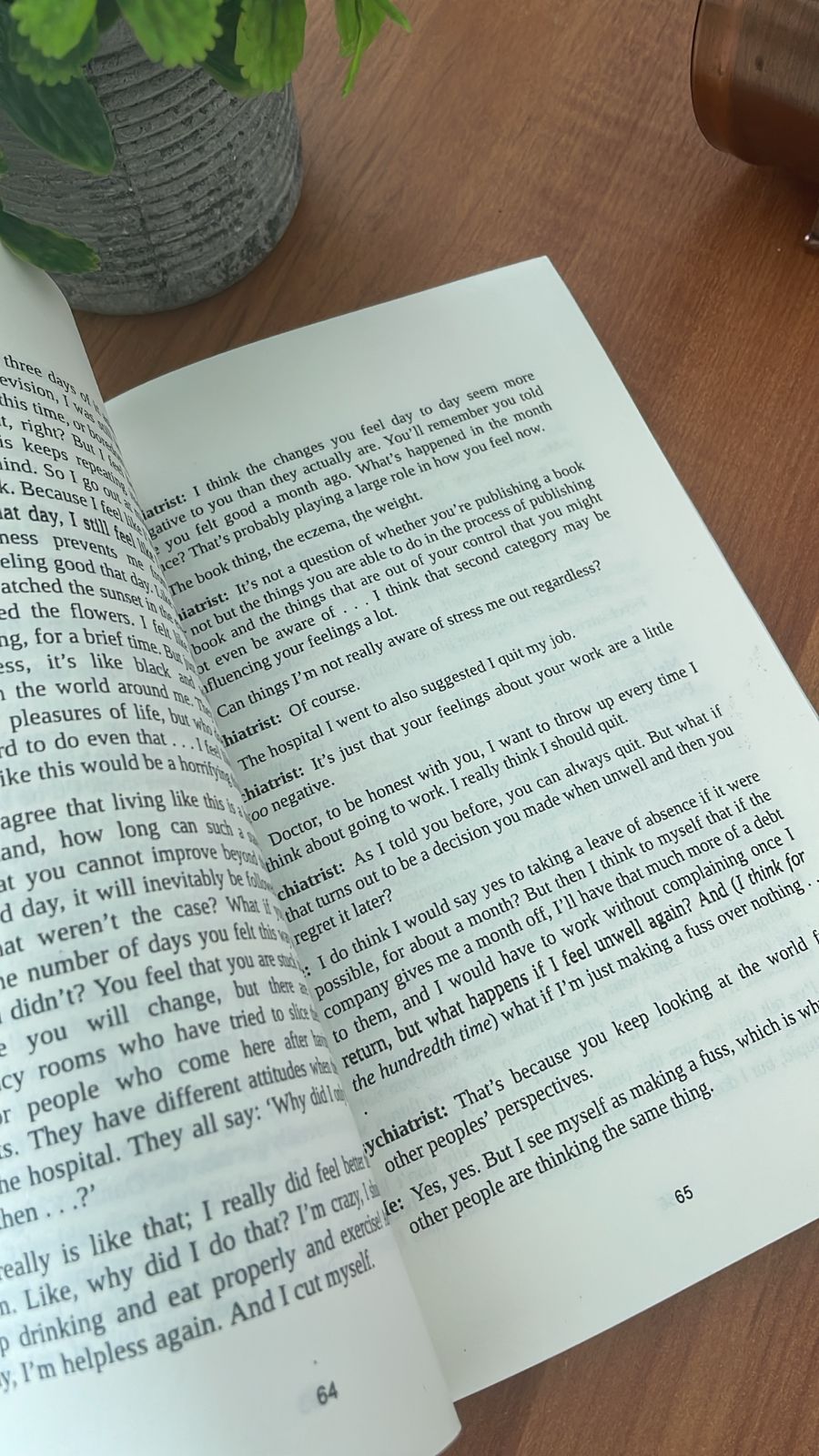

I Want To Die But I Still Want To Eat Tteokbokki by Baek Sehee and Anton Hur


රු1,750.00
3 X Rs. 583.33 or 8% Cashback with


or 3 X රු583.33 with


or up to 4 X රු437.50 with


I Want to Die but I Still Want to Eat Tteokbokki by Baek Sehee is the heartfelt follow-up to I Want to Die but I Want to Eat Tteokbokki. Through further conversations with her psychiatrist, Baek reflects on dysthymia, anxiety, self-esteem, relationships, perfectionism, loneliness, and the uneven process of healing. Honest and compassionate, it explores how small joys and greater self-understanding can coexist with difficult emotions.
1 in stock
I Want to Die but I Still Want to Eat Tteokbokki by Baek Sehee is an intimate and deeply reflective memoir about therapy, dysthymia, anxiety, self-esteem, relationships, loneliness, emotional contradictions, and the slow process of learning to understand yourself.
It continues the journey begun in the international bestseller I Want to Die but I Want to Eat Tteokbokki.
Baek Sehee has already begun examining the thoughts and behaviours that make everyday life feel harder than it appears from the outside.
But therapy does not magically remove every problem.
Self-awareness does not instantly create happiness.
Knowing why you feel a certain way does not always stop you from feeling it.
That is where this second book begins.
Baek continues her conversations with her psychiatrist while reflecting on the complicated reality of trying to become more comfortable with herself.
She questions her relationships.
Her appearance.
Her need for approval.
Her expectations.
Her emotional reactions.
Her sense of identity.
And the gap between the person she wants to be and the person she believes herself to be.
I Want to Die but I Still Want to Eat Tteokbokki by Baek Sehee is therefore not a story about reaching a perfect ending.
It is about continuing.
Continuing therapy.
Continuing to question.
Continuing to notice small joys.
Continuing to make mistakes.
And continuing to choose life even when life remains emotionally complicated.
I Want to Die but I Still Want to Eat Tteokbokki by Baek Sehee – Book Overview
The first book introduced readers to Baek Sehee’s conversations with her psychiatrist.
She spoke openly about experiencing persistent low mood, anxiety, self-criticism, insecurity, and difficulty forming satisfying relationships.
The sequel goes further.
I Want to Die but I Still Want to Eat Tteokbokki by Baek Sehee explores what happens after someone has already begun understanding their emotional patterns.
Awareness helps.
But awareness can also reveal new layers.
You may understand that you seek approval from others.
Then you must ask:
Why?
What happens when approval does not come?
What would it mean to trust your own judgment?
You may recognize that you compare yourself constantly.
But stopping the comparison can still be difficult.
The book captures this frustrating gap between knowing and changing.
A Continuation of Therapy
One of the book’s most important qualities is its honesty about therapy.
Therapy is sometimes portrayed as a simple transformation.
Someone feels bad.
They speak to a professional.
They understand the problem.
Then everything improves.
Real life can be far less tidy.
I Want to Die but I Still Want to Eat Tteokbokki by Baek Sehee shows that emotional growth may involve repeatedly returning to the same issue from different angles.
A person can make progress and still struggle.
Feel confident one day and insecure the next.
Understand a problem intellectually while continuing to experience it emotionally.
That does not necessarily mean nothing has changed.
Healing Is Not a Straight Line
Progress rarely happens perfectly.
There may be:
Good days.
Bad days.
Moments of confidence.
Periods of doubt.
Healthy decisions.
Old habits.
I Want to Die but I Still Want to Eat Tteokbokki by Baek Sehee presents healing as something gradual and uneven.
This can make the book comforting for readers who expect themselves to improve quickly.
People often criticize themselves for repeating patterns.
But recognising a pattern more clearly can itself be part of progress.
Emotional Contradictions
The title contains one of the central contradictions.
A person can feel hopeless and still want something delicious.
They can feel lonely and still avoid people.
They can want love and fear intimacy.
They can dislike themselves while desperately wanting others to like them.
I Want to Die but I Still Want to Eat Tteokbokki by Baek Sehee makes space for these contradictions.
Human emotion does not always follow logic.
Feeling one thing does not automatically cancel another.
You can struggle deeply and still laugh.
Enjoy food.
Love a pet.
Meet a friend.
Want tomorrow to be better.
These small desires can coexist with pain.
Self-Esteem
Self-esteem remains one of the book’s major themes.
How do we decide whether we are good enough?
Many people depend heavily on external responses.
Compliments.
Attention.
Approval.
Achievement.
Relationships.
Social acceptance.
When these things are available, confidence rises.
When they disappear, confidence collapses.
I Want to Die but I Still Want to Eat Tteokbokki by Baek Sehee explores the difficulty of developing a more stable sense of self-worth.
If your value depends entirely on what other people think, your emotional life becomes vulnerable to every reaction.
The Need for Approval
Wanting people to like us is normal.
But the desire can become exhausting when it controls behaviour.
Should I say this?
Will they dislike me?
Did I sound strange?
Why did they respond differently?
I Want to Die but I Still Want to Eat Tteokbokki by Baek Sehee examines this constant awareness of other people’s opinions.
When we spend too much energy managing how others see us, we may lose sight of what we actually think or want.
The book encourages deeper reflection on the difference between being considerate and living entirely for approval.
Comparing Yourself With Others
Comparison can quickly damage self-esteem.
Someone looks more attractive.
More successful.
More confident.
More social.
More talented.
The mind converts those observations into:
Therefore, I am less valuable.
But comparison is rarely fair.
We compare our internal fears with someone else’s external presentation.
I Want to Die but I Still Want to Eat Tteokbokki by Baek Sehee explores how these habits can trap people in constant dissatisfaction.
There will always be someone who appears better according to a particular standard.
A healthier question may be:
What kind of life feels meaningful to me?
Appearance and Body Image
Appearance can become deeply connected to self-worth.
How attractive am I?
How do other people see me?
Do I look good enough?
These questions can become exhausting when they determine emotional value.
Baek openly discusses insecurity and self-perception.
I Want to Die but I Still Want to Eat Tteokbokki by Baek Sehee encourages readers to notice how social expectations around appearance can influence internal dialogue.
The goal is not pretending appearance never matters.
It is questioning whether appearance should decide an entire person’s worth.
Relationships
Relationships are another major theme.
Friendship.
Romance.
Family.
Work relationships.
Each can reveal different emotional patterns.
Sometimes we expect other people to fill needs we struggle to express.
Then we feel disappointed when they cannot read our minds.
I Want to Die but I Still Want to Eat Tteokbokki by Baek Sehee explores how relationships can become mirrors.
They show us:
What we fear.
What we expect.
What we avoid.
What we need.
And how we respond when those needs are not met.
Loneliness
Loneliness is more complicated than simply being alone.
Someone can have friends and still feel lonely.
They can be surrounded by people and still feel misunderstood.
They can desire connection while simultaneously withdrawing.
This contradiction appears throughout I Want to Die but I Still Want to Eat Tteokbokki by Baek Sehee.
The book explores the emotional distance that can exist between a person’s public life and private experience.
From the outside, everything may appear normal.
Inside, the person may feel completely different.
Friendship
Friendship can provide comfort.
But it can also trigger insecurity.
Does this person really like me?
Am I more invested in the friendship than they are?
Why didn’t they contact me?
These thoughts can transform ordinary situations into emotional crises.
Baek examines this kind of thinking honestly.
I Want to Die but I Still Want to Eat Tteokbokki by Baek Sehee shows how emotional sensitivity can influence interpretations of other people’s behaviour.
Sometimes another person’s actions have little to do with us.
Learning not to personalize everything can create emotional freedom.
Boundaries
Relationships become healthier when people develop boundaries.
A boundary can involve recognizing:
What belongs to me.
What belongs to someone else.
I can care about your feelings.
But I cannot control them.
You can disagree with me.
That does not automatically mean I am wrong or unworthy.
I Want to Die but I Still Want to Eat Tteokbokki by Baek Sehee encourages readers to think about how much emotional responsibility they assume for other people.
Trying to control everyone’s reaction is impossible.
Perfectionism
Perfectionism can disguise itself as ambition.
I just want to do well.
I want people to respect me.
I want to make the right choice.
But underneath may be fear.
Fear of criticism.
Failure.
Embarrassment.
Rejection.
I Want to Die but I Still Want to Eat Tteokbokki by Baek Sehee shows how perfectionism can make ordinary life exhausting.
If every mistake becomes proof that you are inadequate, even small problems feel enormous.
Accepting imperfection can therefore become a form of emotional relief.
Self-Criticism
Many people speak to themselves in ways they would never speak to another person.
You are useless.
Why did you do that?
Everyone else is better.
You always fail.
Baek’s conversations repeatedly reveal how powerful internal language can become.
I Want to Die but I Still Want to Eat Tteokbokki by Baek Sehee encourages readers to notice the voice they use toward themselves.
Self-compassion does not mean pretending mistakes never happen.
It means responding to mistakes without turning them into evidence that the entire person is worthless.
Understanding Yourself
Self-understanding sounds simple.
But people can spend years avoiding their own emotions.
We distract ourselves.
Work.
Scroll.
Eat.
Socialize.
Sleep.
Stay busy.
Anything to avoid asking:
What am I actually feeling?
I Want to Die but I Still Want to Eat Tteokbokki by Baek Sehee demonstrates the value of naming emotions.
Anger may hide hurt.
Jealousy may hide insecurity.
Avoidance may hide fear.
Understanding the emotion can create more choices about how to respond.
Thoughts Are Not Always Facts
A thought can feel true without being true.
Nobody likes me.
I ruined everything.
I will never improve.
Everyone is judging me.
These thoughts can feel completely convincing in the moment.
Therapeutic conversations can help create distance between thought and reality.
I Want to Die but I Still Want to Eat Tteokbokki by Baek Sehee repeatedly encourages examination rather than automatic belief.
Ask:
What evidence supports this thought?
Is there another explanation?
Would I say the same thing to someone else?
This shift can weaken destructive mental loops.
Small Joys Still Matter
Tteokbokki becomes important symbolically.
It is something ordinary.
Warm.
Spicy.
Comforting.
Enjoyable.
The desire for food can represent a small connection to everyday life.
I Want to Die but I Still Want to Eat Tteokbokki by Baek Sehee reminds readers that life does not always need to contain a huge inspirational breakthrough.
Sometimes meaning appears through small things.
A favourite meal.
A dog.
A conversation.
A walk.
A book.
A quiet afternoon.
Small pleasures do not solve every problem.
But they still matter.
Contentment Instead of Constant Happiness
Modern culture often tells people to pursue happiness.
Be positive.
Be successful.
Love yourself.
Live your best life.
But constantly trying to be happy can create another form of pressure.
I Want to Die but I Still Want to Eat Tteokbokki by Baek Sehee moves toward a quieter idea.
Contentment.
Being okay.
Accepting ordinary emotions.
Not every day has to be amazing.
Not every sadness must immediately disappear.
A sustainable life may involve learning to tolerate emotional variety rather than demanding permanent happiness.
Accepting Imperfection
No one becomes perfectly healed.
Perfectly confident.
Perfectly calm.
Perfectly secure.
Accepting that fact can actually reduce suffering.
I Want to Die but I Still Want to Eat Tteokbokki by Baek Sehee encourages a gentler relationship with imperfection.
Growth can mean becoming more aware of your limitations without hating yourself for having them.
Therapy Conversations
The conversational structure makes the book approachable.
Instead of presenting mental-health ideas only through formal theory, readers experience many of them through exchanges between Baek and her psychiatrist.
This gives the book an intimate quality.
Readers may recognize their own questions in hers.
Why do I care so much about what people think?
Why am I unhappy even when life seems fine?
Why do I repeat the same patterns?
I Want to Die but I Still Want to Eat Tteokbokki by Baek Sehee does not always provide simple answers.
That honesty is part of its appeal.
Memoir and Self-Reflection
The book sits between memoir and reflective mental-health writing.
It is not a clinical textbook.
It does not attempt to provide one universal treatment plan.
Instead, Baek shares her own experiences and conversations.
This personal format allows readers to reflect on their own lives without assuming every experience will be identical.
A Book About Continuing
Perhaps the most powerful theme is continuation.
The first book does not end every struggle.
Neither does therapy.
I Want to Die but I Still Want to Eat Tteokbokki by Baek Sehee acknowledges that some emotional difficulties can remain present while a person still builds a meaningful life.
The goal may not always be:
I will never feel this again.
Sometimes the healthier goal is:
When I feel this again, I will understand it better.
I will respond differently.
I will be kinder to myself.
Mental Health Without False Positivity
The book avoids the idea that every difficult emotion can be solved with positivity.
“Just be happy.”
“Think positively.”
“Other people have it worse.”
These responses rarely address the underlying experience.
I Want to Die but I Still Want to Eat Tteokbokki by Baek Sehee instead creates room for complicated feelings.
Sometimes people need understanding before advice.
Sometimes they need to examine an emotion rather than immediately eliminate it.
The First Book and the Sequel
The recommended reading order is:
1. I Want to Die but I Want to Eat Tteokbokki
Introduces Baek Sehee’s conversations with her psychiatrist and explores dysthymia, anxiety, self-esteem, relationships, and the emotional contradictions of everyday life.
2. I Want to Die but I Still Want to Eat Tteokbokki
Continues those conversations and explores the ongoing complexity of therapy, relationships, self-acceptance, contentment, and trying to live more gently with yourself.
Reading the first book before I Want to Die but I Still Want to Eat Tteokbokki by Baek Sehee provides more context for her emotional journey.
7 Powerful Lessons From I Want to Die but I Still Want to Eat Tteokbokki
I Want to Die but I Still Want to Eat Tteokbokki by Baek Sehee offers many reflective ideas, but seven stand out:
- Healing is rarely linear – Progress can exist even when difficult feelings return.
- Thoughts are not automatically facts – A negative thought may feel convincing without accurately describing reality.
- Self-worth cannot depend entirely on approval – Constantly measuring yourself through other people’s reactions creates instability.
- Small joys matter – A favourite meal, conversation, pet, or ordinary pleasure can still carry meaning during difficult periods.
- Relationships reveal emotional patterns – Insecurity, fear, boundaries, and expectations often become clearer through how we relate to others.
- Perfection is not the goal – Accepting complexity and imperfection can be healthier than constantly trying to become an ideal version of yourself.
- Continuing is meaningful – Life does not need to become completely easy before it can contain moments worth experiencing.
Why Read I Want to Die but I Still Want to Eat Tteokbokki by Baek Sehee?
I Want to Die but I Still Want to Eat Tteokbokki by Baek Sehee is an excellent choice for readers interested in:
- Memoirs
- Mental-health writing
- Therapy
- Self-reflection
- Anxiety
- Depression and dysthymia
- Self-esteem
- Relationships
- Personal growth
- Self-compassion
- Korean literature
- Contemporary memoir
- Emotional wellbeing
- Psychology
- Healing
- Identity
It may particularly appeal to readers who appreciated the honesty and conversational style of the first book.
Who Should Read This Book?
I Want to Die but I Still Want to Eat Tteokbokki by Baek Sehee may especially appeal to:
- Readers of the first book
- Baek Sehee readers
- Memoir readers
- Psychology readers
- Readers interested in therapy
- Readers who enjoy reflective nonfiction
- Readers interested in self-esteem and relationships
- Readers who appreciate honest discussions about mental health
- Readers interested in Korean authors
- Readers exploring self-compassion
- Readers who enjoy conversational books
- Readers looking for thoughtful personal-growth writing
The book discusses depression, anxiety, suicidal thoughts, self-criticism, and other potentially difficult mental-health topics, so readers may wish to consider those themes before beginning.
A Gentle and Honest Continuation of an Emotional Journey
I Want to Die but I Still Want to Eat Tteokbokki by Baek Sehee does not promise a perfect transformation.
That is exactly why it can feel authentic.
Baek has already begun therapy.
She has already learned things about herself.
But life continues to produce insecurity.
Relationships remain complicated.
Self-esteem still fluctuates.
Old thought patterns sometimes return.
The difference is that she is learning to look at these experiences differently.
She can ask why.
Question assumptions.
Recognize patterns.
Speak honestly.
And gradually become less cruel toward herself.
The book suggests that healing does not necessarily mean becoming someone who never struggles.
It may mean becoming someone who understands their struggles more clearly and responds to them with greater patience.
And through all of this, ordinary life continues.
Food.
Friends.
Work.
Relationships.
A dog.
Small pleasures.
Difficult days.
Better days.
Tteokbokki.
For readers interested in therapy, mental-health memoirs, emotional wellbeing, self-esteem, relationships, self-compassion, and the complicated process of learning to live with yourself, I Want to Die but I Still Want to Eat Tteokbokki by Baek Sehee is a thoughtful and deeply human continuation of Baek Sehee’s journey.
Learn more about I Want to Die but I Still Want to Eat Tteokbokki by Baek Sehee on the official Bloomsbury website.
Explore more memoir and personal growth books at Bargain Books.
Be the first to review “I Want To Die But I Still Want To Eat Tteokbokki by Baek Sehee and Anton Hur”
Related products
-33%

Self-Help & Psychology
Original price was: රු2,300.00.රු1,550.00Current price is: රු1,550.00.
3 X Rs. 516.67 or 8% Cashback with
or 3 X රු516.67 with
or up to 4 X රු387.50 with
Out of stock
Non-Fiction & Knowledge
රු1,600.00
3 X Rs. 533.33 or 8% Cashback with
or 3 X රු533.33 with
or up to 4 X රු400.00 with
-14%
Out of stock
Self-Help & Psychology
Original price was: රු2,900.00.රු2,500.00Current price is: රු2,500.00.
3 X Rs. 833.33 or 8% Cashback with
or 3 X රු833.33 with
or up to 4 X රු625.00 with
Non-Fiction & Knowledge
රු1,550.00
3 X Rs. 516.67 or 8% Cashback with
or 3 X රු516.67 with
or up to 4 X රු387.50 with
-21%
Non-Fiction & Knowledge
7 Secrets to Investing Like Warren Buffett by Mary Buffett & Sean Seah
Original price was: රු1,900.00.රු1,500.00Current price is: රු1,500.00.
3 X Rs. 500.00 or 8% Cashback with
or 3 X රු500.00 with
or up to 4 X රු375.00 with
-24%
Out of stock
Non-Fiction & Knowledge
Original price was: රු2,100.00.රු1,600.00Current price is: රු1,600.00.
3 X Rs. 533.33 or 8% Cashback with
or 3 X රු533.33 with
or up to 4 X රු400.00 with
Out of stock
Self-Help & Psychology
රු2,200.00
3 X Rs. 733.33 or 8% Cashback with
or 3 X රු733.33 with
or up to 4 X රු550.00 with
-13%
Out of stock
Non-Fiction & Knowledge
Original price was: රු3,900.00.රු3,400.00Current price is: රු3,400.00.
3 X Rs. 1,133.33 or 8% Cashback with
or 3 X රු1,133.33 with
or up to 4 X රු850.00 with
Reviews
There are no reviews yet.