
No products in the cart.
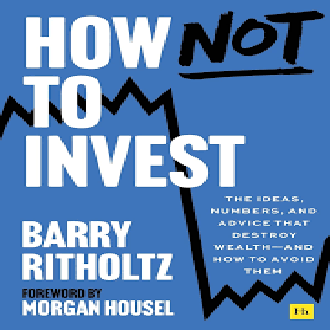
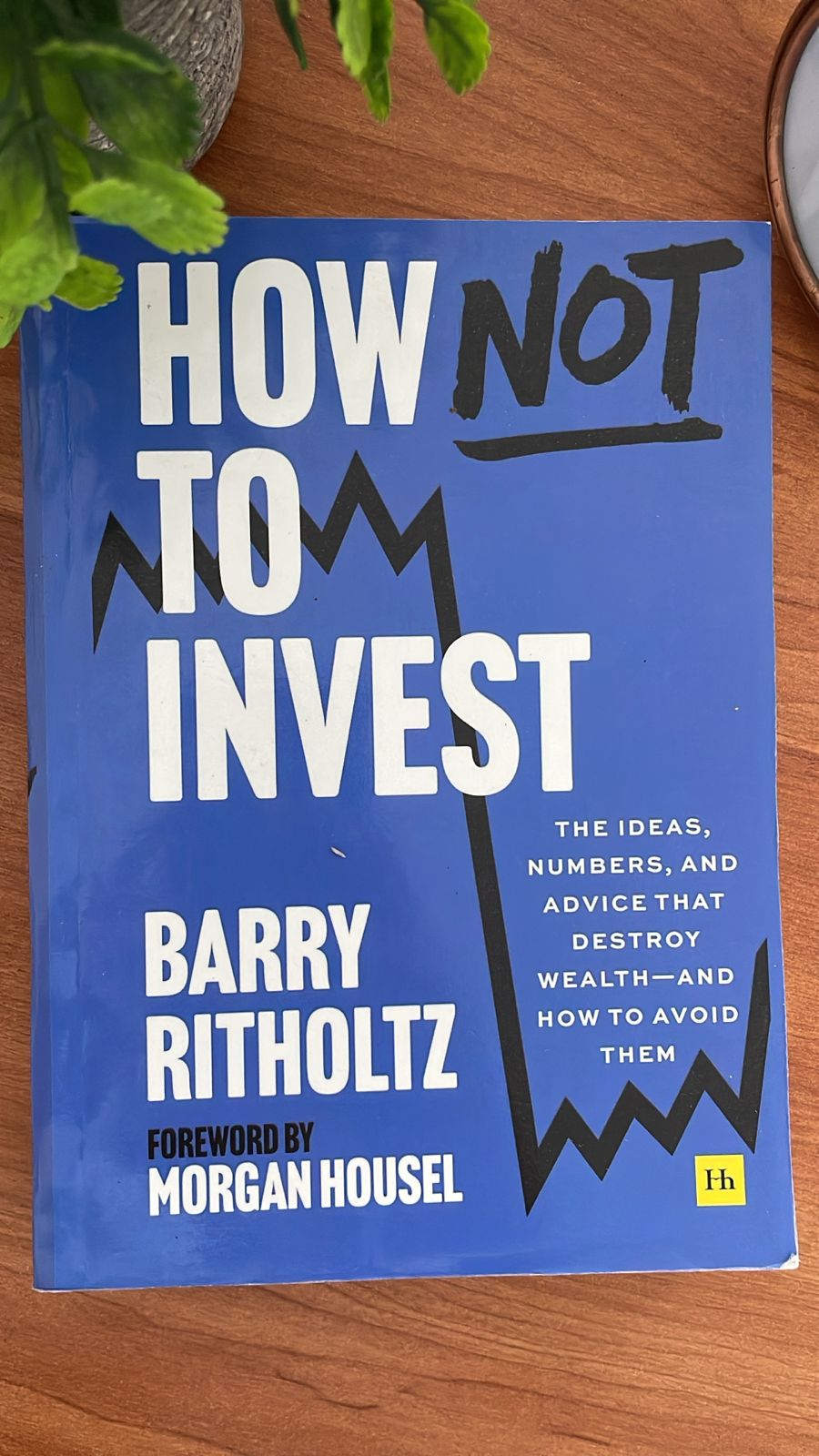

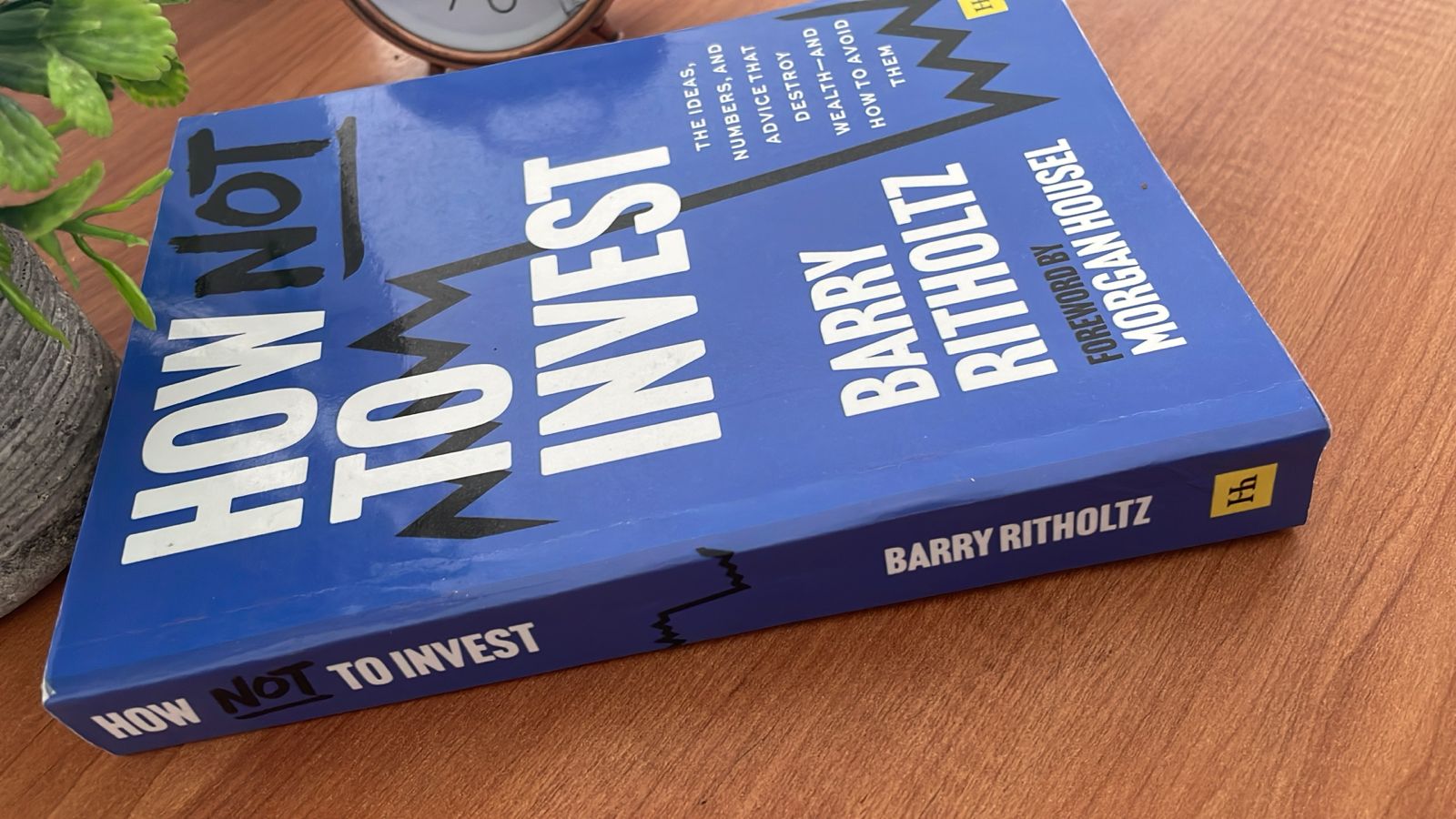
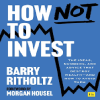
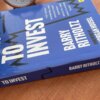
How Not To Invest by Barry Ritholtz


රු2,100.00
3 X Rs. 700.00 or 8% Cashback with


or 3 X රු700.00 with


or up to 4 X රු525.00 with


How Not to Invest focuses on avoiding costly financial mistakes rather than chasing profits—showing that reducing errors is one of the most powerful ways to build long-term wealth.
4 in stock
How Not to Invest by Barry Ritholtz is a practical investing and personal-finance book focused on one of the most overlooked parts of building wealth: avoiding unnecessary mistakes.
Investors often spend enormous amounts of time searching for winning stocks, predicting market movements, following financial news, studying charts, or looking for the next major opportunity.
Barry Ritholtz takes a different approach.
Instead of asking only, “How can I make more money?” he encourages readers to ask another important question:
What mistakes could destroy the money I already have?
A single serious investment mistake can sometimes erase the benefits of many successful decisions.
That is why How Not to Invest by Barry Ritholtz concentrates on the behaviors, assumptions, numbers, and decision-making errors that repeatedly cause investors to lose money.
The goal is not to become perfect.
It is to make fewer avoidable mistakes and make the mistakes that do happen less expensive.
How Not to Invest by Barry Ritholtz – Book Overview
How Not to Invest by Barry Ritholtz examines the most common errors made by both professional and individual investors.
Investing can appear complicated because markets constantly produce new information.
Stock prices move.
Interest rates change.
Companies report earnings.
Analysts publish forecasts.
News headlines create fear and excitement.
Social media spreads opinions instantly.
Investors can easily feel that successful investing requires responding to every new development.
Ritholtz challenges this idea.
Many of the biggest problems investors face do not come from lacking information.
They come from how people interpret information and how emotions influence decisions.
Fear can cause investors to sell at the wrong time.
Greed can encourage excessive risk-taking.
Overconfidence can make someone believe they understand more than they actually do.
Following a crowd can lead people into investments they never properly researched.
The book encourages readers to recognize these patterns before they become expensive mistakes.
Avoiding Mistakes Can Be More Important Than Finding Winners
One of the central ideas in How Not to Invest by Barry Ritholtz is that avoiding major errors may be more valuable than constantly trying to achieve spectacular returns.
Investors naturally notice success.
A stock doubles.
A trader makes a perfect call.
Someone buys an asset shortly before its price rises dramatically.
These stories are exciting.
But they can create unrealistic expectations.
Long-term wealth often depends less on one brilliant decision and more on avoiding catastrophic ones.
Consider an investor who earns good returns for several years and then places too much money into one risky investment.
If that investment collapses, years of progress can disappear.
Avoiding that concentration risk may matter more than finding another exciting opportunity.
Behavioral Biases
Behavioral psychology plays an important role in How Not to Invest by Barry Ritholtz.
Humans are not perfectly rational decision-makers.
Our brains developed to survive uncertain environments, not necessarily to manage modern investment portfolios.
This can create predictable biases.
Investors may:
- Become overconfident after a few successful trades
- Give too much importance to recent events
- Follow the crowd
- Refuse to admit a mistake
- Sell winners too early
- Hold losing investments too long
- Believe memorable stories more than boring data
- Search only for information that supports existing beliefs
- React emotionally to market volatility
Recognizing these biases does not make them disappear.
However, awareness can help investors design better decision-making processes.
Overconfidence
Overconfidence is one of the most dangerous investing behaviors explored in How Not to Invest by Barry Ritholtz.
A few successful decisions can convince someone that they have special market insight.
This may encourage larger bets.
More trading.
Less diversification.
Greater risk.
The problem is that investing outcomes can involve both skill and luck.
An investor may make money even when the reasoning behind a decision was poor.
If they misunderstand luck as skill, they may increase risk at exactly the wrong time.
A disciplined investor therefore needs humility.
Successful investing does not require knowing everything.
It requires understanding that uncertainty is always present.
The Danger of Forecasting
Predictions are everywhere in financial markets.
Experts predict where interest rates will move.
Analysts predict company earnings.
Economists predict recessions.
Strategists predict stock-market levels.
How Not to Invest by Barry Ritholtz encourages readers to be cautious about treating forecasts as certainty.
The future contains too many variables.
Unexpected wars can begin.
Companies can fail.
Technologies can emerge.
Governments can change policy.
Natural disasters can occur.
Consumer behavior can shift.
A forecast may be based on reasonable assumptions and still be wrong.
Investors should therefore avoid building entire portfolios around one prediction about what the future will look like.
Following the Crowd
Crowd behavior can create powerful pressure.
When everyone appears to be making money from one investment, staying away can feel uncomfortable.
How Not to Invest by Barry Ritholtz examines how this fear of missing out can influence investors.
During market booms, rising prices attract attention.
Attention attracts new buyers.
More buying pushes prices higher.
The increasing price then appears to confirm the original excitement.
Eventually, investors may stop asking whether an asset is reasonably valued.
They buy because everyone else is buying.
This behavior can contribute to bubbles.
The lesson is simple: popularity alone is not an investment strategy.
Emotional Investing
Fear and greed are two of the strongest emotions affecting markets.
How Not to Invest by Barry Ritholtz explores how emotional reactions can damage long-term returns.
When markets fall sharply, fear becomes intense.
Headlines become negative.
Investors may feel pressure to sell everything.
But selling after a major decline can turn temporary losses into permanent ones.
The opposite problem occurs during strong markets.
When prices rise rapidly, investors may become overconfident.
Risk suddenly feels harmless.
People may borrow money, chase speculative assets, or concentrate portfolios.
A disciplined process can help reduce the influence of these emotional extremes.
Diversification
Diversification is one of the most important tools for managing investment risk.
How Not to Invest by Barry Ritholtz reminds readers that no one knows with certainty which company, sector, market, or asset will perform best in the future.
Concentrating too much money in one area may create enormous risk.
A diversified portfolio spreads exposure across different investments.
This does not guarantee profits.
It does not prevent temporary losses.
But it can reduce the damage caused when one investment performs badly.
Diversification may feel less exciting than making a huge bet on a single stock.
That is exactly why it can be valuable.
Good investing is not always exciting.
Market Timing
Trying to perfectly time the market is another common mistake.
Investors may attempt to sell immediately before a crash and buy again at the exact bottom.
In theory, this sounds attractive.
In practice, it requires two difficult decisions.
First, the investor must know when to get out.
Then they must know when to get back in.
How Not to Invest by Barry Ritholtz encourages readers to think carefully about whether they can consistently make both decisions correctly.
Missing only a few strong market days can significantly affect long-term returns.
For many investors, maintaining a disciplined long-term approach may be more realistic than constantly jumping in and out of markets.
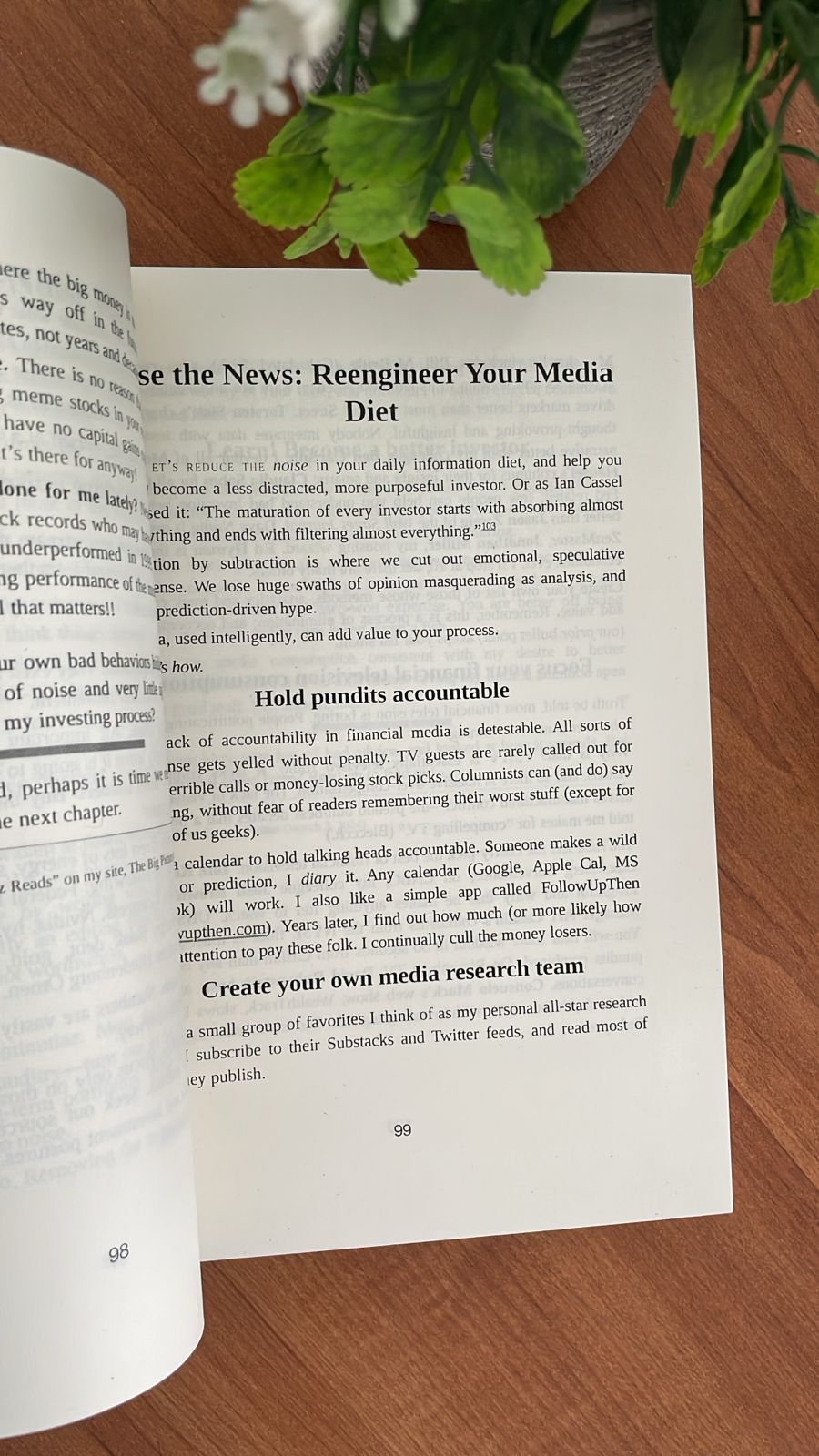
Bad Information and Financial Media
Modern investors have access to more information than any previous generation.
That does not necessarily mean they make better decisions.
How Not to Invest by Barry Ritholtz examines the difference between useful information and noise.
Financial media operates continuously.
Every market movement needs an explanation.
Every day produces predictions, opinions, and urgent headlines.
But long-term investors may not need to react to most of this information.
Too much attention to short-term news can encourage unnecessary trading.
Investors should focus on information that actually matters to their goals rather than reacting to every headline.
Stories Versus Data
Humans naturally respond to stories.
A compelling investment story can be extremely persuasive.
A company may promise revolutionary technology.
An entrepreneur may describe an enormous future market.
An investor may tell an inspiring story about becoming wealthy quickly.
But stories can sometimes distract from numbers.
How Not to Invest by Barry Ritholtz encourages readers to compare narratives with evidence.
Does the company make money?
How much debt does it have?
Is the valuation reasonable?
What assumptions are required for the investment to succeed?
A good story may still describe a bad investment if the price is too high or the fundamentals are weak.
Learning From Famous Investor Mistakes
One of the interesting aspects of How Not to Invest by Barry Ritholtz is its attention to mistakes made by experienced and wealthy investors.
Success does not eliminate the possibility of error.
Professional investors can become overconfident.
Billionaires can make poor decisions.
Fund managers can follow trends.
Experienced market participants can underestimate risk.
This is an important lesson for ordinary investors.
If highly experienced professionals can make mistakes, individual investors should not assume they are immune.
The goal should therefore be to create systems that reduce the impact of human error.
Investing Is a Long-Term Process
Long-term thinking is an important theme in How Not to Invest by Barry Ritholtz.
Financial markets naturally produce volatility.
Prices rise and fall.
Economic conditions change.
Some years are excellent.
Others are difficult.
Investors who constantly judge their strategy based on short-term performance may abandon good plans during temporary periods of weakness.
Long-term investing requires patience.
It also requires realistic expectations.
Wealth is usually built gradually through consistent saving, sensible investing, diversification, and avoiding major mistakes.
Know What You Own
Investors should understand what they are buying.
How Not to Invest by Barry Ritholtz encourages readers to avoid investing simply because something is popular.
Before buying an investment, a person should understand basic questions.
What is the investment?
How does it generate returns?
What risks are involved?
What could cause it to lose value?
How does it fit within the overall portfolio?
An investment should not become attractive simply because its price recently increased.
Understanding the asset can help investors remain calm when markets become volatile.
Fees and Costs
Costs matter more than many investors realize.
Every fee reduces the amount of money remaining in the portfolio.
Trading fees, fund expenses, advisory costs, taxes, and other expenses can accumulate over long periods.
Even small differences in annual costs can become meaningful after decades of compounding.
How Not to Invest by Barry Ritholtz encourages investors to pay attention to factors they can control.
No investor can control tomorrow’s stock-market return.
But they can often control:
- Investment costs
- Trading frequency
- Diversification
- Savings rate
- Tax efficiency
- Asset allocation
- Risk level
- Emotional reactions
Focusing on controllable factors can create a more disciplined strategy.
Risk Management
Investing always involves risk.
The question is how much risk a person can afford and tolerate.
How Not to Invest by Barry Ritholtz highlights why investors should understand their own financial situation before taking large risks.
Someone investing money needed next year should think differently from someone investing for retirement thirty years away.
Risk tolerance also matters emotionally.
A portfolio that looks perfect during a bull market may become impossible to hold during a major decline.
A realistic strategy should account for both financial capacity and psychological comfort.
Why Read How Not to Invest by Barry Ritholtz?
How Not to Invest by Barry Ritholtz is a strong choice for readers interested in:
- Investing
- Personal finance
- Wealth management
- Behavioral finance
- Stock markets
- Portfolio management
- Risk management
- Financial psychology
- Long-term investing
- Market mistakes
- Decision-making
- Investment strategy
- Financial independence
- Building wealth
Rather than promising a secret formula for getting rich quickly, the book focuses on helping readers avoid the mistakes that can destroy long-term progress.
Who Should Read This Book?
How Not to Invest by Barry Ritholtz may especially appeal to:
- Beginner investors
- Long-term investors
- Stock-market investors
- Business students
- Finance students
- Entrepreneurs
- Professionals building retirement portfolios
- Personal-finance readers
- Financial advisors
- Market enthusiasts
- Readers interested in behavioral psychology
- Anyone worried about making costly investment mistakes
It can be especially useful for investors who feel overwhelmed by constant financial news and conflicting market predictions.
A Powerful Guide to Making Fewer Investment Mistakes
How Not to Invest by Barry Ritholtz offers a refreshing perspective on investing.
The biggest opportunity may not always be finding another winning stock.
Sometimes the most valuable decision is simply avoiding a terrible mistake.
Do not take risks you do not understand.
Do not confuse luck with skill.
Do not assume predictions are certain.
Do not follow crowds blindly.
Do not allow fear and greed to control every decision.
Do not ignore diversification.
Do not underestimate fees.
And do not forget that successful investing is usually a long-term process.
By focusing on behavioral mistakes, financial myths, risk, portfolio construction, and better decision-making, How Not to Invest by Barry Ritholtz helps readers build a more disciplined approach to managing money.
For anyone interested in investing, wealth creation, behavioral finance, stock markets, portfolio management, and avoiding expensive financial mistakes, this book offers a practical and thought-provoking guide to becoming a more rational investor.
Learn more about How Not to Invest by Barry Ritholtz on the official Harriman House website.
Explore more investing and finance books at Bargain Books.
Be the first to review “How Not To Invest by Barry Ritholtz”
Related products
-19%
Out of stock
Non-Fiction & Knowledge
Original price was: රු2,650.00.රු2,150.00Current price is: රු2,150.00.
3 X Rs. 716.67 or 8% Cashback with
or 3 X රු716.67 with
or up to 4 X රු537.50 with

Out of stock
Autobiography
රු2,750.00
3 X Rs. 916.67 or 8% Cashback with
or 3 X රු916.67 with
or up to 4 X රු687.50 with
Non-Fiction & Knowledge
රු2,450.00
3 X Rs. 816.67 or 8% Cashback with
or 3 X රු816.67 with
or up to 4 X රු612.50 with
Out of stock
Non-Fiction & Knowledge
රු1,600.00
3 X Rs. 533.33 or 8% Cashback with
or 3 X රු533.33 with
or up to 4 X රු400.00 with
-24%
Out of stock
Non-Fiction & Knowledge
Original price was: රු2,500.00.රු1,900.00Current price is: රු1,900.00.
3 X Rs. 633.33 or 8% Cashback with
or 3 X රු633.33 with
or up to 4 X රු475.00 with
-17%
Out of stock
Non-Fiction & Knowledge
Original price was: රු2,900.00.රු2,400.00Current price is: රු2,400.00.
3 X Rs. 800.00 or 8% Cashback with
or 3 X රු800.00 with
or up to 4 X රු600.00 with
-23%

Non-Fiction & Knowledge
Original price was: රු2,200.00.රු1,700.00Current price is: රු1,700.00.
3 X Rs. 566.67 or 8% Cashback with
or 3 X රු566.67 with
or up to 4 X රු425.00 with
Out of stock
Non-Fiction & Knowledge
රු1,500.00
3 X Rs. 500.00 or 8% Cashback with
or 3 X රු500.00 with
or up to 4 X රු375.00 with
Reviews
There are no reviews yet.