
No products in the cart.
-19%
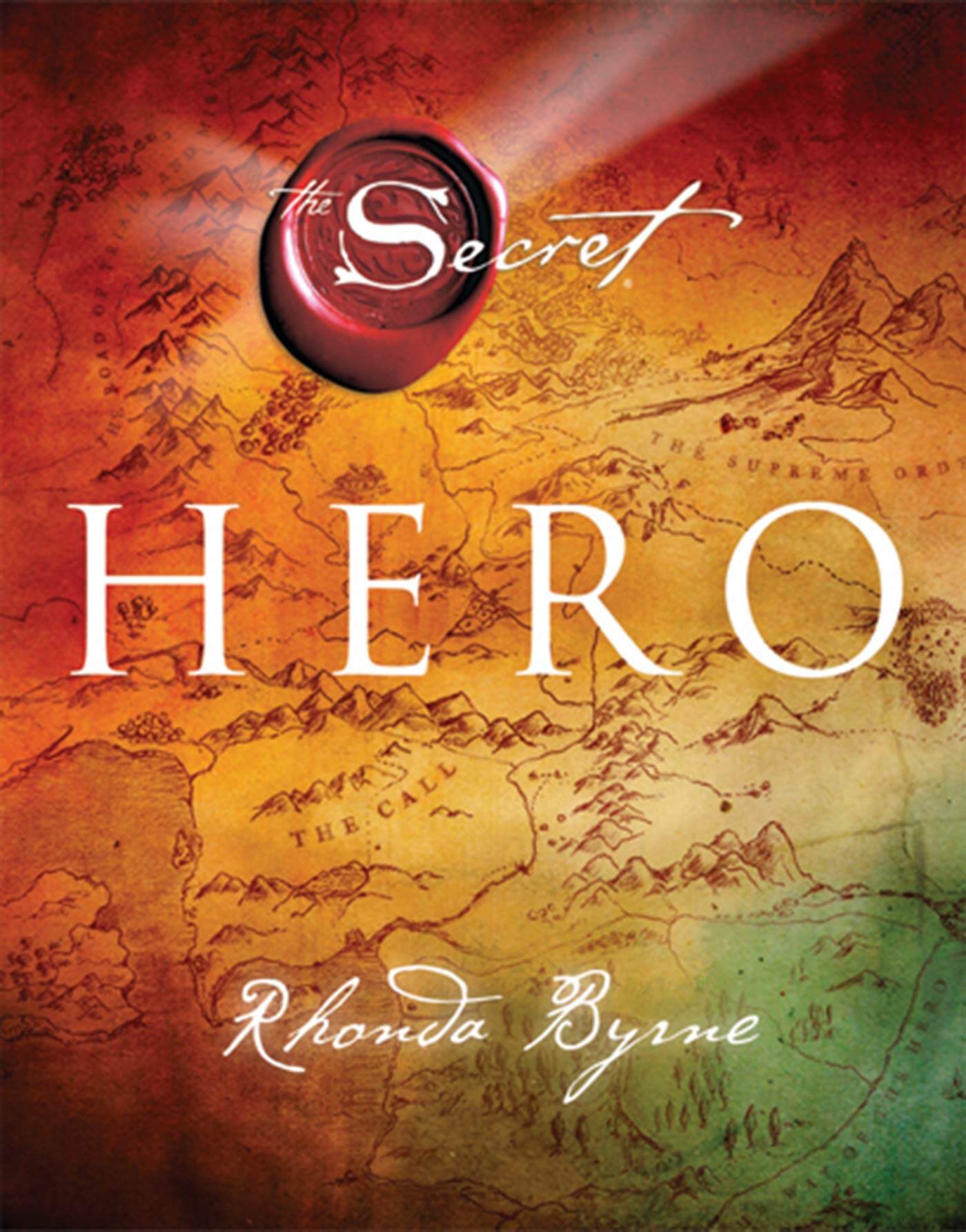
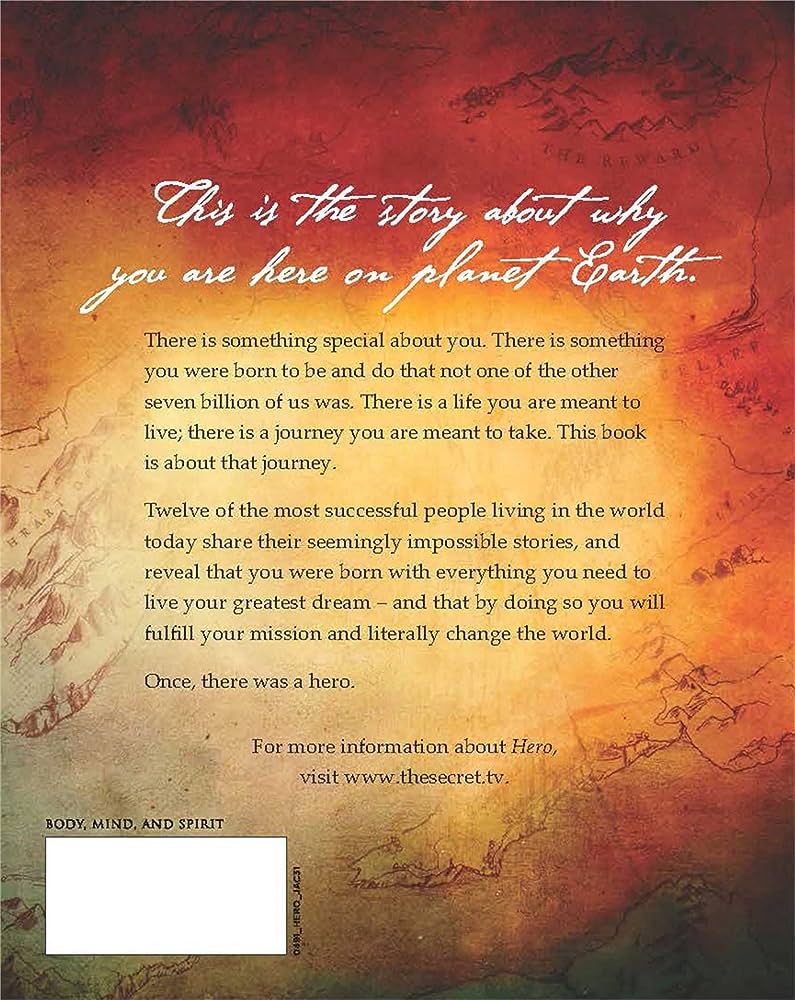
Secret Hero by Rhonda Byrne
Original price was: රු1,600.00.රු1,300.00Current price is: රු1,300.00.
3 X Rs. 433.33 or 8% Cashback with


or 3 X රු433.33 with


or up to 4 X රු325.00 with


Uncover your inner hero with Rhonda Byrne’s “Hero.” This inspiring book explores the incredible potential within each of us through real-life hero stories. Order now to discover your true purpose, tap into your strengths, and embrace a life of meaningful impact.
Out of stock
Email when stock available
Hero by Rhonda Byrne is an inspirational personal-development book about discovering your true calling, pursuing meaningful dreams and developing the courage to continue when obstacles make success seem impossible.
From the creator of The Secret, The Power and The Magic, Rhonda Byrne presents what she describes as a map for moving from where you are now toward the life you most deeply want to live.
Instead of relying only on theory, Byrne draws on the journeys of twelve successful people who faced uncertainty, fear, failure and difficult beginnings before building extraordinary careers and lives.
Their stories are used to explore questions many people eventually ask themselves.
What do I really want?
What am I naturally drawn toward?
Why am I afraid to pursue it?
What if I fail?
What if other people do not believe in me?
And how do I turn a dream into something real?
Hero by Rhonda Byrne argues that the path begins with discovering what genuinely excites you and then having enough courage to start moving toward it.
The official publisher describes the book as a guide to discovering your true calling and learning from people who overcame obstacles while pursuing seemingly impossible dreams.
Hero by Rhonda Byrne – Book Overview
Hero by Rhonda Byrne is built around the idea that every person has something meaningful they are capable of pursuing.
That does not necessarily mean becoming famous.
Your dream might involve creating a business.
Becoming an artist.
Building a career.
Helping people.
Writing a book.
Learning a profession.
Travelling.
Creating financial independence.
Or simply building a life that feels more aligned with your own values.
The central message is that many people never seriously pursue what they want because fear becomes stronger than possibility.
Byrne encourages readers to identify the dream first and then begin moving toward it.
Discovering Your True Calling
One of the biggest themes in Hero by Rhonda Byrne is purpose.
People often choose paths because they seem:
Safe.
Expected.
Respectable.
Practical.
But a successful life and a personally meaningful life are not always identical.
A person can have a respectable job while feeling completely disconnected from the work.
Another person may earn less initially while feeling deeply motivated by what they are building.
The book encourages readers to notice the activities and ambitions that repeatedly attract them.
What Do You Actually Want?
This sounds like an easy question.
Often it is not.
People become influenced by parents, teachers, friends, social media and society.
Eventually it becomes difficult to separate:
What I genuinely want
from
What I think I am supposed to want.
Hero by Rhonda Byrne encourages the reader to examine that distinction.
The Dream
The book treats dreams as starting points.
A dream provides direction.
But simply wanting something is not enough.
You eventually need to translate:
“I want this”
into
“What can I do next?”
That transition from imagination to action is where many dreams either begin becoming real or remain fantasies.
Start Before Everything Is Perfect
A common mistake is waiting until conditions feel completely right.
Enough money.
Enough confidence.
Enough knowledge.
Enough time.
No risk.
But perfect conditions rarely arrive.
Most meaningful projects begin while something is still uncertain.
Starting small can be more useful than waiting indefinitely.
Fear
Fear is one of the biggest obstacles discussed throughout Hero by Rhonda Byrne.
People fear:
Failure.
Rejection.
Embarrassment.
Financial loss.
Criticism.
Making the wrong decision.
Being different.
Fear is not unusual.
The more meaningful a goal becomes, the more vulnerable pursuing it may feel.
Courage Is Action Despite Fear
Courage does not necessarily mean feeling confident all the time.
You can feel afraid and still act.
Apply.
Call.
Create.
Publish.
Practice.
Try.
Ask.
The first step may feel uncomfortable.
But action gives you information that thinking alone cannot provide.
Obstacles
Every meaningful goal eventually encounters obstacles.
A business idea may fail.
An application may be rejected.
Money may become difficult.
A project may take longer than expected.
Someone may criticize you.
The motivational argument behind Hero by Rhonda Byrne is that obstacles should not automatically be interpreted as evidence that the dream is impossible.
Sometimes they simply indicate that the strategy needs adjustment.
Persistence
Persistence becomes important when the initial excitement disappears.
At first, a new goal feels motivating.
Then reality arrives.
Repetition.
Delays.
Mistakes.
Frustration.
That is where persistence becomes more important than inspiration.
Persistence Is Not Blind Stubbornness
There is an important distinction.
Persistence does not mean repeating the same failed method forever.
Useful persistence combines determination with adaptation.
Keep the goal.
Change the method when necessary.
Learn from evidence.
Failure
Hero by Rhonda Byrne presents setbacks as part of pursuing ambitious goals.
Failure can feel personal.
But one unsuccessful attempt does not prove that a person is permanently incapable.
A failed attempt may reveal:
A weak strategy.
Poor timing.
Missing skills.
Insufficient preparation.
A bad market.
Incorrect assumptions.
That information can improve the next attempt.
Failure Versus Identity
There is a major psychological difference between:
“I failed at this attempt.”
and
“I am a failure.”
The first describes an event.
The second creates an identity.
Growth becomes easier when failure is treated as feedback rather than permanent judgment.
The Labyrinth
The book uses the idea of a journey in which the path is not always obvious.
You may know approximately where you want to go without knowing exactly how you will reach it.
Careers often work this way.
Businesses work this way.
Creative projects work this way.
You move forward, gather information and adjust.
Vision
Vision helps you maintain direction when daily work becomes difficult.
Imagine someone wants to build a business.
The vision might be:
Financial independence.
Creating useful products.
Employing people.
Building something meaningful.
That vision provides a reason to continue through the less glamorous work.
Visualization
Byrne’s broader Secret philosophy emphasizes visualization and belief.
Visualization can be practically useful when it helps someone clarify a goal, mentally rehearse performance or maintain motivation.
However, imagining an outcome by itself does not guarantee that outcome.
Results still depend on factors such as action, skills, opportunity, resources, timing and external circumstances.
That distinction is useful when applying the ideas in Hero by Rhonda Byrne.
Belief
Believing that improvement is possible can influence behavior.
If someone thinks:
“There is absolutely no point trying,”
they probably will not take many useful actions.
A stronger belief might be:
“I do not know whether I will succeed, but I can learn enough to give myself a genuine chance.”
That form of belief creates movement without requiring unrealistic certainty.
Action
Perhaps the most practical lesson is that dreams need action.
You can visualize becoming:
An entrepreneur.
A software engineer.
An author.
An athlete.
A designer.
But eventually you need to do the work.
Build.
Study.
Train.
Sell.
Write.
Practice.
Submit.
The dream creates direction.
Action creates evidence.
Small Steps
Large goals often become frightening because the brain sees the entire distance at once.
Instead of thinking:
“I need to create a successful company,”
think:
“What can I test this week?”
Instead of:
“I must become an expert developer,”
ask:
“What skill can I improve today?”
Small steps reduce psychological resistance.
Momentum
Action creates momentum.
One completed step makes the second easier.
A completed course.
First customer.
First article.
First interview.
First prototype.
None guarantees long-term success.
But each provides evidence that progress is possible.
Mentors
The stories inside Hero by Rhonda Byrne also demonstrate the importance of learning from people who have already travelled difficult paths.
Mentors can help you understand:
Mistakes to avoid.
Skills to develop.
Opportunities to notice.
Questions to ask.
You do not necessarily need personal access to famous people.
Books themselves can function as indirect mentorship.
Learn From Other People’s Journeys
One reason Byrne includes twelve successful people is to show different paths toward achievement. The official Secret site describes the book as bringing together the wisdom and insight of twelve successful people and using their journeys to identify the qualities needed to pursue a major dream.
Their stories can provide inspiration.
But readers should avoid copying someone’s path mechanically.
Different people have different:
Resources.
Timing.
Skills.
Networks.
Industries.
Circumstances.
Take principles.
Adapt them to your reality.
Passion
Passion appears frequently in success literature.
But passion should not be interpreted as:
“If I love something, everything will become easy.”
A person can love:
Writing
and dislike editing.
Entrepreneurship
and dislike bookkeeping.
Software development
and dislike debugging.
Passion gives you a reason to tolerate difficult parts.
It does not eliminate them.
Work
Dreams often look glamorous after success.
People see:
The successful company.
Published book.
Large audience.
Award.
Career.
They rarely see all the ordinary work that came first.
The invisible work is often where the dream is actually built.
Discipline
Motivation changes.
Discipline provides continuity.
You may not feel inspired every day.
You can still complete useful work.
That consistency is often more valuable than occasional bursts of extreme motivation.
Purpose and Money
A rich life should not necessarily be interpreted only as financial wealth.
Money matters.
It can provide:
Security.
Freedom.
Opportunity.
Comfort.
But many people also want:
Meaning.
Relationships.
Health.
Contribution.
Time.
A fulfilling definition of success usually includes more than income.
Define Success for Yourself
This is one of the most useful exercises a reader can take from Hero by Rhonda Byrne.
Ask:
What would success actually look like for me?
Not Instagram.
Not colleagues.
Not family expectations.
You.
Maybe your ideal life involves:
High income.
Creative freedom.
A quiet family life.
Travel.
Building a company.
Community service.
There is no universal answer.
Comparison
Comparison can make people abandon perfectly meaningful goals.
Someone else appears:
Further ahead.
Richer.
Younger.
More talented.
More successful.
But you usually see only a small portion of their situation.
Comparing your beginning with someone else’s established success can create unnecessary discouragement.
Social Media and Success
This lesson is even more relevant today than when the book was first published in 2013.
Social media often displays outcomes.
Not process.
You see:
Launch day.
Promotion.
Graduation.
Revenue milestone.
Transformation.
You rarely see every ordinary day required to reach it.
Remembering that can make comparison less destructive.
Opportunity
Opportunity matters.
Success is not created only by mindset.
People have unequal access to:
Education.
Money.
Networks.
Safety.
Healthcare.
Geography.
Opportunity.
That means motivational advice should not be used to blame people for every circumstance they face.
At the same time, recognizing external limitations does not mean ignoring the actions available within your own circumstances.
Both realities can exist.
Luck
Luck also influences outcomes.
Meeting the right person.
Being born in the right location.
Entering an industry at the right time.
Avoiding an unexpected crisis.
Successful people may work extremely hard and still benefit from luck.
Recognizing this encourages humility.
Gratitude
Gratitude is another idea associated with Byrne’s broader philosophy.
Practically, gratitude can help people notice what is already working in their lives rather than focusing exclusively on what is missing.
But gratitude should not become a reason to ignore genuine problems.
You can appreciate what you have and still work to improve what needs changing.
Intuition
Sometimes people feel strongly drawn toward a particular path without being able to explain every reason.
Intuition can be useful.
But for high-stakes decisions, it is sensible to combine intuition with:
Evidence.
Research.
Advice.
Financial analysis.
Risk assessment.
Feeling and thinking can work together.
Self-Trust
People who constantly doubt every decision may struggle to act.
Self-trust develops when you repeatedly demonstrate that you can:
Make decisions.
Handle mistakes.
Learn.
Adjust.
Continue.
You do not need certainty.
You need confidence that you can respond to uncertainty.
The Hero Within
The title Hero reflects Byrne’s belief that the individual should stop waiting for an outside hero to create their life.
This does not mean rejecting help.
It means accepting responsibility for the choices and actions you can control.
Other people can:
Support.
Teach.
Encourage.
Introduce opportunities.
But nobody can permanently do the internal work for you.
Responsibility
Personal responsibility is powerful when used carefully.
It means asking:
What can I do?
It does not mean:
Everything bad that happened is my fault.
Those are completely different ideas.
The first creates agency.
The second can create unnecessary blame.
Success Stories
Success stories can inspire.
But readers should remember survivorship bias.
For every entrepreneur who succeeded after five failures, many other people may have worked equally hard without producing the same outcome.
Therefore, use success stories for:
Ideas.
Courage.
Perspective.
Not guarantees.
Is Hero Part of The Secret Series?
Yes.
Simon & Schuster lists Hero as part of The Secret Library.
It is connected thematically with Rhonda Byrne’s other books, including The Secret, The Power, The Magic and The Greatest Secret.
Do You Need to Read The Secret First?
No.
Hero by Rhonda Byrne can be read independently.
Readers familiar with The Secret will recognize Byrne’s emphasis on:
Belief.
Vision.
Purpose.
Inner potential.
But the book presents its own structure around personal dreams and the experiences of successful people.
Is Hero a Self-Help Book?
Yes.
It fits best within:
Self-Help.
Personal Development.
Motivation.
Success.
Mind, Body & Spirit.
Its goal is to encourage readers to discover a meaningful ambition and begin pursuing it.
Is Hero a Biography?
No.
Although the book includes the experiences of real successful people, Hero by Rhonda Byrne is primarily a motivational/personal-development book rather than a conventional biography.
Is Hero Based on Science?
It should not be treated as a scientific psychology textbook.
Some practical themes—goal setting, persistence, deliberate action, learning from failure and social support—can overlap with established psychological ideas.
However, Byrne’s broader law-of-attraction philosophy includes spiritual or metaphysical claims that are not established scientific laws.
Readers can still use the book for reflection and motivation while distinguishing inspirational ideas from scientific evidence.
Who Is Rhonda Byrne?
Rhonda Byrne is the creator of The Secret, first released as a documentary film and later as an internationally bestselling book.
She subsequently wrote works including The Power, The Magic, Hero and The Greatest Secret. Simon & Schuster lists Hero among her major bestselling titles.
Official Edition Details
Your inventory identifies the product as Secret Hero – Rhonda Byrne – ISBN 9781471133442.
The official publisher identifies that ISBN as:
Title: Hero
Author: Rhonda Byrne
Series: The Secret Library
Publisher: Simon & Schuster UK
Publication Date: November 19, 2013
Format: Hardcover
Pages: 240
ISBN-13: 9781471133442
So your ISBN is correct, but I recommend correcting the product title from Secret Hero to simply Hero by Rhonda Byrne.
7 Powerful Lessons From Hero by Rhonda Byrne
- Discover what genuinely matters to you. A meaningful goal becomes easier to pursue when it reflects your own values rather than someone else’s expectations.
- Begin before you feel completely ready. Waiting for perfect confidence, perfect timing or perfect circumstances can delay action indefinitely.
- Treat obstacles as part of the journey. Difficulties do not automatically prove that the goal is wrong; sometimes they reveal what must change.
- Use failure as information. A failed attempt can reveal weaknesses in your strategy without defining your worth or future.
- Protect the dream with consistent action. Visualization and belief may create direction, but real progress requires learning, practice and repeated action.
- Learn from people who have already overcome difficult challenges. Mentors, books and other people’s experiences can shorten your learning curve while still requiring you to create your own path.
- Become responsible for the next step. You cannot control every circumstance, but you can repeatedly ask what useful action remains available to you.
Why Read Hero by Rhonda Byrne?
Hero by Rhonda Byrne is a good choice for readers interested in personal development, motivation, purpose, goal setting, entrepreneurship, overcoming fear, self-belief and inspirational success stories.
It may especially appeal to people who feel:
Unsure about their direction.
Afraid to begin.
Stuck after failure.
Ready for a career change.
Interested in entrepreneurship.
Motivated by real-life success stories.
Already familiar with The Secret.
The book’s strongest value comes from encouraging readers to think seriously about what they want from life and whether their current actions are moving them toward it.
Who Should Read This Book?
Hero by Rhonda Byrne may particularly appeal to students, entrepreneurs, young professionals, creative people, business owners, readers of motivational books and anyone trying to rediscover a sense of purpose after feeling stuck.
It is also a natural choice for readers who already enjoy Rhonda Byrne’s The Secret, The Power or The Magic and want another book focused specifically on dreams, personal calling and success.
Hero by Rhonda Byrne – Your Dream Needs a First Step
Hero by Rhonda Byrne begins with an attractive idea:
Somewhere inside many people is a life they would genuinely like to live.
The problem is that between the current life and that dream stands uncertainty.
Fear.
Money.
Other people’s opinions.
Past failures.
Responsibilities.
Self-doubt.
The distance can feel so large that doing nothing begins to feel safer.
But dreams rarely disappear simply because they are ignored.
Sometimes they return repeatedly.
The business idea.
The creative project.
The career change.
The book you want to write.
The skill you want to master.
The place you want to go.
Eventually the important question becomes:
Will you continue thinking about it?
Or will you take one real step?
That step does not need to be dramatic.
Research.
Learn.
Save.
Practice.
Build.
Apply.
Ask.
Create.
Then take another.
This is where the most practical interpretation of Hero by Rhonda Byrne becomes useful.
You do not need to believe that positive thoughts magically guarantee success.
You can instead use the book as an invitation to identify what matters, strengthen your sense of possibility and begin acting deliberately.
Dreams need imagination.
But they also need reality.
Time.
Effort.
Skills.
Experimentation.
Relationships.
Persistence.
And sometimes luck.
The hero of your story is not someone who controls every outcome.
It is someone willing to participate actively in creating the next chapter.
For readers who enjoy motivational books about purpose, personal growth and pursuing meaningful goals, Hero by Rhonda Byrne offers an encouraging reminder that a different future often begins with one decision:
Start.
Learn more about Hero by Rhonda Byrne on The Secret official website.
Explore more self-help and personal development books at Bargain Books.
| Author | Rhonda Byrne |
|---|---|
| Type | Paperback Printed Book |
| ISBN/ISSN | 8183224237, 978-8183224239 |
| Language | English |
| Pages | 240 |
Be the first to review “Secret Hero by Rhonda Byrne”
Related products
-23%
Non-Fiction & Knowledge
Original price was: රු2,200.00.රු1,700.00Current price is: රු1,700.00.
3 X Rs. 566.67 or 8% Cashback with
or 3 X රු566.67 with
or up to 4 X රු425.00 with
-26%
Non-Fiction & Knowledge
Original price was: රු2,000.00.රු1,490.00Current price is: රු1,490.00.
3 X Rs. 496.67 or 8% Cashback with
or 3 X රු496.67 with
or up to 4 X රු372.50 with
Non-Fiction & Knowledge
රු1,700.00
3 X Rs. 566.67 or 8% Cashback with
or 3 X රු566.67 with
or up to 4 X රු425.00 with
-26%
Non-Fiction & Knowledge
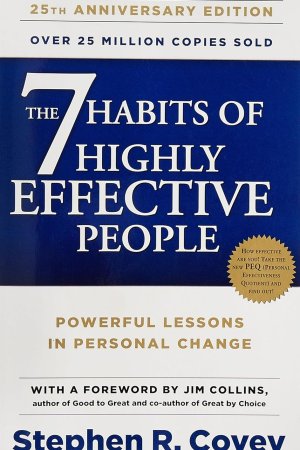
The 7 Habits of Highly Effective People by Stephen R. Covey – Blue Cover
Original price was: රු2,300.00.රු1,700.00Current price is: රු1,700.00.
3 X Rs. 566.67 or 8% Cashback with
or 3 X රු566.67 with
or up to 4 X රු425.00 with
-34%

Self-Help & Psychology
Original price was: රු2,350.00.රු1,550.00Current price is: රු1,550.00.
3 X Rs. 516.67 or 8% Cashback with
or 3 X රු516.67 with
or up to 4 X රු387.50 with
Non-Fiction & Knowledge
රු1,600.00
3 X Rs. 533.33 or 8% Cashback with
or 3 X රු533.33 with
or up to 4 X රු400.00 with
Non-Fiction & Knowledge
රු1,900.00
3 X Rs. 633.33 or 8% Cashback with
or 3 X රු633.33 with
or up to 4 X රු475.00 with
රු2,000.00
3 X Rs. 666.67 or 8% Cashback with
or 3 X රු666.67 with
or up to 4 X රු500.00 with
Reviews
There are no reviews yet.