
No products in the cart.




Grit by Angela Duckworth
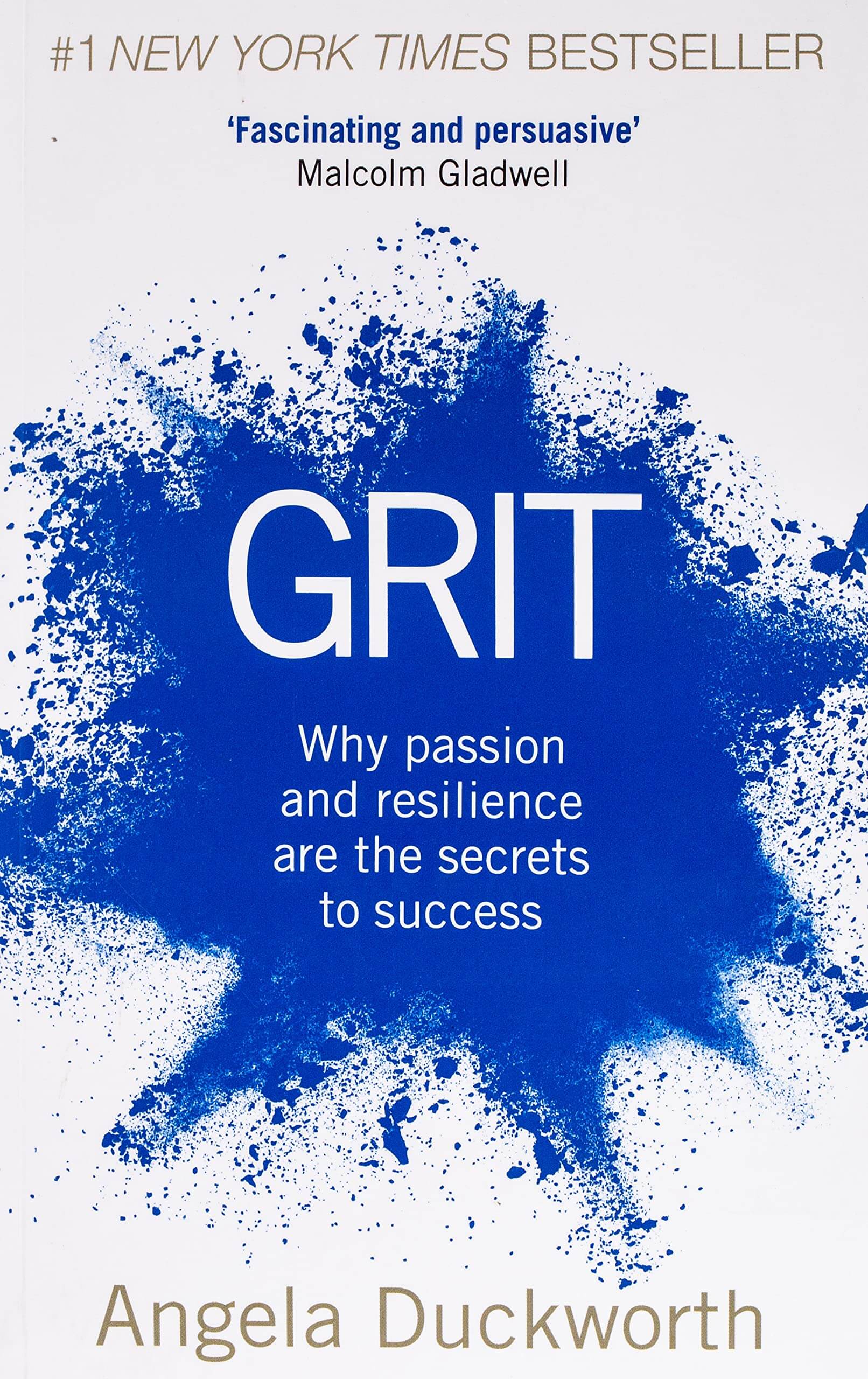
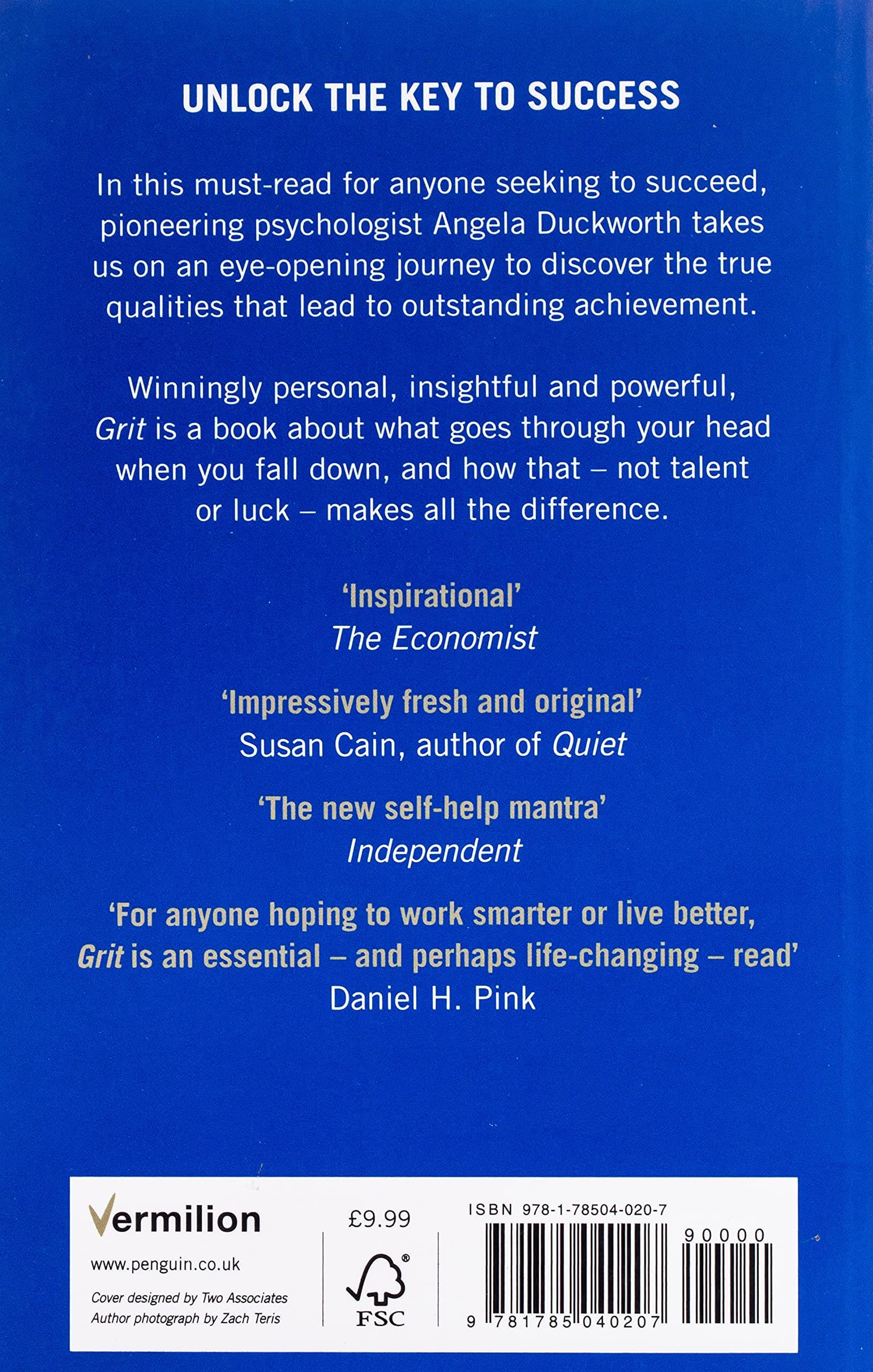
Grit by Angela Duckworth is an insightful psychology and personal-development book that explores why some people achieve extraordinary results while others with similar levels of talent struggle to reach their goals.
Angela Duckworth challenges the common belief that natural intelligence or talent is the most important predictor of success.
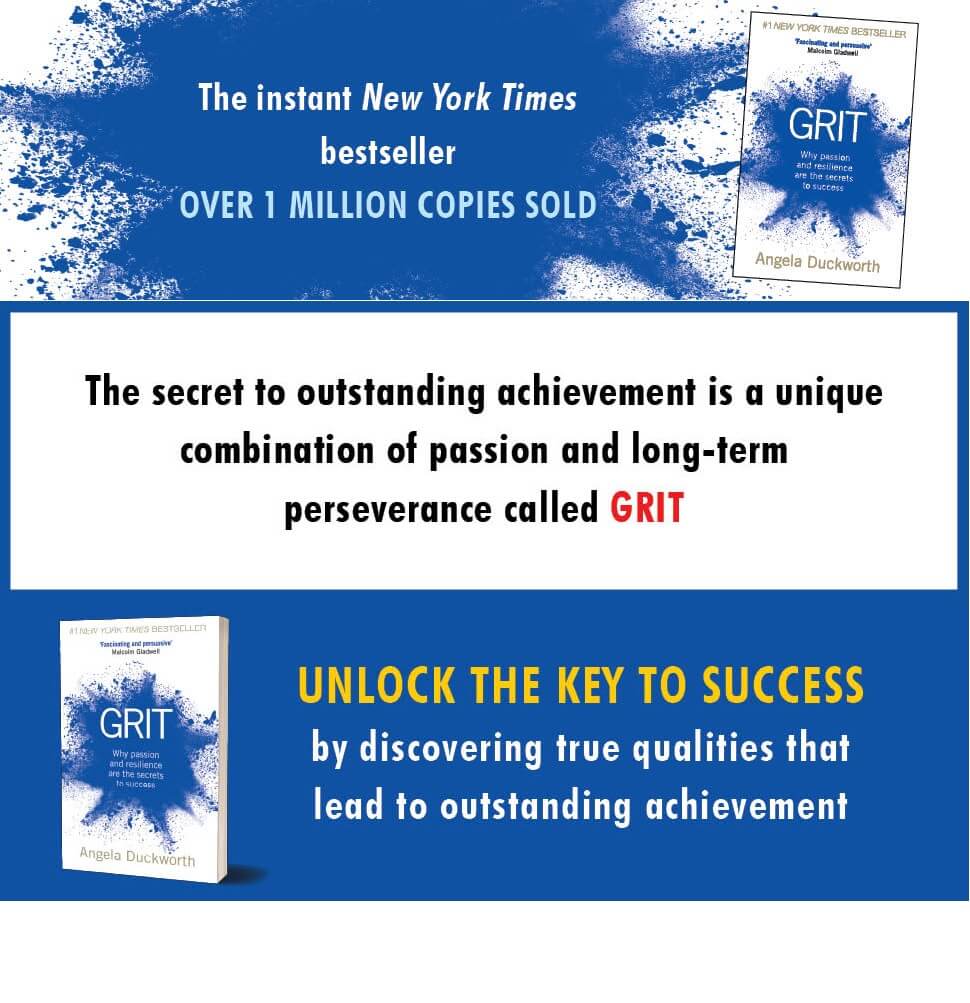
Instead, she argues that outstanding achievement often depends on a combination of passion and long-term perseverance—a quality she calls grit. Her research examines achievers in areas including education, sport, business and highly demanding training environments.
Rather than asking simply, “How talented are you?”, the book encourages readers to ask another question:
How consistently are you willing to work toward something that matters to you?
Why Read Grit by Angela Duckworth?
One of the most valuable ideas in Grit by Angela Duckworth is that talent alone does not automatically create achievement.
Someone can be intelligent and naturally gifted but still fail to develop their potential.
Another person may begin with less natural ability but improve steadily through effort, practice and determination.
Duckworth’s central argument is that high achievers often combine a deep interest in what they do with the willingness to continue working toward long-term goals even when progress is difficult.
This makes the book relevant to students, entrepreneurs, athletes, professionals and anyone trying to improve an important part of their life.
What Does Grit Mean?
Grit is not simply working hard for a few days.
It is also different from temporary motivation.
Many people feel highly motivated when they begin something new.
They start a business.
Begin exercising.
Start learning a language.
Set a study goal.
Or decide to develop a new skill.
The difficult part comes later.
Progress becomes slower.
Excitement disappears.
Mistakes happen.
Results take longer than expected.
Grit is about continuing when the initial excitement is gone.
Duckworth describes it as a combination of passion and perseverance directed toward long-term goals.
That long-term element is important.
Passion Is More Than Excitement
People often describe passion as intense enthusiasm.
But Grit by Angela Duckworth presents passion as something more stable.
You do not need to feel excited every single day.
Instead, passion can mean maintaining a consistent direction over a long period of time.
Someone may spend years developing expertise in the same general field.
Their specific projects may change, but the larger purpose stays relatively consistent.
For example, an entrepreneur may experiment with several different products while remaining committed to solving the same customer problem.
A student may struggle with certain subjects while continuing toward a larger career goal.
Passion therefore involves direction as much as emotion.
Perseverance When Progress Is Slow
Perseverance is the second major part of grit.
Success usually involves setbacks.
Businesses lose customers.
Students receive disappointing results.
Athletes lose competitions.
Writers receive rejection.
Employees make mistakes.
People often assume that successful individuals experience fewer failures.
In reality, the difference may be how they respond.
A setback can produce two reactions.
One person may decide:
“I am clearly not good enough.”
Another may ask:
“What can I learn from this?”
The second reaction creates an opportunity for improvement.
Perseverance does not mean pretending failure does not matter.
It means learning from failure without allowing one disappointing result to end the entire journey.
Effort Matters More Than We Think
A useful idea associated with the book is that effort plays more than one role in achievement.
Talent can help someone develop a skill.
But skill itself still needs to be applied through effort before it produces meaningful results.
This explains why highly talented people do not always become the most successful.
Natural ability may provide an advantage at the beginning.
But someone who practises consistently can continue improving while someone who depends only on talent may eventually stop progressing.
This is an encouraging message.
People cannot completely control the abilities they were born with.
But they can influence how much effort they invest in developing those abilities.
The Importance of Practice
Improvement requires more than simply repeating the same activity.
Effective practice involves identifying weaknesses and deliberately working on them.
Imagine someone learning to play an instrument.
Playing songs they already know may be enjoyable.
But improvement often comes from practising difficult sections repeatedly.
The same idea applies to business.
A salesperson who struggles with handling objections can deliberately practise that skill.
A manager who struggles with communication can work specifically on giving clearer feedback.
A student who consistently loses marks in one area can focus additional practice there.
The important lesson is that practice should be purposeful.
Learn From Failure
Grit by Angela Duckworth also provides a useful perspective on failure.
Failure can feel like evidence that someone should stop.
But it can also become information.
A failed attempt can reveal:
- What does not work
- Which skills need improvement
- Which assumptions were incorrect
- Where preparation was insufficient
- What should be changed next time
This does not mean every goal should be pursued forever.
Sometimes changing direction is sensible.
But quitting immediately whenever something becomes difficult can prevent people from discovering what they could eventually achieve.
Interest Can Be Developed
People sometimes believe they must instantly discover one perfect passion.
The book offers a more realistic perspective.
Interests often develop gradually.
You try something.
You become curious.
You practise.
You improve.
You discover more depth.
Eventually, that interest may become an important part of your life.
This means young people especially should not feel pressured to identify one perfect career immediately.
Exploration matters.
Trying different activities can help people discover which subjects or problems continue to hold their attention.
Passion may grow rather than suddenly appear.
Purpose Makes Persistence Easier
Long-term goals become easier to pursue when they feel meaningful.
Purpose gives people a reason to continue when the work itself becomes difficult.
For example, a teacher may continue working through challenging days because helping students matters deeply to them.
An entrepreneur may continue improving a product because they believe it genuinely solves a customer problem.
A healthcare worker may tolerate demanding training because the larger purpose feels worthwhile.
Purpose does not eliminate difficulty.
But it can make difficulty feel worth enduring.
Hope and Resilience
Another important element of grit is the belief that improvement is possible.
People who believe nothing can change are less likely to continue trying.
Resilient people do not necessarily believe everything will be easy.
They believe their actions can influence what happens next.
That difference matters.
After a poor result, they look for adjustments.
After rejection, they try again.
After making a mistake, they learn.
This mindset allows people to recover rather than remaining trapped by one negative experience.
Grit in Education
Duckworth’s research has examined students and educational settings, including competitors in the National Spelling Bee and cadets undergoing demanding training at West Point.
These examples help illustrate why academic ability alone does not completely explain achievement.
Students also need consistency.
Studying only when exams are approaching can produce different results from building regular study habits.
A student may understand a concept quickly but perform poorly if they do not practise.
Another student may initially struggle but eventually master the subject through continued effort.
This makes grit particularly relevant to learners.
Grit in Business
The lessons in Grit by Angela Duckworth also apply strongly to entrepreneurship.
Business rarely develops exactly as planned.
A new product may fail.
Marketing may produce disappointing results.
Suppliers may create problems.
Customers may choose competitors.
Cash flow may become difficult.
Entrepreneurs therefore need more than a good idea.
They need the ability to keep learning and adapting.
At the same time, grit should not mean stubbornly following a strategy that clearly does not work.
The long-term goal can remain stable while the method changes.
That distinction is important.
Be persistent about the purpose, but flexible about how you reach it.
Grit and Leadership
Leaders also influence the perseverance of the people around them.
A manager who treats every mistake as a disaster may create employees who are afraid to experiment.
A manager who encourages reflection and improvement can create a healthier learning environment.
Good leaders can help teams develop grit by:
- Setting meaningful goals
- Providing useful feedback
- Encouraging improvement
- Recognizing consistent effort
- Creating opportunities to learn
- Allowing people to recover from reasonable mistakes
This does not mean lowering standards.
In fact, high expectations can work well when people also receive support and opportunities to improve.
Grit Is Not About Working Without Rest
Persistence should not be confused with constant exhaustion.
Working every hour of every day is not necessarily evidence of grit.
Long-term performance requires sustainability.
People need rest.
They need recovery.
They may need to change strategies.
And sometimes they need to abandon goals that no longer make sense.
The useful lesson from grit is not “never stop doing anything.”
It is to avoid giving up on meaningful long-term goals simply because progress becomes uncomfortable or slow.
Who Should Read Grit?
This book is an excellent choice for readers interested in:
- Personal development
- Psychology
- Motivation
- Resilience
- Goal setting
- Success
- Entrepreneurship
- Education
- Leadership
- Career development
- Building better habits
- Overcoming failure
- Long-term achievement
- Developing potential
It can be especially useful for students, teachers, parents, athletes, entrepreneurs, managers and professionals working toward difficult long-term goals.
Is Grit by Angela Duckworth Worth Reading?
If you have ever wondered why some people continue progressing while others give up despite having enormous talent, Grit by Angela Duckworth provides a fascinating perspective.
The book’s message is encouraging because it shifts attention away from abilities people cannot easily control.
You may not be the smartest person in the room.
You may not have the most natural talent.
You may not begin with the greatest advantages.
But effort, consistency, practice and perseverance can still matter enormously.
Duckworth does not argue that talent is irrelevant.
Instead, she shows why talent alone is insufficient.
Potential must be developed.
Skills require practice.
And meaningful achievement usually requires sustained effort over time.
Buy Grit by Angela Duckworth in Sri Lanka
If you are searching for Grit by Angela Duckworth in Sri Lanka, this bestselling psychology and personal-development book is an excellent addition to your collection.
Whether you are studying, starting a business, building a career, developing a new skill or working toward an ambitious personal goal, the ideas in Grit can help you think differently about success.
Instead of asking whether you were born talented enough, the book encourages you to consider your passion, practice, resilience and willingness to continue improving.
Grit by Angela Duckworth delivers a powerful message: extraordinary achievement is not created by talent alone. Long-term passion combined with perseverance can make an enormous difference in what people ultimately accomplish.
Learn more about Grit: The Power of Passion and Perseverance by Angela Duckworth on the official Simon & Schuster website.
Explore more personal development books at Bargain Books.
| Author | Angela Duckworth |
|---|---|
| Language | English |
| Type | Paperback Printed Book (Second Quality Copy) |
Be the first to review “Grit by Angela Duckworth”
Related products
-24%
Out of stock
Non-Fiction & Knowledge
Original price was: රු2,500.00.රු1,900.00Current price is: රු1,900.00.
3 X Rs. 633.33 or 8% Cashback with


or 3 X රු633.33 with


or up to 4 X රු475.00 with

-14%

Out of stock
Self-Help & Psychology
Original price was: රු2,900.00.රු2,500.00Current price is: රු2,500.00.
3 X Rs. 833.33 or 8% Cashback with
or 3 X රු833.33 with
or up to 4 X රු625.00 with
-26%

Self-Help & Psychology
Original price was: රු2,350.00.රු1,750.00Current price is: රු1,750.00.
3 X Rs. 583.33 or 8% Cashback with
or 3 X රු583.33 with
or up to 4 X රු437.50 with

Non-Fiction & Knowledge
රු1,950.00
3 X Rs. 650.00 or 8% Cashback with
or 3 X රු650.00 with
or up to 4 X රු487.50 with

Self-Help & Psychology
රු2,200.00
3 X Rs. 733.33 or 8% Cashback with
or 3 X රු733.33 with
or up to 4 X රු550.00 with
-23%

Non-Fiction & Knowledge
Original price was: රු2,200.00.රු1,700.00Current price is: රු1,700.00.
3 X Rs. 566.67 or 8% Cashback with
or 3 X රු566.67 with
or up to 4 X රු425.00 with
-24%

Non-Fiction & Knowledge
Original price was: රු2,300.00.රු1,750.00Current price is: රු1,750.00.
3 X Rs. 583.33 or 8% Cashback with
or 3 X රු583.33 with
or up to 4 X රු437.50 with
Out of stock
Non-Fiction & Knowledge
රු1,600.00
3 X Rs. 533.33 or 8% Cashback with
or 3 X රු533.33 with
or up to 4 X රු400.00 with
Reviews
There are no reviews yet.