
No products in the cart.
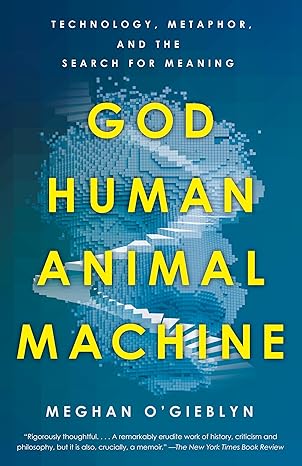
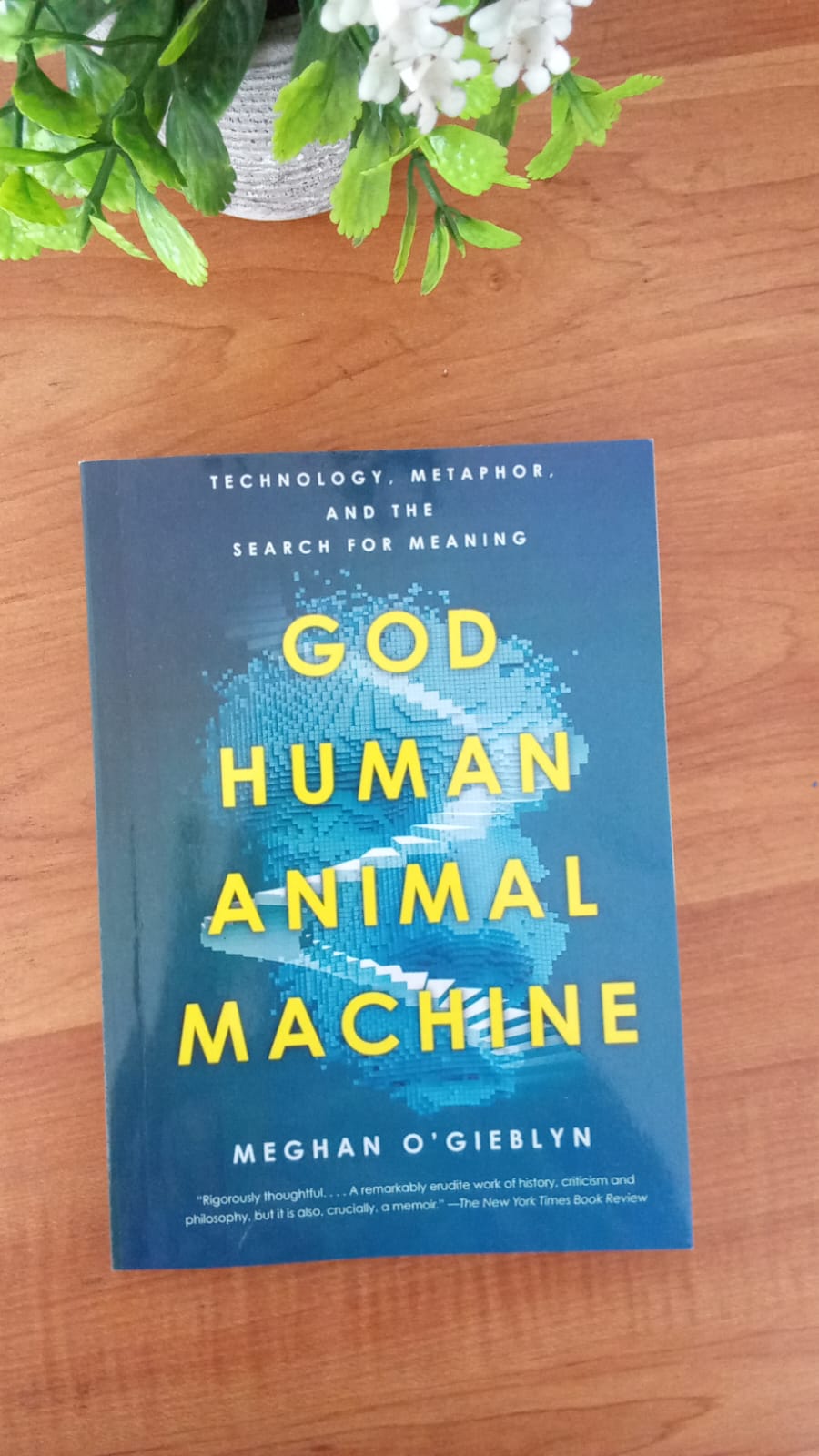
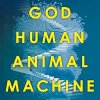
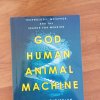



God, Human, Animal, Machine by Meghan O’Gieblyn is a thought-provoking exploration of one of the biggest questions of the modern age:
What does it actually mean to be human?
For centuries, people looked to religion for answers.
Human beings had souls.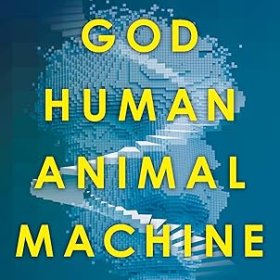
God created meaning.
Life had a purpose beyond the material world.
Then science changed the way many people understood reality.
The universe increasingly became something that could be measured.
Explained.
Calculated.
Reduced to physical processes.
Today, another transformation is happening.
Artificial intelligence can generate language.
Algorithms predict behaviour.
Computers recognize images.
Robots imitate living creatures.
Neural networks are described using language once associated with the human brain.
And people increasingly describe their own minds using computer metaphors.
Memory becomes storage.
The brain becomes hardware.
Thought becomes computation.
So where does that leave the human being?
God, Human, Animal, Machine asks whether technology is simply giving us new tools—or quietly changing the way we understand ourselves.
The publisher describes the book as an exploration of authentic human existence in the age of artificial intelligence, combining O’Gieblyn’s personal religious history with questions of identity, consciousness, knowledge, and the purpose of life.
Why Read God, Human, Animal, Machine?
God, Human, Animal, Machine is ideal for readers interested in the intersection of technology and philosophy.
Readers can expect discussions of:
- Artificial intelligence
- Consciousness
- The human mind
- Religion
- Christianity
- Faith and doubt
- Philosophy
- Technology
- Algorithms
- Robotics
- Machine learning
- Transhumanism
- Simulation theory
- The soul
- Free will
- Human identity
- Animals and machines
- Science
- Meaning and purpose
This is not a simple “AI is good” or “AI is bad” book.
It asks something deeper.
What happens to our understanding of humanity when machines begin performing activities once considered uniquely human?
God, Human, Animal, Machine and Artificial Intelligence
Artificial intelligence creates a philosophical problem as well as a technological one.
Suppose a machine can:
Write.
Talk.
Recognize faces.
Compose music.
Solve problems.
Imitate empathy.
Generate art.
At what point do we stop asking only what the machine can do and begin asking what intelligence actually is?
Human beings have traditionally defined themselves by abilities thought to separate us from other creatures.
Language.
Reason.
Creativity.
Self-awareness.
Moral judgment.
But technology continually challenges those boundaries.
God, Human, Animal, Machine examines what happens when machines appear increasingly capable of behaviours once treated as evidence of a uniquely human mind.
God, Human, Animal, Machine and Consciousness
A computer can process information.
But does it experience anything?
That distinction is central.
A machine may identify the colour red.
But does it see redness?
An AI system may say:
“I am sad.”
But does anything inside it actually feel sadness?
This leads directly to one of philosophy’s oldest and most difficult problems.
What is consciousness?
We know consciousness exists because we experience it.
But explaining how subjective experience emerges from physical matter remains difficult.
O’Gieblyn explores theories of mind alongside modern technological thinking, asking whether consciousness can ultimately be explained as computation or whether something remains outside that model. The book ranges across subjects including neuroscience, cybernetics, philosophy of mind, and theories such as panpsychism.
Are Humans Basically Machines?
Modern culture frequently describes people in mechanical terms.
The brain processes information.
DNA contains code.
The body is biological machinery.
Behaviour can be predicted from data.
Habits can be programmed.
These metaphors are useful.
But metaphors can influence thought.
If we repeatedly describe human beings as machines, eventually we may begin treating ourselves as if that is literally what we are.
God, Human, Animal, Machine asks readers to notice those assumptions.
A metaphor can clarify something.
It can also hide something.
Technology Changes More Than Our Tools
New technologies do not simply change what we can do.
They can change the language we use to understand ourselves.
Before computers, people did not commonly describe memory as information storage.
Before networks, people did not think about human society in exactly the same terms as interconnected data systems.
Technology supplies metaphors.
Then those metaphors travel back into psychology, philosophy, and everyday conversation.
That circular relationship is one of the most fascinating ideas in the book.
God, Human, Animal, Machine and Religion
Religion is not simply an academic topic for Meghan O’Gieblyn.
It is personal.
She grew up with strong religious beliefs and later left Christian fundamentalism.
But abandoning belief did not automatically eliminate the questions religion once answered.
What gives life meaning?
Do human beings have souls?
Does consciousness have a purpose?
Is morality objective?
What happens after death?
Why does anything exist?
The publisher notes that O’Gieblyn writes from the perspective of a former religious believer who remains haunted by questions of faith.
This gives God, Human, Animal, Machine a different tone from an ordinary technology book.
The author is not simply studying machines.
She is searching for meaning.
What Replaces Religion?
When traditional religious explanations disappear, humans do not necessarily stop looking for transcendence.
Sometimes technology begins occupying similar territory.
Consider ideas such as:
Digital immortality.
Uploading consciousness.
Artificial superintelligence.
Simulation theory.
Transhumanism.
Living forever through technology.
Some technological visions promise outcomes that sound surprisingly similar to ancient religious hopes.
Immortality.
Transformation.
Perfect knowledge.
Escape from the limitations of the body.
That similarity allows O’Gieblyn to examine whether supposedly secular technological culture may reproduce older religious desires using different language.
God, Human, Animal, Machine and Transhumanism
Transhumanism asks whether technology should help humanity overcome its biological limitations.
Why accept ageing?
Disease?
Limited memory?
Physical weakness?
Eventually even death?
Future technologies might allow people to dramatically extend their capabilities.
But that raises another question.
If we replace enough of what currently defines a human body and mind, are we still human?
And perhaps more importantly:
Which parts of ourselves are essential?
The body?
Memory?
Personality?
Consciousness?
Information?
The soul?
These questions make God, Human, Animal, Machine particularly relevant to readers interested in AI and futurism.
The Dream of Digital Immortality
Imagine copying every memory from your brain into a computer.
The digital version speaks like you.
Remembers your childhood.
Recognizes your friends.
Has your personality.
Would you continue living?
Or would there simply be a convincing copy that believes it is you?
That distinction reveals how difficult personal identity becomes when the human mind is understood primarily as information.
If a person is data, perhaps data can be copied.
But if subjective consciousness is something more, copying information may not preserve the self.
God, Human, Animal, Machine and the Simulation Question
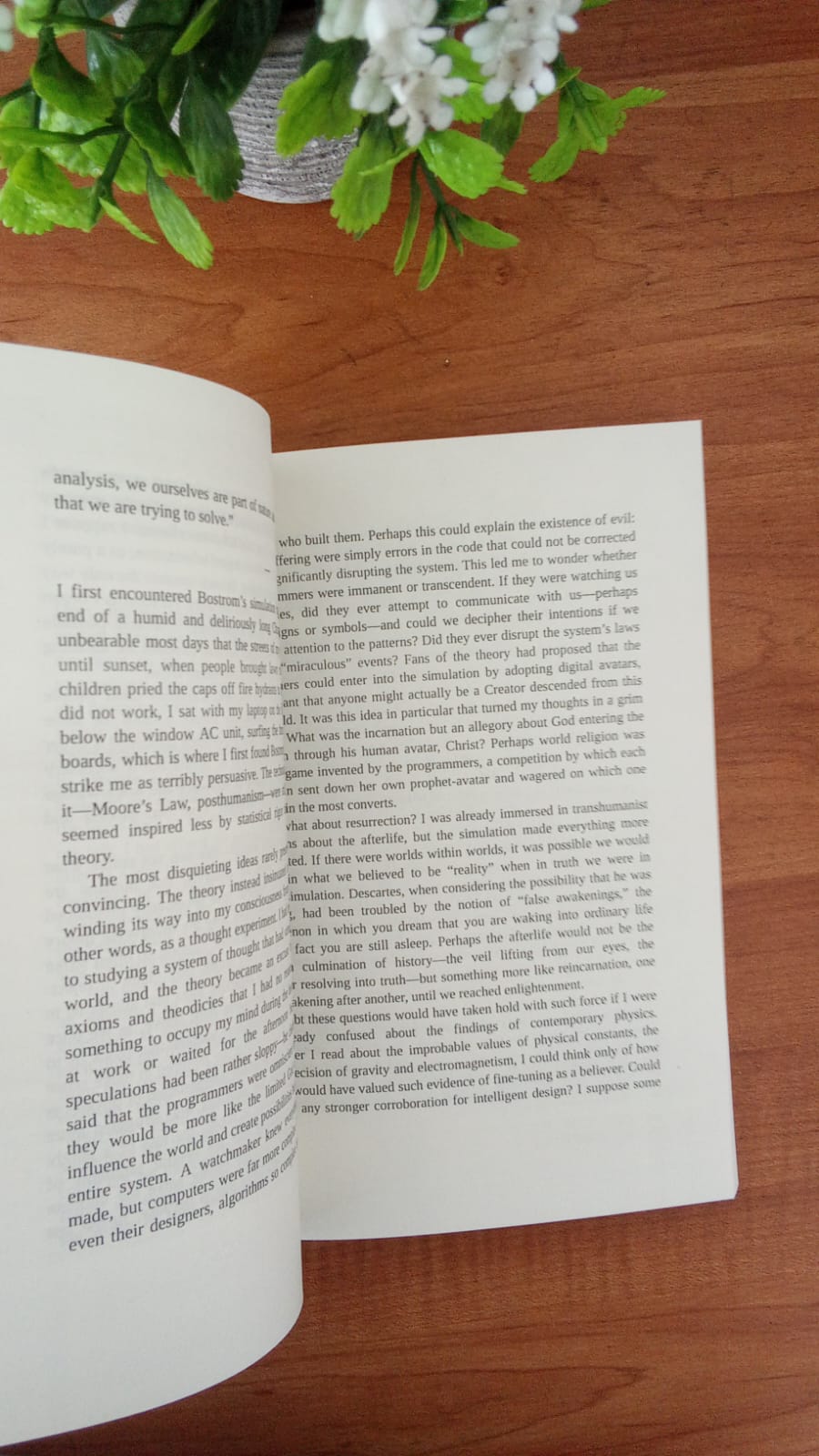
Another modern idea explored within the book’s intellectual landscape is simulation theory.
Could reality itself be computational?
Could our universe be a simulation?
At first, this sounds very different from religion.
But consider the structure.
There is a reality beyond our visible world.
A more powerful intelligence created our world.
The inhabitants cannot easily perceive the creator.
That sounds strangely familiar.
Technology may appear to replace religious explanations while sometimes recreating similar philosophical structures.
Machines and Animals
The title is carefully chosen.
God.
Human.
Animal.
Machine.
These categories have historically helped people organize existence.
God above humanity.
Humans above animals.
Machines as objects created by humans.
But modern science and technology blur those boundaries.
Evolution connects humans with animals.
Artificial intelligence connects cognitive abilities with machines.
Materialism questions the distinction between mind and matter.
Technology raises the possibility that humans may eventually merge with machines.
The categories remain.
Their borders become increasingly uncertain.
What Makes Humans Special?
For centuries, humanity has identified qualities supposedly unique to us.
Reason.
Language.
Tool use.
Culture.
Self-awareness.
Morality.
Creativity.
Then researchers discover complex behaviours in animals.
And machines begin demonstrating abilities once associated with human intelligence.
Every discovery forces the boundary to move again.
That creates the question at the heart of God, Human, Animal, Machine:
If intelligence alone does not make us unique, what does?
Perhaps consciousness.
Perhaps moral responsibility.
Perhaps embodiment.
Perhaps relationships.
Perhaps there is no single answer.
God, Human, Animal, Machine and Free Will
If the brain is a physical system following physical laws, where does free will fit?
When you make a decision, are you choosing?
Or are neurons simply producing an outcome?
Technology makes this question even more uncomfortable.
Algorithms already attempt to predict:
What people will buy.
What they will watch.
Where they will click.
Whom they may date.
Which political content will hold their attention.
The better prediction becomes, the more tempting it becomes to think of human behaviour as computational.
But prediction is not necessarily the same as complete understanding.
That tension runs throughout the book’s examination of technological metaphors.
The Problem With Treating People as Data
Data can reveal patterns.
But a person is more than a statistical pattern.
Suppose an algorithm knows:
Your age.
Location.
Income.
Purchases.
Search history.
Music.
Reading habits.
Social connections.
It may predict your next action remarkably well.
But does it know you?
That question matters.
A system can model behaviour without understanding subjective experience.
God, Human, Animal, Machine continually pushes readers to examine the gap between description and experience.
Is Technology Becoming a New Religion?
Not exactly.
O’Gieblyn’s argument is more nuanced.
She does not simply declare that technology is religion.
Instead, she examines the strange similarities between religious and technological ways of thinking.
Both can promise transcendence.
Both can offer explanations of reality.
Both can produce powerful narratives about humanity’s future.
And both can encourage belief in things ordinary people cannot fully understand themselves.
The book is particularly interested in what happens when technological systems become so complex that users must rely on them without fully understanding how they work.
God, Human, Animal, Machine Is Also a Memoir
This is important for customers.
The book is not a standard computer-science textbook.
Nor is it simply a philosophy reference book.
It blends:
Memoir.
Essays.
Technology criticism.
Religion.
History.
Philosophy.
Personal reflection.
The New York Times characterization reproduced by the publisher describes it as a hybrid of history, criticism, philosophy, and memoir.
That personal element makes abstract ideas feel connected to a real intellectual journey.
Is God, Human, Animal, Machine Difficult to Read?
It is intellectually demanding.
Readers encounter subjects such as:
Descartes.
Consciousness.
Quantum physics.
Cybernetics.
Artificial intelligence.
Transhumanism.
Theology.
Philosophy of mind.
But O’Gieblyn is known for making complex ideas relatively accessible.
The publisher’s collected reviews repeatedly note her ability to communicate difficult philosophical concepts without turning the book into a technical textbook.
Readers do not need a computer-science degree.
But they should be prepared to think.
7 Powerful Ideas From God, Human, Animal, Machine
1. Technology Changes How We Understand Ourselves
Computers do not merely perform tasks.
They give us new metaphors for describing memory, intelligence, consciousness, and identity.
2. Intelligence and Consciousness Are Not Necessarily the Same
A system may behave intelligently without settling the question of whether it experiences anything internally.
3. Human Exceptionalism Is Becoming Harder to Define
Animals and machines continually challenge abilities once considered uniquely human.
4. Technology Can Reproduce Ancient Religious Dreams
Digital immortality, superintelligence, and transhumanism can resemble older hopes for transcendence and eternal life.
5. Scientific Explanation Does Not Automatically Create Meaning
Understanding how something works does not necessarily answer why life matters.
6. Metaphors Can Become Invisible Assumptions
When we repeatedly compare the brain to a computer, we may eventually forget that the comparison began as a metaphor.
7. The Question of Humanity Becomes More Important as AI Improves
God, Human, Animal, Machine ultimately asks us to reconsider consciousness, identity, purpose, and moral responsibility as the boundary between humans and technology becomes less obvious.
What You Can Expect From God, Human, Animal, Machine
Readers can expect:
- Artificial intelligence
- Philosophy
- Technology
- Religion
- Memoir
- Consciousness
- Human identity
- Philosophy of mind
- Transhumanism
- Simulation theory
- Cybernetics
- Robotics
- Machine learning
- Faith and doubt
- The soul
- Free will
- Human exceptionalism
- Science and spirituality
- Technology criticism
- Questions about meaning
Who Should Read God, Human, Animal, Machine?
God, Human, Animal, Machine is ideal for:
AI enthusiasts.
Technology professionals.
Philosophy readers.
Readers interested in consciousness.
People interested in religion and technology.
Students of philosophy of mind.
Readers interested in futurism.
People curious about transhumanism.
Readers questioning faith and meaning.
Fans of thoughtful essay collections.
People interested in the social consequences of artificial intelligence.
Readers who enjoyed books about AI but want something more philosophical than a technical guide.
A Powerful Exploration of What Makes Us Human
God, Human, Animal, Machine does not offer an easy answer.
That is precisely the point.
Technology is advancing faster than many of our old definitions can handle.
Machines can imitate intelligence.
Animals show capacities humans once considered uniquely ours.
Science explains more of the physical world.
Traditional religious certainty has weakened for many people.
Yet the deepest questions remain.
What is consciousness?
What makes a person a person?
Does free will exist?
Is the mind simply computation?
Can consciousness be copied?
Could machines ever genuinely experience the world?
Is meaning something we discover—or something humans create?
Meghan O’Gieblyn approaches these questions through philosophy, technology, religion, history, and her own experience of losing faith without losing the desire for meaning.
For readers interested in artificial intelligence, consciousness, technology, religion, philosophy, transhumanism, the soul, and humanity’s uncertain relationship with increasingly intelligent machines, God, Human, Animal, Machine is an unusually thoughtful and rewarding read.
The book was also a 2022 Los Angeles Times Book Prize finalist in Science & Technology, while Penguin Random House lists it as a recipient of the Benjamin Hadley Danks Award.
Book Details
Title: God, Human, Animal, Machine
Full Title: God, Human, Animal, Machine: Technology, Metaphor, and the Search for Meaning
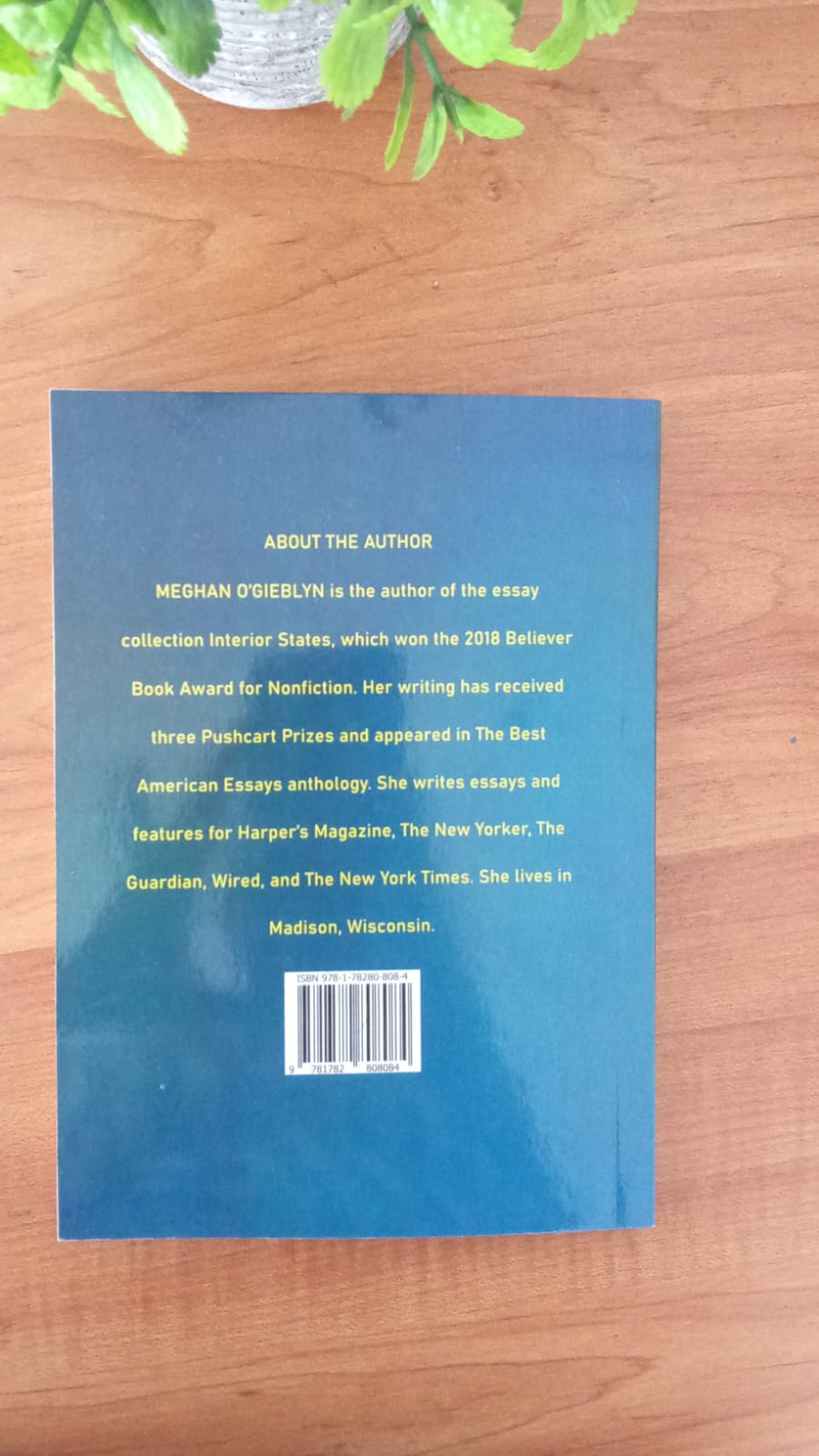
Author: Meghan O’Gieblyn
Genre: Philosophy / Technology / Religion / Memoir / Essays
Major Topics: AI, consciousness, technology, faith, identity, transhumanism and meaning
Original Publication Date: August 24, 2021
Original Publisher: Knopf / Knopf Doubleday Publishing Group
Length: 304 pages.
Paperback Edition
ISBN-13: 9780525562719
ISBN-10: 0525562710
Format: Paperback
Publisher: Vintage
Publication Date: July 12, 2022
Pages: 304
Dimensions: approximately 5 3/16 × 8 inches.
Original Hardcover Edition
ISBN-13: 9780385543835
ISBN-10: 0385543832
Format: Hardcover
Original Publication Date: August 24, 2021
Pages: 304.
Audiobook Edition
The publisher lists an unabridged audiobook released on August 24, 2021, with a running time of approximately 9 hours 20 minutes.
Edition Note
Different editions of God, Human, Animal, Machine use different ISBNs even though the major U.S. hardcover and paperback editions are both approximately 304 pages.
For your WooCommerce product page, use the ISBN physically printed on your copy before entering exact format, publication year, or dimensions.
Learn more about God, Human, Animal, Machine by Meghan O’Gieblyn on the official Penguin Random House website.
Explore more philosophy and thought-provoking books at Bargain Books.
Be the first to review “God human animal machine by Meghan O’Gieblyn”
Related products
Non-Fiction & Knowledge
රු2,250.00
3 X Rs. 750.00 or 8% Cashback with


or 3 X රු750.00 with


or up to 4 X රු562.50 with

Out of stock
Self-Help & Psychology
රු1,500.00
3 X Rs. 500.00 or 8% Cashback with
or 3 X රු500.00 with
or up to 4 X රු375.00 with
-34%

Self-Help & Psychology
Original price was: රු2,350.00.රු1,550.00Current price is: රු1,550.00.
3 X Rs. 516.67 or 8% Cashback with
or 3 X රු516.67 with
or up to 4 X රු387.50 with
-34%

Non-Fiction & Knowledge
Original price was: රු2,250.00.රු1,490.00Current price is: රු1,490.00.
3 X Rs. 496.67 or 8% Cashback with
or 3 X රු496.67 with
or up to 4 X රු372.50 with
-24%
Out of stock
Non-Fiction & Knowledge
Original price was: රු2,100.00.රු1,600.00Current price is: රු1,600.00.
3 X Rs. 533.33 or 8% Cashback with
or 3 X රු533.33 with
or up to 4 X රු400.00 with
-28%

Self-Help & Psychology
Original price was: රු1,800.00.රු1,300.00Current price is: රු1,300.00.
3 X Rs. 433.33 or 8% Cashback with
or 3 X රු433.33 with
or up to 4 X රු325.00 with
Out of stock
Non-Fiction & Knowledge
රු1,500.00
3 X Rs. 500.00 or 8% Cashback with
or 3 X රු500.00 with
or up to 4 X රු375.00 with
Out of stock
Self-Help & Psychology
රු2,200.00
3 X Rs. 733.33 or 8% Cashback with
or 3 X රු733.33 with
or up to 4 X රු550.00 with
Reviews
There are no reviews yet.