
No products in the cart.

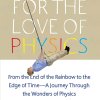
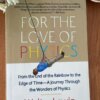



For the Love of Physics by Walter Lewin


රු1,950.00
3 X Rs. 650.00 or 8% Cashback with


or 3 X රු650.00 with


or up to 4 X රු487.50 with


| Detail | Information |
|---|---|
| Title | For the Love of Physics: From the End of the Rainbow to the Edge of Time – A Journey Through the Wonders of Physics |
| Author | Walter Lewin |
| Genre | Science / Physics / Popular Science |
| Language | English |
| Publisher | Free Press |
| Publication Year | 2011 |
| Pages | 320 pages |
| Format | Paperback |
| ISBN-10 | 1451607136 |
| ISBN-13 | 9781451607130 |
| Package Length (cm) | 21.0 cm |
| Package Width (cm) | 14.0 cm |
| Package Height (cm) | 2.3 cm |
5 in stock
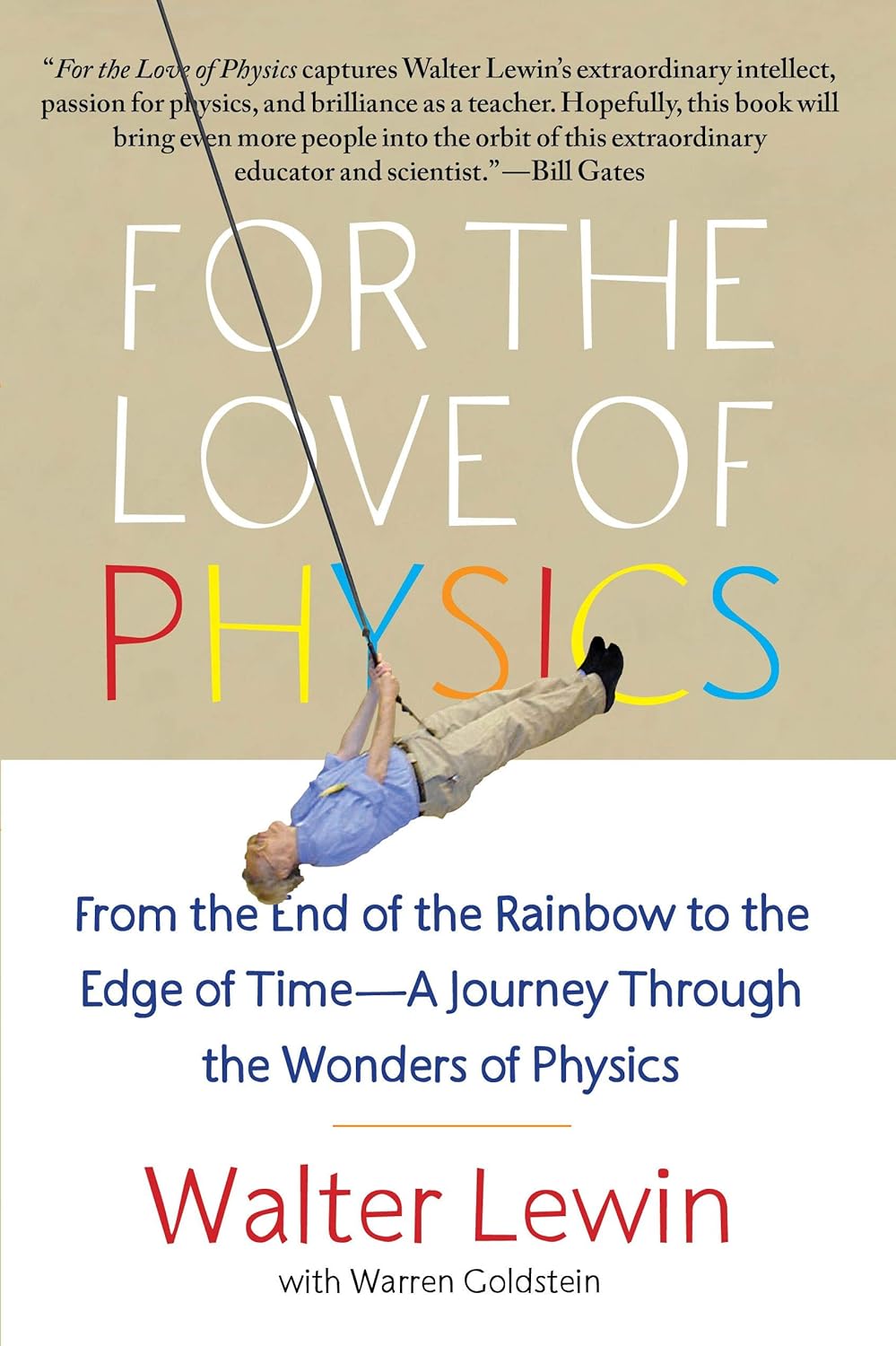
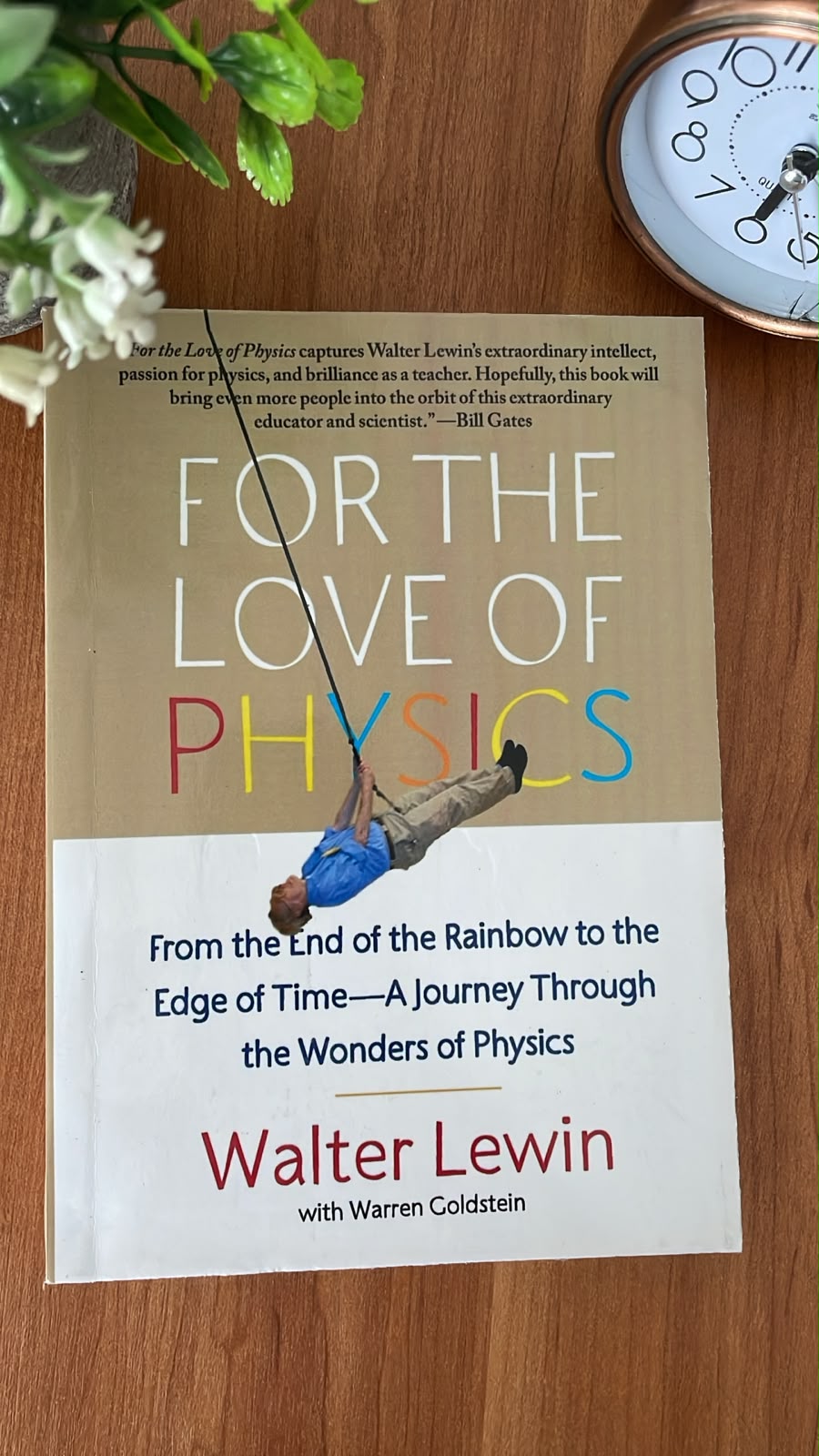
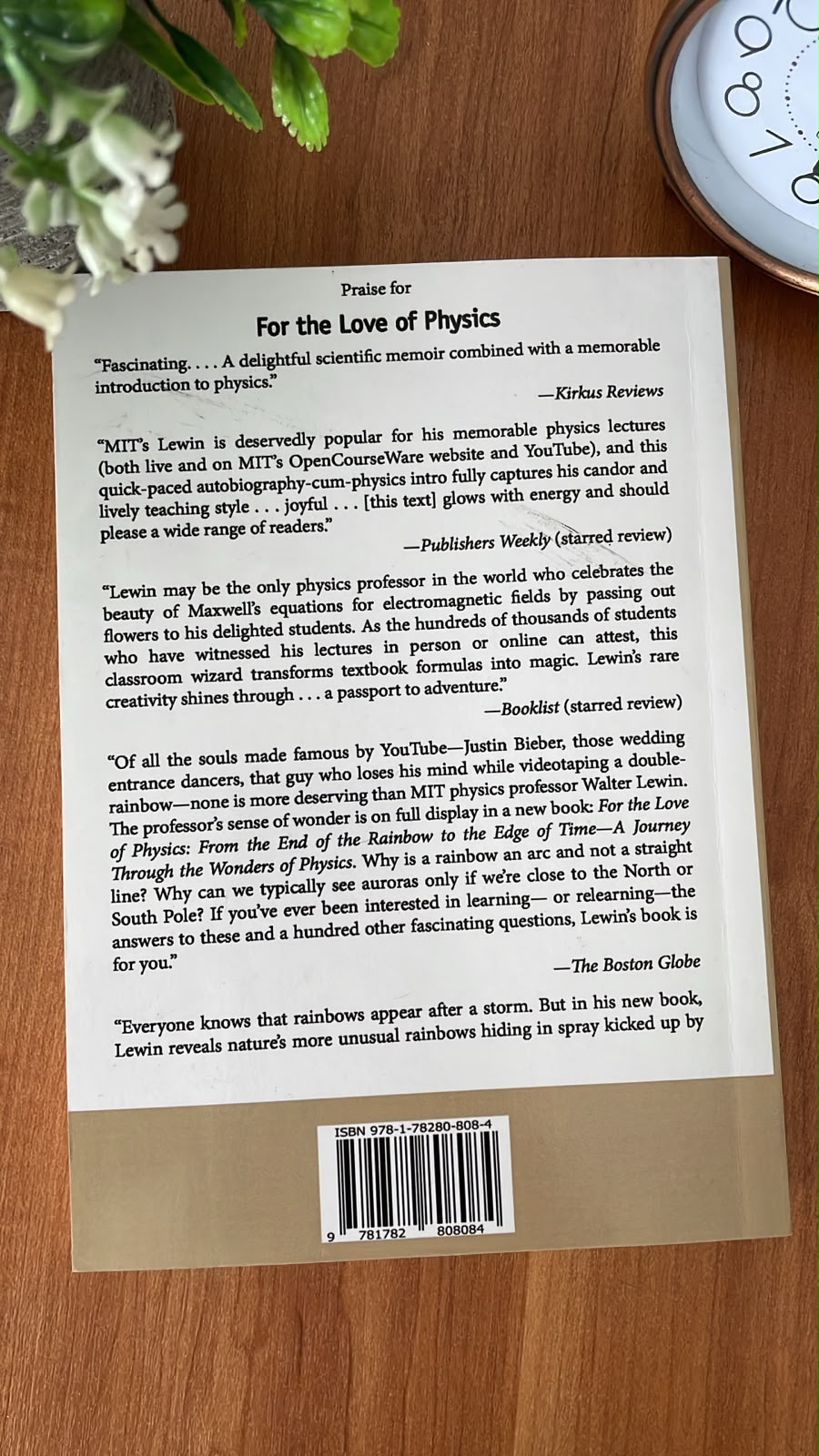
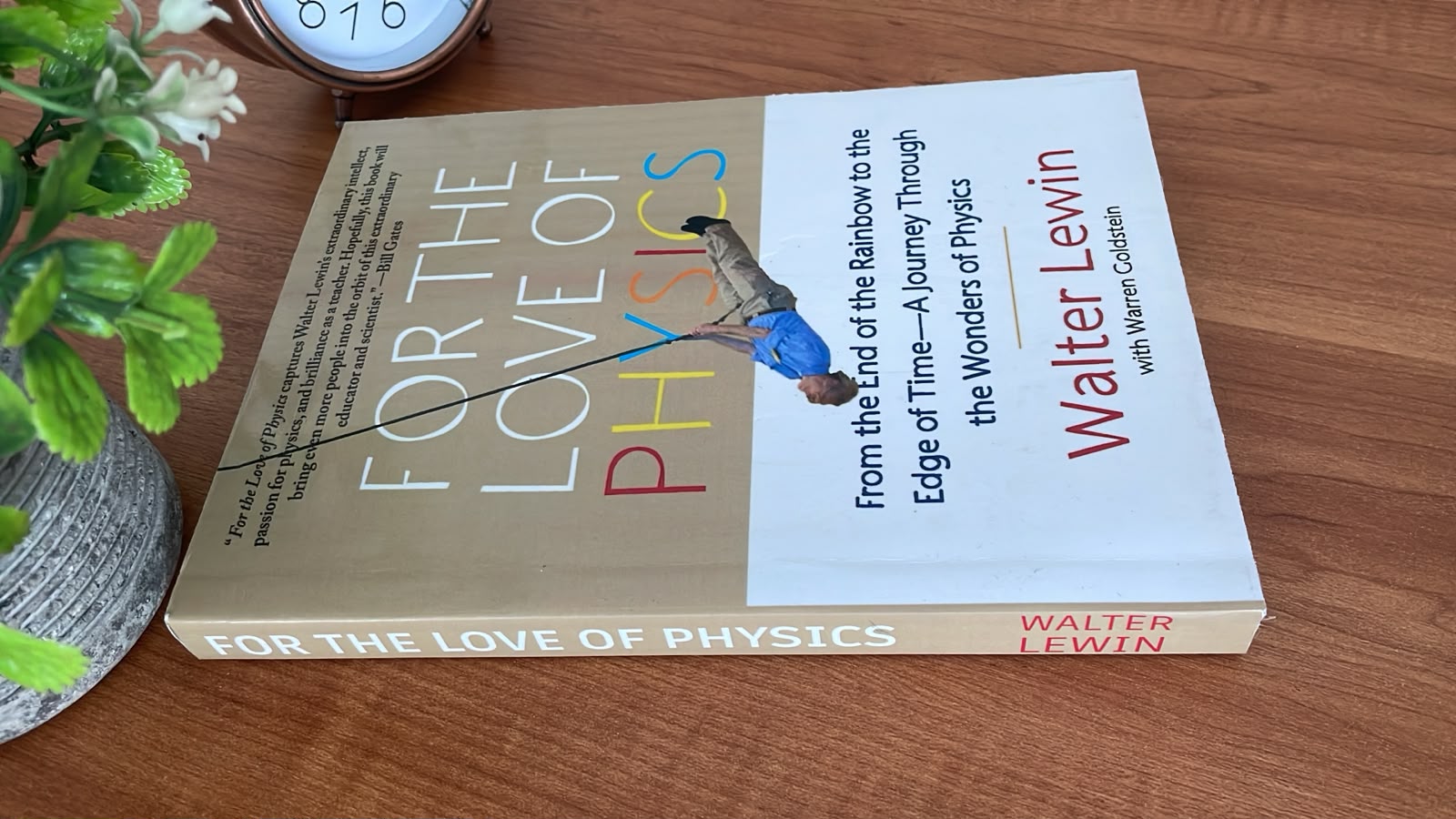
For the Love of Physics by Walter Lewin, with Warren Goldstein, is a fascinating journey through the science that explains the world around us.
Why is the sky blue?
Why are clouds white?
How does a rainbow form?
Why can we drink through a straw?
How do musical instruments create sound?
What happens around neutron stars and black holes?
Physics answers these questions.
But For the Love of Physics does not present those answers like a dry textbook.
Walter Lewin approaches physics with excitement, demonstrations, stories, and curiosity.
His goal is not simply to teach equations.
He wants readers to look at ordinary life differently.
After reading the book, a rainbow is no longer just beautiful.
It is also physics.
A swinging object becomes physics.
A musical instrument becomes physics.
The night sky becomes physics.
Even something as simple as drinking through a straw becomes an opportunity to understand how nature works.
Why Read For the Love of Physics?
For the Love of Physics is ideal for readers who are curious about science but do not want a traditional physics textbook.
The book explores:
- Motion
- Gravity
- Measurements
- Rainbows
- Light
- Sound
- Electricity
- Magnetism
- Energy
- Astronomy
- Neutron stars
- Black holes
- X-rays
- The physics of everyday objects
- Scientific thinking
Walter Lewin combines scientific explanations with stories from his life and teaching career.
That makes the book part science guide and part personal journey.
For the Love of Physics Makes Science Exciting
Many students experience physics mainly through equations.
Calculate velocity.
Find acceleration.
Solve for force.
Memorize formulas.
Those skills matter.
But they can hide the excitement behind the subject.
For the Love of Physics tries to restore that excitement.
Walter Lewin became known for dramatic classroom demonstrations that made invisible physical principles easier to see.
The official publisher highlights examples such as putting himself in the path of a swinging wrecking ball, demonstrating hundreds of thousands of volts of electricity, and showing why the sky appears blue while clouds appear white.
For the Love of Physics and Everyday Life
Physics is not something that exists only in laboratories.
It surrounds us constantly.
When you walk, physics is involved.
When a ball falls, physics is involved.
When music comes from a guitar, physics is involved.
When sunlight passes through water droplets and produces a rainbow, physics is involved.
For the Love of Physics encourages readers to notice these connections.
Once you understand the science behind an ordinary event, everyday life can become much more interesting.
Why Is the Sky Blue?
One of the memorable ideas discussed in the book is the colour of the sky.
Sunlight may appear white.
But it contains many wavelengths of visible light.
When sunlight enters Earth’s atmosphere, shorter wavelengths such as blue are scattered more strongly than longer wavelengths.
That scattered blue light reaches our eyes from many directions.
The result is the blue sky we see during the day.
For the Love of Physics uses familiar questions like this to show that physics is not separate from daily experience.
For the Love of Physics and Rainbows
Rainbows are another beautiful example.
Most people admire a rainbow.
A physicist also asks:
Why does it appear?
Why does it form an arc?
Why are the colours arranged in that particular order?
How does light interact with water droplets?
Lewin spends significant attention on rainbows and optics, connecting something visually beautiful with fundamental principles of light. The book’s full subtitle even begins with “From the End of the Rainbow.”
Measurements Matter
Measurement is fundamental to physics.
How long is something?
How heavy?
How quickly is it moving?
How accurately do we actually know the answer?
For the Love of Physics explores measurement and uncertainty rather than treating measured numbers as automatically perfect.
This introduces an important scientific habit.
Do not only ask:
“What is the answer?”
Also ask:
“How certain are we?”
For the Love of Physics and Motion
Motion is everywhere.
Cars.
Bicycles.
Falling objects.
Pendulums.
Planets.
People walking.
Physics helps explain why things move the way they do.
Lewin uses demonstrations to turn these ideas into something readers can imagine rather than simply memorize.
That makes concepts involving motion and mechanics feel more connected to real life.
The Famous Wrecking Ball Demonstration
One of Lewin’s well-known classroom demonstrations involved a large pendulum.
He would position himself near the path of a heavy swinging object to demonstrate a principle involving conservation of energy.
The demonstration looked dangerous.
But the physics explained why the pendulum should not return higher than the point from which it was released, assuming no additional energy is added.
The publisher specifically highlights the wrecking-ball demonstration as an example of Lewin’s theatrical approach to teaching.
For the Love of Physics and Electricity
Electricity can feel mysterious.
We cannot usually see electric charge directly.
Yet electricity powers enormous parts of modern civilization.
Phones.
Computers.
Lights.
Machines.
Communication.
Lewin introduces the wonders of electricity using both explanations and memorable demonstrations.
He became known for dramatic experiments involving extremely high voltages, helping students experience abstract physical ideas as something real.
Magnetism in For the Love of Physics
Magnetism is another subject explored in the book.
Magnets seem almost magical when first encountered.
Objects can attract or repel one another without visibly touching.
But behind that behaviour are physical laws.
Understanding magnetism also creates a pathway toward understanding the deeper relationship between electricity and magnetism.
For the Love of Physics helps readers appreciate how extraordinary familiar phenomena can become when examined carefully.
Physics and Music
Music is deeply connected to physics.
When a string vibrates, it produces sound.
Its:
Length.
Tension.
Mass.
And vibration frequency
affect what we hear.
Wind instruments work through vibrating columns of air.
Resonance matters.
Frequency matters.
Waves matter.
The book includes a chapter on the harmonies of strings and winds, showing how scientific principles can explain something as emotional and artistic as music.
For the Love of Physics and Energy
Energy is one of the most fundamental ideas in physics.
It changes form.
Moves between systems.
And helps us understand everything from falling objects to stars.
Conservation of energy appears throughout physics.
The idea sounds simple.
But its consequences are enormous.
Lewin uses everyday demonstrations to help readers understand why energy is central to how the physical world behaves.
From Everyday Physics to Deep Space
The scale of For the Love of Physics is one of its strengths.
One chapter may discuss something familiar.
A straw.
A rainbow.
A musical instrument.
Then the book moves outward.
Stars.
X-rays.
Neutron stars.
Black holes.
The universe.
That range reflects the beauty of physics.
The same desire to understand nature can be applied to something on your kitchen table and something thousands of light-years away.
For the Love of Physics and Astronomy
Walter Lewin’s scientific career included important work in X-ray astronomy.
The publisher notes that he made major discoveries in that field during his career.
That expertise becomes particularly valuable when the book reaches the universe.
Stars are not simply distant lights.
They are enormous physical systems.
Gravity.
Energy.
Radiation.
Nuclear processes.
Magnetic fields.
All interact.
Physics allows us to understand objects we may never physically reach.
Neutron Stars and Black Holes
The book also explores some of the universe’s most extreme objects.
Neutron stars.
Black holes.
Cosmic catastrophes.
These environments push physics into conditions far beyond ordinary human experience.
Gravity can become enormous.
Matter can exist in extraordinary states.
Space and time behave in ways that challenge everyday intuition.
The book’s chapters explicitly move from everyday phenomena toward these extreme cosmic subjects.
For the Love of Physics and Scientific Curiosity
One of the strongest lessons in the book is not a formula.
It is curiosity.
Why?
How?
What happens if?
Can we measure it?
Can we test it?
Science grows from questions.
A person who becomes curious about ordinary experiences can begin seeing the entire world as something worth investigating.
That mindset is one reason For the Love of Physics can appeal even to readers who never plan to become physicists.
Walter Lewin as a Teacher
Lewin taught the core physics curriculum at MIT for more than three decades.
His demonstrations and recorded lectures reached audiences far beyond his university classroom, and his publisher credits those lectures with helping make him widely known online.
That teaching background shapes the book.
He does not only know physics.
He spent decades thinking about how to make other people understand and enjoy it.
For the Love of Physics for Students
Students may particularly enjoy this book.
It can help reconnect equations with physical meaning.
Instead of asking only:
“What formula should I use?”
readers begin asking:
“What is actually happening here?”
That shift can make physics easier to understand.
When an equation represents something you can visualize, it becomes more than symbols on a page.
For the Love of Physics for Non-Science Readers
You do not need to be a physicist to enjoy the book.
The publisher explicitly presents it as a journey intended to make physics accessible and enjoyable rather than as a specialist academic text.
That makes it suitable for:
Curious adults.
Students.
Teachers.
Science enthusiasts.
Readers fascinated by astronomy.
People who once thought physics was boring.
And anyone interested in seeing ordinary life differently.
7 Amazing Lessons From For the Love of Physics
- Physics is everywhere. Ordinary experiences such as rainbows, music, motion, and drinking through a straw reveal physical laws.
- Measurement includes uncertainty. Scientific thinking requires understanding how accurately something can actually be measured.
- Energy explains enormous amounts of the physical world. Conservation principles connect everyday motion with deeper physical systems.
- Beautiful things can have beautiful explanations. Understanding the physics of a rainbow does not make it less remarkable.
- The universe follows physical laws across enormous scales. Physics connects everyday objects with stars, neutron stars, and black holes.
- Good demonstrations can transform difficult ideas. Walter Lewin built his teaching career around making abstract concepts physically visible.
- Curiosity changes how you see the world. For the Love of Physics encourages readers to stop accepting everyday phenomena without asking why they happen.
What You Can Expect From For the Love of Physics
Readers can expect:
- Accessible physics
- Walter Lewin’s life stories
- MIT teaching experiences
- Motion
- Gravity
- Measurement
- Rainbows
- Light
- Sound
- Electricity
- Magnetism
- Energy
- Astronomy
- Neutron stars
- Black holes
- X-ray astronomy
- Scientific demonstrations
- Curiosity and wonder
Who Should Read For the Love of Physics?
For the Love of Physics is ideal for:
Physics students.
Science students.
Teachers.
Astronomy fans.
Curious readers.
Readers interested in popular science.
People who enjoy understanding how things work.
Anyone who believes physics is boring and wants to see another side of it.
It can also make an excellent introduction to popular physics before moving into more advanced science books.
An Amazing Journey Through the Wonders of Physics
For the Love of Physics begins with a simple idea.
Physics can be exciting.
Not because someone forces you to memorize equations.
But because physics explains the world you are already living in.
Why the sky is blue.
Why clouds appear white.
How rainbows form.
How sound travels.
How electricity behaves.
How objects move.
How stars live.
And what happens at the most extreme edges of the universe.
Walter Lewin combines decades of physics teaching with personal stories and scientific demonstrations to turn these questions into a journey from ordinary experience to deep space.
For students, teachers, science lovers, and curious readers who want to discover how fascinating physics can be, For the Love of Physics offers an entertaining and thought-provoking introduction to the wonders hidden inside everyday life.
Book Details
Title: For the Love of Physics
Full Title: For the Love of Physics: From the End of the Rainbow to the Edge of Time – A Journey Through the Wonders of Physics
Author: Walter Lewin
With: Warren Goldstein
Genre: Popular Science / Physics / Autobiographical Science Writing
Original Publication: 2011
Original Publisher: Free Press / Simon & Schuster.
Trade Paperback Edition
A widely available Simon & Schuster edition has:
ISBN-13: 9781451607130
Format: Trade Paperback
Publisher: Free Press
Publication Date: February 7, 2012
Pages: 320.
Hardcover / Earlier Edition
An earlier 2011 Free Press edition is catalogued as:
ISBN-13: 9781439108277
Format: Illustrated edition
Publication Date: May 3, 2011
Pages: 320.
Edition Note
Some catalogues show slightly different page counts for different printings, including a 302-page listing for ISBN 9781451607130. Use the ISBN and pagination printed on your physical copy before entering exact edition details on your website.
Learn more about For the Love of Physics by Walter Lewin and Warren Goldstein on the official Simon & Schuster website.
Explore more science and educational books at Bargain Books.
Be the first to review “For the Love of Physics by Walter Lewin”
Related products
-14%

Out of stock
Self-Help & Psychology
Original price was: රු2,900.00.රු2,500.00Current price is: රු2,500.00.
3 X Rs. 833.33 or 8% Cashback with
or 3 X රු833.33 with
or up to 4 X රු625.00 with
-33%

Self-Help & Psychology
Original price was: රු2,300.00.රු1,550.00Current price is: රු1,550.00.
3 X Rs. 516.67 or 8% Cashback with
or 3 X රු516.67 with
or up to 4 X රු387.50 with
-28%

Self-Help & Psychology
Original price was: රු1,800.00.රු1,300.00Current price is: රු1,300.00.
3 X Rs. 433.33 or 8% Cashback with
or 3 X රු433.33 with
or up to 4 X රු325.00 with
-24%

Out of stock
Non-Fiction & Knowledge
Original price was: රු2,100.00.රු1,600.00Current price is: රු1,600.00.
3 X Rs. 533.33 or 8% Cashback with
or 3 X රු533.33 with
or up to 4 X රු400.00 with

Out of stock
Non-Fiction & Knowledge
රු1,900.00
3 X Rs. 633.33 or 8% Cashback with
or 3 X රු633.33 with
or up to 4 X රු475.00 with

Out of stock
Non-Fiction & Knowledge
රු1,500.00
3 X Rs. 500.00 or 8% Cashback with
or 3 X රු500.00 with
or up to 4 X රු375.00 with

Out of stock
Self-Help & Psychology
රු1,900.00
3 X Rs. 633.33 or 8% Cashback with
or 3 X රු633.33 with
or up to 4 X රු475.00 with
-34%

Self-Help & Psychology
Original price was: රු2,350.00.රු1,550.00Current price is: රු1,550.00.
3 X Rs. 516.67 or 8% Cashback with
or 3 X රු516.67 with
or up to 4 X රු387.50 with
Reviews
There are no reviews yet.