
No products in the cart.
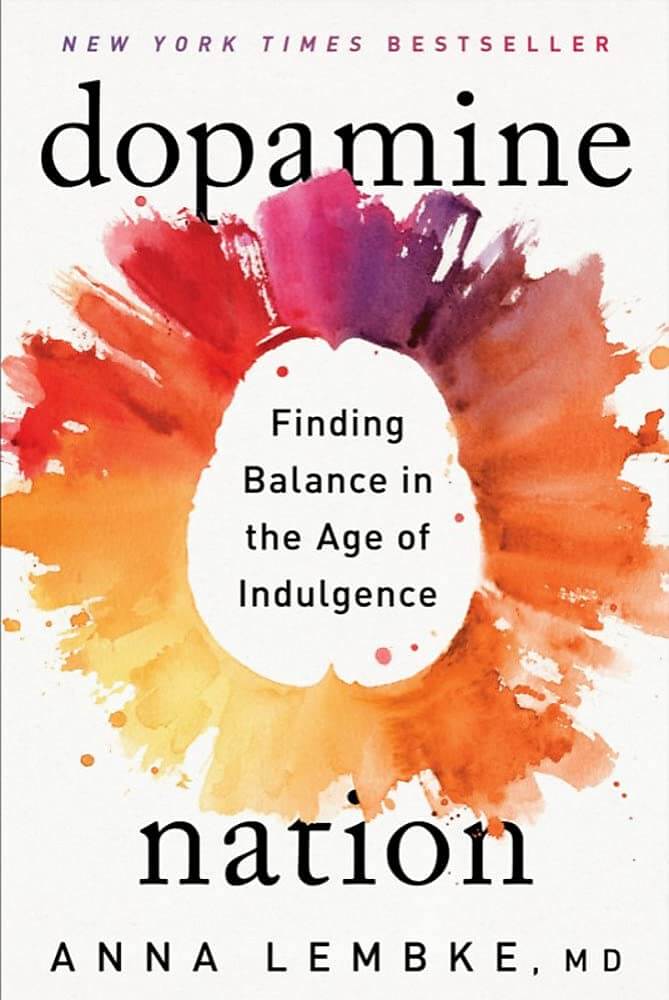
Dopamine Nation by Dr Anna Lembke


රු1,650.00
3 X Rs. 550.00 or 8% Cashback with


or 3 X රු550.00 with


or up to 4 X රු412.50 with


Explore the addictive power of pleasure and the quest for happiness in Dopamine Nation by Dr. Anna Lembke. This eye-opening book delves into the science of addiction and offers insights into reclaiming control over our lives.
Out of stock
Email when stock available
Dopamine Nation by Anna Lembke is a fascinating book about pleasure, pain, addiction, overconsumption and the challenge of finding balance in a world filled with instant rewards.
Modern life provides almost unlimited access to pleasurable experiences.
Food.
Shopping.
Gaming.
Social media.
Streaming.
Gambling.
Smartphones.
The problem is not simply that these things can feel good.
It is that constant access to highly rewarding experiences can make moderation increasingly difficult.
Dopamine Nation explores how the brain’s reward system responds to pleasure and why repeatedly chasing pleasurable experiences can sometimes lead to the opposite result: discomfort, craving and dissatisfaction.
Why Read Dopamine Nation?
Dopamine Nation helps readers understand why modern life can make self-control so challenging.
We live in an environment where almost every form of entertainment is immediately available.
Feeling bored?
Open your phone.
Feeling stressed?
Watch something.
Want food?
Order it.
Want to buy something?
A few taps are enough.
Anna Lembke argues that this unprecedented access to rewarding stimuli can make people vulnerable to compulsive overconsumption.
Dopamine Nation and the Pleasure-Pain Balance
One of the central ideas in Dopamine Nation is that pleasure and pain are closely connected.
The book explores how repeatedly pursuing pleasure can eventually contribute to discomfort and dissatisfaction.
Lembke uses neuroscience, patient stories and accessible metaphors to explain this relationship.
This creates an interesting paradox.
People often pursue pleasurable experiences because they want to feel better.
Yet excessive consumption can sometimes leave them feeling worse.
Understanding this balance is one of the book’s major themes.
What Is Dopamine?
Dopamine is a neurotransmitter involved in reward, motivation, attention, learning, movement and several other important functions.
It is sometimes described too simply as the brain’s “pleasure chemical.”
Its role is more complicated than that.
Dopamine helps influence motivation and reward-related behaviour.
Dopamine Nation uses dopamine as a way to explore why people continue seeking certain rewarding activities even when those activities begin causing problems.
Dopamine Nation and Modern Overconsumption
Dopamine Nation examines a world where high-reward experiences have become extremely easy to access.
The publisher specifically highlights activities such as shopping, gaming, social media, food, gambling and digital communication when describing the modern environment of high-dopamine stimuli.
These activities are not automatically harmful.
The problem appears when consumption becomes difficult to control.
Someone may intend to scroll for five minutes.
An hour passes.
Someone may plan to play one game.
They continue for several hours.
The book encourages readers to notice when enjoyment begins becoming compulsion.
Smartphones and Constant Stimulation
Smartphones make stimulation available almost everywhere.
There is always something new to see.
Another message.
Another video.
Another notification.
Another headline.
Anna Lembke uses smartphones as a powerful example of how modern technology can deliver rewarding stimulation throughout the day.
This makes boredom increasingly rare.
But avoiding boredom constantly may have consequences.
People can become accustomed to immediate stimulation and increasingly uncomfortable when nothing exciting is happening.
Dopamine Nation and Addiction
Addiction is a major subject in Dopamine Nation.
Anna Lembke works in addiction medicine, and the book draws on patient experiences alongside research and neuroscience.
The stories involve different forms of compulsive behaviour.
The specific activity may change.
But many of the underlying patterns can feel surprisingly similar.
Craving develops.
Consumption increases.
Temporary relief appears.
Then the urge returns.
The book helps readers understand why these cycles can become difficult to break.
Pleasure Can Become Less Pleasurable
One of the problems with constant stimulation is adaptation.
Something that once felt exciting may gradually feel normal.
People may then seek more intensity or greater frequency to produce the same satisfaction.
Dopamine Nation explores this broader relationship between pleasure, tolerance and compulsive consumption through accessible neuroscience and clinical examples.
This helps explain why “more” does not always create more happiness.
Sometimes more simply creates a new baseline.
Learn to Recognise Compulsive Behaviour
Compulsive behaviour can be difficult to recognise.
Someone may say:
“I can stop whenever I want.”
But they never actually stop.
Another person may continue an activity even though it is affecting sleep, relationships or work.
Dopamine Nation encourages readers to examine their own consumption patterns more carefully.
The point is not to label every enjoyable habit as an addiction.
It is to become more aware of when behaviour stops feeling voluntary.
Dopamine Nation and Self-Binding
One important practical theme in Anna Lembke’s work is creating boundaries around behaviours that are difficult to moderate.
People often assume they will simply use willpower.
But willpower can become unreliable when temptation is constantly available.
Creating distance can help.
That may mean limiting access.
It may mean changing routines.
It may mean creating specific rules around a behaviour.
The broader idea is simple.
Sometimes changing the environment is easier than repeatedly fighting the same temptation.
Learn to Tolerate Discomfort
People naturally try to avoid pain.
But avoiding every uncomfortable feeling can create its own problems.
Boredom appears.
We seek stimulation.
Stress appears.
We seek distraction.
Sadness appears.
We try to escape it immediately.
Dopamine Nation explores the possibility that learning to tolerate some discomfort can help restore balance between pleasure and pain.
Not every uncomfortable feeling requires immediate escape.
Sometimes it can simply be experienced and allowed to pass.
Dopamine Nation and Delayed Gratification
Modern technology encourages immediate gratification.
Want entertainment?
It starts instantly.
Want something delivered?
Order it now.
Want social feedback?
Post something.
Many important goals work differently.
Fitness takes time.
Education takes time.
Building a career takes time.
Strong relationships take time.
Dopamine Nation encourages readers to think about the tension between instant rewards and longer-term well-being.
Learning to delay gratification can make space for goals whose rewards arrive much later.
The Importance of Abstinence
For some behaviours, temporarily stepping away can reveal how strong the habit has become.
A person may believe they use social media casually.
Then they try going without it.
Suddenly they notice how often they automatically reach for their phone.
A temporary period without a rewarding behaviour can help make unconscious habits more visible.
The official Dopamine Nation workbook later expanded on this approach with exercises around identifying difficult-to-moderate substances and behaviours and undertaking a dopamine fast.
Honesty and Recovery
Honesty is important when changing behaviour.
People can become skilled at explaining their habits to themselves.
“I deserve this.”
“I’ll stop tomorrow.”
“It’s not really a problem.”
These explanations may protect the behaviour.
Dopamine Nation uses patient stories involving suffering and recovery to illustrate how confronting patterns honestly can support change.
Self-awareness begins with seeing behaviour clearly.
Dopamine Nation and Social Media
Social media is one of the clearest examples of modern reward-driven technology discussed around Dopamine Nation.
There is always another post.
Another like.
Another comment.
Another short video.
The experience rarely provides a natural stopping point.
This makes intentional use especially important.
Before opening an app, ask:
Why am I opening it?
How long do I intend to stay?
Am I choosing this consciously?
Or is the behaviour automatic?
These simple questions can reveal how much attention is being consumed without deliberate choice.
Pleasure Is Not the Enemy
Dopamine Nation is not simply an argument that pleasure is bad.
Pleasure is part of life.
Food can be enjoyable.
Technology can be useful.
Entertainment can be meaningful.
The challenge is balance.
Lembke’s central message is about understanding the delicate relationship between pleasure and pain and learning how to manage consumption more intentionally.
Finding Contentment
Constantly searching for another reward can make contentment difficult.
There is always something else to consume.
Another purchase.
Another video.
Another experience.
Another achievement.
Dopamine Nation explores how reducing compulsive consumption can create space for greater contentment and connection.
Sometimes satisfaction comes not from adding more stimulation but from needing less of it.
7 Powerful Lessons From Dopamine Nation
- More Pleasure Is Not Always Better – Constant reward-seeking can eventually create dissatisfaction.
- Recognise Your Triggers – Understanding what starts compulsive behaviour makes it easier to respond intentionally.
- Create Healthy Boundaries – Reducing access to difficult-to-control rewards can support better habits.
- Learn to Tolerate Discomfort – Boredom and other uncomfortable emotions do not always require immediate escape.
- Practice Delayed Gratification – Many meaningful goals require waiting for rewards.
- Be Honest About Consumption – Behaviour becomes easier to change when you recognise it clearly.
- Seek Balance – Dopamine Nation ultimately focuses on finding a healthier relationship between pleasure and pain.
What You Can Learn From Dopamine Nation
Readers can explore:
- Dopamine
- Pleasure and pain
- Addiction
- Compulsive behaviour
- Overconsumption
- Digital habits
- Social media
- Smartphones
- Reward systems
- Self-control
- Delayed gratification
- Recovery
- Habit awareness
- Psychology
- Neuroscience
- Personal development
- Finding balance
Who Should Read Dopamine Nation?
Dopamine Nation is suitable for readers interested in psychology, neuroscience and human behaviour.
People who struggle with excessive screen time may find its ideas relevant.
Readers interested in addiction and recovery may particularly appreciate Lembke’s clinical perspective.
It can also appeal to anyone trying to understand why instant gratification can become difficult to control.
The book combines scientific explanations with stories from Lembke’s clinical experience, making complicated concepts more accessible to general readers.
A Powerful Guide to Finding Balance
Dopamine Nation examines a modern paradox.
We have more opportunities for pleasure than previous generations could have imagined.
Yet unlimited access to rewarding experiences does not guarantee satisfaction.
Anna Lembke explores why the relentless pursuit of pleasure can lead toward pain and how people can begin creating greater balance.
The book combines neuroscience with experiences from addiction medicine to make the science of desire easier to understand.
For readers interested in dopamine, addiction, overconsumption, psychology and developing a healthier relationship with modern pleasures, Dopamine Nation is a thought-provoking addition to any psychology or personal-development bookshelf.
Book Details
Title: Dopamine Nation
Author: Anna Lembke, MD
Category: Psychology / Neuroscience / Addiction / Personal Development
Publisher: Dutton
Hardcover Publication: August 24, 2021
Paperback Publication: January 3, 2023
Pages: 304
Paperback ISBN-13: 9781524746742
https://yourwebsite.com/dopamine-nation/
| Weight | 0.38 kg |
|---|---|
| Dimensions | 15.2 × 2.4 × 23.2 cm |
| Author | Dr Anna Lembke |
| Type | Paperback Brand new Printed (Indian Locally published) |
| ISBN/ISSN | 1472294122 |
| Language | English |
| Pages | 304 |
Be the first to review “Dopamine Nation by Dr Anna Lembke”
Related products
-24%
Out of stock
Non-Fiction & Knowledge
Original price was: රු2,100.00.රු1,600.00Current price is: රු1,600.00.
3 X Rs. 533.33 or 8% Cashback with
or 3 X රු533.33 with
or up to 4 X රු400.00 with
-14%

Out of stock
Self-Help & Psychology
Original price was: රු2,900.00.රු2,500.00Current price is: රු2,500.00.
3 X Rs. 833.33 or 8% Cashback with
or 3 X රු833.33 with
or up to 4 X රු625.00 with

Non-Fiction & Knowledge
රු2,450.00
3 X Rs. 816.67 or 8% Cashback with
or 3 X රු816.67 with
or up to 4 X රු612.50 with

Non-Fiction & Knowledge
රු1,700.00
3 X Rs. 566.67 or 8% Cashback with
or 3 X රු566.67 with
or up to 4 X රු425.00 with

Non-Fiction & Knowledge
රු1,950.00
3 X Rs. 650.00 or 8% Cashback with
or 3 X රු650.00 with
or up to 4 X රු487.50 with
-34%

Self-Help & Psychology
Original price was: රු2,350.00.රු1,550.00Current price is: රු1,550.00.
3 X Rs. 516.67 or 8% Cashback with
or 3 X රු516.67 with
or up to 4 X රු387.50 with

Out of stock
Non-Fiction & Knowledge
රු1,900.00
3 X Rs. 633.33 or 8% Cashback with
or 3 X රු633.33 with
or up to 4 X රු475.00 with
-19%

Out of stock
Biography
Original price was: රු2,400.00.රු1,950.00Current price is: රු1,950.00.
3 X Rs. 650.00 or 8% Cashback with
or 3 X රු650.00 with
or up to 4 X රු487.50 with
Reviews
There are no reviews yet.