
No products in the cart.
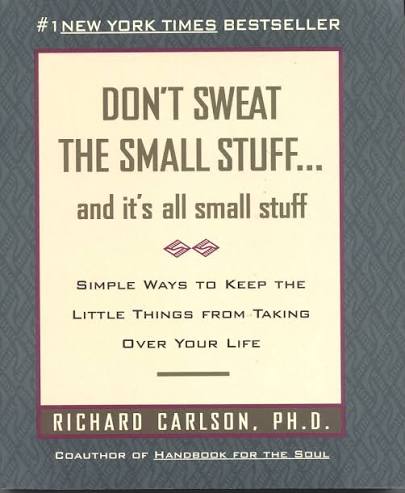
Don’t Sweat the Small Stuff… and It’s All Small Stuff by Richard Carlson – Hardcover

රු2,400.00
3 X Rs. 800.00 or 8% Cashback with


or 3 X රු800.00 with


or up to 4 X රු600.00 with


Don’t Sweat the Small Stuff… and It’s All Small Stuff by Richard Carlson – Hardcover Edition is an internationally bestselling self-help classic that teaches readers how to reduce everyday stress, let go of unnecessary worries and live a happier, more peaceful life.
Life is filled with small frustrations, unexpected challenges and difficult moments. But what if you could learn to approach them with greater patience, understanding and perspective?
In this practical and inspiring guide, Richard Carlson shares simple strategies for recognising what truly matters and avoiding the unnecessary stress created by everyday problems.
Through short, easy-to-read chapters, discover how to make peace with imperfection, live in the present moment, become more patient, improve relationships and respond calmly to life’s challenges.
With its gentle wisdom and practical advice, Don’t Sweat the Small Stuff encourages readers to make small changes that can contribute to a more balanced and meaningful life.
Product Highlights:
- Written by bestselling self-help author Richard Carlson
- A classic guide to stress management and personal growth
- Selected edition: 1997 hardcover gift edition
- Features short, practical chapters
- Encourages patience, compassion and positive thinking
- Explores mindfulness and living in the present
- Provides practical advice for improving relationships
- Helps readers put everyday problems into perspective
- Suitable for students, professionals and general readers
- A thoughtful gift for personal development enthusiasts
Buy Don’t Sweat the Small Stuff by Richard Carlson hardcover online in Sri Lanka from Book Lounge and discover how letting go of little worries can help you enjoy life more fully.
8 in stock
Learn to Let Go of Everyday Stress and Enjoy a More Peaceful Life
Don’t Sweat the Small Stuff by Richard Carlson is an internationally bestselling self-help classic that teaches readers how to approach everyday challenges with greater calm, patience, understanding and perspective.
With its reassuring advice and short, practical chapters, this inspiring guide explores a simple but powerful idea: many of the frustrations that consume our attention are not nearly as important as they seem.
Modern life is filled with responsibilities, deadlines, disagreements and unexpected problems. A difficult conversation can ruin an otherwise pleasant day. A minor mistake can become a source of unnecessary worry. A small inconvenience can quickly develop into frustration or anger.
Richard Carlson encourages readers to recognise these patterns and develop a more peaceful way of responding.
Rather than attempting to control every situation or eliminate every difficulty, the book focuses on changing how we interpret and respond to ordinary events.
Its lessons address familiar experiences, including impatience, perfectionism, overthinking, criticism and the pressure to accomplish too much.
Each short chapter introduces an idea that readers can consider and apply in their daily lives.
Through gentle guidance, Carlson demonstrates that small changes in attitude and behaviour may lead to meaningful improvements in our relationships and sense of wellbeing.
Don’t Sweat the Small Stuff… and It’s All Small Stuff is a practical guide to understanding what truly matters and learning not to let minor problems take over your life.
Hachette Book Group
Stop Letting Little Things Control Your Happiness
One of the central messages of the book is that small frustrations can become disproportionately important.
People often devote significant emotional energy to events that will have little lasting impact.
A delayed appointment, an unpleasant comment or an unexpected change in plans can create feelings of irritation.
These reactions may seem automatic, but Carlson encourages readers to examine them.
Instead of assuming every inconvenience deserves an immediate emotional response, we can consider whether it truly matters.
This perspective does not mean ignoring important problems.
Rather, it involves recognising the difference between a meaningful challenge and an ordinary inconvenience.
By reducing unnecessary reactions, readers may find more energy for the people and activities they value.
Make Peace With Imperfection
Perfectionism can create unnecessary pressure.
People often expect themselves, their work and their relationships to meet unrealistic standards.
When reality does not match these expectations, disappointment follows.
Carlson encourages readers to accept that imperfections are part of ordinary life.
Not every project will be completed exactly as planned.
Not every interaction will be entirely comfortable.
Not every day will be productive or enjoyable.
Learning to accept these limitations can help reduce frustration.
The book suggests that happiness does not require everything to be perfect.
Instead, it can develop through appreciation, flexibility and a more compassionate understanding of everyday experiences.
Learn to Live in the Present Moment
Many people spend their time thinking about past mistakes or worrying about future problems.
While reflection and planning are important, excessive rumination can prevent us from appreciating the present.
Don’t Sweat the Small Stuff encourages readers to pay attention to what is happening now.
A conversation with a friend, a quiet moment at home or an enjoyable activity can become more meaningful when we are fully engaged.
The book invites readers to reconsider habits that constantly pull their attention away from the present.
Its message is especially relevant for individuals who feel overwhelmed by busy schedules and competing responsibilities.
Choose Your Battles Wisely
Disagreements are a normal part of life.
However, not every disagreement requires a confrontation.
Sometimes people spend enormous energy defending a position that has little lasting importance.
Carlson encourages readers to consider whether an argument is worth the emotional cost.
Choosing not to engage in an unnecessary conflict can be an intentional decision rather than a sign of weakness.
This approach can be useful in family relationships, friendships and professional environments.
The goal is not to avoid every difficult conversation.
It is to recognise when a disagreement deserves attention and when letting go may be the wiser choice.
Develop Greater Patience
Impatience often increases ordinary stress.
Waiting in traffic, dealing with delays or depending on other people’s schedules can become frustrating.
The book encourages readers to treat these moments as opportunities to practise patience.
Rather than viewing every interruption as an obstacle, individuals can reconsider their expectations.
Patience allows people to respond more thoughtfully.
It can also improve relationships by reducing unnecessary criticism and irritation.
Through repeated practice, readers may become more comfortable with situations that do not unfold exactly as expected.
Stop Overthinking Every Problem
Small worries can become larger through repeated thinking.
A minor concern may lead to imagined difficulties that have not occurred.
Carlson discusses the tendency for thoughts to build upon one another until an ordinary situation feels overwhelming.
The book encourages readers to become aware of this process.
Recognising when thoughts are escalating can create an opportunity to respond differently.
Instead of treating every worry as an urgent problem, readers can consider whether it requires immediate action.
This approach encourages clearer thinking and a more balanced perspective.
Build Better Relationships
Relationships often suffer because of small misunderstandings.
A careless remark, an interruption or a difference of opinion can create tension.
Carlson encourages readers to respond with patience and compassion.
He explores the importance of listening carefully, showing appreciation and allowing others to express themselves.
Rather than approaching every interaction as an opportunity to prove a point, readers are invited to focus on understanding.
These ideas can be useful in romantic relationships, families, friendships and workplaces.
The book demonstrates how simple changes in everyday communication can contribute to more respectful interactions.
Be Kind Rather Than Always Trying to Be Right
People naturally want their opinions to be understood.
However, the desire to be right can sometimes create unnecessary conflict.
Carlson encourages readers to consider whether proving a point is more important than maintaining kindness and respect.
This does not mean abandoning personal principles.
Instead, it involves recognising that many ordinary disagreements are not worth damaging a relationship.
Listening, acknowledging another person’s perspective and responding gently can make conversations more constructive.
The book suggests that kindness is an important part of living peacefully.
Reduce Stress at Work
Professional life can involve deadlines, difficult customers, demanding responsibilities and unexpected setbacks.
These situations may create a feeling that everything requires immediate attention.
Carlson encourages readers to reconsider the urgency they assign to everyday tasks.
Not every email is an emergency.
Not every mistake is a disaster.
Not every disagreement needs to become a conflict.
By identifying important priorities and responding more thoughtfully, individuals may become better equipped to manage workplace pressure.
The book’s lessons are relevant to employees, managers, entrepreneurs and business owners.
Let Go of the Need to Control Everything
Many frustrations arise because reality differs from our expectations.
We may want other people to behave in particular ways or expect plans to proceed without interruption.
However, much of life cannot be controlled.
The book encourages readers to become more flexible.
Instead of attempting to manage every outcome, they can focus on their own actions and attitudes.
This mindset may make unexpected situations easier to navigate.
Accepting uncertainty does not mean giving up responsibility.
It means understanding that personal effort and external outcomes are not always the same thing.
The Importance of Gratitude
Gratitude can help shift attention away from constant dissatisfaction.
When people concentrate entirely on what is missing or imperfect, they may overlook valuable aspects of their lives.
Carlson encourages readers to appreciate ordinary experiences and meaningful relationships.
Spending a moment thinking about someone they are thankful for can help readers reconsider their priorities.
The book suggests that appreciation does not need to depend upon extraordinary achievements.
Everyday kindness, friendship and simple comforts can also deserve recognition.
Practise Compassion Every Day
Compassion is another important theme.
People often judge others based upon isolated actions without understanding their circumstances.
Carlson encourages readers to consider alternative explanations for difficult behaviour.
Someone who appears impatient may be dealing with problems that are not immediately visible.
An individual who makes a mistake may need understanding rather than criticism.
Practising compassion can improve everyday interactions.
It can also encourage readers to respond more constructively when they encounter behaviour they dislike.
Find Balance in a Busy Life
Busy schedules can create the impression that every activity is equally urgent.
People may struggle to relax because they believe there is always more to accomplish.
Don’t Sweat the Small Stuff encourages readers to reconsider this approach.
A meaningful life includes responsibilities, but it also requires attention to relationships, rest and personal wellbeing.
The book invites readers to examine the habits that make life unnecessarily complicated.
Sometimes a more balanced approach begins with reducing unrealistic expectations.
Instead of attempting to do everything, readers can identify what matters most.
Why Small Changes Matter
The book does not depend upon a complicated programme or strict daily routine.
Its advice is deliberately accessible.
Readers can choose a single idea and experiment with applying it to their lives.
They might practise listening without interrupting.
They might respond more patiently to a delay.
They might decide not to argue about a minor disagreement.
These changes may appear insignificant individually.
However, their cumulative effect can influence everyday experiences and relationships.
Carlson’s approach encourages readers to think of personal growth as a gradual process.
A Practical Book for Everyday Reading
One of the book’s strengths is its short-chapter format.
Readers do not need to finish lengthy sections to encounter a useful idea.
The book can be read from beginning to end or revisited whenever a particular lesson feels relevant.
A chapter may offer a perspective on dealing with frustration.
Another may encourage gratitude or compassion.
This structure makes the book suitable for busy readers who want accessible personal development material.
Its direct language also makes it approachable for individuals who are new to self-help books.
A Thoughtful Gift for Someone Special
The hardcover format makes Don’t Sweat the Small Stuff a suitable gift for readers interested in personal development and practical wisdom.
Its gentle message is relevant to different stages of life.
Students may appreciate its advice on perspective and expectations.
Professionals may find ideas for handling workplace stress.
Parents, partners and friends may value its guidance on relationships and communication.
The book’s short reflections make it easy to return to over time.
A hardcover edition can also be a lasting addition to a personal bookshelf.
Who Should Read Don’t Sweat the Small Stuff?
This book is recommended for readers interested in personal development, stress management, emotional wellbeing, mindfulness, positive thinking, relationships, patience and living a more balanced life.
It may appeal to readers of The Daily Stoic, The Four Agreements, The Power of Now, Atomic Habits and other accessible personal growth books.
About the Author – Richard Carlson
Richard Carlson (1961–2006) was an American psychologist, author and speaker known for his work on happiness, stress reduction and personal perspective.
His international bestseller Don’t Sweat the Small Stuff… and It’s All Small Stuff became a highly influential self-help book and inspired an extensive series of related titles.
His books include Don’t Sweat the Small Stuff at Work, Don’t Sweat the Small Stuff with Your Family, Don’t Sweat the Small Stuff in Love and You Can Be Happy No Matter What.
Carlson’s writing is recognised for its simple, compassionate approach to everyday challenges.
Penguin Random House
Buy Don’t Sweat the Small Stuff in Sri Lanka
Don’t Sweat the Small Stuff by Richard Carlson – Hardcover is an excellent choice for anyone interested in developing greater patience, perspective and appreciation for everyday life.
With accessible reflections on relationships, stress, imperfection and happiness, this classic self-help book encourages readers to concentrate on what genuinely matters.
Buy Don’t Sweat the Small Stuff by Richard Carlson online in Sri Lanka from Book Lounge and discover practical ideas for approaching life with greater calm and understanding.
Browse other personal development and self-help titles at Book Lounge.
For the official book description, visit Hachette Book Group. This publisher page describes the standard paperback edition.
Be the first to review “Don’t Sweat the Small Stuff… and It’s All Small Stuff by Richard Carlson – Hardcover”
Related products
Non-Fiction & Knowledge
රු1,750.00
3 X Rs. 583.33 or 8% Cashback with
or 3 X රු583.33 with
or up to 4 X රු437.50 with

Non-Fiction & Knowledge
රු1,550.00
3 X Rs. 516.67 or 8% Cashback with
or 3 X රු516.67 with
or up to 4 X රු387.50 with

Self-Help & Psychology
රු1,750.00
3 X Rs. 583.33 or 8% Cashback with
or 3 X රු583.33 with
or up to 4 X රු437.50 with
-34%

Self-Help & Psychology
Original price was: රු2,350.00.රු1,550.00Current price is: රු1,550.00.
3 X Rs. 516.67 or 8% Cashback with
or 3 X රු516.67 with
or up to 4 X රු387.50 with

Non-Fiction & Knowledge
රු1,550.00
3 X Rs. 516.67 or 8% Cashback with
or 3 X රු516.67 with
or up to 4 X රු387.50 with
-24%
Out of stock
Non-Fiction & Knowledge
Original price was: රු2,100.00.රු1,600.00Current price is: රු1,600.00.
3 X Rs. 533.33 or 8% Cashback with
or 3 X රු533.33 with
or up to 4 X රු400.00 with

Self-Help & Psychology
රු2,550.00
3 X Rs. 850.00 or 8% Cashback with
or 3 X රු850.00 with
or up to 4 X රු637.50 with

Self-Help & Psychology
රු1,500.00
3 X Rs. 500.00 or 8% Cashback with
or 3 X රු500.00 with
or up to 4 X රු375.00 with
Reviews
There are no reviews yet.