
No products in the cart.
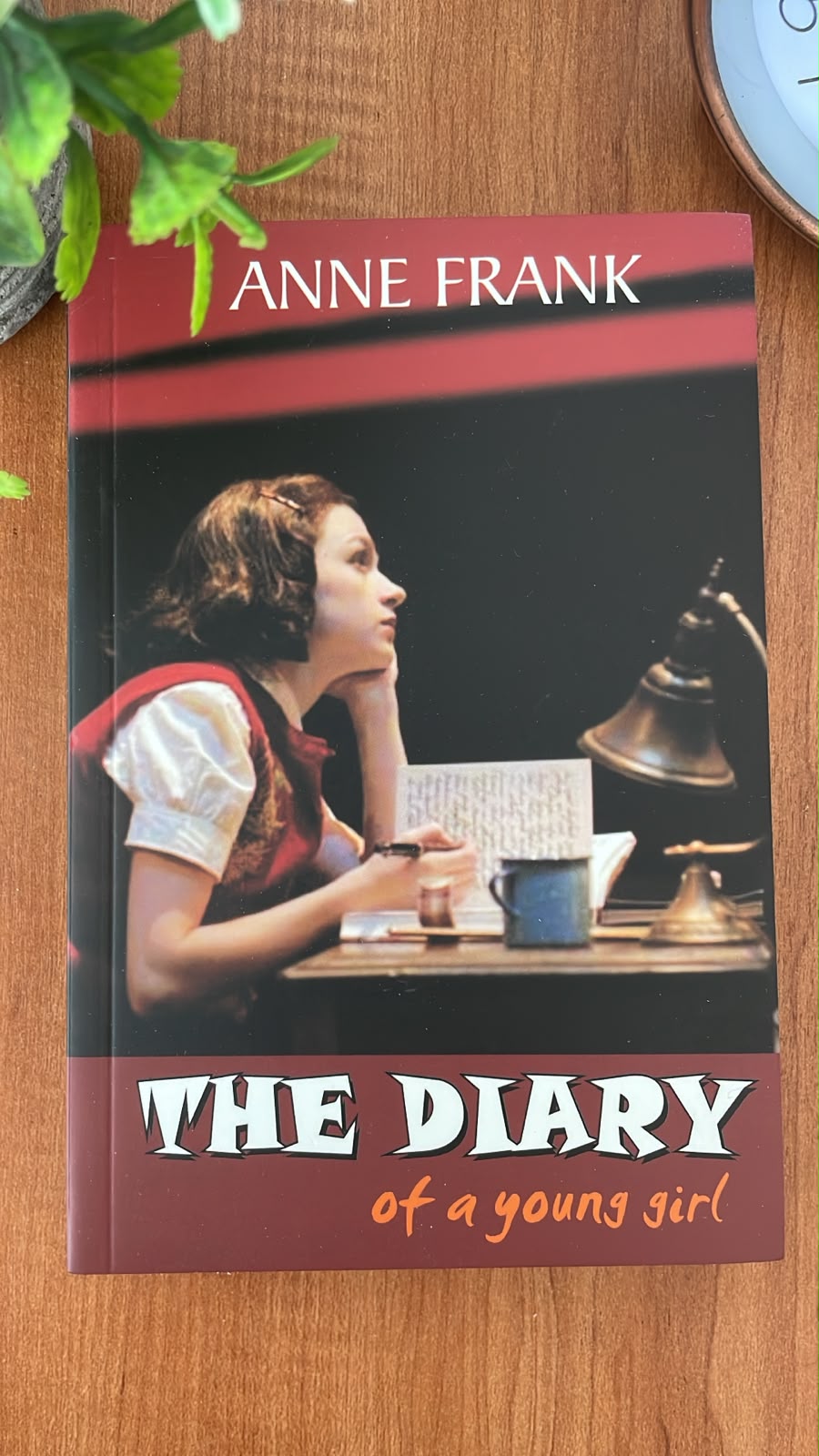
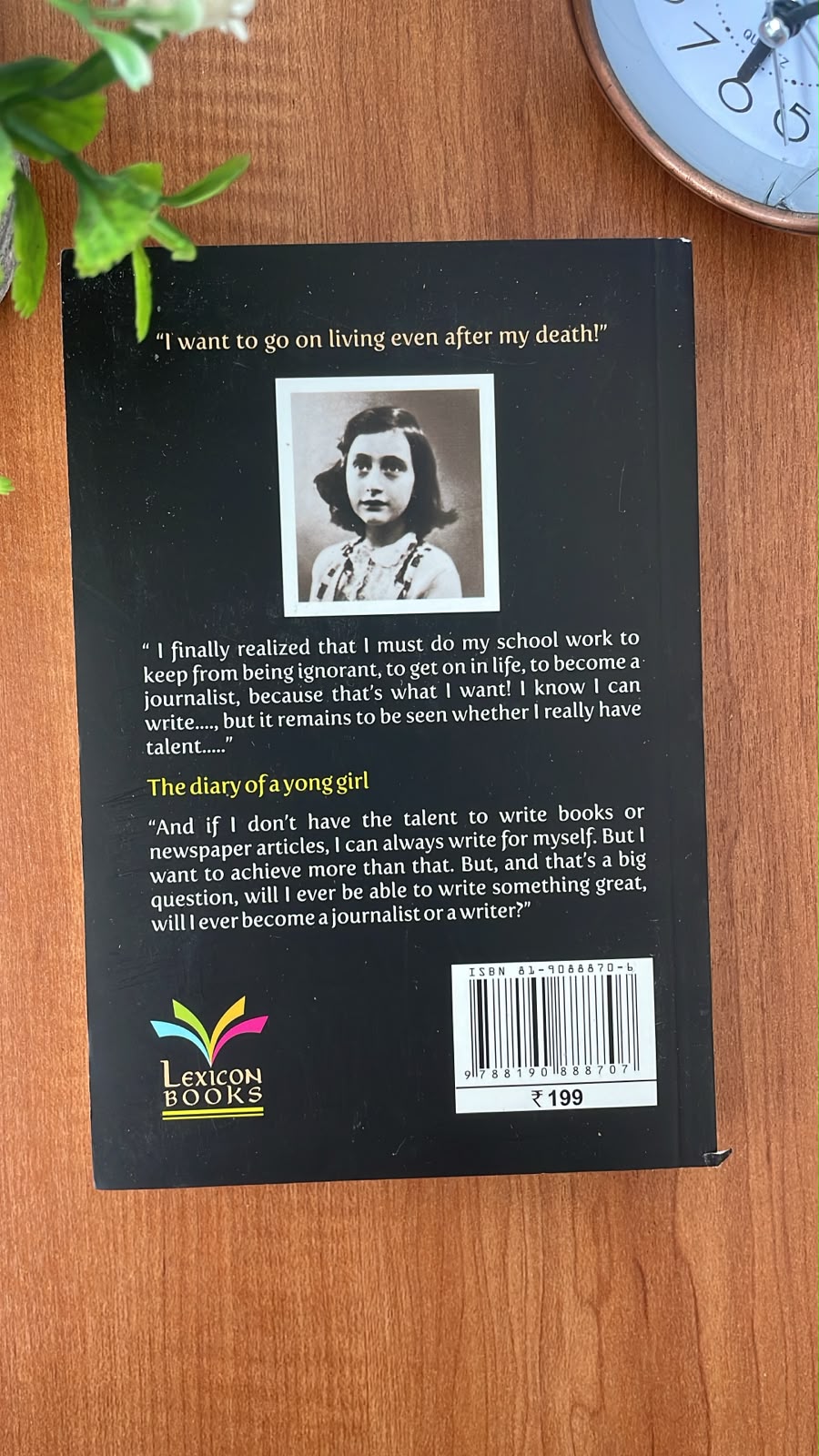
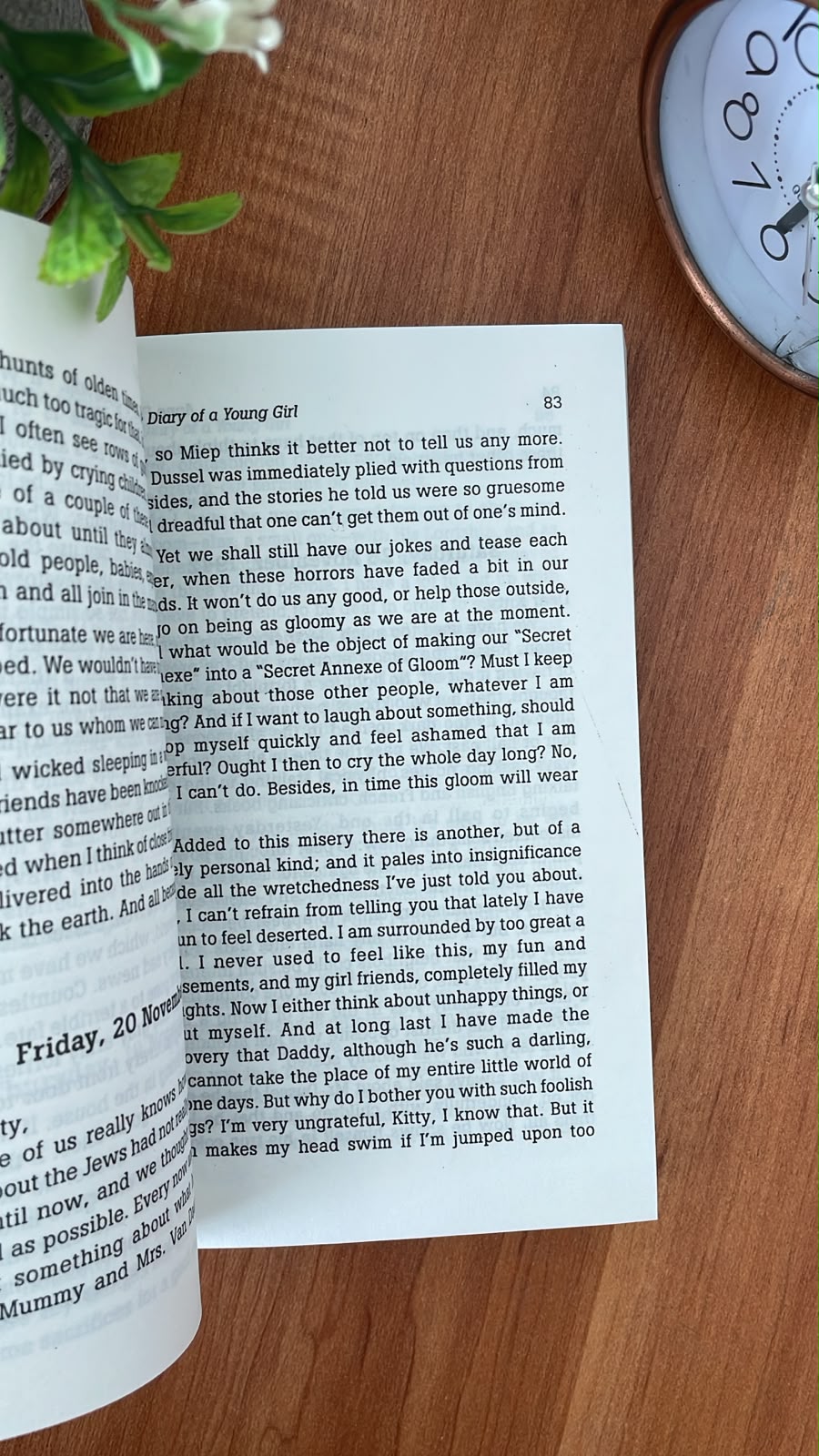
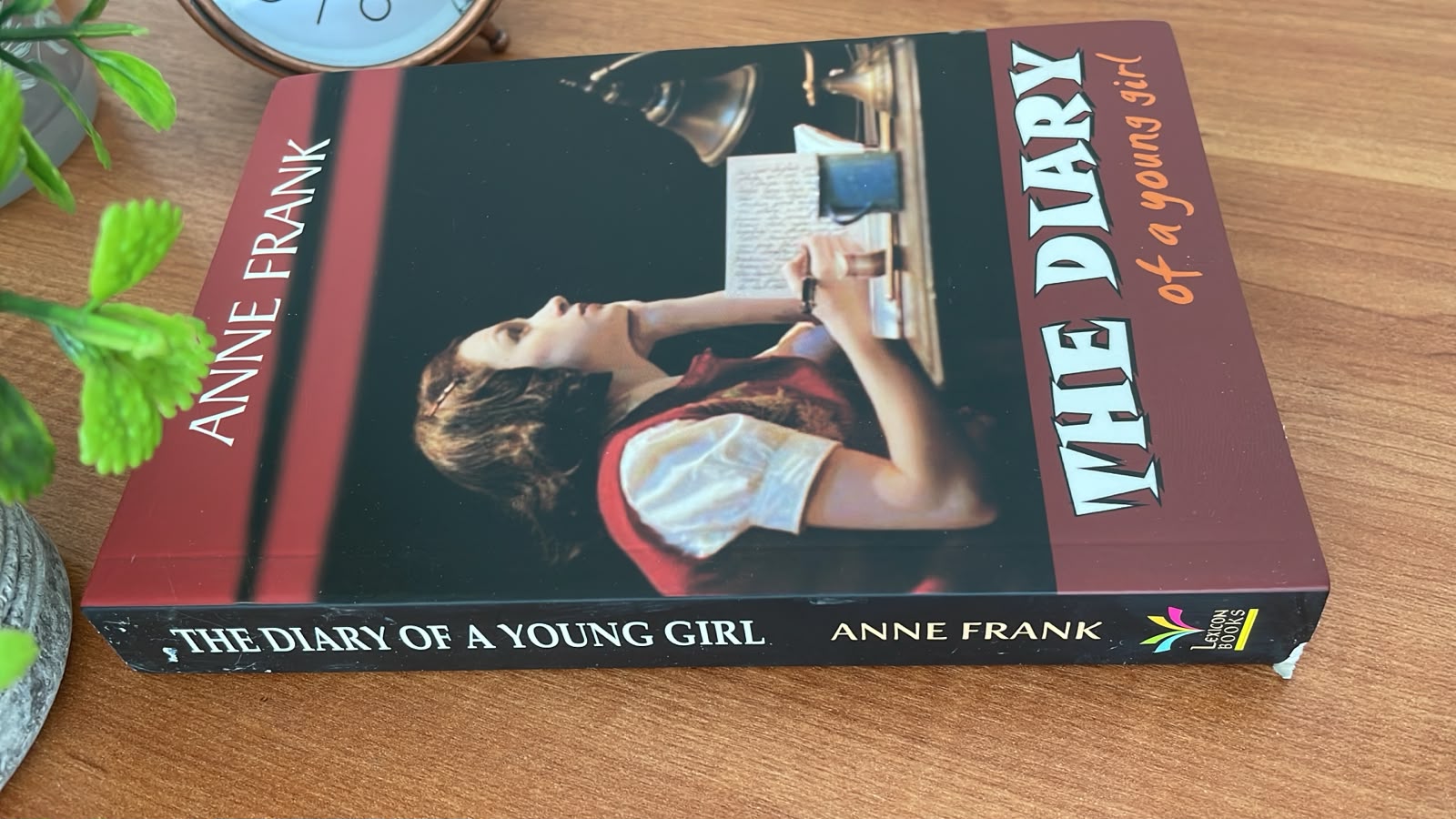





Diary of a Young Girl by Anne Frank


රු1,900.00
3 X Rs. 633.33 or 8% Cashback with


or 3 X රු633.33 with


or up to 4 X රු475.00 with


Diary of a Young Girl by Anne Frank is a deeply moving real-life diary that captures a young girl’s thoughts, fears, and hopes during World War II,
Indian locally published copy included.
3 in stock
The Diary of a Young Girl by Anne Frank is one of the most moving and important personal accounts of the Holocaust.
Anne was a Jewish teenager living in Amsterdam during the Nazi occupation of the Netherlands.
In 1942, Anne and her family went into hiding to escape Nazi persecution. They lived in a concealed space that became known as the Secret Annex.
For more than two years, Anne recorded her thoughts, fears, frustrations, dreams and observations in her diary.
The Diary of a Young Girl is therefore both a historical document and an intimate story of a teenager growing up under extraordinary circumstances.
Why Read The Diary of a Young Girl?
The Diary of a Young Girl allows readers to experience history through the eyes of one young person.
Anne does not write like a historian.
She writes as a teenager.
She talks about family.
She talks about friendship.
She writes about arguments, loneliness, growing up and the future she hopes to have.
At the same time, the constant danger of discovery exists in the background.
This contrast gives the diary much of its emotional power.
The Diary of a Young Girl and the Secret Annex
Anne Frank and her family went into hiding in Amsterdam in July 1942.
They were later joined by another family and one additional person.
The group lived inside the Secret Annex of a business building while people outside helped provide food, news and essential supplies.
Living in hiding created enormous pressure.
The people inside had limited space.
They had to remain quiet during certain hours.
They could not simply go outside.
And they lived with the constant fear that they might be discovered.
The Diary of a Young Girl records what that daily existence felt like from Anne’s perspective.
Meet Anne Frank
Anne Frank received a diary shortly after her thirteenth birthday.
She began writing in it in June 1942.
Her entries gradually became much more than simple descriptions of daily events.
Anne writes about who she is.
She questions how other people see her.
She thinks about love, family, education and the person she hopes to become.
This honesty makes The Diary of a Young Girl feel remarkably personal.
Readers do not simply learn about Anne as a historical figure.
They encounter a young person trying to understand herself.
Writing to “Kitty”
Anne often addressed her diary entries to Kitty.
The Anne Frank House notes that “Dear Kitty” first appeared in Anne’s diary in September 1942, after she had already spent two months in hiding.
Writing to Kitty gave Anne a conversational way to express thoughts that she could not easily share with other people.
The diary became an emotional outlet.
It also became a place where she could be completely honest.
Growing Up in Hiding
One of the strongest parts of The Diary of a Young Girl is that Anne continues growing emotionally while living in an extremely restricted environment.
She experiences the ordinary changes of adolescence.
She becomes more independent in her thinking.
Her relationships with family members change.
She becomes interested in romance.
She also develops stronger opinions about society and the people around her.
This makes the diary more than an account of war.
It is also a coming-of-age story.
Fear and Uncertainty
Fear is constantly present.
The people in hiding know that discovery could have devastating consequences.
Unexpected noises can become frightening.
News from outside can change the emotional atmosphere inside the Annex.
The Diary of a Young Girl shows what it means to live with uncertainty day after day.
Yet Anne’s writing does not focus only on fear.
She continues imagining a future.
That mixture of danger and hope makes the diary especially powerful.
Hope in The Diary of a Young Girl
Hope is one of the ideas most strongly associated with Anne Frank’s story.
She continues writing.
She continues learning.
She continues imagining what she might become after the war.
This does not mean she ignores the seriousness of her situation.
Anne can be deeply worried and still remain hopeful.
The Diary of a Young Girl demonstrates that hope can survive even in extremely difficult circumstances.
Family Life in the Secret Annex
Living in a confined space creates tension.
Anne writes openly about disagreements with family members.
She sometimes feels misunderstood.
She is particularly honest about the changing relationships between herself and her parents.
These details make the diary feel authentic.
The people in hiding are not presented as perfect.
They become frustrated.
They disagree.
They need privacy.
Yet they must continue living closely together.
Identity and Self-Discovery
Anne spends considerable time thinking about identity.
Who is she really?
Is she the cheerful girl other people see?
Or is there a more serious person underneath?
The Diary of a Young Girl frequently explores the difference between public personality and private emotion.
This theme is one reason the book continues to connect with younger readers.
Questions about identity are universal.
Anne’s circumstances were extraordinary, but many of her personal struggles feel familiar.
The Holocaust Through One Person’s Experience
The Holocaust involved the systematic persecution and murder of millions of Jews and other victims by Nazi Germany and its collaborators.
Large numbers can sometimes make history feel distant.
The Diary of a Young Girl gives that history an individual voice.
Readers learn what persecution meant for one family.
They see how political hatred changed ordinary routines.
School disappears.
Freedom disappears.
Home becomes unsafe.
Daily life becomes an act of survival.
This personal perspective gives the book enormous historical importance.
Anne Wanted to Become a Writer
Anne did not only keep a private diary.
She also wrote stories and began revising parts of her diary with the hope of eventually publishing a book about her experiences in hiding.
This makes The Diary of a Young Girl especially interesting from a literary perspective.
Anne was not simply recording events.
She was developing as a writer.
She thought about how her experiences might someday be read by other people.
The Publication of The Diary of a Young Girl
After the war, Otto Frank was the only member of Anne’s immediate family to return.
Anne’s diary papers had been preserved.
Otto eventually decided to publish them.
The first Dutch edition appeared in 1947.
The English-language edition later appeared in 1952.
Since then, the diary has reached readers around the world.
The Anne Frank House states that it has been translated into more than 75 languages.
The Power of Personal Writing
One reason The Diary of a Young Girl remains so influential is the intimacy of Anne’s writing.
History can be presented through statistics.
It can also be presented through government documents and timelines.
Anne’s diary offers something different.
It records emotions.
It captures ordinary moments.
It shows how huge historical events affected the daily life of one teenager.
This makes the book emotionally immediate even decades later.
Courage and Resilience
Courage does not always look dramatic.
Sometimes courage means continuing with ordinary life under impossible circumstances.
Anne reads.
She writes.
She studies.
She argues.
She dreams.
The Diary of a Young Girl reminds readers that resilience can appear in everyday actions.
The people in hiding continue trying to live even when the future is uncertain.
7 Powerful Lessons From The Diary of a Young Girl
- Hope Can Survive Difficult Circumstances – Anne continues imagining a future even while living in hiding.
- Every Person Has a Story – Historical events become more understandable when we hear individual voices.
- Writing Can Preserve Experience – Anne’s diary allowed her thoughts to survive beyond her lifetime.
- Freedom Should Never Be Taken for Granted – Everyday freedoms become especially visible when they disappear.
- Growing Up Is Complicated – Anne experiences ordinary teenage emotions alongside extraordinary danger.
- Prejudice Has Real Human Consequences – Political hatred can destroy the lives of ordinary families.
- Human Dignity Matters – Even under oppression, people continue thinking, loving, learning and hoping.
What You Can Expect From The Diary of a Young Girl
Readers can explore:
- Anne Frank’s life
- The Holocaust
- World War II
- Jewish history
- Amsterdam
- The Secret Annex
- Family relationships
- Adolescence
- Identity
- Hope
- Fear
- Courage
- Personal growth
- Historical memoir
- Diary writing
- Human resilience
- Coming-of-age themes
Who Should Read The Diary of a Young Girl?
The Diary of a Young Girl is suitable for readers interested in history and memoir.
Students studying World War II or the Holocaust may find it especially valuable.
Readers who enjoy personal diaries and autobiographical writing may appreciate Anne’s honest voice.
Young readers can also relate to her thoughts about family, friendship, identity and growing up.
However, readers should remember that the diary is connected to real persecution and tragedy.
Some sections can therefore be emotionally difficult.
A Powerful and Unforgettable Historical Memoir
The Diary of a Young Girl preserves the voice of a teenager living through one of history’s darkest periods.
Anne writes about fear.
She writes about family.
She writes about arguments, dreams and the future.
She also records what it means to live without freedom while constantly fearing discovery.
Her diary was eventually published after the war and became one of the best-known personal accounts connected with the Holocaust.
For readers interested in history, memoir, courage and the human experience, The Diary of a Young Girl by Anne Frank remains an essential and deeply moving book.
Book Details
Title: The Diary of a Young Girl
Author: Anne Frank
Category: Memoir / Diary / History / Holocaust Literature
Diary Period: June 12, 1942 – August 1, 1944
First Dutch Publication: 1947
First U.S. English Edition: 1952
A widely sold definitive-edition paperback from Anchor Books carries ISBN 9780385480338.
Be the first to review “Diary of a Young Girl by Anne Frank”
Related products
-24%

Out of stock
Non-Fiction & Knowledge
Original price was: රු2,100.00.රු1,600.00Current price is: රු1,600.00.
3 X Rs. 533.33 or 8% Cashback with
or 3 X රු533.33 with
or up to 4 X රු400.00 with

Non-Fiction & Knowledge
රු1,550.00
3 X Rs. 516.67 or 8% Cashback with
or 3 X රු516.67 with
or up to 4 X රු387.50 with
-19%

Out of stock
Non-Fiction & Knowledge
Original price was: රු2,650.00.රු2,150.00Current price is: රු2,150.00.
3 X Rs. 716.67 or 8% Cashback with
or 3 X රු716.67 with
or up to 4 X රු537.50 with
-23%

Non-Fiction & Knowledge
Original price was: රු2,200.00.රු1,700.00Current price is: රු1,700.00.
3 X Rs. 566.67 or 8% Cashback with
or 3 X රු566.67 with
or up to 4 X රු425.00 with
-7%

Out of stock
Original price was: රු4,500.00.රු4,200.00Current price is: රු4,200.00.
3 X Rs. 1,400.00 or 8% Cashback with
or 3 X රු1,400.00 with
or up to 4 X රු1,050.00 with

Out of stock
Autobiography
රු2,750.00
3 X Rs. 916.67 or 8% Cashback with
or 3 X රු916.67 with
or up to 4 X රු687.50 with

Non-Fiction & Knowledge
රු1,700.00
3 X Rs. 566.67 or 8% Cashback with
or 3 X රු566.67 with
or up to 4 X රු425.00 with

Out of stock
Non-Fiction & Knowledge
රු1,500.00
3 X Rs. 500.00 or 8% Cashback with
or 3 X රු500.00 with
or up to 4 X රු375.00 with
Reviews
There are no reviews yet.