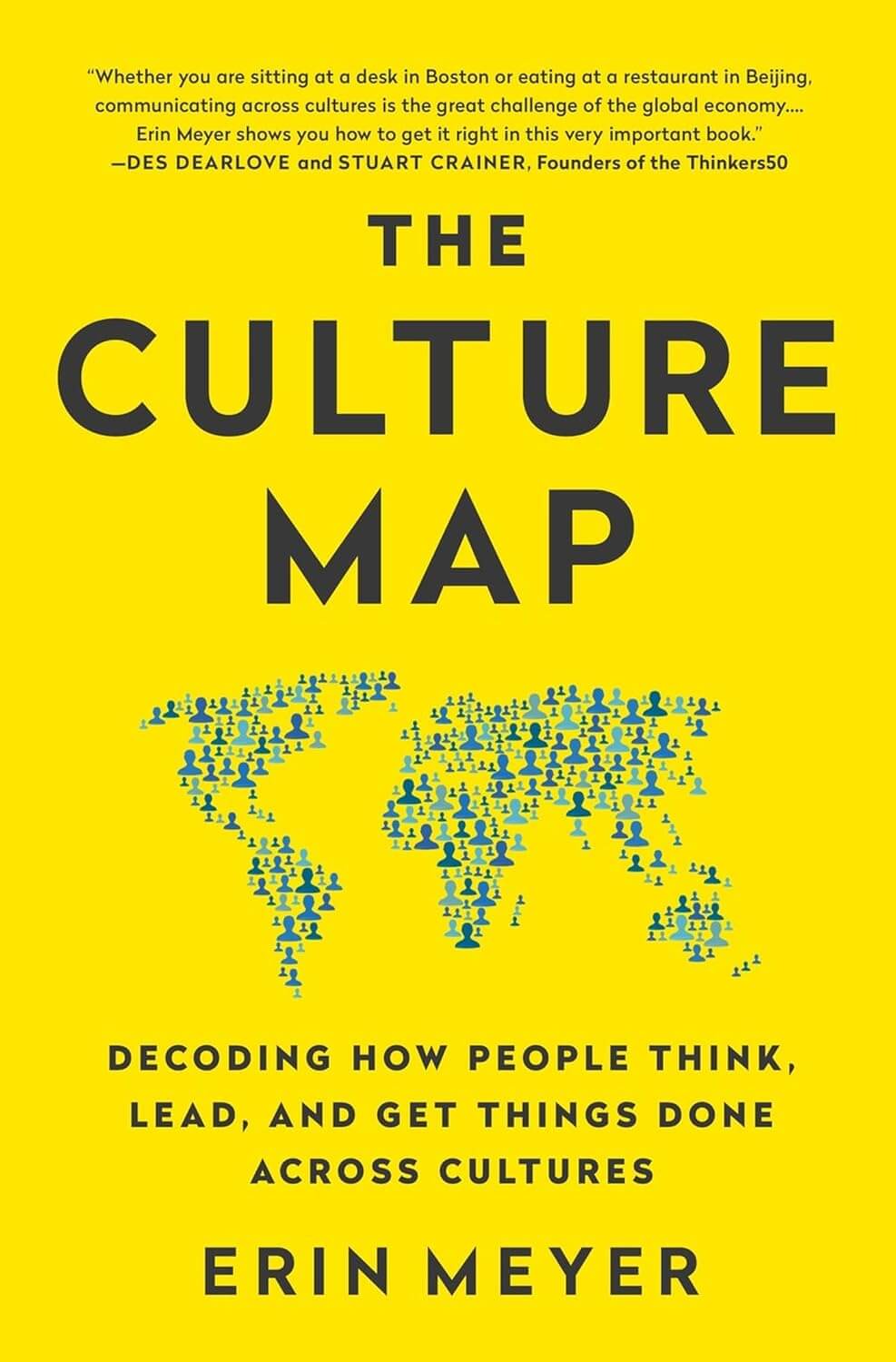
The Culture Map by Erin Meyer is an insightful business and leadership book about understanding cultural differences in today’s global workplace.
Working with people from different countries can create unexpected challenges.
Communication styles, leadership expectations, decision-making and trust can vary greatly between cultures.
The Culture Map provides a practical framework for recognising these differences and working more effectively with international colleagues, employees and clients.
It is ideal for managers, entrepreneurs, business students and professionals working in multicultural environments.
Why Read The Culture Map?
The Culture Map helps readers understand why behaviour that seems completely normal in one country may be misunderstood in another.
A manager may believe they are giving clear feedback.
An employee from another culture may consider the same feedback unnecessarily harsh.
One team may expect quick decisions.
Another may prefer extensive discussion before reaching agreement.
Understanding these differences can reduce confusion and improve international collaboration.
8 Dimensions of Cultural Differences
One of the most useful features of The Culture Map is Erin Meyer’s eight-scale framework.
The model helps readers compare cultures across several important areas of professional behaviour.
These areas include:
- Communicating
- Evaluating
- Persuading
- Leading
- Deciding
- Trusting
- Disagreeing
- Scheduling
Each dimension demonstrates how cultural expectations can influence workplace behaviour.
Understand Different Communication Styles
Communication is one of the central themes in The Culture Map.
Some cultures communicate very directly.
Others depend more heavily on context and indirect messages.
A statement that sounds perfectly clear to one person may appear vague to someone from another culture.
Understanding these differences can reduce misunderstanding.
It can also help professionals adjust their communication when working with international teams.
Giving and Receiving Feedback
Feedback is handled differently across cultures.
Some people are comfortable receiving direct criticism.
Others expect negative feedback to be communicated more carefully.
The Culture Map helps readers recognise these differences.
This is particularly useful for managers responsible for international employees.
Changing the way feedback is delivered can sometimes make the same message much more effective.
Leadership Across Cultures
Leadership styles are not interpreted in the same way everywhere.
Some cultures are comfortable with relatively flat organisational structures.
Employees may freely challenge managers or senior executives.
Other cultures place greater importance on hierarchy.
In these environments, employees may expect leaders to provide stronger direction.
The Culture Map helps readers understand how these expectations influence workplace relationships.
How Cultures Make Decisions
Decision-making can also vary significantly.
A company may have a hierarchical management structure while still involving many employees in important decisions.
Another organisation may appear informal while allowing senior leaders to make decisions independently.
These differences can surprise international teams.
The Culture Map encourages managers to understand the decision-making expectations of the cultures they work with.
Building Trust Across Cultures
Trust is essential in business.
However, different cultures may build trust in different ways.
Some people develop professional trust mainly through competence and reliability.
Others place greater importance on personal relationships.
Meals, conversations and time spent getting to know someone may therefore become important parts of business.
Erin Meyer’s framework examines these differences and shows why misunderstanding them can damage international relationships.
Understand Cultural Differences in Disagreement
Disagreement can be especially difficult in multicultural teams.
In some cultures, openly challenging another person’s opinion is normal.
People can disagree strongly without considering the interaction personal.
In other cultures, direct disagreement may feel disrespectful.
The Culture Map helps readers recognise these differences.
Understanding them can make meetings and negotiations more productive.
Different Attitudes Toward Time
Time and scheduling are another important cultural difference.
Some cultures place enormous importance on punctuality and detailed schedules.
Others are more flexible.
Changing circumstances may be considered more important than following the original timetable exactly.
Erin Meyer explains that attitudes toward time can vary substantially between cultures.
Recognising this difference can prevent frustration when working internationally.
Avoid Cultural Misunderstandings
Many cross-cultural problems are not caused by bad intentions.
They happen because people interpret behaviour through their own cultural expectations.
A quiet employee may appear uninterested.
They may actually be showing respect.
A direct manager may appear rude.
They may believe they are simply communicating efficiently.
The Culture Map encourages readers to examine behaviour within its cultural context.
This can create greater understanding.
Improve International Teamwork
Global teams often contain people with very different working styles.
Those differences can become strengths when they are understood.
They can become problems when they are ignored.
The Culture Map provides tools for discussing these differences openly.
Teams can compare their preferred approaches to communication, leadership, trust and decision-making.
This awareness can make collaboration easier.
Useful for Global Leaders
Leaders working internationally cannot always manage every team in exactly the same way.
A leadership approach that succeeds in one country may perform differently elsewhere.
The Culture Map encourages leaders to adapt without abandoning their own principles.
Understanding cultural expectations allows managers to communicate more effectively while still providing clear leadership.
Cultural Intelligence in Business
Modern businesses increasingly operate across borders.
Employees may work remotely with colleagues thousands of kilometres away.
Suppliers may come from another country.
Customers may have completely different cultural expectations.
This makes cultural intelligence increasingly valuable.
The Culture Map offers a structured way to develop that awareness.
Its framework was developed from Erin Meyer’s work on cross-cultural management at INSEAD.
8 Powerful Lessons From The Culture Map
- Communication Differs – What sounds clear in one culture may feel unclear in another.
- Feedback Needs Adaptation – Different cultures respond differently to criticism.
- Leadership Expectations Vary – Hierarchy is understood differently around the world.
- Decision-Making Is Cultural – Teams may disagree about how and when decisions should be made.
- Trust Is Built Differently – Some cultures focus on professional reliability while others value personal relationships.
- Disagreement Has Different Meanings – Direct debate may be welcomed in one culture and uncomfortable in another.
- Time Is Viewed Differently – Scheduling and punctuality expectations vary.
- Adaptability Matters – Successful global professionals learn to adjust their approach.
What You Can Learn From The Culture Map
Readers can explore:
- Cross-cultural communication
- International business
- Global leadership
- Cultural intelligence
- Team management
- Building trust
- Giving feedback
- Decision-making
- Managing international teams
- Workplace communication
- Negotiation
- Leadership styles
- Cultural differences
- Global collaboration
- Business relationships
Who Should Read The Culture Map?
The Culture Map is ideal for managers working with international teams.
Entrepreneurs dealing with overseas suppliers or customers can also benefit from its ideas.
Business students can use it to understand cross-cultural management.
HR professionals may find the framework useful when managing diverse organisations.
Professionals working remotely with colleagues from several countries may also find the lessons immediately relevant.
A Powerful Guide to Global Business
The Culture Map demonstrates that cultural differences do not need to become barriers.
The first step is recognising that people may interpret the same behaviour in very different ways.
Erin Meyer provides a practical framework for comparing cultures and understanding these differences.
The book helps readers communicate more effectively, develop stronger relationships and reduce misunderstandings in international environments.
For anyone working with people from different countries, The Culture Map is a valuable addition to a business, leadership or management collection. https://yourwebsite.com/the-culture-map/


Reviews
There are no reviews yet.