
No products in the cart.
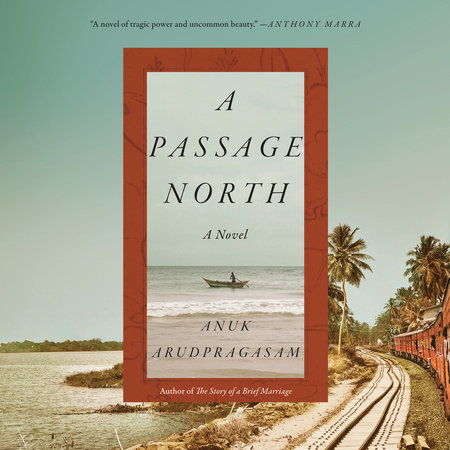
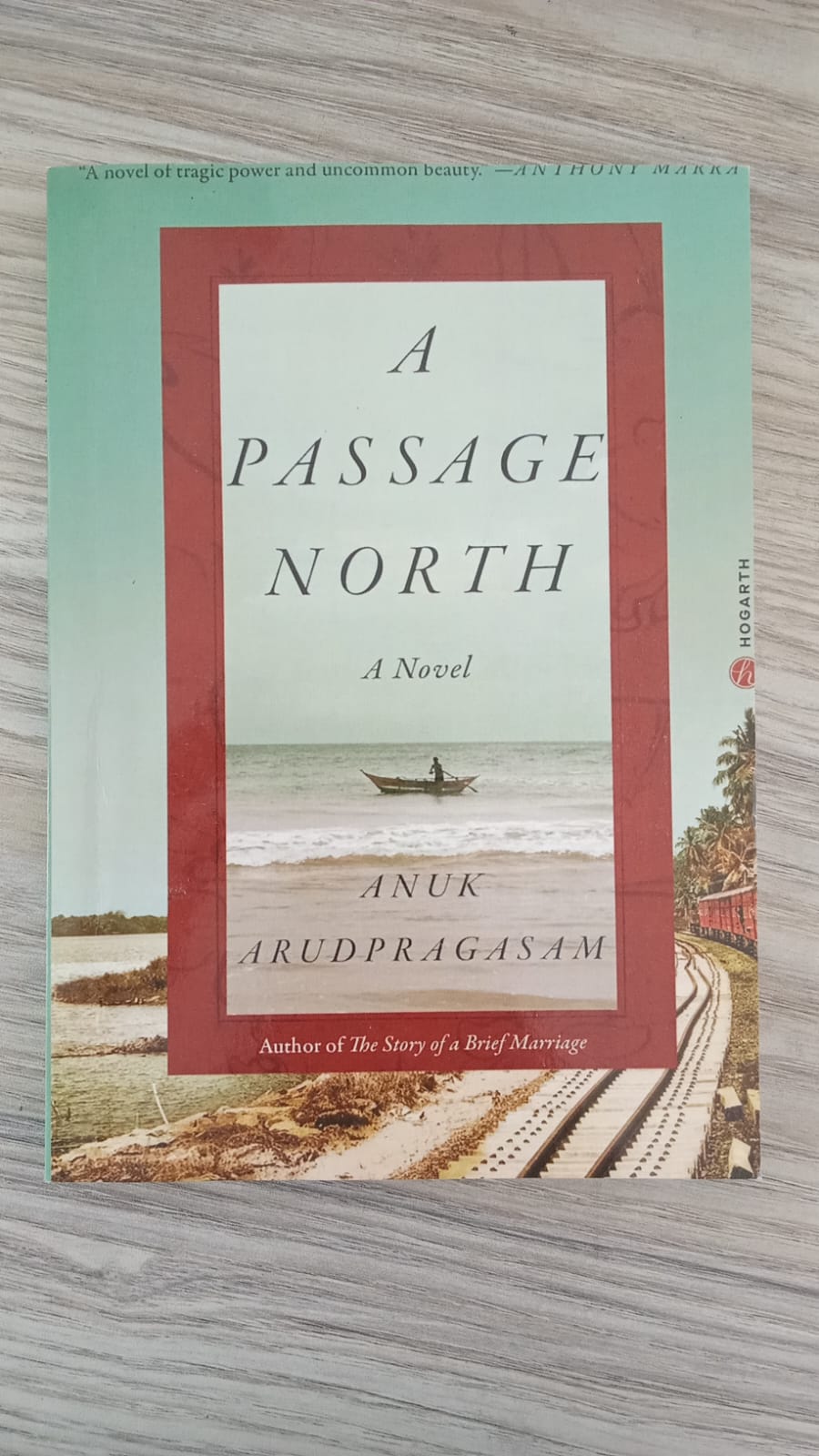




Passage North by Anuk Arudpracasam


රු1,750.00
3 X Rs. 583.33 or 8% Cashback with


or 3 X රු583.33 with


or up to 4 X රු437.50 with


A Passage North by Anuk Arudpragasam is a Booker Prize-shortlisted literary novel set in post-war Sri Lanka. After learning of the unexpected death of Rani, his grandmother’s former caregiver, Krishan travels by train from Colombo to the Northern Province for her funeral. Along the way, memories of Rani, his former lover Anjum and the lasting consequences of Sri Lanka’s civil war draw him into a profound meditation on grief, love, identity, memory and the distance between one human experience and another.
4 in stock
A Passage North by Anuk Arudpragasam is a deeply reflective literary novel about grief, memory, love, identity and the lasting consequences of Sri Lanka’s civil war.
Krishan is living in Colombo when he receives unexpected news.
Rani, the woman who had cared for his elderly grandmother, has died in her village in northern Sri Lanka.
Her death draws Krishan away from the routines of his current life and onto a long train journey from Colombo toward the war-scarred north.
But the physical journey is only one part of the novel.
As the train moves across the country, Krishan’s mind moves through:
Memories.
Loss.
Love.
Family.
War.
Distance.
The past.
He thinks about Rani, a woman whose life had been profoundly altered by the deaths of her sons during the civil war.
He also thinks about Anjum, the politically committed activist he once loved while living in Delhi.
An email from Anjum has recently returned her to his thoughts, causing him to reconsider their relationship, the choices he made and the emotional distance that eventually separated them.
Through Krishan’s memories and observations, A Passage North by Anuk Arudpragasam becomes far more than a story about travelling to a funeral.
It becomes a journey through the difficult spaces between people who survived conflict and those attempting to understand suffering from a safer distance.
A Passage North by Anuk Arudpragasam – Book Overview
A Passage North by Anuk Arudpragasam takes place in Sri Lanka after the end of the country’s long civil war.
The war may have officially ended.
Its consequences have not.
People continue carrying:
Grief.
Memory.
Absence.
Physical wounds.
Psychological trauma.
Destroyed relationships.
Interrupted lives.
The novel examines what it means to continue living when the event that caused enormous suffering belongs to the past but remains constantly present in memory.
Krishan
Krishan is the central consciousness of the novel.
Much of the book unfolds through his thoughts.
He is observant, introspective and often deeply analytical.
He does not simply experience something and move forward.
He considers it.
Reconsiders it.
Connects it with another memory.
Questions his response.
This creates a novel focused less on external action and more on the movement of consciousness.
The Train Journey North
The train journey gives the novel its physical structure.
Krishan leaves Colombo and travels toward the Northern Province.
As the landscape changes, his thoughts move further into the past.
The journey connects two parts of Sri Lanka.
But it also connects:
Present and past.
Distance and intimacy.
Life and death.
Memory and reality.
Colombo and the North
The geographical movement is especially important.
Colombo represents one kind of experience of Sri Lanka.
The war-affected north carries another history.
Krishan becomes increasingly conscious of the emotional and political distance that can exist between different parts of the same country.
The train therefore becomes more than transportation.
It becomes a passage into histories that cannot easily be separated from the present.
Rani
Rani had worked as a caregiver for Krishan’s grandmother.
But A Passage North by Anuk Arudpragasam gradually reveals that she carried an immense personal history of her own.
She had suffered devastating losses during the war.
Her grief did not simply disappear because years passed.
Through Rani, the novel considers what prolonged suffering can do to a person.
Grief After War
Wars are often described through numbers.
Deaths.
Displacements.
Years.
Battles.
Territories.
But numbers cannot fully describe private grief.
A parent losing a child does not experience that loss statistically.
It becomes part of the person’s everyday existence.
Arudpragasam brings the focus away from abstract history and toward individual consciousness.
The Sri Lankan Civil War
The Sri Lankan civil war lasted for decades and ended in 2009.
A Passage North by Anuk Arudpragasam is concerned not primarily with recreating battles but with examining what remains afterward.
The Booker Prize describes the novel as an attempt to understand life in the wake of the devastation of Sri Lanka’s thirty-year civil war.
The war therefore operates through memory and consequence rather than as a conventional military-action backdrop.
The Aftermath of Violence
A peace agreement or military ending can stop one phase of conflict.
It cannot instantly repair:
Families.
Bodies.
Memories.
Communities.
Homes.
Relationships.
The novel is interested in this slower, quieter aftermath.
What happens after the world stops looking?
Memory
Memory is one of the central forces in A Passage North by Anuk Arudpragasam.
Krishan’s thoughts continually return to earlier experiences.
One memory produces another.
A physical sensation may trigger a relationship.
A location may bring back a person.
A death may force older questions to return.
Memory therefore does not operate like a neat archive.
It is fluid.
Associative.
Unpredictable.
Time
The novel’s treatment of time is closely connected to memory.
The present moment can suddenly open into:
Years ago.
Another city.
Another relationship.
Another version of the self.
This creates a narrative where psychological time may matter more than clock time.
Anjum
Anjum is an important presence in Krishan’s memories.
She is politically engaged and committed to activist work.
Krishan remembers their relationship partly through the tension between intimacy and political commitment.
She represents not only a lost relationship but also a different way of engaging with suffering.
Love and Distance
Love does not automatically eliminate distance between two people.
People may care deeply for each other and still differ in:
Priorities.
Political commitments.
Emotional needs.
Ways of understanding the world.
Krishan’s memories of Anjum allow the novel to examine how love can remain meaningful even when a relationship does not continue.
Longing
Longing appears throughout A Passage North by Anuk Arudpragasam.
We may long for:
A person.
A past.
A place.
A different version of ourselves.
Something we never fully possessed.
Longing is powerful partly because its object is often unreachable.
Absence
The novel frequently examines people through their absence.
Someone dies.
Someone leaves.
A relationship ends.
A past disappears.
Yet absence can create an intense form of presence.
The person who is no longer physically there may occupy more mental space than someone sitting beside us.
Life After Loss
One of the difficult questions the novel asks is:
How does life continue after profound loss?
Not:
How do we forget?
Not:
How do we make suffering disappear?
But:
How do we continue while carrying it?
There is no simple answer.
Survivor’s Distance
Krishan also considers his own relationship to suffering.
He is close enough to understand some of the history around him.
Yet he has not lived every experience he reflects upon.
That creates discomfort.
Can one person ever fully understand another person’s suffering?
Witnessing
This becomes a question of witnessing.
We can listen.
Learn.
Observe.
Remember.
But we cannot literally enter another person’s consciousness.
There is always a distance between:
The person who suffers
and
the person who watches.
Empathy Has Limits
Empathy is valuable.
But A Passage North by Anuk Arudpragasam does not treat empathy as magical.
Imagining another person’s pain is not the same as experiencing it.
Recognizing that limitation can itself become a form of respect.
The Body
Arudpragasam pays close attention to physical experience.
Movement.
Breathing.
Touch.
Fatigue.
Ageing.
Death.
The body becomes one way human beings remain connected to the present even when the mind is travelling elsewhere.
Krishan’s Grandmother
Krishan’s grandmother also adds another dimension to the novel.
Her ageing body requires care.
Rani’s role as caregiver therefore connects:
Age.
Dependence.
Family.
Work.
Mortality.
Care becomes both intimate and practical.
Caregiving
Caregiving is often overlooked because much of its work appears ordinary.
Helping someone move.
Eat.
Wash.
Rest.
Live safely.
Yet these actions involve enormous intimacy.
Through Rani’s relationship with Krishan’s grandmother, the novel gives attention to forms of labour that are essential but rarely celebrated.
Ageing
Ageing reminds us that independence is temporary.
A person who once looked after others may eventually require assistance.
This reversal can be emotionally difficult for both the person receiving care and the family around them.
Death
The novel begins moving because of a death.
But death is not treated simply as a plot device.
It forces Krishan to think about:
How someone lived.
What they endured.
What remains after them.
What another person can ever truly know about their life.
Funeral and Ritual
Krishan travels north to attend Rani’s funeral.
Funerals are for the dead.
But they are also for the living.
Ritual gives grief structure.
People gather.
A body is acknowledged.
A life is remembered.
The community marks that something irreversible has occurred.
Journey as Meditation
Many novels use journeys to produce adventure.
A Passage North by Anuk Arudpragasam uses a journey to produce contemplation.
The train creates time.
Krishan cannot instantly arrive.
He must sit.
Wait.
Watch.
Remember.
Think.
That slow movement gives his consciousness room to unfold.
A Quiet Novel
Readers should understand that this is not a fast-paced thriller.
There is a death.
There is a war in the background.
There is emotional conflict.
But the novel’s primary energy comes from thought.
Readers who enjoy:
Interior monologue.
Long reflective passages.
Philosophical fiction.
Literary prose.
will likely appreciate it most.
Long Sentences and Meditative Prose
Arudpragasam is known for an unusually patient, flowing prose style.
Sentences can carry thoughts through multiple layers of memory and reflection.
The Booker judges highlighted the novel’s “hypnotic” style and its close attention to living in the aftermath of trauma.
The effect is deliberate.
Readers are invited not to rush.
Philosophy
Arudpragasam studied philosophy and received a doctorate from Columbia University, and his fiction often reflects a deep interest in consciousness, perception and human experience.
However, A Passage North is still a novel rather than a philosophical textbook.
Its questions emerge through characters, memory and lived experience.
Consciousness
Few novels devote this much attention to what thinking actually feels like.
The mind rarely moves in a straight line.
We remember.
Associate.
Return.
Reconsider.
Imagine.
Regret.
The novel’s structure follows that movement.
Identity
Krishan’s identity is connected to:
Language.
Family.
Sri Lanka.
Tamil experience.
Education.
Political history.
Relationships.
Yet identity is never presented as one simple label.
People contain different histories simultaneously.
Tamil Experience
Arudpragasam is a Sri Lankan Tamil writer, and the novel engages closely with the experiences and aftermath of war in the Tamil-majority north. The Booker Prize identifies him as a Sri Lankan novelist and describes the book as reckoning with the civil war’s aftermath.
This perspective is important to the novel’s emotional and historical landscape.
National Identity
A nation can contain many experiences of itself.
Different communities may remember the same historical period differently.
A Passage North by Anuk Arudpragasam resists turning Sri Lanka into one simple national story.
Instead, it emphasizes difference, distance and memory.
Politics and Private Life
Political history can feel abstract until it enters:
A family.
A body.
A relationship.
A funeral.
The novel repeatedly brings large historical forces down to the scale of individual lives.
War Does Not Stay in the Past
Even after fighting ends, war can continue through:
Trauma.
Missing people.
Changed landscapes.
Family stories.
Political memory.
Economic consequences.
Silence.
This is why the novel’s post-war setting is so important.
Is A Passage North Based on a True Story?
No. It is a work of fiction.
However, it is set against the real historical aftermath of Sri Lanka’s civil war and engages seriously with the social and emotional consequences of that history.
Readers should distinguish the fictional characters from the real historical context.
Is A Passage North a Romance?
No.
Krishan’s past relationship with Anjum is important, and the novel contains powerful reflections on love and longing.
But it is primarily literary fiction, not a romance novel.
Is A Passage North a War Novel?
It is better described as a post-war literary novel.
The focus is not battlefield action.
It is on:
Memory.
Aftermath.
Grief.
Survival.
Consciousness.
The people left behind.
Is It a Sri Lankan Novel?
Yes.
Sri Lanka is fundamental to the story.
Krishan’s journey begins in Colombo and moves into the Northern Province, making the geography of the island central to the book.
For Sri Lankan readers, familiar places and historical context may make the novel especially resonant.
Is It a Standalone?
Yes.
A Passage North by Anuk Arudpragasam is a standalone novel.
You do not need to read Arudpragasam’s earlier novel The Story of a Brief Marriage first.
The two books share interests in Sri Lanka’s war and its human consequences but tell separate stories.
The Story of a Brief Marriage
Arudpragasam’s first novel, The Story of a Brief Marriage, is set during the final stages of Sri Lanka’s civil war.
It won the DSC Prize for South Asian Literature and was shortlisted for the Dylan Thomas Prize.
Readers interested in A Passage North by Anuk Arudpragasam may also want to explore that earlier novel.
Booker Prize Recognition
A Passage North was shortlisted for the 2021 Booker Prize, alongside novels including The Promise, Great Circle, Bewilderment, The Fortune Men and No One Is Talking About This.
The eventual winner was Damon Galgut’s The Promise.
Edition Details
Granta lists its current UK paperback edition as:
Title: A Passage North
Author: Anuk Arudpragasam
Publisher: Granta Books
Paperback publication: March 3, 2022
ISBN: 9781783786961
Pages: 304
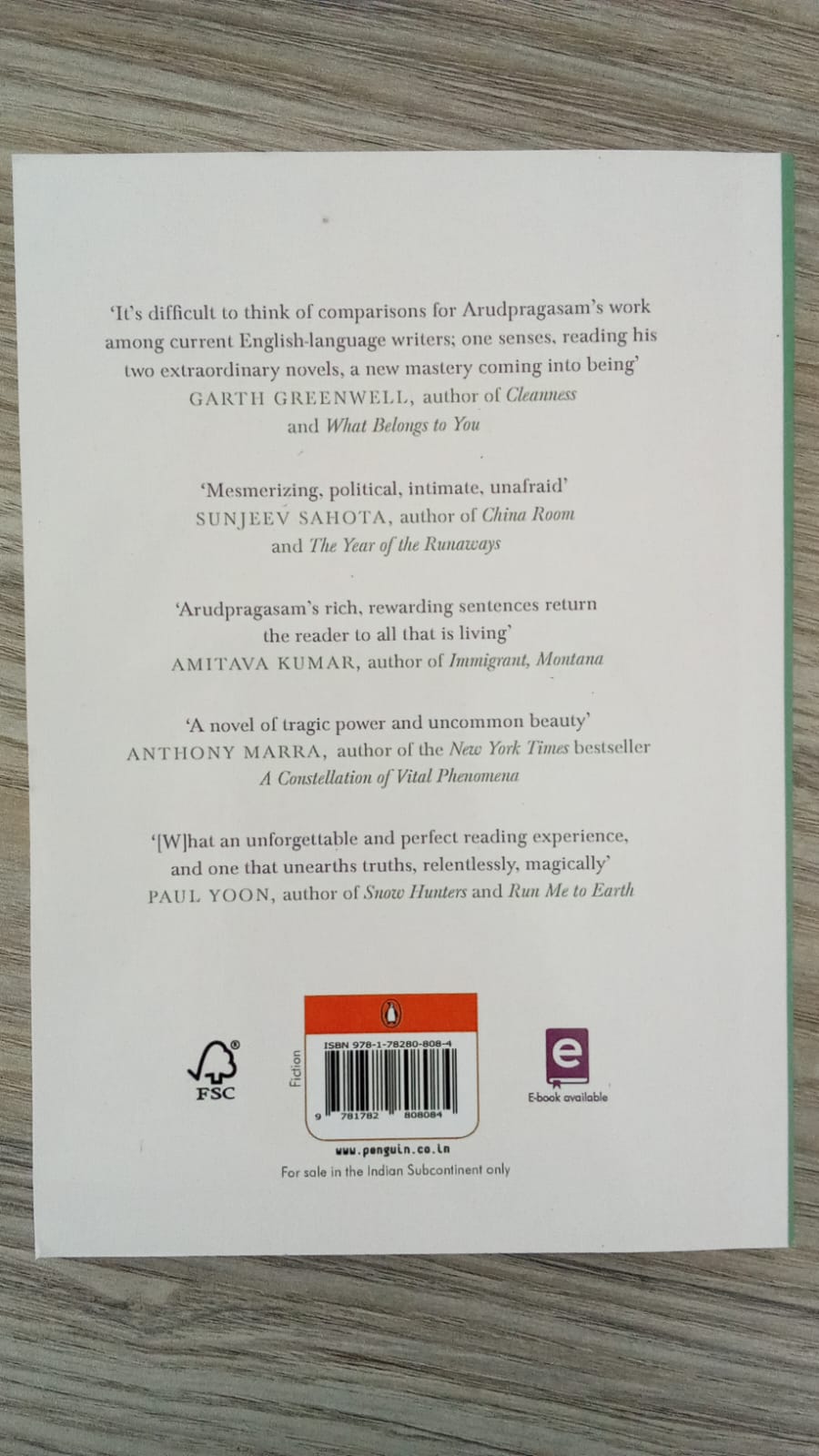
A U.S. Hogarth edition also exists with different ISBN details, so check the barcode on your physical BargainBooks copy before filling in the WooCommerce ISBN field.
Category Recommendation
Your final BargainBooks review currently places this product under Fiction & Literature > Classics & Literary Fiction.
Genre-wise, I would describe it as contemporary literary fiction / post-war literary fiction. If your store uses the combined Classics & Literary Fiction category for modern literary novels, your existing category is workable.
Content Considerations
A Passage North by Anuk Arudpragasam contains mature and emotionally difficult material involving:
- Sri Lanka’s civil war
- Death and bereavement
- Grief
- Deaths of children/family members
- War trauma
- Displacement
- Psychological suffering
- Unexpected death
- Memories of violence
- Political conflict
- Loss
- Relationship separation
The novel is not written as graphic action fiction, but its subject matter can be emotionally heavy.
Important Themes
A Passage North by Anuk Arudpragasam explores memory, grief, war, post-war Sri Lanka, Tamil identity, love, longing, family, caregiving, mortality, trauma, political commitment, distance, consciousness, time, absence, empathy, national identity and the difficulty of understanding another person’s suffering.
7 Powerful Reasons to Read A Passage North by Anuk Arudpragasam
- It offers a deeply personal view of post-war Sri Lanka. Instead of explaining history through statistics or battles, the novel explores how conflict remains inside ordinary lives long after fighting ends.
- Krishan’s train journey becomes a remarkable journey through memory. The physical movement from Colombo to the north gives the novel structure while his thoughts travel through family, love, grief and history.
- The prose is intensely reflective and distinctive. Arudpragasam uses long, flowing sentences to reproduce the movement of consciousness rather than rushing readers from one plot event to another.
- It gives attention to lives that can disappear from official histories. Rani’s experiences remind readers that national conflicts consist of individual people carrying private losses.
- It explores love without reducing itself to romance. Krishan’s memories of Anjum consider desire, political commitment, emotional distance and the difficulty of truly understanding another person.
- It asks difficult questions about empathy. The book recognizes both our responsibility to care about another person’s suffering and the limits of imagining experiences we have never lived ourselves.
- It is internationally acclaimed Sri Lankan literary fiction. Its place on the 2021 Booker Prize shortlist introduced Arudpragasam’s meditative exploration of post-war Sri Lanka to a wide international readership.
Why Read A Passage North by Anuk Arudpragasam?
A Passage North by Anuk Arudpragasam is an excellent choice for readers interested in Sri Lankan literature, literary fiction, post-war fiction, family stories, philosophical novels, grief, memory and character-driven writing.
It may especially appeal to readers who enjoy books that do not rush.
This is a novel that asks the reader to stay inside thoughts.
To notice small movements.
To consider how the past returns.
To recognize that historical events continue inside individual lives long after the official history says they have ended.
For Sri Lankan readers, there is an additional dimension.
The places are not abstract.
Colombo.
The north.
The train connecting them.
The political and emotional distances within the island.
These elements give the novel a particularly immediate resonance.
Who Should Read This Book?
A Passage North by Anuk Arudpragasam may especially appeal to readers of literary fiction, Sri Lankan and South Asian literature, Booker Prize novels, reflective and philosophical fiction, books about memory and grief, post-war narratives, slow and meditative novels, character studies and readers interested in how private lives intersect with national history.
Readers looking primarily for action, romance or a plot-driven war thriller should know that this book works very differently.
Its drama occurs largely inside consciousness.
A Passage North by Anuk Arudpragasam – A Journey Through a Country and a Mind
A Passage North by Anuk Arudpragasam begins with a phone call.
Someone has died.
Krishan needs to travel north.
That simple event opens an enormous interior landscape.
As the train moves away from Colombo, Krishan is carried not only through Sri Lanka but through layers of his own memory.
Rani.
His grandmother.
Anjum.
War.
Love.
Loss.
Things he understood once.
Things he may have misunderstood.
Things another person experienced that he can never completely know.
The north toward which he travels is physically part of the same island.
Yet history has created distances that cannot be measured simply in kilometres.
That is what gives the journey its power.
Arudpragasam is interested in those invisible distances.
Between one person and another.
Between suffering and observing suffering.
Between the past and the present.
Between love and possession.
Between remembering someone and truly understanding them.
The novel does not offer easy solutions.
Grief is not neatly resolved.
History is not closed.
The dead do not simply disappear from the lives of the living.
Instead, A Passage North by Anuk Arudpragasam asks readers to pay attention.
To the body.
To memory.
To history.
To people whose pain may never become part of a famous story.
That patient attention is what gives the novel its emotional force.
For readers who appreciate thoughtful, beautifully controlled literary fiction and stories that examine Sri Lanka through memory rather than spectacle, A Passage North is a powerful and rewarding novel about what remains after loss—and the difficult work of continuing to live beside the past.
Learn more about A Passage North by Anuk Arudpragasam on the official Penguin Random House website.
Explore more literary fiction books at Bargain Books.
Be the first to review “Passage North by Anuk Arudpracasam”
Related products
Classics & Literary Fiction
රු1,850.00
3 X Rs. 616.67 or 8% Cashback with
or 3 X රු616.67 with
or up to 4 X රු462.50 with
-16%

Classics & Literary Fiction
Original price was: රු3,200.00.රු2,700.00Current price is: රු2,700.00.
3 X Rs. 900.00 or 8% Cashback with
or 3 X රු900.00 with
or up to 4 X රු675.00 with
Classics & Literary Fiction
රු1,800.00
3 X Rs. 600.00 or 8% Cashback with
or 3 X රු600.00 with
or up to 4 X රු450.00 with
-28%

Out of stock
Classics & Literary Fiction
Original price was: රු1,800.00.රු1,300.00Current price is: රු1,300.00.
3 X Rs. 433.33 or 8% Cashback with
or 3 X රු433.33 with
or up to 4 X රු325.00 with

Out of stock
Classics & Literary Fiction
රු1,750.00
3 X Rs. 583.33 or 8% Cashback with
or 3 X රු583.33 with
or up to 4 X රු437.50 with

Out of stock
Classics & Literary Fiction
රු1,750.00
3 X Rs. 583.33 or 8% Cashback with
or 3 X රු583.33 with
or up to 4 X රු437.50 with
-48%

Out of stock
Classics & Literary Fiction
Original price was: රු3,000.00.රු1,550.00Current price is: රු1,550.00.
3 X Rs. 516.67 or 8% Cashback with
or 3 X රු516.67 with
or up to 4 X රු387.50 with
-16%

Classics & Literary Fiction
Original price was: රු3,100.00.රු2,600.00Current price is: රු2,600.00.
3 X Rs. 866.67 or 8% Cashback with
or 3 X රු866.67 with
or up to 4 X රු650.00 with
Reviews
There are no reviews yet.