
No products in the cart.
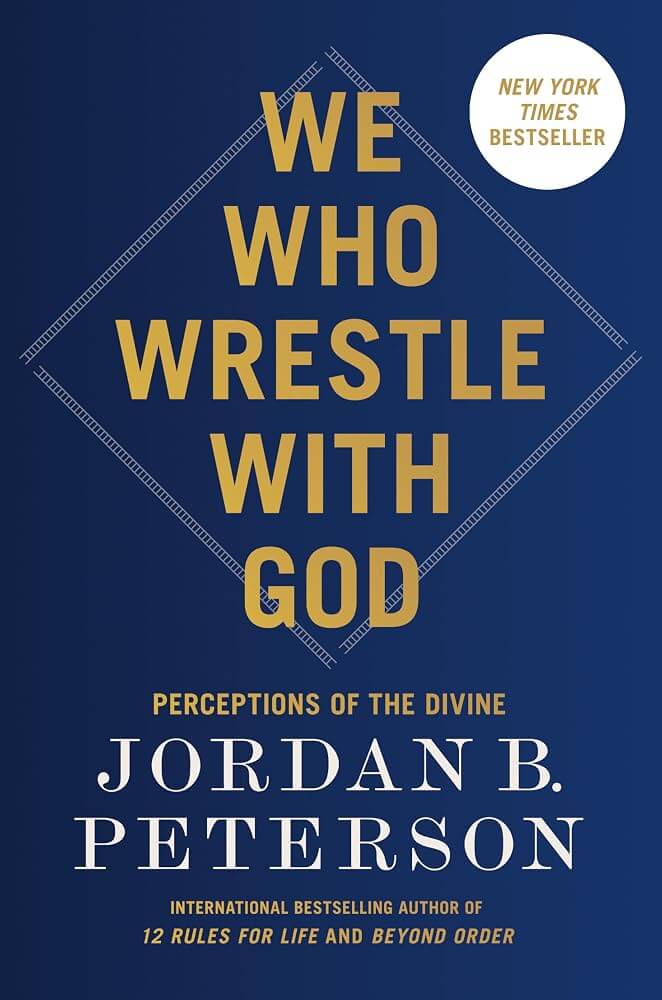
We Who Wrestle with God: Perceptions of the Divine by Jordan B. Peterson

රු2,950.00
3 X Rs. 983.33 or 8% Cashback with


or 3 X රු983.33 with


or up to 4 X රු737.50 with


In We Who Wrestle with God: Perceptions of the Divine, Jordan B. Peterson explores some of the Bible’s most influential stories through psychology, philosophy, mythology and religion.
Explore narratives including:
- Adam and Eve
- Cain and Abel
- Noah
- The Tower of Babel
- Abraham
- Moses
- Elijah
- Jonah
Themes include:
- Meaning & Purpose
- Sacrifice
- Responsibility
- Suffering
- Moral Choice
- Psychology of Religion
- Biblical Interpretation
- Mythology
- Cultural Foundations
Trade Paperback | 576 pages | Allen Lane | ISBN 9780241619636
5 in stock
We Who Wrestle with God by Jordan B. Peterson
We Who Wrestle with God: Perceptions of the Divine by Jordan B. Peterson is an ambitious exploration of major biblical stories through the lenses of psychology, mythology, philosophy and religion.
Peterson examines some of the foundational narratives that have influenced Western culture for centuries and asks why these stories continue to matter.
The book explores figures and stories including:
- Adam and Eve
- Cain and Abel
- Noah and the Flood
- The Tower of Babel
- Abraham
- Moses and the Israelites
- Elijah
- Jonah
Rather than treating these narratives only as historical or theological texts, Peterson considers their symbolic, psychological and cultural meaning.
Penguin describes the book as an analysis of biblical accounts of rebellion, sacrifice, suffering and triumph, asking how such stories helped people understand meaning, identity and purpose across generations.
Adam and Eve
One of the major stories explored is the account of Adam and Eve.
Peterson uses the story of the Fall to examine ideas such as:
- Self-consciousness
- Moral awareness
- Choice
- Responsibility
- Shame
- Knowledge
- Human vulnerability
The story becomes more than a simple narrative about disobedience.
It becomes a framework for considering what it means to become aware of oneself and of the consequences of one’s actions.
Cain and Abel
The conflict between Cain and Abel provides another major psychological theme.
The story raises questions about:
- Envy
- Resentment
- Sacrifice
- Responsibility
- Violence
- Moral failure
Peterson frequently returns to the danger of resentment as a destructive psychological force.
Cain’s response to rejection becomes a way to examine how frustration and perceived injustice can transform into anger and violence.
Noah and the Flood
The story of Noah introduces themes of chaos, catastrophe and preparation.
Why does one person survive a disaster that overwhelms others?
What does it mean to prepare wisely for uncertain events?
How do individuals respond when social structures become unstable?
Peterson interprets the narrative as part of a broader discussion about order, responsibility and the ability to confront danger rather than ignore it.
The Tower of Babel
The Tower of Babel allows the book to explore the relationship between collective ambition and collapse.
The story raises questions about:
- Pride
- Social organisation
- Communication
- Power
- Collective identity
- Human limits
The collapse of the tower becomes a symbolic example of what can happen when large systems become disconnected from deeper moral or spiritual foundations.
Abraham
The story of Abraham is central to the book’s discussion of faith, sacrifice and the willingness to move toward an uncertain future.
Abraham repeatedly leaves what is familiar.
He travels.
He accepts responsibility.
He faces difficult choices.
Peterson uses these episodes to examine how individuals develop meaning by moving voluntarily toward challenge rather than remaining within what is safe and known.
Moses and the Israelites
The story of Moses provides another major framework.
Peterson examines themes surrounding:
- Tyranny
- Liberation
- Law
- Leadership
- Responsibility
- Collective identity
- Moral order
The journey out of Egypt is not treated simply as escape from oppression.
It also raises the question:
What happens after freedom is achieved?
A group freed from one system must still develop rules, responsibilities and a structure capable of holding the community together.
Elijah and Conscience
The book also explores Elijah and the relationship between spiritual experience and conscience.
Penguin’s synopsis highlights Elijah’s discovery of the divine voice through the dictates of conscience.
This supports one of the book’s broader themes:
that religious stories can be interpreted not only as external events but also as descriptions of internal psychological processes.
Jonah
The story of Jonah becomes another example of what happens when responsibility is avoided.
Jonah attempts to escape the task placed before him.
That avoidance creates increasingly serious consequences.
Peterson uses the story to explore:
- Responsibility
- Avoidance
- Fear
- Moral obligation
- Purpose
The famous image of Jonah inside the great fish becomes part of a broader discussion about the consequences of refusing to confront what life demands.
Psychology and Religion
One of Peterson’s long-running academic interests is the relationship between:
religion, psychology, mythology and meaning.
We Who Wrestle with God continues that approach.
Rather than asking readers simply to accept biblical stories literally, the book asks what psychological and cultural truths might be contained within them.
This makes it relevant to readers interested in:
- Psychology
- Religion
- Mythology
- Philosophy
- Biblical interpretation
- Cultural history
Google Books categorises the title across religion, philosophy, psychology of religion, mythology and self-development.
Meaning, Aim and Purpose
A recurring concern in Peterson’s work is the question of meaning.
What makes life meaningful?
How should a person respond to suffering?
What responsibilities are worth accepting?
How should individuals orient themselves when life becomes uncertain?
In this book, biblical stories become a way of approaching these questions.
Penguin describes the work as an examination of how ancient narratives continue to guide the search for meaning, aim and purpose.
Ancient Stories and Modern Life
One of the book’s central claims is that ancient stories remain relevant because they encode recurring patterns of human behaviour.
The technologies and social structures of the modern world may be different, but people still confront:
- Jealousy
- Fear
- Ambition
- Betrayal
- Responsibility
- Sacrifice
- Family conflict
- Leadership
- Suffering
- Hope
This allows Peterson to connect ancient biblical narratives with contemporary psychological questions.
Western Cultural Foundations
The book also considers the influence of biblical stories on Western culture.
Peterson argues that these stories have helped shape ideas about:
- Morality
- Law
- Responsibility
- Human dignity
- Sacrifice
- Justice
- Community
Readers do not need to agree with every interpretation to find the cultural analysis interesting.
The book can therefore be approached from multiple perspectives:
- Religious
- Philosophical
- Psychological
- Literary
- Cultural
Not a Conventional Bible Commentary
We Who Wrestle with God should not be categorised simply as a traditional theological commentary.
Peterson approaches the texts through multiple disciplines.
His analysis draws from:
- Psychology
- Mythology
- Philosophy
- Religion
- Symbolism
- Cultural interpretation
That interdisciplinary approach is one of the book’s defining features.
About Jordan B. Peterson
Jordan B. Peterson is a Canadian psychologist, author and public intellectual.
Penguin identifies him as the bestselling author of:
- Maps of Meaning
- 12 Rules for Life
- Beyond Order
- We Who Wrestle with God
The publisher notes his academic background at Harvard and the University of Toronto and his extensive work on personality, belief, motivation and psychology.
Who Will Enjoy We Who Wrestle with God?
This book may especially appeal to readers interested in:
- Psychology
- Philosophy
- Religion
- Christianity
- Biblical stories
- Mythology
- Meaning and purpose
- Cultural history
- Personal responsibility
- Jordan B. Peterson
It may also appeal to readers who enjoyed Maps of Meaning, 12 Rules for Life or Beyond Order and want a deeper exploration of Peterson’s ideas about religion and mythology.
Important Classification Note
This book discusses biblical narratives extensively, but its approach is broader than devotional Christianity.
A suitable WooCommerce classification is:
Philosophy / Religion / Psychology of Religion
rather than:
Religious Scripture
The book presents Peterson’s interpretations and arguments about biblical stories; those interpretations should not be marketed as universally accepted theological conclusions.
Buy We Who Wrestle with God in Sri Lanka
For readers looking to buy We Who Wrestle with God by Jordan B. Peterson in Sri Lanka, ISBN 9780241619636 identifies the physical Allen Lane trade paperback edition.
Exact-ISBN trade records give a trim around:
23.3–23.4 × 15.3 × 3.2–4.0 cm
and weights ranging from approximately:
700–850 g.
For safer WooCommerce courier calculations, I recommend:
0.850 kg / 23.4 × 15.3 × 4.0 cm
Be the first to review “We Who Wrestle with God: Perceptions of the Divine by Jordan B. Peterson”
Related products

Out of stock
Religion & Spirituality
රු1,850.00
3 X Rs. 616.67 or 8% Cashback with
or 3 X රු616.67 with
or up to 4 X රු462.50 with

රු1,350.00
3 X Rs. 450.00 or 8% Cashback with
or 3 X රු450.00 with
or up to 4 X රු337.50 with
-9%

Non-Fiction & Knowledge
Original price was: රු1,750.00.රු1,600.00Current price is: රු1,600.00.
3 X Rs. 533.33 or 8% Cashback with
or 3 X රු533.33 with
or up to 4 X රු400.00 with
රු1,700.00
3 X Rs. 566.67 or 8% Cashback with
or 3 X රු566.67 with
or up to 4 X රු425.00 with

Contemporary romance
The Forty Rules of Love Paperback – A Captivating Novel by Elif Shafak on Love and Spirituality
රු1,650.00
3 X Rs. 550.00 or 8% Cashback with
or 3 X රු550.00 with
or up to 4 X රු412.50 with
-27%

Non-Fiction & Knowledge
Original price was: රු2,400.00.රු1,750.00Current price is: රු1,750.00.
3 X Rs. 583.33 or 8% Cashback with
or 3 X රු583.33 with
or up to 4 X රු437.50 with
Out of stock
Non-Fiction & Knowledge
රු2,200.00
3 X Rs. 733.33 or 8% Cashback with
or 3 X රු733.33 with
or up to 4 X රු550.00 with
-28%

Non-Fiction & Knowledge
Osho Books Set | Inspirational Spiritual Paperback Collection by Osho
Original price was: රු12,200.00.රු8,750.00Current price is: රු8,750.00.
3 X Rs. 2,916.67 or 8% Cashback with
or 3 X රු2,916.67 with
or up to 4 X රු2,187.50 with
Reviews
There are no reviews yet.