
No products in the cart.
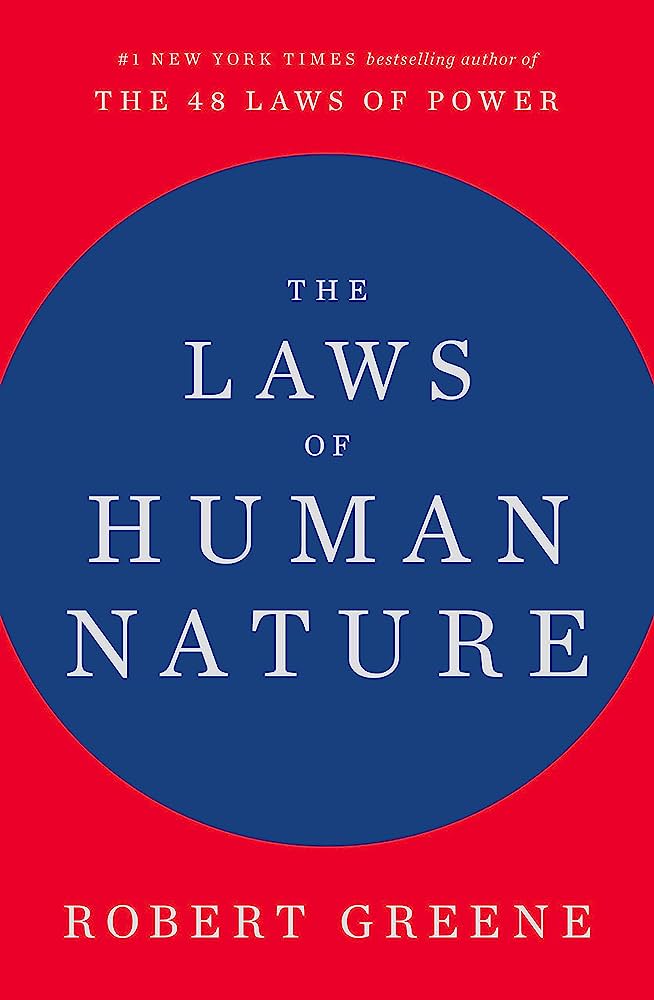
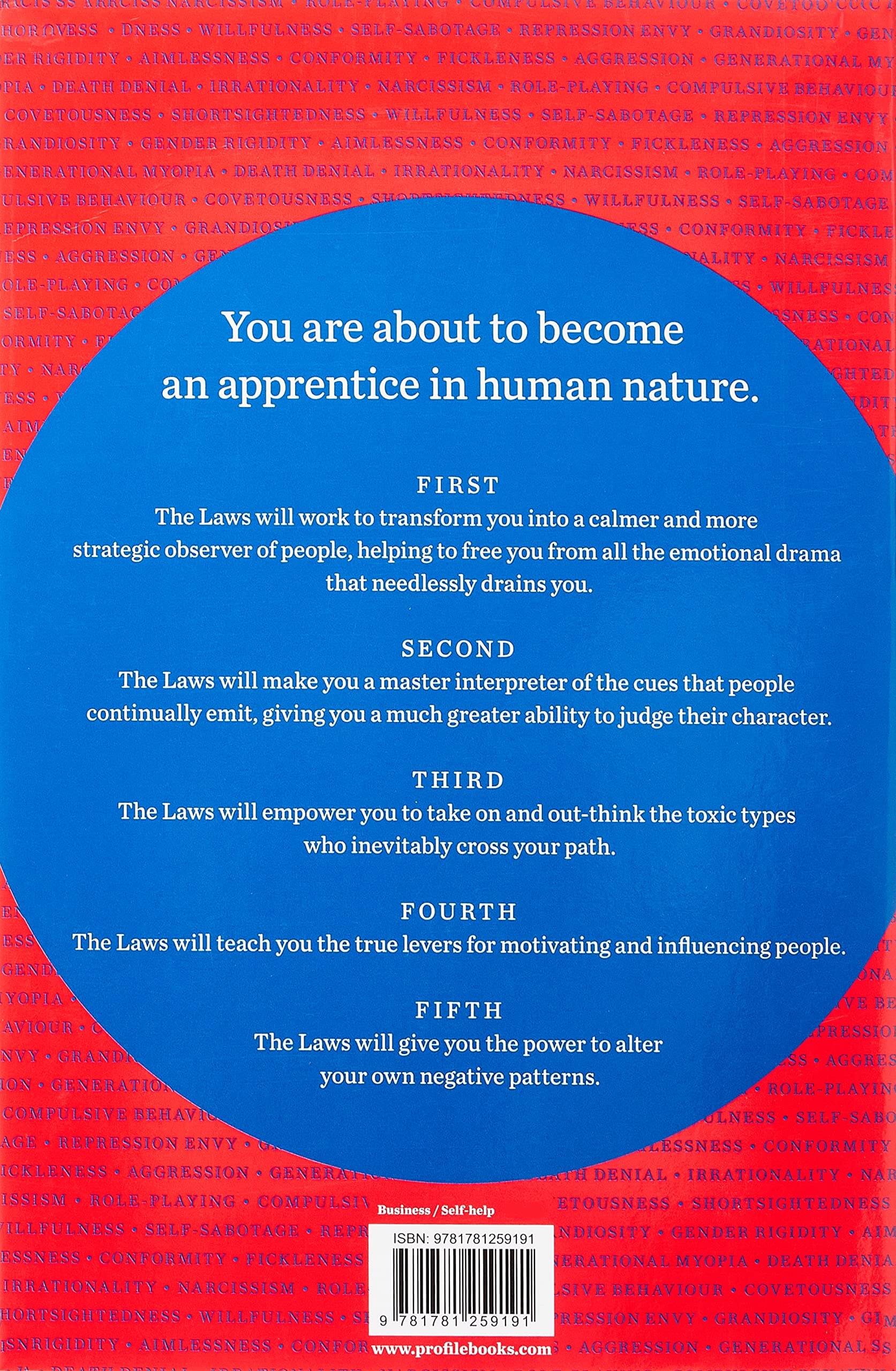


Laws of Human Nature by Robert Greene


රු2,750.00
3 X Rs. 916.67 or 8% Cashback with


or 3 X රු916.67 with


or up to 4 X රු687.50 with


The Laws of Human Nature by Robert Greene is a powerful guide to understanding human behavior, emotions and hidden motivations. Drawing on psychology, history and real-world examples, Robert Greene explores irrationality, narcissism, envy, aggression, status, persuasion, leadership and self-awareness. Ideal for readers interested in psychology, business, relationships, emotional intelligence and personal development, this book helps you understand others more clearly while becoming more conscious of your own behavior.
Out of stock
Email when stock available
The Laws of Human Nature by Robert Greene is a powerful guide to understanding why people behave the way they do, how emotions influence decisions, how hidden motives shape relationships, and how greater self-awareness can help you deal with difficult personalities more intelligently.
People rarely behave according to pure logic.
They react through:
Emotion.
Ego.
Fear.
Insecurity.
Ambition.
Desire.
Jealousy.
Status.
Past experiences.
Yet most people focus only on what someone says or does on the surface.
Robert Greene encourages readers to look deeper.
Why did that person react so strongly?
What insecurity may be behind their behavior?
Why does someone constantly seek attention?
Why do some people manipulate others?
Why do people repeat the same mistakes even when they know better?
Why can intelligent people make irrational decisions?
These are the kinds of questions explored in The Laws of Human Nature by Robert Greene.
Rather than presenting human behavior as random, Greene argues that many patterns can be recognized.
The better you understand those patterns, the better prepared you may become to understand both yourself and other people.
The Laws of Human Nature by Robert Greene – Book Overview
The Laws of Human Nature by Robert Greene examines recurring patterns in human psychology and behavior.
Greene draws from:
History.
Psychology.
Politics.
Business.
Leadership.
Relationships.
Biographies.
Famous historical figures.
His goal is to help readers become more observant.
Many people move through life reacting quickly.
Someone criticizes them.
They become angry.
Someone succeeds.
They become jealous.
Someone gives them attention.
They become attached.
Someone challenges their status.
They become defensive.
Greene encourages readers to notice these reactions before being controlled by them.
Understanding Human Nature
Human nature refers to the patterns, instincts and emotional tendencies that repeatedly appear across people and societies.
Individuals are different.
But certain behaviors appear again and again.
People want:
Recognition.
Respect.
Belonging.
Security.
Status.
Control.
Meaning.
Approval.
When these needs feel threatened, behavior can change.
Understanding these deeper motivations can make other people’s actions easier to interpret.
The Law of Irrationality
One of Greene’s most important ideas is that people are more emotional than they realize.
We often believe:
“I made a logical decision.”
But emotion may have influenced the decision long before logic arrived.
Anger can change judgment.
Fear can make risks appear larger.
Excitement can make opportunities appear better than they actually are.
Desire can make warning signs easier to ignore.
The Laws of Human Nature by Robert Greene encourages readers to become more aware of emotional influence.
Emotional Self-Control
Self-control does not mean becoming emotionless.
Emotions provide information.
The problem begins when emotion becomes the only decision-maker.
A useful habit is learning to pause.
Instead of reacting immediately:
Observe.
Question.
Wait.
Consider.
Then respond.
That small delay can prevent many unnecessary mistakes.
Self-Awareness
Understanding other people begins with understanding yourself.
This is one of the strongest ideas in The Laws of Human Nature by Robert Greene.
It is easy to see someone else’s flaws.
Much harder to notice your own.
People naturally protect their self-image.
We may tell ourselves:
I am always reasonable.
I am never jealous.
I do not care what people think.
I am not competitive.
But behavior sometimes tells a different story.
Greater self-awareness requires uncomfortable honesty.
Narcissism
Greene explores narcissism as an important part of human nature.
Everyone needs some degree of self-focus.
We need:
Self-respect.
Confidence.
Identity.
Personal goals.
But extreme narcissism can cause people to become disconnected from others.
They may constantly ask:
What can this person do for me?
How does this make me look?
Why am I not receiving enough attention?
Healthy and Unhealthy Narcissism
Healthy self-confidence allows someone to care about themselves while still recognizing other people’s needs.
Unhealthy narcissism can create:
Manipulation.
Attention-seeking.
Lack of empathy.
Constant competition.
Sensitivity to criticism.
A need for admiration.
The Laws of Human Nature by Robert Greene encourages readers to recognize these patterns early.
Empathy
One of the most useful skills Greene discusses is empathy.
Empathy is not simply being nice.
It means trying to understand another person’s emotional reality.
What do they want?
What are they afraid of?
What are they protecting?
What are they not saying?
People often reveal more through:
Tone.
Body language.
Patterns.
Silence.
Reactions.
than through their words alone.
Reading People
Understanding people requires observation over time.
One dramatic moment may be misleading.
Patterns matter more.
Watch how someone behaves:
When criticized.
When stressed.
When given power.
When they lose.
When they succeed.
When they no longer need something from you.
Those moments often reveal character more clearly.
Masks
People wear social masks.
At work, someone may appear calm.
Privately, they may be insecure.
Someone may appear extremely confident.
That confidence may be covering fear.
Someone may act generous.
Their generosity may also be connected to a desire for admiration.
This does not mean everyone is fake.
It means human behavior often contains multiple layers.
Character
Greene encourages readers to pay attention to character rather than charm.
Charm can be temporary.
Character appears through repeated behavior.
A person may say:
Trust me.
But do their actions support that?
A person may appear friendly.
But how do they treat people who cannot benefit them?
Character reveals itself through consistency.
Compulsive Behavior
People often repeat patterns.
They choose similar partners.
Create similar conflicts.
Make similar financial mistakes.
React to criticism in the same way.
Then they wonder why the same problems keep returning.
The Laws of Human Nature by Robert Greene encourages readers to search for the pattern rather than treating every event as separate.
The Law of Covetousness
People often desire what appears unavailable.
Scarcity increases attraction.
Mystery increases curiosity.
Something can become more desirable precisely because it feels difficult to obtain.
This applies to:
Products.
Relationships.
Status.
Opportunities.
Greene examines how desire can be shaped by distance and scarcity.
Desire
People do not always want things because they truly need them.
Sometimes they want them because:
Other people have them.
They are difficult to get.
They symbolize status.
They seem forbidden.
Understanding this helps readers question their own desires.
Do I genuinely want this?
Or do I want what this represents?
The Law of Shortsightedness
People often focus too strongly on immediate results.
Short-term emotion can hide long-term consequences.
Someone may:
Spend impulsively.
React angrily.
Accept a bad deal.
Leave a job suddenly.
Start a conflict.
because the immediate emotional reward feels stronger than the future cost.
Greene encourages long-term thinking.
Long-Term Thinking
Before making an important decision, consider:
What happens next?
And after that?
And after that?
This can improve decisions in:
Business.
Relationships.
Money.
Career.
Leadership.
Long-term thinking reduces the influence of temporary emotion.
Defensiveness
People naturally resist ideas that make them feel attacked.
If someone feels:
Judged.
Embarrassed.
Inferior.
Controlled.
they may stop listening.
This is why persuasion cannot rely only on facts.
Understanding the other person’s emotional position matters.
Persuasion
Greene explores how people can influence others more effectively.
A strong approach often begins with understanding:
What matters to them?
What identity are they protecting?
What outcome do they want?
What fear is influencing them?
People are more likely to listen when they feel understood.
Self-Opinion
Most people maintain a positive internal story about themselves.
They may believe:
I am intelligent.
I am independent.
I am fair.
I am a good person.
When someone directly attacks that identity, defensiveness appears.
Understanding this can improve communication.
Envy
Envy is one of the most uncomfortable emotions to admit.
People rarely say:
“I am jealous of you.”
Instead, envy may appear as:
Criticism.
Sarcasm.
Gossip.
Minimizing someone’s success.
Finding flaws in their achievements.
Greene encourages readers to recognize both external and internal envy.
Why Envy Happens
People compare themselves most strongly with those who seem similar.
A complete stranger’s success may not bother you.
But a colleague, sibling or friend achieving something you want can trigger comparison.
The lesson is not to become suspicious of everyone.
It is to understand how comparison influences behavior.
Status
Status is another powerful force.
People care about where they stand within groups.
Workplaces.
Families.
Friendship circles.
Communities.
Someone may become defensive when they feel their position is threatened.
This can create conflict even when no obvious practical issue exists.
Status Games
People communicate status subtly.
Who speaks first?
Who interrupts?
Who receives attention?
Whose opinion matters?
Who controls information?
Who gets credit?
Understanding these dynamics can help readers navigate workplaces and social environments more effectively.
Aggression
Aggression is not always obvious.
Some people are openly confrontational.
Others use indirect aggression.
Passive resistance.
Sarcasm.
Gossip.
Delays.
Subtle sabotage.
The Laws of Human Nature by Robert Greene encourages readers to recognize aggression even when it appears polite.
Hidden Hostility
Someone may smile while resenting you.
This does not mean becoming paranoid.
It means paying attention to contradictions between words and behavior.
If someone repeatedly says:
“No problem.”
while consistently undermining you, their actions deserve more attention than their words.
Leadership
Leadership is one of the areas where understanding human nature becomes especially valuable.
Leaders must understand:
Motivation.
Group dynamics.
Ego.
Fear.
Conflict.
Status.
People do not simply follow instructions.
They respond emotionally to leaders.
A leader who understands psychology can communicate more effectively.
Authority
Authority can reveal character.
Some people become more generous when given power.
Others become controlling.
Power reduces certain social restrictions.
That means observing how someone behaves after gaining authority can reveal important traits.
Group Psychology
People behave differently in groups.
An individual may be reasonable alone but become more extreme inside a crowd.
Groups can create:
Belonging.
Identity.
Energy.
But also:
Conformity.
Tribalism.
Emotional contagion.
Greene explores why people sometimes adopt the beliefs of their group without carefully examining them.
Conformity
Humans naturally want belonging.
Standing against a group can feel uncomfortable.
This is why people may agree publicly even when privately uncertain.
Understanding conformity can help readers think more independently.
The Law of Fickleness
People’s loyalty can change.
Public opinion can shift quickly.
Someone celebrated today may be criticized tomorrow.
Leaders who depend entirely on popularity can become unstable.
Greene argues that influence requires understanding people’s changing emotional needs.
Leadership and Emotion
People often follow leaders who make them feel:
Hope.
Confidence.
Belonging.
Purpose.
Security.
This demonstrates why emotional communication is so important in leadership.
Facts matter.
But feelings influence whether people act.
Grandiosity
Success can become dangerous when it creates an unrealistic self-image.
Someone succeeds once.
Then they begin thinking:
I cannot fail.
I am smarter than everyone.
The rules do not apply to me.
This is grandiosity.
The Laws of Human Nature by Robert Greene warns that success can become a source of blindness.
Staying Grounded
A useful defense against grandiosity is maintaining contact with reality.
Ask:
Where was luck involved?
Who helped me?
What could I still learn?
Where could I be wrong?
Humility can protect long-term success.
Gender and Behavior
Greene also discusses masculine and feminine qualities in personality.
People often contain a mixture of traditionally masculine and feminine traits.
Becoming more comfortable with the full range of one’s personality can create greater emotional flexibility.
Purpose
People function differently when they have a clear sense of purpose.
Without direction, energy becomes scattered.
A meaningful goal can organize:
Time.
Attention.
Discipline.
Decision-making.
Greene encourages readers to identify work and goals that connect with their deeper interests.
Finding Direction
Purpose does not always arrive as one dramatic discovery.
It may emerge through:
Curiosity.
Skills.
Repeated interests.
Childhood passions.
Problems you enjoy solving.
The book encourages readers to pay attention to patterns in what naturally attracts them.
Mortality
Awareness of death can change priorities.
People often live as though time is unlimited.
They postpone:
Important work.
Difficult conversations.
Meaningful relationships.
Personal goals.
Remembering that time is limited can create urgency and perspective.
Using Mortality Positively
Thinking about mortality does not need to be depressing.
It can help answer:
What actually matters?
What am I wasting time on?
What do I want to create?
Who matters to me?
This perspective can make everyday decisions clearer.
Historical Examples
Robert Greene uses many historical figures and stories throughout The Laws of Human Nature by Robert Greene.
These examples help demonstrate psychological patterns through real events.
Readers encounter leaders, politicians, artists, strategists and public figures.
The historical approach makes abstract psychological ideas easier to remember.
Human Behavior in Business
Understanding human nature can be especially useful in business.
Employees are not motivated only by salary.
Customers are not influenced only by logic.
Partners are not driven only by contracts.
People also respond to:
Trust.
Status.
Recognition.
Fear.
Identity.
Belonging.
Understanding these emotional factors can improve decision-making.
Human Nature in Sales
Sales becomes easier when you understand the person rather than only the product.
A customer may say:
“This is too expensive.”
But the deeper issue may be:
Fear of making the wrong choice.
Lack of trust.
Unclear value.
Need for approval.
Understanding motivation makes communication more effective.
Human Nature in Relationships
Relationships become difficult when people assume intentions instead of understanding patterns.
Someone may appear distant because they are:
Angry.
Afraid.
Overwhelmed.
Avoidant.
Insecure.
Observation and communication can help prevent unnecessary assumptions.
Manipulation
The book discusses manipulative behavior, but one of its most useful applications is defensive.
Understanding manipulation can help readers recognize when someone is using:
Guilt.
Flattery.
Fear.
Pressure.
Status.
Emotional dependency.
Awareness makes these tactics easier to resist.
Flattery
Flattery works because people enjoy hearing positive things about themselves.
But excessive flattery can sometimes hide another motive.
Instead of automatically believing praise, ask:
What does this person want?
Again, this does not mean distrusting everyone.
It means combining warmth with awareness.
Toxic Personalities
Some people repeatedly create problems.
Drama follows them.
Relationships break.
Conflicts repeat.
And somehow they are always the victim.
Greene encourages readers to pay attention to repeated patterns rather than becoming trapped by excuses.
Red Flags
Useful warning signs may include:
Repeated dishonesty.
Extreme defensiveness.
Constant blame.
Inability to accept criticism.
Manipulation.
Jealousy.
Chronic instability.
A pattern matters more than one isolated mistake.
Emotional Intelligence
Much of The Laws of Human Nature by Robert Greene connects naturally with emotional intelligence.
Emotional intelligence involves:
Recognizing emotions.
Understanding them.
Managing reactions.
Reading other people.
Communicating effectively.
These abilities can improve both personal and professional relationships.
Observation
One of the simplest lessons in the book is:
Observe more.
Talk less.
People reveal themselves constantly.
Through:
Patterns.
Reactions.
Choices.
Body language.
Relationships.
What they complain about.
What makes them angry.
What they admire.
Observation creates information.
Patience
Understanding people takes time.
First impressions can be misleading.
Charm can disappear.
Insecurity can become visible.
Consistency takes time to evaluate.
Patience therefore becomes part of psychological intelligence.
Do Not Take Everything Personally
People often react from their own:
History.
Fear.
Ego.
Stress.
Insecurity.
Not everything another person does is actually about you.
Understanding this can reduce unnecessary emotional reactions.
Your Shadow Side
People tend to hide traits they dislike in themselves.
Anger.
Jealousy.
Control.
Aggression.
Need for attention.
These traits do not disappear simply because they are denied.
Greene encourages readers to recognize their own darker tendencies.
Awareness creates greater control.
Projection
Sometimes people criticize others for qualities they struggle with themselves.
This is one reason self-awareness matters.
Before judging someone intensely, ask:
Why is this affecting me so strongly?
The answer may reveal something about yourself.
Repetition Compulsion
People sometimes unconsciously recreate familiar emotional situations.
A person who grew up around conflict may repeatedly enter conflict-filled relationships.
Someone who fears rejection may behave in ways that eventually cause rejection.
Recognizing these patterns can create an opportunity to change them.
Personal Responsibility
Understanding human nature is not only about identifying other people’s weaknesses.
It should also increase responsibility for your own behavior.
Instead of saying:
“That is just how I am.”
you can ask:
Why do I keep reacting this way?
Can I respond differently?
This is where the book becomes useful for personal growth.
Becoming Less Reactive
One of the most practical goals in The Laws of Human Nature by Robert Greene is becoming less reactive.
Someone insults you.
Pause.
Someone criticizes you.
Pause.
You feel jealous.
Observe it.
You feel threatened.
Question it.
That small space between emotion and action can dramatically improve decisions.
Becoming a Better Judge of Character
A better understanding of human nature can help with:
Hiring.
Friendships.
Relationships.
Business partnerships.
Leadership.
Negotiation.
Instead of being overly influenced by charm, observe long-term behavior.
7 Powerful Lessons From The Laws of Human Nature
There are many lessons in The Laws of Human Nature by Robert Greene, but seven stand out:
- People are more emotional than they realize – Logic often comes after emotion, so learning to manage reactions is essential.
- Self-awareness comes before understanding others – Recognizing your own ego, envy, insecurity and emotional triggers improves judgment.
- Watch behavior, not only words – Character is revealed through repeated actions, especially under stress.
- People protect their self-image – Communication becomes easier when you understand the identity someone is trying to preserve.
- Envy, status and insecurity influence behavior – Many conflicts make more sense once hidden emotional motives are considered.
- Power reveals character – Observe how people behave when they gain authority, success or control.
- You can become less controlled by human nature through awareness – The goal is not to become emotionless, but more conscious of the forces shaping your decisions.
Why Read The Laws of Human Nature by Robert Greene?
The Laws of Human Nature by Robert Greene is an excellent choice for readers interested in:
- Robert Greene books
- Human psychology
- Human behavior
- Emotional intelligence
- Self-awareness
- Leadership
- Power
- Persuasion
- Communication
- Manipulation psychology
- Business psychology
- Relationships
- Personality
- Social dynamics
- Personal development
- Decision-making
- Strategy
- Self-improvement
It is particularly useful for readers who want to better understand the hidden motivations behind everyday behavior.
Who Should Read This Book?
The Laws of Human Nature by Robert Greene may especially appeal to:
- Robert Greene fans
- Psychology readers
- Business owners
- Entrepreneurs
- Managers
- Leaders
- Sales professionals
- Students
- Readers interested in human behavior
- Readers interested in emotional intelligence
- People wanting stronger communication skills
- Readers studying influence and persuasion
- People dealing with difficult personalities
- Readers interested in personal growth
Understand Others by First Understanding Yourself
The Laws of Human Nature by Robert Greene is ultimately about awareness.
People will always experience:
Anger.
Fear.
Jealousy.
Ambition.
Desire.
Pride.
Insecurity.
These emotions are part of being human.
The goal is not to eliminate human nature.
It is to understand it.
When you understand your own emotions, you become less likely to be controlled by them.
When you understand other people’s motivations, their behavior becomes less confusing.
You begin noticing patterns.
You recognize manipulation sooner.
You become better at reading character.
You understand why someone becomes defensive.
Why status matters.
Why people become jealous.
Why power changes behavior.
Why groups influence individuals.
And why people repeatedly act against their own interests.
For readers interested in psychology, leadership, emotional intelligence, communication, persuasion, business, relationships, human behavior and self-improvement, The Laws of Human Nature by Robert Greene offers a detailed framework for becoming more observant, strategic and self-aware in everyday life.
Learn more about The Laws of Human Nature by Robert Greene on Robert Greene’s official website.
Explore more psychology and personal development books at Bargain Books.
| Author | Robert Greene |
|---|---|
| Type | Paperback Printed Book |
| ISBN/ISSN | 014311137X, 978-0143111375 |
| Language | English |
| Pages | 624 |
Be the first to review “Laws of Human Nature by Robert Greene”
Related products

Out of stock
Self-Help & Psychology
රු2,200.00
3 X Rs. 733.33 or 8% Cashback with
or 3 X රු733.33 with
or up to 4 X රු550.00 with

Non-Fiction & Knowledge
රු2,250.00
3 X Rs. 750.00 or 8% Cashback with
or 3 X රු750.00 with
or up to 4 X රු562.50 with

Non-Fiction & Knowledge
රු2,450.00
3 X Rs. 816.67 or 8% Cashback with
or 3 X රු816.67 with
or up to 4 X රු612.50 with
-17%

Out of stock
Non-Fiction & Knowledge
Original price was: රු2,900.00.රු2,400.00Current price is: රු2,400.00.
3 X Rs. 800.00 or 8% Cashback with
or 3 X රු800.00 with
or up to 4 X රු600.00 with
-19%

Out of stock
Non-Fiction & Knowledge
Original price was: රු2,650.00.රු2,150.00Current price is: රු2,150.00.
3 X Rs. 716.67 or 8% Cashback with
or 3 X රු716.67 with
or up to 4 X රු537.50 with
-19%

Out of stock
Biography
Original price was: රු2,400.00.රු1,950.00Current price is: රු1,950.00.
3 X Rs. 650.00 or 8% Cashback with
or 3 X රු650.00 with
or up to 4 X රු487.50 with

Out of stock
Non-Fiction & Knowledge
රු1,800.00
3 X Rs. 600.00 or 8% Cashback with
or 3 X රු600.00 with
or up to 4 X රු450.00 with

Non-Fiction & Knowledge
රු1,550.00
3 X Rs. 516.67 or 8% Cashback with
or 3 X රු516.67 with
or up to 4 X රු387.50 with
Reviews
There are no reviews yet.