
No products in the cart.
-22%
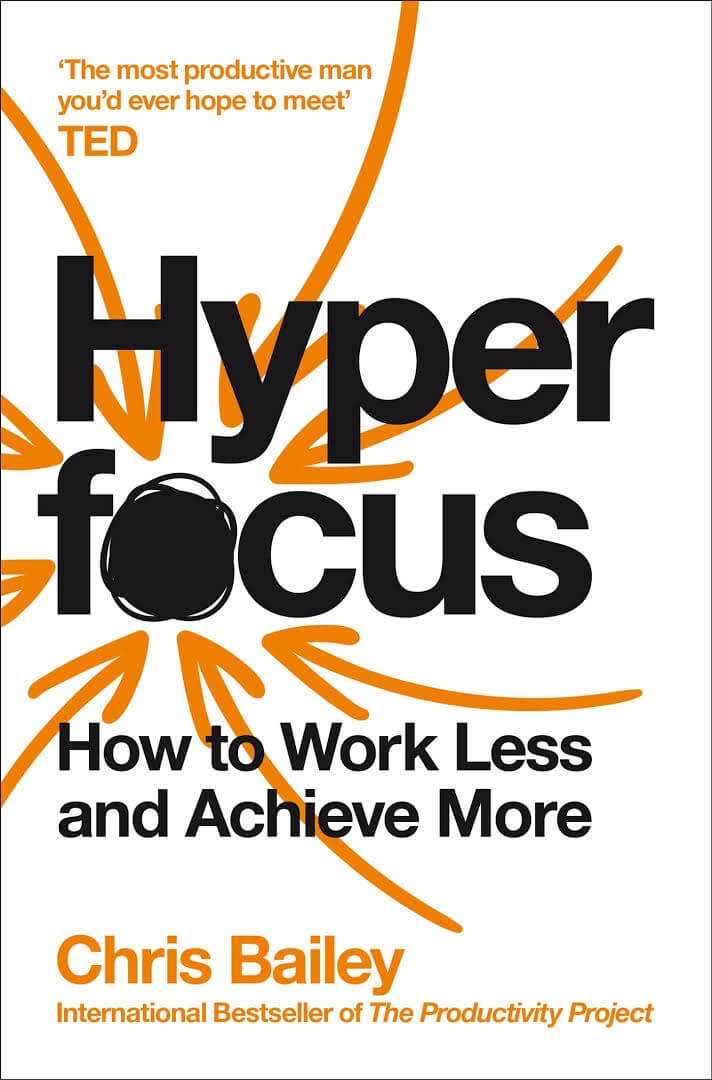
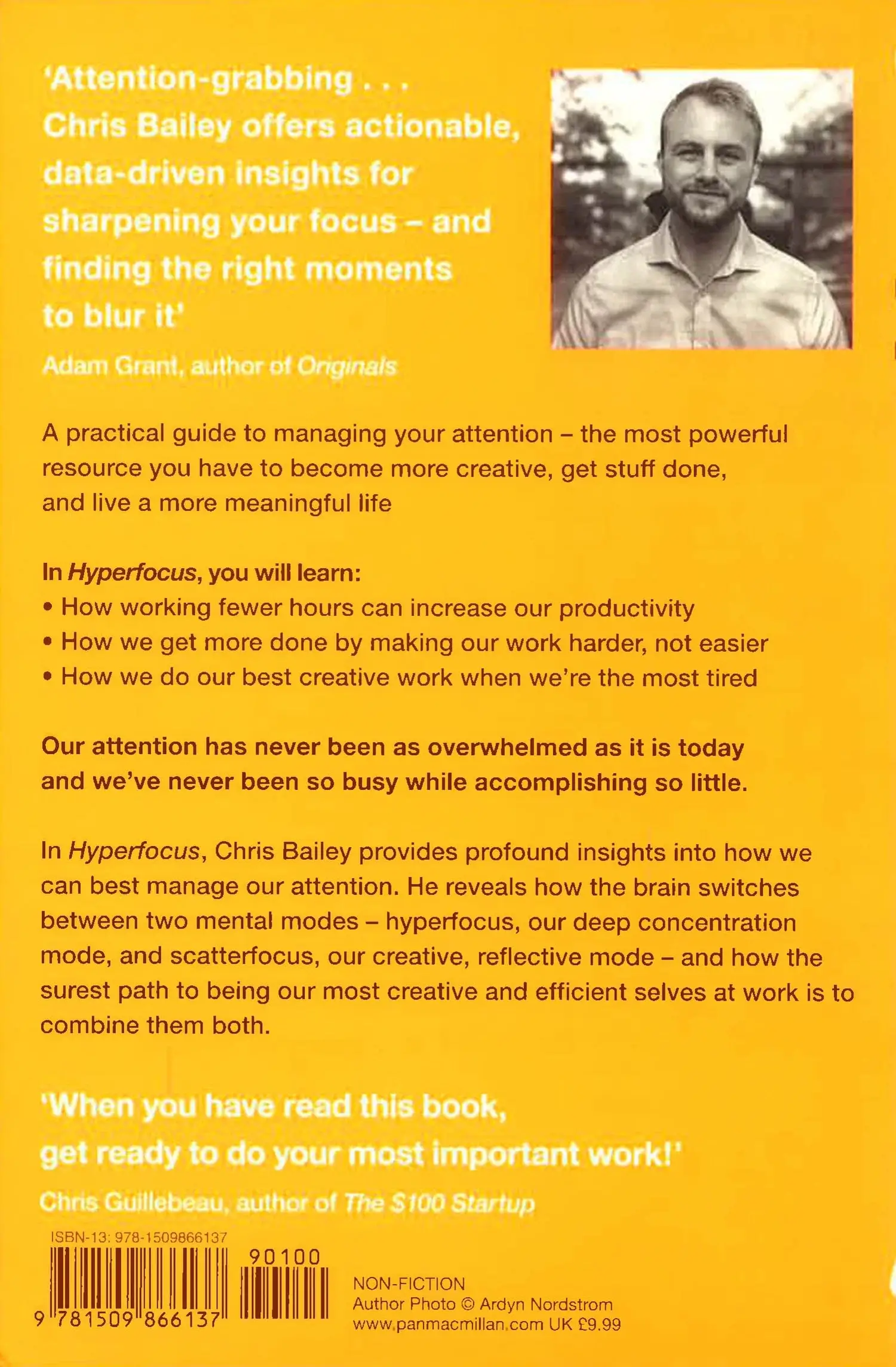
Hyperfocus by Chris Bailey

Original price was: රු2,450.00.රු1,900.00Current price is: රු1,900.00.
3 X Rs. 633.33 or 8% Cashback with


or 3 X රු633.33 with


or up to 4 X රු475.00 with


Hyperfocus by Chris Bailey is a practical productivity guide that teaches readers how to manage attention, eliminate distractions, improve concentration, work more intentionally, and use Hyperfocus for deep work and Scatterfocus for creativity and better ideas.
1 in stock

Hyperfocus by Chris Bailey is a practical guide to managing one of the most valuable resources we have: our attention.
Modern life constantly competes for our focus.
Phones vibrate.
Notifications appear.
Emails arrive.
Social media provides endless new content.
Meetings interrupt work.
And even when nothing external is distracting us, our minds may jump from one thought to another.
The result is that many people remain busy all day while accomplishing surprisingly little of the work that actually matters.
Hyperfocus by Chris Bailey explores how to change that.
Rather than treating productivity purely as a matter of managing time, Chris Bailey argues that effective work depends heavily on managing attention.
Everyone receives the same twenty-four hours in a day.
But two people can use those hours very differently depending on what receives their attention.
The book explains how readers can deliberately focus deeply when concentration is needed and allow the mind to wander strategically when creativity is more valuable.
Hyperfocus by Chris Bailey – Book Overview
Hyperfocus by Chris Bailey introduces two major modes of attention:
- Hyperfocus
- Scatterfocus
Hyperfocus is the deliberate concentration mode.
You choose one important task and direct your attention toward it while reducing unnecessary distractions.
Scatterfocus works differently.
Instead of concentrating tightly on one task, you intentionally give your mind space to wander and connect different ideas.
Bailey argues that both modes are useful.
Hyperfocus helps us execute.
Scatterfocus helps us create, plan, reflect, and discover connections.
The goal is therefore not to remain intensely focused every minute of the day.
It is to understand which type of attention is most useful for the situation.
What Is Hyperfocus?
Hyperfocus is the first major concept in Hyperfocus by Chris Bailey.
It involves intentionally choosing what deserves your attention and protecting that attention from unnecessary interruption.
Imagine you need to write a report.
You open the document.
Then an email notification appears.
You check it.
While reading the email, you notice another message.
Then you open your phone.
Ten minutes later, you are looking at something completely unrelated to the report.
The problem is not that you lacked time.
You had time.
Your attention was simply captured by something else.
Hyperfocus is about taking that attention back.
You decide what matters.
Then you create conditions that make concentrating on it easier.
Attention Is a Limited Resource
One of the most important lessons in Hyperfocus by Chris Bailey is that attention has limits.
We cannot consciously process everything happening around us at the same time.
Our minds select information.
That means every time we give attention to one thing, something else receives less.
This creates an important productivity question:
What deserves your attention right now?
If important work receives only fragmented attention while low-value activities receive hours of focus, productivity suffers.
Bailey encourages readers to become more deliberate.
Instead of allowing notifications, other people, or habits to determine where attention goes, choose intentionally.
Stop Multitasking Constantly
Multitasking feels productive.
You may answer messages while attending a meeting.
Check email while writing.
Watch something while studying.
Switch between five browser tabs during a task.
But Hyperfocus by Chris Bailey explains that our brains often struggle when repeatedly switching between tasks that require real concentration.
Instead of performing two demanding tasks simultaneously, we often move attention rapidly between them.
Each switch creates a mental cost.
You need to remember where you stopped.
Reconstruct your thoughts.
Refocus.
Then another interruption occurs.
By reducing unnecessary switching, people can often work more efficiently.
This is one reason Hyperfocus emphasizes working on one meaningful task at a time when possible.
Identify Your Most Important Task
Not every task deserves the same amount of focus.
Hyperfocus by Chris Bailey encourages readers to identify which activities are genuinely important.
A normal workday may contain:
- Emails
- Meetings
- Administrative work
- Messages
- Reports
- Creative projects
- Planning
- Customer requests
- Social media
- Routine tasks
Some activities create significantly more value than others.
But urgent-looking tasks can easily steal attention from important ones.
Hyperfocus requires deliberately selecting a target.
What is the most valuable thing you could work on right now?
Once that has been identified, attention can be organized around it.
Create an Environment for Focus
Willpower alone is not always enough.
Hyperfocus by Chris Bailey explains that our surroundings strongly influence our ability to concentrate.
If your phone is beside you with notifications appearing every minute, concentration becomes harder.
If dozens of browser tabs are open, each one becomes another possible distraction.
If messaging applications constantly generate alerts, your brain is repeatedly invited to switch tasks.
A better strategy is to change the environment.
Possible actions include:
- Turning off unnecessary notifications
- Putting the phone out of reach
- Closing unrelated browser tabs
- Using full-screen mode
- Finding a quieter workspace
- Scheduling uninterrupted work periods
- Checking email at deliberate times
- Removing visual distractions
The easier you make focusing, the less willpower you need.
Understand Distraction
Distraction is a central subject in Hyperfocus by Chris Bailey.
Some distractions come from outside us.
A phone rings.
Someone interrupts.
An email arrives.
Noise appears.
Other distractions are internal.
You remember something unrelated.
You start thinking about tomorrow.
You feel bored.
You suddenly want to check social media.
Bailey encourages readers to notice both kinds.
The goal is not to become angry every time attention wanders.
Instead, notice what happened and gently return attention to the intended task.
Becoming aware of distraction is itself an important skill.
You cannot manage something you never notice.
Work With Intention
A recurring theme in Hyperfocus by Chris Bailey is intentionality.
Many people begin their day by reacting.
Check notifications.
Answer emails.
Respond to messages.
Attend meetings.
Handle requests.
Hours disappear without consciously deciding what the day should accomplish.
Bailey recommends a more deliberate approach.
Before starting work, ask:
What do I intend to accomplish?
What deserves my best attention?
Which distractions should I prevent?
How long should I focus?
This simple act of setting intention can make work much more purposeful.
What Is Scatterfocus?
The second major idea in Hyperfocus by Chris Bailey is Scatterfocus.
Scatterfocus is almost the opposite of Hyperfocus.
Instead of directing attention tightly toward one problem, you deliberately allow the mind to wander.
At first, this may sound unproductive.
But mind-wandering can help us:
- Connect ideas
- Plan the future
- Reflect on problems
- Generate creative solutions
- Process experiences
- Think about larger goals
Many good ideas appear when people are not actively forcing themselves to think.
While walking.
Taking a shower.
Exercising.
Sitting quietly.
Performing a simple task.
Scatterfocus creates space for these connections.
Creativity Needs Mental Space
One of the strongest lessons in Hyperfocus by Chris Bailey is that constant stimulation can interfere with creativity.
Think about what happens during an empty moment.
You wait in line.
Immediately you open your phone.
You sit on a bus.
You check social media.
You wait for someone.
You answer messages.
Every small gap becomes filled with information.
But those gaps once gave our minds opportunities to wander.
Bailey argues that intentionally allowing some boredom or mental space can be useful.
When the brain is not occupied with constant external stimulation, it may connect ideas that previously seemed unrelated.
That is one reason Scatterfocus can support creative work.
Hyperfocus and Scatterfocus Work Together
The most powerful idea in Hyperfocus by Chris Bailey may be that Hyperfocus and Scatterfocus complement each other.
Imagine you are solving a difficult business problem.
During Hyperfocus, you research the problem carefully.
You analyse data.
You identify constraints.
You work deliberately.
Then you step away.
During Scatterfocus, your mind continues processing the problem more loosely.
Later, an unexpected connection may appear.
Then you return to Hyperfocus and develop the idea.
This cycle can be extremely powerful.
Focus creates depth.
Mind-wandering creates connections.
Using both intentionally can improve both productivity and creativity.
Control Your Digital Environment
Technology is useful.
But it can also consume enormous amounts of attention.
Hyperfocus by Chris Bailey encourages readers to examine their digital habits carefully.
Ask:
How many notifications do I actually need?
How often do I check email?
Do I pick up my phone automatically?
Which apps consume the most attention?
Which technologies genuinely improve my life?
The goal is not necessarily to abandon technology.
It is to make technology serve your intentions rather than constantly determining your behaviour.
Turning off unnecessary notifications can be one of the simplest productivity improvements.
Attention Residue
When people switch tasks, part of their attention may remain connected to the previous activity.
You might leave a meeting and immediately begin writing.
But mentally, part of you is still thinking about the meeting.
Or you check an upsetting email before starting an important task.
The email continues occupying your thoughts.
Hyperfocus by Chris Bailey helps readers understand why constant switching can reduce the quality of deep work.
Protecting blocks of uninterrupted attention allows the mind to become more fully engaged with one task.
Make Distractions Harder
One practical productivity principle is to increase friction around distracting behaviour.
If checking your phone is effortless, you may do it automatically.
If the phone is in another room, the behaviour requires more effort.
Hyperfocus by Chris Bailey encourages readers to design environments that support their intentions.
For example:
If social media distracts you, log out.
If email distracts you, close the application.
If websites steal attention, use blockers during focused work.
If your phone is the problem, place it somewhere less accessible.
Small changes in friction can strongly influence habits.
Make Important Tasks Easier
The opposite principle also works.
Reduce friction around important activities.
Want to read more?
Keep the book visible.
Want to exercise?
Prepare your clothing beforehand.
Want to write?
Open the document before your focus session starts.
Want to study?
Prepare the materials in advance.
Hyperfocus by Chris Bailey demonstrates how productivity can improve when environments make useful actions easier and distracting actions harder.
Motivation and Productivity
Attention is closely related to motivation.
Some tasks naturally capture us.
Others feel difficult to begin.
Hyperfocus by Chris Bailey examines how interest, difficulty, and stimulation influence our willingness to focus.
If a task feels extremely boring, the mind searches for stimulation elsewhere.
That is when phones and websites become especially tempting.
Understanding this can help readers work more strategically.
Breaking a difficult project into smaller steps can make it easier to begin.
Creating clear goals can make progress more visible.
Starting is often the hardest part.
Once attention becomes engaged, continuing can become easier.
Work Fewer Hours More Intentionally
Hyperfocus by Chris Bailey challenges the assumption that productivity always means working longer.
Someone can spend twelve distracted hours working and accomplish less than another person working for five highly focused hours.
The quality of attention matters.
Long working hours can also reduce energy.
When people become exhausted, concentration declines.
Decision-making may become weaker.
Creativity can suffer.
The goal is therefore not simply to maximize time at a desk.
It is to make the hours devoted to work more deliberate and valuable.
Take Better Breaks
Breaks are not necessarily the opposite of productivity.
The brain needs recovery.
Hyperfocus by Chris Bailey encourages taking time-outs intentionally.
A useful break may involve:
- Walking
- Stretching
- Drinking water
- Sitting quietly
- Getting fresh air
- Allowing the mind to wander
- Resting away from screens
A break filled with more notifications and digital stimulation may not provide the same type of mental recovery.
Intentional breaks can support both focus and creativity.
Attention Shapes Your Life
One of the deeper messages in Hyperfocus by Chris Bailey extends beyond productivity.
Your attention determines what you experience.
If your attention is constantly divided, much of life may feel fragmented.
If your attention is always directed toward screens, fewer moments remain for people, ideas, surroundings, and reflection.
Bailey therefore treats attention as more than a workplace tool.
How you manage attention affects:
- Work
- Relationships
- Creativity
- Learning
- Rest
- Personal goals
- Meaning
- Everyday experience
In this sense, improving attention can improve much more than productivity.
7 Powerful Lessons From Hyperfocus
Hyperfocus by Chris Bailey contains many useful productivity ideas, but seven lessons stand out:
- Manage attention, not only time – Time matters, but what receives your attention determines what you actually accomplish.
- Focus on one important task when possible – Reducing task switching can improve concentration and quality.
- Remove distractions before they appear – Design your environment to make concentration easier.
- Set intentions deliberately – Decide what deserves attention instead of automatically reacting.
- Use Scatterfocus for creativity – Mind-wandering can help connect ideas and generate insights.
- Give your brain room to think – Constant stimulation can remove valuable reflective time.
- Use focus and creativity together – Hyperfocus helps execute ideas while Scatterfocus helps generate them.
Why Read Hyperfocus by Chris Bailey?
Hyperfocus by Chris Bailey is an excellent choice for readers interested in:
- Productivity
- Focus
- Concentration
- Attention management
- Deep work
- Time management
- Creativity
- Digital distraction
- Personal development
- Workplace productivity
- Better study habits
- Mindfulness
- Goal setting
- Working smarter
- Intentional living
The book combines research with practical strategies readers can experiment with immediately.
Who Should Read This Book?
Hyperfocus by Chris Bailey may especially appeal to:
- Students
- Entrepreneurs
- Business owners
- Managers
- Writers
- Creative professionals
- Software developers
- Remote workers
- Office professionals
- Content creators
- People struggling with digital distraction
- Readers interested in productivity
- Anyone who frequently multitasks
- Anyone who wants to improve concentration
It can be particularly useful for people who feel busy throughout the day but still struggle to complete their most important work.
A Powerful Guide to Managing Your Attention
Hyperfocus by Chris Bailey teaches that productivity is not simply about doing more.
It is about directing attention toward what matters.
You can have excellent plans.
Plenty of time.
Powerful technology.
A perfect task-management system.
But if your attention is constantly captured by distractions, meaningful work becomes difficult.
Chris Bailey offers a different approach.
Choose what deserves attention.
Remove unnecessary distractions.
Work deeply.
Notice when attention wanders.
Give the mind opportunities to rest.
And intentionally allow it to wander when creativity is needed.
The combination of Hyperfocus and Scatterfocus creates a practical framework for working more deliberately.
For readers interested in productivity, deep concentration, creativity, digital distraction, attention management, and getting more meaningful work done without simply adding more hours to the day, Hyperfocus by Chris Bailey provides an accessible and highly practical guide.
Learn more about Hyperfocus by Chris Bailey on Chris Bailey’s official website.
Explore more productivity and personal development books at Bargain Books.
| Author | Chris Bailey |
|---|---|
| Type | Paperback Printed Book |
| ISBN/ISSN | 0525522255, 978-0525522256 |
| Language | English |
| Pages | 256 |
Be the first to review “Hyperfocus by Chris Bailey”
Related products
Out of stock
Non-Fiction & Knowledge
රු1,500.00
3 X Rs. 500.00 or 8% Cashback with
or 3 X රු500.00 with
or up to 4 X රු375.00 with
-33%

Self-Help & Psychology
Original price was: රු2,300.00.රු1,550.00Current price is: රු1,550.00.
3 X Rs. 516.67 or 8% Cashback with
or 3 X රු516.67 with
or up to 4 X රු387.50 with
Out of stock
Non-Fiction & Knowledge
රු1,800.00
3 X Rs. 600.00 or 8% Cashback with
or 3 X රු600.00 with
or up to 4 X රු450.00 with
-24%
Non-Fiction & Knowledge
Original price was: රු2,300.00.රු1,750.00Current price is: රු1,750.00.
3 X Rs. 583.33 or 8% Cashback with
or 3 X රු583.33 with
or up to 4 X රු437.50 with

Non-Fiction & Knowledge
රු1,700.00
3 X Rs. 566.67 or 8% Cashback with
or 3 X රු566.67 with
or up to 4 X රු425.00 with

Out of stock
Autobiography
රු2,750.00
3 X Rs. 916.67 or 8% Cashback with
or 3 X රු916.67 with
or up to 4 X රු687.50 with

Non-Fiction & Knowledge
රු1,950.00
3 X Rs. 650.00 or 8% Cashback with
or 3 X රු650.00 with
or up to 4 X රු487.50 with
-24%
Out of stock
Non-Fiction & Knowledge
Original price was: රු2,100.00.රු1,600.00Current price is: රු1,600.00.
3 X Rs. 533.33 or 8% Cashback with
or 3 X රු533.33 with
or up to 4 X රු400.00 with
Reviews
There are no reviews yet.