
No products in the cart.
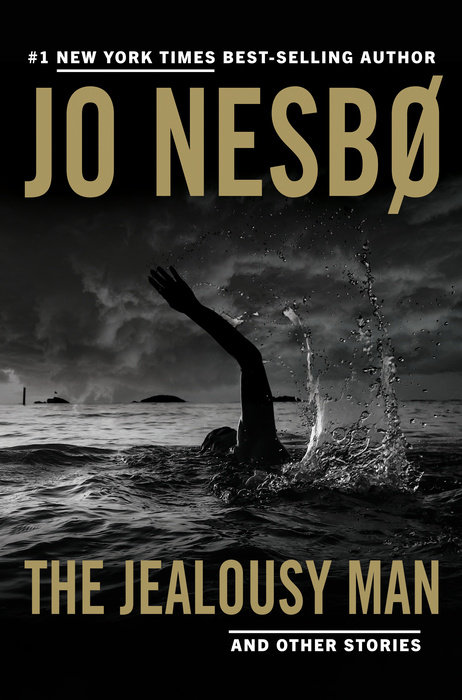
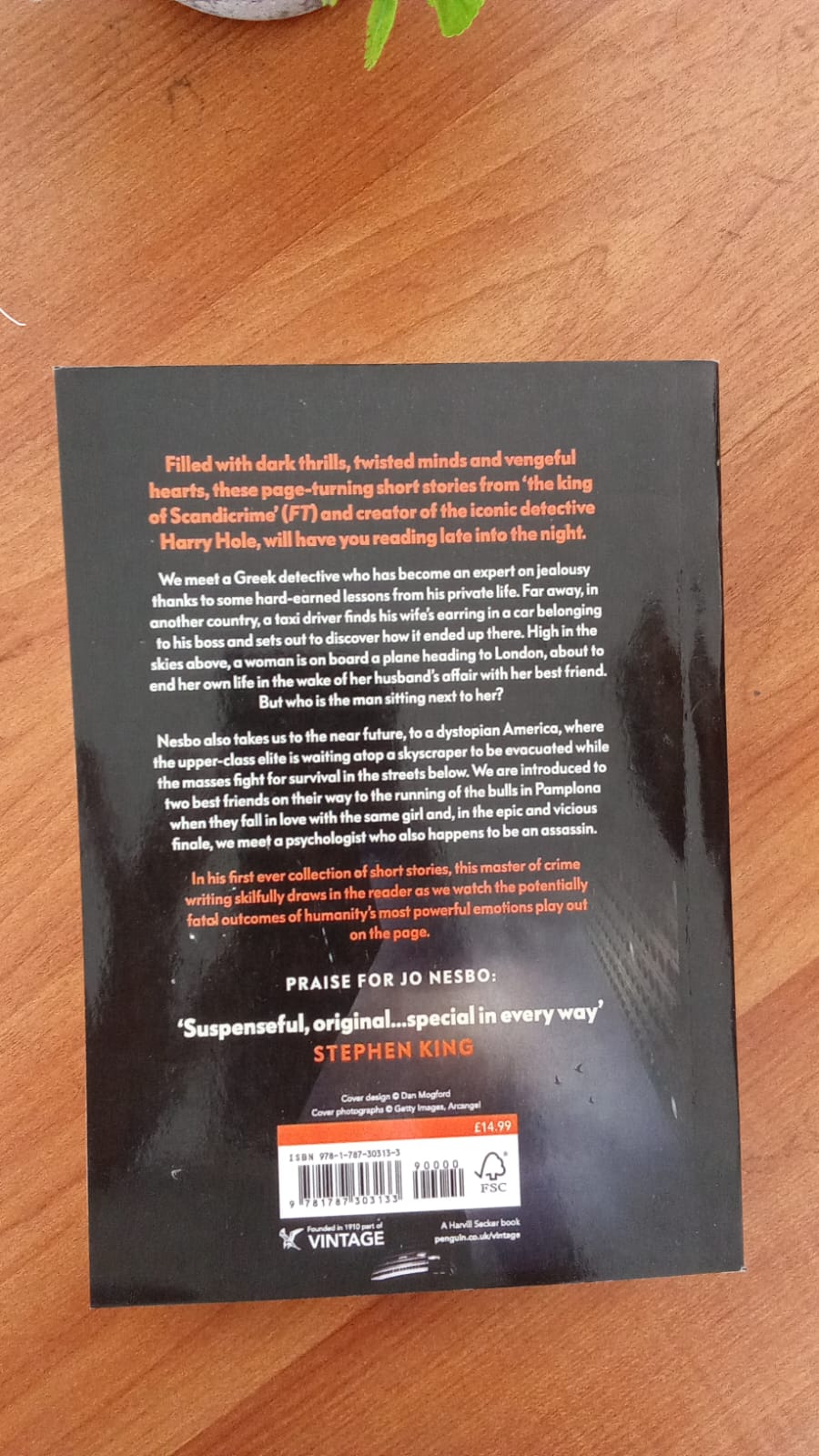
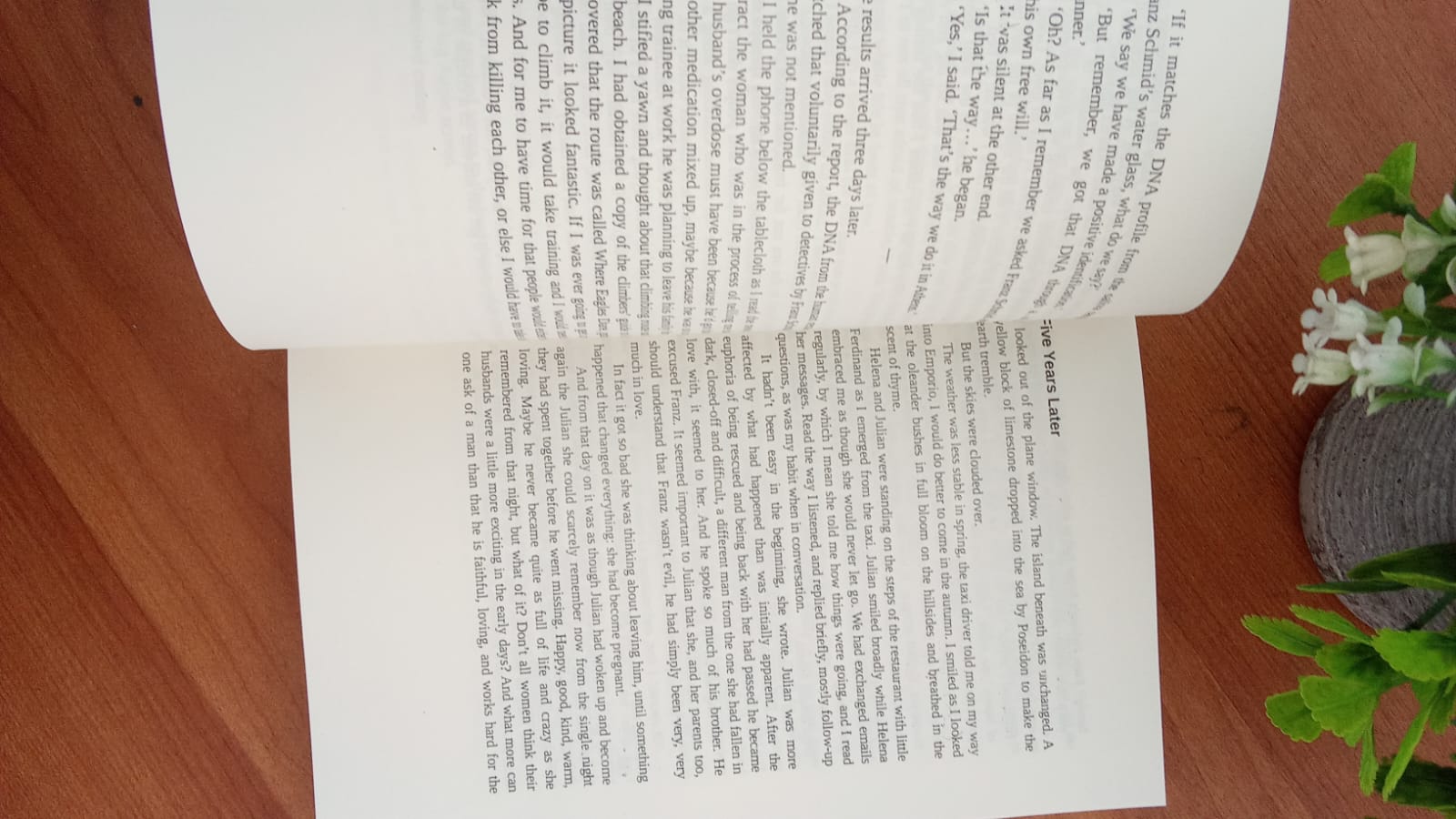
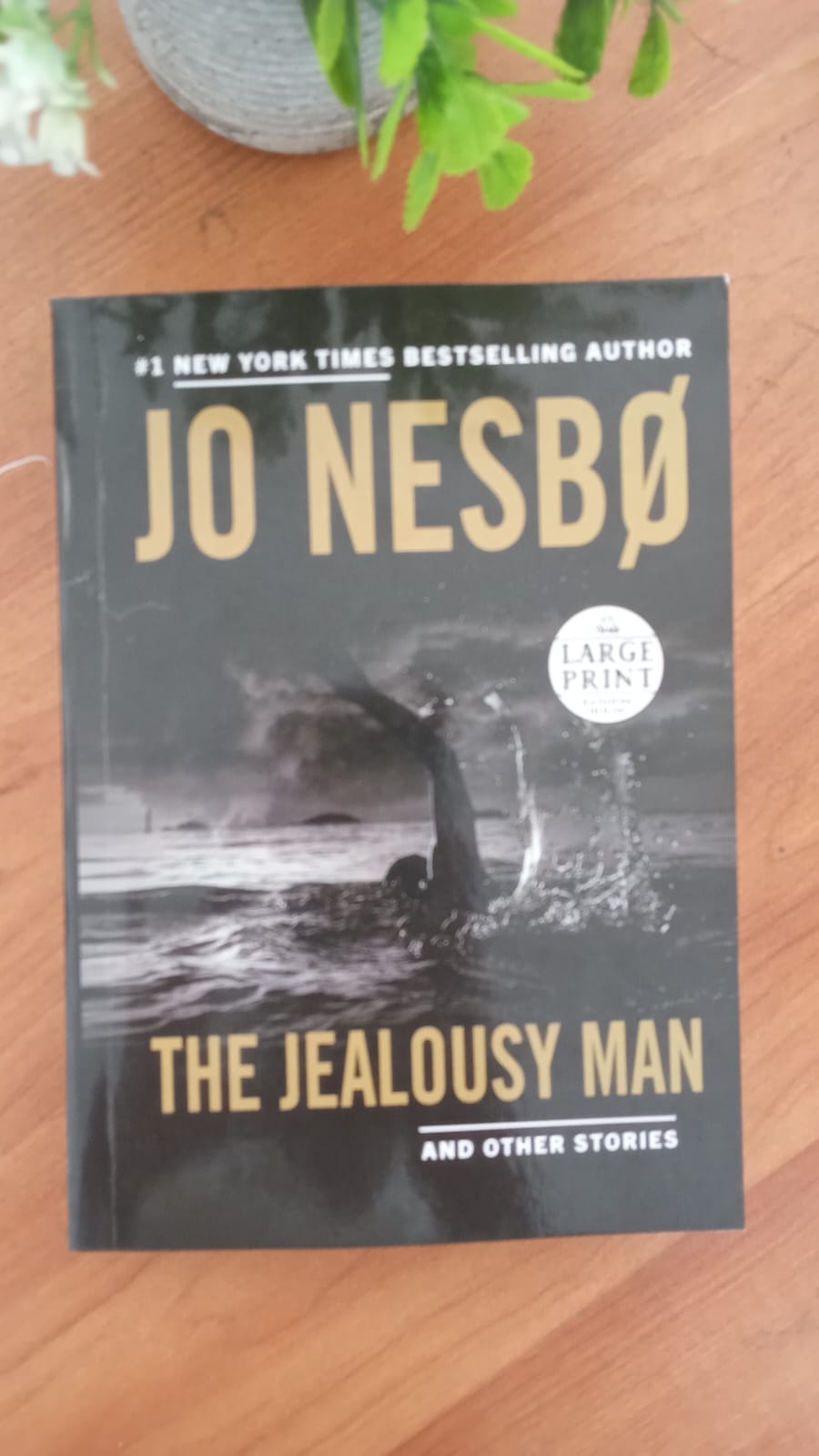



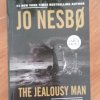

The Jealousy Man by Jo Nesbo is a dark and gripping collection of crime stories exploring jealousy, murder, obsession, revenge, betrayal, greed, desire, psychological manipulation, and the dangerous choices people make when powerful emotions take control.
Jo Nesbo is internationally known for creating tense crime fiction filled with morally complicated characters, disturbing mysteries, and unexpected twists.
In The Jealousy Man by Jo Nesbo, he brings that talent into the short-story format.
Instead of following one investigation across an entire novel, readers encounter a collection of different characters and situations.
A detective investigates a disturbing mystery involving twin brothers.
A hired assassin encounters a dangerous opponent.
A grieving father is forced to consider revenge.
Passengers meet unexpectedly on a flight.
Ordinary people discover that seemingly simple situations can become sinister very quickly.
Each story presents a new mystery.
A new danger.
A new psychological puzzle.
But many of them share one important idea:
Human emotions can become extremely dangerous when they turn into obsession.
Jealousy.
Greed.
Love.
Fear.
Revenge.
Desire.
These emotions can push ordinary people toward extraordinary decisions.
That makes The Jealousy Man by Jo Nesbo an excellent choice for readers who enjoy dark crime fiction, psychological thrillers, Scandinavian noir, suspense, unpredictable characters, and stories that reveal the darker side of human behaviour.
The Jealousy Man by Jo Nesbo – Book Overview
The Jealousy Man by Jo Nesbo is a collection of dark crime and thriller stories rather than a single continuous novel.
The stories vary in:
Setting.
Characters.
Length.
Conflict.
Tone.
But they are connected through recurring themes such as:
- Jealousy
- Murder
- Revenge
- Betrayal
- Greed
- Obsession
- Relationships
- Violence
- Deception
- Psychological manipulation
- Crime
- Unexpected consequences
This structure makes the book particularly enjoyable for readers who like variety.
You can finish one story and immediately enter a completely different situation in the next.
One may focus on jealousy.
Another on revenge.
Another on a professional killer.
Another on an apparently ordinary encounter that becomes increasingly disturbing.
Despite the variety, each story carries the suspense and psychological darkness associated with Jo Nesbo’s crime writing.
The Title Story – The Jealousy Man
The title story is one of the most memorable parts of The Jealousy Man by Jo Nesbo.
At its centre is a detective who has developed a particular understanding of jealousy.
He recognizes how jealousy can influence behaviour.
How it can become obsessive.
How it can distort judgment.
And how it may sometimes provide the motive for violent crime.
The detective becomes involved in a case concerning twin brothers.
One brother has disappeared.
The other may know more than he admits.
What initially appears to be a disappearance gradually becomes something much darker.
The detective must examine:
Relationships.
Motives.
Suspicion.
Jealousy.
Family connections.
And hidden truths.
The story demonstrates why jealousy is such a powerful theme for crime fiction.
Jealousy as a Motive
Jealousy is an emotion almost everyone understands.
Someone receives attention you wanted.
A partner appears interested in someone else.
A sibling receives more recognition.
A competitor becomes more successful.
Normally, jealousy remains an uncomfortable emotion.
But in The Jealousy Man by Jo Nesbo, the question becomes:
What happens when jealousy becomes extreme?
Jealousy can create:
Suspicion.
Possessiveness.
Resentment.
Anger.
Obsession.
A person may begin interpreting ordinary behaviour as evidence of betrayal.
The emotion can slowly change how someone sees reality.
That makes jealousy especially useful in psychological thrillers.
The Dark Side of Love
Love usually appears in stories as something positive.
But love can become dangerous when mixed with control and obsession.
A person may tell themselves:
I love them.
Therefore I should know everything they do.
I love them.
Therefore they should never leave me.
I love them.
Therefore nobody else should have them.
At that point, love may begin turning into possession.
The Jealousy Man by Jo Nesbo explores the uncomfortable area where affection, desire, jealousy, and control can overlap.
This adds psychological depth to the crime stories.
Obsession
Many crimes begin long before the actual criminal act.
A person thinks about something repeatedly.
A betrayal.
An insult.
A relationship.
Money.
Revenge.
The thought grows.
It becomes harder to ignore.
Eventually obsession may influence behaviour.
The Jealousy Man by Jo Nesbo shows how characters can become trapped inside their own thoughts.
They may believe they are acting rationally.
From outside, however, their behaviour may look increasingly dangerous.
Revenge
Revenge is another major theme.
Someone has been harmed.
They believe justice has failed.
What should they do?
Forgive?
Move on?
Or take punishment into their own hands?
Crime fiction frequently explores this question because revenge creates moral complexity.
Readers may understand why a character wants revenge while still questioning whether their actions are justified.
The Jealousy Man by Jo Nesbo gives readers situations where justice and vengeance can become difficult to separate.
Murder
Murder appears throughout the collection, but Jo Nesbo is interested in more than identifying the killer.
The psychological question matters equally:
Why did someone kill?
Was it:
Jealousy?
Fear?
Money?
Love?
Revenge?
Self-preservation?
Crime becomes more interesting when the motive reveals something about human nature.
That psychological focus makes The Jealousy Man by Jo Nesbo especially appealing to readers who prefer mysteries built around motives as well as evidence.
Twisted Minds
Jo Nesbo often writes characters who appear ordinary until circumstances reveal something darker.
A person may seem harmless.
Friendly.
Professional.
Romantic.
Helpful.
Then another side appears.
The Jealousy Man by Jo Nesbo repeatedly uses this contrast.
Readers are encouraged not to trust appearances too easily.
A stranger may have hidden intentions.
A lover may have secrets.
A family member may be lying.
Someone telling the truth may still be hiding something important.
Short Stories With Big Twists
Short fiction creates a special challenge for thriller writers.
A novelist may have hundreds of pages to build suspense.
A short-story writer has much less space.
That means every detail matters.
Jo Nesbo uses the limited format effectively.
Introduce the character.
Create the problem.
Build suspicion.
Then change what the reader believes.
The Jealousy Man by Jo Nesbo contains the kind of revelations that encourage readers to reconsider earlier details.
Something that seemed ordinary may suddenly become important.
Scandinavian Crime Fiction
Jo Nesbo is one of the best-known writers associated with Scandinavian crime fiction.
The genre is often associated with:
Dark atmosphere.
Psychological complexity.
Violence.
Social themes.
Morally grey characters.
Cold or isolated environments.
Realistic crime.
The Jealousy Man by Jo Nesbo carries many of these qualities while expanding beyond a single Norwegian setting.
The stories travel through different locations and situations, giving the collection an international feeling.
Morally Grey Characters
Crime fiction becomes more interesting when people are not simply divided into good and evil.
Good people make bad decisions.
Criminals may have understandable motives.
Victims may have secrets.
Investigators may have personal flaws.
The Jealousy Man by Jo Nesbo frequently places readers in morally uncomfortable territory.
You may sympathize with someone and then discover something disturbing.
You may judge a character and later understand why they acted that way.
This uncertainty keeps the stories psychologically engaging.
Greed
Money can change relationships.
Someone wants:
An inheritance.
A business opportunity.
Financial freedom.
Something another person owns.
Greed becomes especially dangerous when someone begins believing they deserve something regardless of the consequences.
The Jealousy Man by Jo Nesbo explores greed alongside jealousy and revenge as powerful motivations.
Material desire may appear rational at first.
But when combined with desperation, it can lead characters toward extreme behaviour.
Betrayal
Few emotions create stronger reactions than betrayal.
A person trusted someone.
A partner.
Friend.
Family member.
Business associate.
Then discovers the trust may have been misplaced.
Betrayal often creates:
Shock.
Anger.
Humiliation.
Revenge.
Jealousy.
The combination can become explosive.
The Jealousy Man by Jo Nesbo uses betrayal to create both emotional tension and criminal motive.
Secrets
Every good mystery needs information that someone does not want discovered.
A secret relationship.
A hidden motive.
An earlier crime.
A lie.
A financial arrangement.
A personal betrayal.
The Jealousy Man by Jo Nesbo continually asks:
What is this person hiding?
And perhaps more importantly:
Why are they hiding it?
Secrets become dangerous because once one exists, additional lies may be required to protect it.
Lies
A believable lie usually contains some truth.
That makes deception difficult to detect.
Someone may tell the truth about:
Where they were.
But lie about why.
They may tell the truth about a relationship.
But hide an important detail.
The Jealousy Man by Jo Nesbo uses these partial truths to create mystery.
Readers must pay attention not only to what characters say but also to what they avoid saying.
Detectives and Observation
The title story emphasizes observation.
A skilled investigator does not simply collect obvious facts.
They examine:
Body language.
Contradictions.
Motives.
Relationships.
Timing.
Behaviour.
The detective’s understanding of jealousy gives him another tool.
Instead of asking only:
“What happened?”
he can ask:
“What emotion would make someone do this?”
This psychological approach strengthens The Jealousy Man by Jo Nesbo as crime fiction.
Assassins
Some stories move away from traditional detective investigations and enter the world of professional killers.
An assassin lives differently from an ordinary person.
Trust becomes dangerous.
Mistakes can be fatal.
A person who makes a living killing others must constantly calculate:
Risk.
Timing.
Escape.
Targets.
Enemies.
The Jealousy Man by Jo Nesbo uses this world to create tense games of strategy and survival.
Cat-and-Mouse Suspense
Several situations in the collection involve characters attempting to outthink each other.
One person has information.
Another wants it.
One person sets a trap.
Another suspects it.
This creates cat-and-mouse suspense.
Readers continually ask:
Who is actually in control?
That question may change several times within one story.
Unexpected Encounters
Not every thriller needs to begin with a body.
Sometimes suspense begins with an ordinary meeting.
Two strangers talk.
Someone offers help.
A passenger meets another passenger.
A friendly interaction begins.
Then something feels wrong.
The Jealousy Man by Jo Nesbo uses this technique effectively.
The familiar becomes unsettling.
Readers begin questioning every detail.
Atmosphere
Atmosphere is one of Jo Nesbo’s strengths.
A setting can make an ordinary event feel threatening.
An isolated place.
A plane.
A city.
A remote community.
A hotel.
The Jealousy Man by Jo Nesbo uses different environments to create tension.
The location often becomes part of the psychological experience.
A beautiful place can contain something terrible.
A peaceful location can hide violence.
Human Nature
Ultimately, the book is interested in human behaviour.
What happens when people are placed under emotional pressure?
Jealousy.
Love.
Loss.
Money.
Fear.
Desire.
The Jealousy Man by Jo Nesbo explores how quickly civilized behaviour can change when someone believes something important is being taken away.
Crime becomes a way to examine human nature.
Ordinary People and Extraordinary Decisions
One of the frightening aspects of psychological crime fiction is that the characters do not always begin as obvious criminals.
They may be ordinary people.
Then something happens.
A betrayal.
Loss.
Opportunity.
Humiliation.
One decision leads to another.
The Jealousy Man by Jo Nesbo explores the distance between ordinary life and criminal behaviour—and how surprisingly small that distance can sometimes become.
Psychological Suspense
Readers who enjoy psychological thrillers will find plenty to appreciate.
The danger is not always physical.
Sometimes the greatest tension comes from uncertainty.
Is this person lying?
Is someone being manipulated?
Can the narrator be trusted?
What is the real motive?
The Jealousy Man by Jo Nesbo uses psychological uncertainty to keep readers engaged.
Fast-Paced Reading
Short stories naturally create a different pace from long novels.
Readers can complete one mystery relatively quickly.
Then begin another.
This makes the collection suitable for people who want suspense without committing to one enormous narrative.
However, the stories still contain enough complexity to provide satisfying mysteries.
Variety
One of the greatest advantages of The Jealousy Man by Jo Nesbo is variety.
Readers encounter:
Detectives.
Lovers.
Criminals.
Assassins.
Victims.
Ordinary travellers.
People seeking revenge.
Each story begins a new puzzle.
If one story focuses heavily on psychological jealousy, another may focus more strongly on survival or revenge.
This keeps the collection fresh.
The Jealousy Man and Other Stories
Depending on the edition, readers may see the book listed as:
The Jealousy Man
or
The Jealousy Man and Other Stories
Both refer to Jo Nesbo’s short-story collection centred around dark crime, revenge, jealousy, and psychological suspense.
Some international editions use the shorter title prominently on the cover.
The Title Story and Killer Heat
The title story later inspired the film Killer Heat, bringing the jealousy-driven mystery to the screen.
However, the complete book offers much more than the story used for the adaptation.
Readers receive a full collection of dark crime fiction with different characters and scenarios.
Those who discover the story through the adaptation can therefore still find plenty of new material in The Jealousy Man by Jo Nesbo.
Fans of Jo Nesbo
Readers familiar with Jo Nesbo’s Harry Hole novels will recognize several familiar strengths:
- Dark psychological themes
- Crime
- Suspense
- Complex motives
- Violence
- Moral ambiguity
- Unexpected twists
- Disturbing characters
- Strong atmosphere
However, The Jealousy Man by Jo Nesbo does not require readers to know the Harry Hole series.
It can be read completely independently.
No Previous Jo Nesbo Book Required
This is particularly useful for new readers.
You do not need to know:
Harry Hole.
His history.
Any earlier series.
Previous cases.
The stories stand alone.
That makes The Jealousy Man by Jo Nesbo a good introduction to Nesbo’s style for readers who are curious about his crime writing but do not want to begin a long series immediately.
Dark Themes and Content
Readers should expect mature crime themes.
The collection includes material involving:
- Murder
- Violence
- Death
- Revenge
- Jealousy
- Obsession
- Assassination
- Betrayal
- Psychological manipulation
- Disturbing relationships
- Criminal behaviour
This is dark adult crime fiction rather than a light mystery collection.
7 Powerful Reasons to Read The Jealousy Man
There are many reasons thriller fans may enjoy The Jealousy Man by Jo Nesbo:
- Every story offers a different mystery – The collection moves between detectives, assassins, lovers, criminals, and ordinary people caught in dangerous situations.
- Jealousy becomes a fascinating criminal motive – The title story explores how jealousy can distort thinking and lead to extreme consequences.
- The twists arrive quickly – Short-story structure allows Jo Nesbo to build suspense and deliver surprising revelations without unnecessary delay.
- The characters are morally complicated – Heroes, villains, victims, and criminals are rarely completely simple.
- The collection explores the darker side of human nature – Revenge, greed, desire, obsession, and betrayal appear throughout the stories.
- It is ideal for crime and psychological-thriller readers – The book combines mystery, suspense, violence, atmosphere, and psychological tension.
- It works as an introduction to Jo Nesbo – No previous Harry Hole or Jo Nesbo novel is required to enjoy the collection.
Why Read The Jealousy Man by Jo Nesbo?
The Jealousy Man by Jo Nesbo is an excellent choice for readers interested in:
- Crime fiction
- Psychological thrillers
- Jo Nesbo books
- Scandinavian crime
- Short stories
- Murder mysteries
- Revenge stories
- Jealousy
- Dark fiction
- Assassins
- Suspense
- Betrayal
- Detective fiction
- Twisted endings
- Moral dilemmas
- Psychological mysteries
It is particularly suitable for readers who want several complete thriller experiences within one book.
Who Should Read This Book?
The Jealousy Man by Jo Nesbo may especially appeal to:
- Jo Nesbo fans
- Crime-fiction readers
- Thriller readers
- Mystery lovers
- Scandinavian-noir fans
- Readers who enjoy psychological suspense
- Readers who like short-story collections
- Fans of dark fiction
- Readers who enjoy unexpected twists
- Readers interested in criminal psychology
- Fans of detective fiction
- Readers who enjoy morally grey characters
- Readers who watched Killer Heat
- New readers looking for an introduction to Jo Nesbo
A Dark Collection About Jealousy, Revenge and Human Nature
The Jealousy Man by Jo Nesbo demonstrates how ordinary emotions can become extraordinary motives.
Jealousy can become obsession.
Love can become possession.
Loss can become revenge.
Greed can become violence.
A simple meeting can become dangerous.
A trusted person can become a suspect.
Across different stories, Jo Nesbo places characters in situations that reveal what happens when hidden desires and darker impulses are pushed to their limits.
The title story captures this idea particularly well.
A detective who understands jealousy investigates a mystery involving twins and a possible murder.
But the collection quickly expands beyond that case.
Readers encounter assassins.
Grieving characters.
Dangerous relationships.
Unexpected encounters.
Revenge.
Betrayal.
And people whose true intentions may remain hidden until the final moments.
For readers who enjoy crime, mystery, Scandinavian noir, psychological suspense, murder, twisted motives, shocking revelations, morally complicated characters, and dark short stories, The Jealousy Man by Jo Nesbo offers a gripping journey through some of the most dangerous corners of the human mind.
Learn more about The Jealousy Man by Jo Nesbø on Jo Nesbø’s official website.
Explore more thriller and crime fiction books at Bargain Books.
Be the first to review “Jealousy man by JO NESBO”
Related products
-14%

Out of stock
Fiction & Literature
Original price was: රු3,450.00.රු2,950.00Current price is: රු2,950.00.
3 X Rs. 983.33 or 8% Cashback with


or 3 X රු983.33 with


or up to 4 X රු737.50 with

-14%

Fiction & Literature
Original price was: රු3,450.00.රු2,950.00Current price is: රු2,950.00.
3 X Rs. 983.33 or 8% Cashback with
or 3 X රු983.33 with
or up to 4 X රු737.50 with

Fiction & Literature
රු1,990.00
3 X Rs. 663.33 or 8% Cashback with
or 3 X රු663.33 with
or up to 4 X රු497.50 with
-21%

Contemporary romance
Echoes of You: A Lost & Found Special Edition by Catherine Cowles
Original price was: රු2,400.00.රු1,900.00Current price is: රු1,900.00.
3 X Rs. 633.33 or 8% Cashback with
or 3 X රු633.33 with
or up to 4 X රු475.00 with
Fiction & Literature
රු1,990.00
3 X Rs. 663.33 or 8% Cashback with
or 3 X රු663.33 with
or up to 4 X රු497.50 with

Fiction & Literature
රු1,990.00
3 X Rs. 663.33 or 8% Cashback with
or 3 X රු663.33 with
or up to 4 X රු497.50 with

Out of stock
රු1,900.00
3 X Rs. 633.33 or 8% Cashback with
or 3 X රු633.33 with
or up to 4 X රු475.00 with

Out of stock
Fiction & Literature
Uzumaki (3 in 1 Deluxe Edition): Includes vols. 1, 2 & 3 by Junji Ito (Hardcover)
රු3,950.00
3 X Rs. 1,316.67 or 8% Cashback with
or 3 X රු1,316.67 with
or up to 4 X රු987.50 with
Reviews
There are no reviews yet.