
No products in the cart.
-18%
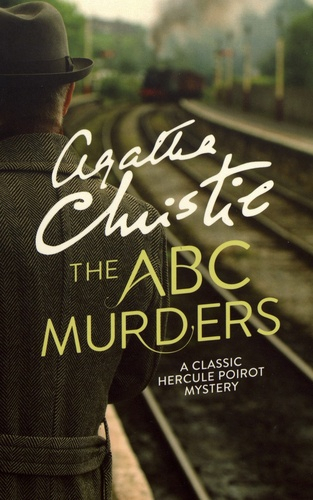
The ABC Murders by Agatha Christie


Original price was: රු2,800.00.රු2,300.00Current price is: රු2,300.00.
3 X Rs. 766.67 or 8% Cashback with


or 3 X රු766.67 with


or up to 4 X රු575.00 with


ABC Murders by Agatha Christie is a classic Hercule Poirot mystery built around one of Christie’s most unusual and memorable criminal patterns.
Poirot begins receiving mysterious letters that warn him about crimes before they happen.
The killer appears to be moving through the alphabet, linking victims and locations through their initials.
As the pattern develops, Poirot must determine whether the obvious clues are genuinely helping him or deliberately leading the investigation in the wrong direction.
The novel combines psychological suspense, detective reasoning and Christie’s talent for hiding important information in plain sight.
It is particularly suitable for readers who enjoy classic mysteries, clever puzzles and stories where every small detail may matter.
Product details:
- Title: The ABC Murders
- Author: Agatha Christie
- Series: Hercule Poirot
- Publisher: HarperCollins
- Format: Paperback
- Language: English
- Pages: 288
- ISBN-13: 9780007527533
- ISBN-10: 0007527535
- Dimensions: Approximately 19.8 × 12.9 × 1.9 cm
- Weight: Approximately 200 g
- Categories: Mystery, Crime, Detective Fiction and Classic Fiction
- Key themes: Investigation, deception, psychology, clues and deduction
Out of stock
Email when stock available
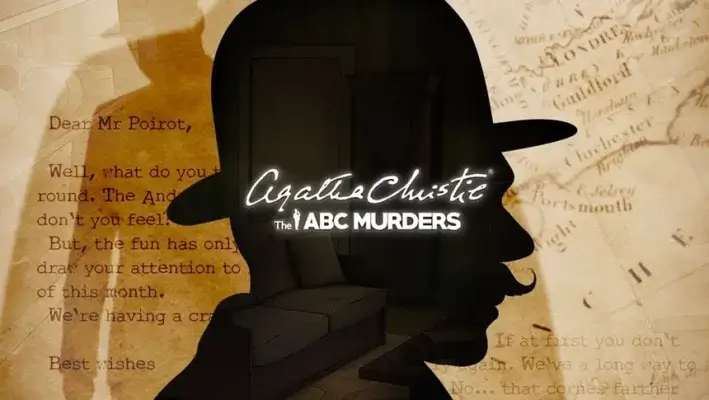
The ABC Murders by Agatha Christie
ABC Murders by Agatha Christie is a classic detective novel featuring the brilliant Belgian detective Hercule Poirot.
The story combines an unusual pattern of crimes with psychological suspense, misleading clues and Christie’s famous ability to keep readers questioning every assumption.
ABC Murders
ABC Murders begins when Hercule Poirot receives a disturbing letter.
The message appears to warn him that something terrible is about to happen.
The letter includes a location and a date.
At first, it is difficult to know whether the warning should be taken seriously.
Then a crime occurs.
A Killer with a Pattern
The murderer appears to be following the alphabet.
The first crime is connected with the letter A.
Another follows with B.
Then comes C.
The pattern creates fear because it seems to suggest that the crimes may continue.
Each new event increases pressure on Poirot and the police.
A Challenge for Hercule Poirot
The killer appears determined to involve Poirot personally.
Letters are sent directly to him.
This transforms the investigation into something more than an ordinary criminal case.
Poirot is not simply searching for evidence.
He is also trying to understand why the murderer wants his attention.
The Importance of Psychology
Poirot is famous for his interest in human psychology.
Physical clues matter.
Witness statements matter.
Timelines matter.
But Poirot also wants to understand how people think.
He studies motives.
He watches reactions.
He considers what someone might want others to believe.
This psychological approach becomes especially important in ABC Murders.
Clues Can Mislead
A clue seems useful because it appears to point toward an answer.
However, clues can also be planted deliberately.
A clever criminal may understand how investigators think.
That creates a second question.
Is the evidence revealing the truth?
Or is someone controlling the investigation?
This tension gives the novel much of its suspense.
The ABC Railway Guide
An ABC railway guide becomes an important recurring object within the mystery.
Its connection with the crimes strengthens the apparent alphabetical pattern.
The object becomes both a clue and a symbol of the killer’s method.
Readers are encouraged to notice how apparently simple details can carry several possible meanings.
A Country in Fear
As the crimes continue, the case receives increasing attention.
The pattern creates fear beyond the individual crime scenes.
People begin wondering what letter might come next.
The apparent randomness makes the situation particularly frightening.
If there is no obvious connection between victims, predicting the next target becomes much harder.
Pattern Versus Motive
Traditional detective stories often begin by asking who had a reason to kill the victim.
ABC Murders complicates that approach.
The crimes appear to be linked by alphabet rather than personal motive.
This forces investigators to think differently.
Poirot must determine whether the pattern itself explains the crimes.
Or perhaps the pattern is hiding something else.
Captain Hastings
Captain Arthur Hastings is an important part of many Poirot stories.
His perspective provides a useful contrast with Poirot’s methods.
Hastings often approaches problems more directly.
Poirot may pay greater attention to psychology and hidden motives.
Their different ways of thinking create both humour and useful tension.
First-Person and Third-Person Narration
One unusual feature of ABC Murders is its shifting narrative perspective.
Agatha Christie uses both first-person and third-person sections.
This changes what the reader knows at different moments.
It also allows Christie to show events that Hastings could not directly witness.
The structure contributes to the mystery.
Information Is Carefully Controlled
Mystery fiction depends heavily on information.
Readers need enough clues to remain involved.
Yet they should not receive the solution too easily.
Christie manages this balance carefully.
Some facts seem important immediately.
Others appear ordinary until much later.
The challenge is deciding which details deserve attention.
An Early Serial-Killer Mystery
ABC Murders is notable for presenting a series of apparently connected killings long before the modern phrase “serial killer” became common.
The official Agatha Christie site highlights this as one of the novel’s distinctive historical features.
That makes the book interesting not only as a Poirot mystery but also within the development of crime fiction.
Suspense Through Anticipation
Much of the suspense comes from knowing another crime may happen.
The letters create deadlines.
Poirot may understand that danger is approaching without knowing exactly how to prevent it.
This creates a different kind of tension from a mystery where the crime has already been completed.
The reader becomes involved in both investigation and prevention.
A Race Against Time
Each warning increases urgency.
A detective normally reconstructs past events.
Here, Poirot also faces the possibility of future crimes.
That changes the rhythm of the investigation.
Every delay matters.
Every interpretation of a clue could influence what happens next.
The Danger of Assumptions
ABC Murders repeatedly encourages readers to question assumptions.
When several crimes share a pattern, people naturally begin building theories around that pattern.
But patterns can become traps.
Once an investigator becomes convinced of one explanation, conflicting evidence may be ignored.
Poirot’s strength is his willingness to reconsider.
Observation Matters
A small inconsistency can become important.
A casual remark may deserve attention.
Someone’s behaviour may not match what they claim.
Christie’s mysteries reward careful observation.
ABC Murders is especially effective because the large, dramatic pattern can distract from smaller details.
Motive Still Matters
Even when crimes appear random, Poirot remains interested in motive.
Why would someone commit these crimes?
Why use an alphabet?
Why communicate with Poirot?
Why leave deliberate clues?
These questions help move the investigation beyond the surface pattern.
The Psychology of Attention
The criminal appears to understand the power of spectacle.
An alphabetical sequence attracts attention.
Letters sent to a famous detective attract even more.
Public fear becomes part of the case.
This raises an important detective question.
What does the killer gain from controlling everyone’s attention?
Poirot’s Method
Poirot often speaks about order and method.
He does not depend only on dramatic discoveries.
Instead, he organises information.
He compares statements.
He studies behaviour.
He searches for contradictions.
His famous “little grey cells” represent careful thinking rather than physical action.
ABC Murders provides a strong example of this approach.
A Different Kind of Poirot Case
Many detective novels begin with a limited group of suspects.
A crime occurs in a house, train or other controlled setting.
ABC Murders initially feels much broader.
The crimes take place in different locations.
The apparent pattern extends across England.
This makes the case feel unusually large.
Yet the Mystery Remains Personal
Despite its larger scale, the mystery still depends on individuals.
Every victim has a life.
Every witness has a perspective.
Every suspect has motives, weaknesses and secrets.
Poirot gradually brings the case back from an abstract pattern to human behaviour.
That movement is central to the novel.
Why the Alphabet Is So Effective
The alphabet is familiar.
Everyone understands it.
That simplicity makes it frightening when connected with crime.
A, B and C suggest that D may follow.
The structure creates anticipation automatically.
Christie turns something ordinary into a source of suspense.
Crime and Performance
There is also a theatrical quality to the case.
The letters feel like announcements.
The repeated pattern feels staged.
The killer seems aware of an audience.
This creates the impression that the crimes are being presented as a performance.
Poirot must understand the purpose behind that performance.
Red Herrings
Agatha Christie is famous for red herrings.
These are clues or details that draw attention toward the wrong explanation.
ABC Murders provides many opportunities for misdirection because the central pattern is so powerful.
Readers may become focused on one question while overlooking another.
That is part of the enjoyment.
Fair-Play Mystery
One reason Christie remains popular is that her mysteries usually invite readers to participate.
The necessary clues are often present.
The challenge is interpreting them correctly.
A reader may reach the end and realise that an important detail had been visible much earlier.
That feeling is central to classic detective fiction.
A Story About How We See Patterns
Humans naturally search for patterns.
Patterns help us understand complicated information.
But they can also mislead us.
ABC Murders uses this tendency brilliantly.
The alphabet gives the investigation an obvious structure.
The deeper question is whether the obvious structure is the true one.
The Difference Between Facts and Interpretation
A fact is something that happened.
An interpretation explains what that fact means.
Detectives can agree on facts while disagreeing about interpretation.
Poirot pays close attention to this difference.
A clue may be genuine while the conclusion drawn from it is wrong.
Why Poirot Remains Memorable
Hercule Poirot is one of detective fiction’s most recognisable characters.
He is confident.
He is methodical.
He notices human behaviour.
He often appears more interested in psychology than physical evidence.
His personality gives Christie’s mysteries a distinctive style.
Agatha Christie’s Storytelling
Christie’s writing is known for clarity and efficient plotting.
Scenes usually move the investigation forward.
Dialogue often contains important information.
Characters may reveal more than they realise.
This makes her books accessible while still providing complex puzzles.
Mystery Without Excessive Complexity
ABC Murders contains a complicated investigation.
Yet the core premise is easy to understand.
A killer appears to be following the alphabet.
Poirot must stop the pattern and identify the person behind it.
This clear premise makes the story approachable for readers new to Christie.
A Good Starting Point for Agatha Christie
Readers unfamiliar with Hercule Poirot can begin with ABC Murders.
The novel demonstrates many of the qualities associated with the series.
There is a striking puzzle.
There are misleading clues.
Psychology matters.
The final explanation depends on careful reasoning.
For Existing Christie Readers
Long-time Christie readers may particularly enjoy the unusual structure.
The case feels different from many closed-circle mysteries.
It has a wider geographical scope.
The narrative perspective also shifts.
These differences make ABC Murders stand out within the Poirot series.
Crime Fiction History
The novel was first published in 1936.
Its treatment of a murderer apparently selecting victims according to a repeating pattern was unusual for its period.
The official Agatha Christie site identifies it as an early example of an idea that later became common in crime fiction.
This historical context adds another reason to read it.
Adaptations
ABC Murders has been adapted multiple times.
A 1992 television adaptation appeared in Agatha Christie’s Poirot with David Suchet.
A later BBC adaptation aired in 2018 with John Malkovich as Poirot.
The story has also inspired radio, film, game and other adaptations.
Its continued adaptation shows how memorable the central mystery remains.
No Need to Know Other Poirot Books
Although ABC Murders belongs to the Hercule Poirot series, readers do not need to read all previous books first.
The mystery works as a standalone story.
Familiar characters such as Poirot and Hastings appear.
However, the central case can be understood independently.
Who Should Read ABC Murders?
ABC Murders may appeal to:
- Agatha Christie fans
- Hercule Poirot readers
- Mystery lovers
- Crime-fiction readers
- Classic-fiction readers
- Detective-story enthusiasts
- Readers who enjoy puzzles
- Readers interested in psychological mysteries
- Book-club readers
- Fans of twist-driven fiction
It is especially suitable for readers who enjoy trying to solve the mystery before the detective does.
Themes in ABC Murders
Important themes include:
- Patterns
- Deception
- Psychology
- Criminal motivation
- Public fear
- Observation
- Deduction
- Misdirection
- Identity
- Appearance versus reality
These themes help make the novel more than a simple sequence of crimes.
Why Choose ABC Murders?
ABC Murders combines a memorable premise with Agatha Christie’s precise mystery plotting.
The alphabetical structure immediately creates suspense.
Poirot’s psychological investigation adds depth.
The shifting narrative perspective gives the story a distinctive structure.
Readers are encouraged to question every clue.
For fans of crime fiction, detective stories and classic mysteries, ABC Murders remains an excellent addition to a fiction collection.
Product Details
Product title: The ABC Murders
Author: Agatha Christie
Series: Hercule Poirot
Publisher: HarperCollins
Format: Paperback
Language: English
Pages: 288
ISBN-13: 9780007527533
ISBN-10: 0007527535
Dimensions: Approximately 198 × 129 × 19 mm
Weight: Approximately 200 grams
Categories: Mystery, Crime, Detective Fiction and Classic Fiction
Key themes: Investigation, psychology, deception, clues, patterns and deduction
Explore our complete mystery and thriller books collection to discover more detective novels, classic crime stories and suspenseful mysteries.
Learn more about
The ABC Murders by Agatha Christie
.
| Author | Agatha Christie |
|---|---|
| Type | Paperback Brand new Printed (Indian Locally published) |
| ISBN/ISSN | 0007527535, 978-0007527533 |
| Language | English |
| Pages | 288 |
Be the first to review “The ABC Murders by Agatha Christie”
Related products
Out of stock
Fiction & Literature
රු1,900.00
3 X Rs. 633.33 or 8% Cashback with
or 3 X රු633.33 with
or up to 4 X රු475.00 with

Out of stock
රු2,300.00
3 X Rs. 766.67 or 8% Cashback with
or 3 X රු766.67 with
or up to 4 X රු575.00 with
-19%

Out of stock
Fiction & Literature
Inferno by BROWN DAN – A Gripping Thriller of Mystery and Secrets”
Original price was: රු2,100.00.රු1,700.00Current price is: රු1,700.00.
3 X Rs. 566.67 or 8% Cashback with
or 3 X රු566.67 with
or up to 4 X රු425.00 with
-21%

Contemporary romance
Echoes of You: A Lost & Found Special Edition by Catherine Cowles
Original price was: රු2,400.00.රු1,900.00Current price is: රු1,900.00.
3 X Rs. 633.33 or 8% Cashback with
or 3 X රු633.33 with
or up to 4 X රු475.00 with
-14%

Out of stock
Fiction & Literature
Original price was: රු3,450.00.රු2,950.00Current price is: රු2,950.00.
3 X Rs. 983.33 or 8% Cashback with
or 3 X රු983.33 with
or up to 4 X රු737.50 with
-20%
Out of stock
Fiction & Literature
Original price was: රු2,450.00.රු1,950.00Current price is: රු1,950.00.
3 X Rs. 650.00 or 8% Cashback with
or 3 X රු650.00 with
or up to 4 X රු487.50 with
Out of stock
Fiction & Literature
රු1,700.00
3 X Rs. 566.67 or 8% Cashback with
or 3 X රු566.67 with
or up to 4 X රු425.00 with
-18%
Fiction & Literature
Original price was: රු2,750.00.රු2,250.00Current price is: රු2,250.00.
3 X Rs. 750.00 or 8% Cashback with
or 3 X රු750.00 with
or up to 4 X රු562.50 with
Reviews
There are no reviews yet.