
No products in the cart.
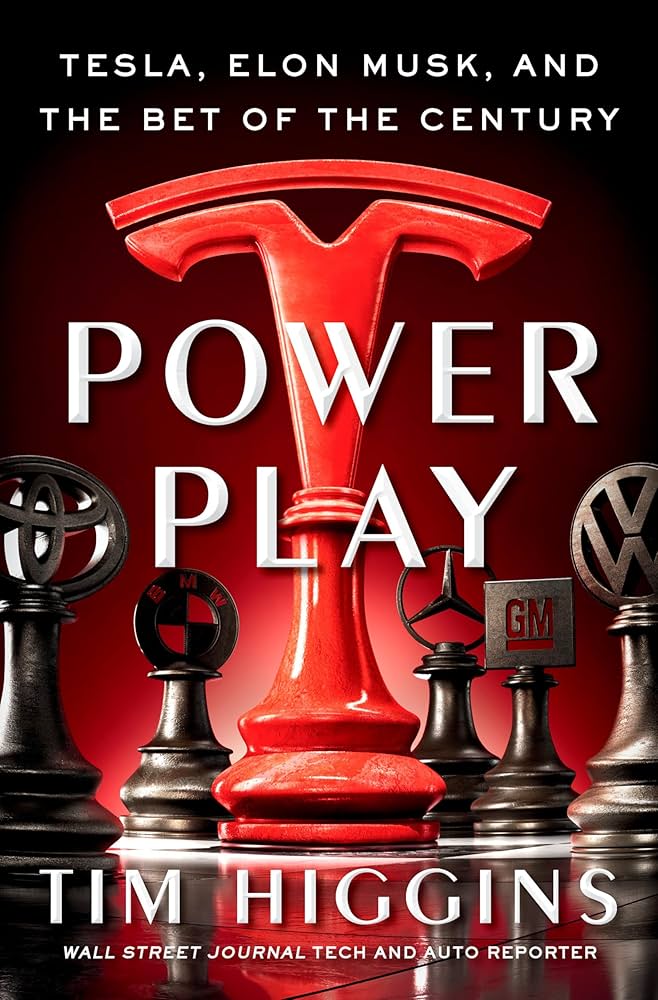
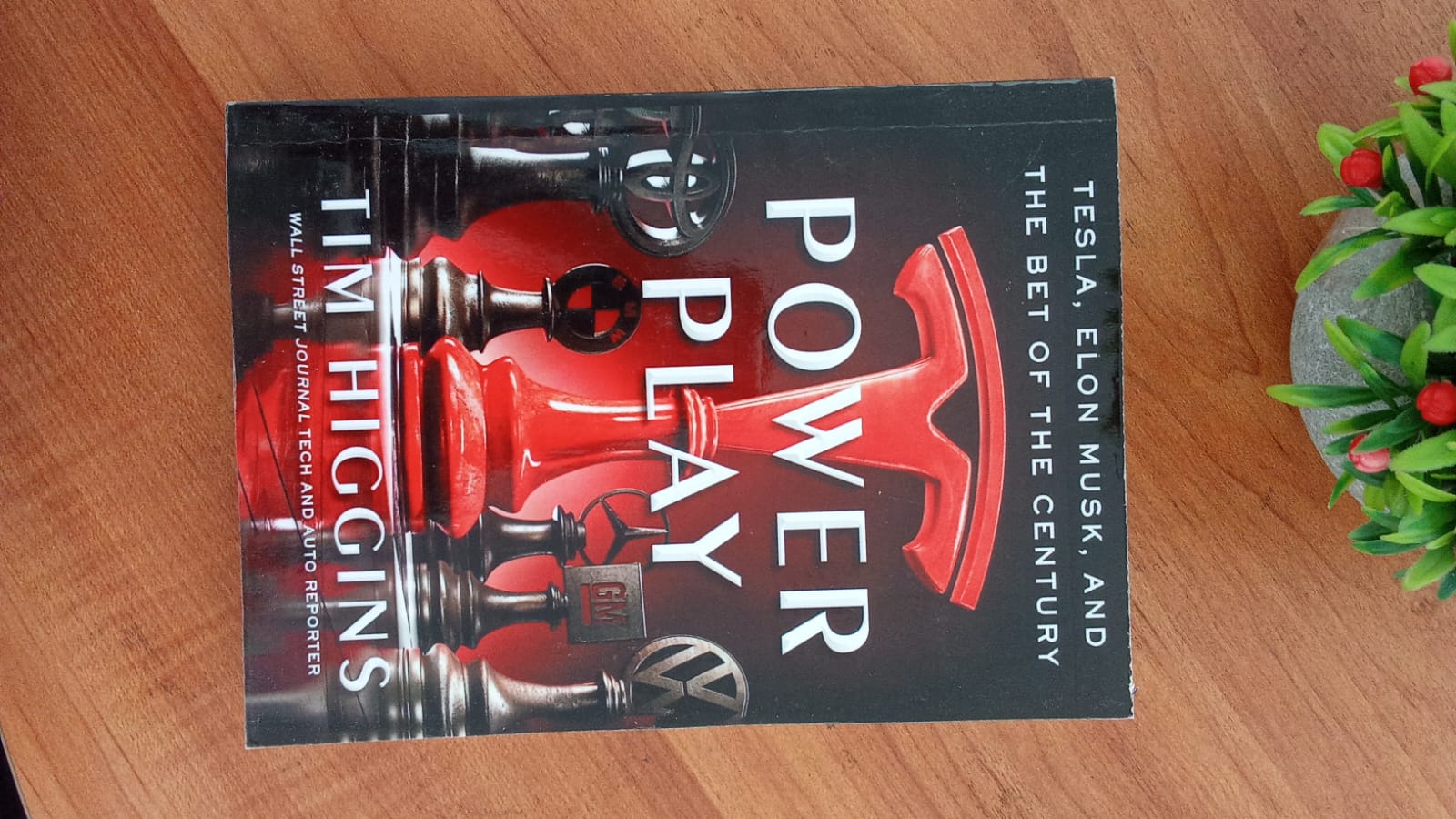




Power Play by Tim Higgins

රු2,350.00
3 X Rs. 783.33 or 8% Cashback with


or 3 X රු783.33 with


or up to 4 X රු587.50 with


Product Short Description:
Power Play by Tim Higgins is a gripping business book that explores the rise of Tesla and the leadership of Elon Musk. It reveals the challenges, risks, and bold decisions behind one of the world’s most innovative companies, offering valuable insights into entrepreneurship, technology, and modern business success.
6 in stock
Power Play by Tim Higgins is a gripping business story about Tesla, Elon Musk and the extraordinary gamble to prove that an electric-car company from Silicon Valley could challenge some of the world’s most powerful automobile manufacturers.
Today, Tesla is one of the most recognizable names in technology and automobiles.
But its success was never guaranteed.
The company faced enormous problems involving money, manufacturing, engineering, production targets, competition, leadership and investor expectations.
At several points, failure appeared entirely possible.
Tim Higgins takes readers behind the public image of Tesla to explore the complicated reality of building a company that was trying to transform an industry dominated for generations by traditional automakers.
The result is not simply a celebration of Elon Musk.
It is also not simply a criticism.
Power Play by Tim Higgins examines the engineers, executives, investors, employees and decisions that helped turn Tesla from an ambitious startup into a company capable of changing expectations around electric vehicles.
The book shows innovation at its most exciting—and at its messiest.
Big ideas.
Impossible deadlines.
Technical problems.
Financial pressure.
Leadership conflict.
Manufacturing chaos.
Investor excitement.
Public controversy.
And the constant possibility that the entire experiment could collapse.
For readers interested in entrepreneurship, technology, Tesla, Elon Musk, innovation, leadership and disruptive business strategy, this is an absorbing case study in what happens when an ambitious vision collides with the difficult reality of actually building physical products at enormous scale.
Power Play by Tim Higgins – Book Overview
Power Play by Tim Higgins tells the story of Tesla primarily as a business and technology company rather than presenting a conventional cradle-to-present biography of Elon Musk.
That distinction matters.
Musk is obviously central to the story.
But the book also pays attention to:
Engineers.
Designers.
Executives.
Investors.
Production workers.
Suppliers.
Competitors.
Boardroom conflicts.
Manufacturing problems.
Tesla’s success was not created by one person operating alone.
It emerged from a complicated organization under enormous pressure.
Tesla Was an Unlikely Bet
When Tesla began, the idea of building a successful electric-car startup looked extremely difficult.
Automobile manufacturing requires enormous amounts of:
Capital.
Engineering.
Factories.
Supply chains.
Safety testing.
Production expertise.
Distribution.
Customer support.
Established automakers already had decades of experience.
A startup had almost none of those advantages.
That is what makes Tesla’s rise so unusual.
The Electric Car Problem
Electric vehicles were not a completely new idea.
Electric cars had existed in different forms long before Tesla.
The challenge was creating an electric vehicle that enough customers actually wanted to buy.
A successful product needed to address problems such as:
Range.
Performance.
Battery cost.
Charging.
Design.
Manufacturing.
Customer perception.
Tesla’s ambition was not merely to create an environmentally cleaner car.
It wanted electric cars to feel desirable.
The Roadster
Tesla’s early Roadster became important because it challenged the stereotype that electric cars had to be slow, boring or unattractive.
The strategy was powerful:
Do not ask customers to accept a worse product simply because it is electric.
Try to make the electric vehicle exciting in its own right.
This lesson extends far beyond automobiles.
A disruptive product becomes much more powerful when customers want it because it is better—not merely because they believe buying it is morally responsible.
Product Desirability
One major business lesson from Power Play by Tim Higgins is that changing an industry often requires changing customer expectations.
Tesla helped push electric vehicles toward:
Performance.
Technology.
Modern design.
Software.
Premium positioning.
That changed the conversation.
Instead of asking only:
“Can an electric car work?”
customers increasingly began asking:
“Why can’t more cars work like this?”
Elon Musk
Elon Musk is obviously one of the central figures in the book.
Higgins portrays a leader capable of enormous ambition, intense pressure and unusual risk tolerance.
The same characteristics that can help a company challenge conventional assumptions can also create instability.
This makes the leadership story particularly interesting.
Vision
Strong founders often see possibilities other people reject.
Tesla required belief that several difficult things could happen simultaneously.
Battery technology would improve.
Customers would want electric cars.
Production could scale.
Charging infrastructure could grow.
A relatively young company could compete with global automakers.
Without an ambitious vision, Tesla probably could not have attempted what it did.
Vision Is Not Execution
But Power Play by Tim Higgins repeatedly demonstrates that having a compelling vision does not solve the operational problem.
A slide presentation can promise:
Thousands of cars.
Higher efficiency.
Better margins.
Faster production.
Then reality begins.
Parts arrive late.
Machines break.
Software fails.
Processes create bottlenecks.
Quality problems appear.
People quit.
Manufacturing exposes weaknesses that an idea alone cannot solve.
Manufacturing
This is one of the book’s most valuable business themes.
Technology companies sometimes think primarily in terms of:
Ideas.
Software.
Design.
Speed.
But manufacturing physical products creates a different level of complexity.
A car contains thousands of components.
Every part needs to arrive.
Fit.
Work.
Meet safety requirements.
Be produced repeatedly.
Scale is unforgiving.
Prototype Versus Production
Building one impressive prototype is not the same as manufacturing hundreds of thousands of reliable products.
A prototype asks:
Can we build this once?
Manufacturing asks:
Can we build it repeatedly, quickly, safely and profitably?
That second question destroys many promising hardware companies.
Production Hell
Tesla became famous for periods of extreme manufacturing pressure.
The company had ambitious production goals, particularly around scaling vehicles such as the Model 3.
The gap between promising production and actually achieving it created enormous organizational pressure.
This is where Power Play by Tim Higgins often feels like a business thriller.
A delay does not simply mean inconvenience.
It may threaten:
Cash flow.
Investor confidence.
Customer trust.
The company’s survival.
The Model S
The Model S became an important moment in Tesla’s development.
It helped demonstrate that an electric vehicle could compete in the premium automobile market on:
Performance.
Technology.
Design.
Driving experience.
For Tesla, this represented more than another product launch.
It supported the argument that the company could produce a serious automobile rather than merely an interesting experiment.
Model X
The Model X demonstrated another side of innovation.
Ambitious product features can create engineering complications.
Complexity has a cost.
A feature that looks impressive in marketing may become difficult to:
Engineer.
Manufacture.
Repair.
Scale.
Innovation therefore involves deciding which complexity actually creates enough customer value to justify itself.
Model 3
The Model 3 represented an even larger challenge.
Tesla wanted to reach a much broader market.
That required much higher production volumes.
The strategic logic was clear.
But scaling dramatically increased the operational difficulty.
The more units a company promises, the less room it has for inefficient processes.
Automation
Tesla aggressively explored factory automation.
Automation can improve:
Speed.
Consistency.
Productivity.
But automating a bad or poorly understood process can create a very expensive bad process.
Sometimes humans remain more flexible than machines.
One useful lesson is:
Do not automate simply because automation sounds advanced.
First understand the process.
Then determine where automation actually creates value.
Engineering Culture
Tesla’s culture attracted people interested in difficult engineering challenges.
The company asked employees to solve problems traditional automakers might approach more slowly.
That urgency can accelerate innovation.
But it can also produce:
Burnout.
Conflict.
Mistakes.
Employee turnover.
The business question becomes:
How much pressure produces exceptional performance before the pressure begins damaging the organization?
Speed
Speed matters in startups.
A slower competitor may lose.
But speed should not be confused with recklessness.
Moving quickly is valuable when teams are learning rapidly.
It becomes dangerous when critical testing, safety or operational controls are ignored.
Risk
Tesla’s story contains extraordinary risk.
Financial risk.
Technical risk.
Market risk.
Leadership risk.
Manufacturing risk.
Reputation risk.
At several points, the company made decisions that could have ended badly.
This makes Tesla an excellent case study in the relationship between risk and reward.
Risk Tolerance
Entrepreneurs often hear:
Take risks.
But that advice is incomplete.
A better question is:
Which risks are worth taking?
Successful entrepreneurship does not mean accepting every danger.
It means making calculated bets where the potential reward justifies the uncertainty.
Capital
Building automobiles requires enormous amounts of capital.
Factories cost money.
Equipment costs money.
Employees cost money.
Research costs money.
Inventory costs money.
A growing hardware company can therefore appear successful while still consuming enormous cash.
This makes fundraising and investor confidence strategically important.
Investors
Investors often fund future expectations.
They are not only valuing what a company produces today.
They are evaluating what they believe it may become tomorrow.
Tesla’s valuation therefore became connected to a much larger story:
Not simply how many cars Tesla sells now.
But whether it could dominate an emerging electric future.
Narrative in Business
Companies sell products.
They also sell narratives.
A powerful corporate narrative can attract:
Investors.
Employees.
Customers.
Media attention.
Partners.
Tesla built a compelling narrative around:
Clean technology.
Innovation.
The future.
Disrupting old industries.
The challenge is that narrative eventually has to meet measurable reality.
Promises and Expectations
A bold promise can motivate a team.
It can also create a trap.
If expectations rise too quickly, even good performance may look disappointing.
Leaders therefore need to understand that communication changes the standard against which future performance will be judged.
Leadership Pressure
One reason Power Play by Tim Higgins is useful for management readers is that it shows leadership under extreme pressure.
A leader can create urgency.
But constant crisis mode has consequences.
If every task is:
Emergency.
Mission-critical.
Immediate.
then people eventually struggle to distinguish genuine priorities.
Company Culture
Culture is not what a company writes on a wall.
Culture is what employees repeatedly experience.
What behavior gets rewarded?
What mistakes are tolerated?
How do leaders react to bad news?
Can employees disagree?
What happens when deadlines are missed?
The answers tell you more about culture than slogans do.
The Importance of Bad News
Leaders need accurate information.
That means employees must feel able to report:
Problems.
Delays.
Quality issues.
Unrealistic projections.
If everyone is afraid to bring bad news upward, the leader becomes less informed precisely when accurate information matters most.
Founder-Led Companies
Founder-led companies can have distinctive strengths.
The founder may possess:
Long-term commitment.
Deep product knowledge.
Strong vision.
Personal credibility with investors.
But concentrated leadership can create risks if too much depends on one person.
This makes governance especially important.
Governance
Boards exist partly to supervise management.
But governance becomes complicated when a founder has enormous influence over:
Brand.
Capital.
Strategy.
Public perception.
Investor enthusiasm.
Tesla’s story provides useful material for readers interested in how founder power interacts with formal corporate structures.
Silicon Valley Versus Detroit
Another fascinating aspect of Power Play by Tim Higgins is the collision between two business cultures.
Silicon Valley thinks about:
Software.
Rapid iteration.
Disruption.
Venture capital.
Speed.
Traditional automobile manufacturing thinks about:
Safety.
Supply chains.
Factories.
Regulation.
Quality.
Long product cycles.
Tesla attempted to combine elements of both.
Software on Wheels
Tesla helped popularize a view of modern automobiles as technology platforms rather than purely mechanical machines.
Software became increasingly important to:
Features.
User experience.
Updates.
Performance.
Vehicle management.
That helped push the broader auto industry toward deeper integration between software and hardware.
Over-the-Air Updates
Traditional cars historically required physical service for many changes.
Connected vehicles created the possibility of delivering some improvements through software.
This changes the relationship between manufacturer and vehicle.
A car is no longer necessarily a finished product the moment it leaves the factory.
It can continue changing afterward.
Vertical Integration
Tesla often pursued unusually high levels of control over important parts of its business.
Greater integration can provide:
Speed.
Control.
Differentiation.
But it also creates responsibility.
When you control more of the system, you also own more of the problems.
Competition
Tesla did not operate in isolation.
Established automakers possessed enormous resources.
Yet large organizations can sometimes struggle to respond quickly to disruptive change.
Existing businesses have:
Factories.
Dealer networks.
Legacy products.
Internal politics.
Existing profit centers.
A newcomer may have fewer resources but fewer constraints.
Innovator’s Advantage
A startup can sometimes ask:
How should this industry work?
An established company may ask:
How can we improve what we already have?
The first question can produce more radical change.
But it also produces more risk.
Customers
Tesla developed an unusually passionate customer base.
Enthusiastic customers can become powerful advocates.
They:
Recommend products.
Defend the brand.
Create online communities.
Generate word-of-mouth marketing.
That kind of customer enthusiasm can become a competitive advantage.
Brand Loyalty
Strong brand loyalty is valuable.
But it can also complicate public discussion.
People may become emotionally attached to either supporting or criticizing a company.
A useful reader should therefore separate:
Product.
Company.
Leader.
Investment.
Each can be evaluated independently.
Media and Elon Musk
Musk’s public profile became inseparable from Tesla.
His statements could generate:
Attention.
Excitement.
Controversy.
Market reaction.
This illustrates both the advantage and danger of a company becoming closely associated with one individual.
Personal Brand and Corporate Brand
A charismatic founder can dramatically strengthen a company brand.
But if the founder becomes controversial, the company may inherit that controversy.
This is a strategic risk that becomes especially important once a business reaches global scale.
Crisis Management
Tesla’s history contains repeated moments when the company had to respond to serious challenges.
Crisis management requires:
Speed.
Accuracy.
Communication.
Prioritization.
Decision-making.
But organizations that operate permanently in crisis mode can exhaust their people.
Persistence
Tesla survived situations that might have killed another startup.
Persistence clearly mattered.
But Power Play by Tim Higgins suggests a more sophisticated lesson than:
Never give up.
Persistence works when combined with:
Adaptation.
Capital.
Talent.
Timing.
Customer demand.
Operational improvement.
Luck and Timing
Business stories often become simplified after success.
A successful company appears destined to win.
But while events are unfolding, the outcome is uncertain.
Timing matters.
Market conditions matter.
Technology matters.
Competitors make mistakes.
Investors change their minds.
Success is often a combination of deliberate action and circumstances no one fully controls.
Success Can Rewrite History
Once a company becomes successful, earlier decisions may look brilliant.
But sometimes the same decision could have produced failure under slightly different circumstances.
That is why business readers should be careful about copying outcomes without understanding context.
Case Study, Not Formula
Power Play by Tim Higgins should not be read as:
Follow these exact Tesla steps and your startup will succeed.
Tesla operated in a unique:
Industry.
Market.
Technological period.
Capital environment.
Leadership structure.
The better approach is extracting principles while recognizing context.
Innovation Is Expensive
Real innovation often requires many failed experiments.
Research.
Redesign.
Prototype changes.
Manufacturing mistakes.
Those costs are easy to overlook after the final product succeeds.
Hiring Exceptional People
Big missions attract talented people.
Many employees join ambitious companies because they want to solve problems that matter.
But mission alone cannot replace:
Good management.
Fair expectations.
Clear roles.
Sustainable workloads.
Leaders need both inspiration and operating discipline.
Talent Does Not Eliminate Management
A team filled with brilliant people can still fail if:
Priorities constantly change.
Communication breaks.
Teams compete destructively.
Deadlines become impossible.
Talent works best inside systems that help people coordinate.
Musk Is Not the Only Character
An important strength of Power Play by Tim Higgins is that Tesla’s history is not reduced entirely to Elon Musk.
The company was built by many people.
Founders.
Engineers.
Executives.
Factory teams.
Investors.
Designers.
Recognizing this produces a more realistic understanding of innovation.
Business Journalism
Tim Higgins approaches the story as a journalist rather than writing an authorized corporate history.
Penguin Random House describes the book as a deeply reported account based on his coverage of technology and automobiles.
That means readers should understand it as a reported account built from interviews and research, not Tesla’s official version of its own history.
Perspective and Disagreement
Any book about a highly controversial company and leader should be read critically.
Different participants may remember events differently.
Tesla and Musk have publicly disagreed with some reporting about the company.
That makes it useful to distinguish between:
Documented events.
Participant recollections.
Author interpretation.
Corporate claims.
A thoughtful reader can appreciate the reporting while still comparing important claims with other sources.
Is Power Play an Elon Musk Biography?
Not exactly.
Power Play by Tim Higgins contains extensive material about Elon Musk because Musk became central to Tesla.
But the main subject is the rise of Tesla.
Readers wanting a complete biography covering Musk’s childhood, SpaceX, personal life and all of his later ventures should choose a dedicated Elon Musk biography instead.
Is Power Play a Tesla Book?
Yes.
It is particularly well suited to readers who want to understand:
How Tesla developed.
The company’s early struggles.
Product launches.
Leadership decisions.
Manufacturing problems.
Investor pressure.
The broader electric-vehicle race.
Is It a Business Book?
Yes.
Your BookLounge category Non-Fiction > Business, Leadership & Marketing is appropriate.
It also overlaps with:
Technology.
Entrepreneurship.
Automotive history.
Corporate leadership.
Innovation.
Is It Motivational?
It can be inspiring because the story contains enormous ambition and unlikely success.
However, it is not written like a traditional motivational or self-help book.
It is better described as business journalism and corporate history.
Is It Only for Tesla Fans?
No.
Readers interested in:
Startups.
Leadership.
Technology.
Manufacturing.
Business strategy.
Engineering.
Innovation.
Founder culture.
may enjoy the book even if they do not own or follow Tesla vehicles.
Tim Higgins
Tim Higgins reported on automobiles and technology for The Wall Street Journal and spent years covering the automotive industry. His background in both Detroit’s traditional auto world and Silicon Valley technology reporting makes him particularly suited to examining Tesla’s attempt to bridge those two industries.
Edition Note
Your BookLounge title uses the UK-style subtitle Power Play: Elon Musk, Tesla, and the Bet of the Century.
A 2021 Ebury edition with that subtitle is listed at 400 pages and ISBN 9780753554401. The U.S. Anchor paperback uses the subtitle order Tesla, Elon Musk, and the Bet of the Century and has ISBN 9781984898241, also at 400 pages.
For WooCommerce, use the ISBN printed on your exact physical copy, because editions differ.
Important Themes
Power Play by Tim Higgins explores innovation, entrepreneurship, electric vehicles, Tesla, Elon Musk, manufacturing, leadership, risk, startup culture, engineering, Silicon Valley, automobile history, investor pressure, company culture, disruption, scaling, technology, competition, persistence and the difficult transition from ambitious idea to mass production.
7 Powerful Lessons From Power Play by Tim Higgins
- A revolutionary idea still needs ordinary execution. Tesla’s ambition attracted attention, but cars still had to be engineered, manufactured, delivered and serviced reliably.
- Building one great product is very different from scaling production. Prototype success proves possibility; manufacturing success proves that the business can repeatedly deliver.
- Bold leadership can create extraordinary momentum and extraordinary risk. High expectations can push teams beyond conventional limits, but constant pressure can also produce instability and burnout.
- Customer expectations can be disrupted, not merely satisfied. Tesla helped reposition electric vehicles from environmentally responsible alternatives into desirable technology products.
- Cash matters even when the vision is brilliant. Hardware companies can consume enormous capital long before scale creates financial stability, making financing a strategic requirement rather than an administrative detail.
- Company culture determines whether speed becomes innovation or chaos. Talented teams need strong communication, truthful reporting and clear priorities if urgency is going to produce sustainable results.
- Success is easier to explain after it happens than before. Tesla’s eventual rise can make the outcome appear inevitable, but Power Play by Tim Higgins shows how frequently uncertainty, setbacks and near-failure surrounded the journey.
Why Read Power Play by Tim Higgins?
Power Play by Tim Higgins is an excellent choice for readers interested in Tesla, Elon Musk, electric vehicles, entrepreneurship, business strategy, startup leadership, technology companies, engineering, automobile manufacturing and innovation.
It is particularly useful for readers who want to move beyond the simplified online debate of:
“Elon Musk is a genius”
versus
“Elon Musk is terrible.”
The real business story is more interesting.
Tesla’s success involved:
Vision and execution.
Brilliant engineering and operational mistakes.
Huge ambition and enormous risk.
Strong customer loyalty and intense criticism.
Individual leadership and contributions from thousands of employees.
Those contradictions make the company worth studying.
Who Should Read This Book?
Power Play by Tim Higgins may especially appeal to entrepreneurs, founders, managers, business students, engineers, software professionals, Tesla followers, electric-vehicle enthusiasts, investors interested in business history, technology readers and anyone fascinated by companies attempting to disrupt established industries.
It is also a useful book for people building physical products because it demonstrates how much harder scaling hardware can be than the early prototype makes it appear.
Power Play by Tim Higgins – What Does It Really Take to Change an Industry?
Power Play by Tim Higgins is ultimately a story about the gap between believing something should exist and actually building it.
The vision sounds simple afterward.
Make electric cars desirable.
Build better batteries.
Use software intelligently.
Scale production.
Sell millions of vehicles.
But each sentence contains thousands of problems.
Engineers need solutions.
Factories need processes.
Investors need confidence.
Employees need direction.
Customers need cars.
And every delay creates another financial problem.
That is why Tesla’s story matters beyond Tesla.
Entrepreneurs often fall in love with the idea.
The customer sees only the final product.
Between those two points is execution.
Messy, expensive, difficult execution.
The company that survives that stage may change an industry.
The company that cannot may become another impressive idea that disappeared.
Tesla survived.
That does not mean every decision was brilliant.
It does not mean every leadership method should be copied.
It does not mean the story was inevitable.
That uncertainty is exactly what makes Power Play by Tim Higgins compelling.
It allows readers to see a famous company before success made everything look obvious.
When money was tight.
When factories struggled.
When deadlines slipped.
When employees fought over direction.
When investors questioned whether the gamble would work.
And when one of the strangest experiments in modern automobile history somehow continued moving forward.
For readers interested in business, innovation, entrepreneurship, engineering and the complicated reality behind disruptive companies, Power Play by Tim Higgins offers an engaging look at how Tesla challenged the automobile industry—and how close ambitious innovation can sometimes come to disaster before it becomes success.
Learn more about Power Play by Tim Higgins on the official Penguin Random House website.
Explore more business and entrepreneurship books at Bargain Books.
Be the first to review “Power Play by Tim Higgins”
Related products

Non-Fiction & Knowledge
රු1,550.00
3 X Rs. 516.67 or 8% Cashback with
or 3 X රු516.67 with
or up to 4 X රු387.50 with
-39%
Out of stock
Self-Help & Psychology
Original price was: රු2,450.00.රු1,500.00Current price is: රු1,500.00.
3 X Rs. 500.00 or 8% Cashback with
or 3 X රු500.00 with
or up to 4 X රු375.00 with
Out of stock
Non-Fiction & Knowledge
රු1,600.00
3 X Rs. 533.33 or 8% Cashback with
or 3 X රු533.33 with
or up to 4 X රු400.00 with
-34%

Self-Help & Psychology
Original price was: රු2,350.00.රු1,550.00Current price is: රු1,550.00.
3 X Rs. 516.67 or 8% Cashback with
or 3 X රු516.67 with
or up to 4 X රු387.50 with
-33%

Self-Help & Psychology
Original price was: රු2,300.00.රු1,550.00Current price is: රු1,550.00.
3 X Rs. 516.67 or 8% Cashback with
or 3 X රු516.67 with
or up to 4 X රු387.50 with
-24%
Out of stock
Non-Fiction & Knowledge
Original price was: රු2,100.00.රු1,600.00Current price is: රු1,600.00.
3 X Rs. 533.33 or 8% Cashback with
or 3 X රු533.33 with
or up to 4 X රු400.00 with
Out of stock
Self-Help & Psychology
රු1,900.00
3 X Rs. 633.33 or 8% Cashback with
or 3 X රු633.33 with
or up to 4 X රු475.00 with
-28%
Self-Help & Psychology
Original price was: රු1,800.00.රු1,300.00Current price is: රු1,300.00.
3 X Rs. 433.33 or 8% Cashback with
or 3 X රු433.33 with
or up to 4 X රු325.00 with
Reviews
There are no reviews yet.