
No products in the cart.
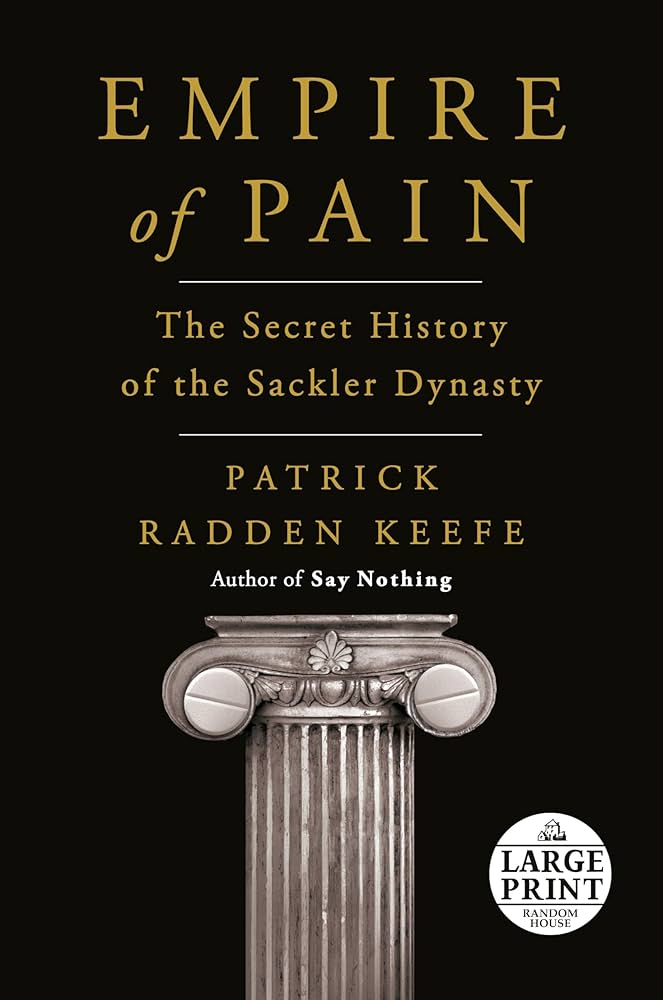
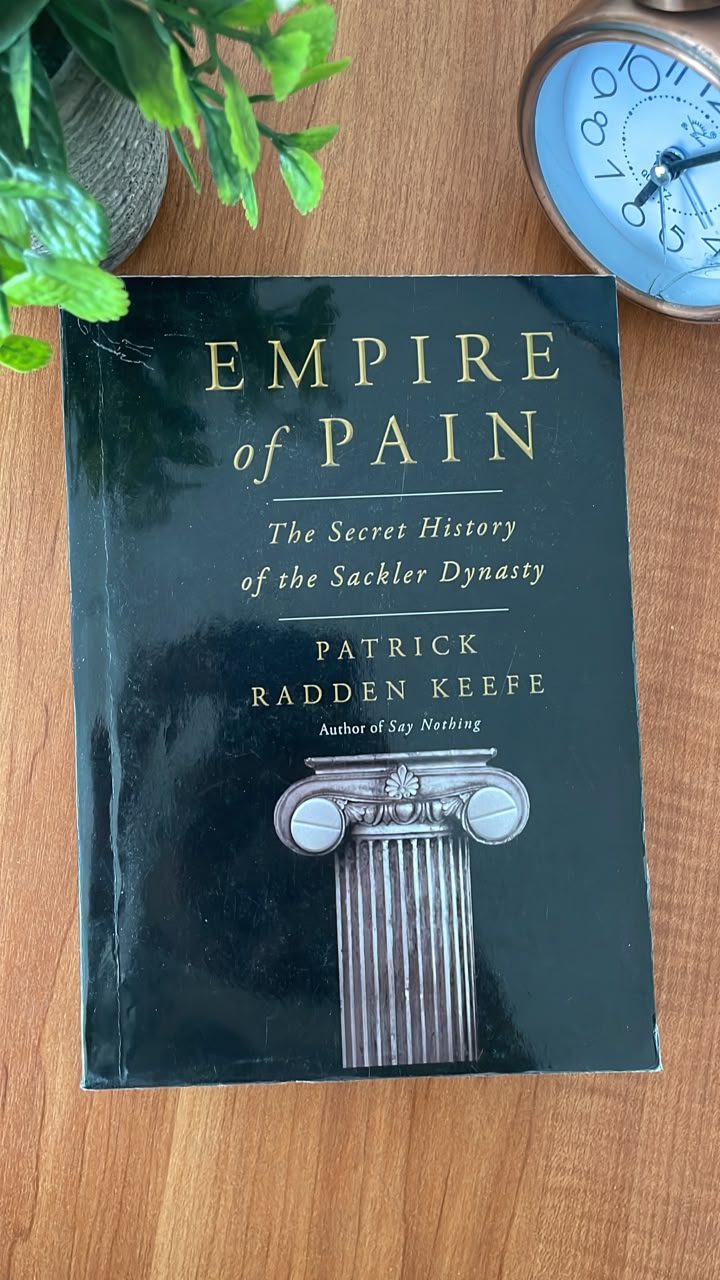

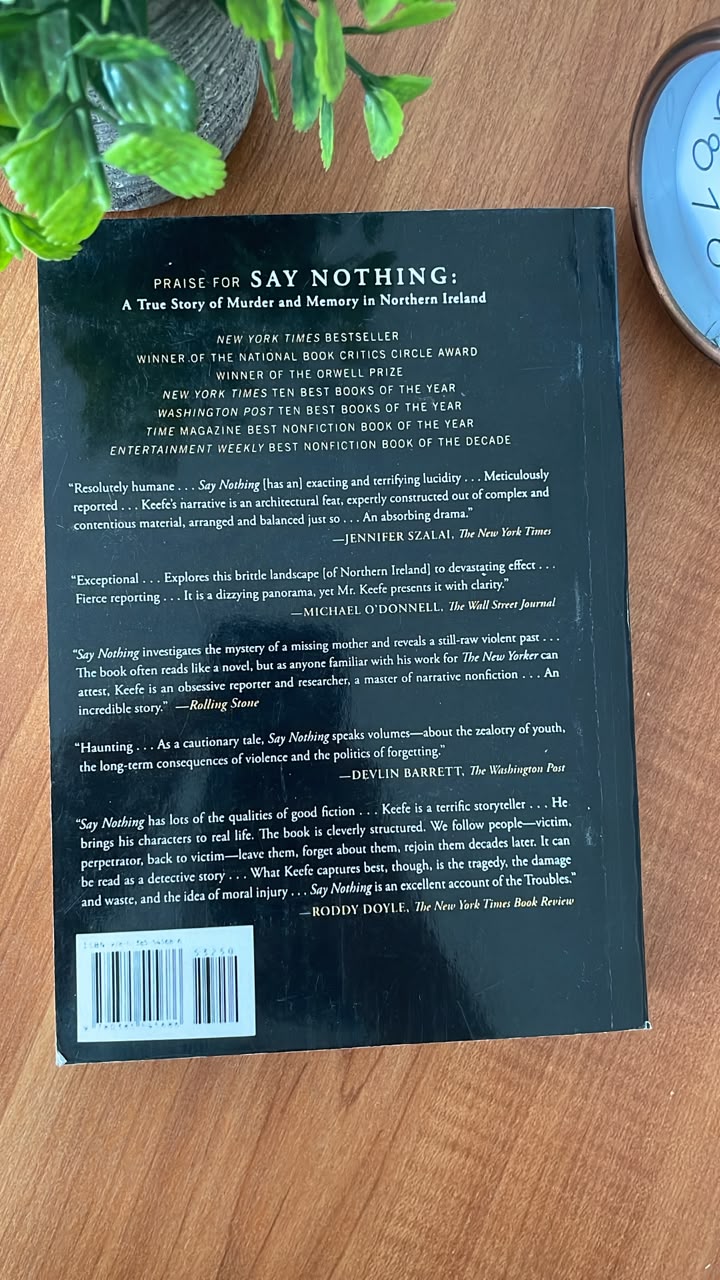
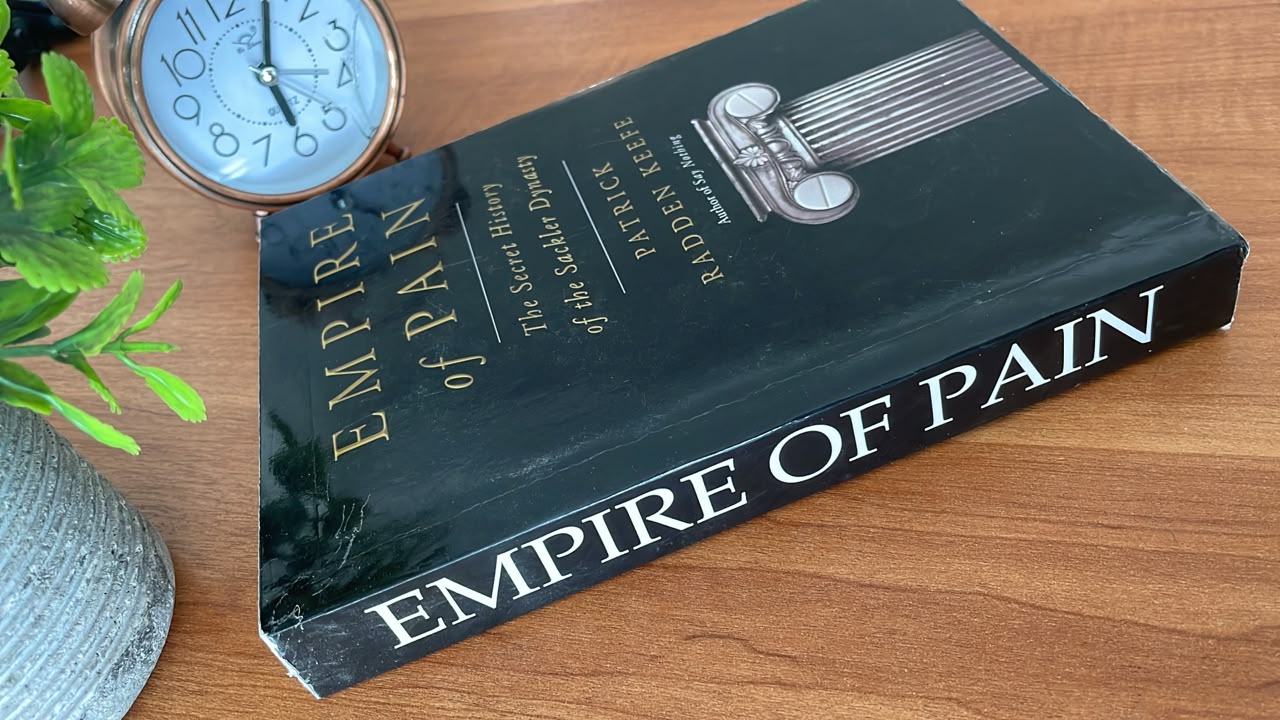
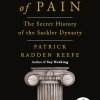
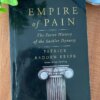

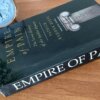
Empire Of Pain by Patrick Radden Keefe

රු2,900.00
3 X Rs. 966.67 or 8% Cashback with


or 3 X රු966.67 with


or up to 4 X රු725.00 with


Empire of Pain: The Secret History of the Sackler Dynasty by Patrick Radden Keefe is a gripping and deeply researched nonfiction book that uncovers the rise and fall of one of the most powerful and controversial families in modern history.
2 in stock
Empire of Pain – Book Description
Empire of Pain by Patrick Radden Keefe is a gripping work of investigative nonfiction about wealth, pharmaceutical business, family power, reputation and accountability.
The book tells the story of the Sackler family across three generations.
Their name once appeared prominently at major universities, museums and cultural institutions.
Behind that public image was an enormous pharmaceutical fortune.
Keefe investigates how that fortune developed, how Purdue Pharma marketed the prescription painkiller OxyContin, and how the Sackler family became closely associated with the opioid crisis.
Why Read Empire of Pain?
Empire of Pain is particularly compelling for readers interested in investigative journalism, business, public health and corporate accountability.
It is not simply the story of one pharmaceutical company.
Keefe goes much further back.
He examines how a family dynasty was built.
How wealth grew.
How reputation was managed.
How business decisions were made.
And how a prestigious public image could exist alongside increasingly serious controversy.
The result reads partly like a business history and partly like a family saga.
Empire of Pain and the Sackler Dynasty
At the centre of Empire of Pain is the Sackler family.
The story begins with brothers Arthur, Mortimer and Raymond Sackler, physicians who built careers and business interests during the twentieth century.
Keefe traces the family’s evolution from relatively modest beginnings to extraordinary wealth and influence.
That multigenerational approach is important.
It allows readers to see that the OxyContin controversy did not emerge in isolation.
The book examines earlier pharmaceutical marketing practices, family ambitions and business strategies that developed over decades.
Empire of Pain and Purdue Pharma
Purdue Pharma becomes central to the later sections of the book.
The company developed and marketed OxyContin, a prescription opioid painkiller.
Keefe investigates the company’s marketing strategy and the broader controversy surrounding the drug’s promotion and addictive potential.
This gives Empire of Pain a strong business dimension.
Readers encounter questions about:
- Pharmaceutical marketing
- Sales incentives
- Corporate responsibility
- Regulation
- Medical influence
- Reputation management
- Legal accountability
The story shows how decisions made inside companies can have consequences far beyond balance sheets.
Empire of Pain and the Opioid Crisis
The opioid crisis forms the larger public-health context of Empire of Pain.
Keefe connects Purdue Pharma and OxyContin to the broader history of prescription opioid use and addiction in the United States.
The book therefore moves between different worlds.
Corporate offices.
Medical marketing.
Family meetings.
Courtrooms.
Museums.
Universities.
Communities affected by addiction.
That contrast gives the story much of its emotional power.
Wealth and Reputation
One of the strongest themes in Empire of Pain is reputation.
The Sackler name became associated with major cultural and educational institutions through extensive philanthropy.
Libraries.
Museums.
Universities.
Galleries.
Keefe investigates the relationship between philanthropy, prestige and the family’s business interests.
This creates a difficult question.
Can philanthropy be considered separately from the way wealth was created?
The book does not treat donations simply as generosity.
It examines how public giving can also shape reputation.
Empire of Pain and Corporate Accountability
Businesses often celebrate success through revenue, market share and growth.
Empire of Pain asks readers to consider another measurement:
Consequences.
What happens when a profitable product causes or contributes to serious harm?
Who should be responsible?
Executives?
Owners?
Sales teams?
Regulators?
The healthcare system?
These questions become increasingly complicated as the story develops.
The Power of Marketing
Marketing is another major theme.
A product does not succeed only because it exists.
People need to be persuaded to use it.
Doctors need information.
Sales teams need strategies.
Customers develop perceptions.
The book examines how pharmaceutical marketing can influence medical practice and public understanding.
Keefe’s reporting places particular attention on the aggressive marketing strategies associated with OxyContin.
Empire of Pain and Business Ethics
Empire of Pain is also a powerful business-ethics book.
Companies constantly make decisions involving profit and risk.
Sometimes those decisions are straightforward.
Sometimes they involve serious moral questions.
How much information should customers receive?
How should a company respond when warning signs appear?
What happens when profits and public welfare conflict?
These questions extend beyond the pharmaceutical industry.
They apply to almost every major business.
Family, Money and Power
The Sacklers were not simply business partners.
They were a family.
That creates another layer of complexity.
Keefe documents family disputes, estate conflicts, boardroom tensions and disagreements over money and control.
This makes Empire of Pain surprisingly dramatic for nonfiction.
Readers are not only following corporate decisions.
They are following relationships across generations.
Empire of Pain and Philanthropy
Philanthropy gives the story a fascinating contrast.
The Sackler name was associated with some of the world’s best-known cultural institutions.
At the same time, public criticism of the family grew as scrutiny of Purdue Pharma increased.
The book explores how philanthropy can create prestige and social legitimacy.
It also raises questions about what institutions should do when donations become controversial.
Investigative Journalism in Empire of Pain
One of the biggest strengths of Empire of Pain is its investigative approach.
Patrick Radden Keefe is a longtime staff writer at The New Yorker.
The book grew from years of reporting and research into the Sacklers, Purdue Pharma and the history surrounding OxyContin.
Instead of presenting isolated facts, Keefe builds a narrative.
People have motivations.
Families have histories.
Businesses develop cultures.
Decisions lead to consequences.
This storytelling approach makes a complicated subject easier to follow.
Empire of Pain Reads Like a Family Saga
Although Empire of Pain is nonfiction, much of it reads like a sweeping family saga.
There are ambitious founders.
Enormous fortunes.
Family disagreements.
Prestigious institutions.
Courtroom battles.
Corporate crises.
Public scandals.
That combination helps explain why the book attracted readers beyond those already interested in healthcare policy.
Power Can Reduce Accountability
A recurring question throughout Empire of Pain concerns the relationship between wealth and accountability.
Powerful individuals and organizations often have resources unavailable to ordinary people.
Lawyers.
Lobbyists.
Public-relations specialists.
Political access.
Financial reserves.
Keefe examines how wealth can influence the way institutions respond to controversy.
The book becomes a broader investigation of power as much as pharmaceuticals.
Success Does Not Tell the Whole Story
A company can appear extremely successful when judged only financially.
Revenue grows.
Owners become wealthy.
Products dominate a market.
But Empire of Pain demonstrates why success needs a wider definition.
What did the company create?
How did it treat customers?
What risks did it create?
What happened when problems became visible?
Financial results are only one part of the story.
Empire of Pain and Regulation
The pharmaceutical industry operates inside a regulated system.
Government agencies, healthcare professionals and companies all play roles.
Keefe examines interactions between Purdue Pharma and the institutions responsible for evaluating and overseeing pharmaceutical products.
This raises broader questions about regulation.
How close should regulators become to industries they oversee?
How should medical claims be evaluated?
How quickly should institutions respond when evidence of harm appears?
Accountability Can Take Years
Large corporate controversies rarely resolve quickly.
Investigations can take years.
Lawsuits continue.
Settlements are negotiated.
Companies restructure.
Public attitudes change.
Empire of Pain follows this long process of scrutiny and legal challenge rather than treating accountability as one dramatic moment.
This makes the book particularly useful for readers interested in how powerful institutions respond to sustained pressure.
7 Shocking Lessons From Empire of Pain
- Business Decisions Have Human Consequences – Corporate strategy can affect people far beyond shareholders and executives.
- Reputation Can Be Carefully Constructed – Philanthropy and prestige can shape how powerful families are perceived.
- Marketing Has Enormous Influence – The way a product is promoted can dramatically affect how widely it is used.
- Wealth Creates Power – Financial resources can provide access to lawyers, institutions and influence unavailable to ordinary people.
- Corporate Accountability Can Be Slow – Investigations and legal battles may continue for years.
- Success Should Be Measured Broadly – Financial performance alone does not reveal a company’s full impact.
- Institutions Need Independent Judgment – Regulators, medical professionals and cultural organizations all face difficult decisions when powerful interests are involved.
What You Can Expect From Empire of Pain
Readers can expect:
- Investigative journalism
- Patrick Radden Keefe
- Sackler family
- Purdue Pharma
- OxyContin
- Pharmaceutical industry
- Business history
- Corporate accountability
- Opioid crisis
- Public health
- Wealth and influence
- Philanthropy
- Legal battles
- Family dynasty
- Business ethics
- Reputation management
- Corporate power
Who Should Read Empire of Pain?
Empire of Pain is ideal for readers who enjoy investigative nonfiction.
Business readers may find the corporate history and marketing strategies particularly interesting.
Readers interested in public health can explore the story of OxyContin and the opioid crisis.
Students of journalism may appreciate Keefe’s detailed reporting and narrative style.
It may also appeal to readers who enjoyed books such as Bad Blood or other investigations of powerful companies and wealthy individuals.
An Award-Winning Investigation
Empire of Pain received major recognition after publication.
It won the 2021 Baillie Gifford Prize for Non-Fiction and was a finalist for the National Book Critics Circle Award.
That recognition reflects both the importance of the subject and Keefe’s narrative reporting.
The book combines business history, family biography, public-health investigation and legal drama into one detailed account.
A Powerful Story of Wealth, Influence and Accountability
Empire of Pain begins as the story of an ambitious family.
It grows into something much larger.
A pharmaceutical fortune.
A famous family name.
A blockbuster prescription drug.
An enormous public-health crisis.
Investigations.
Court battles.
And difficult questions about responsibility.
Patrick Radden Keefe uses the Sackler dynasty to explore how wealth, business, philanthropy and power can become deeply interconnected.
For readers interested in investigative journalism, corporate history, business ethics and powerful nonfiction, Empire of Pain is a compelling addition to any bookshelf.
Book Details
Full Title: Empire of Pain: The Secret History of the Sackler Dynasty
Author: Patrick Radden Keefe
Genre: Investigative Nonfiction / Business / Biography / Public Health
Original Publication: 2021
Subject: Sackler family, Purdue Pharma, OxyContin and the opioid crisis.
For the U.S. Doubleday hardcover edition:
ISBN-13: 9780385545686
Publication Date: April 13, 2021
Pages: 560
Dimensions: approximately 6⅛ × 9⅛ inches.
For the U.S. paperback, Penguin Random House lists 640 pages, so make sure you use the details matching your physical copy. https://yourwebsite.com/empire-of-pain/
Be the first to review “Empire Of Pain by Patrick Radden Keefe”
Related products
-24%
Out of stock
Non-Fiction & Knowledge
Original price was: රු2,500.00.රු1,900.00Current price is: රු1,900.00.
3 X Rs. 633.33 or 8% Cashback with
or 3 X රු633.33 with
or up to 4 X රු475.00 with
-39%
Out of stock
Self-Help & Psychology
Original price was: රු2,450.00.රු1,500.00Current price is: රු1,500.00.
3 X Rs. 500.00 or 8% Cashback with
or 3 X රු500.00 with
or up to 4 X රු375.00 with
-13%
Out of stock
Non-Fiction & Knowledge
Original price was: රු3,900.00.රු3,400.00Current price is: රු3,400.00.
3 X Rs. 1,133.33 or 8% Cashback with
or 3 X රු1,133.33 with
or up to 4 X රු850.00 with
-24%
Out of stock
Non-Fiction & Knowledge
Original price was: රු2,100.00.රු1,600.00Current price is: රු1,600.00.
3 X Rs. 533.33 or 8% Cashback with
or 3 X රු533.33 with
or up to 4 X රු400.00 with
-23%

Non-Fiction & Knowledge
Original price was: රු2,200.00.රු1,700.00Current price is: රු1,700.00.
3 X Rs. 566.67 or 8% Cashback with
or 3 X රු566.67 with
or up to 4 X රු425.00 with
-34%

Self-Help & Psychology
Original price was: රු2,350.00.රු1,550.00Current price is: රු1,550.00.
3 X Rs. 516.67 or 8% Cashback with
or 3 X රු516.67 with
or up to 4 X රු387.50 with

Out of stock
Non-Fiction & Knowledge
රු1,900.00
3 X Rs. 633.33 or 8% Cashback with
or 3 X රු633.33 with
or up to 4 X රු475.00 with
-19%
Out of stock
Non-Fiction & Knowledge
Original price was: රු2,650.00.රු2,150.00Current price is: රු2,150.00.
3 X Rs. 716.67 or 8% Cashback with
or 3 X රු716.67 with
or up to 4 X රු537.50 with
Reviews
There are no reviews yet.