
No products in the cart.
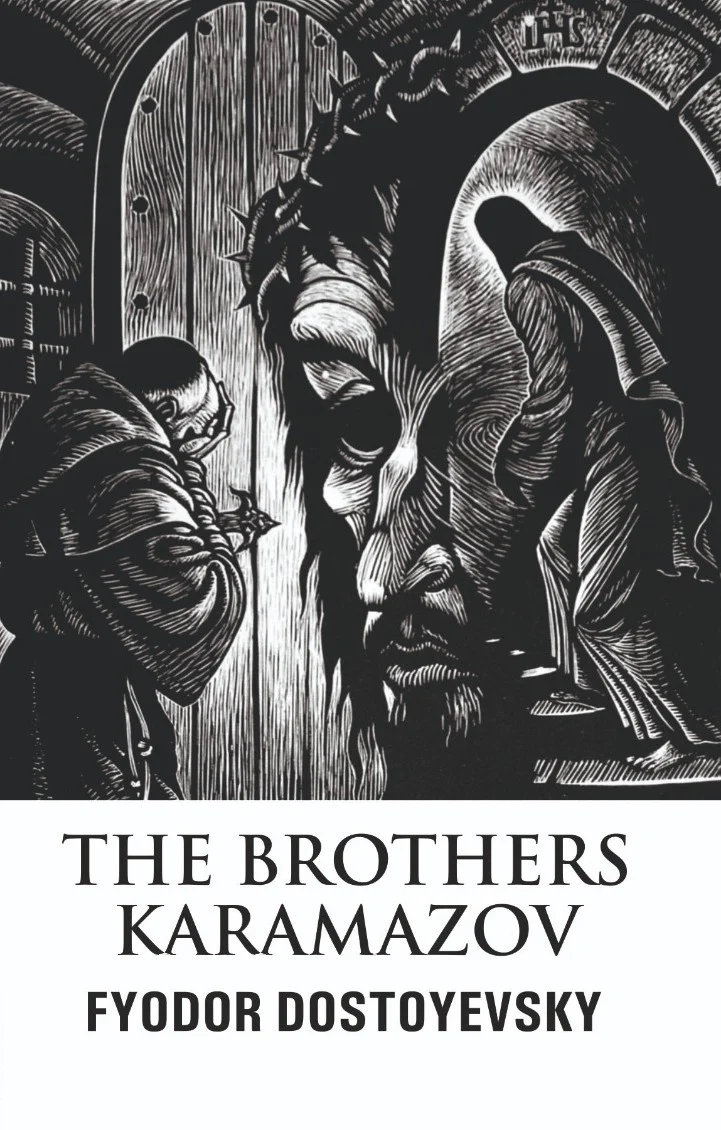
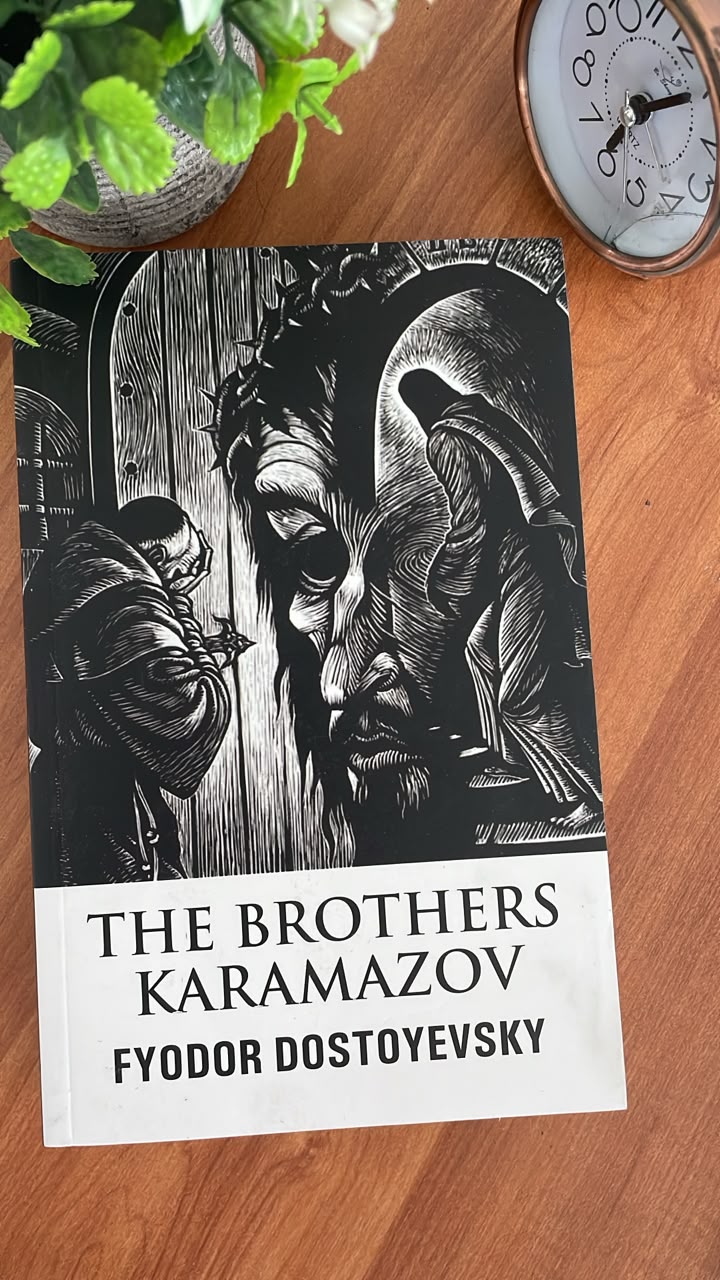
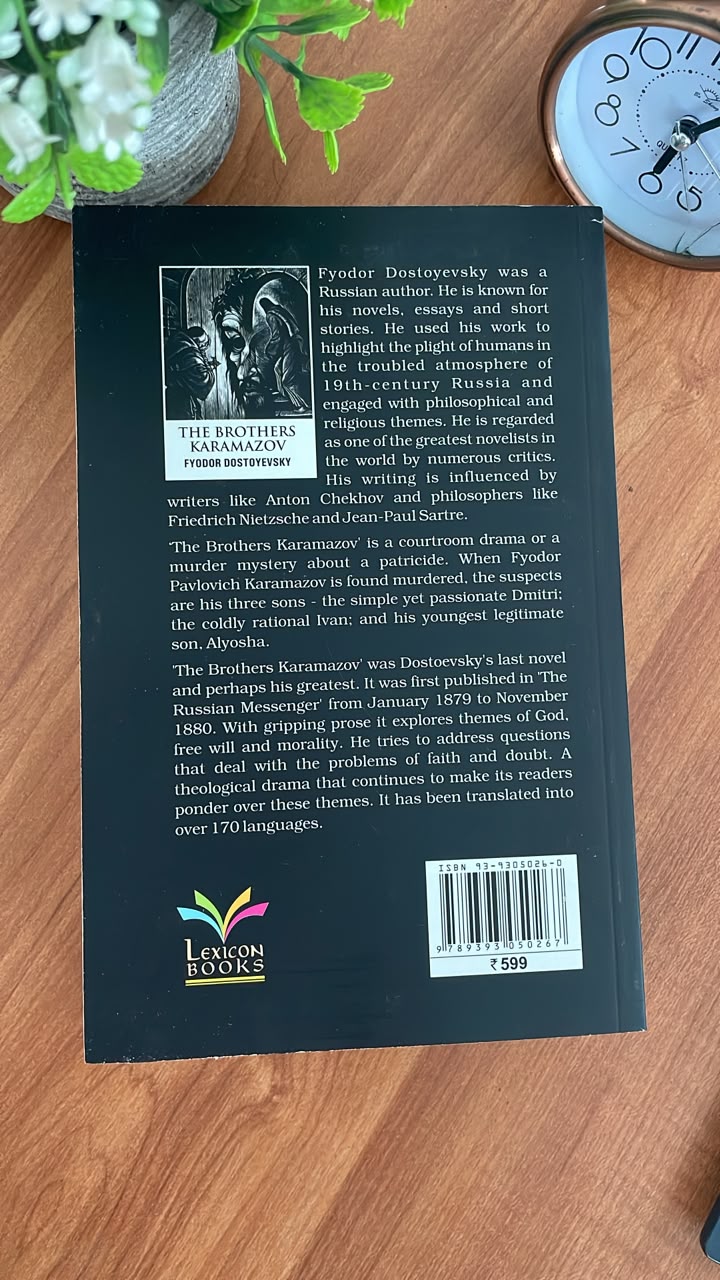

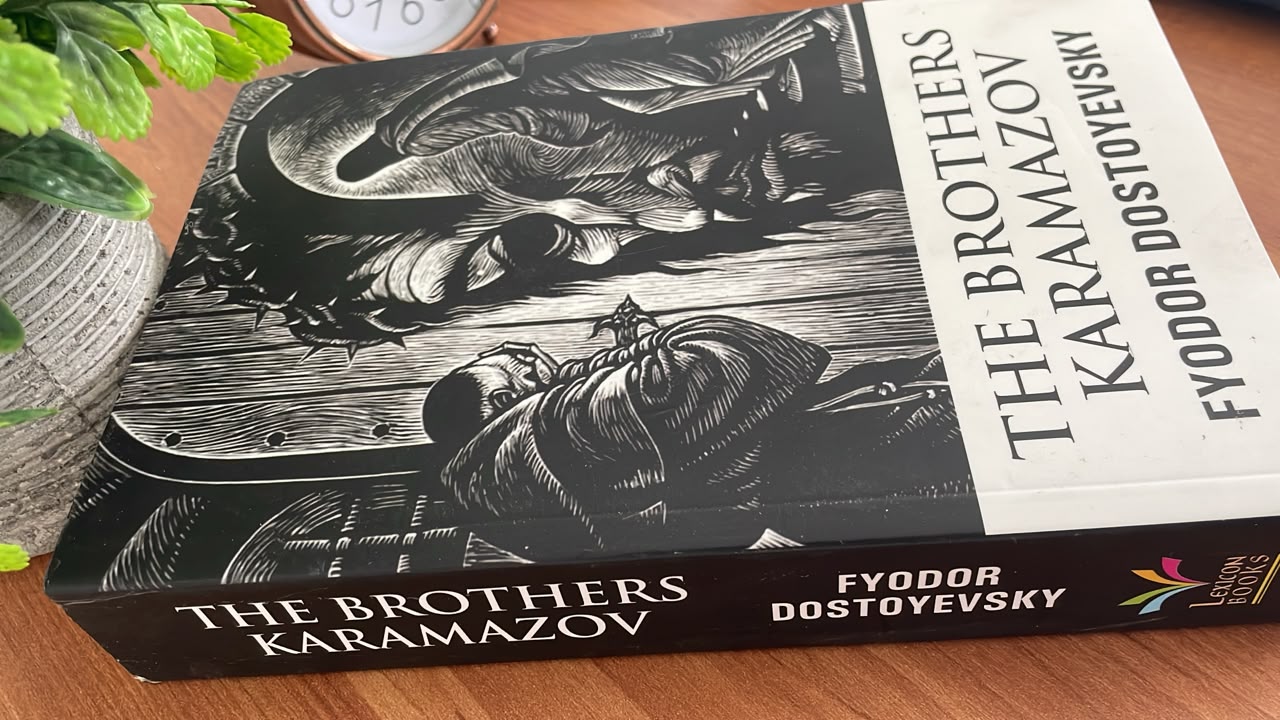
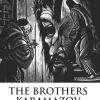




Brothers Karamazov by Fyodor Dostoevsky


රු3,500.00
3 X Rs. 1,166.67 or 8% Cashback with


or 3 X රු1,166.67 with


or up to 4 X රු875.00 with


| Detail | Information |
|---|---|
| Title | The Brothers Karamazov |
| Author | Fyodor Dostoevsky |
| Genre | Fiction / Classic Literature / Philosophy |
| Language | English (Translated) |
| Publisher | Penguin Classics / Vintage (varies by edition) |
| Publication Year | 1880 |
| Pages | 824 pages (approx.) |
| Format | Paperback |
| ISBN-10 | 0140449249 |
| ISBN-13 | 9780140449242 |
| Package Length (cm) | 19.8 cm |
| Package Width (cm) | 12.9 cm |
| Package Height (cm) | 4.5 cm |
3 in stock
The Brothers Karamazov by Fyodor Dostoevsky
Brothers Karamazov by Fyodor Dostoevsky is a monumental Russian classic combining family conflict, murder, philosophy, psychology, faith, morality, guilt, and redemption.
At the centre of the novel is the troubled Karamazov family and the violent death of its father, Fyodor Pavlovich Karamazov. His sons become caught in a complicated drama involving suspicion, rivalry, desire, resentment, and moral responsibility.
The result is both a gripping family tragedy and a deeply philosophical exploration of human nature.
Why Read Brothers Karamazov?
Brothers Karamazov is an excellent choice for readers who enjoy classics that combine dramatic storytelling with serious philosophical questions.
Dostoevsky explores what happens when different ways of understanding life collide inside one family.
Faith confronts doubt.
Reason confronts passion.
Love exists beside hatred.
Innocence becomes difficult to separate from responsibility.
Penguin describes the novel as a meditation on faith, meaning, morality, guilt, salvation, and the blurred boundaries between good and evil.
The Karamazov Family
The Karamazov family is anything but peaceful.
Fyodor Pavlovich Karamazov is a wealthy landowner whose relationships with his sons are filled with bitterness and conflict.
The central brothers are Dmitri, Ivan, and Alyosha.
Smerdyakov, their half-brother, also becomes crucial to the story and its murder mystery.
Each character represents a very different way of approaching life.
Meet Dmitri Karamazov
Dmitri is passionate, impulsive, emotional, and frequently driven by desire.
His bitter rivalry with his father becomes especially dangerous.
Money, jealousy, and romantic competition intensify their conflict.
Because Dmitri has openly fought with his father, suspicion naturally falls on him when Fyodor Pavlovich is murdered.
His story becomes closely connected with guilt, responsibility, suffering, and justice.
Meet Ivan Karamazov
Ivan is the intellectual brother.
He questions religious belief and struggles deeply with suffering, morality, and the existence of God.
His philosophical arguments form some of the most famous sections of Brothers Karamazov.
Ivan’s ideas are not presented as simple answers.
Instead, Dostoevsky uses him to explore difficult questions about whether morality can exist without religious belief and how a person should respond to apparently meaningless suffering.
Penguin describes Ivan as the intellectual brother whose inner conflict eventually drives him toward breakdown.
Meet Alyosha Karamazov
Alyosha is the youngest brother and the most spiritually oriented.
He is compassionate and often attempts to reduce conflict between the people around him.
Penguin describes him as the spiritual brother who tries to heal the divisions within the family.
Through Alyosha, the novel explores faith, forgiveness, love, humility, and the possibility of goodness even in a deeply damaged world.
Meet Smerdyakov
Smerdyakov occupies a darker position within the Karamazov family.
He is the illegitimate half-brother of Dmitri, Ivan, and Alyosha and becomes essential to the murder mystery.
His character also connects the novel’s philosophical discussions with its central crime.
Ideas are no longer merely abstract when people begin acting on them.
A Murder at the Centre of the Story
The murder of Fyodor Pavlovich transforms the family conflict into a gripping crime story.
Each son has his own complicated relationship with the victim.
Suspicion, evidence, motives, and moral responsibility become increasingly difficult to separate.
Penguin describes the novel as the story of a patricide involving four sons who each possess a possible motive.
This mystery gives the enormous philosophical novel a strong narrative engine.
Faith and Doubt
Faith is one of the most important themes in Brothers Karamazov.
Dostoevsky does not avoid difficult questions.
Why does suffering exist?
Why do innocent people suffer?
Can someone believe in a good God while confronting cruelty?
What happens when faith disappears?
Ivan and Alyosha represent very different responses to these questions.
Their conversations turn family drama into a much larger exploration of belief and meaning.
Free Will and Responsibility
The novel repeatedly asks how responsible people are for their actions.
Is someone guilty only when they physically commit a crime?
Can ideas influence wrongdoing?
Does wishing for someone’s death create any moral responsibility if another person acts?
These questions become increasingly important as the murder investigation develops.
The novel therefore explores legal guilt and moral guilt as related but not identical ideas.
The Grand Inquisitor
One of the most famous sections of the novel is “The Grand Inquisitor.”
Project Gutenberg identifies it as a story within the 1880 novel in which Ivan presents a philosophical tale involving Christ returning during the Spanish Inquisition.
The episode explores freedom, religion, authority, obedience, and the question of whether human beings truly want freedom when freedom also creates responsibility.
It can be read as part of the larger novel or studied as a major philosophical passage in its own right.
Psychology and Human Behaviour
Dostoevsky is deeply interested in contradiction.
People can love and hate the same person.
They can believe one thing and behave in another way.
They can understand that an action is wrong while still wanting to perform it.
Brothers Karamazov repeatedly places characters in situations where emotion, reason, pride, desire, fear, and morality collide.
This psychological complexity is one reason the novel continues to attract readers of philosophy and psychology as well as literature.
Family Conflict
The philosophical ideas never completely separate from the family story.
Fathers and sons fight.
Brothers disagree.
Romantic jealousy creates tension.
Money creates resentment.
Old wounds shape present choices.
The Karamazov family therefore becomes a way for Dostoevsky to explore larger questions through intensely personal relationships.
Crime and the Courtroom
The murder eventually leads to investigation and courtroom drama.
Penguin highlights the trial as one of the major narrative elements of the novel.
The courtroom sections explore how evidence becomes a story.
Different people interpret the same events differently.
A convincing explanation is not necessarily identical to the truth.
This gives the novel a surprisingly modern psychological-thriller quality despite its nineteenth-century setting.
7 Powerful Reasons to Read Brothers Karamazov
1. A gripping murder mystery
The death of Fyodor Karamazov drives much of the novel’s suspense.
2. Deep philosophical questions
The book explores faith, morality, freedom, suffering, and responsibility.
3. Complex characters
Dmitri, Ivan, Alyosha, and Smerdyakov represent dramatically different personalities and beliefs.
4. Psychological depth
Characters frequently struggle with conflicting desires, beliefs, and emotions.
5. Powerful family drama
The conflict between father and sons gives the philosophical novel a deeply personal foundation.
6. A major Russian classic
Penguin categorizes the novel as both classic fiction and literary fiction.
7. Dostoevsky’s final novel
It was completed shortly before Dostoevsky’s death in 1881 and is widely treated as the culmination of his major fiction.
About Fyodor Dostoevsky
Fyodor Dostoevsky was born in Moscow in 1821 and died in 1881.
His major novels include Crime and Punishment, The Idiot, Demons, Notes from Underground, and The Brothers Karamazov.
His fiction is particularly known for exploring morality, religion, psychology, guilt, suffering, freedom, and human contradiction.
Book Details
There are many English editions and translations, so check your physical copy before entering page count, translator, or ISBN.
For example, the Penguin Classics edition translated by David McDuff is listed as 1,056 pages. Its paperback edition was published in 2003, while a clothbound hardcover edition with the same page count was released in 2024.
The Bantam Classics mass-market edition is instead listed as 1,072 pages, ISBN 9780553212167.
Because translations and editions differ significantly, use the details printed on your own copy.
Perfect for Readers Interested In
This book is a strong choice for readers interested in:
- Classic literature
- Russian literature
- Fyodor Dostoevsky
- Philosophical fiction
- Literary fiction
- Murder mysteries
- Psychology
- Religion and faith
- Existential literature
- Family drama
- Courtroom fiction
- Morality and free will
Build Your Dostoevsky Collection
Readers who enjoy Brothers Karamazov may also want to explore Crime and Punishment, The Idiot, Notes from Underground, and Demons.
Add internal links to your Classics, Russian Literature, Literary Fiction, and Philosophical Fiction categories.
If you stock other Dostoevsky titles, directly linking those product pages can also improve the Rank Math internal-link check.
Buy Brothers Karamazov in Sri Lanka
Looking for Brothers Karamazov in Sri Lanka?
Fyodor Dostoevsky’s final novel is an outstanding choice for readers interested in family conflict, murder mysteries, philosophy, psychology, faith, free will, morality, guilt, and redemption.
Its combination of suspense, unforgettable characters, and enormous philosophical questions has made it one of Dostoevsky’s defining works.
Add Brothers Karamazov to your classics collection today. https://www.penguinrandomhouse.com/books/286344/the-brothers-karamazov-by-fyodor-dostoyevsky-translated-with-an-introduction-and-notes-by-david-mcduff-cover-illustrated-by-coralie-bickford-smith/
Be the first to review “Brothers Karamazov by Fyodor Dostoevsky”
Related products
-33%

Self-Help & Psychology
Original price was: රු2,300.00.රු1,550.00Current price is: රු1,550.00.
3 X Rs. 516.67 or 8% Cashback with
or 3 X රු516.67 with
or up to 4 X රු387.50 with
-19%
Out of stock
Non-Fiction & Knowledge
Original price was: රු2,650.00.රු2,150.00Current price is: රු2,150.00.
3 X Rs. 716.67 or 8% Cashback with
or 3 X රු716.67 with
or up to 4 X රු537.50 with
-24%

Non-Fiction & Knowledge
Original price was: රු2,300.00.රු1,750.00Current price is: රු1,750.00.
3 X Rs. 583.33 or 8% Cashback with
or 3 X රු583.33 with
or up to 4 X රු437.50 with
-29%

Self-Help & Psychology
Original price was: රු1,750.00.රු1,250.00Current price is: රු1,250.00.
3 X Rs. 416.67 or 8% Cashback with
or 3 X රු416.67 with
or up to 4 X රු312.50 with
-21%

Non-Fiction & Knowledge
7 Secrets to Investing Like Warren Buffett by Mary Buffett & Sean Seah
Original price was: රු1,900.00.රු1,500.00Current price is: රු1,500.00.
3 X Rs. 500.00 or 8% Cashback with
or 3 X රු500.00 with
or up to 4 X රු375.00 with
-17%
Out of stock
Non-Fiction & Knowledge
Original price was: රු2,900.00.රු2,400.00Current price is: රු2,400.00.
3 X Rs. 800.00 or 8% Cashback with
or 3 X රු800.00 with
or up to 4 X රු600.00 with
-13%

Out of stock
Non-Fiction & Knowledge
Original price was: රු3,900.00.රු3,400.00Current price is: රු3,400.00.
3 X Rs. 1,133.33 or 8% Cashback with
or 3 X රු1,133.33 with
or up to 4 X රු850.00 with

Out of stock
Self-Help & Psychology
රු1,900.00
3 X Rs. 633.33 or 8% Cashback with
or 3 X රු633.33 with
or up to 4 X රු475.00 with
Reviews
There are no reviews yet.