
No products in the cart.

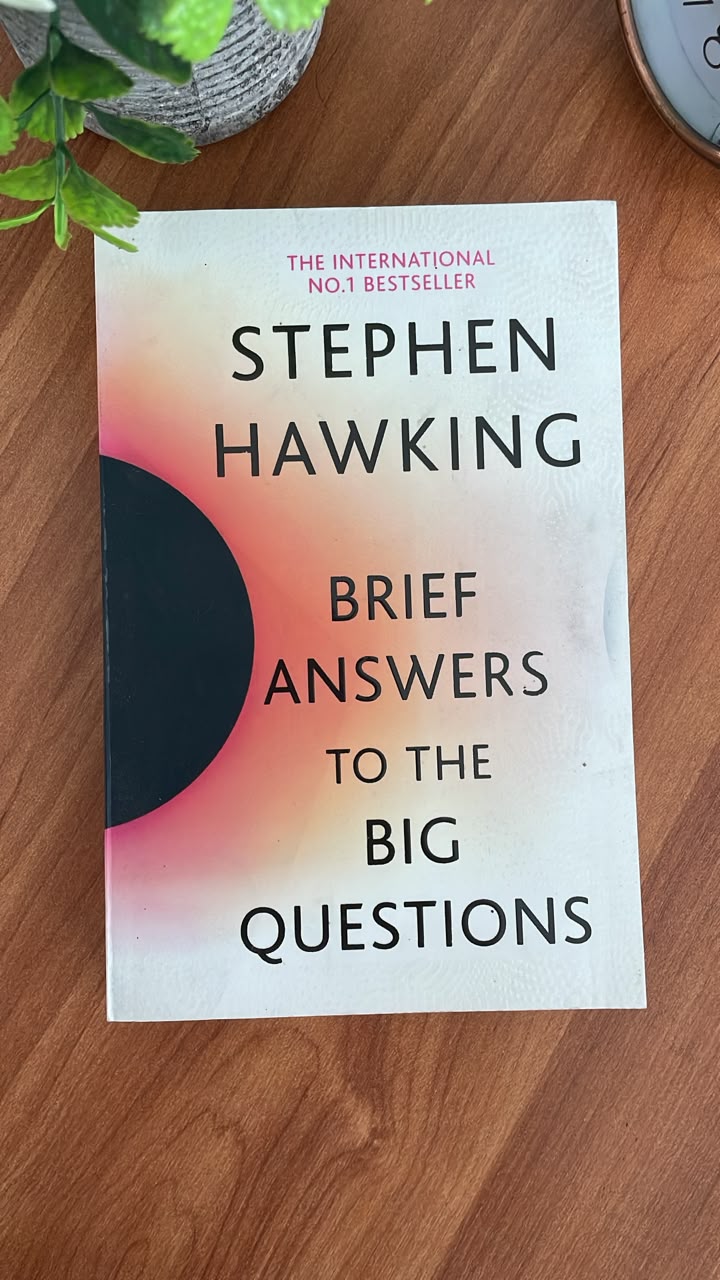

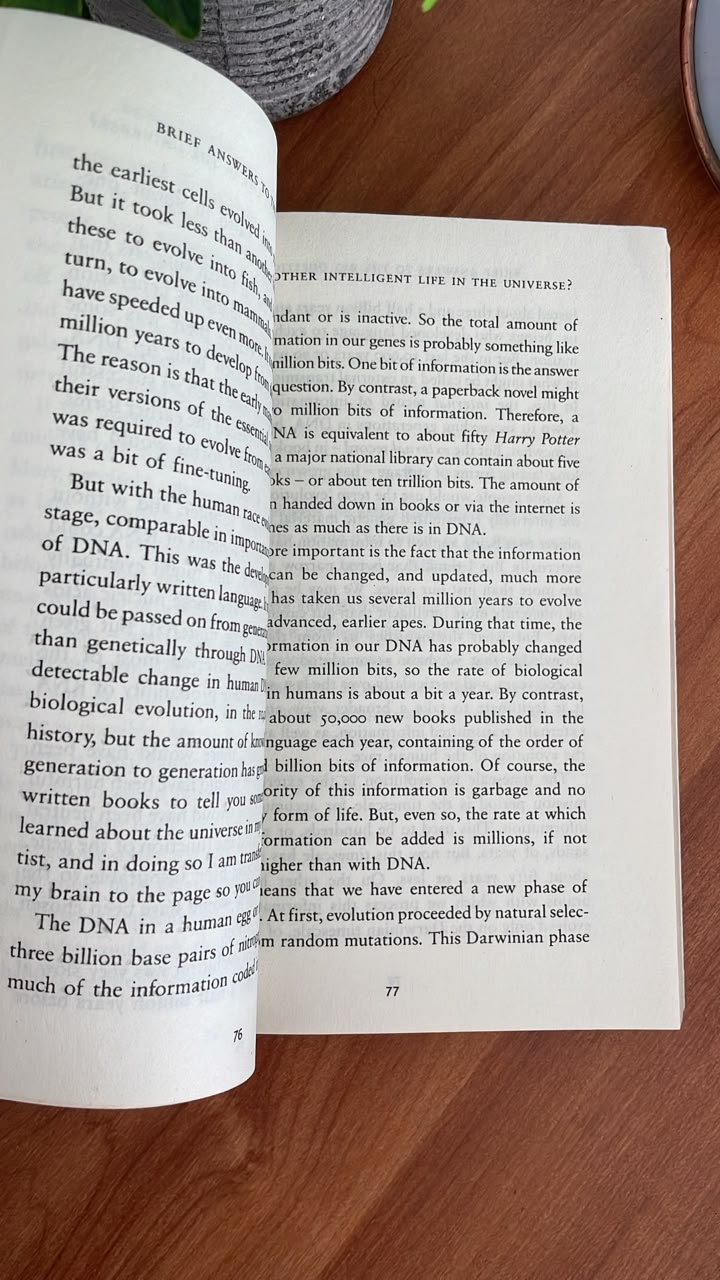
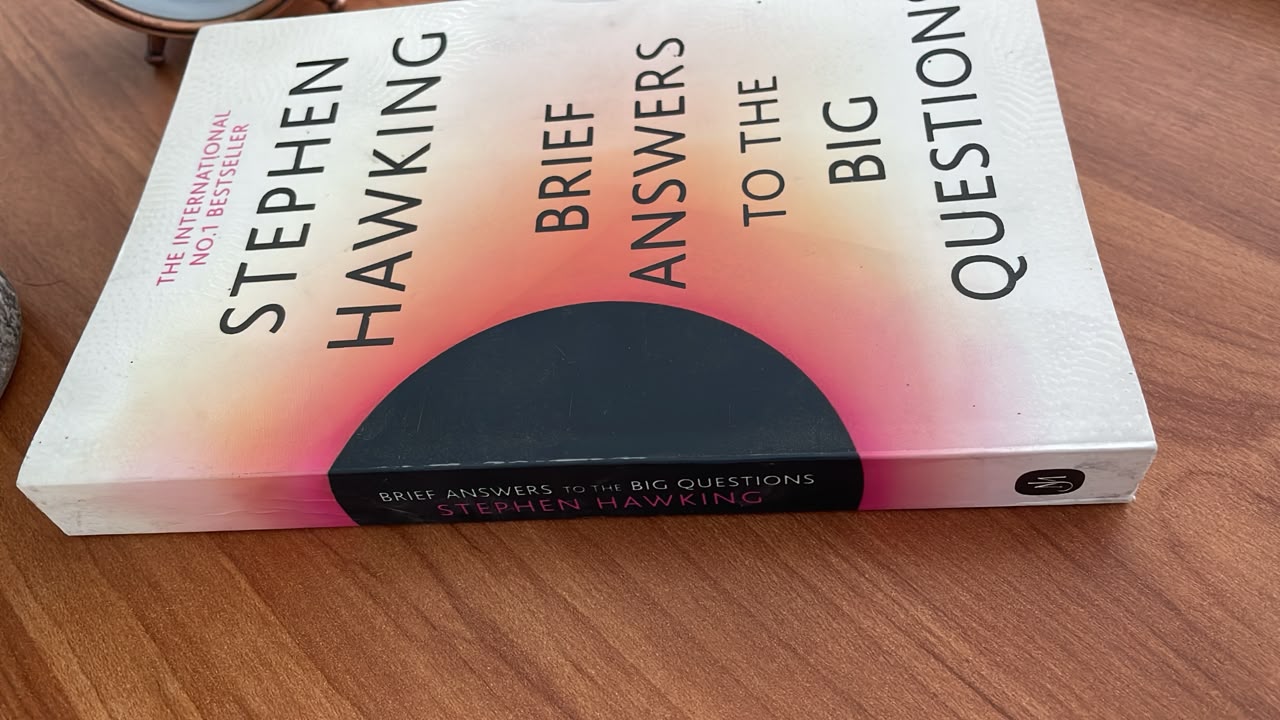




Brief Answers To Big Questions by Stephen Hawking


රු1,950.00
3 X Rs. 650.00 or 8% Cashback with


or 3 X රු650.00 with


or up to 4 X රු487.50 with


- Title: Brief Answers to the Big Questions
- Author: Stephen Hawking
- Publisher: John Murray
- Publication Date: October 2018
- Format: Paperback
- Pages: 256
- Language: English
- ISBN-10: 1473695988
- ISBN-13: 978-1473695986
- Package Weight: ~0.26 kg
3 in stock
Brief Answers to the Big Questions by Stephen Hawking
Brief Answers to the Big Questions by Stephen Hawking is a fascinating popular-science book exploring some of humanity’s biggest questions about the universe, our planet, technology, and the future.
It was Hawking’s final book and brings together his thoughts on subjects ranging from black holes and the origins of the universe to artificial intelligence, climate change, space exploration, and humanity’s long-term survival.
The result is an accessible introduction to enormous scientific and philosophical questions.
Why Read Brief Answers to the Big Questions?
Brief Answers to the Big Questions is an excellent choice for readers who are curious about science but do not necessarily have a technical background.
Hawking spent much of his career studying some of the deepest problems in cosmology.
Yet he also became famous for explaining complex scientific ideas to general readers.
This book continues that approach.
Rather than focusing on one narrow topic, it looks at questions that connect science with the future of humanity.
How Did the Universe Begin?
The origin of the universe is one of the fundamental questions of cosmology.
Hawking spent much of his scientific career studying the relationship between gravity, space, time, and the beginning of the universe.
The book introduces readers to these enormous questions without requiring advanced mathematics.
It encourages readers to think about where everything came from and what modern physics can tell us about the earliest universe.
Is There Other Intelligent Life?
Human beings have wondered for centuries whether we are alone.
With billions of stars and enormous numbers of planets throughout the universe, the possibility of extraterrestrial life becomes a scientific question as well as an imaginative one.
Hawking considers the possibility of intelligent life beyond Earth and what contact with another civilization might mean.
The question forces us to think about humanity from a much larger cosmic perspective.
What Is Inside a Black Hole?
Black holes were central to Stephen Hawking’s scientific work.
These extraordinary objects contain gravitational fields so strong that beyond a certain boundary even light cannot escape.
Hawking became especially famous for theoretical work showing that black holes can be connected with quantum effects now commonly associated with Hawking radiation.
His ability to connect black holes, thermodynamics, gravity, and quantum theory made him one of the best-known physicists of his generation.
Does God Exist?
One of the most discussed questions in Brief Answers to the Big Questions concerns God.
Hawking approaches this subject from his perspective as a physicist.
He considers what modern cosmology says about the origin and operation of the universe and whether a supernatural explanation is scientifically necessary.
Readers may agree or disagree with his conclusions.
But the discussion makes the book especially interesting because it connects cosmology with questions people have debated for thousands of years.
Can We Predict the Future?
Prediction is another important theme.
Science allows us to understand patterns and create models.
But complicated systems can make exact prediction extremely difficult.
The question also becomes philosophical.
If physical laws influence everything around us, how much can we really know about what will happen next?
Hawking uses questions of this kind to connect physics with broader ideas about knowledge and uncertainty.
Will Artificial Intelligence Outsmart Us?
Artificial intelligence is one of the major future-facing subjects in the book.
Hawking considered advanced AI both an extraordinary opportunity and something requiring careful thought.
The publisher specifically identifies artificial intelligence as one of the major challenges discussed in his final book.
The question is not simply whether machines can become more intelligent.
It is also whether humans can ensure powerful technologies are developed and used responsibly.
Should Humanity Colonize Space?
Space exploration is another central topic.
Earth is currently humanity’s only home.
But Hawking believed that thinking about long-term survival requires looking beyond our planet.
The book asks whether humans should eventually establish settlements elsewhere in space.
This raises scientific, technological, economic, and ethical questions.
How difficult would it be?
Where could humans survive?
And what would a civilization living beyond Earth actually look like?
Will Humanity Survive?
One of the biggest questions in Brief Answers to the Big Questions concerns our future as a species.
Hawking discusses major threats facing humanity, including climate change, nuclear war, and powerful emerging technologies.
These are enormous problems.
But the overall message is not simply pessimistic.
Scientific knowledge can help people better understand risks and develop solutions.
Can Science Solve Earth’s Problems?
Hawking strongly believed science had an important role to play in addressing major global challenges.
The book examines not only distant galaxies and theoretical physics but also problems happening here on Earth.
Technology can create risks.
But technology can also help solve problems.
Scientific progress therefore needs to be combined with thoughtful human decisions.
The Importance of Curiosity
One of the strongest ideas running through the book is curiosity.
Human progress begins when people ask questions.
Why does something happen?
How does the universe work?
Could there be another explanation?
What might become possible in the future?
Hawking’s career demonstrated the value of continuing to ask questions even when the answers are difficult.
Science Made Accessible
Brief Answers to the Big Questions is written for general readers rather than only professional physicists.
It discusses enormous scientific ideas without turning the book into a university textbook.
That makes it suitable for readers who enjoyed A Brief History of Time but want a broader look at Hawking’s thoughts about humanity and its future.
Hawking’s Final Message
Penguin Random House describes the book as Hawking’s final thoughts on some of the biggest questions facing humanity.
It also contains a foreword by actor Eddie Redmayne, an introduction by physicist Kip Thorne, and an afterword by Hawking’s daughter Lucy Hawking.
This gives the book additional significance within Hawking’s body of work.
10 Amazing Questions Explored in Brief Answers to the Big Questions
The book examines major questions including:
- Is there a God?
- How did it all begin?
- Is there other intelligent life in the universe?
- Can we predict the future?
- What is inside a black hole?
- Is time travel possible?
- Will we survive on Earth?
- Should we colonize space?
- Will artificial intelligence outsmart us?
- How do we shape the future?
Together, these questions move from the beginning of the universe to the possible future of humanity.
About Stephen Hawking
Stephen Hawking was a theoretical physicist and cosmologist who served as the Lucasian Professor of Mathematics at the University of Cambridge for thirty years.
His books for general readers include A Brief History of Time, The Universe in a Nutshell, My Brief History, Black Holes and Baby Universes, and The Grand Design.
He died in 2018, the same year Brief Answers to the Big Questions was published.
Book Details
For the U.S. Bantam hardcover edition, Penguin Random House lists:
Title: Brief Answers to the Big Questions
Author: Stephen Hawking
Publisher: Bantam
Format: Hardcover
Pages: 256
Publication Date: October 16, 2018
ISBN: 9781984819192
Different international editions may have different ISBNs or page counts, so check your physical copy before entering the specifications.
Perfect for Readers Interested In
Brief Answers to the Big Questions is ideal for readers interested in:
- Stephen Hawking
- Astronomy
- Cosmology
- Black holes
- Space exploration
- Artificial intelligence
- Physics
- Climate change
- Future technology
- Popular science
- Universe and space
- Big philosophical questions
Build Your Stephen Hawking Collection
Readers who enjoy this book may also want to explore A Brief History of Time, Black Holes, The Grand Design, The Universe in a Nutshell, and My Brief History.
Add internal links to your Science, Astronomy, Physics, and Popular Science categories.
If you stock other Stephen Hawking books, link directly to those product pages as well.
Buy Brief Answers to the Big Questions in Sri Lanka
Looking for Brief Answers to the Big Questions in Sri Lanka?
Stephen Hawking’s final book is an excellent choice for curious readers interested in black holes, the universe, artificial intelligence, space exploration, science, humanity, and our possible future.
It brings together some of the biggest questions Hawking considered during his life and presents them for a general audience.
Add Brief Answers to the Big Questions to your popular-science collection today. https://www.penguinrandomhouse.com/books/600621/brief-answers-to-the-big-questions-by-stephen-hawking/
Be the first to review “Brief Answers To Big Questions by Stephen Hawking”
Related products
-19%
Out of stock
Non-Fiction & Knowledge
Original price was: රු2,650.00.රු2,150.00Current price is: රු2,150.00.
3 X Rs. 716.67 or 8% Cashback with
or 3 X රු716.67 with
or up to 4 X රු537.50 with
-24%
Out of stock
Non-Fiction & Knowledge
Original price was: රු2,100.00.රු1,600.00Current price is: රු1,600.00.
3 X Rs. 533.33 or 8% Cashback with
or 3 X රු533.33 with
or up to 4 X රු400.00 with
Out of stock
Non-Fiction & Knowledge
රු1,500.00
3 X Rs. 500.00 or 8% Cashback with
or 3 X රු500.00 with
or up to 4 X රු375.00 with

Out of stock
Autobiography
රු2,750.00
3 X Rs. 916.67 or 8% Cashback with
or 3 X රු916.67 with
or up to 4 X රු687.50 with

Non-Fiction & Knowledge
රු2,250.00
3 X Rs. 750.00 or 8% Cashback with
or 3 X රු750.00 with
or up to 4 X රු562.50 with

රු2,000.00
3 X Rs. 666.67 or 8% Cashback with
or 3 X රු666.67 with
or up to 4 X රු500.00 with
-33%

Self-Help & Psychology
Original price was: රු2,300.00.රු1,550.00Current price is: රු1,550.00.
3 X Rs. 516.67 or 8% Cashback with
or 3 X රු516.67 with
or up to 4 X රු387.50 with
-13%

Out of stock
Non-Fiction & Knowledge
Original price was: රු3,900.00.රු3,400.00Current price is: රු3,400.00.
3 X Rs. 1,133.33 or 8% Cashback with
or 3 X රු1,133.33 with
or up to 4 X රු850.00 with
Reviews
There are no reviews yet.