
No products in the cart.
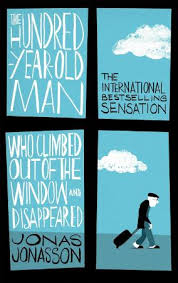











The Hundred-Year-Old Man Who Climbed Out of the Window and Disappeared by Jonas Jonasson

රු1,800.00
3 X Rs. 600.00 or 8% Cashback with


or 3 X රු600.00 with


or up to 4 X රු450.00 with


On the morning of his hundredth birthday, Allan Karlsson decides that he has no interest in attending his own celebration. He climbs through his bedroom window and walks away in his slippers, beginning an increasingly improbable adventure involving a mysterious suitcase, criminals, police officers and a colourful group of new companions.
As Allan’s escape unfolds, the story looks back at his extraordinary life and his accidental involvement in some of the twentieth century’s most important historical events.
Translated from Swedish by Roy Bradbury, The Hundred-Year-Old Man Who Climbed Out of the Window and Disappeared is a warm, clever and wonderfully absurd novel about freedom, friendship, ageing and the unpredictable nature of history.
5 in stock
The Hundred-Year-Old Man Who Climbed Out of the Window and Disappeared by Jonas Jonasson
The Hundred-Year-Old Man by Jonas Jonasson
The Hundred-Year-Old Man by Jonas Jonasson is a wonderfully eccentric historical adventure about ageing, freedom, chance and one man’s remarkable talent for becoming involved in situations that should have nothing to do with him. Translated from Swedish by Roy Bradbury, this international bestseller combines a present-day escape story with an imaginative journey through the major events of the twentieth century.
Allan Karlsson is about to celebrate his hundredth birthday. Staff at his residential home have prepared a party, local officials are expected to attend and everyone assumes that the guest of honour will behave exactly as required. Allan, however, has never been particularly interested in doing what other people expect.
Shortly before the celebration begins, he opens his bedroom window, climbs into the flowerbed and walks away in his slippers. He has no detailed plan and no particular destination. He simply knows that he would rather go somewhere else than remain for a party he does not want.
What begins as a quiet departure soon develops into an increasingly complicated adventure. A spontaneous decision at a bus station leaves Allan travelling with a suitcase that does not belong to him. Unfortunately, its owner wants it back, and the contents make it far more valuable than Allan initially realises. Before long, criminals, police officers, journalists and several unlikely companions are all attempting to understand where the hundred-year-old man has gone and what he might do next.
Allan approaches each new difficulty with extraordinary calm. Where other people see danger, he sees a problem that can probably be solved with a practical conversation, a meal or—when absolutely necessary—his extensive knowledge of explosives. His refusal to panic gives the novel much of its distinctive humour. He rarely judges the people he meets and has little interest in political arguments, even when politics repeatedly places him in extraordinary circumstances.
Alongside Allan’s present-day escape, the novel gradually reveals the story of his earlier life. Born in Sweden at the beginning of the twentieth century, Allan develops an unusual professional talent that carries him far beyond his quiet hometown. Through coincidence, curiosity and a remarkable ability to survive, he becomes involved with political leaders, revolutionaries, soldiers, scientists and spies.
Jonas Jonasson playfully inserts his fictional hero into real historical events. Allan travels across countries and political systems while powerful figures attempt to use his abilities for their own purposes. Yet he remains more interested in good food, strong drink and sensible companionship than in ideology or personal glory.
This unusual structure allows the novel to operate both as a fast-moving comic adventure and as a satire of twentieth-century politics. Dictators, presidents and government officials may believe they are directing history, but events are frequently shaped by mistakes, coincidences and people who do not fully understand what is happening. Allan’s practical attitude provides an entertaining contrast to the seriousness with which powerful individuals view themselves.
The novel also challenges assumptions about ageing. Allan may be one hundred years old, but he is not interested in quietly waiting for his life to end. His escape becomes a declaration of independence and a reminder that curiosity, friendship and adventure are not restricted to the young. The story treats old age with warmth and humour without turning Allan into a helpless or sentimental character.
Jonasson’s storytelling is deliberately exaggerated, allowing the plot to grow more improbable with every chapter. The pleasure comes from discovering how one unlikely event can lead naturally—or at least hilariously—to the next. Despite the criminal misunderstandings and historical chaos, the novel maintains an optimistic tone and genuine affection for its eccentric characters.
The Hundred-Year-Old Man Who Climbed Out of the Window and Disappeared is an excellent choice for readers who enjoy humorous historical fiction, unconventional journeys and stories populated by memorable outsiders. It will particularly appeal to fans of A Man Called Ove, Forrest Gump, The Unlikely Pilgrimage of Harold Fry and Fredrik Backman’s warm, character-driven comedies.
The book works as a complete standalone novel, although Allan’s adventures later continue in The Accidental Further Adventures of the Hundred-Year-Old Man. Its combination of history, satire, crime and absurd humour also makes it an entertaining selection for book clubs.
This Abacus paperback is a delightful gift for readers who appreciate clever comedy, unusual protagonists and adventures that refuse to follow predictable routes. Browse more humorous and translated fiction at bargainbooks.lk, or visit the official Hachette page for information about this edition.
Be the first to review “The Hundred-Year-Old Man Who Climbed Out of the Window and Disappeared by Jonas Jonasson”
Related products
-22%
Out of stock
Fiction & Literature
Original price was: රු2,300.00.රු1,800.00Current price is: රු1,800.00.
3 X Rs. 600.00 or 8% Cashback with
or 3 X රු600.00 with
or up to 4 X රු450.00 with
-22%

Out of stock
Fiction & Literature
Original price was: රු2,250.00.රු1,750.00Current price is: රු1,750.00.
3 X Rs. 583.33 or 8% Cashback with
or 3 X රු583.33 with
or up to 4 X රු437.50 with
-24%

Contemporary romance
Original price was: රු2,100.00.රු1,600.00Current price is: රු1,600.00.
3 X Rs. 533.33 or 8% Cashback with
or 3 X රු533.33 with
or up to 4 X රු400.00 with
-29%
Classics & Literary Fiction
Original price was: රු2,100.00.රු1,500.00Current price is: රු1,500.00.
3 X Rs. 500.00 or 8% Cashback with
or 3 X රු500.00 with
or up to 4 X රු375.00 with
-20%
Classics & Literary Fiction
Original price was: රු2,450.00.රු1,950.00Current price is: රු1,950.00.
3 X Rs. 650.00 or 8% Cashback with
or 3 X රු650.00 with
or up to 4 X රු487.50 with

Out of stock
Classics & Literary Fiction
රු1,500.00
3 X Rs. 500.00 or 8% Cashback with
or 3 X රු500.00 with
or up to 4 X රු375.00 with
-19%

Out of stock
Classics & Literary Fiction
Original price was: රු2,600.00.රු2,100.00Current price is: රු2,100.00.
3 X Rs. 700.00 or 8% Cashback with
or 3 X රු700.00 with
or up to 4 X රු525.00 with
-18%

Out of stock
Fiction & Literature
Original price was: රු1,950.00.රු1,600.00Current price is: රු1,600.00.
3 X Rs. 533.33 or 8% Cashback with
or 3 X රු533.33 with
or up to 4 X රු400.00 with
Reviews
There are no reviews yet.