
No products in the cart.
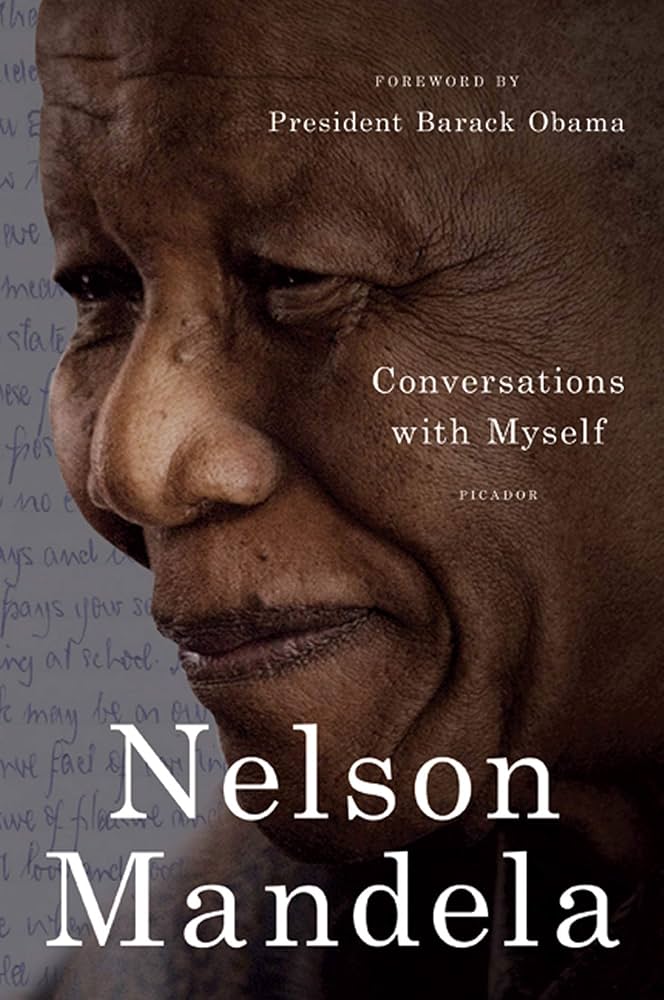
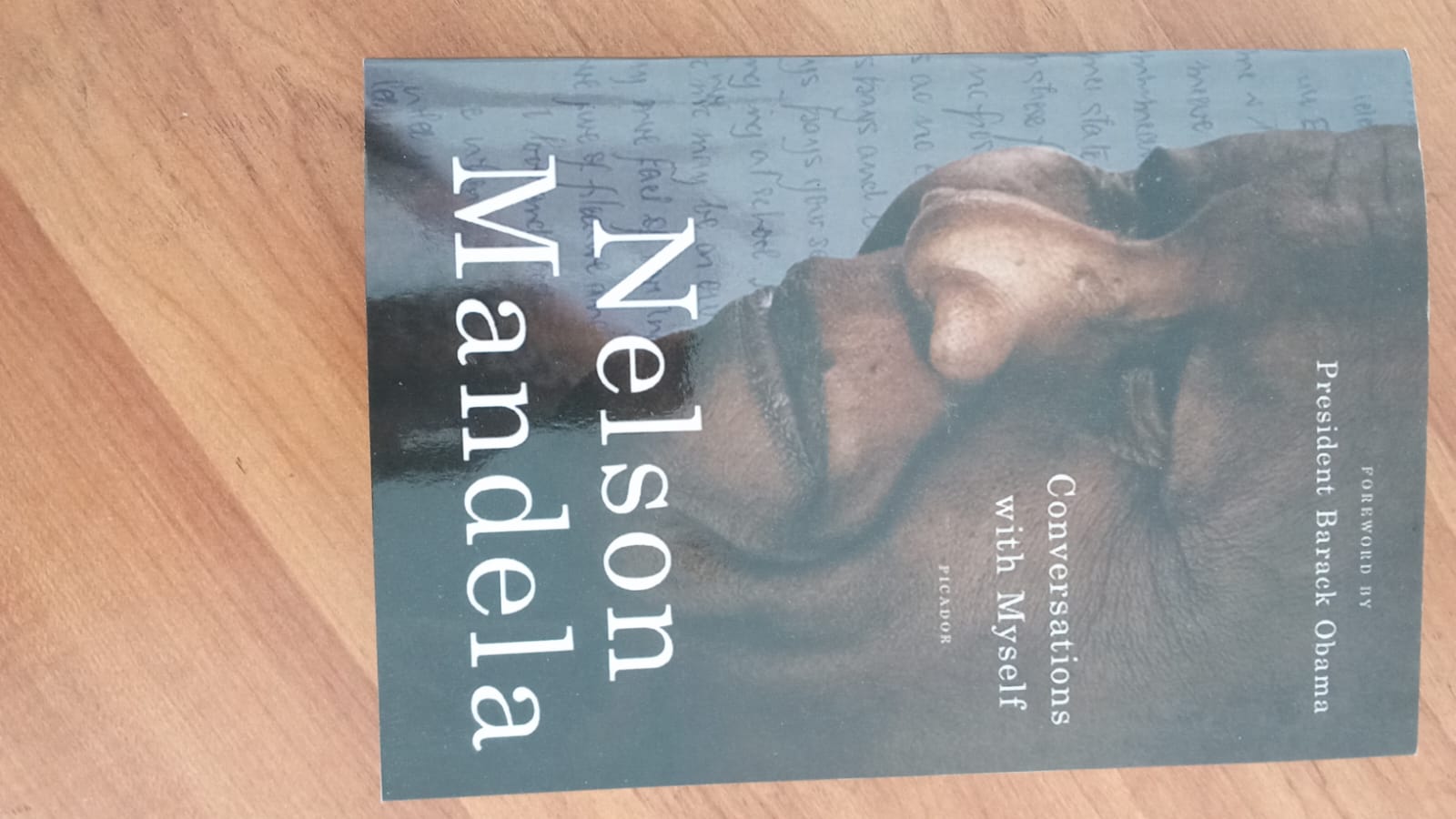
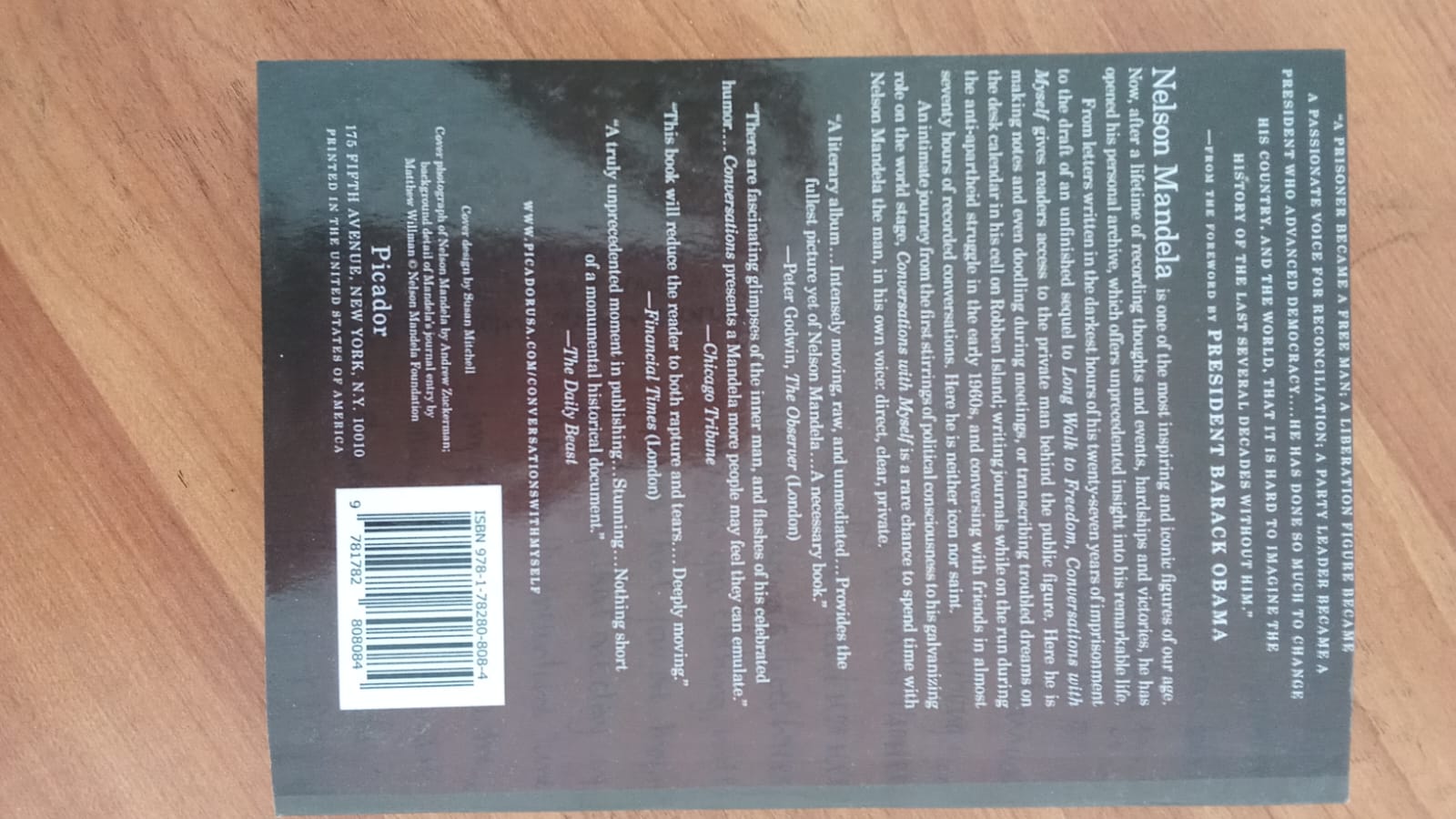
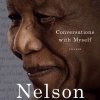


Conversations With Myself by Nelson Mandela

රු1,900.00
3 X Rs. 633.33 or 8% Cashback with


or 3 X රු633.33 with


or up to 4 X රු475.00 with


Short Description – Conversations With Myself by Nelson Mandela
Conversations With Myself is an intimate collection of personal writings, letters, and reflections that reveal the inner life of Nelson Mandela. Through his own words, readers gain insight into his thoughts during times of struggle, leadership, and transformation.
Blending history, wisdom, and personal reflection, the book highlights themes of resilience, self-discipline, and the pursuit of justice—offering a powerful and inspiring look at the man behind the legacy.
6 in stock
Conversation with Myself by Nelson Mandela offers readers a deeply personal look into the thoughts, experiences and reflections of one of the most influential leaders of the modern era.
The collection draws from Mandela’s private letters, notebooks, diary entries, recorded conversations and unfinished writings.
Conversation with Myself reveals more than the public image of Nelson Mandela.
It gives readers access to his private thoughts about family, imprisonment, leadership, freedom, sacrifice and the challenges he faced throughout his life.
Why Read Conversation with Myself?
Conversation with Myself is ideal for readers interested in biography, history, leadership and personal development.
Rather than presenting Mandela only as a historical figure, the book allows readers to discover his thoughts in a much more direct and personal way.
The material includes reflections written during and after his long years of imprisonment.
Readers can explore how Mandela thought about responsibility, political struggle, relationships and his own strengths and weaknesses.
A Personal Side of Nelson Mandela
Nelson Mandela is remembered around the world for his role in South Africa’s struggle against apartheid and his later leadership.
However, Conversation with Myself focuses heavily on the human being behind the public figure.
Readers encounter moments of uncertainty, reflection and personal struggle.
These sections provide a more intimate understanding of Mandela’s character and the experiences that shaped his life.
Letters From Imprisonment
Some of the most powerful material in Conversation with Myself comes from Mandela’s years in prison.
The collection contains letters written during his 27 years of imprisonment.
These writings reveal his thoughts about family, separation, responsibility and the political struggle taking place outside prison.
They also show the emotional cost of his circumstances.
Rather than presenting history from a distance, these personal writings allow readers to experience events through Mandela’s own perspective.
Leadership and Responsibility
Leadership is an important theme throughout Conversation with Myself.
Mandela’s writings show that leadership often involves difficult choices.
A leader must consider the needs of others while also dealing with personal doubts and limitations.
His reflections demonstrate the importance of patience, discipline and long-term thinking.
For readers interested in leadership, the book provides lessons drawn from real experiences rather than abstract theories.
Courage During Difficult Times
Conversation with Myself also explores courage.
Mandela’s life involved imprisonment, political conflict and enormous personal sacrifice.
His writings show that courage does not necessarily mean the absence of fear.
Instead, courage can involve continuing to act according to your principles despite uncertainty and hardship.
This makes the book particularly meaningful for readers interested in resilience and personal strength.
The Importance of Self-Reflection
One of the strongest elements of Conversation with Myself is Mandela’s willingness to examine himself.
He reflects on his mistakes, relationships, decisions and responsibilities.
This self-awareness makes the book more than a political memoir.
It also becomes a study of personal growth.
Readers can see how reflection helped Mandela understand both himself and the consequences of his actions.
Freedom and Sacrifice
Freedom is naturally one of the central themes in Conversation with Myself.
Mandela’s writings reveal the personal cost involved in fighting for political and social change.
His experiences demonstrate that major achievements can require enormous sacrifice.
Family relationships, personal comfort and freedom itself were affected by his political commitments.
These reflections add emotional depth to the historical events surrounding his life.
Family and Personal Relationships
The book also explores Mandela’s relationships with family members.
Political struggle and imprisonment placed enormous pressure on his personal life.
His letters reveal how separation affected him emotionally.
This personal dimension helps readers understand that major historical figures experience many of the same emotions as everyone else.
Love, regret, responsibility and loneliness appear alongside political ideas and leadership.
Learn From History
Conversation with Myself offers a unique way to understand history.
Instead of only reading about events through historians, readers can explore Mandela’s own notes and correspondence.
This creates a direct connection between historical events and personal experience.
Students of history, politics and leadership may find this perspective particularly valuable.
7 Powerful Lessons From Conversation with Myself
- Stay Committed to Your Principles – Difficult circumstances can test what you truly believe.
- Practice Patience – Meaningful change often requires time.
- Learn Through Reflection – Examining your own actions can support personal growth.
- Understand Sacrifice – Important goals may require difficult personal choices.
- Lead With Responsibility – Leadership involves thinking beyond yourself.
- Develop Resilience – Challenges can strengthen determination when approached with purpose.
- Value Freedom – Mandela’s experiences demonstrate how precious personal and political freedom can be.
What You Can Learn From Conversation with Myself
Readers can explore ideas about:
- Leadership
- Courage
- Freedom
- Resilience
- Self-reflection
- Political history
- Personal sacrifice
- Responsibility
- Human relationships
- Decision-making
- Patience
- Personal growth
- South African history
- Social change
- Nelson Mandela’s life
Who Should Read Conversation with Myself?
Conversation with Myself is suitable for readers interested in biography, history, politics and leadership.
Students may find it useful for understanding Nelson Mandela from a more personal perspective.
Professionals and leaders can explore lessons about responsibility and decision-making.
Readers interested in personal development may also appreciate Mandela’s reflections on resilience, discipline and self-awareness.
An Intimate Portrait of Nelson Mandela
Conversation with Myself allows readers to discover Nelson Mandela beyond speeches, photographs and historical accounts.
Through his letters, notebooks and recorded conversations, the book reveals his private thoughts and personal experiences.
It presents Mandela as a leader, prisoner, father and individual constantly reflecting on his choices and responsibilities.
For readers interested in understanding the person behind one of the most important political figures of the twentieth century, Conversation with Myself is a valuable addition to any biography, history or leadership collection.
Wikipedia Link
Learn more about the book here:
https://en.wikipedia.org/wiki/Conversations_With_Myself_(book)
Lasting Impact
After reading Conversations With Myself, readers gain a deeper understanding of what it truly means to lead and to endure. Instead of focusing only on achievements, the book highlights the journey behind them.
Ultimately, Conversations With Myself teaches that strength comes from within, and lasting change is built through patience, purpose, and unwavering commitment.
Be the first to review “Conversations With Myself by Nelson Mandela”
Related products

රු2,000.00
3 X Rs. 666.67 or 8% Cashback with
or 3 X රු666.67 with
or up to 4 X රු500.00 with
-13%

Out of stock
Non-Fiction & Knowledge
Original price was: රු3,900.00.රු3,400.00Current price is: රු3,400.00.
3 X Rs. 1,133.33 or 8% Cashback with
or 3 X රු1,133.33 with
or up to 4 X රු850.00 with
-24%
Out of stock
Non-Fiction & Knowledge
Original price was: රු2,100.00.රු1,600.00Current price is: රු1,600.00.
3 X Rs. 533.33 or 8% Cashback with
or 3 X රු533.33 with
or up to 4 X රු400.00 with
Out of stock
Self-Help & Psychology
රු1,900.00
3 X Rs. 633.33 or 8% Cashback with
or 3 X රු633.33 with
or up to 4 X රු475.00 with

Non-Fiction & Knowledge
රු2,250.00
3 X Rs. 750.00 or 8% Cashback with
or 3 X රු750.00 with
or up to 4 X රු562.50 with
-14%
Out of stock
Self-Help & Psychology
Original price was: රු2,900.00.රු2,500.00Current price is: රු2,500.00.
3 X Rs. 833.33 or 8% Cashback with
or 3 X රු833.33 with
or up to 4 X රු625.00 with
-33%

Self-Help & Psychology
Original price was: රු2,300.00.රු1,550.00Current price is: රු1,550.00.
3 X Rs. 516.67 or 8% Cashback with
or 3 X රු516.67 with
or up to 4 X රු387.50 with
-24%

Non-Fiction & Knowledge
Original price was: රු2,300.00.රු1,750.00Current price is: රු1,750.00.
3 X Rs. 583.33 or 8% Cashback with
or 3 X රු583.33 with
or up to 4 X රු437.50 with
Reviews
There are no reviews yet.